
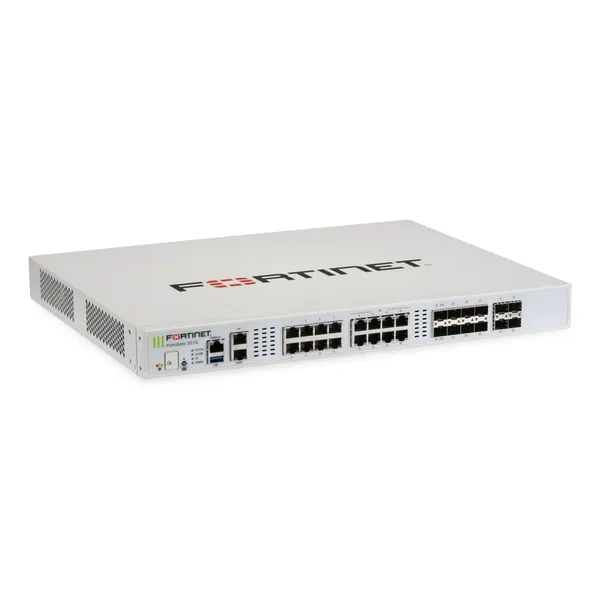
FortiGate 200G (FG-200G) Tanzania
FortiGate 200G is a high-performance next-generation firewall for organizations that need fast security inspection, secure SD-WAN, encrypted connectivity, segmentation and centralized policy enforcement without treating networking and cybersecurity as separate projects. Fortinet positions the 200G series for modern campus and enterprise-edge requirements, combining purpose-built security processing with FortiOS and FortiGuard security services.
For Tanzanian businesses, the useful buying question is not simply whether an appliance can pass the raw internet speed. Correct sizing should consider inspected traffic, VPN load, SSL inspection, application mix, user and device growth, interface requirements, high availability, branch connectivity and the FortiGuard/FortiCare service level required by the organization.

FortiGate 200G: direct product answer
The FG-200G is a 1RU FortiGate next-generation firewall. Fortinet’s current product information publishes firewall throughput of up to 39 Gbps, IPsec VPN throughput of 36 Gbps, IPS throughput of 9 Gbps, NGFW throughput of 7 Gbps and threat-protection throughput of 6 Gbps. It supports 11 million concurrent sessions and 400,000 new sessions per second in the current Fortinet product matrix. Physical connectivity includes 10 GE RJ45 ports in total, comprising management, HA and switch ports; eight 5GE RJ45 ports; four GE SFP slots; and eight 10GE SFP+ slots. The appliance uses Fortinet hardware acceleration and runs FortiOS.
Published maximum figures are reference points, not a substitute for project sizing. Real deployments should be designed around the security functions enabled, traffic profile, encrypted inspection, policy complexity and expected growth. A quotation should also distinguish the appliance from subscriptions and support: FortiGuard services and FortiCare options can materially change the protection and support scope, so the requested term and bundle should be identified before purchase.
What the FortiGate 200G solves
Secure internet edge
Organizations can consolidate firewall policy, intrusion prevention, application control, web and DNS security capabilities, malware protection and related FortiGuard services into a security platform designed to inspect traffic at the network edge. The exact protections available depend on the selected services and configuration.
Branch and SD-WAN connectivity
FortiOS combines security with SD-WAN capabilities, allowing policy-based use of multiple WAN links, application-aware steering and secure branch connectivity. This is useful where a business wants resilience between primary and secondary internet services or consistent policy across multiple sites.
Segmentation and campus security
The FG-200G can serve as a policy point between user, server, guest, wireless, voice, camera and operational network zones. Segmentation reduces unnecessary lateral access and helps administrators express business access requirements as controlled security policies.
Key verified FortiGate 200G specifications
| Specification | Fortinet published figure |
|---|---|
| Firewall throughput | 39 / 39 / 26.5 Gbps (1518 / 512 / 64 byte UDP) |
| IPsec VPN throughput | 36 Gbps |
| IPS throughput | 9 Gbps |
| NGFW throughput | 7 Gbps |
| Threat protection throughput | 6 Gbps |
| Concurrent sessions | 11 million |
| New sessions per second | 400,000 |
| Interfaces | 8×10GE SFP+, 8×5GE RJ45, 10×GE RJ45 total, 4×GE SFP |
Performance figures are vendor-published reference values measured under defined test conditions. Production results vary with enabled features, traffic, packet size, inspection and configuration.
Interfaces, integration and architecture
The FG-200G’s mix of 5GE copper, 10GE SFP+ and standard Gigabit interfaces gives architects flexibility when connecting ISP handoffs, aggregation switches, server or distribution networks and high-speed campus infrastructure. The interface count should still be mapped before ordering: document WAN circuits, HA links, trunks, routed uplinks, DMZ connections and any direct server or management networks. Transceiver and cabling requirements should be identified separately because fiber type, connector and distance depend on the surrounding network.
Fortinet positions FortiGate as part of its Security Fabric. In a Fortinet-centric environment, the firewall can be planned alongside FortiSwitch, FortiAP, FortiAnalyzer, FortiManager and other components according to the project’s management and visibility requirements. Integration should be deliberate rather than assumed: confirm software versions, feature requirements, management design and licensing before implementation.
For broader infrastructure planning, FourTeck Tanzania’s integrated IT and network solutions provide context for firewall, switching, Wi-Fi, servers, racks and UPS dependencies. Regional Fortinet requirements can also be coordinated through FourTeck’s Fortinet-focused UAE resource, FourTeck Uganda, and FourTeck Kenya for multi-country project discussions.
FortiGuard, FortiCare and licensing decisions
A FortiGate hardware purchase and its security-service entitlement are related but different procurement decisions. Buyers should define whether they need only hardware and support or a security bundle with FortiGuard services. Service naming, bundle composition and term options can change, so the quotation should identify the exact current Fortinet SKU and service term rather than relying on an old bill of materials.
For a new deployment, define the desired security outcome first: intrusion prevention, malware defense, web or DNS controls, application visibility, advanced threat functions, support response and centralized logging may influence the subscription choice. For a renewal, provide the appliance serial number and current contract information so entitlement dates and the correct renewal path can be checked. High-availability pairs should be reviewed carefully because both appliances and their service coverage need to match the intended architecture.
High availability, VPN and SD-WAN planning
The FG-200G supports enterprise designs where availability matters. An HA pair can reduce dependence on a single firewall appliance, but a resilient architecture also requires attention to switches, ISP circuits, power, upstream routing and downstream topology. Two firewalls connected to one failing switch or one unprotected power source do not create end-to-end resilience. Define failure scenarios before finalizing the bill of materials.
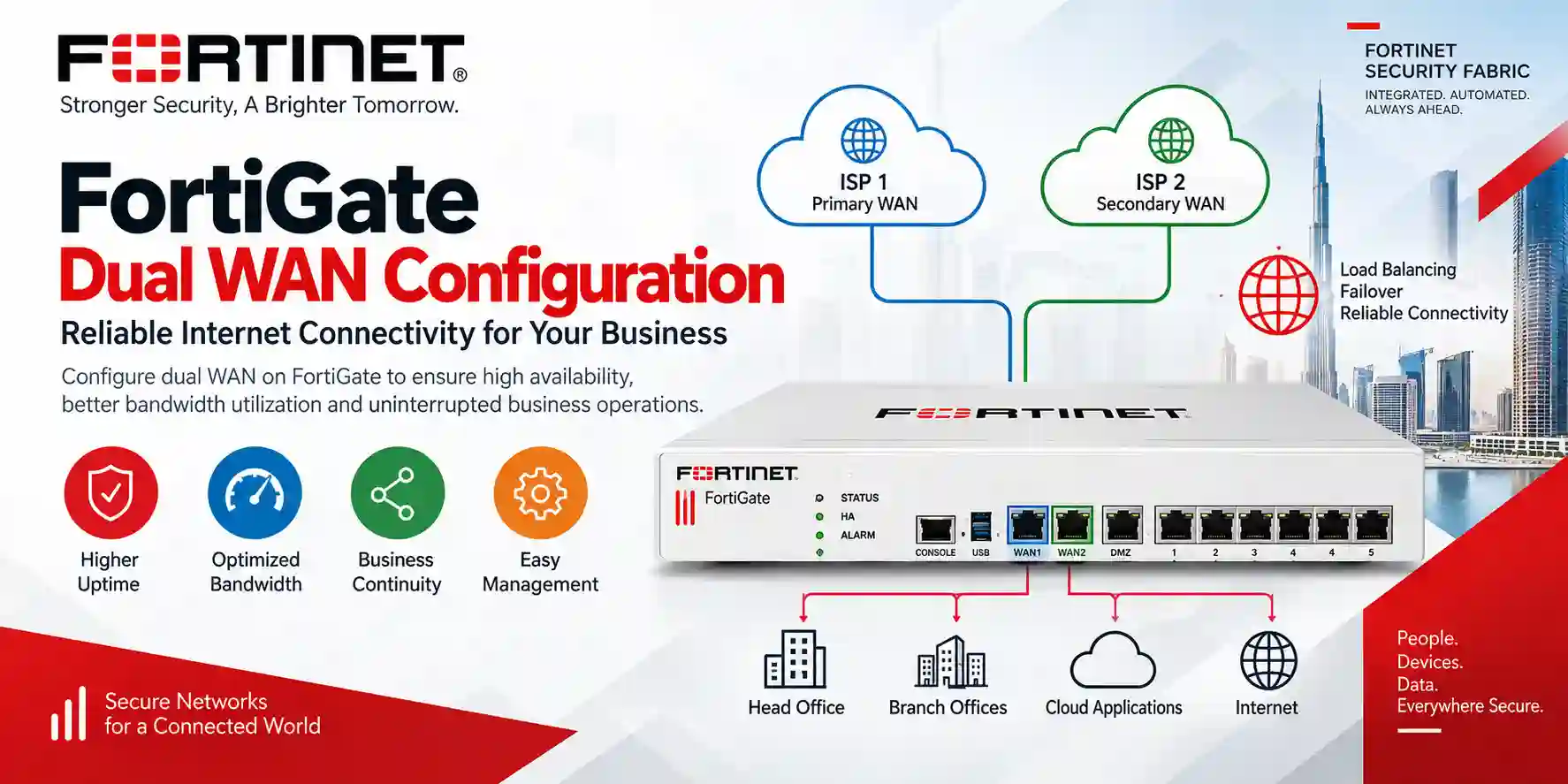
For site-to-site IPsec VPN, record each branch’s internet characteristics, public addressing, routing domains, protected subnets and encryption requirements. Remote-access design should define identity, authentication and user groups rather than exposing broad network access. For dual-WAN projects, use measured circuit quality and application priorities to determine failover or SD-WAN policy. The supplied FortiGate dual-WAN configuration visual can help project teams discuss the concept, while the final configuration should reflect the actual ISP and topology.
FortiGate 200G Tanzania
Organizations evaluating FortiGate 200G in Tanzania commonly need more than a firewall appliance. The project may involve an internet-edge refresh, a new head office, a campus upgrade, secure connectivity between branches, a data-center edge, an SD-WAN rollout or replacement of a firewall that no longer has enough inspected throughput. The first sizing step is to document the real traffic profile: primary and backup internet speeds, internal routed traffic, VPN demand, cloud usage, public applications, remote users and the security functions expected to remain enabled during peak periods.
The 200G’s published performance provides substantial capacity, but the relevant figure depends on the use case. A buyer should not size an NGFW only from 39 Gbps raw firewall throughput if the intended production policy will use IPS, application control, malware protection and encrypted inspection. Fortinet publishes separate IPS, NGFW and threat-protection figures precisely because security processing matters. Allowing headroom for growth is also important when internet circuits, user counts and cloud workloads are expected to increase during the firewall’s operational life.
Tanzania deployments should also include practical infrastructure checks. Confirm rack depth and available rack units, power protection, ventilation, cable management, fiber and copper handoffs, transceivers, upstream switch capacity and ISP demarcation. Where power continuity is important, firewall and core switching should be included in UPS planning. For multi-site organizations, a standardized addressing, VLAN, VPN and policy model can simplify future branch onboarding and troubleshooting.
Procurement teams requesting a FortiGate 200G Tanzania quotation should provide the appliance quantity, whether HA is required, preferred FortiGuard/FortiCare term, internet bandwidth, approximate user/device count, VPN requirements and any existing Fortinet management or logging platforms. This gives the technical and commercial teams enough context to avoid quoting an appliance without the subscriptions, optics or deployment services the project actually requires.
FortiGate 200G Dar es Salaam
For businesses in Dar es Salaam, the FortiGate 200G can fit projects where a busy headquarters, corporate campus, hotel, financial operation, logistics environment, service provider, education organization or multi-branch company needs a stronger security edge. Dense office environments can combine cloud applications, video meetings, VoIP, Wi-Fi, guest traffic, CCTV, ERP access and large file transfers on the same internet links. The firewall design should therefore separate business-critical flows and apply security controls without creating an avoidable bottleneck.
A Dar es Salaam head-office project should begin with the network diagram. Identify ISP handoffs, public IP requirements, internal VLANs, server networks, wireless controllers or access points, voice infrastructure and branch tunnels. If two internet services are available, decide whether the goal is simple failover, load distribution or application-aware SD-WAN. Critical SaaS and voice traffic may require different steering from backups or software downloads. Link monitoring should test meaningful destinations rather than only the next-hop gateway.
Security policy migration deserves its own workstream when replacing an existing firewall. Old rule bases often contain obsolete objects, broad access and temporary exceptions that became permanent. A migration is an opportunity to document applications, remove unused rules, strengthen administrative access and segment sensitive systems. Where SSL inspection is required, certificate deployment and application compatibility should be planned before broad enforcement.
When requesting an FG-200G quotation for Dar es Salaam, include whether installation, migration, HA, VPN, FortiGuard services, FortiCare, centralized management or logging are needed. Avoid comparing quotes only by the appliance line: two proposals can look similar while including very different service terms and deployment scope. A clear bill of materials makes technical and commercial comparison much easier.
FortiGate 200G Mwanza
FortiGate 200G projects in Mwanza can support organizations that operate a main site with important branch, warehouse, healthcare, education, hospitality, trading or industrial connectivity. A common requirement is dependable access to centralized applications while maintaining security between local users, servers, guest networks, cameras and operational devices. The firewall should be treated as part of the site’s routing and security architecture, not simply inserted between a modem and a switch.
For a Mwanza site connected to headquarters elsewhere in Tanzania, site-to-site VPN design should consider route overlap, tunnel redundancy and the behavior of applications during an ISP outage. If the business uses two WAN providers, SD-WAN policies can be planned around latency, loss and application importance. The objective is predictable failover and recovery, not merely having two cables connected. Where cloud applications dominate, direct internet access can be secured locally while private resources continue through encrypted tunnels according to policy.
Physical infrastructure is equally important. The FG-200G is rack-mounted equipment and should be installed in a controlled rack environment with adequate ventilation, organized patching and suitable UPS protection. Switch uplinks must be sized to match expected traffic, especially when the firewall performs inter-VLAN routing for multiple high-volume segments. Fiber runs and optics should be specified from actual distance and switch interface requirements rather than assumed from the firewall’s available SFP/SFP+ slots.
A useful procurement brief for Mwanza lists present and planned internet bandwidth, number of sites, users and major device classes, critical applications, VPN tunnels, remote-access users, security services and support expectations. That information allows the FG-200G to be evaluated against the workload rather than selected only from model hierarchy.
FortiGate 200G Arusha
Arusha organizations considering the FortiGate 200G may include hospitality groups, tour and travel businesses, NGOs, educational institutions, corporate offices and organizations coordinating operations across multiple sites. These environments can have diverse traffic: staff business systems, guest internet, cloud services, voice, surveillance, payment or booking platforms and remote connectivity. Segmentation is valuable because these users and systems should not automatically share the same trust level.
A practical Arusha deployment can place staff, guest Wi-Fi, servers, IP phones, cameras and management systems in defined network zones with policies controlling which services may cross between them. Guest traffic can be restricted from internal resources. Administrative interfaces can be limited to management networks. Public-facing services can be isolated from user networks. These controls are architectural decisions; the firewall’s performance only becomes useful when the rule set reflects business risk and operational requirements.
Hospitality and customer-facing environments also benefit from WAN planning. Internet demand can change significantly by time of day, and guest usage should not compromise critical business applications. SD-WAN and traffic policy can help use multiple circuits intelligently when the underlying connectivity supports it. VPN links to reservation, finance or headquarters systems should be documented and monitored, with failover behavior tested before the site depends on it.
For procurement, buyers should confirm whether the requirement is a standalone FG-200G, an HA pair, a security bundle, FortiCare, deployment assistance or a broader Fortinet environment. Include existing switch and wireless details if integration is expected. This helps prevent a firewall purchase from becoming a disconnected component that requires redesign during installation.
FortiGate 200G Dodoma
FortiGate 200G deployments in Dodoma can be relevant for government-adjacent organizations, institutions, corporate offices, education environments and growing multi-site businesses that need controlled access between users, services and external networks. The design process should begin with data flows: identify which applications are hosted locally, which are cloud based, which branches require private connectivity and which users need remote access. Security policies can then be created around business functions instead of broad source-to-destination rules.
Where availability is important, an HA design should be evaluated together with redundant switching, WAN circuits and power. An HA firewall pair does not protect against every outage. If both units depend on the same unprotected upstream switch, single ISP or power source, those components remain single points of failure. A resilience workshop that maps likely failure modes can be more valuable than simply doubling the appliance quantity.
For secure remote access, identity and authentication should be part of the project. Define who needs access, from which device types, to which applications and for how long. Avoid giving remote users broad network reach when application-specific access can meet the requirement. Administrative access to FortiGate itself should be tightly controlled, logged and separated from normal user traffic.
Dodoma procurement teams can improve quote accuracy by sharing a current topology, ISP speeds, planned growth, desired subscription term and support expectations. If an existing FortiGate is being replaced, include the model, software version, configuration complexity and current subscriptions. Migration effort depends on more than copying policies; routing, VPN, certificates, objects, NAT and integrations all need validation.
FortiGate 200G UAE
Organizations sourcing the FortiGate 200G for UAE operations often require enterprise-edge security for headquarters, campuses, branch aggregation or regional infrastructure. The 200G’s high-speed copper and fiber connectivity can be useful where LAN and WAN architecture has moved beyond basic Gigabit interfaces. Before selecting it, map ISP handoffs, data-center or cloud connections, switch uplinks and internal routing so that interface types and optics align with the surrounding network.
For companies operating between the UAE and Tanzania, consistent FortiGate policy standards can simplify cross-border IT operations. Site-to-site IPsec VPN can connect offices, while SD-WAN can provide policy-driven use of multiple circuits at each location. Standard object naming, address plans, logging, administrator roles and change-control procedures reduce operational friction when different teams support different countries.
Licensing is a key commercial comparison point. A hardware-only quote should not be compared directly with a proposal that includes a multi-year security bundle and FortiCare. Define the required protection and support scope, then request equivalent terms. Where centralized management or analytics are required, FortiManager and FortiAnalyzer architecture can be considered separately according to scale and operational model.
FourTeck’s UAE technology solutions site provides a regional route for UAE requirements, while Tanzania projects can remain coordinated through the Tanzania site. Multi-country buyers should provide a site list, required quantities, desired standard configuration and licensing term so procurement and rollout planning can be aligned rather than handled as unrelated purchases.
FortiGate 200G Uganda
Ugandan organizations evaluating the FG-200G may be planning a headquarters refresh, branch aggregation, campus network, secure SD-WAN or higher-capacity VPN environment. The most important sizing input is the protected workload. Count internet links and speeds, internal segments routed through the firewall, VPN tunnels, remote users, public services and expected security inspection. Then allow capacity for realistic growth rather than designing only for today’s peak.
For organizations with sites in both Uganda and Tanzania, standardized FortiGate architecture can make policy and support more consistent. Use common naming for VLANs and address objects where practical, but avoid overlapping private subnets between branches because overlaps complicate VPN routing. Document tunnel endpoints, routing priorities, failover paths and responsible administrators so troubleshooting does not depend on one person’s memory.
Security services should be selected according to risk and use case. IPS, application controls, web/DNS security and malware protections are not simply checkboxes; each should map to an organizational requirement and be tuned to avoid unnecessary disruption. Logging should be retained somewhere appropriate for operational review and incident investigation. Firmware and configuration backups should be managed as part of routine operations.
Uganda buyers can use FourTeck Uganda for regional coordination while sharing the exact FG-200G quantity, HA requirement, licensing term and deployment scope. For multi-country procurement, align contract terms and configurations where possible so renewals and lifecycle planning do not become fragmented across sites.
FortiGate 200G Kampala
In Kampala, the FortiGate 200G can suit organizations with substantial internet usage, many concurrent sessions, multiple business systems or branch connectivity requirements. Corporate offices may combine cloud productivity suites, ERP, CRM, video collaboration, VoIP, CCTV, guest Wi-Fi and remote users. These services compete for bandwidth and create different security requirements, so the network should be segmented and traffic policies documented before migration.
A Kampala head-office firewall replacement should include discovery of current NAT rules, VPNs, static and dynamic routing, public services, authentication, certificates and administrative workflows. Migrating only the obvious internet rules can leave important dependencies undiscovered until cutover. A rollback plan and test matrix should cover internet access, DNS, critical SaaS, inbound services, branch tunnels, remote access and monitoring.
If the organization has two ISP circuits, define how they should behave during normal operation and failure. Some businesses want active/standby service; others want both links used with application steering. Health checks should reflect end-to-end internet reachability. Voice and interactive applications may need latency-sensitive policies, while bulk transfers can use available capacity differently.
For quotation, provide bandwidth, expected users/devices, number of VPN sites, whether SSL inspection is planned, HA requirements and desired subscription duration. If the project includes FortiSwitch or FortiAP, state whether centralized FortiGate-based management is part of the design. Clear scope reduces change requests after equipment arrives.
FortiGate 200G Arua
For an Arua branch, institutional site or regional operation, the FG-200G should be selected because the workload justifies its capacity and interfaces, not simply because it is a higher model. A large regional site may aggregate many users, servers, wireless networks and VPN connections, while a smaller branch could be better served by a different FortiGate model. Sizing should remain evidence based.
Connectivity resilience can be especially important for sites that depend on centralized cloud or head-office applications. If multiple internet options are available, FortiGate SD-WAN can be planned to monitor path quality and select links according to policy. The design should include what happens when a circuit fails, how sessions recover and which applications receive priority. VPN tunnel redundancy should align with WAN redundancy rather than being configured independently.
Operational simplicity matters when specialist support is not physically present at every site. Standard templates, clear interface labels, configuration backups, centralized logging and documented remote-management methods can reduce troubleshooting time. Administrative exposure should be minimized; management access should use secure methods and trusted sources rather than being broadly reachable from the internet.
An Arua procurement request should therefore include site role, network diagram, WAN links, user/device estimates, applications, VPN peers, required security services and support expectations. This information helps determine whether FG-200G is appropriately sized and what additional components or licenses are necessary for a complete deployment.
FortiGate 200G Mbarara
Mbarara organizations can evaluate the FortiGate 200G for campus, enterprise, healthcare, education, hospitality, trading or multi-branch security where significant traffic must be inspected and controlled. A useful design separates internet-edge requirements from internal segmentation requirements. Some deployments send only WAN traffic through the firewall; others use it to enforce policy between internal zones, which can materially increase traffic volume.
When internal routing is placed on the FG-200G, switch uplinks should be designed to avoid bottlenecks. The availability of 10GE SFP+ and 5GE copper interfaces provides options, but the adjacent switches must support compatible speeds and media. Document VLAN trunks, link aggregation and redundancy before installation. If fiber is used, select transceivers based on actual fiber type and distance.
Security policy should reflect user roles and asset sensitivity. Finance systems, servers, guest devices, CCTV and general staff endpoints do not need identical access. Segmentation can limit unnecessary lateral movement and make logs easier to interpret. Security services should be tuned and monitored rather than enabled without review, particularly where business applications use encrypted traffic or uncommon protocols.
For Mbarara buyers, quotation preparation should include whether the project needs appliance supply only or also configuration, migration, VPN, SD-WAN, HA and subscription services. A complete scope makes it easier to compare offers and plan cutover without discovering missing service entitlements or connectivity accessories late in the project.
FortiGate 200G Gulu
A FortiGate 200G deployment in Gulu can support organizations that need a robust security gateway for a major branch, campus or regional hub. The model’s published session scale and throughput can be valuable where many endpoints and applications share the edge, but the security architecture should remain understandable. Complex rule sets are difficult to audit and can become risky when exceptions accumulate.
Start with a zone model: internet, users, servers, voice, wireless guest, cameras, management and any operational networks. Define allowed flows between zones, then translate them into firewall policy. This produces a clearer design than migrating a flat LAN and adding rules reactively. Where branch-to-head-office VPN is needed, routes and security policies should be documented together so traffic paths remain predictable.
For sites where connectivity interruptions have operational impact, test failure behavior. A secondary WAN circuit is useful only if monitoring detects real failures and important traffic can move to the backup path. UPS runtime should cover the firewall and the switches or ISP equipment required to keep the connection alive. Resilience should be evaluated as an end-to-end service.
Gulu procurement teams should provide the target topology, current and future bandwidth, security service expectations and support term. If a centralized Fortinet environment already exists, include FortiManager, FortiAnalyzer or Security Fabric requirements so the new appliance can be planned as part of the operating model from day one.
FortiGate 200G Kenya
Kenyan enterprises considering the FortiGate 200G can use it in secure campus and enterprise-edge designs where high connection counts, fast internet, multiple VPNs and advanced inspection are required. Organizations operating between Kenya and Tanzania can benefit from standardizing firewall design principles even when site sizes differ. Common policy naming, logging standards, VPN conventions and change processes make cross-border support easier.
For Nairobi or other high-connectivity sites, interface planning can be as important as security throughput. The FG-200G offers multi-gigabit copper and 10GE fiber options, so architects can avoid constraining faster switch uplinks or WAN services to 1 Gbps. However, compatible switch ports, optics, cabling and ISP handoffs must be verified. A port on the firewall does not guarantee the surrounding infrastructure can use the same speed.
Security subscriptions should be compared on equivalent terms. Procurement teams should ask each supplier to state appliance SKU, FortiGuard bundle, FortiCare level, term, included accessories and professional services. This avoids a misleading comparison between hardware-only and fully licensed proposals. For renewals, serial and entitlement data should be checked before selecting a renewal SKU.
FourTeck Kenya can coordinate Kenya-side requirements, while Tanzania FourTeck can support the Tanzania project conversation. A multi-country rollout brief should include quantities per site, desired standard build, WAN design, HA requirements and renewal term so deployment and lifecycle planning remain consistent.
FortiGate 200G Kuwait
For Kuwait business networks, FortiGate 200G can be evaluated for enterprise-edge, campus, secure SD-WAN and branch aggregation where the organization needs substantial inspected throughput and high-speed connectivity. The design should distinguish internet traffic, east-west internal traffic and VPN traffic because each can influence sizing and interface use differently.
A secure rollout should include administrator-role design, trusted management access, configuration backup, firmware planning and logging. Firewall security is weakened when the appliance itself is administered through shared accounts or broadly exposed management interfaces. Role-based access and change records help organizations maintain accountability as multiple engineers work on the environment.
For regional companies linking Kuwait with UAE, Tanzania, Kenya or Uganda sites, VPN and SD-WAN standards can reduce configuration drift. Address plans should avoid overlap, routing should have documented priorities and failover should be tested. Central management can be considered where the number of FortiGate devices justifies it, but the management architecture and licenses should be specified separately.
Kuwait procurement should define whether the request includes only FG-200G hardware or security subscriptions, support, HA, optics and implementation. Climate-controlled rack conditions, UPS capacity and cabling should be included in site readiness. The objective is a complete operational solution rather than an appliance that arrives before the surrounding network is prepared.
FortiGate 200G Ghana
Ghanaian organizations evaluating the FortiGate 200G may need a security platform for a headquarters, campus, regional hub or data-intensive branch. The decision should be based on inspected throughput, sessions, VPN scale, interface requirements and future bandwidth rather than a generic user-count rule. User count alone can be misleading because ten users moving large datasets may create more traffic than hundreds of light web users.
A Ghana deployment can combine perimeter security with segmentation and SD-WAN. For example, a company can separate server, staff, guest, voice and surveillance networks while steering internet applications across available WAN paths. Each design should be tested against real application behavior. Security controls that are too broad can interrupt legitimate traffic, while policies that are too permissive reduce the value of segmentation.
For companies with branches elsewhere in Africa, consistent configuration standards are valuable. Establish templates for administrator access, DNS/NTP, logging, address objects, VPN naming and policy review. Centralized tools may help at larger scale, but operational processes remain necessary: alerts need owners, backups need testing and policy changes need documentation.
A FortiGate 200G Ghana quotation should specify the exact appliance quantity, HA requirement, subscription bundle and term, support expectation and implementation scope. If the project is a migration, include the existing platform and cutover constraints. This enables more accurate effort estimation and reduces the chance that essential licensing or professional services are omitted.
FortiGate 200G Nigeria
Nigeria deployments can place heavy demands on enterprise firewalls because large offices, campuses and distributed organizations may combine many users, multiple WAN links, branch tunnels, public services and cloud applications. FortiGate 200G offers a performance tier intended for substantial secure networking workloads, but every project should be sized against the actual mix of traffic and enabled inspection.
For multi-WAN environments, SD-WAN planning should identify which applications need low latency, which can tolerate path changes and which must use a specific provider or public address. Health checks should detect service quality, not merely physical link status. When public-facing services depend on a WAN circuit, inbound failover may require DNS, routing or provider coordination beyond the firewall itself.
Security operations are another design dimension. Decide where logs will be retained, who reviews alerts, how configurations are backed up and how firmware upgrades are approved. An NGFW provides visibility and controls, but the organization still needs processes to act on that information. For sensitive networks, segmentation and least-privilege policies can reduce the impact of compromised endpoints.
Nigeria procurement teams should request equivalent Fortinet bundles when comparing suppliers. State the required term, FortiCare level, FortiGuard scope, HA quantity, optics and implementation services. For regional rollouts, coordinate renewal dates and standard configurations so each site does not become a separate lifecycle problem.
FortiGate 200G Seychelles
Seychelles organizations considering the FG-200G may include hospitality groups, financial or professional organizations, public institutions and multi-site businesses where internet availability and secure connectivity are operationally important. The firewall should be sized with attention to WAN capacity, cloud usage, guest networks, VPNs and the volume of encrypted traffic that will be inspected.
Hospitality environments can benefit from clear separation between guest, staff, payment, building, voice and surveillance networks. Segmentation helps prevent a guest device from reaching internal business systems and allows security policies to be tailored to each zone. Internet bandwidth policy can also protect critical business applications from competing with non-critical guest or bulk traffic.
Where a site depends heavily on connectivity, dual-WAN and power resilience should be assessed together. A secondary circuit may use a different service path, but failover should be tested with real applications. Firewall, core switching and ISP equipment should have appropriate power protection. Remote management should be secured so support does not require exposing administrative interfaces indiscriminately.
For a Seychelles quotation, provide the network role, bandwidth, number of users and devices, VPN requirements, desired subscription term and whether implementation or migration is required. If equipment must integrate with an existing Fortinet estate, include management, logging and software-version requirements. Clear pre-sales discovery is particularly useful for island deployments because missing accessories or mismatched interfaces can create avoidable project delays.
Related Tanzania network and security planning
Firewall and VPN architecture
Review firewall sizing, segmentation, site-to-site VPN and remote-access requirements as part of the wider security architecture on the FourTeck Tanzania solutions overview.
LAN and uplink readiness
The FG-200G can connect at multi-gigabit speeds, but switches, fiber and structured cabling must be planned to match. Review switching, routing and infrastructure dependencies before cutover.
Wi-Fi and segmentation
Staff, guest and device wireless networks can be separated with VLANs and firewall policy. Coordinate AP, switching and firewall design so security boundaries remain consistent from wireless edge to internet edge.
FortiGate 200G quotation checklist
A precise quotation request reduces back-and-forth and helps ensure the hardware, services and deployment scope match the project. Include the following information when available:
- FG-200G quantity and whether high availability is required.
- Current and planned internet bandwidth for each WAN circuit.
- Approximate users, devices and concurrent remote users.
- Number of site-to-site VPN peers and branch locations.
- Required FortiGuard security functions and preferred term.
- FortiCare support requirement.
- Existing FortiManager, FortiAnalyzer, FortiSwitch or FortiAP environment.
- 10GE, 5GE, Gigabit and fiber interface requirements.
- Migration source firewall and target cutover window.
- Need for installation, configuration, policy migration, testing or documentation.
FortiGate 200G FAQ
What is the firewall throughput of FortiGate 200G?
Fortinet publishes up to 39 Gbps firewall throughput for the FG-200G under its stated test conditions. For production sizing, use the throughput category that best reflects enabled security services rather than relying only on raw firewall throughput.
What are the IPS, NGFW and threat-protection figures?
Fortinet’s current product matrix lists 9 Gbps IPS throughput, 7 Gbps NGFW throughput and 6 Gbps threat-protection throughput for FG-200G. Testing definitions matter, so compare figures using Fortinet’s published methodology.
Does FortiGate 200G support 10 Gigabit Ethernet?
Yes. Fortinet lists eight 10GE SFP+ slots on FG-200G, together with eight 5GE RJ45, four GE SFP and Gigabit RJ45 interfaces. Confirm optics, cabling and adjacent switch compatibility for the planned topology.
Can FG-200G be used for SD-WAN?
Yes. FortiOS includes secure SD-WAN capabilities. The production design should define WAN health checks, application priorities, routing, failover and security policy for the organization’s actual circuits.
Does FortiGate 200G need FortiGuard licensing?
The appliance can be quoted with different support and security-service options. The appropriate FortiGuard and FortiCare scope depends on the security functions and support required. Request the exact current SKU and term for the intended bundle.
Is FG-200G suitable for high availability?
It can be deployed in HA designs. Resilience should also cover WAN circuits, switches, power and other dependencies; two firewalls alone do not remove every single point of failure.
How should I size a FortiGate 200G for Tanzania?
Document WAN speeds, inspected traffic, internal routed traffic, VPN use, SSL inspection, sessions, users/devices, interfaces, HA and future growth. Compare that workload with the relevant Fortinet performance metrics and keep reasonable capacity headroom.
Decision recap
Choose the FortiGate 200G when the verified performance, session scale, interface mix and FortiOS capabilities fit the actual security and networking workload. Do not select it from raw throughput alone. A well-scoped project includes security-service licensing, support, HA, optics, WAN design, segmentation, VPN, management, logging, power and migration requirements.
For Tanzania projects, FourTeck can use your topology and requirements to prepare a more precise product and deployment discussion. For cross-border organizations, the same architecture can be coordinated with relevant FourTeck regional resources while keeping each site’s bandwidth and operational needs distinct.
Consultation panel: what to send FourTeck
Send the target location, WAN speeds, user/device estimate, branch count, existing firewall model, required VPNs, HA preference, desired FortiGuard/FortiCare term and any Fortinet management products already in use. A current network diagram is especially useful. This allows the discussion to focus on sizing, licensing and implementation rather than guessing from a model number alone.
No stock, delivery date, price, warranty term or authorization status is assumed on this page. These commercial details should be confirmed on the current quotation.



Reviews
There are no reviews yet.