
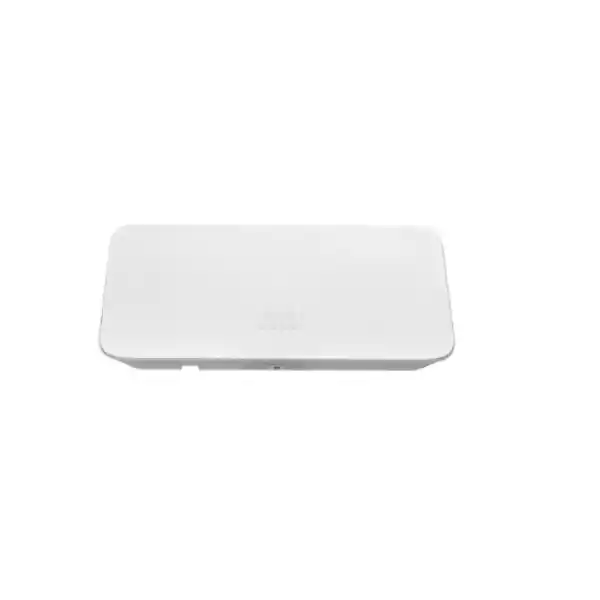
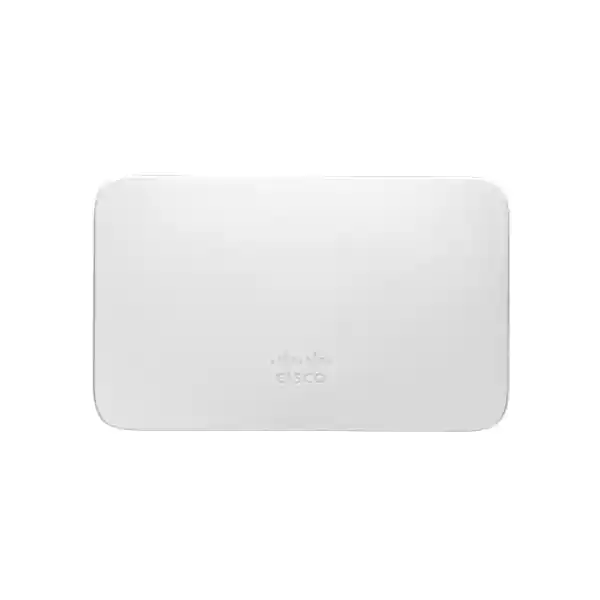
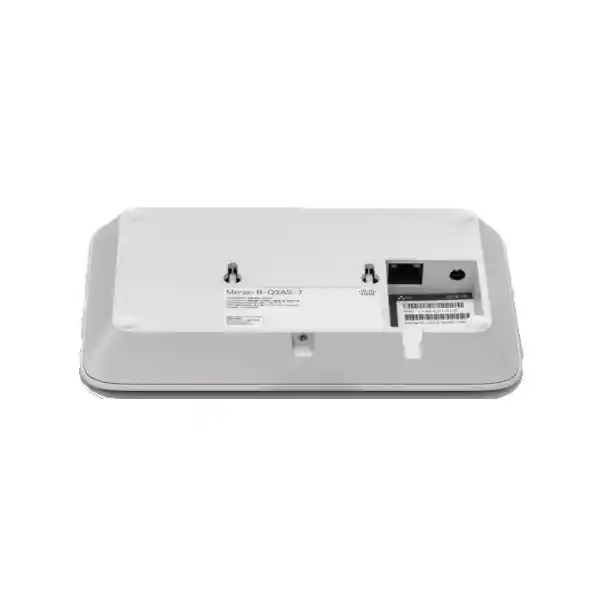
Cisco Meraki MR28 Tanzania
The Cisco Meraki MR28 is an entry-level Wi-Fi 6 access point designed for basic and medium-density indoor deployments that need dependable wireless connectivity, centralized cloud management and enterprise-oriented security controls. It uses concurrent 2.4 GHz and 5 GHz radios, supports 2×2:2 MU-MIMO and OFDMA, provides a maximum dual-radio aggregate frame rate of up to 1.5 Gbps, and connects to the wired network through one Gigabit Ethernet port. For Tanzania organizations, the most important buying decision is not the headline wireless rate alone; it is whether the MR28 fits the building layout, expected client count, application mix, PoE design, switch capacity, internet connection, VLAN plan and Meraki licensing model.
What the Cisco Meraki MR28 solves
Business Wi-Fi projects often fail for reasons unrelated to the access point’s advertised speed. Coverage can be weakened by reinforced walls, shelving, glazing or poor placement. Capacity can collapse when too many clients share one radio. Guest traffic may be mixed with internal systems. Access points may be installed on switches without enough PoE budget. A cloud-managed platform can reduce operational friction, but only when licensing, administrator access and organization ownership are planned correctly. The MR28 addresses the wireless access layer with a compact Wi-Fi 6 platform that can be centrally managed through the Meraki Dashboard, making it suitable for small offices, branch sites, meeting areas, retail environments, classrooms and similar indoor spaces where basic to medium client density is expected.
Because the MR28 is a 2×2:2 model with a single Gigabit Ethernet uplink, it is best evaluated as an efficient entry-level business access point rather than as a highest-density flagship radio. That distinction matters. A well-designed deployment may use several correctly placed MR28 units instead of expecting one access point to cover an entire floor. The correct quantity depends on floor plan, client density, wall materials, roaming needs, application load and interference. A site survey or predictive wireless design can reduce guesswork, especially in multi-room offices, hospitality properties, schools and buildings with challenging construction.
Wi-Fi 6 efficiency
802.11ax technologies such as OFDMA and MU-MIMO are designed to improve wireless efficiency when compatible client devices share airtime. The benefit is strongest when radio planning and client distribution are also healthy.
Cloud administration
Meraki Dashboard allows browser-based configuration, monitoring and troubleshooting, which can simplify operations for organizations managing one site or multiple branches without a separate on-premises wireless controller.
Business segmentation
The wireless design can be coordinated with VLANs and firewall policy so staff, guest and device traffic are separated according to business requirements rather than sharing one flat network.
Verified Cisco Meraki MR28 specifications
| Positioning | Entry-level cloud-managed Wi-Fi 6 access point for basic, medium-density deployments |
| Wireless standard | 802.11ax Wi-Fi 6 with backward support for relevant earlier 2.4 GHz and 5 GHz Wi-Fi standards |
| Radios | One 2.4 GHz radio, one 5 GHz radio and Bluetooth Low Energy radio |
| Spatial streams | 2×2:2 MU-MIMO with beamforming |
| Performance features | MU-MIMO, OFDMA and U-APSD support |
| Maximum aggregate frame rate | Up to 1.5 Gbps across concurrent radios |
| Wired interface | 1× Gigabit Ethernet RJ45 |
| Power | 802.3af PoE supported; Cisco documentation also lists the MA-PWR-30W-XX family as the compatible AC adapter option for MR28 |
| Dimensions | Approximately 20.2 cm × 12.4 cm × 2.58 cm |
| Weight | Approximately 272 g |
Performance figures are theoretical frame-rate specifications rather than guaranteed application throughput. Real-world results depend on client capabilities, channel width, interference, distance, building materials, airtime utilization, wired backhaul, internet speed and configuration.
Deployment, PoE, switching and licensing considerations
Before ordering Cisco Meraki MR28 units, confirm how they will be powered. A PoE-capable managed switch is normally the cleanest approach because one Ethernet cable can provide both network connectivity and power. The switch should have sufficient PoE budget for the entire access-point count plus any IP phones, cameras or other powered devices sharing the chassis. Where PoE is not available, the exact MR28-compatible AC adapter must be validated. Cisco specifically notes that the MA-PWR-30W-XX family is the compatible AC adapter option; older adapter generations should not be assumed compatible.
The wired network should also be prepared for wireless segmentation. Decide whether staff, guest, voice, IoT or operational devices require separate SSIDs and VLANs. Confirm that access-point switch ports carry the required VLANs and that DHCP, DNS, gateway and firewall policy exist for each network. Guest Wi-Fi should be isolated from sensitive internal resources according to business policy. If the wireless design spans several access points, naming, channel planning, transmit power and roaming behavior should be reviewed together instead of configuring each AP independently.
Meraki cloud-managed wireless requires appropriate licensing and an operational Meraki organization. Procurement should therefore treat hardware, license term and account ownership as one lifecycle decision. The quotation should identify the exact license, term and renewal responsibility. Administrators should use individual accounts, multi-factor authentication and appropriate role permissions. If the organization already operates Meraki MX security appliances or MS switches, the MR28 can fit into the same broader Dashboard-managed environment, but each product family still requires correct design and licensing.
Related FourTeck Tanzania resources
Wireless does not operate in isolation. Review the FourTeck Tanzania integrated IT overview for the relationship between Wi-Fi, switching, cybersecurity, servers, cabling and business applications. Use the FourTeck Tanzania technology shop to frame compatibility and procurement questions, and the technology services page when deployment, configuration, documentation or lifecycle assistance is required.
For related Meraki security architecture, the Cisco Meraki MX Tanzania family page explains cloud-managed security and SD-WAN. Smaller branch buyers can also review Cisco Meraki MX67 Tanzania, while organizations planning more capacity can compare Cisco Meraki MX75 Tanzania and Cisco Meraki MX85 Tanzania. These pages are useful because firewall, VLAN and WAN design directly affect the services that wireless clients can reach.
Cisco Meraki MR28 regional buying and deployment guidance
Cisco Meraki MR28 Tanzania
Organizations evaluating Cisco Meraki MR28 in Tanzania typically need a business Wi-Fi platform that is easier to manage than isolated consumer-grade access points. The MR28 is a practical candidate for compact offices, branch networks, professional-services workplaces, training areas, retail sites and similar indoor environments where Wi-Fi 6 efficiency, centralized visibility and predictable administration are more important than maximum radio density. A Tanzania deployment should begin with a basic wireless requirement profile: number of users, number of devices, floor plan, wall construction, client types, applications, guest access expectations and the available wired network. Those inputs are more useful than purchasing a fixed quantity based only on floor area.
The power and switching layer is especially important. Each MR28 needs a suitable Ethernet connection and power source, normally 802.3af PoE from a compatible switch. The switch design must account for total PoE budget, VLANs, uplink capacity and any other powered endpoints such as IP phones or cameras. If several access points share an older switch, confirm that the switch can provide the required power simultaneously and that its uplink is not already congested. A Wi-Fi upgrade can expose weaknesses elsewhere in the LAN, so procurement should review cabling, patch panels, switch capacity, firewall policy and internet bandwidth at the same time.
For multi-site Tanzania organizations, Meraki Dashboard management can reduce the need to treat each branch as a separate wireless island. Standard SSID names, VLAN mappings, security settings and administration practices can be repeated while still allowing site-specific radio planning. Licensing should be included in the commercial evaluation from the beginning because the cloud-managed operating model is part of the product lifecycle. A useful quotation request should state the access-point quantity estimate, site names, desired subscription term, switch models, PoE availability and whether the organization already has a Meraki Dashboard organization.
FourTeck can help connect the MR28 decision to the broader network rather than treating it as a standalone box. That includes identifying when the MR28 is a good fit and when a higher-capacity or different-form-factor access point would be more appropriate. For regional reference, customers with neighboring operations can also review FourTeck Kenya networking solutions and FourTeck Uganda IT and networking solutions.
Cisco Meraki MR28 Dar es Salaam
Dar es Salaam businesses often operate in office towers, mixed-use buildings, retail environments, warehouses and multi-floor commercial sites where wireless performance is shaped by more than user count. Reinforced concrete, interior partitions, neighboring Wi-Fi networks and dense concentrations of phones and laptops can all influence coverage. An MR28 deployment in Dar es Salaam should therefore be designed around the physical environment. A predictive design or on-site survey can identify likely access-point positions, but final validation should include actual signal and roaming tests after installation. Placing an access point in a corridor simply because power is available may not produce reliable coverage inside meeting rooms or enclosed offices.
Application behavior also matters. Video meetings, cloud productivity suites, IP telephony over Wi-Fi, file synchronization and browser-based business systems can create simultaneous demand. A branch with fifty connected devices is not equivalent to another branch with fifty devices if one is mostly email and web traffic while the other hosts constant video calls. The MR28 is positioned for basic to medium-density deployments, so areas with unusually heavy client concentration should be reviewed carefully. Large conference rooms, event areas or highly dense open offices may justify a different AP class or more access points with careful channel reuse.
Dar es Salaam organizations should also coordinate Wi-Fi with WAN resilience. A beautifully designed wireless LAN cannot compensate for an undersized or unstable internet connection. If primary and backup circuits are available, the firewall or SD-WAN edge should be planned so critical applications remain usable during failover. Guest wireless may need bandwidth controls so it does not compete with operational traffic. Staff, visitor, camera and IoT networks can be separated through VLANs and security policy, provided the switch and firewall configuration carry that segmentation consistently.
When requesting an MR28 quotation for Dar es Salaam, include floor plans where possible, expected users per area, switch locations, available PoE ports, ceiling type, cabling status and any existing Meraki equipment. This creates a more useful buying conversation than asking only for a per-unit price because mounting, licensing, network readiness and the correct access-point count can materially affect the final project.
Cisco Meraki MR28 Mwanza
For Mwanza organizations, Cisco Meraki MR28 can be attractive where a central IT team wants visibility into a branch without maintaining a separate wireless controller at the site. A branch office, professional-services location, training center, hospitality back office or retail operation can be administered through the Meraki cloud, allowing authorized administrators to review connectivity and configuration remotely. This does not eliminate the need for sound local infrastructure, but it can reduce operational dependence on specialist wireless configuration at every site.
A Mwanza deployment should start by confirming the wired path from the access point to the internet. The MR28 uses a Gigabit Ethernet uplink, and the connected switch should provide the required PoE while carrying the appropriate VLANs. If the site has one small switch serving cameras, phones, user devices and access points, the total power budget and traffic profile should be checked. An overloaded uplink or insufficient PoE supply can create symptoms that appear to be wireless problems even when the radio layer is healthy. UPS protection for the switch, firewall and upstream connectivity may also be worthwhile when business operations depend on continuous access.
Branch standardization is another useful consideration. If a company has a headquarters in Dar es Salaam and a Mwanza branch, use consistent SSID naming, VLAN numbering, security policy and administrator roles where practical. That makes documentation and support easier. However, avoid assuming the same AP count will work at every branch. A compact open office may need fewer access points than a similarly sized building divided by masonry walls. The wireless design should respond to the actual layout.
Procurement teams should include the Meraki license in the lifecycle budget and verify ownership of the Dashboard organization before deployment. The quotation should identify whether the MR28 units are for a new organization or an existing Meraki environment, the desired subscription term, the PoE arrangement and the expected installation scope. For sites expected to grow significantly, ask whether the planned MR28 count leaves enough switch ports, PoE budget and channel capacity for future expansion.
Cisco Meraki MR28 Arusha
Arusha has many environments where wireless requirements extend beyond ordinary office browsing, including hospitality, tourism operations, education, meeting venues and businesses serving international teams. Cisco Meraki MR28 can be useful in staff areas, offices, reception zones and moderate-density indoor spaces where cloud management and Wi-Fi 6 are desired. Hospitality-style networks require particularly careful separation between guest and business traffic. A guest SSID should not provide the same access as reservation systems, finance devices, staff resources or building-management equipment. VLAN and firewall design should be agreed before access points are installed so the wireless configuration supports the broader security model.
Building layout can be a major variable in Arusha. Lodges, hotels and converted properties may include thick walls, detached blocks or outdoor areas. The MR28 is an indoor access point, so outdoor coverage requirements or weather-exposed mounting positions should be handled with an appropriate outdoor model instead of forcing an indoor device into unsuitable conditions. For multi-building sites, wired backhaul, fiber links or other inter-building network designs may be necessary. Coverage planning should identify where indoor MR28 units are appropriate and where another access-point family or topology is required.
Guest demand can also be bursty. Evening streaming, conferences or tour groups can create temporary peaks. A basic medium-density access point should not be selected merely because the average user count looks low. Ask how many devices may connect at the busiest time and what applications they will run. Areas with unusually high concurrency may need more capacity or a higher-performing AP. Conversely, placing too many access points without channel planning can increase interference, so quantity must be balanced with radio design.
For an Arusha quotation, provide the number of rooms or zones, whether the project is staff-only or guest-facing, the internet speed, switch and PoE details, ceiling and mounting conditions, and whether centralized guest access controls are required. These inputs help determine whether MR28 is a suitable component of the site rather than assuming one access-point model should serve every part of the property.
Cisco Meraki MR28 Dodoma
Dodoma organizations considering Cisco Meraki MR28 may include administrative offices, education environments, professional services, NGOs, project offices and distributed institutions that want centralized wireless administration. The MR28 can fit locations where Wi-Fi 6 client support, cloud visibility and moderate density are sufficient. For organizations managed by a central IT team, remote Dashboard access can help administrators apply consistent SSIDs and security settings, review device connectivity and plan changes without relying on a separate on-premises wireless controller at every branch.
The design should still begin at the site. Identify staff areas, meeting rooms, public zones and spaces containing specialized devices. Decide which groups require separate wireless networks and whether those networks map to different VLANs. Government, education and NGO environments may have distinct user categories, contractors or visitors, making segmentation especially useful. The access point can broadcast the required SSIDs, but the switching, DHCP and firewall layers must support those networks end to end. Wireless security cannot compensate for a flat wired architecture that allows every device to communicate freely.
Power and continuity should be considered as well. An MR28 connected to a PoE switch depends on the switch, firewall and internet handoff remaining powered. If the site requires continuity during short utility interruptions, evaluate UPS coverage for the full network path rather than only the access point. Similarly, if the office depends on cloud applications, assess whether a backup internet link is needed. Remote cloud management is valuable only while the site has connectivity, although local wireless forwarding behavior depends on configuration and platform capabilities.
A Dodoma procurement request should describe the site purpose, user groups, expected device count, existing switch model, available PoE budget, internet connection and any security or guest-access policies. Include the desired Meraki subscription term and whether the organization already uses Meraki products elsewhere. This allows the MR28 hardware decision to be aligned with management, licensing and branch standards rather than evaluated as an isolated purchase.
Cisco Meraki MR28 UAE
Organizations with operations in both Tanzania and the UAE may consider Cisco Meraki MR28 when they want a consistent cloud-managed wireless architecture across regional branches. A common Dashboard environment can simplify naming, administration, alerting and configuration standards, while each site retains radio settings appropriate to its building. The MR28 remains an entry-level Wi-Fi 6 platform, so it should be assigned to spaces that match its basic-to-medium-density positioning rather than automatically standardized into every office regardless of user concentration.
UAE offices may have high-speed internet services and dense meeting-room usage, which means WAN capacity can exceed what users traditionally associate with branch networks. Wireless design should therefore assess whether a 2×2:2 access point with a Gigabit Ethernet uplink matches the intended workload. General office zones, branch rooms and moderate-density spaces may be appropriate. Large event areas, auditoriums or high-concurrency workplaces may warrant a more capable AP class. Standardization is valuable, but only when the selected model fits the local performance requirement.
Cross-region governance deserves attention. Decide who owns the Meraki organization, who can add or remove administrators, how MFA is enforced, how license renewals are tracked and whether configuration templates are used. Procurement teams should avoid creating separate unmanaged accounts for every country if the company intends a centrally governed architecture. Subscription terms can also be coordinated so renewal planning is predictable across branches.
For UAE-related technology requirements, customers can review FourTeck UAE IT and network solutions. When Tanzania and UAE offices are part of the same project, the bill of materials should clearly separate site-specific hardware quantities, PoE switching, cabling, licenses and installation assumptions. A consistent Meraki platform can simplify operations, but physical wireless design should still be completed per site.
Cisco Meraki MR28 Uganda
Uganda organizations can use Cisco Meraki MR28 in branch and office environments where centralized wireless management is useful and client density is moderate. The strongest business case often appears in distributed networks. A company with sites in Uganda and Tanzania can use common wireless standards across locations while allowing each branch to have a different AP count based on floor plan and density. This can reduce configuration drift and make troubleshooting easier for a regional IT team.
A Uganda deployment should document local connectivity and switching before installation. The MR28 requires wired Ethernet and appropriate power, normally PoE. If an older switch is being reused, verify the PoE standard, total power budget and VLAN capability. A site may have enough physical ports yet still lack enough power for several access points plus phones and cameras. Network segmentation should be defined in advance so staff, guest and operational devices receive only the access they need. The firewall must enforce those boundaries, while DHCP and DNS services must be reachable for each VLAN.
For multi-branch organizations, remote management can reduce routine site visits, but local physical conditions still matter. Radio interference, wall construction and access-point placement cannot be solved entirely from the cloud. After installation, test key work areas, meeting rooms and roaming paths. If the branch uses voice or video over Wi-Fi, validate performance during busy periods rather than only when the office is empty.
Regional buyers can use FourTeck Uganda for related country requirements. A useful MR28 quotation request should include branch count, floor plans or approximate layouts, expected users, application types, PoE switch details and desired licensing term. If the organization already has a Meraki Dashboard organization, include that information so the deployment can be planned within the existing administrative structure.
Cisco Meraki MR28 Kampala
Kampala can serve as a headquarters or operational hub for businesses with several Ugandan branches, which makes wireless standardization especially valuable. Cisco Meraki MR28 can be deployed in moderate-density office zones while the Dashboard provides centralized visibility across branch access points. A headquarters design should not simply multiply a small-branch template, however. More meeting rooms, visiting users, shared work areas and greater device concurrency can create significantly higher airtime demand even when the floor area is similar.
Capacity planning should therefore identify peak users per zone. Reception areas, conference rooms, training spaces and open-plan offices may experience short periods of heavy demand. The MR28’s 2×2:2 architecture can be appropriate for ordinary workplace areas, while unusually dense rooms may need a different AP model or a more detailed radio design. Additional APs should not be installed blindly because overlapping channels and excessive transmit power can make roaming and interference worse. Correct channel reuse and power tuning are part of professional wireless design.
Kampala sites also need a strong wired foundation. PoE switching should have enough reserve capacity for future AP additions. Trunk ports should carry the required VLANs. Firewall policy should isolate guest networks and protect internal services. If the head office hosts shared applications or acts as a VPN hub, WAN and firewall capacity can affect wireless users even when the RF layer performs well. Monitoring should therefore consider the whole path from client to access point, switch, firewall and internet or application server.
Before purchasing MR28 units for Kampala, document the expected AP locations, user density, existing switch models, available rack and UPS capacity, and whether any legacy Wi-Fi network will coexist during migration. If the site is part of a larger Meraki rollout, define naming and configuration standards before installation so devices can be claimed, licensed and assigned consistently.
Cisco Meraki MR28 Arua
Arua branch sites can benefit from the Cisco Meraki MR28 when remote administration is a priority and the wireless requirement fits a basic to medium-density indoor environment. For companies whose network team is based elsewhere, the ability to manage configuration through the Meraki cloud can reduce dependence on repeated on-site changes. The branch still needs reliable internet access for cloud management and a well-prepared LAN, but the operating model can make day-to-day administration more consistent across geographically dispersed offices.
Connectivity resilience may deserve more attention at a remote branch than at a large headquarters with several carrier options. If the business relies on cloud applications, determine what happens when the primary internet link fails. A backup connection may be justified depending on the operational impact. The wireless LAN should also be designed so local devices are not unnecessarily exposed to one another. Guest access can be separated from business systems, while printers, cameras and specialized equipment can use dedicated network segments where appropriate.
Physical deployment should be simple and serviceable. Mount access points where they are secure, accessible for maintenance and positioned to serve work areas rather than hidden inside cabinets or above dense obstructions. Verify cable quality and switch port configuration before blaming the radio for unstable performance. If an AP frequently loses power, investigate PoE budget, cabling and switch health. If clients connect but internet performance is poor, test WAN utilization and firewall behavior in addition to signal strength.
For procurement, an Arua branch should provide its user count, room layout, application profile, switch model, internet service and any existing Meraki hardware. If the site will use only a few access points, licensing and account ownership remain just as important as in a large deployment. A small branch should still have documented administrators, renewal dates and a clear configuration record so future support does not depend on one individual.
Cisco Meraki MR28 Mbarara
Mbarara businesses evaluating Cisco Meraki MR28 may be upgrading from consumer access points, standalone wireless routers or older Wi-Fi standards. The most useful upgrade outcome is not simply a newer wireless generation; it is a more manageable network with predictable coverage, security separation and centralized visibility. The MR28 provides Wi-Fi 6 radio technology and Meraki Dashboard management, but a successful migration should remove old sources of interference, rationalize SSIDs and confirm that the wired LAN can support the new design.
During migration, avoid running unnecessary overlapping SSIDs from legacy equipment. Too many SSIDs increase management overhead and consume airtime. Define a small set of networks aligned to business roles, such as staff and guest, plus specialized device networks only when justified. Confirm VLAN tagging at the switch and firewall before moving users. Authentication choices should match organizational security policy, and shared passwords should not be treated as a complete security strategy for sensitive environments.
Mbarara sites with warehouses, retail floors or mixed office-and-operational spaces should assess physical obstructions. Metal shelving, equipment and thick walls can change radio propagation. One centrally located AP may provide visible signal without enough capacity or quality at the edge. Conversely, excessive AP density can create contention. The access-point count should be validated through design and testing rather than selected from a universal coverage radius.
A quotation request should include whether the project is a full replacement or an expansion, the number of current access points, the switch and PoE environment, the approximate number of concurrent users and any areas with known weak signal. If Meraki licenses are being renewed or expanded, provide the current organization details and existing license model so new equipment can be aligned with the operational environment. The goal is a clean transition with clear ownership and documented network standards.
Cisco Meraki MR28 Gulu
Gulu organizations can consider Cisco Meraki MR28 for branch offices, education spaces, clinics, NGOs, service businesses and other indoor deployments requiring cloud-managed Wi-Fi 6. In these environments, manageability can be as important as raw speed. A central administrator can use the Dashboard to review configuration and device status, while local staff can focus on business operations. This model works best when responsibility is clearly assigned: someone must own licensing, administrator access, firmware policy, switch configuration and physical support.
Network continuity should be evaluated from the user back to the application. The access point may remain powered, but users will still lose service if the switch, firewall, ISP equipment or upstream link fails. A UPS can protect critical network devices during short interruptions, while backup connectivity may be considered if the operational cost of internet downtime is high. These decisions should be based on business impact rather than assuming every branch needs the same redundancy level.
Wireless planning in Gulu should also consider future device growth. A small office may start with laptops and phones but later add tablets, scanners, smart displays or other wireless endpoints. The network design should leave room for more clients and, where possible, spare switch ports and PoE budget for an additional AP. However, future proofing should not be confused with installing unnecessary hardware immediately. A measured design can grow when real demand appears.
Before ordering, document room layout, current weak-signal areas, expected device count and whether users roam between rooms while on calls. Include the switch model and available PoE budget, internet speed and required guest access. If the Gulu site belongs to a wider Uganda network, align SSID names, VLANs and support documentation with the broader standard while still validating radio placement locally.
Cisco Meraki MR28 Kenya
Kenya organizations considering Cisco Meraki MR28 can apply the same core design principles used in Tanzania while adapting the deployment to local buildings, connectivity and user density. The MR28 is a cloud-managed Wi-Fi 6 access point for basic to medium-density indoor environments, making it relevant to branch offices, general workplace areas, small education spaces, retail back offices and similar use cases. A regional business with sites in Nairobi, Mombasa, Tanzania or Uganda can benefit from common administration and security standards without forcing identical AP quantities into every building.
In a multi-country Meraki organization, configuration templates can help maintain consistency, but radio conditions remain local. A Nairobi office inside a dense commercial building may face significant neighboring Wi-Fi interference, while a more isolated branch may have different coverage challenges. Channel planning, transmit power and AP placement should therefore be reviewed per site. The MR28’s single Gigabit uplink is appropriate for its class, but the connected switch and upstream internet service must be sized for the combined traffic generated by all wireless users.
Procurement should coordinate hardware and subscription terms. If several regional sites are purchased at different times, license renewal dates and Dashboard organization ownership can become fragmented unless managed deliberately. Maintain a record of device serial numbers, site assignments, license terms and administrators. The same discipline should apply to switch ports, VLAN mappings and AP names.
For Kenya projects, customers can review FourTeck Kenya for broader networking and IT requirements. When comparing an MR28 quotation, check whether it includes the correct license, mounting and power assumptions. Also state whether the project is a new deployment, replacement or extension of an existing Meraki network. That context helps prevent incompatible assumptions and makes the final bill of materials easier to validate.
Cisco Meraki MR28 Kuwait
Kuwait businesses evaluating Cisco Meraki MR28 may be looking for a cloud-managed Wi-Fi 6 platform for branch offices, professional environments and moderate-density workplace areas. High internet speeds and modern client devices can raise user expectations, so AP selection should consider actual concurrency and application behavior rather than simply matching the wireless generation printed on client devices. The MR28 is an efficient entry-level model, but a dense boardroom, training hall or event space can require more radio capacity than a standard office zone.
Indoor environmental conditions and building construction should also be considered. Office partitions, glass, metal structures and neighboring networks can alter coverage. Mounting access points in suitable open positions and validating post-installation performance helps avoid dead zones. If the site uses separate staff, guest and IoT networks, prepare VLANs and firewall policy before the AP rollout. A cloud-managed wireless design is most effective when the rest of the LAN is equally well organized.
For companies with Kuwait and Tanzania operations, a shared Meraki management framework can simplify standards. Use common naming conventions and security settings where practical, while allowing local differences in channel planning, AP count and WAN architecture. Central IT teams should maintain MFA-protected administrator accounts and clear role separation. License renewal planning should be part of procurement, not left until the subscription approaches expiration.
Customers can review FourTeck Kuwait IT and networking solutions for associated regional requirements. A complete MR28 quotation request should identify user count, site type, switch model, PoE capability, existing Meraki organization details and expected subscription term. Where the project is part of a regional standard, include the reference configuration so the local implementation can be checked for consistency without ignoring site-specific radio needs.
Cisco Meraki MR28 Ghana
Ghana organizations can use Cisco Meraki MR28 in business environments that need centrally managed Wi-Fi 6 without the capacity profile of a high-end access point. The model can suit branch offices, general corporate spaces, education rooms and customer-service environments where moderate client density is expected. The cloud-management approach is particularly useful for distributed companies because administrators can manage settings from a common platform instead of maintaining an independent local controller in every branch.
Design should begin with the building rather than the product quantity. Map where users work, where meetings happen, where guests connect and where walls or other obstructions may weaken signal. Access points should then be placed to provide both coverage and capacity. If voice or video is used over Wi-Fi, roaming paths and busy-hour performance deserve testing. A visible Wi-Fi icon on a laptop is not proof that the network can sustain real-time applications under load.
The LAN should support the wireless policy. Managed switching with adequate PoE is preferable, and VLANs should be used where security policy requires separation. Guest traffic can be restricted from internal systems, while operational devices can be isolated according to risk. The internet edge should also be sized for the combined wireless demand. In cloud-heavy businesses, upgrading Wi-Fi without reviewing WAN bandwidth may simply move the bottleneck.
For Ghana-related requirements, customers can review FourTeck Ghana. Procurement teams should request the MR28 hardware and applicable Meraki licensing together, specify whether PoE switching is already available and state the number of sites. If the business operates in both Ghana and Tanzania, consistent SSID, VLAN and administrative standards can simplify support, while each branch should retain its own site-specific wireless design and installation validation.
Cisco Meraki MR28 Nigeria
Nigeria organizations considering Cisco Meraki MR28 may range from single offices to multi-branch companies that want centralized wireless administration. The platform is especially useful when a network team must manage several locations with limited local IT resources. Dashboard-based management can make configuration and visibility more consistent, but the physical wireless design still requires accurate assumptions about user density, building materials and applications. Large offices should be divided into zones rather than assigning one AP count to the entire building based on a simple floor-area ratio.
Power and connectivity resilience may be important operational considerations. The MR28 is commonly powered by PoE from the switch, so the continuity strategy should protect the switch and upstream network as well. UPS design can support short interruptions, while backup WAN connectivity may be evaluated for business-critical sites. If a branch has two internet links, the firewall or SD-WAN design should determine how traffic fails over and which applications receive priority when backup bandwidth is lower.
Security segmentation is another core requirement. Staff laptops, guest devices, cameras, IoT endpoints and voice systems should not automatically share unrestricted access. SSIDs can map to VLANs, but the network switch and firewall must enforce the intended boundaries. A strong wireless password alone is not a substitute for network architecture. Organizations using Meraki MX and MR products together can gain a more unified management experience, though model sizing and licenses still need to be considered separately.
For related country requirements, review FourTeck Nigeria IT solutions. A good MR28 procurement brief should include site count, floor plans, client estimates, important applications, switch/PoE details, internet speeds and Meraki organization information. Regional enterprises can then standardize management practices across Nigeria and Tanzania while using the access-point class that best fits each local density requirement.
Cisco Meraki MR28 Seychelles
Seychelles organizations evaluating Cisco Meraki MR28 may include hospitality properties, professional offices, retail operations and administrative sites where centralized management is attractive. The MR28 is an indoor access point, so deployment planning should clearly separate indoor office or guest areas from outdoor, semi-outdoor or weather-exposed spaces that require equipment designed for those conditions. This distinction is especially important in island and hospitality environments where access points may be installed near open-air areas, terraces or external walkways.
Hospitality-oriented projects should model user behavior rather than only room count. Guests often carry several devices and may stream video, place internet calls or use cloud services simultaneously. Staff may rely on property-management, payment, voice or operational applications. The MR28 can be suitable in moderate-density indoor zones, but high-concurrency guest areas such as lobbies or meeting rooms may require a different AP class or more detailed capacity planning. Guest traffic should also be isolated from internal business systems.
WAN limitations can be a defining part of user experience in island environments. A fast wireless link does not guarantee fast internet if the upstream service is constrained. Bandwidth management, application prioritization and realistic guest expectations may therefore be relevant. The access-point design should be coordinated with the firewall, switch, internet circuit and any backup connectivity. PoE simplifies installation, but switch power budget and UPS protection should be confirmed.
For a Seychelles quotation, describe whether the deployment serves staff, guests or both, the number of indoor areas, expected peak devices, available PoE switching and internet capacity. If the property is part of an international group, identify whether it already operates a Meraki organization and common network standards. The aim should be a supportable wireless design with clear licensing, administration and documentation, not simply a list of access points selected from a generic coverage estimate.
MR28 buying checklist
Cisco Meraki MR28 FAQ
Is Cisco Meraki MR28 Wi-Fi 6?
Yes. Cisco classifies the MR28 as an 802.11ax Wi-Fi 6 access point. It uses concurrent 2.4 GHz and 5 GHz radios and is positioned for entry-level, basic to medium-density deployments.
What is the maximum MR28 aggregate frame rate?
Cisco documentation lists up to 1.5 Gbps dual-radio aggregate frame rate. This is a radio specification, not guaranteed user throughput. Real performance depends on client devices, RF conditions, channel use, interference, wired backhaul and internet capacity.
Does the MR28 support PoE?
Yes. Cisco documentation lists 802.3af PoE support. The deployment should still verify switch PoE budget for all powered devices. Cisco also specifies the MA-PWR-30W-XX family as the compatible AC adapter option for MR28.
Does Cisco Meraki MR28 require a license?
Meraki cloud-managed wireless operates within Cisco Meraki licensing and Dashboard administration. The exact license and subscription term should be confirmed at quotation time and included in lifecycle budgeting rather than treated as an afterthought.
How many MR28 access points do I need?
There is no reliable universal quantity based only on square metres. Count depends on layout, walls, interference, expected clients, applications, roaming and capacity requirements. A predictive design or wireless survey is preferable for multi-room or higher-value deployments.
Is MR28 suitable for outdoor use?
The MR28 is an indoor access point. Outdoor or weather-exposed areas should use an access point designed for those environmental conditions rather than placing an indoor model in an unsuitable location.
Can MR28 be used with Meraki MX security appliances?
Yes, MR wireless and MX security appliances can be part of the broader Meraki cloud-managed environment. The deployment should still plan VLANs, firewall policy, switch configuration and licenses correctly for each product family.
Decision recap
Cisco Meraki MR28 is a strong fit when the requirement is an indoor, entry-level Wi-Fi 6 access point for basic to medium-density use with centralized cloud management. It should not be selected solely because it carries the Wi-Fi 6 label. Confirm client density, site layout, PoE, switching, internet, VLANs and subscription requirements first. If the intended environment has unusually dense users, outdoor exposure, specialized antenna needs or higher uplink requirements, compare other Meraki access-point models before finalizing the bill of materials.
A well-prepared quotation should state quantity, location, expected users, existing switch models, PoE availability, license term, mounting requirements and whether the organization already uses Meraki Dashboard. That information makes it easier to validate both the MR28 fit and the supporting network design.
Consult FourTeck about Cisco Meraki MR28
Share your site type, floor plan, expected user count, existing switch and firewall details, internet bandwidth and preferred Meraki license term. FourTeck can help you assess whether MR28 is the right access point class and identify the switching, PoE, cabling, segmentation and lifecycle items that should be included in the quotation.


Reviews
There are no reviews yet.