
CISCO MERAKI • SMALL-BRANCH SECURITY • CLOUD-MANAGED SD-WAN
Cisco Meraki MX67 Tanzania
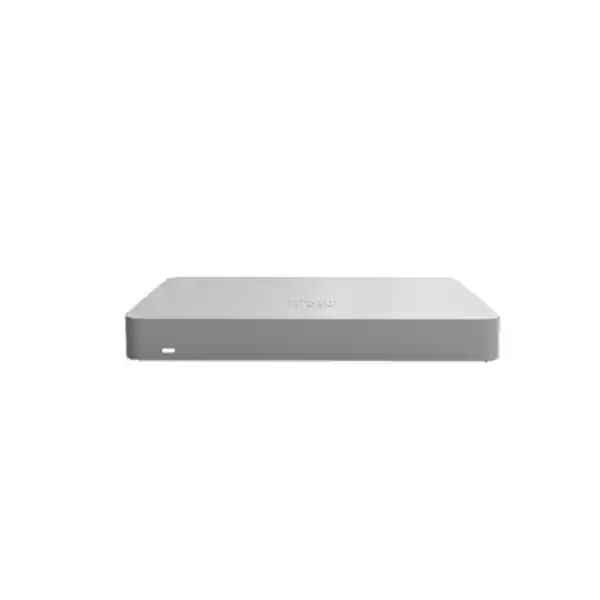
Cisco Meraki MX67 is a compact security and SD-WAN appliance positioned by Cisco for small branches with up to 50 users. It brings centralized Meraki Dashboard management, next-generation firewall capabilities, Auto VPN, traffic shaping, monitoring and branch connectivity into a sleek desktop or wall-mount format. For Tanzanian businesses, the value is not simply the appliance itself: the important buying decision is whether its verified capacity, interfaces, security subscription and deployment model match the branch, internet connection and applications that must be protected.
What is the Cisco Meraki MX67?
The Cisco Meraki MX67 is part of the Meraki MX security and SD-WAN family. Cisco currently lists it as a small-branch appliance supporting up to 50 users. Official Cisco material identifies 700 Mbps firewall throughput, 400 Mbps advanced security services throughput in the MX family datasheet, and four fixed Gigabit Ethernet LAN interfaces. The hardware also has a dedicated Gigabit Ethernet WAN interface plus a convertible Gigabit Ethernet interface that can be used according to the deployment design. These characteristics make it relevant for smaller offices, retail branches, professional-services sites, clinics, education branches and distributed organisations that want centralized control rather than a locally managed firewall at every location.
The MX67 is managed through the Meraki Dashboard, where administrators can view connectivity, clients, application usage, VPN status and device health. Cisco documents capabilities including Auto VPN for site-to-site connectivity, application-aware traffic shaping, VLAN support, DHCP services, NAT, firewalling, role-based administration, alerts, remote packet capture and automatic firmware management. This cloud-managed approach is particularly useful where one IT team supervises several branches because policy, monitoring and troubleshooting do not depend on being physically present at every site.
A correct procurement decision must include licensing. Cisco lists MX subscription options for this model family, and the required subscription tier should be aligned with the security and management functions the organisation intends to use. Buyers should therefore compare the hardware purchase, subscription term, required security capabilities and expected lifecycle as one solution rather than treating the MX67 hardware as a standalone router.
Cisco Meraki MX67 verified specifications
| Recommended use | Small branch, up to 50 users |
| Firewall throughput | 700 Mbps |
| Advanced security services throughput | 400 Mbps according to the current MX family datasheet |
| Site-to-site VPN throughput | Consult the current Cisco datasheet and sizing guidance for the exact test context; current family material lists up to 400 Mbps in its specifications table |
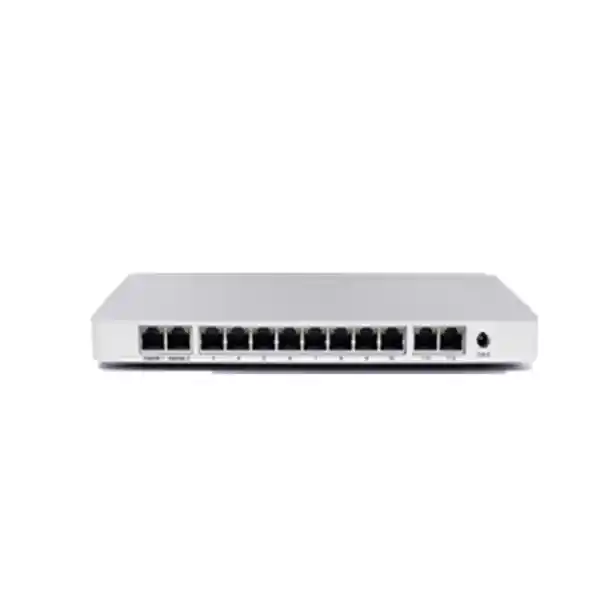
| WAN interfaces | 1 × GbE RJ45 dedicated WAN plus 1 × GbE RJ45 convertible interface |
| LAN interfaces | 4 × GbE RJ45 fixed LAN interfaces |
| Mounting | Desktop or wall mount |
| Dimensions | 239 mm × 130 mm × 27 mm |
| Weight | Approximately 0.7 kg |
| Management | Cisco Meraki Dashboard cloud management |
Performance values are vendor test figures and should be interpreted in the context of enabled services, traffic profile, VPN use and current Cisco sizing guidance. The practical design target should include growth and the security features that will actually be enabled.
Key capabilities for branch security and SD-WAN
Cloud-managed operations
The Meraki Dashboard centralizes configuration, visibility, firmware handling and troubleshooting. This model is useful when IT staff support multiple sites and want consistent policy, audit visibility and remote diagnostics without maintaining a separate management server at each branch.
Auto VPN and SD-WAN
Meraki Auto VPN can simplify site-to-site VPN deployment across branches. Policy-based routing, dynamic path selection and traffic prioritization can help organisations make better use of available WAN links where the design, uplinks and subscription support the required features.
Security controls
Cisco documents next-generation firewalling, content filtering, intrusion detection and prevention, malware-related protection options, segmentation and application visibility within the broader MX security capability set. Exact feature availability depends on the current licensing model and configuration.
Remote troubleshooting
Administrators can use cloud-based monitoring, event logs, usage statistics and remote diagnostic tools. For distributed businesses, faster visibility into WAN performance, VPN status and client behaviour can reduce the need to start every incident with an on-site visit.
How to decide whether MX67 is the right size
Do not select a firewall only by counting employees. Start with the internet circuit, peak concurrent usage, applications, VPN traffic and the security services to be enabled. A branch with thirty users handling cloud productivity and light browsing can behave very differently from a similarly sized site moving large files, maintaining continuous site-to-site VPN traffic, hosting guest Wi‑Fi and running voice or video applications. Advanced inspection also consumes processing capacity, so the correct planning number is not simply the headline firewall throughput.
Future growth matters as well. If a branch is expected to move beyond the MX67 user and throughput profile, or if planned internet upgrades are close to the appliance’s practical capacity with the desired security functions enabled, procurement teams should compare larger MX platforms before committing. Conversely, a well-sized MX67 can reduce unnecessary complexity for a smaller branch that benefits from cloud management and centralized policy.
FourTeck can help buyers assemble the requirements needed for sizing: number of users, WAN speeds, number of branches, site-to-site VPN pattern, remote-access requirements, critical applications, expected encrypted traffic, guest network needs and growth horizon. That information produces a more useful quotation than simply asking for “one firewall.”
Licensing, management and lifecycle planning
Meraki infrastructure is designed around cloud management, so licensing and subscription planning are part of the operational design. Current Cisco MX family documentation lists subscription license options for MX67 and MX68 class appliances. Buyers should verify the desired subscription tier, term and included capabilities against the current Cisco ordering documentation before purchase. This is especially important when a project requires advanced security controls, centralized analytics or specific cloud-security integrations.
For procurement teams, the right comparison is total lifecycle scope: hardware, license or subscription, configuration, migration effort, VPN changes, support arrangements and future renewal. If replacing an existing firewall, document the current public IP addressing, NAT rules, VLANs, DHCP scopes, VPN peers, remote-user method, static routes and special application rules before cutover. A structured migration avoids discovering critical dependencies during the maintenance window.
Administrators should also maintain an inventory of organisation and network ownership, administrator roles, multi-factor authentication, change history and renewal dates. Cloud management makes distributed administration easier, but governance still depends on clear ownership and access control.
Compatibility and integration considerations
MX67 can sit at the edge of a broader business network that includes managed switches, Wi‑Fi access points, servers, IP phones, cameras and cloud applications. The firewall does not need every downstream device to be Meraki, but organisations using Meraki switching and wireless can benefit from the operational consistency of a single dashboard. In mixed-vendor environments, confirm VLAN design, routing boundaries, authentication, logging and management responsibilities before deployment.
For branch connectivity, document each WAN circuit and whether dual-uplink failover or traffic selection is required. Cisco’s MX platform supports automatic Layer 3 failover and SD-WAN capabilities within the supported design. If cellular resilience is a priority, compare the standard MX67 with relevant cellular gateway options or MX variants rather than assuming integrated LTE is present in the base MX67; the MX67C is the variant with integrated cellular capability.
Remote access should be selected based on the organisation’s security model and client requirements. Cisco documents native IPsec and Cisco Secure Client options within the MX family. Site-to-site connectivity can use Auto VPN between Meraki-managed networks or standards-based IPsec where interoperability is required. Exact interoperability and authentication details should be verified against current documentation for the peer platform.
Related FourTeck Tanzania resources
Start with the FourTeck Tanzania technology solutions overview when the MX67 is part of a wider office or branch project. It explains how networking, cybersecurity, Wi‑Fi, servers, voice and physical-security systems fit together rather than treating each device as an isolated purchase.
The FourTeck Tanzania business technology shop provides buying guidance across firewalls, switches, wireless access points and supporting infrastructure. It is useful when the MX67 quotation also needs complementary network components or when procurement is comparing a broader bill of materials.
Use the FourTeck Tanzania services page to review planning, installation, configuration, documentation and support activities that may surround a firewall migration. A security appliance often needs coordinated work across WAN handoff, VLANs, switching and user access.
The FourTeck Tanzania company overview provides context on the integrated IT, telecom and security approach used for business projects. This matters when a firewall is one part of a larger branch or office infrastructure rollout.
For a project-specific discussion, use the FourTeck Tanzania contact page. Provide the internet speed, user count, number of sites, VPN requirement and desired license term so the quotation can be prepared against a defined requirement.
When comparing network security with the downstream LAN, review the network switching and LAN infrastructure guidance. The switch design determines VLAN delivery, endpoint connectivity, PoE capability and uplink capacity below the MX67.
For branch wireless design, the Wi‑Fi and wireless access point guidance explains coverage, capacity and segmentation considerations. Guest Wi‑Fi, staff Wi‑Fi and operational devices can be mapped to security policies at the edge.
The firewall, VPN and network security guidance provides broader context for segmentation, remote access and secure network architecture when the MX67 is being compared with another firewall approach.
Cisco Meraki MX67 Tanzania
Businesses evaluating Cisco Meraki MX67 in Tanzania are often trying to solve more than a basic internet-routing requirement. A branch may need secure access to cloud applications, a VPN link to headquarters, controlled guest Wi‑Fi, segmented networks for staff and devices, and centralized monitoring for an IT team that cannot be physically present at every location. The MX67 is well suited to this type of small-branch design when its capacity aligns with the actual internet traffic and enabled security services.
A Tanzania procurement brief should start with the number of users and devices, but it should not end there. Specify the primary and backup internet services, expected bandwidth, whether WAN addresses are static or dynamic, the number of branch VPN peers, remote-user requirements, critical SaaS applications, voice or video usage, and any public-facing services. Where an organisation runs cameras, IP phones or guest networks, identify the VLAN and access-control requirements as well. These details determine whether the MX67 can be configured cleanly within the wider site architecture.
Power and physical installation also deserve attention. The MX67 can be placed on a desktop or wall mounted, but the surrounding network should still be organised with reliable power, appropriate surge or UPS protection, labelled cabling and controlled access. If the branch experiences connectivity variability, consider a second WAN path and define failover expectations. For cellular resilience, compare an external cellular design or a cellular-capable Meraki option rather than assuming the standard MX67 has an integrated modem.
For quotation in Tanzania, include the exact model, desired subscription term, deployment location, internet speeds, VPN topology, current firewall platform and expected migration window. FourTeck can then help structure the hardware, licensing and implementation scope without making unsupported assumptions about stock or lead time. The same process is useful whether the requirement is a single office in Tanzania or one node in a wider East African network.
Cisco Meraki MX67 Dar es Salaam
In Dar es Salaam, the Cisco Meraki MX67 can fit branch offices, professional firms, retail sites, clinics, logistics operations and other organisations that need a manageable security gateway without the operational overhead of a large data-centre firewall. The business case is strongest where centralized visibility matters: IT staff can monitor uplinks, clients, application usage and VPN health through the Meraki Dashboard rather than relying only on local access to the appliance.
Dar es Salaam sites often combine several business systems behind the same edge connection. Staff laptops may use cloud productivity services, IP phones may require consistent latency, cameras may upload or stream video, guest users may share internet access, and branch applications may depend on a VPN to another site. Before selecting the MX67, map these traffic classes and determine which need priority, which should be isolated, and which must reach internal resources. Meraki traffic shaping, VLANs and security policies can then be aligned to the business requirement instead of applied generically.
For a branch migration in Dar es Salaam, capture the existing firewall configuration well before the planned cutover. NAT entries, DHCP reservations, VLAN IDs, static routes, VPN pre-shared keys, remote-access users, public DNS dependencies and ISP handoff details are common sources of unexpected downtime when they are discovered late. A staged design can also include a test plan covering internet access, VPN reachability, voice, business applications, guest Wi‑Fi and management visibility.
Procurement teams should request an MX67 quotation with the required subscription tier and term stated clearly. If the site is expected to add users, increase internet bandwidth or enable more intensive inspection, ask for a sizing comparison with the next suitable MX platform as well. This gives the business a decision based on lifecycle capacity, not only initial hardware cost.
Cisco Meraki MX67 Mwanza
For organisations in Mwanza, MX67 can be considered where a small branch needs secure internet access, a straightforward site-to-site VPN and centralized administration from another city or headquarters. The cloud-managed model is helpful for distributed operations because routine visibility and many troubleshooting actions can be performed remotely. This does not remove the need for good local infrastructure, but it can reduce the number of incidents that require a technician to begin diagnosis physically at the site.
Connectivity resilience should be part of the Mwanza design from the beginning. Document the primary internet service and identify whether a second wired or cellular path is required for business continuity. If dual uplinks are used, decide which applications should fail over automatically and whether some traffic should prefer one connection. Meraki SD-WAN capabilities can support policy-based path decisions, but the design should reflect the quality and characteristics of the actual circuits rather than assume every uplink behaves the same.
Network segmentation is another practical consideration. A branch may have office PCs, guest wireless, IP phones, printers, cameras and operational devices. Placing every device in one flat network can make policy and troubleshooting harder. VLAN separation combined with defined firewall rules creates clearer trust boundaries. The downstream switch must support the required VLANs and provide sufficient ports and PoE where phones, access points or cameras need power.
When requesting pricing for Mwanza, include whether the project requires new switching, wireless access points, UPS protection, rack work or cabling alongside the MX67. A complete bill of materials prevents the firewall from arriving into an environment that lacks the interfaces, power protection or LAN readiness needed for deployment. Licensing term and renewal planning should be stated explicitly as part of the procurement record.
Cisco Meraki MX67 Arusha
Cisco Meraki MX67 can suit Arusha organisations that need a secure and centrally managed gateway for a small office, hospitality administration site, education branch, professional services office or distributed business location. The platform’s combination of firewall, VPN and SD-WAN functions can simplify branch design, especially when the organisation already uses or plans to use Meraki cloud management for other network components.
Arusha buyers should define application priorities before configuration. Cloud ERP, reservation systems, payment applications, video meetings, voice, remote desktop and general internet browsing do not have identical network requirements. A branch that depends heavily on real-time applications may need careful traffic shaping and a backup WAN strategy. If guest internet is offered, isolate it from business resources and apply appropriate bandwidth and access policy so guest usage cannot interfere with critical operations.
Remote-management governance is equally important. Meraki Dashboard administrator accounts should follow organisational access-control standards, including strong authentication, appropriate role assignment and clear ownership. Change logging and alerting are valuable only when someone is responsible for reviewing them. For organisations with several branches, templates can help create consistency, but each location should still have documented local WAN, VLAN and device information.
For procurement in Arusha, ask for a design that includes the MX67 subscription requirement, expected security services, VPN topology and WAN resilience. If the project also includes Wi‑Fi or switching, state the number of access points, PoE devices and VLANs so the edge and LAN can be sized together. This integrated approach gives a more predictable branch deployment than ordering the firewall first and discovering infrastructure dependencies during installation.
Cisco Meraki MX67 Dodoma
In Dodoma, the MX67 is relevant to organisations that want cloud-managed branch security with simplified VPN and centralized operational visibility. Government-adjacent offices, associations, education sites, NGOs, professional firms and growing businesses may all have branches where local IT resources are limited but reliable policy enforcement and connectivity to central systems remain important. The MX67 can provide that edge role when user count, throughput and security-service requirements fall within the model’s intended profile.
A useful Dodoma sizing exercise considers peak traffic rather than average traffic. Determine what happens during busy periods: software updates, cloud backup, video conferencing, large file transfers and multiple simultaneous VPN sessions can overlap. Then compare those demands with the throughput available when the intended security services are enabled. The aim is to preserve headroom for growth and unexpected peaks rather than operate the firewall continuously near its practical limit.
Branch policy should be documented in business terms. Identify who may access finance systems, which devices belong to guests, whether cameras should reach only required services, and how administrators connect remotely. Translate those requirements into VLANs, firewall rules and VPN access. This makes future review easier because each technical rule has a clear purpose. It also helps avoid broad “allow any” policies that accumulate over time.
When requesting a quotation for Dodoma, include the current internet provider handoff, public IP details if applicable, existing firewall model, switch capability and proposed cutover window. If a second WAN link is being considered, provide its expected bandwidth and medium. FourTeck can use this information to define a practical configuration and migration scope while keeping unverified delivery or stock assumptions out of the proposal.
Cisco Meraki MX67 UAE
For organisations with UAE operations connected to Tanzanian or African branches, Cisco Meraki MX67 can be used as a standardized small-site edge appliance where the user and throughput profile fits. A common platform across regions can simplify configuration templates, monitoring, VPN architecture and administrator training. The benefit is operational consistency: the same dashboard can provide visibility into branch status even when sites are managed by a central team in another country.
Cross-region designs should document internet breakout policy and inter-site traffic. Some applications may be accessed directly from the internet, while others may require VPN connectivity to a data centre, cloud environment or headquarters. Auto VPN can simplify Meraki-to-Meraki connectivity, while standards-based IPsec can be considered for third-party peers. Routing design should prevent unnecessary hairpinning of traffic when local internet access is more appropriate and organisational policy allows it.
Licensing should be coordinated across the organisation. Procurement teams should verify current Cisco subscription terms and align renewal dates where practical so branch licenses are easier to manage. If a UAE site requires higher bandwidth, a larger user population or more demanding security inspection than the MX67 target profile, choose the platform by local requirements rather than forcing the same hardware everywhere simply for standardization.
FourTeck’s wider regional network can support cross-market planning. For UAE-related technology procurement and infrastructure context, see FourTeck UAE, while the Tanzania page can remain the reference point for the Tanzanian branch. The objective should be a consistent architecture with locally appropriate sizing, not duplicated configurations that ignore differences in bandwidth and workload.
Cisco Meraki MX67 Uganda
In Uganda, Cisco Meraki MX67 can provide a manageable branch edge for smaller offices that need centralized security, VPN connectivity and remote monitoring. Distributed companies operating between Uganda and Tanzania may value a common Meraki architecture because policy and branch health can be managed through the same cloud platform. A standard template can simplify rollout, but each Uganda site should still have its own documented WAN and LAN details.
The first procurement question is whether the MX67 has sufficient headroom for the actual site. Confirm primary and secondary internet speeds, number of active users, application mix and VPN traffic. If the branch uses cloud backup, high-resolution video, large software downloads or frequent video conferencing, include these in the sizing discussion. Security inspection requirements should also be clear because enabled services influence practical throughput.
For organisations linking Uganda to other regional offices, VPN design should account for the desired topology. A hub-and-spoke model may be appropriate when most applications are centralized, while more direct site relationships can be useful where branches communicate with each other. Meraki Auto VPN can simplify supported Meraki deployments, but address planning must avoid overlapping subnets between sites. Resolve duplicate private IP ranges before rollout rather than after tunnels are built.
For Uganda-specific procurement and related infrastructure, the FourTeck Uganda website can provide regional context. When preparing an MX67 request, include license term, WAN information, existing firewall configuration and related switching or Wi‑Fi requirements. This supports a more accurate scope and reduces assumptions during implementation.
Cisco Meraki MX67 Kampala
Kampala branches can use MX67 where a small office needs secure connectivity, central monitoring and manageable VPN access to headquarters or cloud resources. In a dense business environment, the branch edge may support many simultaneous services: SaaS, voice, guest Wi‑Fi, payment traffic, remote support and collaboration. The firewall design should separate these workloads logically and prioritize business-critical traffic where necessary.
A dual-WAN plan can be valuable for businesses where internet downtime affects operations. The MX family supports WAN failover and SD-WAN functions, but the secondary circuit should be selected intentionally. Two circuits that share the same physical last-mile dependency may not provide the resilience expected from “two ISPs.” Procurement teams should therefore ask connectivity providers about access path diversity and define the applications that must remain available during failover.
Local network readiness is another factor. If the Kampala site has unmanaged switching, a flat address space and undocumented cabling, the firewall project may be a good opportunity to clean up the LAN. Managed switching and structured VLANs make it easier to separate staff, guest, voice and security devices. Clear labels and an updated network diagram reduce future troubleshooting time.
When requesting an MX67 quotation for Kampala, state whether configuration and migration support are required in addition to hardware and subscription. Share the planned maintenance window and any systems that cannot tolerate interruption. A detailed scope should identify what will be tested after cutover, who will validate business applications, and what rollback approach will be used if a critical dependency is missed.
Cisco Meraki MX67 Arua
For a smaller branch in Arua, the operational simplicity of the Meraki cloud model can be as important as firewall performance. A central IT team can view the appliance remotely, monitor WAN status and inspect events without relying on complex local management. This can be useful where technical staff are not permanently stationed at the branch, provided the site has suitable connectivity and the device is sized correctly.
Resilience planning should consider the actual availability of alternative connectivity. If a secondary fixed circuit is not practical, an external cellular approach may be evaluated. The standard MX67 does not include the integrated LTE modem of the MX67C, so procurement should distinguish between models and avoid assuming that cellular backup is built into every MX67 variant. The choice should be documented before ordering.
Remote troubleshooting works best when the branch infrastructure is documented. Record the WAN handoff, switch uplink, VLAN IDs, IP ranges, Wi‑Fi networks and critical local devices. If a branch loses connectivity completely, an accurate diagram helps local staff follow basic checks while the central team determines whether the issue is power, ISP service, cabling or configuration.
Arua procurement should include the right accessories and power strategy. Confirm mounting location, outlet availability, UPS requirements and cable paths before shipment. If the deployment includes a switch or access point refresh, include those items in the same design. This reduces the risk of installing a modern security appliance while leaving the LAN with unmanaged bottlenecks or unsupported segmentation requirements.
Cisco Meraki MX67 Mbarara
Cisco Meraki MX67 can support a small Mbarara business branch that needs a secure internet edge, VPN connectivity and centralized visibility. The strongest fit is a site where the number of users and traffic remain within the model’s intended scale and the organisation values remote administration. Buyers should examine both current needs and likely growth over the proposed hardware lifecycle.
Before configuration, define the trust zones within the site. Employee devices, visitor Wi‑Fi, cameras, voice endpoints and operational equipment should not automatically share unrestricted access. VLANs and firewall policies can create boundaries, while DHCP and addressing conventions make the site easier to support. If the branch connects back to headquarters, ensure its internal subnets are unique across the organisation to prevent VPN routing conflicts.
Bandwidth management can also improve user experience. Business applications and voice traffic may need priority over large recreational downloads or guest traffic. Meraki application visibility and traffic shaping can help administrators understand where bandwidth is going and apply sensible policy. The objective is not to block everything, but to keep important services usable during peak periods.
For an Mbarara quotation, provide the expected user count, internet speed, preferred license term, VPN requirements and any downstream switch or Wi‑Fi changes. If remote configuration is planned, ensure the ISP handoff and addressing information are available in advance. A deployment checklist should cover internet access, DNS, VPN, business applications, guest access and dashboard monitoring after the cutover.
Cisco Meraki MX67 Gulu
For organisations operating in Gulu, the MX67 can be considered as a small-branch security gateway where remote manageability and consistent policy are priorities. The cloud dashboard provides a common operational view, which is useful for organisations with branches spread across several cities. That benefit is strongest when the organisation also standardizes documentation, naming conventions and alerting procedures across sites.
Connectivity planning should include failure scenarios. Ask what happens if the primary ISP is unavailable, if power is lost briefly, or if a switch uplink fails. A UPS can support short power interruptions, while a secondary WAN path can reduce internet downtime. The MX platform supports failover features, but resilience depends on the whole path, not only the firewall. Modems, switches and other critical devices may also need protected power.
Security policy should be simple enough to maintain. Start with a small number of clearly defined network segments and only allow the access that business systems require. Review rules periodically as applications change. Remove temporary exceptions that are no longer needed. Meraki’s centralized visibility can make review easier, but a clean policy still depends on disciplined administration.
For Gulu projects, a request should state whether the MX67 is replacing an existing firewall or being installed at a new site. Replacement projects need configuration discovery and a cutover plan, while new sites need addressing, VLAN and WAN design from scratch. Including these details in the quotation request helps separate hardware cost from the engineering work needed for a successful deployment.
Cisco Meraki MX67 Kenya
Kenyan offices connected to Tanzanian operations may use MX67 as a standardized branch security appliance where the site profile fits. A shared Meraki platform can simplify regional VPN design and centralized monitoring, particularly for companies with small offices in Nairobi or other business centres and a central IT team managing multiple countries.
Regional standardization should not override local sizing. Compare the actual Kenya branch WAN speed, number of users, cloud application usage, security inspection needs and expected VPN traffic with the model’s capability. If the site has a faster internet circuit or more intensive traffic than the Tanzania branch, it may need a larger MX model even if central management remains the same.
The regional VPN design should use a consistent IP addressing plan. Duplicate private subnets are a common problem when independently built branches are connected later. Establish address ranges for each country or site before deployment, and document routes and local internet breakout policy. This makes future branch additions easier and reduces troubleshooting complexity.
For Kenya-specific product and infrastructure planning, visit FourTeck Kenya. For cross-border projects, procurement teams can align licensing terms, naming standards and configuration templates while still selecting the correct hardware for each branch. A well-designed regional deployment balances standard operations with site-specific capacity.
Cisco Meraki MX67 Kuwait
In Kuwait, MX67 can serve a small branch that needs centrally managed security and VPN connectivity, especially as part of a wider organisation using Meraki across multiple regions. The appliance’s compact form and cloud operating model can suit offices where local technical resources are limited and central IT wants consistent monitoring and policy control.
The site’s internet service should be assessed carefully. High-speed business connectivity can exceed what is sensible for an MX67 once advanced inspection, VPN and future growth are considered. Rather than choosing the model solely because the branch has fewer than 50 users, compare security-service throughput and real application patterns. If the branch requires greater performance, move to a larger platform while retaining the Meraki management model.
Cross-border VPN design should consider application location. If users access cloud services directly, local internet breakout may be more efficient than tunnelling all traffic through another country. If applications are hosted at headquarters, secure site-to-site connectivity remains essential. The routing policy should reflect security and performance requirements together.
For Kuwait procurement context, see FourTeck Kuwait. When a Kuwait and Tanzania branch are part of one project, provide both sites’ bandwidth, subnets, license terms and application dependencies. This allows the architecture to be planned as a regional network rather than two unrelated firewall purchases.
Cisco Meraki MX67 Ghana
For a Ghana branch, Cisco Meraki MX67 can be considered where a compact cloud-managed security appliance is required for a small user population. Organisations with multiple African offices may benefit from a common dashboard because branch status, VPN connectivity and policy changes can be supervised centrally without deploying separate management infrastructure in every country.
A Ghana site assessment should document WAN performance, user and device count, applications, guest access, remote access and any local servers. Determine whether the branch needs one or two internet links and how failover should behave. If a backup link has much lower bandwidth, traffic policy may need to restrict nonessential activity during failover so critical applications remain usable.
Subscription planning should be included from the beginning. Current Cisco licensing options should be checked for the features required by the organisation, and renewal ownership should be clear. Regional deployments benefit from a central renewal register so no branch is overlooked simply because procurement took place in different countries or at different times.
For Ghana-specific technology requirements, visit FourTeck Ghana. A cross-regional request can include the Tanzania and Ghana sites in one network design, with unique addressing, defined VPN relationships and site-specific sizing. This approach makes future expansion to additional branches easier.
Cisco Meraki MX67 Nigeria
Cisco Meraki MX67 can support a small Nigerian branch where centralized management, VPN and policy visibility are important, but sizing deserves particular attention when the site has high-bandwidth circuits or many cloud-heavy users. User count is only one dimension of firewall selection. Security inspection, encrypted traffic, site-to-site VPN and application demand can be more important than the number of desks.
For multi-site organisations, the Meraki Dashboard can reduce administrative fragmentation. Teams can use common network names, templates and monitoring practices across branches. However, security policies should still reflect local roles and applications. A sales office may need different access from a technical site, warehouse or service branch even when the same appliance family is used.
WAN resilience should be designed around real failure modes. If two internet circuits depend on the same local fibre route, the branch may still lose both during one physical incident. Where continuity is important, evaluate path diversity and consider different access media. The firewall’s failover capability is only effective when the upstream connectivity actually provides independent alternatives.
For regional procurement information, see FourTeck Nigeria. When connecting Nigeria and Tanzania offices, include IP addressing, application locations, VPN topology and bandwidth in the design brief. This enables consistent security policy while keeping the hardware choice appropriate to each site’s workload.
Cisco Meraki MX67 Seychelles
For businesses in Seychelles, the MX67 can be relevant to small offices, hospitality administration sites, professional firms and branch operations that benefit from cloud-managed security and remote support. Centralized visibility is especially valuable where IT personnel may support the site from another location. The dashboard can help identify WAN status, client activity and VPN health before an on-site visit is considered.
Internet continuity can be a key design concern for island operations, so the branch should define how it will respond to WAN interruptions. If two connectivity options are available, document their speed, addressing and expected failover behaviour. If a lower-bandwidth backup service is used, prioritize essential business applications and limit high-volume noncritical traffic during failover.
Hospitality and customer-facing environments may require strong separation between guest and business networks. Guest Wi‑Fi should not provide access to internal systems, while operational devices may need their own segment. The MX67 can enforce edge policy, but downstream managed switching and correctly configured wireless networks are needed to carry those VLANs throughout the site.
A Seychelles quotation should include hardware, subscription requirements, WAN design, VPN needs and any related switching or Wi‑Fi changes. If the site is part of a regional organisation, align naming, monitoring and policy standards with other branches. This creates a consistent support model without ignoring local connectivity and capacity constraints.
FourTeck network resources for regional projects
Regional MX deployments often involve more than one country. FourTeck provides broader company and solution context, while FourTeck Africa is relevant when planning multi-country African infrastructure. Country-focused sites such as FourTeck Kenya, FourTeck Uganda, FourTeck Ghana and FourTeck Nigeria can support regional research and procurement discussions. Use these resources to coordinate requirements while keeping each branch’s sizing and local environment distinct.
Quotation checklist for Cisco Meraki MX67
✓ Number of users and network devices
✓ Primary and secondary WAN speeds
✓ Public IP and ISP handoff information
✓ Number of sites and VPN topology
✓ Remote-access requirement
✓ Required subscription tier and term
✓ Current firewall and configuration export
✓ VLANs, DHCP scopes and static routes
✓ NAT and published services
✓ Guest Wi‑Fi and segmentation needs
✓ Critical applications and traffic priorities
✓ Planned growth and internet upgrades
Frequently asked questions
How many users does Cisco recommend for the MX67?
Cisco positions the MX67 as a small-branch appliance for up to 50 users. The final sizing decision should also consider WAN speed, VPN demand, enabled security services, application mix and growth.
What is the firewall throughput of the MX67?
Current Cisco product material lists 700 Mbps firewall throughput for the MX67. The current MX family datasheet lists 400 Mbps advanced security services throughput, so buyers should size against the security functions they plan to enable rather than only the headline firewall figure.
Does the MX67 include Wi‑Fi?
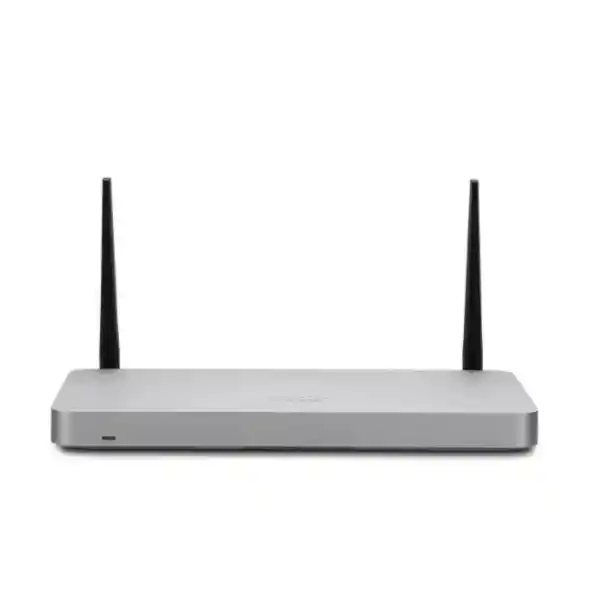
The standard MX67 does not provide the integrated wireless capability associated with the MX67W variant. If integrated Wi‑Fi is required, compare the correct variant or use dedicated wireless access points as part of the branch design.
Does the MX67 have integrated LTE?
No. Integrated cellular capability is associated with the MX67C variant. The standard MX67 can be designed with supported external backup connectivity where appropriate.
Can MX67 connect branch offices with VPN?
Yes. Meraki MX supports site-to-site VPN, including Auto VPN for Meraki-managed deployments, and standards-based options for supported third-party scenarios. Topology, addressing and peer compatibility should be confirmed before deployment.
Is a Meraki subscription required?
Meraki MX is a cloud-managed platform and Cisco publishes subscription license options for MX67-class appliances. Confirm the current tier, term and included capabilities required for your project during quotation.
What should I provide before requesting an MX67 quote?
Provide user count, internet bandwidth, number of sites, VPN requirements, required license term, current firewall details, VLANs and expected growth. This gives the supplier enough context to check sizing and implementation scope.
Decision recap
Choose Cisco Meraki MX67 when a small branch fits its performance and user profile and the organisation values centralized cloud management, SD-WAN, VPN and security policy in one platform. Do not choose it only because the site has fewer than 50 users. Compare internet speed, advanced security throughput, VPN load, subscription needs and future growth first.
For a Tanzania quotation, FourTeck can help translate your branch requirements into a bill of materials and deployment scope. Share the site location, WAN details, user count, current network, required licensing term and any planned switching or Wi‑Fi changes.
Consultation panel
A productive MX67 consultation should answer five questions: Is the appliance large enough for the real traffic profile? Which subscription capabilities are required? How will branches and remote users connect? What must be migrated from the existing firewall? Which switching, Wi‑Fi, cabling and power dependencies need to be included? Preparing these answers before purchase reduces implementation risk.



Reviews
There are no reviews yet.