

Cisco Meraki CW9176I Tanzania
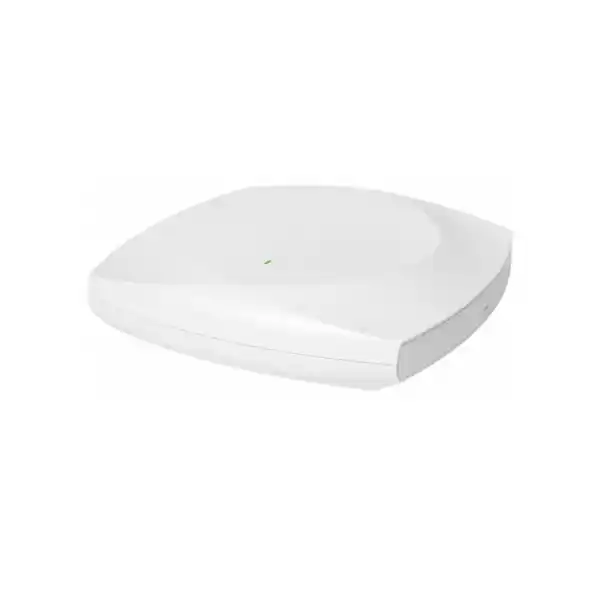
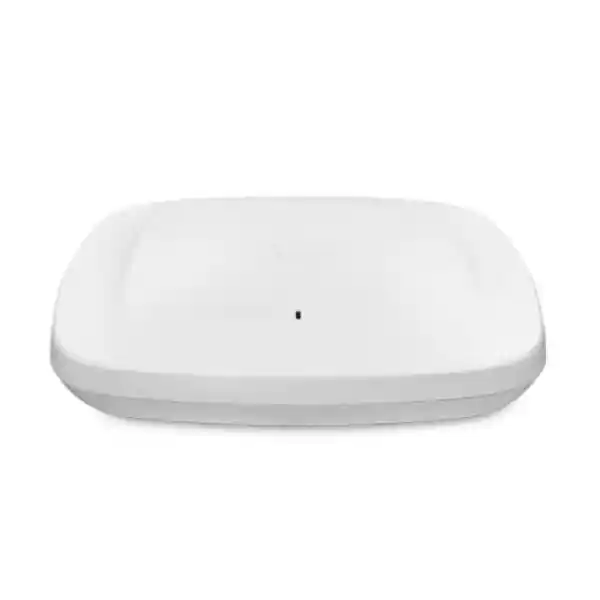
The Cisco Meraki CW9176I is a high-performance indoor Wi-Fi 7 access point designed for organizations that need more wireless capacity, stronger spectrum efficiency and centralized operational visibility. Cisco positions the CW9176I for high-density and critical environments, with 4×4 wireless operation across 2.4 GHz, 5 GHz and 6 GHz, an aggregate frame-rate design of up to 18 Gbps in the documented tri-radio configuration, a dedicated scanning radio for wireless intrusion detection, spectrum analysis and RF optimization, an IoT radio, Bluetooth Low Energy capabilities, built-in location-related functions and a single multigigabit Ethernet port supporting speeds through 10 Gbps. For Tanzanian businesses, the practical value is not simply higher peak wireless speed. The larger design question is whether switching, PoE power, structured cabling, client-device capability, security policy and RF planning are ready to take advantage of the access point. FourTeck helps customers approach the CW9176I as part of a complete WLAN architecture rather than an isolated hardware purchase.
Wi-Fi 7 capacity
The CW9176I supports 802.11be capabilities including 4096-QAM, multi-link operation and channel widths up to 320 MHz in the 6 GHz band, subject to regulatory availability, client support and configuration.
10 GbE uplink
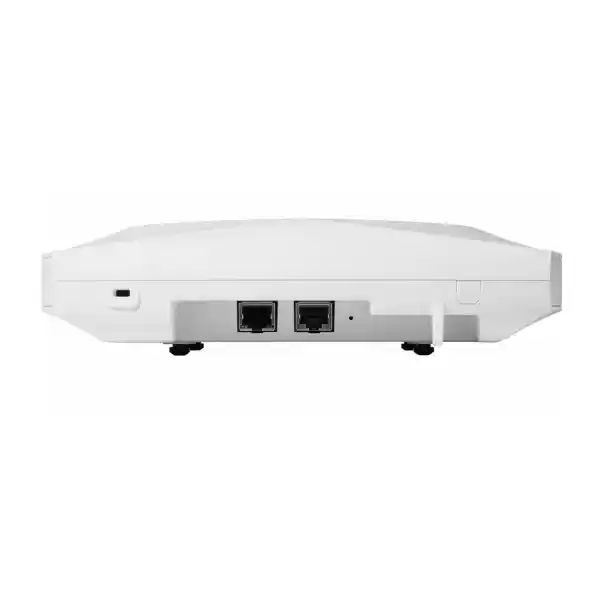
A single RJ45 interface supports 100 Mbps, 1 Gbps, 2.5 Gbps, 5 Gbps and 10 Gbps Ethernet, helping prevent the wired uplink from becoming an unnecessary bottleneck in demanding deployments.
Security and RF visibility
A dedicated scanning radio supports continuous WIDS/WIPS functions, spectrum analytics and location-related visibility while client-serving radios remain available for normal wireless traffic.
What the Cisco Meraki CW9176I solves
Modern wireless networks increasingly carry voice, video meetings, cloud applications, collaboration traffic, point-of-sale systems, handheld devices, guest sessions and connected equipment at the same time. A legacy access point may still show acceptable signal strength while struggling with airtime contention, channel congestion or high client density. The CW9176I is intended for the next generation of enterprise wireless, where additional spectrum in 6 GHz and Wi-Fi 7 features can improve efficiency when compatible clients and regulatory conditions are present. Its flexible radio design can also support different band strategies, including dual 5 GHz operation in appropriate deployments.
For procurement teams, the central question is therefore not only “Is CW9176I faster?” but “Is CW9176I the right fit for this site?” A good assessment considers active client count, concurrent application demand, floor layout, wall materials, interference, ceiling height, AP mounting position, switch uplink speed, PoE capability, cabling category, internet bandwidth, VLAN design, authentication requirements, guest access, monitoring and licensing. The strongest results come when these dependencies are checked before the access points are installed.
Verified CW9176I technical highlights
| Area | CW9176I capability |
|---|---|
| Wireless standard | 802.11be compatible Wi-Fi 7 with backward support for earlier enterprise Wi-Fi generations as documented by Cisco. |
| Client-serving bands | 2.4 GHz, 5 GHz and 6 GHz with software-configurable radio flexibility. |
| Radio architecture | 4×4 with four spatial streams on documented client-serving radios, plus dedicated scanning and IoT functions. |
| Aggregate frame rate | Up to 18 Gbps in Cisco’s documented tri-radio Meraki configuration. |
| Ethernet | One multigigabit RJ45 port supporting through 10GBASE-T. |
| Power | Power over Ethernet support with operational features dependent on negotiated PoE level; project designs should verify switch or injector capability. |
| Security | WPA2/WPA3 options, 802.1X-related enterprise authentication support, Air Marshal WIDS/WIPS and segmentation features in supported management modes. |
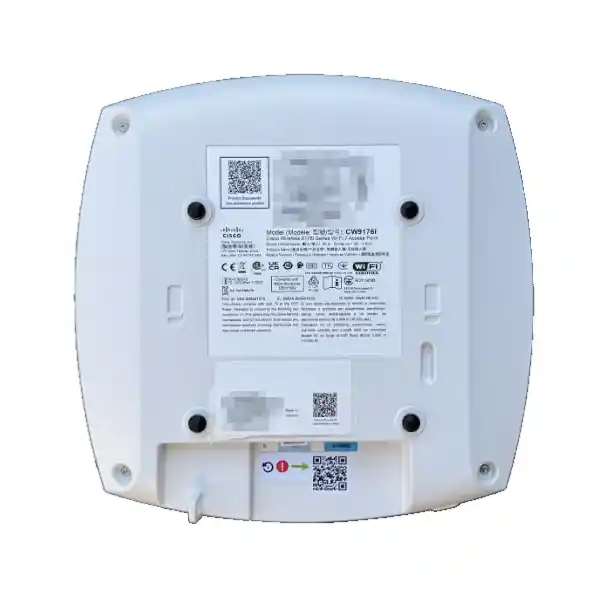
| Physical model | Indoor access point with internal omnidirectional antennas; approximately 24 x 24 x 5.1 cm and 1.56 kg according to Cisco documentation. |
Management, licensing and deployment choice
The CW9176I belongs to Cisco’s unified wireless hardware approach and can be used with Meraki cloud management or supported Cisco Catalyst management, depending on the chosen deployment model, software and licensing. In Meraki-managed deployments, organizations gain centralized dashboard-based visibility and configuration without requiring a traditional on-site wireless controller. Catalyst-oriented environments can integrate the same class of hardware with supported Catalyst 9800 infrastructure. This management flexibility is valuable for organizations standardizing across multiple buildings or gradually modernizing existing Cisco wireless networks.
Licensing should be treated as part of the bill of materials, not as an afterthought. Cisco documentation states that a Cisco Networking Subscription is required for its Wi-Fi 7 access points, with appropriate subscription selection depending on the desired feature set and management design. A quotation should therefore identify the access point hardware, management mode, subscription term, PoE source, switch uplink requirement, optics or cabling where applicable, mounting needs and professional services separately. Buyers should also confirm country regulatory approval for the required bands and features before final deployment.
Cisco Meraki CW9176I Tanzania
For organizations evaluating Cisco Meraki CW9176I in Tanzania, the strongest use cases are typically sites where wireless capacity, centralized management and long-term WLAN modernization matter more than simply obtaining basic coverage. Corporate offices, universities, private schools, hospitals, hotels, conference facilities, financial organizations, retail groups and technology-driven enterprises may all have environments in which large numbers of users connect simultaneously. In those spaces, a Wi-Fi 7 design can provide access to new spectrum and more efficient radio techniques, but only when the full network is prepared. The access point’s 10 GbE-capable port deserves particular attention because a legacy 1 GbE switch port can limit the benefit of a higher-capacity WLAN. PoE capability, cable quality, VLAN design and upstream switching should therefore be reviewed at the same time as the AP specification.
A Tanzania project should also consider the client mix. Many existing laptops, phones, scanners and IoT devices will continue using 2.4 GHz or 5 GHz, while newer devices can benefit from 6 GHz and Wi-Fi 7 features. That means the right design is rarely “replace every AP and expect an immediate speed multiplier.” Instead, the CW9176I can be positioned at high-density or high-value areas first: meeting zones, executive floors, training rooms, customer spaces, classrooms, healthcare work areas or busy operational environments. RF planning should account for wall construction, metal shelving, adjacent networks, floor separation and the fact that higher-frequency signals generally behave differently through obstacles.
FourTeck Tanzania can be considered as part of a wider network planning conversation covering wireless access points, switching, firewall policy, structured cabling and power protection. The FourTeck Tanzania technology solutions overview explains how Wi-Fi, switches, security and supporting infrastructure can be planned together. For a CW9176I quotation, provide site type, approximate floor area, user/device count, number of floors, existing switches, internet speed, current wireless platform and preferred management approach. This information allows a more useful bill of materials than requesting only a unit price.
Cisco Meraki CW9176I Dar es Salaam
Dar es Salaam organizations often operate in offices, hotels, retail properties, education facilities, logistics environments and multi-tenant buildings where wireless demand changes considerably by time of day and by floor. A CW9176I deployment in Dar es Salaam should begin with capacity planning rather than a rough count of rooms. High-density meeting areas, reception spaces, training rooms and shared work areas may require different AP placement and channel strategies from private offices. The CW9176I’s 2.4 GHz, 5 GHz and 6 GHz capabilities offer flexibility, yet practical performance depends on how many compatible clients are present, how much airtime they consume and how effectively the APs can reuse available spectrum without excessive co-channel interference.
For a new office or refurbishment, evaluate the wired network before ceiling installation starts. A Wi-Fi 7 access point can place greater demand on the switch edge, making multigigabit access ports useful where higher throughput is expected. Power budgeting is equally important because the CW9176I can operate with different PoE levels, and full feature operation should be mapped against Cisco’s current power guidance. Structured cabling should be tested, labelled and routed so AP replacement or troubleshooting does not require disruptive ceiling work. If the site has multiple floors or distributed network closets, uplink and core-switch capacity should be reviewed to ensure that wireless traffic is not moved from one bottleneck to another.
Procurement teams in Dar es Salaam should request a quote that clearly separates hardware, licenses, mounting components, power requirements and implementation services. They should also identify whether cloud-managed Meraki operation or Catalyst-oriented management aligns with internal IT practices. The decision may depend on existing Cisco infrastructure, staffing model, multi-site requirements, compliance preferences and desired operational visibility. For organizations with offices outside Dar es Salaam, a cloud-managed approach can simplify common policy and monitoring, while local site design still needs to account for building-specific RF conditions. A site survey or at minimum a careful floor-plan review is recommended for environments where wireless reliability supports revenue, customer service or critical operations.
Cisco Meraki CW9176I Mwanza
In Mwanza, the Cisco Meraki CW9176I can suit organizations planning enterprise wireless for offices, education, healthcare, hospitality, retail and growing branch environments where user density and application demand justify a high-capacity access point. The first planning step should be to distinguish coverage problems from capacity problems. A weak signal in a distant room may require a better AP location or an additional radio cell, while slow service in a busy hall may be caused by too many active devices competing for airtime. The CW9176I offers modern tools to address the latter, including Wi-Fi 7 features and 6 GHz support, but a high-end AP cannot compensate for unsuitable placement, poor cabling or an undersized switching layer.
Mwanza sites with mixed device populations should maintain sensible support for existing 2.4 GHz and 5 GHz endpoints while introducing 6 GHz capacity for newer equipment. Business laptops and premium mobile devices will adopt newer standards at different rates from printers, handheld scanners, sensors and older phones. WLAN design should therefore define SSIDs, VLANs, authentication policies and band strategies according to device purpose. Guest access should be isolated from internal resources, operational devices may need dedicated segmentation, and business users can be mapped to appropriate enterprise authentication. The CW9176I’s dedicated scanning and security functions can improve wireless visibility, but governance still depends on correct configuration and ongoing monitoring.
A quotation for Mwanza should include more than the number of access points. Useful information includes floor plans, wall materials, approximate concurrent users, high-bandwidth applications, current switch models, PoE availability, uplink speeds and whether the deployment must integrate with existing Cisco identity or network-management tools. Where internet connectivity is shared between multiple business services, administrators should also assess WAN capacity and firewall performance. Upgrading access points can expose bottlenecks elsewhere because users are suddenly able to reach the wired network more efficiently. A balanced project considers wireless, LAN, security and internet capacity together so that the investment produces measurable improvement rather than simply replacing visible ceiling hardware.
Cisco Meraki CW9176I Arusha
Arusha has a diverse commercial environment that includes hospitality, tourism-related operations, professional offices, education and service organizations. For these buyers, CW9176I planning should focus on user experience across changing occupancy patterns. A hotel meeting room may be lightly used for hours and then fill rapidly during an event; a training facility may have many attendees connecting at the same time; an office may need stable voice and video calls rather than maximum benchmark throughput. Wi-Fi 7 gives the CW9176I additional technical options, but the wireless design should be driven by these operational patterns rather than by the standard name alone.
In hospitality and customer-facing environments, guest networks require particular attention. Guests should receive internet access without being placed on the same trusted network as staff systems, payment infrastructure or administrative devices. Captive portal requirements, bandwidth controls, application policies and privacy expectations should be decided before deployment. Staff devices may use enterprise authentication and business VLANs, while IoT or building systems can be separated again. The CW9176I’s cloud-management capabilities can support centralized visibility, and the dedicated scanning radio assists with RF and security monitoring, but policies still need to match the business’s actual risk model.
For Arusha procurement, the physical environment also matters. Thick walls, decorative materials, open halls, outdoor-adjacent spaces and high ceilings can all affect propagation. An indoor CW9176I should be placed according to survey results or carefully modelled expectations; it should not be used as a substitute for an outdoor-rated AP where environmental exposure requires different hardware. Power and switching are equally important. Confirm PoE budget, multigigabit port availability and cable certification, then identify which locations genuinely require the CW9176I’s capacity. A mixed-model WLAN can sometimes be more cost-effective than placing the highest-specification AP in every corridor or low-density area, provided management compatibility and RF design remain consistent.
Cisco Meraki CW9176I Dodoma
Organizations in Dodoma evaluating Cisco Meraki CW9176I may include government-related offices, professional services, education, healthcare and growing business facilities that need predictable enterprise wireless. A suitable deployment begins by identifying mission-critical traffic. Video meetings, cloud productivity tools, ERP access, voice over Wi-Fi and large file transfers behave differently from casual browsing. If critical applications depend on wireless, capacity planning should account for peak concurrent use, not only the average daily device count. The CW9176I provides a strong radio platform for such environments, but service quality remains dependent on upstream switching, WAN performance, DNS, firewall rules and application architecture.
Security should be incorporated into the initial design. WPA3 capabilities, enterprise authentication, VLAN segmentation and policy enforcement can be combined according to organizational requirements. Dedicated wireless scanning can help detect rogue activity and provide RF intelligence, while access control decisions determine which users and devices can reach business systems. Administrators should also decide how guest access is handled, how temporary users are onboarded and whether personal devices are permitted on corporate networks. These decisions affect SSID count, authentication method and troubleshooting complexity. Keeping the design simple enough to operate is often more valuable than enabling every available feature.
From a purchasing perspective, Dodoma buyers should verify the exact CW9176I hardware, subscription requirements and current regulatory support for the intended bands. Quotes should identify PoE injectors only when needed; in a properly designed enterprise WLAN, suitable PoE switching may be preferable because it centralizes power and can be backed by UPS. For multi-floor buildings, AP locations should be coordinated with network closets and cabling routes before construction finishes. Documentation should record serial numbers, switch ports, cable IDs, AP names, floor locations and management settings. These operational details make future support, replacement and expansion significantly easier than an installation where devices are mounted without a clear asset and network map.
Cisco Meraki CW9176I UAE
For UAE organizations, the CW9176I is relevant to offices, hospitality properties, retail environments, campuses and high-density commercial buildings that are refreshing wireless infrastructure toward Wi-Fi 7. The UAE market commonly includes modern switching estates and high-bandwidth internet connectivity, so one important design question is whether the access layer can deliver multigigabit Ethernet and adequate PoE to each high-performance AP. If an organization installs Wi-Fi 7 APs on legacy gigabit-only switch ports, it may gain better radio efficiency while leaving substantial wired limitations in place. Network refresh planning should therefore compare the cost and benefit of AP replacement, access-switch upgrades, uplink changes and cabling verification as a unified project.
Another consideration is management consistency across branches or properties. Meraki cloud management can give distributed IT teams centralized monitoring and policy control, while Cisco’s unified hardware strategy offers flexibility for organizations aligned with Catalyst management. The best mode depends on operational practice, licensing strategy and existing network architecture. Wireless security should integrate with identity, segmentation and firewall policy instead of being treated as a separate layer. In visitor-heavy settings, guest access, captive portal behavior and application controls should be documented. In corporate spaces, enterprise authentication and device onboarding should support the organization’s identity platform and endpoint policies.
Regional projects can also benefit from coordinated sourcing and design standards. FourTeck’s Africa IT solutions resource provides a broader network context for organizations operating across multiple countries, while each local site still requires country-specific regulatory checks and practical deployment planning. A UAE quotation for CW9176I should identify the number of APs, required subscription term, management model, switch port specification, PoE needs and any professional services. Buyers should avoid comparing hardware-only prices with full deployment quotations because licensing, power, mounting, design and support can materially change the total project scope.
Cisco Meraki CW9176I Uganda
Ugandan organizations considering the Cisco Meraki CW9176I should evaluate how the access point fits their broader LAN and WAN design. High-performance wireless is valuable in busy offices, campuses, hotels, healthcare facilities and multi-site businesses, but the AP cannot overcome constraints created by insufficient PoE, outdated switching or congested internet connectivity. The CW9176I’s multigigabit Ethernet interface makes switch selection especially important. A well-designed deployment uses an access switch with appropriate mGig capability where needed, sufficient PoE budget and uplinks sized for aggregate traffic from multiple APs and wired endpoints.
Uganda deployments should also account for the gradual mix of Wi-Fi client generations. New Wi-Fi 7 laptops and mobile devices can use advanced 802.11be functions, while many established endpoints will remain on Wi-Fi 6, Wi-Fi 5 or 2.4 GHz-only connectivity. This is normal. The WLAN should be tuned to provide reliable coexistence rather than forcing every client toward the newest band. 6 GHz can create valuable additional capacity for compatible devices, while 5 GHz remains important for broad enterprise use. IoT equipment and older peripherals may still rely on 2.4 GHz, making sensible segmentation and RF management necessary.
Organizations with sites in Kampala or other Ugandan cities can review the FourTeck Uganda IT and networking overview for related regional solutions. For CW9176I procurement, buyers should provide a floor plan, site purpose, number of concurrent users, switch inventory and preferred management model. This allows a solution provider to determine whether the CW9176I should be used throughout the site or targeted at the highest-density areas. Regulatory support, licensing and current Cisco software requirements should be confirmed at quotation stage. A complete scope should also define installation, configuration, testing, documentation and handover expectations rather than assuming that access-point hardware alone represents a finished wireless solution.
Cisco Meraki CW9176I Kampala
Kampala businesses often face wireless environments where several networks overlap within office towers, retail areas and dense commercial zones. In these locations, simply increasing transmit power can worsen interference rather than improve service. A CW9176I design should use channel planning, sensible cell sizes, appropriate AP placement and automated RF tools as part of a coordinated strategy. The dedicated scanning radio can provide continuous visibility into the RF environment and security conditions without consuming the same resources used for normal client access, but the information it produces is most useful when administrators have clear performance objectives and a manageable WLAN policy.
For high-density corporate offices, Wi-Fi 7 capability can support a long-term refresh strategy as compatible clients become more common. 320 MHz channels in 6 GHz can offer substantial capacity in suitable regulatory and RF conditions, yet wide channels are not automatically the best choice in every multi-AP network. Designers must balance channel width, reuse and device density. In many enterprise scenarios, narrower channels across a larger number of cells can deliver more predictable aggregate performance. This is why a site survey, predictive model or post-install validation is useful even when high-end access points are selected.
Kampala procurement teams should compare quotations on equivalent scope. One vendor may quote only AP hardware, while another includes subscriptions, PoE upgrades, cable testing, configuration and support. Clarifying these line items prevents misleading comparisons. Buyers should ask whether their existing switches can negotiate the required PoE level and multigigabit link, whether uplinks are adequate, whether new VLANs are needed and how the APs will be named and monitored. For branch networks, common templates can reduce operational effort, but each building still needs local RF tuning. The CW9176I is best viewed as the radio platform within that broader operational model, not as a standalone guarantee of performance.
Cisco Meraki CW9176I Arua
For organizations in Arua, a CW9176I purchase should be tied to a clear business requirement. A smaller office with modest client density may not need the same access-point capacity as a large training facility, hotel or institutional environment. The CW9176I is most compelling where many active devices, higher-bandwidth applications or a long refresh horizon justify investment in Wi-Fi 7. A site assessment should therefore identify peak connected devices, application types and coverage zones before deciding quantity. Over-specifying hardware in low-demand spaces can consume budget that might be better allocated to improved switching, UPS protection, internet resilience or professional RF planning.
Where CW9176I is selected, the wired edge must support it appropriately. The AP includes a 10 GbE-capable multigigabit port, but actual link speed depends on the connected switch and cabling. Power negotiation must also be checked because full operation requires adequate PoE according to Cisco guidance. If existing switches cannot meet the requirement, options include switch upgrades or approved injectors, with the final choice influenced by scale, manageability and power-backup design. Centralized PoE switching usually simplifies monitoring and UPS coverage across multiple APs compared with a collection of individual local power devices.
Arua sites should also plan support from the beginning. Keep an inventory of AP serial numbers, subscription information, switch ports and physical locations. Document SSIDs, VLAN mappings, authentication settings and administrator access. This makes troubleshooting far easier if users report intermittent performance later. If the WLAN serves operational or customer-facing functions, define what “good performance” means before installation—such as stable voice calls, reliable video meetings, smooth roaming or acceptable application response. Post-install testing can then compare results against those objectives. The CW9176I provides advanced wireless capabilities, but disciplined design and documentation are what turn those capabilities into a sustainable business network.
Cisco Meraki CW9176I Mbarara
Mbarara organizations planning new wireless infrastructure can use the CW9176I as a platform for high-capacity indoor coverage where business demand warrants it. Typical evaluation areas include administrative offices, education facilities, healthcare environments, hospitality spaces and growing enterprises that expect device counts to increase during the life of the WLAN. Wi-Fi 7 offers a forward-looking standard, but purchasing should still begin with present requirements. Determine how many users are active simultaneously, whether they rely on cloud applications, video conferencing or large file transfers, and which areas have the highest concentration of devices.
A common design mistake is to estimate access-point count only from floor area. Radio propagation is influenced by wall materials, ceilings, shelving, furniture and neighboring RF activity, while capacity is influenced by concurrent clients and their traffic. Two spaces with the same square-meter area can need very different WLAN designs. The CW9176I’s internal omnidirectional antenna is suited to general indoor coverage patterns, but location remains critical. Ceiling mounting with appropriate spacing often gives more predictable coverage than hiding APs above dense materials or placing them near sources of attenuation and interference.
For procurement, request current Cisco licensing and software information together with hardware. Confirm whether the planned network will use Meraki cloud management or a supported Catalyst approach, because this affects implementation and operations. Review PoE and mGig switching requirements before finalizing quantity. If the organization already has structured cabling, test the runs intended for high-speed AP links rather than assuming every installed cable will negotiate at the desired rate. Finally, define who will own configuration, firmware policy, monitoring and support after handover. The value of centralized wireless management increases when alerts and analytics are actively reviewed instead of left unused after installation.
Cisco Meraki CW9176I Gulu
For Gulu deployments, the Cisco Meraki CW9176I can support organizations that want to modernize indoor wireless with a platform capable of serving both current clients and newer Wi-Fi 7 devices. The business case should connect technical features to user outcomes. For example, a training center may value consistent performance when many attendees connect at once; a healthcare facility may prioritize reliable roaming and segmented access; a hotel may need secure guest connectivity and operational networks; an office may prioritize cloud collaboration and voice quality. These use cases influence RF design, SSID strategy and upstream capacity in different ways.
The CW9176I’s dedicated security and scanning capabilities help administrators understand the wireless environment, yet physical and logical network preparation remains essential. Check ceiling locations, cable pathways and network closets before installation. Confirm that PoE can be delivered reliably and that UPS systems cover critical network equipment where business continuity requires it. Multigigabit switch interfaces are worth evaluating for higher-capacity cells, while fiber or high-speed uplinks may be needed between switches when aggregate traffic grows. If the internet connection is substantially slower than the LAN, users may still perceive poor “Wi-Fi” even when the wireless segment itself is working correctly.
A Gulu quotation should identify assumptions clearly: number of APs, estimated coverage zones, switch requirements, licenses, installation scope and configuration services. Avoid treating regulatory availability of 6 GHz as universal; country-specific approval and permitted channels should be verified using current Cisco guidance. It is also useful to establish a staged testing plan. Validate basic connectivity, authentication, internet access, business applications, guest isolation, roaming and performance in priority areas. This gives IT teams a clear baseline before the network enters full production. Future expansion is then easier because the design, naming and documentation already provide a structured foundation.
Cisco Meraki CW9176I Kenya
Kenyan enterprises evaluating CW9176I are often balancing the desire for Wi-Fi 7 performance with the practical need to integrate into existing switching, security and identity environments. The access point’s tri-band architecture and 10 GbE-capable Ethernet interface make it well suited to high-density offices, modern campuses and customer-facing environments where large numbers of capable devices are expected over the hardware lifecycle. However, Wi-Fi 7 should be approached as a system upgrade rather than a single-device purchase. Switch ports, PoE budgets, uplinks, cabling and subscription licensing should be checked before the final bill of materials is approved.
In Nairobi and other dense business districts, neighboring wireless networks can make RF design particularly important. Additional spectrum in 6 GHz provides opportunities for compatible clients, but channel plans should still be tailored to AP density and local regulatory rules. Organizations with multiple branches can benefit from centralized management, common configuration templates and shared visibility, while each branch keeps site-specific radio settings. Security architecture should separate guest, corporate and device networks as appropriate and use enterprise authentication where required. Cisco ISE integration may be relevant for organizations already using identity-based network controls.
For organizations with operations in Kenya, the FourTeck Kenya networking and IT solutions site provides additional regional context. A useful CW9176I request for quotation should specify whether pricing is needed for hardware only or a complete deployment, including subscriptions, switching and professional services. Also state expected project timeline, site count, current WLAN vendor, high-density areas and critical applications. This helps avoid a one-size-fits-all estimate and allows the design to consider whether every area requires CW9176I or whether a mixed access-point strategy could deliver better overall value while maintaining operational consistency.
Cisco Meraki CW9176I Kuwait
Kuwait organizations considering the Cisco Meraki CW9176I may be refreshing wireless networks in corporate offices, retail environments, hospitality properties, healthcare facilities or education campuses. The Wi-Fi 7 platform is especially relevant where organizations expect a growing number of high-performance client devices and want greater long-term capacity. The CW9176I combines high-throughput radio capability with centralized management choices and dedicated RF-security functions, yet actual business value depends on how well the deployment is designed around the site. High-end APs should be positioned where client density and application needs justify them rather than selected only because they represent the newest standard.
Structured cabling and switching deserve close attention. If the AP is connected to a 1 GbE switch port, the wired link may constrain aggregate throughput under heavy load. Multigigabit switching allows the access layer to better match the wireless platform, while sufficient PoE supports expected features. Cabling should be tested to confirm negotiated link speeds over installed distances. For larger properties, distribution and core uplinks must carry traffic from many APs at once, so a complete capacity review should extend beyond the edge switch.
Wireless policy also matters. Corporate endpoints, guest devices, payment systems and IoT equipment should not automatically share one flat network. VLAN segmentation, authentication and firewall rules can reduce unnecessary exposure. Cisco’s management platforms can simplify consistent policy across multiple APs, but administrators still need a lifecycle process for firmware, alerts, licenses and configuration changes. During procurement, request the exact hardware variant, current subscription options and country regulatory information. Separate optional components such as injectors from required components, and confirm whether existing switches already meet the design. This keeps the quotation transparent and avoids buying accessories that are unnecessary in a properly planned PoE environment.
Cisco Meraki CW9176I Ghana
For Ghanaian businesses, the CW9176I can be considered for WLAN modernization projects where high user density, cloud applications and future client growth require more than basic wireless coverage. Enterprises should first identify the areas where wireless demand is highest. A boardroom, training room, auditorium, hotel conference floor or busy customer area can have very different capacity needs from a corridor or small office. Using CW9176I in priority zones can provide a strong radio platform while allowing the wider architecture to be optimized around budget and operational requirements.
Power and switching should be validated during design. The access point supports multigigabit Ethernet through 10 Gbps and uses PoE, so the connected switch determines both link capability and available power. A project that upgrades APs without checking switch specifications may discover that ports negotiate below the desired speed or that the PoE budget is insufficient when many APs are active simultaneously. UPS-backed switching may be appropriate where continuity matters, because centralized PoE allows several APs to remain powered through a common protected source.
Ghana deployments should also consider operational simplicity. Centralized management is valuable for organizations with multiple offices or limited on-site network staff, but the platform should be configured with meaningful alerts, naming and documentation. Guest networks should be isolated, business authentication should align with identity systems and legacy IoT clients should be segmented where practical. Country-specific regulatory support for 6 GHz and related features must be verified rather than assumed. When asking for a quote, provide user counts, floor plans, existing switch models and the expected management approach. This allows the supplier to identify licensing, power and implementation dependencies before equipment is purchased.
Cisco Meraki CW9176I Nigeria
Nigerian enterprises considering Cisco Meraki CW9176I may be planning wireless for large offices, financial environments, campuses, hospitality, retail and other sites where dense device populations make capacity a major concern. The CW9176I’s Wi-Fi 7 architecture and 6 GHz capability provide a path toward greater wireless efficiency for compatible clients, while dedicated scanning and security functions support enterprise operational visibility. However, network planners should avoid assuming that maximum published radio rates translate directly to application speed. Real throughput depends on client capability, channel width, interference, AP placement, wired uplink, internet bandwidth and application behavior.
Power quality and network resilience are also important parts of the design. PoE access switches can centralize AP power and make UPS protection easier to manage. Redundant uplinks, resilient core design and internet failover may be relevant where wireless supports critical operations. A high-capacity AP connected to an unstable upstream network will still produce a poor user experience, so troubleshooting should distinguish between RF, LAN, WAN and application issues. Meraki cloud visibility can assist operations, but it should be used alongside sound network-monitoring practices and documented escalation procedures.
When requesting CW9176I pricing in Nigeria, buyers should specify deployment scale, location type, current WLAN, switch models, required subscription duration and whether installation/configuration is needed. A hardware-only quote may look cheaper but can omit mandatory or operationally important elements such as subscriptions, power upgrades and professional services. Country regulatory approval for wireless bands should be checked against current Cisco resources before rollout. Multi-site organizations can standardize SSIDs, identity controls and configuration templates while allowing each facility to use RF settings suitable for its building. That combination of common policy and local radio tuning is usually more sustainable than copying identical channel settings across every branch.
Cisco Meraki CW9176I Seychelles
Seychelles deployments may place particular emphasis on hospitality, resorts, professional offices and service environments where wireless quality directly affects guest or employee experience. The CW9176I can support high-density indoor areas such as conference rooms, lobbies, restaurants, business centers and administrative spaces when installed as part of a well-designed WLAN. Site construction and room layout can strongly affect radio propagation, especially in properties with reinforced walls, decorative finishes and multiple separate buildings. A predictive design or survey helps determine where high-capacity indoor APs are appropriate and where other antenna patterns or outdoor-rated hardware may be required.
Guest connectivity should be designed with security and fairness in mind. Visitors need simple access, but guest traffic should remain separated from staff, payment and operational networks. Bandwidth policies can prevent a small number of devices from consuming disproportionate capacity, while application-aware controls may help protect important business traffic. Newer guest devices can use 6 GHz and Wi-Fi 7 where regulatory conditions allow, reducing pressure on established 5 GHz channels. Older devices still need reliable service, so compatibility across multiple Wi-Fi generations remains essential.
Procurement for island environments benefits from careful planning because overlooked components can delay deployment. A CW9176I bill of materials should confirm mounting hardware, PoE capability, subscriptions, switch ports, cabling and any required injectors before shipment. Spares strategy may also be considered for business-critical properties, although quantities should be based on organizational risk policy rather than assumptions about failure. Documentation of serial numbers, AP locations, configurations and support entitlements makes replacement faster if needed. For multi-property operators, centralized Meraki management can simplify visibility across sites, but each property should maintain RF settings and capacity planning appropriate to its own layout and occupancy patterns.
Deployment and integration checklist
Before ordering CW9176I access points, confirm the management mode, subscription term and country regulatory status. Record the expected number of concurrent users in each high-density area, not only the total employee count. Review the existing switch model, multigigabit port capability, per-port PoE standard and total PoE budget. Check whether cabling can reliably support the intended Ethernet speed and whether rack uplinks are sized for aggregate WLAN traffic. Review firewall and internet capacity, especially when video conferencing, cloud applications or guest services are significant. Decide how staff, guests and devices will be segmented and authenticated. Finally, define installation, naming, testing, documentation and handover standards so the network can be supported after the project team leaves.
If the organization is already using Cisco networking, determine whether integration with identity, switching or Catalyst management changes the recommended design. If the organization is new to Meraki, include administrator onboarding and dashboard ownership in the project scope. Multi-site businesses should agree on a common naming convention, SSID policy and license-tracking process. These operational practices can be more important over five years than small differences in initial installation cost.
Related FourTeck network resources
The FourTeck Tanzania portfolio covers business Wi-Fi, network switching, firewalls, structured cabling and related infrastructure, which are directly relevant when the CW9176I is part of a broader network upgrade. Organizations planning East African expansion can also review FourTeck Kenya and FourTeck Uganda for country-focused networking and IT solution context. For broader regional planning, FourTeck Africa provides cross-market technology coverage. These resources are useful when a procurement standard must be applied across multiple sites without assuming that regulatory details, logistics or implementation conditions are identical in every country.
Frequently asked questions
Is the CW9176I a Wi-Fi 7 access point?
Yes. Cisco documents the CW9176I as an 802.11be-compatible Wi-Fi 7 enterprise access point with client-serving radios across 2.4 GHz, 5 GHz and 6 GHz and support for Wi-Fi 7 capabilities such as 4096-QAM, multi-link operation and wide 6 GHz channels.
Does CW9176I need a Meraki license?
Cisco’s current Wi-Fi 7 licensing model uses Cisco Networking Subscription licensing. The exact subscription should be selected according to the chosen management mode and feature requirements. Licensing should be confirmed on the quotation rather than assumed from older Meraki product generations.
Can the CW9176I use a 10 GbE switch port?
Yes. Cisco documents a multigigabit RJ45 interface supporting Ethernet rates through 10 Gbps. The negotiated speed depends on the connected switch, cabling and configuration.
Is 6 GHz always available?
No. The hardware supports 6 GHz, but permitted channels and features depend on country regulations and current approvals. Regulatory status should be checked for the deployment country before design assumptions are finalized.
Is the CW9176I suitable for outdoor installation?
The CW9176I is an indoor access point. Outdoor or exposed environments should use hardware designed and rated for those conditions.
What should be included in a CW9176I quotation?
A useful quote should identify AP hardware, management mode, subscription term, PoE method, switch requirements, mounting, installation and configuration services where required. For multiple APs, include WLAN design or survey assumptions and post-install validation.
Quotation checklist for Cisco Meraki CW9176I
For an accurate quotation, share the country and city, number of sites, floor plans or approximate dimensions, number of floors, peak concurrent users, critical applications, current access-point models, switch models, available PoE, internet bandwidth and preferred management mode. Also state whether the requirement is hardware supply only or a complete project covering design, installation, configuration, testing and documentation.
This information helps identify hidden dependencies before purchase and makes it easier to compare quotations on an equivalent basis. It also reduces the risk of ordering unnecessary injectors, unsuitable switch ports or incomplete licensing.
Decision recap
Choose the Cisco Meraki CW9176I when the project needs a high-performance indoor Wi-Fi 7 access point for demanding enterprise environments, and when the surrounding network can support its capabilities. Its tri-band 4×4 architecture, dedicated RF-security functions, IoT features and 10 GbE-capable uplink make it a strong option for high-density areas and forward-looking WLAN designs. The best purchasing decision is based on site density, client mix, regulatory support, PoE and switching readiness, management preference and licensing—not on the model number alone.
For design or pricing discussions, use the verified FourTeck Tanzania contact page to provide project details. A complete brief allows the quotation to address access points, subscriptions, switching and implementation as one coordinated solution.
Consultation panel
Planning a CW9176I rollout in Tanzania or a multi-country environment? Prepare your floor plans, user counts, existing switch details and preferred management model before requesting pricing. This lets the discussion focus on correct AP quantity, PoE, uplinks, licensing, RF design and implementation scope instead of a hardware-only estimate that may omit important dependencies.


Reviews
There are no reviews yet.