
FOURTECK TANZANIA · NETWORK SECURITY
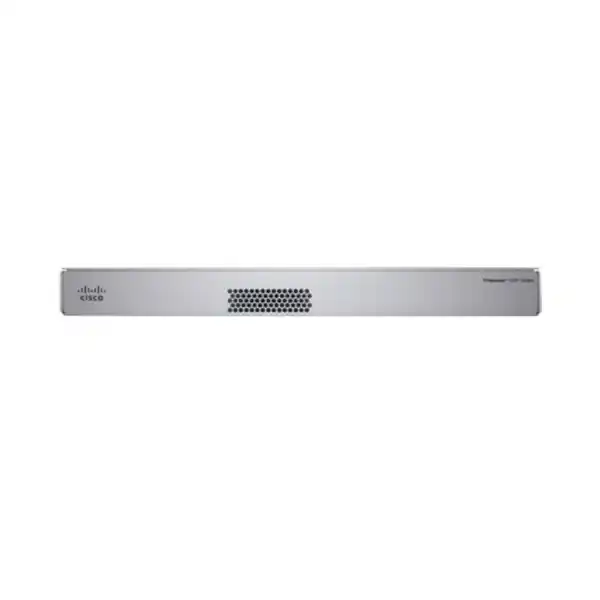
Cisco Firepower 1140 Firewall for Tanzania
Evaluate inspected traffic capacity, software choice and licensing before you buy. Build a clear appliance and deployment specification for your business network.
Choose the firewall around your traffic and security policy
The Cisco Firepower 1140 Firewall is a rack-mounted security appliance for organisations evaluating a controlled internet boundary, branch connectivity and separation between business networks. For buyers in Tanzania, the useful starting point is the traffic the appliance must inspect, the software it will run and the subscriptions needed for the intended security functions. Request a configuration-specific quotation from FourTeck Tanzania with your WAN bandwidth, network layout, VPN requirements and management preference.
An appliance name alone does not define the complete solution. A purchase can involve hardware, a supported software release, security subscriptions, remote-access entitlements, management resources, compatible optics and implementation work. Establish those items before comparing quotations. This makes it easier to understand why two offers carrying the same model name may have different scope and why the lowest hardware price may leave important requirements unresolved.
This page is intended for IT managers, network administrators and procurement teams assessing this particular model. Use the technical snapshot to establish the platform, then work through the sizing, licensing and deployment questions. Where a requirement depends on software, entitlement or network design, ask for written confirmation against the proposed configuration rather than assuming it follows automatically from the chassis designation.
Verified model snapshot
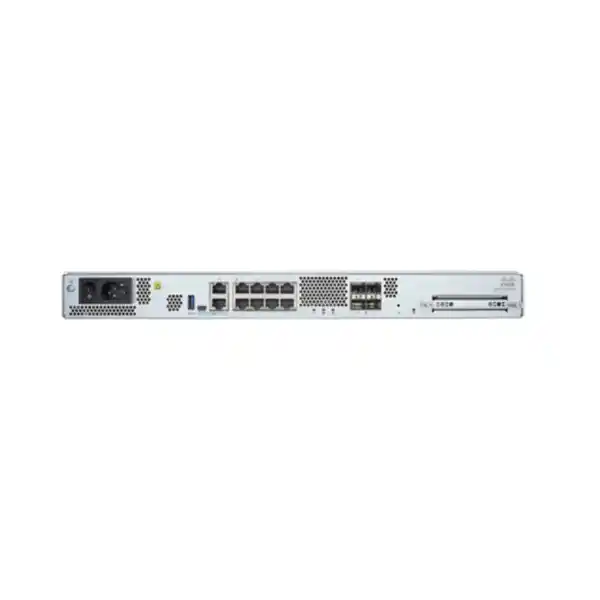
Cisco lists the 1140 with eight Gigabit Ethernet RJ-45 data ports and four SFP interfaces in a 1U rack form factor. Its published Threat Defense results include 3.3 Gbps for firewall plus application visibility and control, and 3.3 Gbps with IPS added, using 1024-byte test traffic. The same table lists 1.2 Gbps TLS performance, 1.4 Gbps IPsec throughput under its stated Fastpath test and up to 400 VPN peers.
These are separate benchmark measurements, not a promise that every function will reach its listed value simultaneously. A business workload combines different packet sizes, connection patterns and inspection settings. Ask for sizing that reflects the services you will enable and the traffic you expect during busy periods. Leave capacity for growth and maintenance rather than treating a headline benchmark as the operating target.
The platform can run Cisco Threat Defense or ASA software. Cisco publishes separate ASA performance figures, which should not be used to describe an inspected Threat Defense deployment. Specify the intended software in the quotation and acceptance plan. The chassis also has dedicated management connectivity; its management connection should be planned separately from ordinary user traffic.
| Firewall + AVC, 1024B | 3.3 Gbps |
|---|---|
| Firewall + AVC + IPS, 1024B | 3.3 Gbps |
| TLS | 1.2 Gbps |
| IPsec, 1024B TCP with Fastpath | 1.4 Gbps |
Who should evaluate this model?
A branch with a structured LAN may need a stronger policy boundary than an internet router alone provides. Its requirements could include controlled access to cloud applications, a tunnel to headquarters and separation of staff, guest and operational networks. The 1140 belongs on an evaluation shortlist when its verified interfaces and assessed inspection capacity match those requirements. Final suitability depends on the complete design rather than the number of employees alone.
A central office may instead be consolidating several existing security rules into one maintained platform. In that case, inspect how much traffic actually crosses the proposed firewall. Server backups, large file transfers and inter-VLAN communication can create a different workload from ordinary web browsing. A topology review should show which flows stay on the switching layer and which are deliberately sent through the security boundary.
An organisation with an existing Cisco environment may value continuity of operational knowledge, but familiarity should not replace a fit check. Compare the selected software, management architecture and support requirements with the current operating model. If the network needs faster physical interfaces, substantially heavier encrypted inspection or a different availability architecture, ask for an alternative platform assessment before committing to this model.
Size for the busiest meaningful workload
Begin with measured peak traffic, not only the contracted internet speed. Record ordinary utilisation, recurring peaks and the applications responsible for them. Include upload traffic as well as downloads, especially where the organisation uses cloud backup, remote collaboration or hosted business systems. A quiet average can conceal short periods that affect users, so a useful sizing discussion considers when congestion occurs and what the business experiences.
Next, decide which traffic must receive which security treatment. Internet browsing, a site-to-site tunnel, a published application and internal server communication may have different requirements. Describe the intended inspection policy for each important path. This gives the reviewer a practical workload model instead of a single bandwidth number that hides the cost of different services.
Concurrent sessions and new connection rates also matter. A network can have modest throughput while creating many short-lived connections. Collect information about user devices, servers and automated systems, including scheduled jobs that run together. Add the expected growth period to the requirement. The aim is to choose capacity with defensible assumptions and a clear review point, rather than to promise a fixed user count.
Understand encrypted traffic before choosing capacity
Many business applications use encrypted connections. A sizing exercise should therefore identify how much encrypted traffic needs inspection and what business policy permits. Do not assume that a general firewall benchmark represents the same workload as TLS decryption and inspection. Discuss the expected mix with the technical reviewer and confirm how the selected release handles the applications that matter to your organisation.
Where decryption is proposed, include certificate distribution, managed device coverage and exception handling in the project plan. Applications can behave differently when an inspection device participates in the connection. Some services may require exclusions or a different control approach. Agree how those decisions are approved, documented and tested before applying a broad inspection policy to production traffic.
Privacy and governance requirements should be resolved by the organisation alongside the technical design. Establish which traffic categories are eligible for inspection, who can access resulting events and how exceptions are reviewed. The product quotation should identify whether encrypted-traffic policy design is included in implementation. A supported feature still needs an operational process to become a useful control.
Map copper and fibre connections before ordering
Make an interface schedule showing the purpose of every planned connection. Typical roles include an ISP handoff, internal switch uplink, server zone, management network and any link required by the selected availability design. Record whether each connection uses copper or fibre and what the adjacent equipment supports. This prevents an installation from stopping because a necessary cable or compatible optical module was overlooked.
The four SFP positions should not be interpreted as a general promise of 10-Gigabit connectivity. Confirm the supported speed and approved transceiver for each intended connection using the current hardware documentation. Include the fibre type, connector, distance and remote-end optic in that check. An interface shape alone does not establish interoperability or the speed available on a particular model.
If VLAN trunks are part of the design, document which VLANs cross each link and where their gateways reside. Separate the physical port plan from the logical zone plan so both can be reviewed. Keep a record of spare connections needed for planned growth. Ask whether optics, patch leads, rack accessories and installation materials are included in the offer rather than assuming they arrive with every appliance.
Select Threat Defense or ASA deliberately
Choose the software approach around the required security functions and the team that will operate them. Threat Defense and ASA use different configuration and management workflows. The purchase request should state which environment is intended, what is already deployed and whether a migration is involved. A quote that leaves the software mode unspecified makes feature and performance comparisons harder to interpret.
For a Threat Defense proposal, ask the reviewer to map the required application controls, intrusion prevention and other security services to the appropriate entitlements and supported management method. For an ASA proposal, ask for the required firewall and VPN behaviour to be verified against the selected release. Treat each proposal as a complete configuration rather than assuming every advertised family capability is included.
Changing software approach should be planned as a migration project. Existing objects, rules, NAT and VPN settings need review in the target environment, even where their business purpose stays the same. Establish a backup and recovery route before making changes. The acceptance test should demonstrate application behaviour and administrator access in the new environment, not simply that the appliance has booted successfully.
Make licensing and subscriptions visible in the quotation
Ask for a bill of materials that separates the appliance from optional or subscription-based services. List the security functions required by the business and ask which entitlement enables each one in the proposed software. Intrusion prevention, URL controls, malware-related services and remote-access requirements should be discussed individually. Do not interpret a hardware model name as evidence that every security service is licensed.
Record the proposed subscription term, start conditions and renewal responsibilities. The organisation should understand which items recur and who will monitor their expiry. If central management or remote users require separate licensing, include that scope explicitly. A useful offer makes it possible for finance and IT to see both the initial purchase and the ongoing operational commitment.
For an existing installation, provide entitlement and account information through an appropriate private channel so the supplier can review the requirement. Keep passwords and license credentials out of public enquiries. Ask for confirmation of current ordering identifiers and compatibility rather than reusing an old part number from an unrelated quotation. Availability of a particular subscription must be checked separately from hardware availability.
Choose a management approach the team can maintain
A locally administered firewall and a centrally managed fleet create different responsibilities. Identify how many appliances the team expects to maintain, who approves changes and where events need to be reviewed. Then verify the management option supported by the chosen model and software release. Include any management infrastructure, licensing and administration work in the project scope.
Central administration can help establish common policy, but it also introduces dependencies that need ownership. Document the management path, addressing, name resolution and time services. Confirm how administrators will reach the platform during an internet outage or a policy change. The ability to manage a device should not depend entirely on an untested connection that the same maintenance task might interrupt.
Agree a simple operating model before handover. It should explain who can request a change, who approves it, who implements it and what evidence is retained. Keep configuration backups and define where the authoritative network documentation lives. These practical arrangements make the selected management tool useful to the organisation after the initial deployment team has completed its work.
Separate networks according to business purpose
A firewall can only enforce a boundary where the network sends traffic through it. Start by identifying staff devices, servers, guests, voice systems, cameras and management equipment. Decide which groups need to communicate and for what purpose. If two groups remain in the same unrestricted network, inserting a firewall elsewhere will not automatically separate their local communication.
Build a communication matrix with source, destination, application and business owner. Use that matrix to review proposed policy rather than creating broad access simply because a department reports a connection problem. Where access is temporary, record its purpose and a review date. Clear intent makes troubleshooting easier and helps prevent the rule base from becoming a collection of unexplained exceptions.
Choose the enforcement point for each boundary deliberately. Some traffic may remain controlled by switching infrastructure while other paths pass through the appliance. Document this division so administrators know where to investigate a blocked or unexpectedly permitted connection. During acceptance, test both the required access and representative prohibited paths from the actual source networks.
Plan internet links, routing and address translation together
Collect the ISP handoff details, public address allocation, gateway information and any upstream equipment dependencies. If there is a second internet connection, state what should happen when the primary service fails. Distinguish outbound continuity from inbound service continuity, because a backup circuit does not automatically preserve every public address or externally published application.
List any services that outside users must reach and identify the internal destination for each one. Review whether publication is necessary and how access should be limited. Routing, NAT and security policy should be designed as one traffic path. An apparently correct rule can still fail when the return route or address translation does not match the intended flow.
For the cutover plan, record the old and new addressing arrangements and the sequence of upstream changes. Identify any dependencies on DNS updates, provider assistance or remote peer changes. Give each action an owner and a verification step. This makes a replacement easier to coordinate and reduces the chance that an external dependency is mistaken for an appliance fault.
Define site-to-site VPN requirements precisely
A tunnel connects networks, but the business requirement is usually access to specific applications between those networks. Gather the peer addresses, protected subnets, expected traffic direction and applications involved. Check for overlapping private address ranges before configuring anything. Resolving an addressing conflict during planning is easier than discovering it after both sites have scheduled their cutover.
Agree the compatible cryptographic and tunnel parameters with the team responsible for the other end. Confirm the selected software supports the proposed design and that the entitlement is appropriate. The public benchmark for IPsec is a controlled test result; it should not be interpreted as the speed of an arbitrary internet circuit or a mixed workload with additional inspection.
Acceptance should include application tests across the tunnel, route verification and evidence that unintended networks remain inaccessible. Also define what happens when one ISP or one peer becomes unavailable. Record troubleshooting ownership for both ends, because a tunnel problem may require coordinated work. Maintain peer documentation without placing shared secrets in ordinary project notes or publicly accessible forms.
Treat remote access as an identity and endpoint project
Remote users need more than an available VPN connection. Define who may connect, what applications they can reach and whether their devices are managed. Identify authentication and multifactor requirements and verify the supported design for the selected release. Confirm the necessary remote-access entitlements separately rather than assuming a published peer limit is the number of licensed users.
Include client compatibility and user experience in the plan. The project should consider endpoint operating systems, DNS behaviour, internal application names and how traffic is routed while connected. A pilot group can reveal application dependencies before broader rollout. Ask who will maintain client software and how users will receive support when credentials, connectivity or device conditions change.
Test the access level from a normal user account, not only an administrator account. Confirm that the user can reach approved applications and cannot browse unrelated management networks. Document how access is withdrawn when a person leaves or changes role. These operational checks help turn a remote-access feature into an access service the organisation can maintain.
Assess availability beyond a second appliance
Cisco documents active/standby availability for Threat Defense on this family. A resilient proposal still needs verification of the exact platform, release, matching configuration and licensing requirements. Ask the designer to show how the proposed pair connects to switches and internet equipment. A pair of appliances sharing an overlooked dependency may not achieve the continuity the business expects.
The 1140 uses a single integrated AC power input. Include power continuity in the assessment, together with switching and ISP equipment. An appliance protected by a UPS cannot maintain connectivity if an essential adjacent device loses power. Review the intended maintenance process and the organisation’s acceptable interruption before deciding whether a single appliance or a paired design fits the requirement.
Set acceptance criteria for failure behaviour rather than relying on the word redundant. Identify which failures will be tested, which applications should recover and who authorises the test. Capture results and any limitations. Do not assume that every session, tunnel or application remains uninterrupted during every failure; verify the behaviour relevant to the selected design and business workload.
Prepare the rack, power and working environment
Confirm that the installation location has suitable rack space, access for cabling and sufficient ventilation. Ask the installer to check the current hardware guide for mounting and clearance requirements. Keep the appliance accessible for inspection without placing network leads under strain. A clear port map and readable cable labels reduce avoidable mistakes during future work.
Review the available electrical connection and UPS arrangement with the responsible facilities team. Verify the correct supplied cord and local connection requirements for the exact order. Do not infer national certification or installation approval merely from a generic product datasheet. The final equipment and installation should be checked against the requirements that apply to the customer’s site.
Account for cooling, dust, water exposure and physical access when selecting the location. A network cabinet shared with unrelated equipment may have heat or space constraints that are not obvious from a floor plan. Include the upstream router, switching and management access in the readiness check. This reduces delays between equipment delivery and a safe, supportable installation.
Migrate existing rules with their business intent
Before replacing a firewall, collect the existing configuration, network diagram and a list of known applications. Identify obsolete rules, duplicate objects and exceptions whose owner is no longer known. The replacement project is a useful opportunity to clarify policy, but changes should be approved deliberately so that cleanup does not silently remove an important service.
Translate the purpose of each important rule into the target configuration. Pay attention to rule order, address translation and the direction of traffic. Existing syntax should not be copied into a different software environment without verification. Record assumptions and unresolved dependencies in a migration worksheet so the customer can decide what must be settled before the production change.
Plan a maintenance window and a rollback decision point. Keep the previous configuration and required recovery information available to the authorised team. Identify who tests each critical application after cutover and how results are reported. If a failure occurs, a documented rollback path gives the team an agreed response instead of forcing an improvised decision under time pressure.
Set up monitoring, backups and ongoing review
Decide which events are useful for operations and security review. Collecting every possible event without an owner or retention plan can make important information harder to find. Identify where logs should go, who will review them and which conditions need escalation. Confirm the capabilities and any integration requirements against the chosen software and management design.
Accurate timestamps help correlate events between the firewall, switches, servers and identity systems. Include time configuration in acceptance testing. Establish a configuration backup routine and record how recovery would be performed. Backups should be protected appropriately and available to authorised staff when needed, rather than existing only on the laptop used during installation.
Schedule reviews of rules, entitlements and software maintenance responsibilities. The organisation should know who tracks vendor advisories and who approves updates. A firewall is an ongoing operational asset, so include these responsibilities when comparing support options. Ask for the exact scope and response terms in writing; this page does not establish a particular service contract or response-time guarantee.
A practical procurement checklist for Tanzania
Send FourTeck Tanzania the model under consideration, installation location and whether the requirement is a new deployment or replacement. Add the internet bandwidth, number of links, network diagram, VLAN list and expected growth. Include both site-to-site and remote-access requirements, along with the security functions you intend to enable. These inputs allow the quotation to address the actual network.
Ask the offer to identify the exact hardware ordering code, software approach, subscriptions, management option and implementation scope. Also confirm included accessories, optics where needed, support terms and the conditions of any warranty offered. Request current pricing and availability directly. No TZS price, stock quantity or delivery commitment is established by the general product information on this page.
For a replacement, identify the existing model and share a sanitised requirement summary first. Arrange a private process for configuration review if detailed assessment is required. A quotation should state important exclusions and customer dependencies, such as ISP coordination or access to remote VPN peers. This helps procurement compare equivalent scope and gives the implementation team a clear starting point.
Check lifecycle and software compatibility for the exact order
Review lifecycle information for the exact hardware and each proposed subscription before purchasing. An end-of-sale notice for a management license or older subscription identifier does not by itself establish that the appliance hardware has reached the same milestone. Keep the distinction clear when reviewing search results, reseller listings or historical quotations.
Confirm the supported software release and management compatibility at the time of ordering and again before implementation. An older image included with equipment may not be the release chosen for production. The project should include a maintenance assessment against current vendor guidance, with ownership for any required upgrade and validation work.
Ask how the proposed support period aligns with the organisation’s planned use. Record renewal responsibilities and any lifecycle constraints confirmed for the specific offer. Avoid relying on a general statement that a product is supported indefinitely. A defensible purchase decision uses current evidence for the exact components and a documented plan for maintaining the environment over its intended life.
Agree what a successful installation looks like
Define acceptance around work the organisation needs to perform. A finance user might need access to a hosted accounts system, a branch team might depend on a shared application, and an administrator might need a restricted management route. Assign a named tester to each important workflow and record the source network, destination and expected outcome. This creates evidence that the deployment supports normal operations.
Include negative tests as well as successful connections. A guest device should not acquire access to internal administration simply because internet browsing works. A remote user should have the intended access level after authentication. Check representative restrictions from the relevant networks, then review the resulting events with the operational team so they understand how permitted and blocked traffic will appear.
At handover, retain the final topology, interface schedule, policy summary, backup location and unresolved actions. Record who owns subscriptions, software maintenance and future change approval. If a dependency remains outside the agreed scope, state it clearly with an owner and next action. These deliverables help the customer operate the equipment and make future changes without reconstructing the project from memory.
Common buyer questions
Is this a suitable firewall for a gigabit internet connection? It may be a candidate, but circuit speed alone is insufficient. The decision should account for encrypted inspection, enabled security services, session behaviour, VPN traffic and growth. Ask for a workload-based assessment rather than treating a headline throughput figure as a guarantee for the entire deployment.
Are advanced security services included with the appliance? Confirm them individually in the bill of materials. The required entitlements depend on the selected software and services. Ask the supplier to show how each requested capability is covered, including subscription duration and any management or remote-access licensing that applies to the proposed configuration.
Can it replace an existing ASA firewall? Replacement requires a review of the current policy, interfaces, routes, NAT, VPNs and software approach. Using ASA or moving to Threat Defense changes the migration work involved. Agree a target design and an application test plan before scheduling the cutover, and keep a documented rollback route.
Does it provide power for wireless access points or phones? Do not plan endpoint power around this model’s data interfaces. Include a suitable PoE switching or other endpoint power arrangement in the network design where required. Verify the complete switching and cabling requirements rather than treating the firewall as a replacement for the LAN access layer.
Can the appliance alone secure every internal device? Protection depends on the traffic path and configured policy. Devices communicating locally within an unrestricted segment may not cross the firewall. Review VLANs, gateways and enforcement boundaries so the design places the required traffic under the intended controls.
Request a configuration-specific quotation
Ask FourTeck Tanzania to assess the Cisco Firepower 1140 against your network requirements. Provide the WAN links, network diagram, expected traffic, VPN needs and preferred software approach. Request a quotation that clearly identifies hardware, subscriptions, management, accessories and deployment work so the complete proposal can be reviewed before purchase.
If implementation is part of the requirement, review the Tanzania site’s Cisco firewall installation and configuration service and describe the desired scope. Specify whether you need a fresh deployment, migration, VPN setup, policy review or a combination. Confirm testing, documentation and handover responsibilities as part of the agreed work.
The next step is a requirement review and current commercial confirmation. Exact stock, delivery, price, support eligibility and the target listing SKU must be confirmed for the offer. Use the resulting bill of materials and acceptance criteria to make the purchase decision with a clear view of both the appliance and the work needed to put it into service.



Reviews
There are no reviews yet.