
FortiGate 60F (FG-60F) Tanzania
FortiGate 60F is a compact Fortinet next-generation firewall designed to combine secure networking, SD-WAN and security controls at branch and small-to-mid-sized business edges. For Tanzanian organizations replacing a basic router, standardizing branch security or adding controlled VPN connectivity, the FG-60F provides a practical platform with purpose-built security processing and FortiOS management. FourTeck can help buyers translate internet bandwidth, user count, application mix, VPN requirements and inspection needs into a more accurate firewall selection rather than choosing a model from headline throughput alone.

FortiGate 60F overview and verified performance
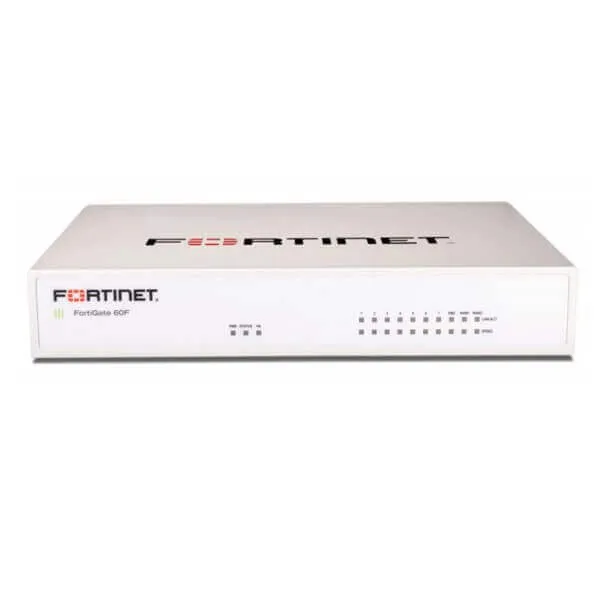
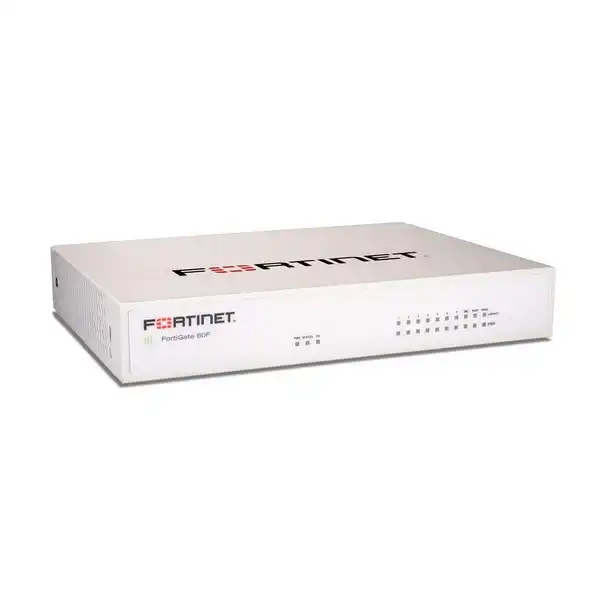
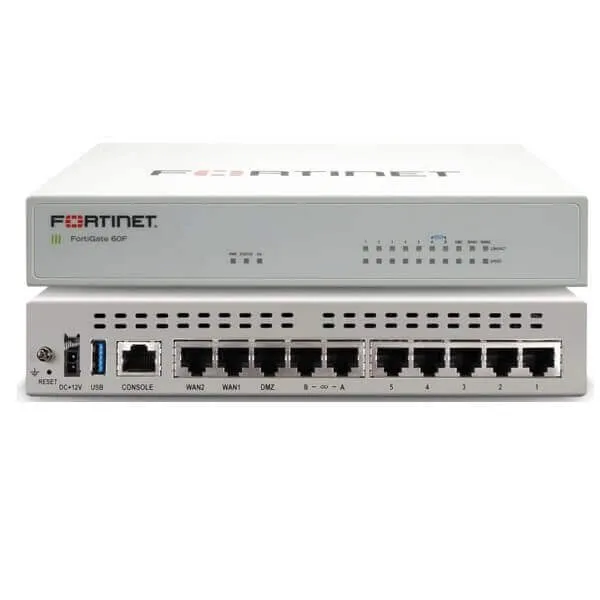
Fortinet positions the FortiGate/FortiWiFi 60F series as a converged next-generation firewall and SD-WAN platform for distributed enterprise sites. The FG-60F uses a desktop form factor and provides two GE RJ45 WAN ports, one GE RJ45 DMZ port, five GE RJ45 internal ports and two default FortiLink interfaces. Fortinet’s published performance figures include up to 10 Gbps firewall throughput, 6.5 Gbps IPsec VPN throughput, 1.4 Gbps IPS throughput, 1 Gbps NGFW throughput and 700 Mbps threat-protection throughput. These are vendor test figures and should be interpreted with the published test conditions; real deployment performance depends on traffic patterns, security profiles, encryption, logging, firmware and configuration.
Up to 10 Gbps vendor-published firewall throughput for 1518/512-byte packets.
Up to 1.4 Gbps IPS throughput using Fortinet’s enterprise traffic mix methodology.
Up to 1 Gbps NGFW throughput with firewall, IPS and application control enabled.
Up to 700 Mbps with firewall, IPS, application control and malware protection enabled.
What the FG-60F can solve
A properly sized FortiGate 60F can consolidate functions that otherwise sit across several separate edge devices. Businesses can use firewall policies to control traffic between internet, users, servers and segmented networks; SD-WAN capabilities can help organizations apply policy across multiple WAN links; IPsec VPN can connect branches; and FortiGuard security services can add capabilities such as intrusion prevention and other subscribed security functions. The important procurement question is not simply whether the appliance can route the internet connection. Buyers should determine which inspection profiles will be enabled, whether encrypted traffic inspection is planned, how many remote or site-to-site VPN connections are required, and whether the firewall will also coordinate FortiSwitch or FortiAP infrastructure.
For broader infrastructure planning, review FourTeck Tanzania’s business technology solutions, including firewall, switching, wireless, server, structured-cabling and support capabilities. The firewall is strongest when VLAN design, switching, Wi-Fi, servers and WAN connectivity are considered as one architecture rather than isolated purchases.
FortiGate 60F technical specifications
| Form factor | Desktop |
| GE RJ45 WAN / DMZ | 2 / 1 |
| GE RJ45 internal ports | 5 |
| Default FortiLink ports | 2 |
| Firewall throughput | Up to 10/10/6 Gbps for 1518/512/64-byte UDP packets |
| IPsec VPN throughput | Up to 6.5 Gbps under Fortinet test conditions |
| Concurrent TCP sessions | 700,000 |
| New TCP sessions/second | 35,000 |
| High availability | Active-active, active-passive and clustering configurations listed by Fortinet |
Performance values are Fortinet-published “up to” figures and vary with system configuration. Confirm current firmware features, subscription requirements and design assumptions before procurement.
Sizing, FortiGuard and deployment guidance
The FG-60F should be sized around protected throughput, not only raw firewall throughput. A branch using IPS, application control, malware protection, SSL inspection, multiple VPNs and detailed logging has a different workload from a site using basic routing and firewall rules. Document current and planned WAN speed, simultaneous users, server publishing, VoIP, cloud applications, CCTV traffic, guest Wi-Fi, VPN tunnels and growth expectations. FortiGuard subscriptions should also be selected according to the security functions the organization actually intends to operate; bundle names, service contents and renewal terms should be confirmed at quotation time because licensing portfolios can change.
A good deployment also includes configuration backup, administrator access controls, VLAN and zone planning, DNS/NTP decisions, firmware strategy, logging, VPN documentation and change control. When dual internet links are available, policy and failover testing should be performed before the site is considered complete. The supplied 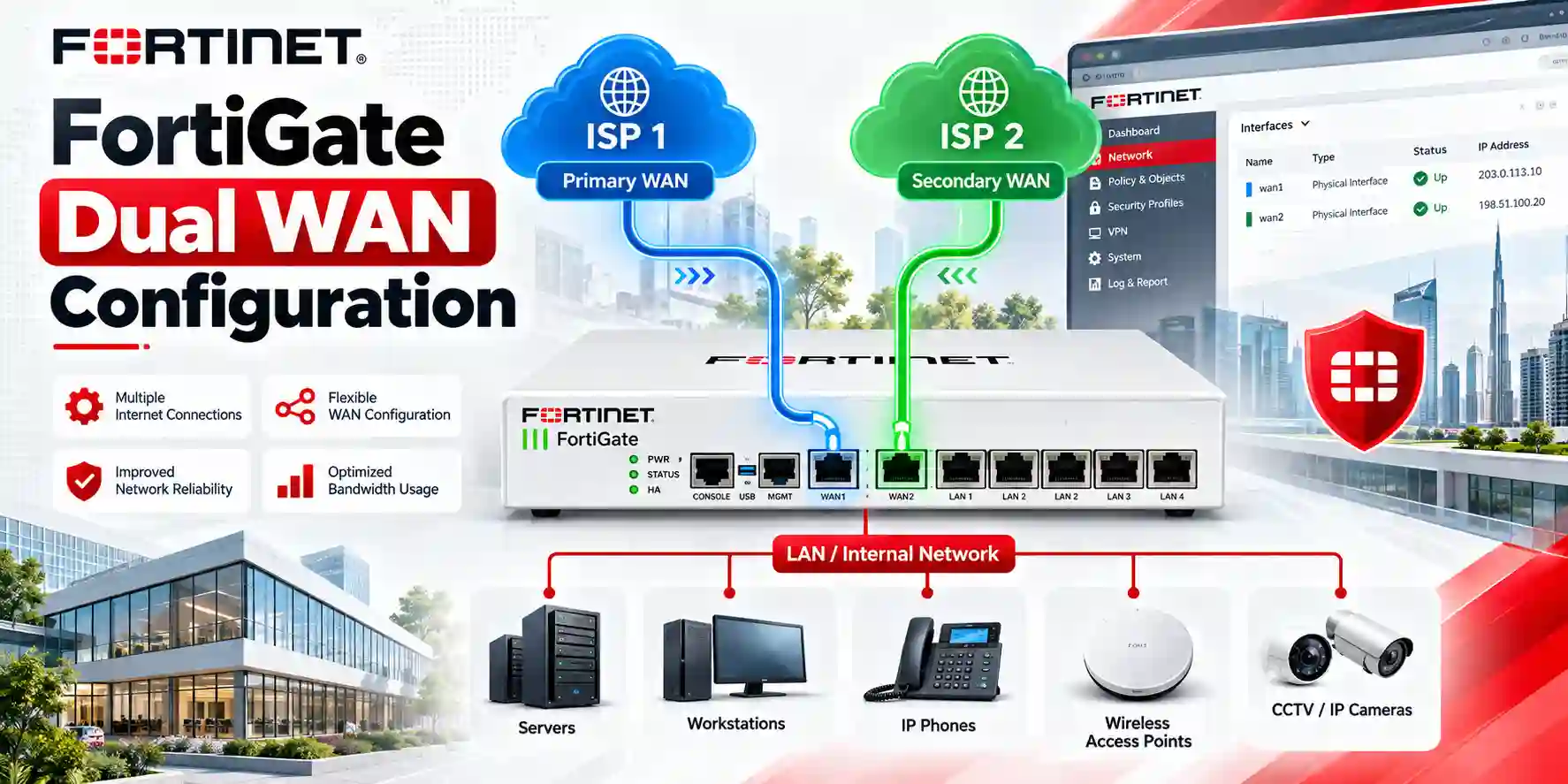 visual illustrates a relevant use case for organizations considering WAN resilience.
Related FourTeck Tanzania infrastructure
Firewall & VPN
See the firewall, VPN and network-security overview for policy, segmentation and secure-access planning.
Network switching
Review switching and LAN infrastructure when the firewall will connect multiple VLANs, PoE devices or branch access networks.
Business Wi-Fi
Use the Wi-Fi and access-point guidance to coordinate staff, guest and device networks with firewall segmentation.
Servers & backup
The server, storage and backup section helps connect protected server workloads to firewall and recovery planning.
Cabling, racks & UPS
Plan physical deployment with structured cabling, racks and UPS considerations.
Integrated IT services
For configuration, documentation and lifecycle planning, review integrated IT solutions and support.
IP telephony
Firewall policy and QoS can affect voice. See IP PBX and VoIP solutions when voice shares the secured WAN.
FortiGate 60F Tanzania
For buyers in Tanzania, the FortiGate 60F is most relevant where a business needs more than basic internet routing but still wants a compact edge appliance. Typical projects include growing offices, retail or hospitality sites, professional-service businesses, clinics, schools, branch locations and organizations that need controlled connectivity between users, servers, cloud applications and remote sites. A Tanzania quotation should begin with the real internet service in use today and the upgrade path expected over the appliance lifecycle. If a company plans to move from a modest broadband circuit to higher-speed fiber, the security workload at the future speed matters more than the current link alone. Security profiles, VPN use and SSL inspection should therefore be included in the sizing discussion.
Tanzanian sites can also have different power, rack and connectivity conditions. The FG-60F desktop format can suit compact environments, but it still needs stable power, ventilation, organized cabling and appropriate UPS planning. Where two ISPs are available, the dual WAN interfaces can support a resilient design, but failover should be tested against the applications that matter to the business. Cloud applications, SIP voice, VPN sessions and public services may behave differently when the external IP path changes. A written test plan is more valuable than assuming that connecting a second ISP automatically creates seamless continuity.
Procurement should define whether the requirement is hardware only or includes FortiGuard services and FortiCare. Buyers should request the exact bundle, subscription term and support level in the quotation so proposals can be compared on the same basis. For organizations replacing another firewall, include existing VLANs, VPN peers, public IPs, published services and authentication methods in the migration scope. FourTeck Tanzania can coordinate the firewall with switching, Wi-Fi, cabling, server and communication requirements described on its Tanzania technology solutions site.
FortiGate 60F Dar es Salaam
Organizations in Dar es Salaam often operate bandwidth-intensive business applications, cloud collaboration, IP telephony, remote access and multiple internet services from the same office edge. In this environment, the FortiGate 60F can be evaluated as a compact security gateway for a branch, professional office or growing business that needs policy control and secure connectivity. The starting point should be an inventory of WAN circuits and critical services. Record the provider, committed bandwidth, public addressing, failover expectations and any inbound services. Then identify which applications must remain available during an ISP outage and whether remote users or site-to-site VPNs depend on a particular public IP.
For a multi-department Dar es Salaam office, segmentation can be just as important as internet filtering. Staff, guest Wi-Fi, voice, CCTV, servers and management interfaces should not automatically share one flat network. VLANs and firewall policies can establish clearer boundaries, while managed switching and access points provide the access layer. If the site uses video meetings or cloud voice, bandwidth policy and application behavior should be tested under normal and failover conditions. The objective is predictable business operation, not simply a firewall that passes a speed test.
Before requesting a quote, provide approximate user and device counts, current and future internet speeds, number of sites, VPN requirements, public services, security features expected and whether existing Fortinet infrastructure must be integrated. If the FG-60F will replace an older appliance, export or document the current policy set rather than recreating rules from memory. Remove obsolete rules during migration where change control permits. A clear bill of requirements also makes it easier to determine whether the 60F remains the right model or whether a different FortiGate should be considered for growth. For regional Fortinet expertise, FourTeck’s Fortinet specialist network can complement the Tanzania project discussion.
FortiGate 60F Mwanza
A Mwanza deployment may involve a standalone office, a branch linked to headquarters, a warehouse, a service location or a business that relies on cloud systems from a relatively compact network. The FortiGate 60F can be assessed where secure internet access and branch connectivity need to be managed in one platform. Branch projects should pay special attention to remote supportability. Device naming, interface descriptions, address plans, configuration backups and documented VPN parameters make a large difference when the site is not next to the central IT team.
Connectivity resilience should be planned around what is actually available at the Mwanza site. If two independent internet connections are practical, the dual WAN capability can be used as part of an SD-WAN or failover design. Independence matters: two services that ultimately share the same upstream failure point may not provide the resilience expected. Where the secondary connection has lower capacity, business-critical applications can be prioritized and nonessential traffic restricted during failover. This prevents a backup circuit from becoming saturated at the exact moment it is needed.
Security policy should also reflect branch function. A location handling customer transactions, local servers or operational devices may require tighter segmentation than a small administrative office. Site-to-site IPsec VPN can link the branch to other networks, but the routing, address ranges and failover behavior should be planned before deployment. Procurement teams should specify subscription requirements, support term and implementation scope rather than asking only for “FortiGate 60F price Mwanza.” A meaningful quote needs enough technical context to avoid comparing hardware-only pricing against a bundle that includes security services. FourTeck’s Tanzania network-security approach connects firewall sizing with switching, Wi-Fi, UPS and cabling so the branch is treated as a complete operational system.
FortiGate 60F Arusha
Businesses in Arusha can have varied security requirements, from hospitality and travel operations to offices, education, services and multi-site organizations. For an Arusha buyer, the FortiGate 60F should be evaluated against application dependence and guest or staff network separation. Hospitality-style environments, for example, can generate very different traffic patterns from a conventional office. Guest access, payment systems, back-office users, CCTV and operational systems should not be treated as one trust zone simply because they share the same building.
The 60F’s interfaces and FortiOS policy framework can support segmented designs, but successful deployment depends on the switching and wireless network being configured consistently. VLAN tags, DHCP scopes, DNS, access policies and management networks should be documented across the firewall and access layer. If the site uses cloud booking, finance or collaboration applications, the design should also account for internet continuity. A secondary WAN connection can improve resilience when engineered correctly, while VPN can provide secure links to other branches or centralized resources.
Arusha procurement teams should avoid selecting a firewall solely from employee count. Device count, encrypted application traffic, guest usage, VPN load, internet speed and security inspection can be more important than headcount. Ask whether deep inspection will be enabled, what FortiGuard services are required, how logs will be retained and who will maintain firmware and policies after handover. For organizations with several locations, standard configuration templates and naming conventions can reduce troubleshooting time. A quote request should therefore include current topology, ISP details, user/device estimates, required subscriptions and expected project services. That information allows FourTeck to discuss whether FG-60F capacity aligns with the intended deployment rather than making an unsupported one-size-fits-all recommendation.
FortiGate 60F Dodoma
For a Dodoma office or branch, the FortiGate 60F can provide a centralized policy point for internet access, VPN, network segmentation and subscribed threat-protection functions. Organizations planning a new site should include the firewall in the network design before switches, wireless networks and address ranges are finalized. Doing so makes it easier to define staff, guest, server, voice, CCTV and management zones cleanly instead of adding security boundaries after devices are already deployed.
A common design question is whether one internet circuit is sufficient. The answer depends on the operational impact of an outage. If critical services require continuity, dual WAN can be considered, but the secondary service should be sized for the applications expected during failover. Test DNS behavior, VPN reconnection, cloud sessions and any inbound services. For sites with centralized systems elsewhere, site-to-site IPsec VPN design should include non-overlapping subnets and clear routing. Address conflicts between branches are easier to prevent during planning than to correct during migration.
For procurement in Dodoma, request the precise appliance, FortiGuard/FortiCare term and implementation scope. Do not assume that every listing for FG-60F includes the same security services. Confirm whether the project needs migration from an existing firewall, new VLAN creation, VPN setup, WAN failover, user authentication, logging or handover documentation. Also consider UPS capacity and rack or shelf placement; network security equipment is part of the critical infrastructure and should not depend on unstable power or improvised cabling. FourTeck can use this project information to prepare a more relevant commercial response and coordinate the firewall with Tanzania switching, Wi-Fi and infrastructure requirements.
FortiGate 60F UAE
For UAE organizations evaluating the FortiGate 60F, the device can suit compact branches and business sites that need converged firewall and SD-WAN functions with Fortinet security services. UAE deployments often involve high-speed internet, cloud applications, multiple offices and centralized IT standards, so the headline 10 Gbps firewall figure should not be treated as the sizing figure for a fully inspected production environment. Use the published NGFW, IPS and threat-protection figures as separate reference points and map them to the enabled security stack.
A branch standard can define WAN ports, VLAN IDs, IP addressing, administrative access, logging, VPN templates and FortiGuard profiles so each location follows repeatable controls. Where dual carriers are available, SD-WAN policy can be planned around application performance and business priority rather than simple link up/down status. Site-to-site VPN can connect UAE offices with Tanzania or other regional operations, but cross-border application design should consider latency, routing and the location of shared services.
Procurement should specify whether hardware, subscription bundles, support and professional services are all required. A bundle with security subscriptions cannot be compared directly with an appliance-only quote. Buyers should also confirm the current FortiOS support position and any feature changes relevant to their intended remote-access method. For specialist regional context, visit FourTeck’s UAE technology solutions site, Fortinet UAE specialist site and Dubai firewall solutions resource. These links are useful when a multi-country organization wants aligned firewall procurement and security architecture across Tanzania and the UAE.
FortiGate 60F Uganda
Ugandan organizations can evaluate the FortiGate 60F for branch security, secure internet access, SD-WAN and VPN use cases where a compact desktop appliance fits the required inspected traffic level. The procurement process should begin with a simple network worksheet: primary and secondary WAN speeds, users, connected devices, business applications, guest networks, servers, VPN peers and the FortiGuard controls that will be enabled. This gives a better basis for sizing than choosing from raw firewall throughput.
For businesses operating between Uganda and Tanzania, consistent policy design can reduce operational complexity. Common VLAN naming, address planning, VPN templates and logging conventions make it easier for IT teams to understand each branch. The same principle applies to lifecycle management: document firmware policy, configuration backups, administrator roles and subscription renewal dates. If the site relies on cloud applications or centralized services, test WAN failover with those applications rather than only checking whether the backup link receives traffic.
A Uganda quotation should clearly identify the FG-60F appliance and any subscription/support term. If migration services are needed, include the existing firewall model, policy count, VPN tunnels, public services and network diagram. If the branch will connect FortiSwitch or FortiAP infrastructure through FortiLink and FortiOS management, include the access-layer design in the project scope. For Uganda-specific regional planning, FourTeck’s Uganda technology site can be used alongside the Tanzania team’s integrated network-security approach.
FortiGate 60F Kampala
A Kampala deployment may be a headquarters satellite office, professional business, retail site or growing organization with multiple cloud and network services. The FortiGate 60F can consolidate edge firewalling and secure SD-WAN, but the design should reflect the actual security workload. Start by separating raw internet bandwidth from inspected traffic requirements. Application control, IPS, malware protection and encrypted traffic inspection consume resources differently from basic forwarding, so a branch expecting a major bandwidth upgrade should be sized for the future security profile.
Kampala sites with more than one ISP can use dual WAN as part of a resilience strategy. The implementation should define preferred paths, health checks, failover thresholds and the behavior of critical applications. If an organization has a Tanzania office, IPsec VPN can form part of the inter-site design, provided subnets do not overlap and routing is documented. Voice and video applications may also need quality-of-service consideration during backup-link operation.
Before procurement, decide whether the firewall will be a standalone security gateway or part of a broader Fortinet Security Fabric environment. Integration with managed switching and wireless can centralize some operational tasks, but it should be planned rather than assumed. A useful quotation request includes WAN details, LAN topology, security subscriptions, VPN scope, migration requirements and support expectations. It should also state whether configuration and handover documentation are required. This prevents a low appliance price from being mistaken for a complete deployment cost. FourTeck’s regional Uganda resource can support customers seeking aligned technology planning between Kampala and other East African sites.
FortiGate 60F Arua
For an Arua branch, remote manageability and resilience can be as important as peak throughput. A compact firewall such as the FG-60F may sit at a site where central IT staff are not permanently present, making configuration standards, remote administration controls and documentation especially valuable. The deployment should record every WAN interface, VLAN, DHCP scope, VPN peer and administrator role. Configuration backups should be protected and updated after approved changes.
If the Arua location depends on centralized applications, the WAN design deserves careful attention. A backup connection can provide continuity, but only if it has enough capacity for the critical workload and the failover policy is tested. Define which traffic receives priority when the backup path is active. Large software downloads, guest usage or nonessential synchronization may need to be limited so transactional, voice or operational applications remain usable. Where a site-to-site VPN is required, test reconnection and routing after WAN changes.
Procurement should include more than the appliance model. Specify the desired FortiGuard service level, FortiCare term, implementation tasks and any existing equipment that must be integrated. Confirm whether switches, access points, UPS or cabling need attention at the same time. A firewall installed on an undocumented flat network cannot deliver the same segmentation value as one deployed with a clear access-layer design. Buyers can use FourTeck’s Uganda regional presence and Tanzania network-security planning resources to coordinate cross-border standards without assuming identical site conditions.
FortiGate 60F Mbarara
Mbarara businesses considering FortiGate 60F should first identify whether the firewall is protecting a single office, a customer-facing site, a warehouse or a branch connected to other locations. Each scenario changes the policy and VPN design. A customer-facing network may need strong separation between guest and business traffic; a branch may prioritize site-to-site VPN; a warehouse may have scanners, cameras or operational devices that benefit from separate security zones. The appliance is only one part of that architecture.
Internet performance should be measured at the point where security inspection is expected. Fortinet’s published figures distinguish raw firewall, IPS, NGFW and threat-protection throughput, and buyers should do the same when setting expectations. If encrypted traffic inspection is planned, include it in the capacity discussion. If the business anticipates faster connectivity during the next few years, size with that upgrade path in mind rather than only today’s circuit.
For continuity, dual WAN can be considered where independent services are available. Define how cloud applications, VPN tunnels and inbound services behave when paths change. For maintenance, establish who receives security alerts, who approves policy changes and who manages subscription renewals. Procurement documents should state the exact hardware, bundle term and services requested. This allows commercial comparisons to remain meaningful and reduces the risk of discovering after purchase that required security subscriptions or deployment tasks were excluded. FourTeck can align the Mbarara requirement with regional network, wireless, UPS and cabling planning for a more supportable branch environment.
FortiGate 60F Gulu
A Gulu branch can benefit from a firewall design that is simple to operate remotely and resilient enough for the applications the site depends on. The FortiGate 60F offers multiple GE interfaces and dual WAN connectivity, giving designers flexibility for segmented LANs and multiple internet paths. However, interface count should not replace a logical network plan. Define user, guest, server, voice, camera and management networks according to the site’s actual needs, then map those zones to switching and firewall policy.
Remote sites should also minimize avoidable support visits. Standardized configuration, clear cable labeling, UPS protection and documented recovery procedures are practical investments. If a WAN link fails, central IT should be able to determine whether the issue is carrier, firewall, switching or application related. Logging and monitoring can support that troubleshooting process. If a backup ISP is present, health checks should test the service path rather than merely the physical interface.
For a Gulu quotation, include current bandwidth, planned upgrades, number of users and devices, VPN requirements, public-facing services and security subscriptions. If the organization has other branches in Uganda or Tanzania, note whether policy and VPN standards already exist. A consistent design can reduce configuration drift while still allowing each site to use the connectivity available locally. Buyers should also verify current licensing and support terms at the time of purchase rather than relying on old bundle descriptions. FourTeck’s regional sites can support the planning conversation for organizations standardizing security across East Africa.
FortiGate 60F Kenya
Kenyan organizations evaluating FG-60F may be looking for a branch firewall, a secure SD-WAN edge or a replacement for a basic router that no longer provides sufficient visibility and control. The design process should begin with the security services that will run continuously. IPS, application control, malware protection and encrypted inspection can make the relevant throughput very different from the headline firewall figure. A site with fast fiber and heavy cloud use should therefore be evaluated against protected traffic rather than raw forwarding alone.
For organizations operating in both Kenya and Tanzania, the 60F can fit into a standardized branch architecture when capacity is appropriate. Common address-planning principles, VPN templates, security profiles and management conventions can make regional support more efficient. SD-WAN policies can also be designed consistently while still accommodating different carriers at each location. Where voice, video or transactional applications are important, failover tests should confirm that user experience remains acceptable on the backup path.
A procurement request should specify appliance, FortiGuard/FortiCare term, deployment scope and any integration with FortiSwitch, FortiAP, identity or logging platforms. If replacing an existing firewall, include migration requirements and an inventory of VPNs and public services. FourTeck’s Kenya technology resource can complement the Tanzania project for businesses that want a common approach across East African locations. The final model choice should still be based on each site’s bandwidth and inspection workload rather than assuming every branch needs identical hardware.
FortiGate 60F Kuwait
In Kuwait, the FortiGate 60F can be considered for compact business and branch environments that require Fortinet NGFW and secure SD-WAN capabilities. High-speed internet availability makes correct sizing particularly important: raw firewall throughput does not represent the throughput available with every security service enabled. Procurement teams should document the intended IPS, application control, malware protection, SSL inspection, VPN and logging workload and compare it with Fortinet’s relevant published performance metrics.
For multi-country organizations, Kuwait and Tanzania sites can use a shared security architecture without forcing identical local configurations. VPN addressing, administrator roles, logging standards and policy naming can be standardized, while WAN providers and bandwidth policies remain site-specific. Dual WAN can support resilience where independent connections exist. During testing, validate cloud applications, DNS, voice, VPN reconnection and any services that depend on public IP addresses.
A complete quote should state whether the requirement includes hardware only, FortiGuard security services, FortiCare, configuration, migration and documentation. It should also identify the expected subscription term so competing proposals are comparable. For Kuwait-specific infrastructure planning, FourTeck’s Kuwait IT and network-security site provides regional context. Organizations with Tanzanian operations can use the same procurement checklist in both markets, while validating each location’s actual connectivity and support requirements before finalizing the firewall design.
FortiGate 60F Ghana
For Ghanaian branches and growing businesses, FortiGate 60F can be evaluated as a compact security gateway that combines FortiOS networking, firewall controls and secure SD-WAN capabilities. The decision should be based on the inspected workload, not merely user count. A small team transferring large files over fast fiber and using SSL inspection may place more demand on a firewall than a larger office with lighter application traffic. Document the WAN speed, device count, VPN requirements and security profiles before choosing the model.
Regional organizations connecting Ghana and Tanzania should plan IP addressing and VPN topology centrally. Overlapping private networks can complicate site-to-site connectivity, so branch address plans should be checked before rollout. If two WAN services are available, determine whether they are truly independent and decide which applications should use each path. Backup-link capacity should be protected from guest or nonessential traffic when business-critical services need priority.
Procurement should include the exact FortiGuard and FortiCare requirements and define whether implementation, migration or post-deployment support is part of the request. For physical reliability, include UPS, cabling and rack or shelf organization in the project. FourTeck’s Ghana technology solutions site can provide regional context for customers with operations across Africa. A common security standard can improve manageability, but each site should still be sized against its own connectivity and inspection needs.
FortiGate 60F Nigeria
Nigerian businesses considering the FortiGate 60F may need secure branch connectivity, internet policy control, VPN and SD-WAN in a compact platform. Where connectivity options and business applications vary by location, the firewall design should be tied to the actual WAN environment. Record circuit speeds, public IP requirements, critical SaaS applications and whether a secondary provider will be used. Then map security inspection requirements to the vendor’s NGFW, IPS and threat-protection figures rather than relying only on raw firewall throughput.
For branch networks, segmentation can protect business systems from guest, IoT or other device classes. The firewall can enforce policy between zones, but the switch and Wi-Fi configuration must carry the same VLAN structure. If a Nigeria office connects to Tanzania, site-to-site VPN planning should include routing, non-overlapping subnets and failover behavior. Standardized templates can make regional operations easier, while local bandwidth policy can reflect the connectivity available at each site.
When requesting pricing, state whether the requirement includes security subscriptions and support, and identify the desired term. Hardware-only and bundled proposals are not directly comparable. Migration scope should list existing policies, VPNs and published services. FourTeck’s Nigeria IT services site can support regional project planning for organizations operating in Nigeria and Tanzania. The goal is a documented, maintainable security edge rather than simply replacing one appliance with another.
FortiGate 60F Seychelles
For Seychelles businesses, the FortiGate 60F can be assessed for compact offices, hospitality environments and branch sites that need secure internet access, segmentation and VPN connectivity. Island operations can make WAN continuity and remote support planning particularly important. The design should document the primary internet path, any practical backup option, critical cloud services and how administrators will securely manage the firewall when specialist staff are not on site.
Hospitality or guest-facing environments should separate public access from back-office systems, payment-related networks, management interfaces and operational devices according to business and compliance requirements. Firewall policies can enforce those boundaries, but switching and wireless VLAN design must be coordinated. If a secondary WAN is used, decide which services receive priority during failover and test real application behavior. Bandwidth-intensive guest traffic may need different policy when the site is running on a constrained backup circuit.
A Seychelles procurement request should include WAN bandwidth, device and user estimates, VPN needs, intended security subscriptions and whether migration/configuration services are required. For multi-country groups, standardized policy naming and configuration documentation can help central teams support Seychelles alongside Tanzania, UAE or other regional sites. Buyers should confirm current FortiGuard bundles and FortiOS feature support at quotation time. FourTeck’s broader Africa technology network can provide regional context where a business is planning security across multiple African markets.
FortiGate 60F buying checklist
To prepare an accurate quotation, provide the primary and backup internet speeds, expected growth, number of users and devices, required VLANs, site-to-site VPN peers, remote-access requirements, public-facing services, FortiGuard functions, desired support term, existing firewall details, Fortinet switches or access points to integrate, and whether configuration, migration, testing and documentation are required. Also state the installation environment and UPS availability. These details help distinguish a hardware request from a complete security-edge project.
FortiGate 60F FAQ
What is the FortiGate 60F?
It is a compact Fortinet FortiGate next-generation firewall and secure SD-WAN appliance in the 60F series, powered by FortiOS and designed for branch and smaller business-edge deployments.
What is the FG-60F firewall throughput?
Fortinet publishes up to 10/10/6 Gbps firewall throughput for 1518/512/64-byte UDP packets. This is not the same as throughput with all security inspection enabled; use the IPS, NGFW and threat-protection metrics when sizing those workloads.
Does FortiGate 60F support dual WAN?
The official hardware specifications list two GE RJ45 WAN ports. A dual-WAN design still requires appropriate routing or SD-WAN policy, health checks and failover testing.
Do I need FortiGuard subscriptions?
The answer depends on the security services required. FortiGuard services provide subscribed security capabilities used with FortiGate. Confirm the current bundle contents and term at quotation time rather than assuming hardware-only and subscription bundles provide the same functionality.
Is FortiGate 60F suitable for my business?
Suitability depends on internet bandwidth, inspected traffic, VPN load, applications, device count, segmentation and growth. Share those requirements with the supplier or integrator so the 60F can be checked against the intended workload.
Decision recap
FortiGate 60F is a compact Fortinet NGFW and secure SD-WAN platform with strong vendor-published performance for its class, multiple GE interfaces and support for branch security functions through FortiOS and FortiGuard services. The right purchasing decision depends on protected throughput, subscription requirements, WAN resilience, VPN design and lifecycle management. Build the quote around the complete security workload rather than the appliance name alone.
Consult FourTeck about FG-60F
Share your WAN speeds, user/device count, VPN requirements, existing network diagram and desired FortiGuard term. FourTeck can use that information to discuss sizing, migration, segmentation, dual-WAN planning and related switching or Wi-Fi requirements. For the broader portfolio, see FourTeck Tanzania.




Reviews
There are no reviews yet.