
CISCO • BRANCH NETWORK SECURITY • TANZANIA
Cisco Secure Firewall 1230 Tanzania
Choose a branch firewall around the traffic you must protect
The Cisco Secure Firewall 1230 is a rack-mounted security appliance for organisations that need controlled internet access, segmented networks and a considered path to threat inspection. For a Tanzania business planning a branch refresh or a new office network, the buying decision should begin with applications, inspection requirements and operational ownership. Request a configuration review from FourTeck Tanzania with your internet capacity, switch connections and preferred software environment so the proposed appliance and subscriptions can be assessed together.
This model deserves consideration when a small desktop firewall no longer matches the physical connectivity or rack layout of a site. It also suits evaluation by organisations that want to bring a branch into an existing Cisco security design. Suitability is not determined by employee count alone. A relatively small office moving large files between security zones can create a different load from a larger office using mostly hosted applications.
Use this page as a procurement and deployment guide. The numerical values below identify specific manufacturer benchmarks; the planning sections explain what information a buyer should collect before relying on them. The final equipment list should identify the software image, management arrangement, security subscriptions, interface accessories and support scope. Price, stock and delivery commitments require a current written quotation.
Verified model snapshot
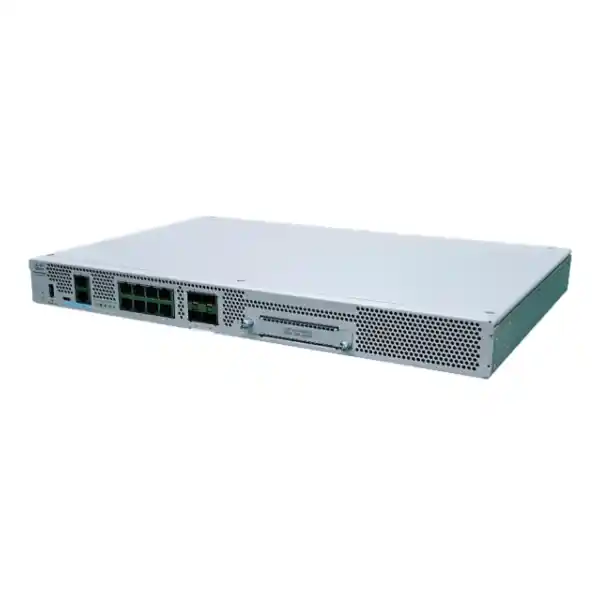
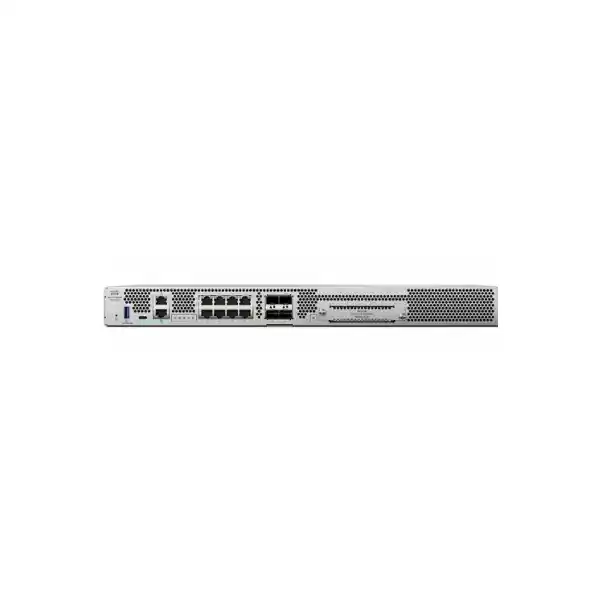
Cisco specifies a 1U chassis with eight Gigabit Ethernet copper data ports and four SFP+ slots supporting compatible 1/10Gbps modules. Threat Defense benchmarks include 13 Gbps firewall plus application visibility and control, 9 Gbps with firewall, application control and IPS, and 2.5 Gbps TLS decryption. These figures describe different tests, not simultaneous guaranteed capacities.
The hardware provides a dedicated Gigabit management connection, USB-C and RJ-45 console options, and a 960GB SSD. It has a single internal AC supply rather than redundant internal power supplies. The 1230 copper ports do not provide PoE. Order the required optics separately unless the quotation explicitly includes them.
Manufacturer product identifiers distinguish CSF1230-TD-K9 for Threat Defense and CSF1230-ASA-K9 for ASA. These are Cisco product identifiers, not a verified FourTeck Tanzania inventory SKU. Confirm the required variant before accepting a quotation or comparing offers from different suppliers.
Start with the software decision
The same model name can appear in proposals for different software environments. Ask whether the project requires Threat Defense or ASA before comparing prices. Choosing the correct image affects how the installation is managed, which security functions are being purchased and how an existing configuration should be assessed. A hardware name by itself does not describe the complete security solution.
For a project centred on application-aware inspection and additional threat services, evaluate a Threat Defense configuration with the relevant entitlements. For an established ASA environment, have the technical team assess the ASA option against the existing network and feature requirements. Neither choice should be made simply because a previous purchase order used the same manufacturer. Document the operating requirements that justify the selection.
Treat migration between software environments as a planned project. Ask for a review of current rules, routing, address translation, VPN dependencies and administration methods. Do not assume an existing backup can be restored unchanged onto a different image or appliance. A written compatibility assessment and an agreed test plan are more useful than a broad assurance that the new firewall will behave exactly like the old one.
Understand performance before comparing models
The useful throughput question is how much traffic must cross the device while the required security policies are active. Internet circuit speed is only one input. Traffic between internal networks, encrypted sessions, branch connections and application bursts may share processing resources. A sizing discussion should distinguish traffic that merely traverses the firewall from traffic that needs deeper inspection.
Do not add the published benchmark figures together. A firewall test and a TLS decryption test represent different workloads. Nor should a headline capacity be treated as the bandwidth that every individual connection will achieve. The network path, endpoint behaviour and selected interface can introduce limits elsewhere. Record the actual traffic paths so that an apparently generous aggregate figure does not conceal a constrained connection.
A practical baseline should include busy periods rather than a single quiet observation. Capture peaks during business opening, scheduled synchronisation, software distribution and backups. Include the security features you intend to enable after installation. Buying only for the current lightly inspected configuration can leave insufficient headroom once the organisation begins using the controls that motivated the purchase.
Ask the reviewer to state assumptions in the sizing recommendation. Useful assumptions include encrypted traffic share, concurrent sessions, new connection activity, expected growth and acceptable utilisation. The result should explain why this model fits the proposed workload and identify conditions that would trigger a larger-platform review. This makes future capacity decisions easier to defend and reduces reliance on informal expectations.
Plan copper and fibre connections as a port map
Before ordering, draw a simple port map showing the intended internet handoff, internal switch uplink, isolated service networks and management connection. Label the speed and media type at both ends of every link. This catches a common procurement problem: selecting a firewall for its processing capacity while overlooking the physical connection required by the upstream router or downstream switch.
An SFP+ slot is not a complete optical link. The transceiver must suit the firewall, software release, switch or router at the far end, fibre type and link distance. Confirm the exact supported module and cable combination during configuration review. Avoid assuming that an existing optical module will work merely because it fits the slot or uses a familiar connector.
Separate network segmentation requirements from physical port requirements. Some designs use dedicated connections, while others carry multiple logical networks over a switch uplink. Ask the implementation team to validate the proposed topology and supported configuration rather than buying extra equipment based on a rough count of departments. The goal is a clear security boundary that can be operated reliably.
Include spare capacity in the port plan where future changes are credible. A second provider, a new service network or a revised management design may otherwise consume a connection already allocated elsewhere. Record which connections are reserved and why. This is particularly helpful when several teams share responsibility for the firewall, access switches and internet services.
Match licensing to the controls you intend to use
Cisco documents Essentials, IPS, Malware Defense, URL Filtering and Cisco Secure Client licensing for Threat Defense deployments. These should be reviewed as distinct requirements. Do not assume that ordering the chassis automatically purchases every security service or every remote-access entitlement. The quotation should state what is included, what is optional and which subscription periods apply.
Build a requirement-to-license checklist before procurement. If the business asks for intrusion prevention, identify the associated entitlement. If it asks for web category controls or malware inspection, ensure those requirements appear explicitly in the proposed subscription set. Remote user access should have its own licensing review, including the intended client use. This avoids discovering a missing entitlement during implementation.
The commercial comparison should also identify management and support costs separately from appliance hardware. A low initial equipment price can be misleading if it excludes the services necessary for the intended design. Ask for a complete configuration covering the agreed period, with renewal responsibilities and dates made visible to the people who will maintain the system.
Nominate an owner for licensing administration. That person or team should understand which organisational account will hold the entitlements and who can assist if registration needs attention. Keep purchasing records and renewal references accessible to authorised administrators. Good entitlement records reduce confusion when a device is replaced, responsibility changes or the organisation reviews its security expenditure.
Decide who will manage the appliance
Cisco provides a Firewall Device Manager deployment guide for this model family and documents Firewall Management Center deployment workflows. Select the management approach according to operational requirements and the supported software combination. Local administration may be appropriate for some environments; a broader estate may need a centrally governed approach. Validate feature requirements before committing to either.
For a single-site organisation, the key question is whether someone can maintain policy consistently after installation. Agree who approves changes, who performs them and who checks that they produced the intended result. An intuitive interface cannot replace this ownership. Ensure the administrator has a recovery path if an interface, routing or access-policy change interrupts normal management.
For a distributed organisation, consider how branch-specific exceptions will be reviewed. A shared policy approach should still reflect legitimate differences in local services and network addressing. Document which settings belong to the central security team and which require branch input. That distinction helps prevent an urgent local request from becoming a permanent, poorly understood exception.
Discuss management reachability as part of the network design. Identify the permitted administration sources, the route to any central management service and the behaviour during a WAN outage. Avoid placing management access on an unrestricted user network for convenience. Keep the administrative path deliberate, documented and tested before the device becomes the only route to important business services.
Define security zones around business relationships
A useful zone design describes which groups of systems should communicate and why. Start with business users, infrastructure services, externally reachable applications, visitors and systems that need stronger isolation. Departments are not always the right boundary: two teams may require identical access, while devices within one department may have very different risk profiles.
Create an application matrix with source, destination, required service, business purpose and owner. This gives the implementation team a concrete basis for policy instead of a request to make everything work. Where an application dependency is unknown, plan a discovery or testing step. Broad temporary access should have an owner and a review date so it does not become an invisible permanent rule.
Consider traffic that remains inside the local switching environment. A firewall can only enforce policy on traffic that reaches its inspection path. If separation is a project objective, ask the designer to show where traffic between the relevant networks is routed. Adding a security appliance at the internet edge does not automatically make every internal connection pass through it.
For visitor access, begin with the services visitors actually need. For shared devices, identify the approved management systems and destinations. For application servers, distinguish user-facing access from administration and backup traffic. These distinctions produce a clearer design and make troubleshooting easier because the purpose of each permitted connection is recorded before deployment.
Make encrypted traffic inspection a deliberate choice
Encrypted applications protect information in transit, but inspection decisions need careful planning. Define the categories of traffic the organisation wants examined and the traffic that should remain exempt under its policies. Consult the relevant internal owners before implementation, particularly where sensitive applications, certificate requirements or application-specific restrictions may be involved.
A decryption plan should cover endpoint trust, certificate handling, application testing and a controlled exception process. Do not assume every application will behave identically after inspection is enabled. Some services may require a different treatment. Build a representative test group containing the applications that matter to operations, rather than validating only general web browsing.
Capacity planning should reflect the traffic selected for decryption. A project that begins with a small inspected subset may later expand significantly. Record that expectation at purchase time so the sizing assessment reflects the intended end state. Keep a clear distinction between observed traffic volume and a forecast; both are useful, but they support different levels of confidence.
Introduce inspection changes in stages and review the outcome. Check application functionality, user experience and the usefulness of the resulting visibility. Retain a documented way to reverse a change that causes an unexpected business impact. This approach helps the organisation gain value from inspection without treating a single global policy change as a complete implementation strategy.
Prepare branch VPN and remote-access requirements
If the firewall will connect branches, list the locations, peer devices, protected networks and applications carried between them. Identify any overlapping private address ranges before migration. A tunnel can establish successfully while the intended application remains unreachable because routing, address translation or access policy does not match the business requirement.
For a replacement project, collect the existing VPN design and coordinate with the administrator at the other end. Agree the change window and the tests that both parties will perform. Keep authentication secrets out of ordinary quote requests and general email threads; provide sensitive configuration through the agreed secure project process when it is needed for implementation.
Remote users should be assessed separately from site connections. Record expected concurrent usage, endpoint types, identity requirements and the applications that should be reachable. Ask for confirmation of software support and licensing for the proposed solution. Avoid using a device capacity figure as a substitute for a full remote-access design.
Acceptance testing should follow the user journey. Confirm that an authorised user can reach the required application, that an unauthorised source remains blocked and that the expected event information is available to administrators. A successful connection indicator is useful but insufficient on its own. The test should demonstrate the intended access boundary as well as connectivity.
Account for site power, cooling and continuity
Place the appliance in a suitable rack environment with access for cabling and maintenance. Confirm mounting arrangements, cable clearance, airflow and the power connection before delivery. An equipment room that already contains networking hardware may still need a practical review if space is crowded or cable bundles obstruct service access.
The single internal power supply is an important purchasing consideration. If the business requires resilience against appliance or power-component failure, ask for a separate availability design and verification of the chosen software topology. Do not infer resilient operation from the rack form factor or from the presence of more than one internet circuit.
Review the complete power path, including the upstream network equipment. A protected firewall cannot maintain a useful connection if the provider handoff or internal switching loses power. Specify the desired operating time during an interruption and have the electrical or infrastructure team size the appropriate power arrangements. Include planned shutdown and recovery procedures in the handover.
For Tanzania deployments, collect actual site conditions rather than relying on a generic regional assumption. Ask about power continuity, cabinet ventilation, access restrictions and who can attend the equipment location. These details affect implementation planning and support arrangements. Confirm any on-site service scope in the quotation; do not assume a location is covered simply because hardware can be delivered there.
Use a controlled migration plan
Begin a replacement by exporting the relevant configuration and recording the current network relationships. Identify rules that are no longer needed, duplicate objects and exceptions whose purpose is unclear. Migration is an opportunity to improve clarity, but changes should be deliberate. Removing unfamiliar entries without checking application ownership can create avoidable disruption.
Prepare the target configuration against the approved design and test it where practical before the production window. Record software versions, interface assignments and administration access. Confirm that the team has the necessary credentials and a reachable contact for each external dependency. The migration window should not be the first time anyone discovers that an upstream change requires another organisation.
Define a rollback decision point. State what must work before the site is accepted, how long troubleshooting can continue and who can authorise restoration of the previous path. Keep the previous configuration and cabling information available. A rollback plan is most useful when it is specific enough to execute under pressure without relying on the memory of one engineer.
After the cutover, verify critical services with their owners and observe the network through a representative operating period. A quiet after-hours test may miss scheduled jobs or business opening traffic. Record any deferred issues with an owner and deadline. Finish the project with a clear distinction between accepted operation and items that still require investigation.
Define evidence for acceptance and handover
Use a written acceptance checklist covering both successful access and intentional denial. Typical test categories include internet browsing, business applications, name resolution, published services, branch connectivity and administrative access. Select the categories relevant to the actual design. Each test should identify the source, expected outcome and person responsible for confirming it.
Performance acceptance should use an agreed method. Record which security services were active, what traffic was generated and where measurements were taken. This prevents a later comparison between unlike results. If the project has a specific throughput or response-time objective, agree its test conditions before purchase rather than introducing a new expectation at the end.
The handover should include a current network diagram, interface map, policy ownership record and recovery information. Include the agreed software and licensing details along with references to support arrangements. Store sensitive information using the organisation’s access controls. A large configuration export without explanatory context is difficult for a new administrator to use confidently.
Make training practical. Ask the team to demonstrate the common tasks the customer will own, such as reviewing events, requesting a change or checking basic device health. Separate routine operations from tasks that require specialist assistance. A useful handover leaves the organisation able to identify when something is wrong and how to obtain the appropriate help.
Keep operations manageable after installation
A firewall policy should evolve with the business. Assign owners to access requests and review rules when applications are retired or moved. Record why an exception exists and when it should be reconsidered. This keeps the policy aligned with real requirements and reduces the burden of investigating entries whose original purpose has been forgotten.
Plan event review around questions the team can act on. Decide which events need attention, who receives them and how they are escalated. Collecting large volumes of information without a review process can obscure the incidents that matter. Where an external monitoring or log platform is proposed, confirm compatibility, retention requirements and costs as a separate part of the design.
Maintain a software lifecycle plan with compatibility checks and a suitable maintenance window. Review the release documentation relevant to the installed environment before an upgrade. Back up the necessary configuration and confirm a recovery approach. Treat a software change as an operational change with testing, even when it is part of routine maintenance.
Review capacity using trends as well as individual peaks. A gradual rise in sessions or inspected traffic may matter more than one isolated spike. Compare observed demand with the assumptions used in the original sizing assessment. This creates a sensible point for discussing expansion before a new branch, application or security requirement puts pressure on the existing deployment.
Compare quotations on the same scope
Ask every quotation to identify the exact software variant and the security services required by your design. Confirm subscription duration, management requirements, support coverage and any implementation work. Without these details, two offers carrying the same appliance name may describe materially different purchases.
List accessories explicitly. Include the proposed transceivers, patching, mounting items and power-related requirements where applicable. Mark items that will be reused and identify who has checked their compatibility. Do the same for professional services: discovery, migration, testing, documentation and training should be visible if they form part of the requested project.
Request a written statement of delivery expectations and commercial terms for the exact configuration. This page does not establish a live stock position, a fixed Tanzania price or a guaranteed implementation date. A current quotation should resolve those items and distinguish hardware supply from the scheduling of technical work.
Consider the cost of operating the solution over the intended period. Renewal planning, management resources and the effort required to maintain policies all affect the value of a purchase. A clear, complete proposal helps technical and procurement teams discuss the same outcome instead of separately optimising hardware price and security requirements.
Common buying situations
A growing office may be replacing a desktop firewall because its network now includes separate user, visitor and application environments. In that situation, focus the review on traffic paths, physical connections and the inspection policy. Do not assume growth automatically requires this model; validate the workload and compare the resulting design with suitable alternatives.
An organisation standardising several branches may place greater emphasis on management consistency. The review should establish which policies are shared, which site settings differ and how changes are approved. The purchase decision then depends on both local capacity and the operational model for the wider network.
A business replacing an older ASA deployment may need to preserve essential connectivity while considering a broader security inspection strategy. Evaluate those objectives separately and then combine them into a migration plan. This prevents a straightforward hardware replacement from quietly becoming a much larger software and policy change without adequate testing.
A site introducing faster internal uplinks may be attracted by the fibre connection options. Check the traffic actually crossing the security boundary and the proposed module compatibility. Faster physical links create connection capacity, but they do not establish the inspected application throughput of the complete environment. The assessment must still include policy and traffic characteristics.
Prepare a useful technical enquiry
The fastest route to a meaningful assessment is a short description of the present network and the intended change. Describe the problem in observable terms: an application stalls during backups, a new network must be isolated, an additional branch needs access, or the current appliance lacks the required connection type. This helps the reviewer separate product selection from an unresolved network problem.
Attach a diagram with device roles and connection speeds if one is available. A simple, accurate diagram is more useful than an elaborate drawing that no longer reflects the site. Mark uncertain details so they can be checked during discovery. Include the intended route for internet, internal application and inter-site traffic, because these may place different demands on the proposed firewall.
Provide measurements with their context. State when they were collected, which security functions were active and whether the period included normal business peaks. If measurements are unavailable, make that explicit and request a discovery step. An estimate can support an initial conversation, but it should not be presented as a measured capacity requirement or a performance guarantee.
Finally, identify the people who must approve the design and accept the completed work. Procurement may need a complete cost breakdown, application owners may need a test window, and administrators may need training or documentation. Bringing those needs into the initial enquiry makes the eventual proposal more useful and helps avoid a technically sound configuration that cannot be implemented within the organisation’s practical constraints.
Buyer questions
Is this a complete security bundle? The model name alone does not identify all subscriptions, management services, accessories or support. Ask for a configuration that maps each required capability to the quoted items. Confirm the intended software image before comparing offers.
Can I use existing fibre modules? Reuse should be assessed against Cisco support information, the installed software, the far-end device and the optical path. Include the exact module identifiers in the technical review. Physical fit is not enough to confirm a supported design.
Will it make a slow application faster? A firewall replacement only addresses limitations attributable to the existing security path. Measure the problem first and consider the internet service, local switching, endpoint and application server. Establish a baseline so any improvement can be evaluated objectively.
Does it provide power to access points or phones? This model does not supply PoE through its copper data ports. Plan endpoint power through suitable switching or other approved equipment. Keep that requirement separate from the firewall selection and include it in the overall network bill of materials.
Can a single appliance satisfy a strict uptime requirement? That depends on the organisation’s tolerance for equipment failure and maintenance interruption. Request an availability assessment covering the appliance, power, switching and provider connections. A suitable resilience design requires more than choosing a rack-mounted unit.
How should I request a quote? Provide the number of sites, current and planned bandwidth, inspection requirements, network diagram and software preference if already decided. Include interface needs and the desired support scope. Avoid sending passwords, private keys or other authentication secrets with the initial enquiry.
Request a configuration-led Tanzania quotation
Ask FourTeck Tanzania to review the Cisco Secure Firewall 1230 against your actual network requirements. Share the current firewall model, internet handoff, internal uplinks, branch connections and expected security controls. Indicate whether you need hardware supply only or a separately scoped migration and handover proposal.
For deployment planning, review the Tanzania site’s Cisco firewall installation and configuration service information. Agree the project boundaries before ordering so that hardware, subscriptions and implementation responsibilities are clear. The next step is a written configuration and quotation identifying the selected variant, required accessories and commercial terms for your organisation.




Reviews
There are no reviews yet.