
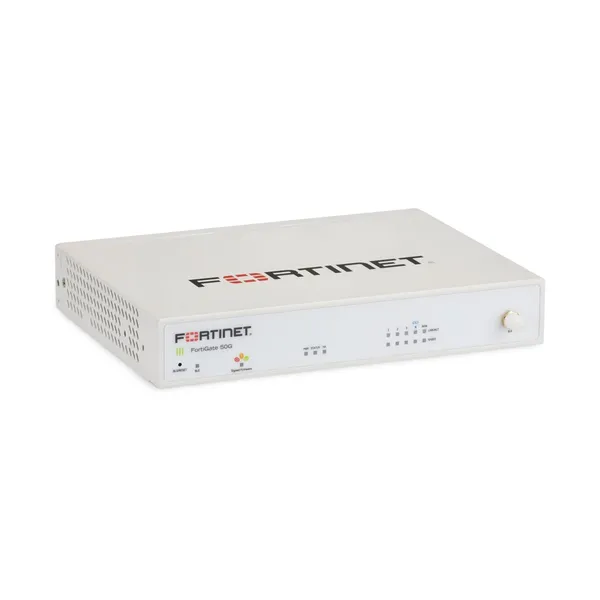
FortiGate 50G SFP (FG-50G-SFP) Tanzania
The FortiGate 50G SFP (FG-50G-SFP) is a compact Fortinet next-generation firewall for organizations that want security, routing, VPN and SD-WAN functions in a branch-friendly platform with a dedicated Gigabit Ethernet SFP interface. That SFP connectivity is especially useful when an ISP, campus backbone or upstream network presents fiber or another compatible SFP-based handoff. For Tanzania buyers, the practical value is not simply adding a firewall at the edge: it is creating a manageable security boundary that can combine application-aware policy, intrusion prevention, encrypted connectivity and WAN control through FortiOS. FourTeck can assist procurement teams with model selection, subscription planning and deployment scoping without assuming that one license or topology suits every network.
What the FG-50G-SFP is designed to solve
A growing branch or small business network often needs more than basic internet filtering. Users may depend on cloud applications, remote-access services, site-to-site connectivity, multiple WAN paths and segmented internal networks. The FG-50G-SFP gives network administrators a compact FortiGate platform that can enforce security policy while participating in the wider Fortinet Security Fabric. The SFP slot differentiates this model for sites where fiber-ready uplink flexibility matters. It can reduce the need to place an unnecessary media-conversion device in front of the firewall when the chosen optic, cabling and upstream interface are mutually compatible.
Fortinet positions the 50G family around converged networking and security using FortiOS and its SP5 security processing architecture. Published 50G-series specifications for the FG-50G-SFP include firewall throughput of 5/5/4 Gbps for 1518/512/64-byte UDP packets, IPS throughput of 2.25 Gbps, NGFW throughput of 1.25 Gbps and threat-protection throughput of 1.1 Gbps under Fortinet’s stated test conditions. Real deployments should be sized around enabled inspection features, traffic mix, encrypted traffic, user count, session behavior and future growth rather than headline firewall throughput alone.
FortiGate 50G SFP verified hardware and performance overview
| Model | FG-50G-SFP |
| Hardware accelerated WAN | 1 × GE WAN |
| Hardware accelerated RJ45 ports | 3 × GE RJ45 |
| SFP connectivity | 1 × hardware accelerated GE SFP slot |
| FortiLink default port | 1 × GE RJ45 FortiLink port |
| Management / utility | 1 × USB, 1 × RJ45 console |
| Firewall throughput | 5 / 5 / 4 Gbps (1518 / 512 / 64-byte UDP) |
| IPS / NGFW / threat protection | 2.25 / 1.25 / 1.1 Gbps under Fortinet test methodology |
| Form factor | Compact fanless desktop; 40.5 × 216 × 160 mm; approximately 1.0 kg |
Performance figures are vendor-published laboratory values and are not guarantees for every production network. Feature combinations, packet size, inspection mode, traffic profile and software version can affect observed performance.
Fiber uplink, SD-WAN, VPN and security deployment planning
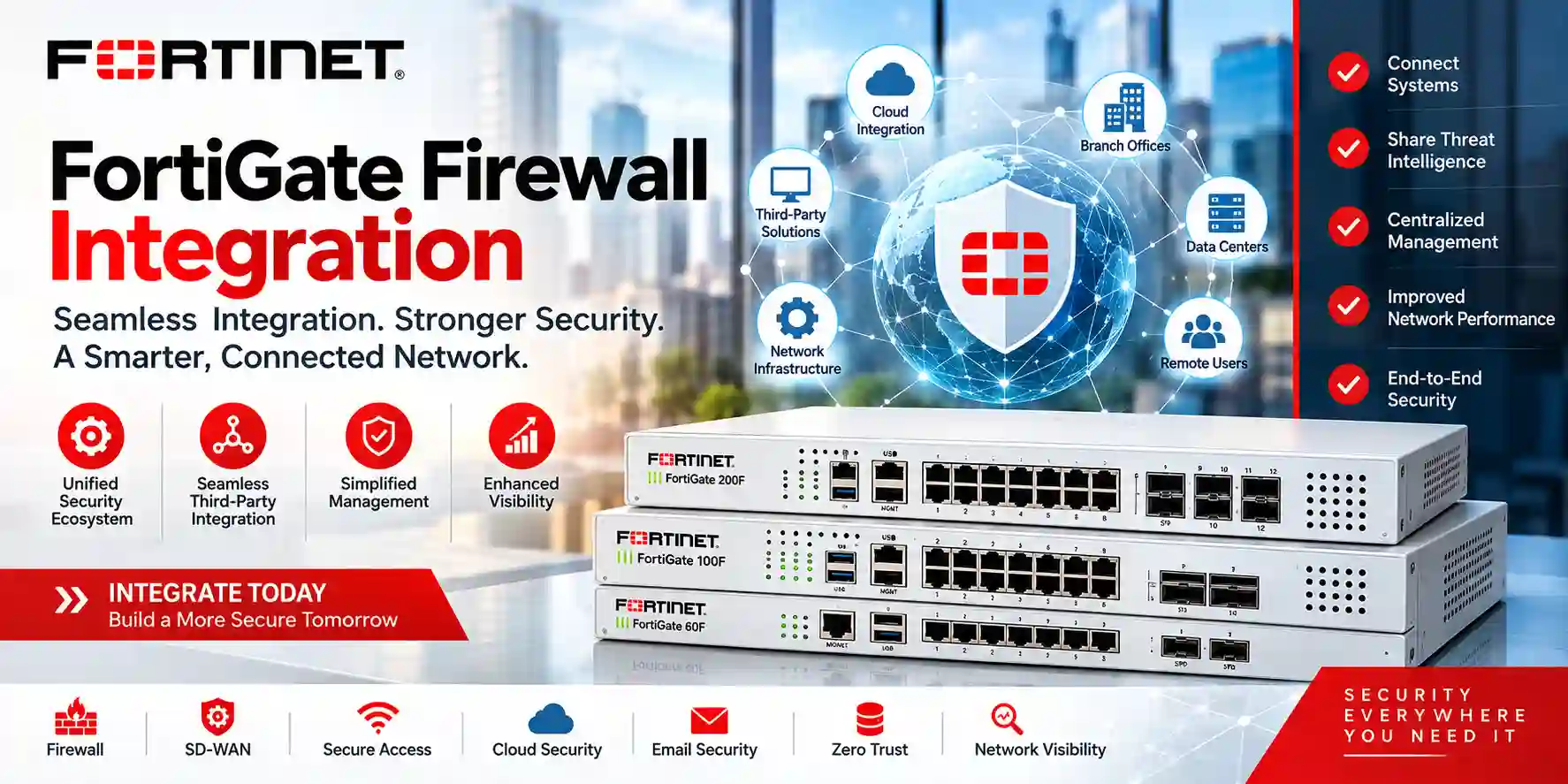
The presence of an SFP slot should be treated as a design option, not an assumption that every fiber circuit can be plugged in directly. Before ordering, confirm the provider handoff, optic type, wavelength, connector, speed, fiber mode and any ISP-specific requirements. Procurement should also confirm whether an optic is included or must be purchased separately. On the LAN side, map trusted, guest, server, voice, management and other zones before deployment so policy and segmentation can be built intentionally rather than retrofitted after users are connected.
For multi-link sites, FortiOS SD-WAN can be considered as part of a policy-driven WAN design. Teams evaluating failover or load distribution can also review FourTeck’s specialist resources for firewall deployment planning and the supplied Tanzania guidance around dual-WAN architecture. VPN design should distinguish site-to-site tunnels from individual remote-user access and should account for authentication, routing, address overlap, application requirements and logging. Security services and FortiCare support terms should be selected according to the organization’s operational and risk requirements rather than treated as an afterthought.
Who should consider the FortiGate 50G SFP?
The model is a practical candidate for small and distributed business locations that need a compact firewall and have a requirement for an SFP-capable uplink. Typical evaluation scenarios include branch offices connected to a head office by IPsec VPN, professional offices with cloud-heavy workflows, retail or service locations that need controlled guest and staff access, and organizations standardizing FortiGate policy across multiple sites. It can also suit networks where a FortiLink-based switching design is being considered. Suitability still depends on measured traffic, security services, VPN concurrency, expected growth and interface requirements. Environments that need higher inspected throughput, more interfaces, built-in PoE or greater expansion should compare other FortiGate models rather than selecting the 50G-SFP solely because it is compact.
Regional procurement and deployment guidance
FortiGate 50G SFP (FG-50G-SFP) Tanzania
Tanzania organizations evaluating the FortiGate 50G SFP typically need to balance internet-edge security, manageable operations and connectivity choices. The SFP interface is relevant where a provider or upstream network offers a compatible fiber handoff, but the exact transceiver and fiber parameters should be checked before procurement. A useful quotation request should therefore identify the ISP handoff, expected internet speed, number of users, important cloud applications, VPN requirements, existing switches and access points, and whether the site needs one or multiple WAN connections. This gives the solution designer enough context to determine whether the FG-50G-SFP is appropriately sized and what licenses or accessories are required.
For Tanzanian businesses with branches, a FortiGate deployment can be planned around standardized policies and secure site-to-site connectivity. The firewall can form part of an SD-WAN strategy when multiple links are available, while application control, intrusion prevention and other FortiGuard-backed capabilities can be selected according to the required subscription. Organizations should distinguish hardware procurement from the ongoing security-service and support lifecycle. Renewal dates, support entitlement, configuration backups, administrator access and firmware governance should be documented from the start. This is particularly important where the firewall becomes a dependency for internet access, VPN connectivity and access to hosted business systems.
FourTeck can help build a requirement-driven quotation for Tanzania rather than presenting a generic bundle. Buyers can compare the broader FourTeck Africa technology portfolio when a project spans multiple countries, while Tanzania-specific procurement should keep local topology and operational ownership central to the design. Before approval, confirm interface counts, compatible SFP requirements, subscription term, support expectations, installation scope and any migration from an existing firewall. That process reduces surprises during cutover and makes the FG-50G-SFP easier to evaluate against larger or differently equipped FortiGate options.
FortiGate 50G SFP (FG-50G-SFP) Dar es Salaam
Dar es Salaam businesses often operate internet-dependent environments where a firewall must support everyday SaaS traffic, business communications, remote connectivity and access to hosted systems without making network administration unnecessarily complex. The FG-50G-SFP can be evaluated for offices, professional services, retail administration sites and distributed branches that want a compact FortiGate with an SFP uplink option. A buyer should begin with the actual circuit presentation: if the service provider supplies fiber, confirm whether the handoff is direct optical Ethernet or terminates at provider equipment with copper Ethernet. This determines whether the integrated SFP slot is useful for the specific circuit.
A Dar es Salaam deployment should also consider resilience. If business operations cannot tolerate a single internet failure, document the secondary-link technology and decide whether failover, active use of both links or application-aware path selection is needed. FortiOS SD-WAN features can support policy-driven designs, but successful implementation depends on clean routing, health checks, DNS planning and realistic application priorities. For organizations linking a Dar es Salaam office to other Tanzanian or international sites, IPsec VPN planning should include address schemes, tunnel routing and failover behavior. Remote-user access requires a separate discussion about identity and authentication.
Procurement teams should request a quotation that clearly separates the appliance, any required SFP optic, FortiGuard security subscription, FortiCare support and professional configuration services. They should also record the current firewall’s NAT rules, public services, VPNs and special routing before migration. A cutover plan with rollback steps is more valuable than simply replacing hardware. The FG-50G-SFP’s compact fanless design can be attractive for office deployments, but power quality, ventilation and physical security remain part of good installation practice. The result should be a firewall deployment sized for the site’s inspected traffic and operational needs, not merely its advertised internet speed.
FortiGate 50G SFP (FG-50G-SFP) Mwanza
For organizations in Mwanza, the FortiGate 50G SFP can be assessed as an edge-security platform for a branch, regional office or growing business that needs secure internet access and connectivity back to central systems. The SFP slot provides additional uplink flexibility when the network design includes compatible fiber. Before purchasing optics, confirm whether the local service circuit uses single-mode or multimode fiber, the required wavelength and connector type, and whether the ISP permits a customer-owned transceiver at the demarcation point. If the provider presents copper Ethernet, the standard GE WAN interface may remain the more appropriate connection.
Mwanza buyers with centralized applications should place VPN and application availability high on the requirements list. A site-to-site IPsec tunnel can securely connect a branch to a data center, cloud edge or head office, while security policy can control what branch users are permitted to reach. If a second WAN link is available, SD-WAN can be considered to improve path selection and failover. The design should account for application behavior during link changes because not every live session survives a path transition transparently. Critical services should be identified and tested during commissioning.
The security subscription decision matters as much as hardware selection. Organizations should define which inspection services they intend to enable, because inspected throughput is the relevant sizing reference for a security appliance. They should also decide who owns policy changes, firmware maintenance, alert review, configuration backups and renewal tracking. For multi-site organizations, standard naming and policy templates can reduce administration effort. FourTeck can use these inputs to prepare a more precise FG-50G-SFP quotation for Mwanza, including the appliance, suitable service term and any deployment assistance required. The goal is a maintainable security gateway that fits the branch’s actual traffic and support model.
FortiGate 50G SFP (FG-50G-SFP) Arusha
Arusha organizations in tourism, professional services, education, administration and other sectors may need a firewall that can protect cloud-connected users while supporting secure access to systems elsewhere. The FG-50G-SFP is worth evaluating when the site is appropriately sized for the 50G platform and an SFP-capable interface adds practical value. Rather than selecting it by user count alone, document peak WAN utilization, concurrent sessions, VPN traffic, web applications, inspection requirements and expected growth. A site with modest bandwidth but heavy encrypted inspection can have different sizing needs from a site with higher raw bandwidth and simpler policy.
Network segmentation is another important planning topic. Guest access, staff endpoints, servers, voice devices, cameras and management interfaces should not automatically share one unrestricted network. The FortiGate can enforce inter-zone policy, while switching and wireless infrastructure provide the VLAN and access architecture. If Fortinet switching is part of the project, the FG-50G-SFP includes a default FortiLink-capable GE RJ45 interface, allowing the broader integrated-management approach to be evaluated. Compatibility and design should be confirmed for the exact switch models and software versions chosen.
For an Arusha quotation, include whether the firewall is replacing an existing appliance or supporting a new site. Migration projects need an inventory of current policies, NAT, VPN, DHCP, routing and public-facing services. New sites need an IP plan, VLAN plan, ISP details and administrator ownership. Subscription and support terms should be aligned to the organization’s budgeting cycle so renewal does not become an unexpected operational risk. Where the organization has operations outside Tanzania, the FourTeck Uganda resource can support regional technology research, while the Tanzania deployment itself should remain based on the Arusha site’s exact connectivity and security requirements.
FortiGate 50G SFP (FG-50G-SFP) Dodoma
Dodoma buyers evaluating the FG-50G-SFP should frame the project around business continuity, controlled access and manageable security operations. Government-adjacent organizations, professional offices, NGOs, education sites and private businesses may all have different compliance and operational requirements, so no single policy template should be assumed. Start by documenting internet circuits, internal networks, remote sites, externally published services and administrative responsibilities. The integrated GE SFP slot can be useful for compatible fiber uplinks, while the other accelerated Ethernet interfaces can support conventional WAN and LAN designs.
If the firewall will connect Dodoma to Dar es Salaam or another hub, define the VPN topology before ordering. Hub-and-spoke, direct site-to-site and cloud-based connectivity models have different routing and resiliency implications. The published IPsec performance of a platform is useful for comparison, but production design also depends on encryption settings, packet sizes and concurrent security functions. Organizations planning remote access should separately determine identity controls, multifactor authentication requirements and endpoint policies. These decisions affect the complete solution even when the hardware model remains unchanged.
Operational planning should cover configuration backup, administrator accounts, firmware review, logging, alert handling and subscription renewal. A firewall that is installed once and then ignored gradually becomes harder to manage safely. Procurement teams can improve quotation accuracy by providing the current topology, desired subscription duration, optic requirements and whether installation or migration is included. For projects that also need server, switching, wireless or endpoint components, scope those dependencies alongside the firewall so addressing, VLANs and access rules are coherent. FourTeck’s role in the purchasing discussion can then focus on matching the FG-50G-SFP and associated services to documented requirements rather than relying on unsupported assumptions about stock, delivery or site conditions.
FortiGate 50G SFP (FG-50G-SFP) UAE
UAE organizations considering the FG-50G-SFP may be comparing it with other compact FortiGate appliances for branch offices, retail sites and distributed corporate locations. The model’s GE SFP interface is useful when an SFP-based handoff is part of the edge design, but buyers should verify the carrier demarcation and optic specification before procurement. The firewall’s value is broader than the physical uplink: FortiOS provides a common operating environment for firewall policy, SD-WAN, VPN and security services, which can help organizations standardize branch configurations across multiple sites.
A multi-branch UAE design should define what is centralized and what remains local. Internet breakout, SaaS access, private applications and guest traffic can each have different routing and inspection needs. SD-WAN policies can use link health and application requirements to guide path selection when more than one circuit is available. Site-to-site VPN can secure traffic to a data center, cloud environment or regional hub. Administrators should test failure behavior rather than assuming that every application responds identically when an uplink changes.
Buyers can explore the FourTeck Fortinet UAE resource for Fortinet-focused regional information. For a specific FG-50G-SFP order, the quotation should identify appliance quantity, support and FortiGuard term, required optics, implementation scope and migration requirements. Hardware-only and security-bundle decisions should be made deliberately because the enabled services affect the operational capabilities and lifecycle of the deployment. Organizations spanning UAE and East Africa should also align naming, VPN addressing and policy standards across regions, while respecting each site’s provider handoff and bandwidth profile. This produces a repeatable architecture without assuming that every branch has identical connectivity.
FortiGate 50G SFP (FG-50G-SFP) Uganda
Uganda deployments of the FortiGate 50G SFP can be planned for organizations that need a compact branch firewall with fiber-ready interface flexibility and integrated security functions. The first sizing question is not simply the number of employees. Buyers should document internet bandwidth, peak usage, encrypted traffic, VPN demand, enabled inspection features and anticipated growth. Fortinet’s published performance figures provide a common comparison point, but actual throughput depends on the configuration and traffic mix. This distinction is important when a branch relies heavily on cloud collaboration, web applications or encrypted business services.
For companies with operations in both Uganda and Tanzania, the firewall can form part of a standardized FortiGate design. Site-to-site IPsec VPN can connect offices, and SD-WAN can be considered where sites have multiple WAN services. Addressing should be planned to avoid overlapping private subnets between branches, because overlap complicates VPN routing and future integration. Administrators should also define logging, backup and change-control practices across sites. Consistent policy names and documentation reduce troubleshooting time when a regional IT team supports several locations.
The FourTeck Uganda site provides a regional reference for projects centered in Uganda. An FG-50G-SFP procurement request should state whether an SFP optic is required, the provider handoff, subscription term and any installation or migration work. Buyers should not assume an optic is automatically bundled with the appliance. They should also determine whether their security requirements call for FortiGuard services beyond base firewalling and how FortiCare support will be handled. A requirements-led quotation makes it easier to compare the 50G-SFP with alternative FortiGate models if additional ports, PoE, storage or higher inspected performance become necessary.
FortiGate 50G SFP (FG-50G-SFP) Kampala
Kampala is a common hub for organizations operating multiple Ugandan branches, making central policy and secure branch connectivity important design themes. The FG-50G-SFP can be evaluated for appropriately sized offices where a compact FortiGate and SFP uplink option fit the physical and performance requirements. If Kampala acts as a hub site, however, designers should carefully evaluate aggregate VPN and inspection load from all connected branches. A platform that is appropriate for an individual branch is not automatically the right choice for a heavily loaded central hub.
For a standalone Kampala office, planning should cover internet-edge policy, VLAN segmentation, guest access, remote administration and cloud application traffic. Where two providers are available, SD-WAN can support health-based path selection and failover. The organization should decide which applications deserve priority and what constitutes a failed link. Simple ping reachability may not always reflect application availability, so health-check targets and thresholds should be chosen carefully. If fiber is presented directly, the FG-50G-SFP’s SFP slot can simplify the physical edge, subject to optic compatibility.
A complete quotation should specify the desired support and security subscription period and whether the project includes configuration, migration and testing. Migration from another firewall should begin with a rule review rather than blindly copying obsolete policies. Remove unused objects, document public NAT and confirm VPN peers. After cutover, test DNS, business applications, inbound services, VPNs and secondary-WAN behavior. This approach turns a firewall purchase into a controlled infrastructure change. Kampala buyers can coordinate broader Ugandan requirements through the regional FourTeck resource while using exact site data to decide whether the FG-50G-SFP has sufficient capacity and interface flexibility.
FortiGate 50G SFP (FG-50G-SFP) Arua
For an Arua branch, the FG-50G-SFP may be considered when the site needs secure internet access, VPN connectivity and a compact hardware footprint. Branch planning should account for the reliability and presentation of available WAN services. If the primary circuit uses an optical handoff compatible with a supported SFP transceiver, the integrated SFP slot can be valuable. If not, the appliance still provides Ethernet interfaces for conventional network designs. The key is to confirm the actual demarcation instead of buying optics based on assumptions.
Resilience can be particularly important for a remote branch that depends on centralized applications. A second circuit can be incorporated into an SD-WAN design where appropriate, but backup connectivity should be tested under real failure conditions. Administrators should know how DNS, VPN tunnels, voice, cloud sessions and business applications behave when the preferred path is unavailable. The branch’s private IP range should also be unique within the organization so VPN routing remains straightforward. Centralized monitoring and configuration standards can help a smaller site operate with limited on-site IT resources.
Security policy should be kept understandable. Separate business devices, guest users and infrastructure where practical, permit only required inter-zone traffic and document exceptions. Subscription selection should reflect the security functions the organization expects to use, while FortiCare planning should match its support process. For procurement, provide user and device estimates, circuit speeds, VPN destinations, required optic details and the expected service term. These inputs allow FourTeck to discuss an FG-50G-SFP configuration for Arua without making unsupported assumptions about availability or local infrastructure. If future expansion is likely, include that growth in the initial sizing discussion so the selected firewall remains useful beyond the immediate installation.
FortiGate 50G SFP (FG-50G-SFP) Mbarara
Mbarara businesses looking for a Fortinet firewall may prioritize dependable access to cloud systems, secure branch-to-head-office connectivity and straightforward administration. The FG-50G-SFP offers an SFP interface alongside its accelerated Ethernet connectivity, making it a candidate where fiber-ready edge flexibility is required. The purchasing decision should still begin with capacity planning. Record peak WAN utilization and the security services that will be active, because threat protection and NGFW performance are more meaningful than raw firewall throughput when advanced inspection is enabled.
A branch design can use IPsec VPN for private connectivity to another office or data center. If Mbarara has two WAN options, SD-WAN can be evaluated for failover and application-aware routing. The firewall’s role should be coordinated with LAN switching, wireless networks and DHCP or routing responsibilities. A clean VLAN plan makes policy easier to understand and supports separation between staff, guests, servers, voice and other device classes. If Fortinet switches are being evaluated, the default FortiLink interface is relevant to integrated management planning, subject to compatibility validation.
Operational ownership is essential. Decide who can administer the firewall, where backups are stored, how firmware changes are approved and who receives security alerts. Subscription renewal should be tracked before expiration so security services and support are managed intentionally. An Mbarara quotation request should include these service expectations along with hardware quantity, ISP handoff and optic requirements. This helps distinguish a hardware-only request from a complete security lifecycle requirement. For organizations with several Ugandan sites, common templates can reduce support complexity, but each branch should retain site-specific routing, WAN and failover documentation. That balance makes regional standardization practical without turning every location into an identical copy.
FortiGate 50G SFP (FG-50G-SFP) Gulu
Gulu organizations can evaluate the FortiGate 50G SFP for branch security where a compact appliance, secure VPN and an SFP-capable uplink fit the requirement. A strong design starts with identifying what must remain available during a WAN interruption. If essential applications are hosted elsewhere, consider whether a secondary circuit is justified and whether it has enough capacity for priority traffic. SD-WAN can help control path selection, but business priorities need to be translated into health checks and policies before the feature provides meaningful resilience.
The SFP interface is a physical advantage only when the upstream network is compatible. Confirm the service-provider handoff and transceiver parameters before ordering. On the inside network, define logical zones and avoid overly broad rules. A branch may need staff, guest, infrastructure and management segments, with access granted according to business need. For remote support, administrators should use controlled management access and appropriate authentication rather than exposing administration indiscriminately to the internet.
When Gulu is part of a larger organization, standardization can improve operations. Use consistent object naming, VPN conventions, logging and backup processes across branches. At the same time, keep a site record with circuit identifiers, IP details, local contacts and failover procedures. The FG-50G-SFP quotation should include the desired FortiGuard and FortiCare term, required SFP components and whether professional deployment is in scope. If the site is expected to grow significantly, discuss higher-capacity FortiGate models at the same time. This avoids treating the smallest acceptable configuration as the only option and helps procurement compare lifecycle value, interface headroom and future inspection requirements.
FortiGate 50G SFP (FG-50G-SFP) Kenya
Kenyan organizations with branch offices or regional operations can consider the FG-50G-SFP when they need a compact FortiGate with a Gigabit SFP interface and FortiOS security capabilities. In Nairobi or other connected business centers, the SFP slot may align with fiber-based carrier services, but the provider’s exact handoff should always be verified. Some fiber services terminate on carrier equipment and present RJ45 Ethernet to the customer, while others may allow direct optical connectivity. The firewall choice should follow that technical reality.
For companies linking Kenya and Tanzania, a consistent FortiGate architecture can simplify VPN and security operations. IP addressing should be coordinated across countries to avoid overlap, and site-to-site VPN routing should account for primary and backup paths. If each office has multiple internet connections, SD-WAN policy can be standardized at a high level while using site-specific link metrics and bandwidth values. Logging and alerting should be centralized where practical so the regional IT team has visibility across branches.
Kenya-focused buyers can review the FourTeck Kenya technology site for regional context. For the FG-50G-SFP itself, request a quote that identifies the number of appliances, security subscription term, FortiCare requirement, SFP optic details and implementation scope. If the project includes switching or wireless infrastructure, include VLAN and FortiLink requirements in the design discussion. A branch firewall should be sized against inspected traffic and expected growth, not only the nominal ISP package. This approach supports a cleaner comparison between the 50G-SFP and other FortiGate options when the organization needs additional interfaces, PoE, storage or greater security throughput.
FortiGate 50G SFP (FG-50G-SFP) Kuwait
Kuwait businesses evaluating the FG-50G-SFP may be seeking a compact security appliance for branch offices, retail operations or smaller corporate locations. The model provides an integrated GE SFP slot that can be useful for a compatible optical or SFP-based WAN handoff, along with FortiOS capabilities for firewalling, VPN and SD-WAN. Procurement should confirm whether the intended carrier connection can terminate directly on the firewall and what transceiver is required. This avoids ordering an optic that does not match the provider’s network.
Security sizing should focus on the functions that will be enabled. Fortinet publishes separate firewall, IPS, NGFW and threat-protection figures because inspection changes the processing workload. A site using advanced security services should compare the relevant inspected-throughput values with peak traffic and future demand. VPN usage also matters, especially when a branch sends substantial traffic to a regional data center or cloud environment. If the location uses dual internet circuits, SD-WAN policies can be planned around application importance and link quality.
Regional buyers can consult FourTeck Kuwait for Kuwait-focused technology requirements. A quotation for the FG-50G-SFP should distinguish hardware, security subscriptions, FortiCare, optics and implementation services. Organizations migrating from another firewall should provide existing policies, NAT rules and VPN information so the new configuration can be reviewed rather than blindly replicated. Operational plans should also define backups, administrator access and renewal ownership. These details turn a product purchase into a supportable network-security deployment and help the buyer determine whether the 50G-SFP is the correct size for the location.
FortiGate 50G SFP (FG-50G-SFP) Ghana
Ghana organizations considering the FortiGate 50G SFP can assess it for secure branch connectivity, controlled internet access and SFP-based uplink flexibility. For offices that depend on cloud services or centralized applications, the design should start with a map of business-critical traffic. This helps determine which security policies, VPN tunnels and WAN priorities are required. The integrated SFP slot may suit a direct compatible fiber handoff, but carrier presentation and optic specifications should be confirmed before the hardware order is finalized.
Where a Ghana branch connects to regional operations, site-to-site IPsec VPN can be part of a standardized secure connectivity design. Unique IP addressing across sites simplifies routing. If more than one WAN service is available, FortiOS SD-WAN can be evaluated for link health, failover and traffic steering. The organization should define what happens when a link degrades rather than fully fails, because latency, jitter and packet loss can affect applications before connectivity disappears completely. Health-check and policy design should reflect the actual services users rely on.
For procurement, specify whether the requirement is hardware only or includes FortiGuard security services, FortiCare support and deployment assistance. Document the desired subscription duration and renewal ownership. An optic should be treated as a separate compatibility item unless explicitly included in a confirmed bill of materials. FourTeck can use the site’s bandwidth, user profile, VPN needs and inspection requirements to determine whether the FG-50G-SFP is a suitable candidate. If the branch is expected to become a regional hub or carry substantially more traffic, compare larger FortiGate platforms before committing. This ensures the purchasing decision accounts for lifecycle growth rather than only the initial installation.
FortiGate 50G SFP (FG-50G-SFP) Nigeria
Nigeria deployments may involve offices with high dependence on cloud applications and multiple connectivity options, making WAN design a central part of firewall selection. The FG-50G-SFP can be considered for appropriately sized branches that need FortiGate security with a GE SFP interface. Before purchase, verify whether the primary service uses a compatible optical handoff or whether provider equipment supplies copper Ethernet. If several WAN connections are used, document their bandwidth, data characteristics and operational role so SD-WAN policy can be designed intentionally.
For distributed Nigerian businesses, the firewall can support secure site-to-site VPN connectivity and consistent policy across branches. The organization should avoid overlapping IP ranges, maintain configuration backups and standardize administrator access. Security services should be chosen according to risk and traffic requirements. Published threat-protection and NGFW performance values provide more useful sizing context than raw firewall throughput when inspection features are enabled. Growth should be considered, especially if a branch may later host more users, servers or inter-site traffic.
A Nigeria quotation should identify the FG-50G-SFP appliance, required optics, subscription term, FortiCare support and any professional implementation work. If migrating, provide the current firewall configuration and a list of services that must remain reachable during cutover. Testing should include business applications, DNS, VPN, inbound NAT and WAN failover. Regional organizations can coordinate the same principles across West and East African locations while adapting provider and bandwidth details per site. FourTeck can then frame the product discussion around verified requirements and lifecycle planning instead of making assumptions about stock, delivery schedules or service coverage that have not been confirmed for the specific project.
FortiGate 50G SFP (FG-50G-SFP) Seychelles
Seychelles organizations evaluating a compact FortiGate may place particular emphasis on reliable connectivity, remote administration and secure access to off-island cloud or corporate systems. The FG-50G-SFP offers an SFP-capable interface that can be useful where the upstream service is technically compatible. Because connectivity architectures vary, confirm the provider demarcation, optic requirements and backup-link options before ordering. A clear understanding of the WAN edge helps determine whether the SFP slot will be used directly or retained for another network purpose.
If a site depends on external applications, resilience planning should include more than a second link. Determine which applications are critical, how DNS and VPN behave during path changes and whether the backup service has enough capacity. FortiOS SD-WAN can support policy-based path selection when multiple links exist, while IPsec VPN can connect the site securely to regional offices or hosted infrastructure. Security policy should segment user and infrastructure networks according to business need and restrict administrative access appropriately.
Procurement should include a lifecycle view. Confirm the FortiGuard services required, FortiCare support term, administrator ownership and renewal process. Keep configuration backups and network documentation outside the appliance so recovery does not depend on access to a failed device. If the Seychelles location is one branch in a wider African organization, align naming, VPN addressing and policy standards with the rest of the network while keeping site-specific WAN details documented. An FG-50G-SFP quotation should therefore include the appliance, compatible SFP requirements where applicable, subscriptions and any implementation services. This gives the buyer a complete basis for comparison and makes it easier to decide whether the 50G-SFP has enough capacity for current and planned usage.
Related security and connectivity planning
Dual-WAN design
Plan primary and secondary circuits, health checks, failover behavior and application priorities before building SD-WAN rules.
FortiGuard lifecycle
Choose security services according to required inspection and establish an owner for subscription renewal and security operations.
VPN migration
Inventory site-to-site and remote-access VPNs, addressing, authentication and routing before replacing an existing edge firewall.
FortiGate 50G SFP buyer FAQs
Does the FG-50G-SFP have an SFP port?
Yes. Fortinet’s 50G-series specifications list one hardware-accelerated Gigabit Ethernet SFP slot for the FG-50G-SFP. The required optic and compatibility with the upstream circuit should be confirmed separately.
Is the FortiGate 50G SFP suitable for fiber internet?
It can support a compatible SFP-based optical handoff, but “fiber internet” does not define the customer interface by itself. Confirm the provider handoff, speed, transceiver type, wavelength, connector and fiber mode before ordering an optic or planning direct termination.
What is the published firewall throughput?
Fortinet publishes 5/5/4 Gbps firewall throughput for 1518/512/64-byte UDP packets for this platform. Advanced inspection has separate published figures, including 2.25 Gbps IPS, 1.25 Gbps NGFW and 1.1 Gbps threat protection under vendor test conditions.
Does the FG-50G-SFP support SD-WAN and VPN?
The FortiGate 50G family runs FortiOS and is positioned for converged NGFW and secure SD-WAN functions. VPN and SD-WAN design should be based on the site’s topology, link characteristics, security policy and required subscription or support services.
Is an SFP transceiver included?
Do not assume an optic is included. Request a confirmed bill of materials and specify the upstream optical requirements so the correct compatible transceiver can be quoted when needed.
How should I request a quotation?
Provide the model, quantity, internet speeds, ISP handoff, user/device estimate, VPN requirements, desired FortiGuard and FortiCare term, optic requirements and whether migration or configuration services are required.
Quotation checklist
For a useful FG-50G-SFP quotation, prepare: appliance quantity; primary and backup WAN speeds; provider handoff type; required SFP optic details; number of users and devices; expected security inspection; site-to-site and remote-access VPN requirements; desired FortiGuard subscription; FortiCare term; existing firewall model; migration scope; VLAN and switching requirements; and the preferred implementation window. This information makes model and service selection substantially more precise.
Decision recap
Choose the FortiGate 50G SFP because its verified interface set and security performance fit the planned site—not simply because an SFP slot is available. Validate the optical handoff, size against inspected traffic, plan VPN and SD-WAN behavior, choose the appropriate security and support lifecycle, and document migration and operational ownership. If the requirements exceed the model’s interface or performance envelope, compare another FortiGate platform before purchase.
Talk to FourTeck about FG-50G-SFP planning
Share your circuit type, bandwidth, user profile, VPN requirements and preferred support term. FourTeck can use those details to prepare a requirements-based discussion for the FortiGate 50G SFP and related security components. For broader regional requirements, the FourTeck technology network provides cross-market context while Tanzania enquiries can proceed through the dedicated contact channel.



Reviews
There are no reviews yet.