
CISCO SECURE FIREWALL 3130 • TANZANIA
Choose the appliance around the traffic you need to protect
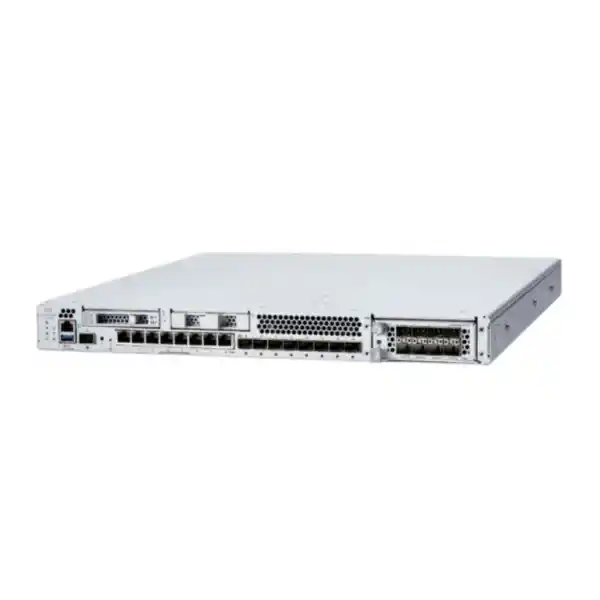
The Cisco Secure Firewall 3130 is an enterprise security appliance for organisations that need substantial inspection capacity, high-speed connectivity and a deliberate approach to network protection. For a Tanzania deployment, the buying decision should start with the services that must stay accessible: business applications, internet access, branch connections, published servers and authorised remote users. Request a configuration-based quotation from FourTeck Tanzania with your traffic requirements, software preference and availability target so the appliance, licences and accessories can be assessed together.
This model deserves consideration when a firewall upgrade also involves faster core links, more inspection or a larger aggregation point. It should not be selected from employee numbers alone. Two organisations with similar staffing can have very different session volumes, encrypted traffic patterns and recovery requirements. A useful proposal connects the chosen configuration to measured demand and explains the assumptions behind it. The sections below help you prepare that evidence and understand what belongs in the purchase.
3130 specifications at a glance
| Area | 3130 reference |
|---|---|
| Inspection with Threat Defense | 38 Gbps firewall + application visibility and control + IPS, using Cisco’s 1024-byte test profile. |
| Encrypted inspection reference | 9.1 Gbps TLS under Cisco’s stated test conditions; size against your own encrypted traffic. |
| Connection scale with AVC | Up to 6 million concurrent sessions and 240,000 new connections per second. |
| ASA reference | 42 Gbps stateful firewall throughput under ideal 1500-byte UDP test conditions; this is a separate software/test profile. |
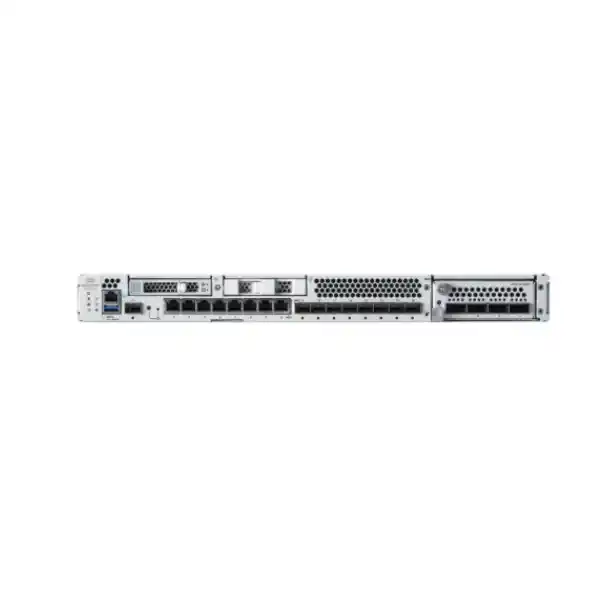
| Fixed data connectivity | Eight 10/100/1000BASE-T RJ-45 ports and eight 1/10/25 Gb optical/transceiver interfaces. |
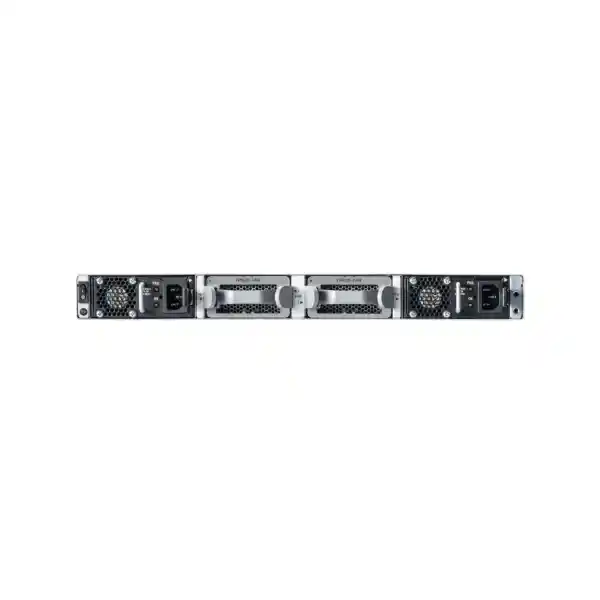
| Chassis and power | 1RU chassis; dual 400 W AC power supplies in the documented 3130 AC configuration. |
| Software choice | Cisco Secure Firewall Threat Defense or ASA; confirm the exact ordered configuration. |
| Expansion | Optional network modules; validate the module, transceivers and software release together. |
These manufacturer figures describe particular tests and configurations. They are not simultaneous operating guarantees, and port speed does not establish inspection throughput. Cisco identifies enabled features, protocol mix, packet size and software release as factors that change performance. Ask for sizing that reflects the proposed security policy rather than treating the largest number as the capacity of every deployment.
Where this enterprise firewall fits
Enterprise internet edge
Assess the 3130 where several business networks share a security boundary and the inspection workload is larger than a simple access gateway requires.
Server and application boundary
Consider it where traffic between defined trust zones needs deliberate inspection, with the relevant flows actually routed through the appliance.
Branch aggregation
Evaluate it as a central connection point when branch demand, tunnel design and application access justify an enterprise platform.
These are deployment scenarios, not a claim that every organisation in a sector needs this model. A smaller office with modest bandwidth may be better served by a different appliance. Conversely, a server environment with intense application traffic may need capacity beyond what an internet-bandwidth figure suggests. Discuss the traffic crossing the intended boundary, the inspection required there and the growth expected during the ownership period.
Start with a diagram showing upstream circuits, core switches, server segments and management access. Mark which flows will cross the firewall in both directions. This simple exercise often reveals whether the project is mainly perimeter replacement, internal segmentation or central VPN aggregation. Defining that purpose early makes competing proposals easier to compare because each supplier is responding to the same security boundary.
Read performance figures in the right context
Firewall forwarding, application inspection, intrusion prevention and TLS processing describe different workloads. The 3130’s Threat Defense inspection figure should therefore be assessed separately from the ASA firewall figure shown above. A proposal using an ASA benchmark to justify a Threat Defense inspection requirement leaves a sizing question unanswered. Ask the proposer to identify the software image and test profile associated with every capacity figure used in the design.
Collect traffic samples across normal business hours, scheduled backups, software distribution and other busy periods. Record sustained utilisation, bursts, sessions and new connection rates where your existing tools make them available. Include expected changes such as a new application rollout or additional sites. Average internet usage alone can hide a short but important peak that affects application responsiveness.
Agree a practical acceptance workload before purchase. It might combine employee browsing, application transactions, branch transfers and approved inspection rules. Reserve capacity for growth and for the operating conditions expected after a failure. Avoid treating every published maximum as achievable at the same time. The decision should be supported by the workload you intend to run, with assumptions documented for later review.
A practical sizing discussion for a mixed network
Consider an illustrative organisation with a modest internet circuit but faster links between its application servers and user networks. If only internet traffic crosses the firewall, the sizing exercise has one boundary. If the project also redirects server access through it, the workload changes even though the internet contract stays the same. Measure those internal flows before approving the model. This example describes a planning method, not a performance guarantee for a particular installation.
Now add encrypted business applications and a requirement to keep operating after one appliance fails. The design must answer three separate questions: how much traffic crosses the boundary, what portion needs the selected inspection controls, and what a surviving unit must carry. The answer cannot be calculated by adding port speeds or multiplying the number of employees by an assumed bandwidth allowance. Use measurements and explicit application requirements instead.
A useful proposal would show the traffic paths, the selected software, the security services applied to each flow and the capacity assumptions during normal and failure conditions. Procurement can then ask why the 3130 is appropriate and what growth would trigger another review. The operations team gains a baseline against which to compare real usage after deployment. If measurements are unavailable, identify that uncertainty openly and agree how a discovery exercise or pilot will resolve it before making a firm capacity commitment.
Plan encrypted-traffic inspection deliberately
Encrypted application traffic requires a separate design conversation. Decide which categories of traffic the organisation intends to decrypt, which must remain encrypted and which applications have technical restrictions. Cisco’s decryption guidance explains that clients need to trust the inspection certificate authority for applicable outbound decryption, and that certificate pinning can prevent inspection of particular connections. A universal decrypt-everything instruction can therefore create application problems rather than a useful operating policy.
Prepare a pilot using representative managed endpoints and applications. Check browsers, software update services, collaboration tools and business clients. Identify the team responsible for certificate distribution and record how certificate expiry will be monitored. Where traffic is excluded, document the reason and consider what other controls are appropriate for that application or endpoint.
Use the TLS figure as a reference for discussion, then validate the proposed policy against actual demand. The amount of traffic selected for decryption matters as much as overall bandwidth. A controlled rollout lets administrators identify exceptions and application effects before expanding coverage. Make exception approval and periodic review part of the operating plan so temporary workarounds do not become unexplained permanent gaps.
Select Threat Defense or ASA before comparing quotations
The appliance family supports a choice of Threat Defense or ASA software. That flexibility does not make the two operating environments interchangeable. Confirm which image the quotation supplies and why it fits the intended policy, management practices and migration plan. This is particularly important when replacing an existing ASA: keeping familiar terminology in a proposal does not establish that the destination will behave identically.
Threat Defense should be evaluated where the project calls for its integrated inspection and security-policy capabilities. An ASA proposal should be assessed against the ASA functions required by the existing architecture. Ask for a feature-by-feature response to your requirements instead of an assumption that any feature carrying the Cisco name is available in every software mode.
Include the management platform, administrator skills and support arrangements in the comparison. A lower hardware line item can be misleading if it excludes the management environment or subscriptions needed for the requested outcome. Record the chosen software release family and confirm current platform compatibility before ordering. Any future change of software mode should be treated as a separate planned project with configuration, entitlement and outage implications assessed.
Build a licence schedule around required outcomes
Cisco’s licensing documentation distinguishes the Essentials entitlement from additional feature licences. Relevant categories include IPS, URL Filtering, Malware and Secure Client, depending on deployment. Do not interpret a chassis purchase as evidence that every security capability or remote-user entitlement is included. Ask for a written licence schedule that identifies each required function, its entitlement and the subscription period where applicable.
For every item, record who owns the Smart Account, who administers the relevant virtual account and how entitlement access will be handed over. These ownership details matter when the appliance changes hands between procurement, implementation and the operations team. Avoid leaving licence administration dependent on an individual whose access may later be removed.
Compare quotations over the planned ownership period. Separate hardware, security subscriptions, management, client access and support rather than comparing a single combined total. Request clarity on renewal responsibilities and what must be reviewed before a subscription ends. Where a proposal excludes a function, state whether the function is unnecessary, already covered by an existing entitlement or requires an additional purchase. That distinction prevents omissions from appearing as savings.
Map ports, optics and expansion to the physical design
The fixed copper and optical interfaces make the 3130 relevant to networks that need a mixture of existing access connections and faster aggregation links. However, an interface count is only the beginning of a usable port plan. Identify the upstream switch, downstream switch, cable route, connection speed and intended role for every link. Reserve the resources needed by the selected resilience design before allocating all ports to production networks.
Optical compatibility must be checked against the exact transceiver, module, platform and software combination. Cisco’s hardware guide lists supported transceivers and their first supported releases. A module or optic that fits mechanically is not sufficient evidence that the proposed combination is supported. For fibre links, confirm fibre type, connector, distance and the matching equipment at the other end.
Optional expansion should appear as an explicit line item with its accessories. Ask whether transceivers, direct-attach cables, patch leads and rack components are included or separately priced. A faster physical connection can support an uplink design, but it does not increase the firewall’s inspected capacity to that link speed. Treat expansion as a connectivity decision with its own compatibility and operational checks.
Choose a management model your team can operate
Cisco Secure Firewall Management Center provides central administration for Threat Defense security functions and events. Where central management is proposed, identify the management platform, its supported device capacity, required resources and relevant entitlements. If local management is proposed instead, verify that it supports the required features and deployment on the chosen release. The management choice should be explicit before policy design begins.
Decide who approves policy changes, who deploys them and who investigates incidents. A small team may combine responsibilities, while a larger organisation may separate them. In either case, define an emergency change path that preserves accountability. Use individual administrator access and maintain a way to reach management when an ordinary production path is unavailable.
Logging also needs an operating plan. Agree which events must be retained, where they will be stored, who can access them and how much storage the expected event rate requires. A dashboard is useful only when someone knows what to inspect and what action follows an alert. Include reporting expectations in the scope so the finished deployment supports day-to-day decisions as well as the initial configuration.
Design resilience beyond the power supplies
Dual power supplies address one part of hardware resilience. They do not by themselves provide a second firewall, a second switch or an independent internet path. For critical applications, draw the complete dependency chain and identify the failures the design must tolerate. Where independent power feeds are intended, confirm that the rack power arrangement actually provides them rather than connecting both supplies to the same point of failure.
Threat Defense supports active/standby high availability, with hardware and software requirements that must be checked for the proposed pair. Obtain a design covering matching appliances, interfaces, links, licensing and management. Size the surviving active unit for the required workload. A standby appliance should not be counted as additional active inspection capacity in a basic active/standby design.
Clustering is a different architecture with separate network and management requirements. Current compatibility documentation makes its scale dependent on release and instance mode, so avoid a blanket node-count promise based on an older series summary. Select the architecture for a defined availability or capacity requirement, then validate the exact configuration. Include tests for device failure, link failure and recovery, with application behaviour assessed during each event.
Turn segmentation into explicit application permissions
A useful segmentation project starts with the relationships between systems. Identify users, servers, administrative services, guest networks and connected devices, then decide which relationships are necessary. VLANs can organise a network, but security policy depends on the actual traffic path and enforcement point. Check whether inter-network traffic will reach the firewall or continue to route elsewhere through the switching infrastructure.
Prepare a traffic matrix with source, destination, application or service, owner and business purpose. Include dependencies that are easy to overlook: name resolution, time services, authentication, monitoring and backup. This creates a practical basis for rule design and acceptance testing. It also helps application owners explain why a flow is needed without asking administrators to permit an entire network indefinitely.
Introduce restrictions in a controlled sequence. Review observed traffic, validate proposed permissions and establish a way to diagnose an unexpected block. Name temporary exceptions and give them review dates. The objective is a policy that someone can maintain after the implementation team leaves. Avoid importing a large historical rule set without asking whether its original applications, addresses and business purposes still exist.
Use threat protection as a policy, not a checkbox
Intrusion prevention, website controls and malware inspection need appropriate entitlements and configuration. They also need a clear operational purpose. Decide which traffic each control should inspect and what should happen when a match occurs. Enabling a function without a review process can leave administrators with an event stream that nobody owns or exceptions that nobody understands.
Cisco documents category and reputation-based URL controls, Security Intelligence filtering using threat feeds and lists, and file policies associated with access control rules. These functions address different decisions. Website policy can express acceptable-use requirements, intelligence filtering can address known malicious destinations, and file inspection can apply controls to relevant transfers. Assess their combined role instead of assuming that one replaces all the others.
Pilot new controls against representative applications and document legitimate exceptions. Assign responsibility for reviewing policy changes and investigating significant detections. Keep endpoint protection, identity security, patching and recovery arrangements in the wider design. A network firewall controls and observes traffic at its deployment point; its presence does not establish that every endpoint or every off-network activity is protected.
Separate branch tunnels from remote-user access
A site-to-site VPN connects networks, while remote access serves individual users and their devices. Gather these requirements separately because their authentication, addressing, permissions and licence considerations differ. Cisco documents Secure Client entitlement requirements for applicable Threat Defense remote access deployments. Confirm the required client licensing and endpoint support rather than equating a platform tunnel limit with a purchased user allowance.
For branch connectivity, prepare peer details, local and remote subnets, routing intentions and the applications that must cross the tunnel. Resolve overlapping address spaces before cutover where possible. Define who controls each endpoint and arrange coordinated testing. A tunnel that establishes successfully still needs application validation because a routing, translation or permission issue can prevent the intended service from working.
For remote users, define identity sources, authentication requirements, authorised applications and device expectations. Include account removal and lost-device scenarios in the operating procedure. Estimate concurrent use and transfer patterns rather than only counting staff who might occasionally connect. Test representative users from external networks before broad rollout, including the DNS and application dependencies they need after authentication.
Prepare the rack, power and environment
The 1RU form factor helps with rack planning, but installation readiness also depends on depth, airflow, cabling and service access. Cisco’s hardware guide specifies the chassis dimensions and environmental limits. For the documented platform, operating temperature is 0–40°C and operating humidity is 5–85% noncondensing. Verify the actual rack environment rather than relying only on the room’s nominal cooling setting.
Check rack depth, mounting hardware, cable management and access to replaceable components. Confirm the exact AC or DC configuration being quoted and the site’s matching power arrangements. A power-supply rating is not a measurement of normal appliance consumption, so use an appropriate equipment power assessment for UPS and cooling planning. Include the connected switches and management equipment when considering continuity.
For Tanzania projects, site readiness should be assessed individually. Do not assume that an existing server room has spare conditioned power or sufficient cooling simply because it already contains network equipment. Record the person responsible for physical access, power work and cabling before installation. A clear readiness checklist avoids discovering a missing rack component or unsupported cable type during the maintenance window.
Make migration a controlled application change
Replacing a firewall changes a critical point in the network. Capture the current addressing, routes, translations, rules, tunnels and published services before designing the cutover. Ask application owners to identify the transactions that demonstrate successful operation. This is more useful than checking only whether the new appliance responds to a ping.
Cisco’s migration tools can translate supported configurations, but their documentation calls for review of migration reports and unsupported or ignored items. Tool output should therefore be assessed as part of the engineering process. Confirm the exact source and destination compatibility and manually resolve the items that do not map. A successful import does not establish policy equivalence or application success.
Agree a cutover window, decision maker, test sequence and rollback threshold. Keep the previous configuration and reconnection procedure available until acceptance is complete. Identify any remote branches or third parties that must participate. During testing, record failures precisely so the team can distinguish a security-policy issue from an addressing, routing or application problem. Complete the migration only when agreed business functions have been checked and the operational team understands the new design.
Define acceptance before the order is placed
An acceptance checklist makes the purchase measurable. Begin with the business functions that justify the project: authorised users can reach required applications, published services behave correctly, branch connections carry intended traffic and unauthorised paths are restricted. Specify the evidence expected for each check and who can sign it off. This keeps the deployment focused on outcomes rather than a list of configured screens.
Include performance checks using the proposed security policy. Record application responsiveness, observed load and relevant device health during a representative workload. If the design includes a redundant pair, test the agreed failure cases and confirm recovery. If decryption is enabled, check the approved application sample and certificate trust. If remote access is included, test its identity and access restrictions.
Finally, validate management, event collection and recovery preparation. Confirm that administrators can find a relevant connection event, identify the applicable rule and follow the escalation path. Review the delivered diagrams and configuration records against the installed system. Agree how unresolved items will be tracked so an incomplete accessory or documentation item does not disappear after the cutover.
Plan ownership, maintenance and lifecycle checks
An enterprise firewall remains an operational responsibility after installation. Assign owners for security updates, subscription renewals, administrator access, certificate expiry, backup review and policy housekeeping. Keep an inventory showing the appliance identity, software, installed modules and entitlement arrangements. This creates a reliable starting point when an incident, upgrade or replacement is needed.
Before a software upgrade, review current compatibility, release notes, security information and the recommended upgrade path for the actual deployment. Maintain a change window and a recovery plan appropriate to business dependencies. Do not assume that a release supporting the appliance automatically supports every management, module and feature combination in use. Check the combined environment.
Hardware availability, support eligibility and commercial terms should be confirmed for the quoted configuration when ordering. The fact that manufacturer documentation lists a model does not confirm local stock or a particular support package. Request the support scope, duration and escalation arrangements in writing. Keep those commercial details separate from the technical specification so future staff can identify what was purchased and what needs renewal.
Compare this model with the rest of the proposal
The right comparison asks what changes if the organisation selects a smaller appliance, the 3130 or a higher-capacity platform. Compare inspected workload, encrypted-traffic demand, interface requirements, resilience and operating complexity. Where another 3100 Series model is proposed, request a sizing explanation for that exact model rather than extending the 3130’s figures across the family.
Use the same assumptions across all proposals. An appliance-only quotation cannot be compared fairly with one that includes subscriptions, optics, management, implementation and support. Ask each bidder to state exclusions clearly. If an existing management platform or entitlement is being reused, verify that it is eligible and has the required capacity before treating it as a saving.
Also consider the cost of an overly complex design. Clustering or extensive segmentation may be justified by business requirements, but each adds operational responsibilities. Choose the architecture that meets the stated need and can be maintained by the available team. Record the reason for spare capacity and expansion provisions so procurement can distinguish useful headroom from an unexplained specification increase.
Prepare a complete Tanzania quotation request
Send FourTeck Tanzania a concise requirement pack for the Cisco Secure Firewall 3130: the intended security boundary, current and expected traffic, required inspection functions, connection types, preferred management approach and availability objective. Include a network diagram with sensitive credentials removed. If replacing another appliance, provide its model and software details together with the applications and tunnels that must be preserved.
Ask the quotation to separate appliance configuration, licences, subscription periods, management, network modules, compatible optics, cabling, power accessories, implementation and support. Confirm what is included in the proposed hardware package rather than assuming every component described in a manufacturer guide is supplied. Where installation is required, define the site, access requirements and acceptance scope.
Request current commercial confirmation for pricing, stock, lead time, warranty terms and service scope. These depend on the exact offer and should not be inferred from this product overview. For deployment planning, see FourTeck Tanzania’s verified Cisco firewall installation and configuration information. For a broader architecture discussion, its Cisco data center firewall solutions page provides a separate starting point.
Cisco firewall installation and configuration · Cisco data center firewall solutions
Buyer questions
Is the 3130 a 38 Gbps or 42 Gbps firewall?
Both figures appear in Cisco specifications, but they refer to different software and test contexts. Use the Threat Defense inspection figure for the corresponding inspection discussion and the ASA stateful figure for its stated test. Neither removes the need to size the actual workload, especially when encrypted traffic and additional controls are involved.
Does the appliance include every security subscription?
Do not assume that it does. Confirm the Essentials entitlement and the additional licences required for the intended IPS, website controls, malware functions, management and remote access. The quotation should name the included entitlements and their terms, with any existing customer licences separately validated.
Can the fixed optical connections operate at 25 Gb?
The 3130 provides fixed interfaces supporting 1/10/25 Gb connectivity with appropriate supported transceivers. Confirm the specific optic or cable, software support and matching switch configuration. A 25 Gb port is a physical connection capability, not a statement that all associated traffic can be inspected at that rate under every policy.
Do dual power supplies provide firewall high availability?
They provide power-supply redundancy within one chassis. Appliance high availability requires a separately designed arrangement with another compatible unit and the appropriate links, configuration and entitlements. Assess power, switching and upstream connectivity as part of that design rather than assuming a second power supply protects against every outage.
Can an existing ASA configuration be moved across unchanged?
Review the actual source configuration and destination software. Supported migration tools can assist, but ignored, unsupported or partially translated settings need engineering review. Test the resulting routes, translations, rules, application access and VPN behaviour before accepting the cutover. Keep a rollback procedure available during the agreed transition window.
What is needed to obtain an accurate price?
Provide the traffic requirement, software choice, inspection functions, management preference, interfaces and resilience target. The appliance price alone cannot establish a complete project cost. Request the exact package contents and current terms for licences, accessories, support and installation; local stock and delivery timing require confirmation in the offer.
Request a configuration-based quote
Bring your network requirements to FourTeck Tanzania and request a Cisco Secure Firewall 3130 proposal matched to the inspection workload, connectivity and operational model. Ask for a clear bill of materials and an agreed validation plan before ordering. That gives procurement and the technical team a common basis for reviewing the appliance, the required entitlements and the deployment scope.




Reviews
There are no reviews yet.