
FOURTECK TANZANIA · ENTERPRISE NETWORK SECURITY
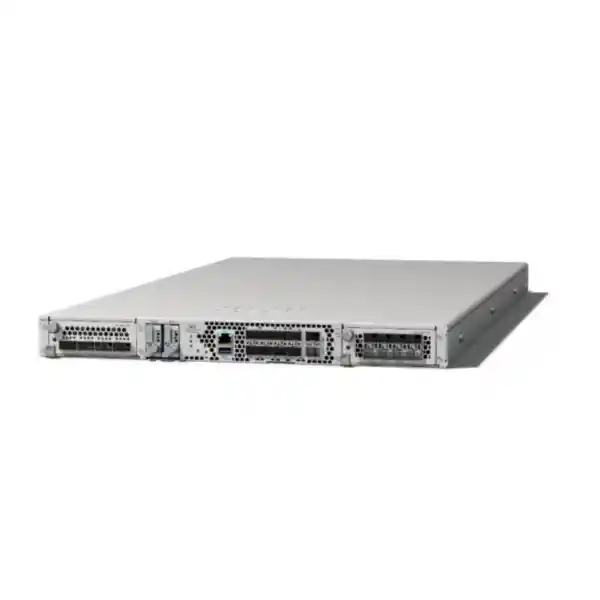
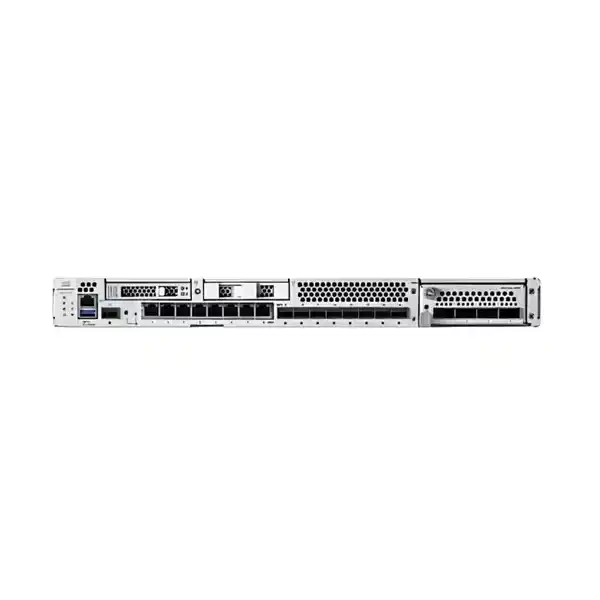
Cisco Secure Firewall 4245
For Tanzania organisations planning a busy data centre, enterprise perimeter or service-provider security boundary, the 4245 is a high-capacity appliance to evaluate against inspected traffic, encrypted applications and operational requirements. Start with the protection your applications need, then build a configuration around the software image, interfaces, management and resilience design.
Next step: Request a configuration-based quotation from FourTeck Tanzania. Include traffic measurements, required security services, interface speeds and whether you need one appliance or a resilient design. Pricing, supply and implementation scope require confirmation for the proposed configuration.
Where this appliance fits
The right buyer is usually a network or security team responsible for an application environment where a firewall interruption, an overloaded inspection path or a poorly controlled trust boundary can affect many users. Procurement should therefore begin with application importance and measured demand. An appliance model is only one part of the decision: topology, policy quality, operational ownership and the surrounding infrastructure determine whether the finished system serves the business well.
Consider the 4245 when your requirement includes concentrated traffic at a central security boundary, room for growth and a structured approach to inspection. Treat these as design scenarios rather than assurances that every environment needs this model. A smaller network can spend more than necessary on hardware while overlooking management or subscriptions; a large network can underestimate short-lived connections, encryption or the extra load during a component failure.
For a broader discussion of security placement, see Cisco data centre firewall solutions in Tanzania. This product assessment focuses on selecting and specifying the individual appliance. Architecture planning should establish where traffic will cross it, which applications need protection and how failures will be handled before quantities are finalised.
Enterprise internet edge
Map internet circuits, inbound business applications, outbound access and public addressing. Ask how the design behaves when a circuit or neighbouring switch fails, and include the traffic that would move onto the surviving path.
Data centre boundary
Identify the server groups that actually need communication across a security boundary. Document application dependencies and return paths so that segmentation does not accidentally block storage, identity, monitoring or backup services.
Service-provider evaluation
Define customer isolation, operational separation and the actual protocols requiring inspection. Procurement should include technical validation of the intended software, licences and architecture before selecting the appliance quantity.
Published performance: compare like with like
Cisco publishes different results for Threat Defense and ASA. The table preserves those distinctions. Figures are vendor laboratory measurements, not guaranteed production rates; enabled features, traffic mix, packet sizes and software affect results. Use measurements from your intended workload when sizing.
| Measurement | 4245 published result | Test context |
|---|---|---|
| Threat Defense firewall + application control | 140 Gbps | 1024-byte traffic |
| Threat Defense firewall + application control + IPS | 140 Gbps | 1024-byte traffic |
| Threat Defense TLS hardware decryption | 45 Gbps | 50% TLS 1.2; AES256-SHA; RSA 2048-bit keys |
| Threat Defense IPsec VPN | 140 Gbps | 1024-byte TCP with Fastpath |
| Concurrent sessions / new connections with application control | 60 million / 800,000 per second | Threat Defense |
| ASA stateful firewall / multiprotocol | 180 Gbps / 100 Gbps | 1500-byte UDP ideal test / mixed protocols |
Avoid using an isolated benchmark as your purchase acceptance criterion. Ask the sizing review to distinguish inspection, decryption and VPN workloads rather than adding unrelated maxima together. An interface rate also describes a connection capability; it does not promise that every policy can inspect traffic at that rate.
Build a sizing brief from your traffic
Collect traffic evidence from representative business periods. Include ordinary working days, scheduled transfers, backup windows and any predictable seasonal peaks. Record both average utilisation and the moments when applications are slow or the existing firewall approaches a resource limit. Averages can conceal brief bursts that cause connection delays. Separate traffic that will traverse the proposed appliance from traffic that stays within a switch or follows another security path.
Describe application behaviour as well as bandwidth. A small number of long transfers creates a different workload from large numbers of short web connections. Capture simultaneous sessions, connection establishment rates, packet-size distribution and the proportion of encrypted traffic where the existing monitoring tools can provide them. Also identify traffic that needs full inspection, traffic subject to decryption and traffic that must be excluded under an approved policy.
Make growth assumptions explicit. A new application platform, additional branches or a change in backup architecture may alter demand more than ordinary annual user growth. Use a planning range with an owner and review date rather than an unexplained percentage. If the system must keep operating after a firewall or link fails, assess the surviving path under that condition. Normal balanced utilisation alone is not enough to establish resilience.
Agree on a validation method before ordering. A representative pilot or staged acceptance exercise can evaluate application response, inspection policy, connection handling and monitoring together. State the software version, enabled services and traffic assumptions in the proposal so competing quotations address the same requirement. Where measurements are missing, identify the uncertainty and collect evidence instead of treating a headline number as a substitute for design.
Choose the software and management model first
Cisco’s hardware guide identifies support for Secure Firewall Threat Defense and Secure ASA software. Select the intended image before finalising the order. These are distinct operating environments with different configuration and feature considerations; a model name alone does not define the finished security solution. Verify the required functions against the selected release rather than assuming that a feature from one environment will behave identically in the other.
Threat Defense projects should establish the management platform and who will own it. Cisco documents Firewall Management Center and cloud-delivered management options for this family. Decide where administrators will work, where events need to be available and how access will be controlled. If you already operate a management platform, include its exact version and capacity in the compatibility review. Do not assume an existing deployment can accept another device without assessment.
Management connectivity deserves its own design. Specify administrative networks, routing, name resolution, time services and approved access paths. Decide how administrators will reach the appliance during an incident that affects ordinary user connectivity. Keep the responsibilities clear: the team approving security policy, the team operating the network and the team managing identity may be different groups. The implementation plan should explain how they coordinate changes.
For cloud-delivered management, review the organisation’s connectivity, governance and event-handling requirements before selecting the service. For an on-premises management environment, include its hosting, capacity, backup and maintenance requirements. In either case, account for ongoing administration in the project budget. A central console is useful only when somebody is responsible for interpreting events, reviewing exceptions and maintaining a recoverable configuration.
Confirm the exact ordering configuration
Ask the quotation to identify the manufacturer ordering code and describe the intended software configuration in plain language. Cisco lists FPR4245-NGFW-K9 for the next-generation firewall chassis and FPR4245-ASA-K9 for the ASA chassis. These identify different ordering configurations within the same model family. They should not be treated as proof that a particular security subscription, optional interface or support service is included.
Match the bill of materials to the approved technical brief before a purchase order is raised. Check the appliance quantity and software choice first, then work through the physical connections and commercial entitlements. If an abbreviated description is unclear, request an expanded description rather than accepting an assumption. Keep the approved version of the proposal with the network design so the receiving team knows exactly what was ordered.
At receiving, compare the supplied equipment and documents with that approved schedule. Record serial numbers through the organisation’s asset process, check separately supplied accessories and confirm access to the purchased entitlements. Resolve discrepancies before the maintenance window. This gives the installation team a practical starting point and reduces the risk of discovering a missing component when the existing security system has already been disconnected. The commissioning handover should also preserve the final hardware inventory so future support and expansion enquiries refer to the deployed configuration.
Licensing and quotation scope
Hardware purchase does not establish entitlement to every security service. Cisco’s ordering guidance separates the software image, required licences and optional security subscriptions. IPS, malware defence and category-based URL filtering need the appropriate entitlements; the documented malware and URL subscription options depend on Threat/IPS licensing. Confirm the exact bundle and subscription term in the quotation rather than inferring them from the appliance name.
Ask for a line-by-line description of the proposed security outcome. If the requirement is to inspect internet traffic, restrict risky websites and analyse malicious files, the quotation should show which entitlements cover each requirement. Features that are not being purchased should be identifiable. This makes it easier to compare a low hardware-only price with a complete offer and prevents security assumptions from being hidden inside an abbreviated part number.
Establish ownership of the organisation’s Cisco Smart Account and relevant virtual account. Cisco’s getting-started guidance describes linking purchased licences to the customer’s licensing account. Identify who can verify entitlements and who will manage renewals before installation begins. Use an authorised procurement process to exchange account information; there is no need to place licence credentials or registration tokens in a public quotation request.
For a resilient design, ask the supplier to confirm entitlement quantities for the complete deployment. Include management, both appliances where applicable, security subscriptions and any remote-access requirement. The licensing rules depend on the selected product and deployment, so a general assumption that one subscription covers the entire solution is unsuitable. Record start and end dates, renewal ownership and any dependencies in the commercial review.
Evaluate the intended ownership period. Separate initial hardware, recurring software, support, implementation, training and operational costs. Confirm what happens at renewal and what the support arrangement actually includes. Request written confirmation of commercial terms for the proposed supply; this page does not establish a price, current stock, delivery date or warranty package for a particular Tanzania order.
Interfaces, optics and cabling
Cisco’s installation guide describes eight fixed 1/10/25-Gbps SFP28 network ports, two management ports and two network-module slots. Treat those as platform capabilities, not a statement of the optics or optional modules included in a particular quotation. Specify every required connection and check the corresponding module, transceiver, cable and software support before the bill of materials is approved.
Create a port schedule that includes the connected device, required speed, media type, cable distance and intended role. Distinguish production traffic, management, resilience links and any future connections. Decide whether an existing switch port can support the proposed connection without additional hardware. A firewall can be correctly selected and still miss its deployment date because a compatible optic, patch lead or neighbouring port was omitted.
For fibre connections, establish the installed fibre type and the optical requirements at both ends. Check connector compatibility, reach and the condition of existing patching. For copper or direct-attach connections, verify the exact supported option and distance. Do not assume that physical fit alone proves interoperability. Include the intended software release in the compatibility review because interface and module support can depend on release capabilities.
Keep the design understandable to the operations team. Label physical ports and patching consistently with the network diagram, and record any link aggregation or special forwarding requirements. If the design needs optional hardware bypass, have the security owner explicitly approve the behaviour during a failure; it must be selected and validated as part of the design. An ordinary interface should never be assumed to provide a bypass function.
Specify spare strategy according to operational importance. For critical connections, consider which replaceable items would be difficult to obtain quickly and how a failure would be diagnosed. Procurement should distinguish installed components from separately requested spares. This avoids paying for unnecessary duplication while still making the recovery plan credible for the site’s own maintenance arrangements.
High availability and clustering solve different needs
Cisco documents Active/Standby high availability for Threat Defense using two identical devices. The standby synchronises information and can take over when the configured failover conditions are met. This is a resilience design, not a reason to count both appliances as simultaneously available inspection capacity. Validate matching hardware, software, links and licensing against the chosen release before planning the pair.
A useful availability requirement describes the failures the organisation needs to withstand and the recovery behaviour it can accept. Consider a chassis failure, a neighbouring switch outage, loss of a power feed and a failed external circuit separately. A second firewall does not automatically remove every shared dependency. Draw the actual traffic and power paths, then test each relevant scenario rather than relying on the word redundant in a proposal.
Clustering groups devices into one logical firewall and has its own topology and feature restrictions. Cisco documents 16-node support for the 4200 family from Threat Defense 7.6, while earlier support differs. Treat this as a release-dependent architecture option requiring a detailed compatibility review. Do not calculate usable application capacity by multiplying a single-appliance benchmark by the maximum cluster size.
Choose the simpler architecture that meets the documented requirement. A pair may address recovery objectives without the operational demands of a larger cluster; a scale-out design may be justified when traffic growth and architecture call for it. In either case, include control links, neighbouring switching, routing behaviour, monitoring and failure testing in the project scope. Confirm which traffic paths remain usable during maintenance.
The acceptance plan should measure outcomes that business owners understand. Verify important application sessions, inbound published services, site-to-site connectivity and administrator access during planned failure scenarios. Record what was interrupted, what recovered and whether manual action was needed. Avoid promising interruption-free operation for every protocol: recovery behaviour must be evaluated against the real applications and the selected configuration.
Encrypted applications and inspection policy
Encryption planning starts with a policy decision. Identify which applications require deeper inspection, which may be excluded and who can approve exceptions. Consider application ownership, user privacy, certificate handling and endpoint behaviour together. A technically possible decryption policy may still be inappropriate for a particular application or business process. Make those decisions before a broad policy change reaches production.
Build a representative application list for testing. Include ordinary web access, collaboration tools, business portals, software update services and applications with unusual trust requirements. Confirm the intended handling of each group with the responsible owner. Where decryption is proposed, plan certificate deployment and support procedures as part of the project. Avoid discovering at cutover that unmanaged devices or specialised applications cannot follow the intended trust model.
Treat exclusions as controlled policy items. Record why each exception exists, which systems it covers and when it should be reviewed. Excessively broad exclusions can reduce the inspection you expected to buy, while indiscriminate decryption can disrupt legitimate use. A clear decision record helps the security team maintain the balance as application behaviour changes and new services are introduced.
Performance validation should use the planned encryption and inspection policy. Testing with inspection bypassed does not demonstrate application experience under the final security rules. Compare response times, failures and event visibility across a staged rollout, then investigate unexpected results before expanding coverage. This approach makes the appliance evaluation relevant to the protection the organisation actually intends to operate.
VPN and segmentation requirements
Document site-to-site and remote-access requirements separately. Record the peer devices, tunnel count, traffic routes, authentication approach and expected demand. Ask whether the design requires simultaneous tunnel capacity, peak encrypted throughput or specific application performance across a constrained WAN. These are different questions. An existing peer configuration should be checked against the chosen Cisco software and settings before assuming it can be reproduced unchanged.
Remote access adds identity, endpoint and user-support considerations. Cisco’s licensing guidance identifies Secure Client entitlements for supported remote-access VPN use; confirm the appropriate option for your requirements. Plan authentication ownership, user onboarding and recovery procedures alongside the technical design. A published VPN platform limit is not proof that a particular order includes user licences or that the full user population has been sized.
For segmentation, start with an application communication matrix. Identify source groups, destinations, services and the business reason for access. Review how directory services, monitoring, backup, patching and administration cross the proposed zones. Broad rules may appear convenient during migration, but they can preserve the same exposure the segmentation project was meant to reduce. Establish a process for reviewing temporary exceptions after cutover.
Use packet-path diagrams to check routing and return traffic. Include address translation where required and identify who controls upstream and downstream changes. If traffic takes an unexpected alternate path, the firewall may see only part of a conversation or provide less coverage than intended. Clarifying the path before deployment helps distinguish policy faults from routing, naming or application problems during acceptance testing.
Rack, power and environmental preparation
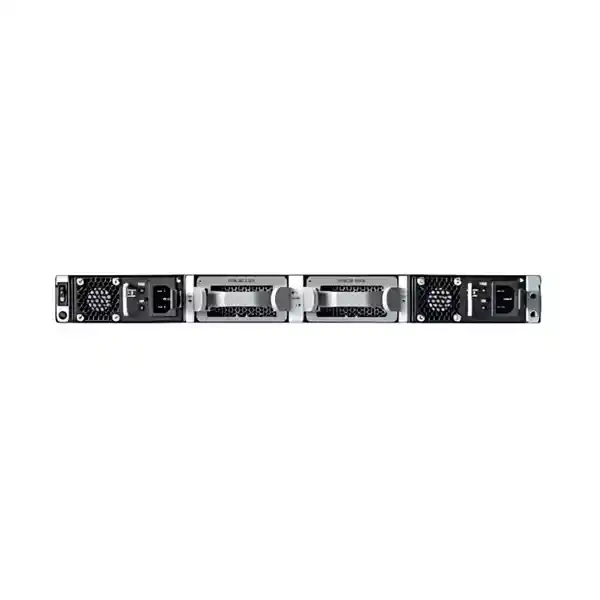
The platform uses front-to-rear airflow. Cisco specifies high-line 200–240 VAC input for the 4245 AC configuration; confirm the selected power option, approved cords and facility capacity before delivery. Rack planning should account for chassis depth, cable access and service clearance as well as its rack-unit height. Have the installation plan reviewed against the current hardware guide.
Provide the facility team with the exact proposed configuration. Ask them to assess rack suitability, power distribution, earthing, UPS capacity and cooling under the site’s own operating conditions. Do not use the nominal output rating of a power supply as a prediction of ordinary consumption. Capacity planning should account for the equipment that will actually be installed and the organisation’s maintenance and resilience objectives.
If separate power paths are part of the design, trace them through the UPS and distribution system. Two connected cords do not establish independence if they converge on the same vulnerable component. Record how the appliance will be isolated for maintenance and how staff will identify the correct feeds. Ensure the planned arrangement can be serviced without confusion during an incident.
Treat the appliance as equipment for an appropriately prepared communications or data-centre space. Consider heat, dust, access control and the work environment around the rack. Arrange installation and lifting according to the manufacturer’s procedures and local workplace requirements. Readiness checks completed before delivery reduce avoidable delays and help prevent an otherwise sound firewall project from being constrained by facility issues.
Migration, acceptance and handover
Begin migration with an inventory of the current system. Export the relevant configuration, identify active services and ask application owners which flows are essential. Review address objects, translations, routes, VPN settings and administrative access. Rules that have existed for years may no longer have an owner. Use the replacement as an opportunity to clarify policy, while controlling changes so the migration remains testable.
Map the intended end state rather than assuming a direct configuration conversion will preserve every behaviour. Differences in software and feature handling need review. Establish a cutover plan that names the decision owner, maintenance window, validation sequence and rollback trigger. Keep the previous configuration and recovery path available according to the organisation’s change policy. Avoid relying on undocumented knowledge held by one engineer.
For project scoping, review the published Cisco firewall installation and configuration guidance for Tanzania. Agree the implementation deliverables in writing for your order. Hardware supply, rule review, migration, user training and post-cutover assistance are distinct activities and should have clear ownership and acceptance criteria.
Test from the perspective of the services being protected. Confirm ordinary internet access, business applications, inbound services, DNS, authentication, VPN traffic and the chosen inspection policy. Also validate that administrators receive useful events and can identify the source of a blocked connection. An interface showing an up status is only one small part of a successful deployment.
Handover should leave the operating team able to manage the system without reconstructing the project. Request an updated diagram, port schedule, licence inventory, software versions, backup procedure and documented administrator ownership. Record approved exceptions and outstanding work. Include a practical session in which operators locate an event, review a policy change and explain the recovery process for the deployed arrangement.
Keep the security investment manageable
Assign responsibility for ongoing work before the project closes. Somebody needs to review alerts, maintain policy, track subscription dates and plan software maintenance. Set review intervals that reflect the importance of the protected services. Agree how incidents move between the network team, application owners and any contracted support provider, including who can authorise an emergency change.
Logging should serve an operational purpose. Decide which events matter, who examines them and how long they need to be retained under the organisation’s requirements. Plan collection and storage accordingly, especially when forwarding to an external monitoring platform. More events are not automatically more useful; establish a small set of questions the team must be able to answer during an incident.
Maintain configuration recovery as a routine process. Keep approved backups, record major changes and verify that the people responsible know how recovery is meant to work. Before software upgrades, review compatibility, applicable security notices and the documented upgrade path for the chosen deployment. Schedule validation of important services afterwards. Multi-instance or clustered arrangements can introduce additional sequencing requirements that should be reviewed before maintenance begins.
Measure whether the system continues to match demand. Review peak utilisation, connection behaviour, inspection outcomes and recurring application complaints alongside changes in the business. If an application team adds a large transfer or changes its hosting model, revisit traffic assumptions. This connects capacity planning to actual change instead of waiting for a performance incident to reveal that the original sizing brief has become outdated.
What to include in your Tanzania quotation request
Send a concise requirements summary rather than a product name alone. Include the deployment purpose, current firewall model and software, traffic evidence, interface schedule, intended security services and desired management approach. State whether the requirement is a new installation, a replacement or an expansion. If the final design is undecided, identify which choices need technical review so they can be scoped explicitly.
Describe commercial requirements clearly. Request the exact software image, hardware quantity, optional modules, optics, cable requirements, licences, subscription terms and support options. Ask for implementation scope as a separate item where required. Confirm the requested destination and commercial terms during the quotation process; availability and delivery arrangements depend on the actual supply proposal and should not be assumed from a general product page.
Compare proposals against the same checklist. Check whether both include the same subscription period, management environment, resilience equipment and required connections. Ask for clarification of exclusions before approval. A complete, understandable bill of materials makes internal budgeting easier and gives the technical team a clearer basis for deciding whether the proposed solution will meet the documented requirement.
Buyer questions
Is the 4245 suitable for every business network?
No. It belongs in an evaluation of demanding enterprise or service-provider requirements. A smaller workload may be better served by another appliance. Compare measured traffic, inspection needs, operational resources and total cost before deciding that the highest-capacity model is appropriate.
Does the chassis include all security subscriptions?
Do not assume that it does. Ask for the exact bundle and a written entitlement list covering the required security functions, management and subscription term. The appliance name identifies the hardware model; it does not establish every commercial inclusion.
Can existing switches and fibre be reused?
Possibly, subject to a connection-by-connection review. Provide switch models, interface speeds, optic details, fibre type and distances. Verify supported modules and software before purchasing. Include any necessary changes to neighbouring equipment in the project cost and schedule.
Should we buy a pair or build a cluster?
Start with the availability and capacity objectives. Review the relevant architecture, release restrictions and operations requirements. Have the design assessed against failure scenarios and real application demand before deciding the number of appliances or treating multiple units as additional usable capacity.
Will replacing the firewall fix application slowness?
Only if the firewall is a relevant constraint and the proposed configuration addresses it. Gather evidence across routing, circuits, switching, name services and the applications themselves. Use agreed acceptance tests to establish whether the replacement produces the required business outcome.
Is a Tanzania price or delivery date confirmed here?
No configuration-specific price, stock position or delivery commitment is stated on this page. Request a written quotation with the hardware, subscriptions, support and delivery terms identified. That proposal should be the basis for procurement approval.
What makes a useful first enquiry?
A brief network diagram, traffic measurements, current equipment details, required inspection services and desired resilience are a strong starting point. Include project priorities and commercial requirements. Sensitive credentials, licence tokens and private keys are unnecessary for an initial requirements discussion.
Request a Cisco 4245 configuration and quotation
Bring your inspected traffic, interfaces, software preference and resilience objectives to FourTeck Tanzania. Request a proposal that identifies the appliance configuration, subscriptions, management requirements, support options and implementation scope so your team can review the complete solution.
Prepare before enquiry: Current firewall details, a simple network diagram, peak traffic evidence, required port speeds and the applications that must keep working. Confirm pricing, supply and project terms in the written quotation before ordering.


Reviews
There are no reviews yet.