
HANWHA VISION • THERMAL MONITORING
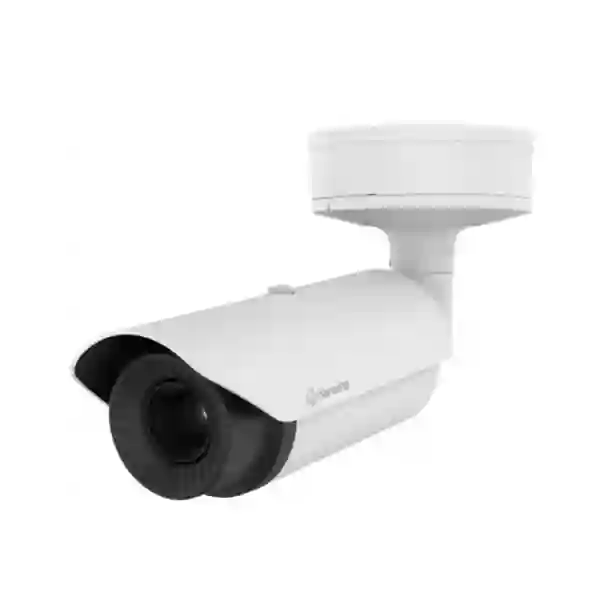
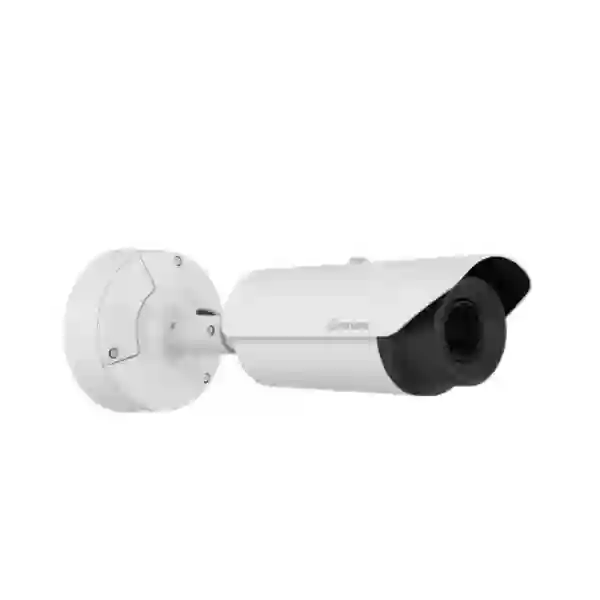
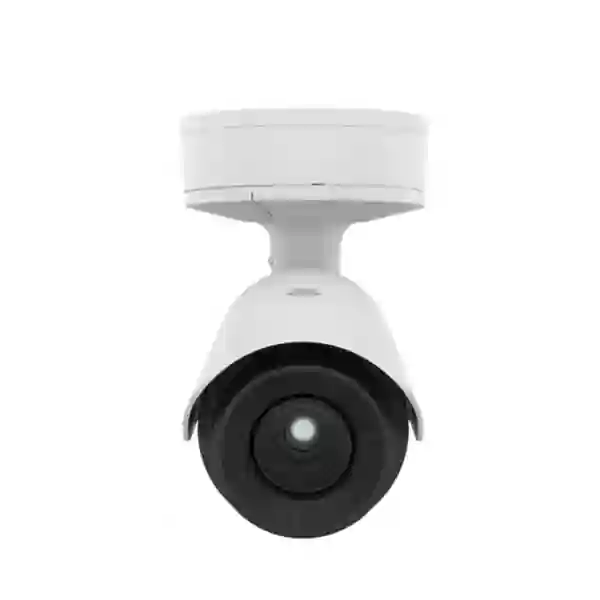
Hanwha TNO-4040TR Radiometric Thermal Camera
See temperature differences, supervise defined areas and investigate events where ordinary visible-light video is not enough. This fixed 19 mm thermal bullet camera combines 640 × 480 imaging, configurable temperature monitoring and IP network connectivity for carefully designed security and operational monitoring systems.
A practical answer for Tanzania security and facilities teams
The Hanwha TNO-4040TR radiometric thermal camera is designed for organisations that need to observe thermal contrast and monitor the temperature of selected areas through an IP surveillance platform. It is particularly relevant when a site wants thermal evidence alongside ordinary CCTV, or wants to identify potential changes around equipment, restricted boundaries, yards or other defined scenes. The model provides temperature-related functions that distinguish it from a thermal-imaging-only camera; choosing it should therefore begin with the actual incident or condition the team wants to detect.
For a Tanzanian project, the useful starting point is not a promise of unlimited range or automatic fire prevention. It is a drawing of the target scene, the expected object size and distance, the thermal condition of interest, and what operators should do when an event arrives. A suitable design also considers available network infrastructure, reliable electrical power, incident response, weather exposure and ongoing maintenance. Ask for a project-specific assessment before assuming that one fixed camera will cover an entire compound or provide calibrated industrial measurements.
Verified product specification at a glance
| Manufacturer and model | Hanwha Vision TNO-4040TR, radiometric thermal bullet camera |
|---|---|
| Thermal imaging | Uncooled microbolometer; 640 × 480 maximum resolution; 17 µm pixel pitch; NETD ≤50 mK |
| Optics | 19 mm fixed F1.0 lens; approximately 32° horizontal and 24.3° vertical field of view; minimum object distance 11 m |
| Video | H.265, H.264 and MJPEG; up to 30 fps at 60 Hz / 25 fps at 50 Hz for H.265/H.264 |
| Temperature measurement | Specified −20°C to +130°C range; six quadrangular temperature-detection regions |
| Temperature accuracy | Manufacturer states ±5°C at or below 100°C and ±20% above 100°C |
| Event handling | Temperature, virtual-line and area analytics, motion, tamper and selected audio events; 1 alarm input and 2 outputs |
| Integration | RJ-45 10/100 Ethernet, RTSP, ONVIF Profiles S/G/T, SUNAPI, MQTT |
| Local storage | One microSD/SDHC/SDXC slot, up to 256 GB |
| Power | PoE IEEE 802.3af Class 3; 12 V DC or 24 V AC |
| Environmental specification | IP66, IK10, NEMA Type 4X; operating temperature −40°C to +60°C |
| Approximate physical size | 101.97 mm diameter × 401.8 mm length; weight 3,175 g |
Technical values are based on Hanwha Vision’s model-specific published specifications. They do not establish suitability for a particular distance, site, alarm threshold, VMS release or jurisdiction.
Where this camera may fit
Defined perimeter zones
Investigate movement or crossing within a purposefully framed outdoor scene, especially where a thermal view could complement visible cameras. Prove the required detection distance and address false alerts before sign-off.
Exposed equipment surfaces
Watch indicated thermal conditions around selected visible components. Validate surface accessibility and measurement accuracy, and keep independent maintenance and safety protections in place.
Low-light yards and operations
Improve thermal situational awareness around open areas, while retaining conventional imaging where colour, registration details or identity are important.
Monitoring-centre workflows
Route selected analytics and radiometric events to a compatible system, with tested recording, operator acknowledgement, escalation and evidence retrieval.
What radiometric thermal monitoring actually means
A conventional daylight camera records light reflected from the scene. Thermal imaging responds to long-wave infrared energy and displays a representation of differences in apparent temperature. That is useful when external lighting is poor or a warm object contrasts with cooler surroundings. Radiometric imaging adds the ability to estimate temperature values in specified image regions. This makes the TNO-4040TR relevant for more than observation: it can help a team define a watch condition and review where that condition appeared.
There are important boundaries. The temperature shown is not automatically the true internal temperature of an object, and an image is not a laboratory measurement. The result depends on surface properties, distance, viewing angle, atmosphere and other site conditions. The camera cannot tell an operator why something is hot; the event must be assessed in context. Teams considering equipment-monitoring use should define the acceptable error and decide whether a dedicated contact sensor, calibrated thermal instrument or independent protection device is also needed. Thermal images are a valuable additional signal, not a substitute for a safety assessment.
Why the TR suffix is a buying-critical detail
Hanwha Vision distinguishes its radiometric models from thermal-imaging models by the suffix in the product name. The TR designation on the TNO-4040TR indicates radiometric temperature measurement functions. The similarly named TNO-4040T can produce thermal imagery, but Hanwha’s technical guidance describes that T version as a thermal image camera rather than an instrument that reports measured temperature values. This distinction should appear on purchase orders and project schedules, because it determines whether a proposed system can address a temperature-threshold requirement.
If the purpose is simply to make moving people or objects more visible in darkness, a non-radiometric option may deserve consideration. If an operator expects readings, temperature areas or alerts against a defined value, review the TR specification and the practical accuracy requirement. Do not treat a one-letter variation as an interchangeable model. Confirm the exact model on the quotation, the housing label, any manufacturer documentation and the integration plan before accepting or commissioning the equipment.
Thermal image resolution and scene detail
The camera’s maximum thermal resolution is 640 × 480 pixels, created by an uncooled microbolometer. This is a thermal image resolution, not a conventional visible-light megapixel specification. It can provide useful scene awareness, but how much detail is available for a person, vehicle, component or hazard depends on how many pixels the target occupies. A tiny object far away may trigger a visible contrast without providing enough information to classify it confidently. Capturing an event and reliably recognising the object responsible are different tasks.
When designing a field of view, describe the smallest object that matters, its nearest and farthest distances, and whether the purpose is detection, classification or temperature observation. The manufacturer’s listed thermal sensitivity, NETD at or below 50 mK, characterises sensitivity to small thermal differences under specified conditions; it is not itself a promise that a particular distant target will be recognised. A practical validation test should examine representative objects, backgrounds and weather conditions instead of relying on a broad marketing range claim.
What the fixed 19 mm lens changes
The TNO-4040TR includes a fixed 19 mm F1.0 lens with a published angular field of view of approximately 32 degrees horizontally and 24.3 degrees vertically. A fixed-lens design is straightforward to specify but it cannot zoom optically to compensate for a badly positioned mounting location. The field of view needs to be calculated against the desired width and height of the monitored scene at the proposed distance. A narrow view can produce useful target detail while leaving areas outside the frame unobserved.
The specified minimum object distance is 11 metres. That fact matters if the intended monitoring area begins very close to the wall, pole or structure on which the camera is fitted. Avoid choosing a mount that sacrifices a critical near-field zone. Include any necessary overlapping views, alternate optics or complementary visible cameras in the design. Orientation, sensor height, obstruction, thermal reflection and the expected route of people or vehicles can be as important as nominal lens size when determining whether the final installation meets the user’s objective.
Temperature range, set points and what they do not guarantee
Hanwha lists a temperature-detection range of −20°C to +130°C for this radiometric model. This is the range to use when checking whether the target condition falls within the camera’s stated capability. It is not the ambient operating range and it is not permission to use the camera as an independent high-temperature shutdown sensor. If a component can exceed the supported radiometric range, a different measurement instrument should be assessed for that requirement.
Project planners should write the intended alert logic in plain language before configuration. For example, an area might require review when its indicated temperature crosses a threshold or when an observed pattern changes relative to a baseline. The selected setting needs to reflect normal operating cycles, sunlight, load variations and an appropriate response process. A commissioning engineer should evaluate whether the temperature being observed is actually exposed to the camera, whether other hot surfaces enter the selected area, and whether a short-lived event is operationally significant. Final values should be determined on site rather than copied from a generic example.
Understanding the manufacturer’s temperature accuracy
The published temperature-accuracy specification is ±5°C for temperatures at or below 100°C and ±20% above 100°C. This is a material decision factor for buyers who expect alerts around a narrow temperature band. A threshold that is close to normal surface temperature may require careful margin, repeat measurements and independent confirmation. A temperature reading on a screen should not be portrayed as exact just because it includes decimal digits.
Radiometric measurements are influenced by emissivity, surface finish, reflective surroundings, weather and geometry. Shiny metal, wet surfaces, nearby heat sources and variable airflow can complicate interpretation. A product assessment should consider not only whether an alarm can be generated, but also the consequence of acting on a false positive or missing an important event. If protection of people, equipment or continuity of production depends on a precise limit, pair video-based monitoring with appropriately engineered safeguards and independent devices. The camera can support situational awareness while an industrial control system performs its own safety-critical role.
Monitoring regions of interest and alerts
The product supports six quadrangular temperature-detection regions. These allow an operator to focus monitoring on designated areas of a scene rather than treating every warm object as equally important. A region could be placed around an accessible equipment face, a defined loading-zone section or another visible area that has a clear monitoring purpose. The six-region specification should be checked against the actual number and shape of target areas, including what falls between them.
A good configuration does more than draw boxes. The installer should record which region corresponds to which asset or location, the expected operating pattern, the selected threshold, the event recipient and the process for verifying an alert. Do not position a region so loosely that moving vehicles or changing backgrounds dominate the result. Confirm how alerts appear in the chosen recorder or monitoring application, which metadata survives integration, and whether staff can retrieve the thermal frame associated with an alarm. A clear response procedure turns a temperature feature into a useful operational workflow.
Analytics beyond temperature monitoring
The TNO-4040TR includes camera-side analytics such as motion, tampering, virtual line and virtual area events, together with listed audio and shock-related detection functions. Depending on configuration, these features can help filter activity in a compound, support restricted-area monitoring or notify staff when a camera is obstructed. They should be used according to the intended environment and the capabilities exposed by the receiving software.
Analytics are not equivalent to an independent guarantee of detection. Branches moving in wind, animals, vehicle exhaust, changing thermal backgrounds, camera vibration and people moving at the edge of a frame can affect event quality. Select rules that map to actual questions: did an object cross a defined boundary, did activity occur within an excluded area, or did a selected thermal region move outside its normal condition? Set an appropriate schedule, test conditions at different times of day and establish who reviews the result. If a workflow depends on audio, confirm the external audio hardware and legal/privacy requirements before activation; the unit’s audio interfaces are not a promise of a built-in microphone.
Night-time monitoring and lighting conditions
Because thermal imaging does not rely on ordinary visible illumination to create a picture, it can improve awareness when a facility is dark or a visible camera sees strong backlighting. A dark perimeter, access route or unlit equipment area can be a sensible place to investigate thermal monitoring. A visible-light camera may still be necessary for reading identifying details, colours, markings and other information not present in a thermal image. Many security designs benefit from using the two types of evidence together.
Thermal imaging is sometimes described as if it sees perfectly through any weather or obstacle. It does not. Heavy rain, dense fog, certain airborne materials, intervening structures and thermal backgrounds can reduce usable contrast or conceal what the operator hopes to observe. The correct question is whether thermal sensing improves detection under the site’s actual conditions, not whether it removes every environmental limitation. Test the scene with representative events, including at night and during warm daytime conditions, before specifying a final camera quantity and position.
Industrial equipment and overheating awareness
Industrial facilities may consider a radiometric camera to add visual monitoring around equipment areas where unexpected heat could matter. Examples worth evaluating include accessible machinery surfaces, electrical infrastructure exteriors, utility areas or material-handling points. The camera may help staff notice an abnormal indicated temperature in an observable region, especially when the monitored asset has a repeatable normal pattern. The exact application needs an engineering review to decide where it is safe to mount the camera and whether the measurable surface corresponds to the underlying risk.
The device should not be described as an automatic electrical fault detector. It may not see a hot connection hidden inside a cabinet, and it cannot distinguish every harmless warm surface from a developing failure. Maintenance teams should create a documented baseline for the actual asset, identify predictable load changes and correlate alarms with inspection, test instruments and maintenance records. An alert can start an investigation, but the right maintenance or safety procedure should determine whether an intervention is necessary.
Yards, depots, boundaries and open areas
For outdoor yards or logistics environments, thermal monitoring can provide another view of activity where ordinary security images are affected by low light. A fixed camera can watch a designed zone near a fence, access route or storage area. Thermal contrast may make a moving subject stand out against some backgrounds, while perimeter analytics can help identify crossing events or movement within an assigned area. The suitability depends on camera height, target size, expected speed and the objects or animals that share the scene.
Do not assume that a single camera will cover every direction or that a wide outdoor scene has a uniform thermal background. A parked vehicle, sun-heated wall, warm ground or dense vegetation can change what is visible. Identify the security question for each zone and provide overlapping coverage for blind spots if the risk assessment requires it. If operators need facial or licence-plate evidence, specify appropriate visible imaging separately. A thermal image is a complementary source of awareness rather than a universal replacement for conventional evidence gathering.
Utilities, energy and critical site observations
Sites with utility equipment often have a strong reason to watch for unusual conditions, but a radiometric video camera should be assigned an achievable task. Its most helpful role may be to notify an operator that an exposed surface or defined scene has changed in a way worth investigating. The project needs to consider the normal temperature profile of that equipment, visibility of the relevant surface, access restrictions and how staff respond when the monitoring station is unattended.
For remote substations, pumps, generator areas or service corridors, the installation should also evaluate site power continuity, surge protection, network routing, lightning risk and secure remote access. These are design considerations, not statements that the model has a special utility certification or guarantees an outage-free system. Any mandatory protections, trips or alarms must remain governed by the appropriate equipment and engineering standards. The camera adds a visual layer that can support inspection and situational understanding when integrated into a broader maintenance process.
How thermal compares with conventional CCTV
Thermal and visible-light cameras answer different questions. A conventional camera often gives the operator more familiar visual detail when the scene is adequately illuminated. A thermal camera highlights differences in emitted infrared energy and can be valuable in darkness or for observing thermal patterns. Radiometric functionality offers indicated temperatures for selected regions, while ordinary video is better suited to confirming identity, colour, printed markings and many incident details.
Choose thermal when the important condition is heat contrast, movement in dark areas or a visible surface temperature pattern within the manufacturer’s supported range. Choose visible CCTV when identification or colour evidence is the central purpose. Choose both when a security or facilities team needs early awareness plus an interpretable incident record. A practical design might send an alert from the thermal image and direct the operator to another camera for visual context. That response should be tested in the actual video-management environment and should not be assumed to work automatically in every third-party system.
Comparing fixed and wider-angle thermal options
A 19 mm fixed lens is a particular balance between scene width and apparent target size. Another thermal model with a shorter focal length may cover a wider area but distribute the available pixels across more of the scene. A longer lens may concentrate more pixels on a smaller distant subject while leaving less context visible. These are design trade-offs, not a simple hierarchy in which one focal length is universally better.
Before comparing models, draw the site boundary or target machinery at scale and list the required view widths. Note the nearest target and the furthest relevant object, and distinguish a detection goal from a temperature-observation goal. For radiometric monitoring, ask whether each target surface occupies enough image area for a meaningful reading. Also check that a different model supports the required temperature function rather than relying on a similar appearance or family name. Selection should depend on demonstrated scene performance and the exact manufacturer’s specification for each candidate.
Integration with recorders and monitoring software
The camera provides IP networking through an RJ-45 Ethernet interface and lists ONVIF Profiles S, G and T, along with RTSP and Hanwha’s SUNAPI interface. This gives a system integrator a useful starting point for connecting the thermal stream to video-management software or a compatible recording platform. Support for a standard protocol is not a guarantee that every third-party platform will display all temperature values, analytics metadata or alarm actions in the same way.
Verify the receiving platform’s version, device driver, recording format, profile support and event handling against the exact model and firmware in the quotation. Request a demonstration of the functions the buyer will actually use: live thermal image, archived video, alarm notification, timestamps, temperature-region information and export for an investigation. If a third-party device is expected to respond to camera alarms, test that path through to the final operator or relay. Integration should be assessed as a complete workflow, not as a checkbox saying merely that the camera is network compatible.
Network planning and video compression
Hanwha lists H.265, H.264 and MJPEG compression, with WiseStream II among the efficiency functions. The maximum video frame rate is specified as up to 30 frames per second in 60 Hz operation or 25 frames per second for H.265/H.264 in 50 Hz operation. In a real network, the chosen codec, scene activity, image settings, frames per second and bitrate target all affect bandwidth and recording demand. No single storage figure is reliable for every scene.
A sensible network plan begins with the number of cameras, required live viewers, retention period, stream settings and available uplink capacity. Thermal images can vary significantly as people, equipment and weather conditions change. Build a capacity allowance instead of designing to a marketing minimum. Keep camera traffic appropriately separated from other services, and review the network equipment and remote-access method. If the site has limited connectivity, consider where events are recorded and viewed locally, what occurs during a communications outage, and whether notifications are queued or lost.
On-camera memory and recording retention
One microSD/SDHC/SDXC slot supports media up to 256 GB according to Hanwha’s specification. Local edge storage can be useful in a system design, for example for relevant event recordings or as a limited recording location depending on configuration. But a memory slot is not a complete evidence-management strategy. A card can fill, wear, become inaccessible or be lost if the camera itself is damaged or removed.
Retention planning should identify which events need to be kept, who can retrieve video, how time is synchronised, and whether the site’s recorder or another secured system keeps a separate copy. Calculate capacity using tested recording settings, not an assumed number of days. Also consider continuous versus event-triggered recording, privacy requirements, card health, network outages and export permissions. An engineer should confirm the supported file and recording functions of the actual firmware and the intended VMS before promising any failover behaviour. Operators need a repeatable way to find the right clip when an alarm is investigated.
Electrical power choices and continuity
The camera supports PoE conforming to IEEE 802.3af Class 3, as well as 12 V DC or 24 V AC power. Hanwha quotes a maximum of 10 W for PoE, 9 W at 12 V DC and 10.5 W at 24 V AC. A PoE design can reduce the number of separately powered devices at the camera position, but the switch and cable route must be checked for the actual installation. The power budget must include every endpoint, any accessories and an appropriate allowance for the wider system.
Where power interruptions are material, review backup supply requirements for the camera, network switch, recording equipment and monitoring station together. Keeping only the camera powered is not enough if its communications path is down. Cable quality, surge protection, earthing, lightning exposure and the selected mounting point also matter on outdoor installations. Have qualified installers design the electrical side and check relevant project requirements. The camera’s supported power options should not be interpreted as confirmation of any particular local power accessory or delivery package.
Outdoor housing, heat and mounting loads
The model carries IP66, IK10 and NEMA Type 4X environmental ratings in the manufacturer’s specification. The stated ambient operating temperature is −40°C to +60°C, with non-condensing humidity conditions specified by the manufacturer. These ratings help describe the enclosure design but do not remove the need for suitable cable entries, sealing, drainage, mounting hardware and periodic inspection. An incorrectly installed connector can compromise the reliability of an otherwise weather-resistant device.
At approximately 3.175 kg and about 402 mm long, the camera also needs a mount suited to the structural support, wind exposure and service access. Avoid positioning it where direct obstructions, exhaust outlets or reflected heat will distort the useful scene. Evaluate corrosive environments, vibration and mechanical access on an individual basis rather than treating the published ratings as blanket suitability for every industrial location. If a pole, wall or special bracket is required, specify the supporting components and check the exact approved mounting arrangement before installation.
Cybersecurity and access management
Network cameras should be treated as managed devices, not simply connected and forgotten. Hanwha lists features including HTTPS, encrypted firmware, IEEE 802.1X network authentication, IP-based access control and logging. The availability of a feature does not mean it has been enabled. Commissioning should include account management, strong unique credentials, restricted administrative privileges, correct system time, secure management access and a documented firmware maintenance policy.
Avoid exposing camera administration directly to the public internet merely to make viewing convenient. Instead, work with the organisation’s IT team on a controlled remote-access path, segmentation and an incident-response plan. Review who can change alarm thresholds, delete recordings or export images. Limit permissions to actual responsibilities and retain a register of device configuration and firmware versions. Where a monitoring centre is involved, define how accounts are added and removed when staff change. Practical security depends on ongoing administration as much as on the camera’s published capabilities.
Planning a Tanzania site survey
For a project in Tanzania, start with a physical site survey rather than a generic city-based specification. Record the relevant asset or boundary, target dimensions, mounting positions, likely weather exposure, electrical supply, network availability and who will receive incidents. The survey should identify whether the target is a person, vehicle, exposed equipment surface or a defined thermal zone. Each may require a different camera angle, distance, lens choice and event rule.
Discuss the working hours and whether critical conditions occur in bright daytime heat, at night, during storms or during scheduled processes. Note locations where people, machinery or moving vehicles may repeatedly cross the thermal field. Agree on the exact operational decision that an alert is expected to support, and how quickly staff must review it. The site survey should not assume that national availability, an installation service, a local warranty or a specific delivery route has already been confirmed. Those commercial details belong in a project quotation, supported by current supplier information.
Commissioning: test the entire event path
A good handover should demonstrate camera performance in the actual environment rather than stop after an image appears on a monitor. Start by recording the model, firmware, mounting position, network settings and lens view. Confirm that the intended region is visible at relevant times of day. Then create controlled test conditions, consistent with safety procedures, to verify the expected detection or temperature alert. Do not use an unsafe heating experiment merely to prove the feature works.
Check whether the event arrives at the appropriate recorder or workstation with the correct timestamp and useful image. Confirm how operators acknowledge the event, whether notifications are retained and how quickly the necessary evidence can be retrieved. Repeat tests after configuration changes or when the monitored equipment’s operating pattern changes. Document limitations discovered during the trial and train staff to interpret readings cautiously. Acceptance should be based on agreed use cases and observable results, not on an undocumented assumption that every published function will be active by default.
Reducing unnecessary alarms
Too many irrelevant events make even an advanced camera less useful. When commissioning the TNO-4040TR, compare the alarm rules with the normal rhythm of the site. Consider hot exhaust, sun-heated surfaces, moving people, passing vehicles, vegetation, shadows on neighbouring structures and routine machinery operation. A thermal scene that is quiet at midnight may be far more complex in late afternoon. Adjust the selected regions, placement and process expectations accordingly.
Where the application involves temperature thresholds, observe normal variations before selecting final alarm values. Where it involves virtual boundaries, test intended and unintended crossings from several directions. Review false positives and misses with the operator, then change one relevant setting at a time so the effect can be understood. Maintain a written change log and do not hide genuine risk by simply disabling all difficult alerts. The aim is a manageable, trustworthy event stream tied to a human response procedure, not the lowest possible count of notifications.
What the product does not replace
This camera does not replace a calibrated measurement programme, a fire alarm system, an industrial shutdown circuit, an access-control system or a competent security operator. Its thermal image cannot show everything behind obstacles, inside sealed machinery or through every kind of material. It is also not a medical thermometer or a method of diagnosing a person’s body temperature. These boundaries matter because the consequences of a missed incident can be serious.
A site may legitimately use radiometric video to improve early awareness and speed investigation, while still relying on separate certified protection devices and inspections for critical decisions. When planning procurement, write down the real-world event and the action that must follow. Ask whether the camera can observe the necessary surface, whether the measurement accuracy is sufficient and whether the system can deliver the alert to the correct team. If any answer is uncertain, test or redesign before approval. Clear limits protect the investment by matching the system to a realistic role.
What to include in a purchase specification
A useful technical quotation should identify the exact TNO-4040TR model, camera quantity, proposed mounting positions, field-of-view assumptions and the specific monitoring functions required. It should also name the recording or VMS environment, preferred video profiles, edge-storage requirement, power approach and event-notification workflow. Ask whether brackets, mounting accessories, outdoor cable protection, switches or backup power are included or require separate items.
For temperature-related uses, define the intended target surface and normal operating condition. Request a discussion of the manufacturer’s stated accuracy and the method for validating readings at the site. Ensure that the quote clearly separates camera capability from integration, installation, commissioning, training and any optional support. Ask the supplier to confirm the exact regional availability and applicable commercial terms rather than assuming they match a foreign listing. A complete specification makes competing proposals easier to compare and reduces the risk of buying equipment that looks suitable on paper but cannot meet the intended workflow.
Operating costs and life-cycle planning
The equipment purchase is only one element of a usable monitoring system. Allow for mounting hardware, suitable network cabling, switches, recording capacity, backup power, installation access and cybersecurity administration. Some projects will need integration development or changes to a control room’s event procedure. An inexpensive installation that misses the intended scene or creates too many unreviewed alerts can be more costly operationally than a carefully scoped design.
Include future inspection of seals and fixtures, camera cleaning where appropriate, verification of the field of view, backup and recovery of settings, updates and periodic alarm tests. Set responsibility for monitoring the storage system and maintaining time synchronisation. If the thermal camera is used near vital machinery, revisit its alarm thresholds after process changes or asset replacement. No fixed maintenance frequency or service package should be implied without a documented project agreement. The objective is reliable information over the life of the installation, not only a successful first-day demonstration.
How to evaluate a proposed demonstration
Ask the demonstration team to show the actual model under conditions representative of your site. A useful demo includes both a live thermal scene and the event path to the operator. Request an explanation of the selected palette, the monitoring region, the temperature indication and the conditions under which a warning is generated. If a feature matters to the business case, do not accept a brochure slide as a substitute for the required practical evidence.
Have the demonstrator compare near and far targets, normal and abnormal background conditions and the actual visibility of the intended object. Note the difference between detecting a heat signature and identifying its source. The person reviewing the demonstration should understand the published accuracy limits and how they affect a proposed threshold. Finish with an agreed list of features proven, features not tested and external system dependencies. This creates a disciplined basis for deciding whether the camera meets the requirement or whether a different optical arrangement or supplementary sensor is necessary.
Operator training and response design
An alarm becomes useful only when someone knows what it means and what to do next. Train the monitoring team to distinguish a radiometric indication from verified equipment temperature, to identify the region in the scene and to check a corresponding visible camera or physical indicator when appropriate. Explain common causes of spurious events and the steps for escalating an unexplained condition. Keep procedures consistent with site safety rules and do not ask staff to approach a potentially hazardous asset without authorisation.
The team should know how to review live and recorded images, read the correct time, export evidence with appropriate controls and report configuration problems. A facilities engineer may need a different response checklist from a security officer watching a fence line. Set ownership for the alarm rules and require approval for changes that could affect risk. Revisit training after staff turnover or system changes. Clear documentation helps the organisation benefit from the camera’s capabilities without treating thermal imagery as an automatic, infallible decision maker.
Requesting a Tanzania project quote
Before requesting a quote, prepare a simple description of what needs monitoring and why. Include the approximate scene dimensions, nearest and furthest target distances, whether the task involves temperature thresholds or movement detection, expected daytime and night-time conditions and the number of monitoring points. If there is an existing recorder or VMS, provide its make and software version so compatibility can be checked properly.
Ask the FourTeck Tanzania team to review the desired outcome and confirm which hardware, accessories and services can be quoted for the intended deployment. Request project-specific details on availability, pricing, warranty, delivery and installation only through a verified quotation. Where the requirement is safety-critical, consult the responsible engineer and retain independent protection measures. The goal is a clear recommendation that describes what the Hanwha TNO-4040TR can observe, how it will be connected and how its alerts will be used.
Frequently asked questions
Does the TNO-4040TR measure temperature or only show heat?
It is a radiometric thermal camera and can provide indicated temperature values within the manufacturer’s specified −20°C to +130°C range. This is the key difference from some thermal-imaging-only models. Its stated measurement accuracy and site conditions still need to be considered before using it for a threshold-based monitoring task.
Is the TNO-4040TR suitable for night surveillance?
Thermal imaging can be useful when little or no visible light is available because it responds to thermal contrast. However, recognising a person or object and obtaining identity details are different requirements. Review the intended distance, environmental conditions and target size. Add visible-light CCTV where identifying or colour evidence is necessary.
Can it act as a standalone fire alarm?
No. A thermal camera can be considered as an additional monitoring aid for certain exposed areas, but it should not replace the site’s required detection, suppression, isolation or shutdown safeguards. Its view may be obstructed and its readings have defined accuracy limits. Use appropriate engineered life-safety protection for those duties.
What is the difference between the TNO-4040T and TNO-4040TR?
Hanwha’s support guidance describes the TR-suffix model as radiometric, capable of temperature measurement. The T-suffix model is a thermal-imaging camera, not the same temperature-measurement product. Confirm the full model identifier on the quotation and equipment rather than treating the two names as equivalent.
What lens and thermal resolution are provided?
The model uses a fixed 19 mm F1.0 lens and a maximum 640 × 480 thermal image. The manufacturer’s stated horizontal field of view is approximately 32 degrees, with an 11 m minimum object distance. Suitable coverage must be checked against the real width of the scene and the size of the target.
How many temperature detection areas are available?
Hanwha specifies six quadrangular temperature-detection regions. These can help organise monitoring around selected visible areas. A site plan should identify what each region represents, the normal temperature pattern and the chosen response if an alert occurs. Confirm the alarm workflow within the intended recording or monitoring software.
What is the camera’s stated temperature accuracy?
The published figure is ±5°C at or below 100°C and ±20% above 100°C. This is not a claim of precision to a fraction of a degree. Surface characteristics, geometry and environmental conditions can affect practical readings. Assess whether that accuracy is appropriate before setting operational or maintenance thresholds.
Can it connect to an existing NVR or video-management system?
It supports IP video and lists ONVIF Profiles S, G and T, RTSP and SUNAPI. That provides several integration routes, but does not guarantee that every recorder or VMS supports the model’s thermal measurements or event metadata. Test the exact software version, firmware, recording format and alarm path before purchase.
Does it support PoE and local recording?
Yes. The stated power options include IEEE 802.3af Class 3 PoE, 12 V DC and 24 V AC, and there is a single microSD-family slot for up to 256 GB. Verify switch power budgets and design recording retention separately. A memory-card slot does not itself guarantee any particular number of recording days.
What should Tanzanian buyers provide when requesting a quote?
Share the site use case, scene dimensions, monitoring distance, chosen area or surface, network and power conditions, existing video system and required response to events. Ask for confirmation of exact model, accessories, availability, regional commercial terms and any needed commissioning. Avoid assuming that a price or warranty found in another market applies locally.
Can thermal imagery identify people or read number plates?
Thermal imagery is well suited to showing temperature contrast, not to reading conventional colours, printed information or facial detail in the way a suitable visible-light camera may. The ability to detect an object does not mean it can be identified. Plan complementary imaging if the incident-response objective needs those details.
Will the camera work in every kind of rain, fog or heat?
The enclosure has published outdoor protection ratings and the camera has a defined ambient operating range, but environmental effects still influence image quality and measurement usefulness. Dense atmospheric conditions, heat-soaked backgrounds, reflective surfaces and obstructions may reduce reliable performance. Validate the actual site and use case rather than relying on an unrestricted all-weather claim.
Plan your Hanwha TNO-4040TR deployment
Request a project-specific discussion with FourTeck Tanzania. Explain the area you want to monitor, the critical event, estimated distances, existing network or recorder and whether radiometric temperature readings are required. The next step is a suitability review and a confirmed quotation, not an assumed promise of stock, delivery, installation or pricing.
Request a Tanzania thermal camera quotation




Reviews
There are no reviews yet.