
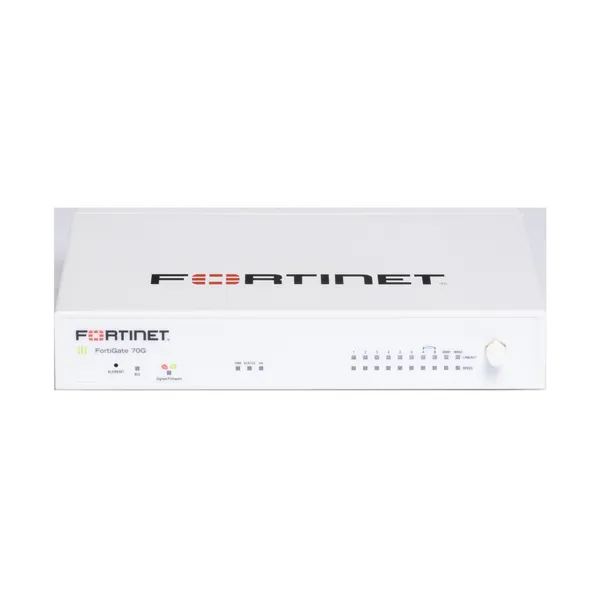
FortiGate 71G (FG-71G) Tanzania
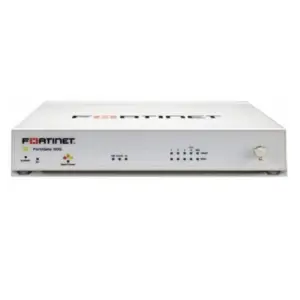
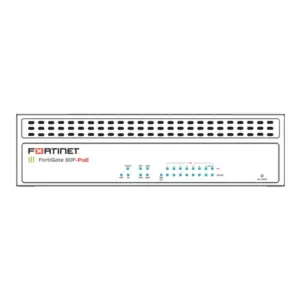
The FortiGate 71G is a compact next-generation firewall for organizations that want firewalling, Secure SD-WAN, VPN, application visibility and FortiGuard-powered security in one FortiOS platform. The FG-71G adds 64 GB of internal SSD storage to the 70G-series hardware platform, making it particularly useful where local storage for logs and operational data is part of the deployment plan.
What is the FortiGate 71G?
Fortinet positions the FortiGate 70G family as a converged next-generation firewall and SD-WAN platform for distributed enterprise sites. The FG-71G uses the same security and networking architecture while adding 64 GB of onboard SSD storage. It runs FortiOS and can participate in the wider Fortinet Security Fabric, allowing organizations to bring network security, branch connectivity, policy enforcement and security services into a coordinated operational model. For a Tanzania buyer, that means the product should be evaluated not simply as an internet firewall, but as the security gateway around which WAN links, VLANs, VPNs, FortiSwitch connectivity, FortiAP management and branch policies may be organized.
Fortinet documentation identifies the 70G/71G platform as using SOC5, also called SP5, with an NP7Lite network processor and CP10 content processor. Its ten front-panel 10/100/1000BASE-T interfaces include six Ethernet ports, two FortiLink interfaces and two WAN interfaces. The architecture is designed to offload supported traffic processing to dedicated security silicon rather than relying only on a general-purpose CPU. This matters when planning a branch because firewall performance must remain predictable while security and networking functions operate together.
Firewall performance
Fortinet publishes 10 Gbps firewall throughput for 1518, 512 and 64-byte UDP packet testing on the 70G series, with 15 Mpps firewall throughput and 1.4 million concurrent TCP sessions.
Security throughput
Published enterprise-traffic-mix figures include 2.5 Gbps IPS throughput, 1.5 Gbps NGFW throughput and 1.3 Gbps threat-protection throughput. Real deployment results depend on traffic and enabled services.
Local storage
The FG-71G includes 64 GB SSD storage. This is the defining hardware difference buyers commonly evaluate when choosing between the 70G and 71G variants.
Branch-ready ports
Ten accelerated GE RJ45 interfaces provide two WAN ports, six Ethernet ports and two FortiLink ports, giving compact sites practical options for ISP connectivity and LAN segmentation.
FortiGate 71G verified technical specifications
| Model | FortiGate 71G / FG-71G |
| Form factor | Desktop, fanless |
| Network interfaces | 10 × GE RJ45: 2 × WAN, 6 × Ethernet, 2 × FortiLink |
| Management/other | 1 × USB, 1 × RJ45 management console |
| Internal storage | 64 GB SSD |
| Firewall throughput | 10 / 10 / 10 Gbps for 1518 / 512 / 64-byte UDP packets |
| IPS throughput | 2.5 Gbps |
| NGFW throughput | 1.5 Gbps |
| Threat protection | 1.3 Gbps |
| IPsec VPN throughput | 7.1 Gbps (512-byte packets) |
| Concurrent TCP sessions | 1.4 million |
| New TCP sessions/second | 100,000 |
| Dimensions | 40.5 × 216 × 160 mm |
| Weight | 0.93 kg |
| Operating temperature | 0°C to 40°C |
Performance values are manufacturer-published test figures and should be interpreted using Fortinet’s test conditions. Production throughput varies with traffic profile, packet size, inspection features, firmware, configuration and network design.
Why businesses consider the FG-71G
The FG-71G is attractive when a site needs a compact firewall but does not want networking and security to become separate operational silos. FortiOS combines firewall policies, routing, SD-WAN, VPN, application control and security functions in one management environment. For branch networks this can simplify policy design because WAN steering and security decisions can be coordinated rather than configured on unrelated appliances. A business with two internet circuits, for example, can design path selection and failover alongside the firewall policy that controls the traffic.
The two FortiLink ports are also relevant to organizations standardizing on Fortinet switching. A FortiGate-centered branch can manage compatible FortiSwitch infrastructure and coordinate segmentation through the Security Fabric model. Similarly, FortiGate includes wireless-controller functionality for supported FortiAP deployments. These capabilities do not mean every site should consolidate everything onto one device; they mean the FG-71G gives designers a practical option for unified branch operations when the surrounding architecture supports it.
The onboard SSD is especially relevant to buyers who want local storage capability. When comparing FG-70G and FG-71G, procurement teams should determine whether the SSD has operational value for their logging and visibility requirements. If local storage is unnecessary, the comparison should be made carefully rather than assuming the higher-numbered model is automatically required. If local storage is part of the security operations plan, the 71G provides it without moving to a physically larger branch platform.
Sizing the FortiGate 71G correctly
Firewall sizing should start with inspected traffic, not only the advertised speed of the internet connection. A site may have a 1 Gbps circuit but require intrusion prevention, application control, web and DNS security, encrypted traffic inspection, VPN, multiple VLANs and simultaneous branch traffic. Each security service changes the processing profile. For this reason, the published 10 Gbps raw firewall figure should not be used as the sole sizing number. The 1.5 Gbps NGFW and 1.3 Gbps threat-protection figures are often more relevant reference points when planning a security-heavy deployment, but the final design still depends on the exact traffic mix.
Count users, servers, cameras, phones, access points, printers and IoT devices rather than only employee headcount. Consider the number of active sessions, cloud applications, remote users and VPN tunnels. Ask whether internet bandwidth will be upgraded during the expected service life. Identify whether two ISPs will be connected, whether SD-WAN rules are required, and whether branch-to-head-office IPsec traffic will be substantial. Also plan the switch topology: the FG-71G has useful integrated interfaces, but larger sites normally use managed switching rather than trying to connect every endpoint directly to the firewall.
Deployment, VPN and integration planning
A successful FG-71G deployment begins with a map of network zones and trust boundaries. Typical segments may include corporate users, servers, voice, CCTV, guest Wi-Fi, management devices and externally reachable services. These should not automatically share unrestricted access. VLANs and firewall policies can define which systems may communicate, while logging provides evidence for troubleshooting and review. The design should also identify DNS, DHCP, identity, directory services and any cloud applications that depend on predictable outbound access.
For multi-site businesses, IPsec VPN can connect branches to shared applications or data-center resources. Fortinet publishes 7.1 Gbps IPsec VPN throughput for the platform under its stated test conditions. The practical design still depends on encryption settings, latency, ISP quality and concurrent traffic. Remote-user access should be planned around the organization’s approved Fortinet access method, identity controls and current FortiOS guidance rather than copying a legacy configuration from an older firewall. Configuration backups, administrator roles, MFA, firmware policy and change documentation should be part of the handover.
FortiGate 71G Tanzania
For organizations buying the FortiGate 71G in Tanzania, the most useful procurement conversation combines model selection with the network conditions the firewall will actually face. Businesses may be protecting a single office, a head office with several branches, a retail environment, a hospitality property, a school, a healthcare facility, a warehouse or a professional-services network. The FG-71G can be a strong fit for compact and distributed sites when its inspected-throughput capacity, interface count and security-service requirements align with the workload.
Tanzania deployments should be scoped around internet circuits, redundancy expectations and power resilience. If a site uses two providers, the two WAN interfaces can support a dual-link design, while FortiOS Secure SD-WAN capabilities can be used to define path selection according to application and link conditions. The network should still include appropriate switching, UPS protection and rack or equipment placement. Because the unit is fanless, it avoids fan noise, but its published 0–40°C operating range means equipment-room temperature and ventilation remain important.
Before requesting a quotation, provide the number of users and devices, current internet bandwidth, expected upgrade path, number of branches, VPN requirements, existing Fortinet equipment and preferred FortiGuard service term. If the project replaces another firewall, include the current model and major policy requirements. FourTeck Tanzania’s business technology overview explains how firewall projects connect with switching, Wi-Fi, servers and other infrastructure, while the technology services page provides context for broader deployment requirements.
FortiGate 71G Dar es Salaam
Dar es Salaam organizations often need security gateways that can support cloud applications, branch connectivity, voice, Wi-Fi and internet-facing business services at the same time. An FG-71G project should therefore begin with traffic discovery. A corporate office with Microsoft 365, ERP access, video meetings, cloud backups and site-to-site VPN has a different security profile from a retail location or a small warehouse. Rather than choosing from raw firewall throughput alone, buyers should map the security services that will be enabled and the busiest expected traffic periods.
Dual-WAN planning can be particularly valuable for sites where internet continuity matters. The FG-71G offers two GE WAN ports, and FortiOS can use SD-WAN policies to steer or fail over traffic. The design should identify which applications need priority, whether both circuits have public addressing requirements, and how inbound services behave during a provider outage. Where servers or cloud gateways depend on fixed addresses, failover may require additional application or DNS planning beyond the firewall itself.
Businesses with multiple floors should connect the firewall to a properly designed switching environment, using VLANs to separate departments, servers, voice, guest access and security devices where appropriate. If the company is standardizing on Fortinet, FortiLink can be considered for supported FortiSwitch management. For quotation preparation in Dar es Salaam, document ISP speeds, VLAN count, switch models, remote-user requirements, branch tunnels and required security subscriptions. Use the verified FourTeck Tanzania contact page to submit those details.
FortiGate 71G Mwanza
A FortiGate 71G deployment in Mwanza may serve a branch, distribution operation, professional office, education site, hospitality property or organization connecting back to systems hosted elsewhere. The key question is whether the firewall has enough security capacity for the actual mix of internet and private traffic. If a branch sends significant traffic through IPsec to a head office, that VPN load should be considered alongside direct internet browsing and cloud applications. Fortinet’s published IPsec performance provides a useful platform reference, but ISP latency and circuit quality can influence the user experience just as much as firewall processing.
The 64 GB SSD can be useful where the architecture calls for local storage capability, but retention expectations should be discussed before assuming the internal disk replaces centralized logging or security analytics. Multi-site organizations often benefit from centralized management and reporting because administrators need a consistent view across branches. The FG-71G can participate in Fortinet’s broader management and Security Fabric ecosystem, allowing the appliance to be considered as one part of a standardized security architecture.
For Mwanza procurement, prepare a simple topology showing ISP connections, internal subnets, switch uplinks, wireless networks, servers and any existing VPN peers. Identify applications that cannot tolerate interruption and whether secondary connectivity is available. If the site has cameras, IP phones and guest Wi-Fi, plan segmentation rather than placing every device on one flat LAN. A clear topology makes it easier to determine whether the 71G is the correct model and which FortiGuard and FortiCare options should be quoted.
FortiGate 71G Arusha
Arusha businesses evaluating the FortiGate 71G may include hospitality, travel, professional services, education, logistics and branch operations where internet availability and secure remote connectivity are important. A hotel or guest-oriented environment, for example, should separate guest traffic from administrative systems and operational devices. An office may need stronger controls around finance, servers and remote access. The FG-71G provides the policy and segmentation platform, but the quality of the outcome depends on how those zones are designed.
Secure SD-WAN can help sites use multiple internet links more deliberately. Instead of treating the secondary circuit only as a passive backup, policy can be designed around application requirements and measured link conditions. The correct approach depends on circuit characteristics and business priorities. Voice and video may value latency and jitter, while backups can tolerate a different path. Critical SaaS applications may need consistent performance and DNS behavior. These requirements should be documented before configuration.
Environmental planning also matters. The FG-71G is a compact fanless desktop unit, but network equipment should still be installed in a secure, ventilated location with stable power and suitable UPS protection. Keep the firewall, ISP handoff, core switch and patching organized so support teams can trace connections quickly. For an Arusha quotation, include the site type, number of staff and devices, ISP speeds, VPN count, expected inspection services and whether FortiSwitch or FortiAP integration is planned. This produces a more useful bill of materials than asking for hardware-only pricing without deployment context.
FortiGate 71G Dodoma
Organizations in Dodoma considering an FG-71G should define the information systems and network zones the firewall must protect. Administrative offices, project sites, educational organizations and multi-branch businesses may need controlled internet access, secure VPN connectivity and clear separation between user, server, voice and guest networks. FortiOS allows those requirements to be expressed through routing and security policy in the same platform, helping administrators keep connectivity and protection aligned.
Where the firewall connects to remote offices, determine whether the topology will be hub-and-spoke, partial mesh or direct site-to-site. The number of tunnels is only one sizing factor; the volume and type of traffic carried through those tunnels also matters. Centralized applications, file transfers, backups and voice can create different performance patterns. If a secondary ISP is available, document whether it is intended for failover, active use or specific application paths. SD-WAN policy should be designed around that business objective rather than enabled without a traffic plan.
The FG-71G’s 64 GB SSD may support local operational requirements, while organizations with several sites may also evaluate centralized Fortinet logging and management options. Procurement should therefore include the appliance, appropriate security subscriptions, support term and any management components needed by the architecture. FourTeck’s Tanzania contact page specifically asks firewall customers to share internet speed, VPN use, branch connectivity and expected security services, which are exactly the details that make an FG-71G quotation more accurate.
FortiGate 71G UAE
For UAE deployments, the FG-71G can suit distributed offices and branch environments that need compact secure networking with local SSD storage. Buyers should compare the appliance against actual inspected bandwidth, number of users, VPN traffic and planned security services. Multi-branch companies operating between the UAE and East Africa can also benefit from standardizing policy conventions, VPN templates, VLAN naming and management practices across sites. Standardization reduces troubleshooting time because administrators encounter a familiar structure at each branch.
UAE sites frequently use multiple cloud services, hosted business applications, IP telephony and video collaboration. These workloads make application-aware path selection and consistent security policy important. When two WAN links are available, the FG-71G’s dual WAN connectivity can form part of an SD-WAN design. The implementation should still account for ISP addressing, inbound services, DNS, SaaS authentication and any regulatory or organizational security requirements. For broader UAE technology context, visit FourTeck UAE, which covers firewall and network-device solutions alongside IT infrastructure.
Before procurement, confirm the exact FG-71G appliance or bundle SKU, FortiGuard package, FortiCare term and power requirements. Do not assume a listing for hardware includes the subscriptions required by the intended security design. A line-item quotation should make the appliance, service term and any accessories clear. If the firewall is replacing an existing device, include migration requirements such as IPsec peers, public NAT rules, VLANs, DHCP scopes, address objects and policy dependencies.
FortiGate 71G Uganda
Uganda organizations can evaluate the FG-71G for secure branches, offices and distributed networks where firewalling and WAN connectivity need to be managed together. The 70G-series architecture provides hardware-accelerated packet processing, while FortiOS supplies the operational layer for firewall policies, SD-WAN, VPN and security services. The 71G variant’s 64 GB SSD distinguishes it for buyers who value onboard storage as part of the branch design.
A regional company with locations in Tanzania and Uganda can gain operational consistency by using the same approach to network segmentation, administrative access, VPN naming and security profiles. Consistency is especially useful when support is handled by a central IT team. However, each branch should still be sized for its local bandwidth and workload; standardization should not mean forcing an undersized or oversized appliance into every location. The number of endpoints, internet speed and inspection profile can differ substantially between a headquarters and a small branch.
For Uganda-specific project context, FourTeck Uganda covers regional IT and network-security requirements. When requesting the FG-71G, provide the exact destination, quantity, required subscription term, existing firewall model and whether migration assistance is needed. Availability, delivery and pricing should be confirmed in the quotation rather than inferred from a product page.
FortiGate 71G Kampala
Kampala offices and branch networks often combine business internet, SaaS applications, Wi-Fi, voice, remote users and connectivity to other locations. The FG-71G can provide a single policy point for these flows when its capacity matches the environment. A sensible design separates trusted business systems from guest and device networks, then allows only the traffic each zone needs. This reduces unnecessary lateral access and makes firewall logs easier to interpret.
If the site has two ISPs, define what successful failover means. Some businesses only need outbound browsing to continue; others have public services, VPN peers or cloud allowlists tied to a specific public IP address. Those dependencies determine whether simple path failover is enough. Secure SD-WAN can monitor and steer links, but application architecture must be considered at the same time. Documenting these requirements before implementation avoids discovering them during an outage.
Kampala buyers should also decide how firewall administration will be controlled. Use named administrative accounts, appropriate role separation, MFA where supported and a defined firmware/update process. Back up configuration before major changes and maintain a simple change record. If several FortiGate sites will be managed, centralized tooling may be worth evaluating. The FG-71G’s local SSD can add local storage capability, but centralized visibility remains useful when security teams need to compare events across locations.
FortiGate 71G Arua
For an Arua site, the FG-71G should be evaluated around connectivity resilience and the applications that depend on remote resources. A branch that relies on head-office systems can experience disruption even when the local LAN remains healthy, so WAN design and VPN recovery are important. If more than one connection is practical, dual WAN can provide additional resilience. If only one primary circuit is available, the project should still document recovery procedures and any alternative connectivity options the organization maintains.
Compact branches benefit from keeping the network simple but segmented. Corporate devices, guest access, cameras and voice endpoints do not necessarily need unrestricted communication. The firewall can enforce boundaries while a managed switch carries the VLANs. FortiLink may be considered where supported FortiSwitch equipment is used. This approach gives the branch a clear topology that can be documented and remotely supported without turning the firewall into an unmanaged collection of directly attached devices.
When preparing an Arua request, include the current ISP speed, expected future bandwidth, user count, device count and whether traffic is mostly local internet or sent through a VPN. Specify if web security, intrusion prevention, application control or other FortiGuard services are required. These details help determine whether the published 1.3 Gbps threat-protection reference leaves suitable design headroom for the actual workload.
FortiGate 71G Mbarara
Mbarara businesses evaluating a FortiGate 71G may be protecting a growing office, retail operation, education environment, hospitality site or branch connected to a larger corporate network. Growth planning is important because internet bandwidth and device counts often increase during the firewall’s service life. A model selected only for today’s circuit can become a constraint after an ISP upgrade or after encrypted inspection and additional security services are enabled.
The FG-71G offers a useful combination of compact size, ten GE RJ45 interfaces and 64 GB SSD storage. Its two WAN interfaces support straightforward dual-provider designs, while six Ethernet and two FortiLink interfaces give the network designer flexibility. Larger endpoint populations should still use appropriate managed switching. The firewall’s role is to enforce policy and route traffic between defined zones, not to replace a properly sized access-switch layer.
For branch connectivity, document which applications live at headquarters, which use the public cloud and which should break out locally to the internet. This information affects VPN routing and SD-WAN design. A centralized security policy may still allow local internet breakout when inspection and controls are applied consistently. Include these operational goals in the quotation request so the discussion covers configuration and subscriptions as well as the physical appliance.
FortiGate 71G Gulu
A Gulu deployment should focus on secure connectivity, manageable policy and practical recovery. The FG-71G can serve as the branch security gateway, but a complete design also needs reliable switching, appropriate cabling, protected power and documented ISP handoffs. Where remote support is important, consistent interface naming, VLAN IDs, address plans and configuration standards can significantly reduce troubleshooting time.
If local applications and cloud services share the same WAN links, SD-WAN policy can be used to make path decisions according to business needs. Before configuration, identify applications sensitive to latency or packet loss and distinguish them from bulk traffic such as backups or software downloads. This allows the network team to create policies that reflect business impact rather than simply distributing traffic evenly. Security inspection should remain part of the design so performance optimization does not create uncontrolled paths.
The 71G’s local SSD is a differentiator for sites that need onboard storage, but log strategy should consider how administrators will actually review events. A disk that nobody monitors provides limited operational value. Define retention, reporting and escalation expectations, and evaluate centralized Fortinet management or analytics where appropriate. When requesting pricing, specify whether the need is appliance-only for an existing licensed architecture or a new bundle with FortiGuard and FortiCare coverage.
FortiGate 71G Kenya
Kenya buyers can consider the FortiGate 71G for branch and SMB environments requiring a modern FortiOS security gateway with local SSD storage. The appliance’s published security figures provide a useful baseline for comparing it with adjacent FortiGate models, but the right selection depends on inspected bandwidth and future growth. Organizations with high-speed circuits should assess the 1.5 Gbps NGFW and 1.3 Gbps threat-protection figures alongside the features they intend to enable rather than relying on the 10 Gbps raw firewall number.
For companies operating between Kenya and Tanzania, a standardized FortiGate architecture can simplify site-to-site VPN, policy naming and administrator workflows. Each country site can still have different ISP providers and bandwidth, while the security model remains consistent. This is particularly helpful when cloud applications, ERP, voice and collaboration need predictable access across several offices. Central management can further reduce configuration drift when the FortiGate estate grows.
Visit FourTeck Kenya for regional technology context. For an FG-71G quote, provide quantity, required service term, delivery destination, WAN speeds, user count and existing Fortinet environment. If the firewall will join a Security Fabric, note the FortiSwitch, FortiAP, FortiManager or FortiAnalyzer components already in use so compatibility and licensing can be considered before ordering.
FortiGate 71G Kuwait
In Kuwait, the FG-71G can fit compact business sites that need strong secure networking without moving to a rack-sized firewall. The fanless desktop form factor is convenient for branches, but the appliance should still be installed in a controlled equipment location. Its published operating temperature is 0°C to 40°C, so cooling and ventilation are relevant in warm environments. UPS protection and clean power should be included in the site plan rather than treated as accessories after installation.
Network architects should evaluate whether the ten GE interfaces meet the topology or whether most LAN connectivity will be delivered through managed switches. The two WAN interfaces make dual-provider connectivity straightforward at the physical layer. The two FortiLink interfaces can support integration with compatible FortiSwitch deployments, helping organizations coordinate network access and security. The value of this integration is greatest when the organization intends to manage the branch as a unified Fortinet environment.
For regional procurement and technology context, see FourTeck Kuwait. Buyers should request a line-item quotation showing the exact FG-71G or bundle SKU and subscription term. Pricing should not be compared across regions without accounting for service bundle, tax, logistics, support term and included accessories. A cheaper hardware-only listing is not equivalent to a multi-year FortiGuard security bundle.
FortiGate 71G Ghana
Ghana organizations planning an FG-71G deployment should begin with business-critical traffic and security objectives. A branch may need secure internet, IPsec to headquarters, remote administration, guest isolation and application controls. The FortiGate can bring these requirements into one policy framework. Where a site has two providers, SD-WAN can add path monitoring and steering, but the implementation should define what happens to VPNs and inbound services when public IP addresses change.
The 64 GB SSD is a meaningful model feature when local storage is required. Security teams should decide how local logs will complement any centralized analytics and how long information needs to be retained. If several FortiGate devices are deployed, centralized management can help enforce templates and reduce differences between branches. This operational layer is important because security effectiveness depends on maintaining policies and firmware over time, not only on the appliance selected at purchase.
For regional context, visit FourTeck Ghana. A useful quotation request should identify the site, number of users, internet capacity, required VPN tunnels, security services and expected contract duration. Confirm current product availability and lead time at quotation stage rather than assuming stock from online content.
FortiGate 71G Nigeria
Nigeria deployments can use the FG-71G as a secure branch gateway where dual internet, VPN and segmented LAN requirements fit the platform. The design should account for bandwidth variability and the organization’s tolerance for WAN interruption. Where two providers are available, the firewall can connect both and apply SD-WAN rules, but resilience should be tested rather than assumed. Simulated failover during commissioning can reveal DNS, NAT, VPN or application dependencies before a real outage occurs.
Organizations with many SaaS applications should consider encrypted traffic volumes when sizing. Security services can place a different load on the appliance from basic stateful firewalling, which is why Fortinet publishes separate firewall, NGFW, IPS and threat-protection metrics. Use the metric closest to the intended security profile and retain headroom for growth. If future circuit upgrades may exceed the design envelope, compare adjacent FortiGate models before procurement.
See FourTeck Nigeria for broader regional IT context. When preparing a Nigeria FG-71G request, state whether local SSD logging is important, whether FortiSwitch or FortiAP will be managed through the FortiGate, and whether centralized FortiManager or FortiAnalyzer capabilities are already present. These details help avoid buying overlapping management functions or missing a required license.
FortiGate 71G Seychelles
For Seychelles businesses, the FG-71G may be relevant to hospitality, professional offices, distributed operations and sites where secure internet and remote management are important. Island deployments can place extra emphasis on planning spares, remote support and recovery procedures because replacing equipment may require more logistics than in a large metropolitan market. This makes clear configuration backups and documented network topology particularly valuable.
Hospitality and guest-facing sites should separate guest access from property-management, finance, voice, CCTV and staff systems. A FortiGate can enforce these boundaries while still providing controlled internet access and VPN connectivity. If two WAN circuits or diverse connectivity options are available, Secure SD-WAN can form part of the resilience design. The architecture should specify which systems must remain reachable during failover and whether any cloud services restrict access by public IP address.
The FG-71G’s fanless design and compact dimensions make it suitable for smaller equipment spaces, but temperature, power quality and physical security still require attention. Use a suitable UPS, protect the ISP handoff and switch infrastructure, and maintain remote administrative access according to security policy. For procurement, request the exact model, security bundle and support term and confirm shipping and lead time specifically for the destination. Do not infer availability from another country’s listing.
FortiGate 70G vs FortiGate 71G: what changes?
For the standard FortiGate 70G and 71G models, the major buying distinction is onboard storage: the FG-71G includes 64 GB SSD storage, while the FG-70G does not list onboard storage. The network interfaces and published performance figures for the platform are otherwise aligned. This makes the decision relatively focused. Choose based on whether the deployment benefits from local storage rather than assuming that the 71G provides a faster firewall simply because of its model number.
A procurement team should still compare exact ordering SKUs because FortiGuard and FortiCare bundles can differ by service package and contract term. Hardware-only, Unified Threat Protection and Enterprise Protection offers are not equivalent purchases. Ask for a quotation that clearly identifies the appliance, subscription package, support level and duration. This also makes renewal planning easier because stakeholders know which services were included at the beginning of the deployment.
FortiGuard subscriptions and support planning
The appliance provides the hardware and FortiOS platform, while FortiGuard security services and FortiCare support are selected according to the required protection and service term. The exact bundle should be chosen from current Fortinet ordering information at quotation time. Security packages may combine services such as intrusion prevention, web and DNS security, malware protection and other FortiGuard capabilities. Because packages and names can evolve, procurement documents should state the exact SKU rather than relying only on a generic phrase such as “full license.”
Renewal planning is part of lifecycle management. Record the registration owner, contract dates, support entitlement and responsible administrator. Schedule renewal review before expiration so security services do not lapse unexpectedly. For multi-site organizations, align contract dates where practical to simplify budgeting. If the business is moving from an older FortiGate, review configuration compatibility and current FortiOS guidance rather than assuming every legacy feature should be migrated unchanged.
Related Tanzania network-security planning
Firewall and VPN architecture
Review the FourTeck Tanzania firewall and network-security overview when the FG-71G is part of a wider security project. It explains why sizing, segmentation, VPN and inspection services should be considered together.
Network switching
The Tanzania site also covers managed switching, VLANs, PoE, fiber uplinks and LAN infrastructure. These topics matter because the FG-71G normally protects a switched network rather than replacing the access layer.
Business Wi-Fi
Wireless design should coordinate staff, guest and device VLANs with firewall policy. The Tanzania technology portfolio includes Wi-Fi planning and wireless access-point integration for business environments.
FortiGate 71G quotation checklist
Frequently asked questions about FortiGate 71G
Does the FortiGate 71G have internal storage?
Yes. Fortinet specifies 64 GB SSD storage for the FG-71G. This is the primary hardware distinction from the standard FG-70G.
How many Ethernet ports does the FG-71G have?
The platform provides ten accelerated GE RJ45 data interfaces: two WAN ports, six Ethernet ports and two FortiLink ports. It also has USB and an RJ45 management console interface.
What is the FortiGate 71G threat-protection throughput?
Fortinet publishes 1.3 Gbps threat-protection throughput using its stated enterprise traffic mix and test methodology. Actual production performance depends on configuration and traffic.
Can the FG-71G use two internet connections?
Yes. It has two GE WAN ports and FortiOS includes Secure SD-WAN capabilities. The correct failover and path-selection policy should be designed around ISP characteristics and application requirements.
Is FortiGate 71G suitable for a branch office?
Fortinet positions the 70G series for distributed enterprise sites and secure branch networking. Suitability for a specific branch depends on inspected bandwidth, users, devices, VPN traffic, security services and expected growth.
Does the FG-71G support IPsec VPN?
Yes. Fortinet publishes IPsec VPN performance for the platform and supports gateway-to-gateway VPN use cases through FortiOS. Configuration should follow the current FortiOS documentation and organizational security policy.
Should I buy FG-70G or FG-71G?
The central difference is the 71G’s 64 GB SSD. Evaluate whether local storage has operational value for your deployment, then compare the exact FortiGuard and FortiCare bundle required.
How do I request FortiGate 71G pricing in Tanzania?
Send FourTeck Tanzania the model, quantity, destination, ISP speeds, user/device count, VPN requirements and desired security term. Current price, stock and delivery should be confirmed in the quotation.
Decision recap
Choose the FortiGate 71G when the 70G-series performance and port profile match the site and 64 GB of onboard SSD storage is useful to the deployment. Size the appliance using security-enabled traffic rather than raw firewall throughput alone. Plan dual WAN, VPN, VLAN segmentation, FortiGuard services, management and support before ordering. For Tanzania projects, provide enough network information for the quotation to distinguish between hardware-only procurement and a complete security deployment.
Talk to FourTeck Tanzania about the FG-71G
Share your internet bandwidth, user count, branches, VPN requirements, existing firewall, required FortiGuard services and expected contract term. FourTeck can use those inputs to discuss product fit and prepare a more meaningful quotation. Current pricing, availability, delivery terms and service scope should always be confirmed for the exact order.

Reviews
There are no reviews yet.