
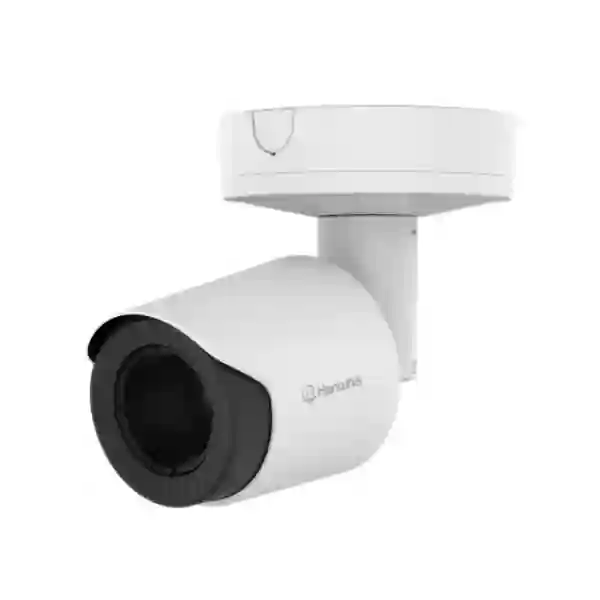
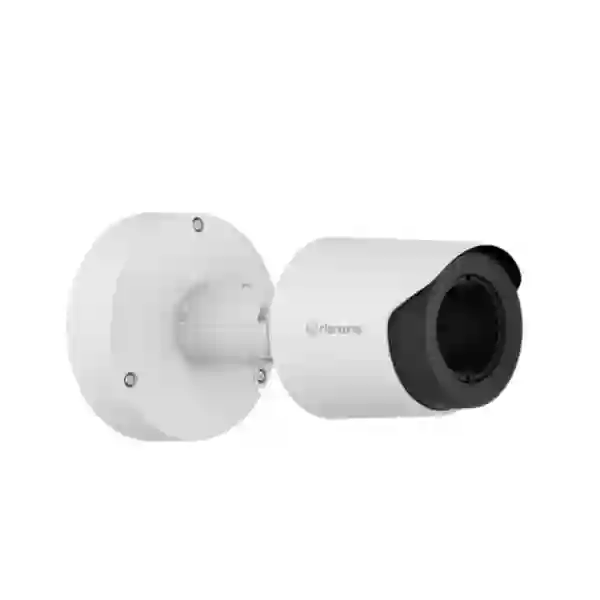
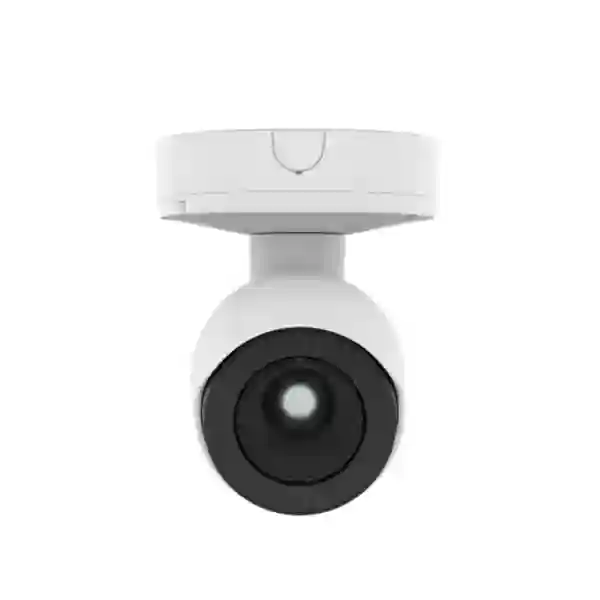
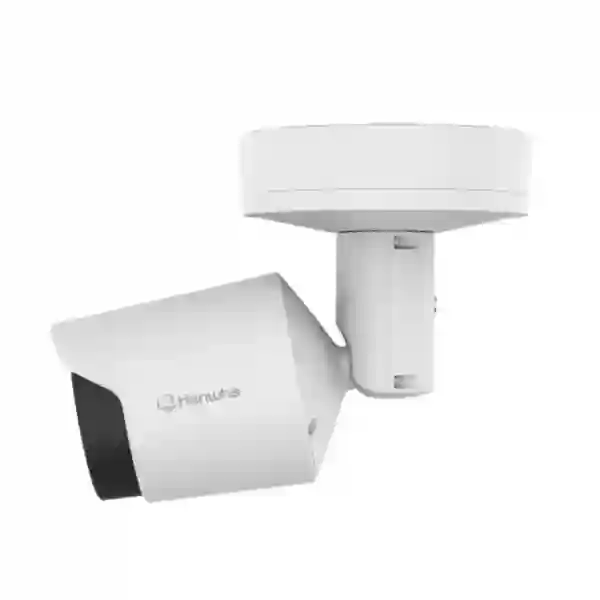
Hanwha Vision · Specialist thermal surveillance
Hanwha TNO-C3062T Thermal Camera
A 35 mm AI-enabled thermal network camera for focused outdoor and perimeter detection.
Planning surveillance in Tanzania? Confirm target distance, field of view and VMS compatibility before requesting a project-specific quotation.
Quick suitability guide
Strong fit
Defined distant perimeter, restricted approach, night-time activity detection and operator-reviewed alarms.
Check carefully
Short-range monitoring, very wide yards, fast-moving scenes, integration to an existing recorder and weather-specific performance.
Use another system
Colour identification, readable number plates, calibrated temperature measurements, or certified protective interlocks.
Verified technical specifications
These are the published manufacturer specifications for this exact model. Confirm the latest revision and intended regional supply configuration before a purchase order.
| Thermal imaging device | Uncooled microbolometer, native 384 × 288 |
|---|---|
| Published output resolutions | 384 × 288; 768 × 576 |
| Lens and focus | 35 mm fixed, athermalized, F1.0 |
| Horizontal / vertical view | 10.7° / 8.0° |
| Minimum object distance | 36.1 m |
| Thermal sensitivity | NETD ≤20 mK at 25°C, F1.0 |
| Spectral range / pixel size | 8–14 µm / 17 µm |
| Maximum frame rate | 8 fps (H.265, H.264, MJPEG) |
| AI classification | Person and vehicle |
| Analytic events | Crossing, direction, intrusion, enter/exit, loitering |
| Video and integration | H.265, H.264, MJPEG; ONVIF S/G/T/M; RTSP |
| Power input | IEEE 802.3af Class 3 PoE or 12 V DC |
| Maximum power consumption | 10.8 W PoE; 9.4 W at 12 V DC |
| Local card storage | One microSD/SDHC/SDXC slot; up to 1 TB |
| Environmental ratings | IP66, IP67, IK10, NEMA 4X |
| Operating temperature | −40°C to +60°C |
| Approximate size / weight | Ø107.3 × 275 mm; 2.37 kg |
| Network port | Shielded RJ-45, 10/100/1000BASE-T |
What this camera is designed to solve
The Hanwha TNO-C3062T thermal camera is a specialist network camera for security teams that need to detect activity along a defined distant corridor, boundary, gate approach or protected outdoor zone. Rather than depending on reflected visible light, its thermal sensor records differences in infrared energy. That makes it useful when a conventional daylight camera has too little illumination to deliver a dependable image. It should be evaluated as part of a complete detection and verification system, not as a replacement for every visible-light security camera.
Its combination of a 35 mm fixed telephoto lens, built-in classification of people and vehicles, and configurable intrusion analytics makes it worth considering where the surveillance question is specific: did a person or vehicle move into a restricted space, cross a line or remain in a controlled area? Buyers in Tanzania should first establish the distance, width and actual purpose of the scene, then request a layout review that tests the thermal field of view against the property and the monitoring response.
The sensor and the meaning of QVGA
The imaging device is an uncooled microbolometer with a native 384 × 288 pixel array, commonly described in this product family as QVGA thermal resolution. The manufacturer’s specifications also list 768 × 576 as an available output resolution. That larger output should not be mistaken for a native increase in captured thermal detail. Sensor sampling, lens choice, target size and scene contrast still govern what an operator can reliably see. A tender should therefore specify the native sensor resolution as well as the configured stream size.
Thermal pixels have a different role from visible-light CCTV pixels. Their job is to map relative infrared energy across a scene, creating contrast between objects and their surroundings. This can improve detection when a person is darker or brighter than the background, but the result does not show clothing colours, readable vehicle plates or ordinary facial features. If identification is the objective, pair thermal detection with a correctly positioned optical camera and design an operational handover so an alarm leads to a useful verification image.
Why the 35 mm telephoto lens matters
The fixed 35 mm athermalized lens gives a manufacturer-stated horizontal angle of view of 10.7 degrees and a vertical angle of view of 8.0 degrees. This is a deliberately narrow view. It concentrates the available pixels on a smaller slice of the distant scene instead of attempting to see an entire open yard at once. For a lengthy boundary or a single approach lane, this can be useful; for a wide forecourt, the same narrow framing may leave blind areas unless the site uses additional cameras.
The published minimum object distance is 36.1 metres. That figure is especially important for a compact site or a camera mounted close to a perimeter. A near-field gate, doorway or pedestrian path within that distance may need a different lens or separate coverage. Lens selection should always be checked against the expected target distance, target direction, mounting height and width of the required detection area. Do not choose a telephoto camera from a headline maximum-distance claim alone.
Thermal sensitivity and realistic expectations
Hanwha specifies a noise-equivalent temperature difference, or NETD, of no more than 20 millikelvin at 25 degrees Celsius and F1.0. In simple terms, this measures how small a thermal difference the imaging system is designed to distinguish under the stated test conditions. Lower NETD figures can help reveal subtle contrast, but NETD is not a promise that an alarm will be accurate in every environment. Atmospheric conditions, distance, surface behaviour, target movement and analytic configuration still matter.
Heat contrast changes through the day. A sun-warmed wall may resemble the thermal signature of nearby objects, while rain and humid air can reduce the useful separation of more distant targets. Background vegetation, machinery and passing traffic can further complicate classification. A realistic acceptance test should cover the hours and conditions the security team actually cares about. That might include a warm afternoon, an unlit night and routine movement around the protected route, with alarm settings refined from those observations.
Eight frames per second: what buyers should know
The model’s published maximum rate is 8 frames per second for H.265, H.264 and MJPEG. That figure should be treated as a design constraint, not hidden in small print. It can be suitable for observing comparatively slow perimeter activity and generating events from people or vehicles within a defined area. It is not the right assumption for applications that require a high-frame-rate visual record of rapid motion, fine movement or detailed forensic playback of a fast sequence.
When writing an acceptance specification, distinguish between detection of an event and reconstruction of every intermediate instant. Review object speed, approach angle, crossing width and the alert workflow. Also check the recorder or video-management software can ingest the chosen codec and frame rate without transcoding surprises. If the use case needs smoother motion, compare other models or sensor configurations before committing. The best camera is the one that satisfies the documented operational test rather than the one with the longest feature list.
Person and vehicle classification
The camera’s AI engine supports classification of people and vehicles. That provides a more targeted starting point than treating every change in a thermal picture as a security incident. An operator may be interested in a person crossing a boundary at night, a vehicle entering an exclusion area or an object remaining inside a monitored zone. Classification can help create policies around these cases, provided the monitored scene supports reliable separation of target and background.
AI classification is not the same as guaranteed recognition and it does not prove who a person is. Small distant targets, partial occlusion, unusual motion and environmental interference can affect outcomes. During commissioning, record ordinary activity as well as test incidents, observe missed events and nuisance triggers, and adjust the designated area. Agree on who reviews the alarm and what action follows. This turns analytics from an attractive feature into an accountable operational procedure with clear limitations.
Virtual lines, intrusion and loitering
Hanwha lists AI-driven virtual-line crossing and direction events, along with virtual-area intrusion, enter, exit and loitering events. These tools allow a designer to describe the movement that matters instead of watching a screen continuously for every change. A line might follow a protected boundary, while an area might cover an isolated equipment enclosure. Direction rules can distinguish a person moving toward a protected asset from somebody walking along a permitted public route outside it.
Placement is critical. A line drawn over a distant scene has different detection behaviour from a line close to the camera, and a zone that includes trees, roads or reflections may generate activity the operator does not want. Plan virtual boundaries around real security rules and the camera’s narrow view. Test a person crossing at different speeds, at both edges of the zone and against different backgrounds. Maintain records of changes so a later adjustment can be explained, reviewed and rolled back if necessary.
Motion events beyond AI classification
The published function list includes standard motion detection, tampering, audio detection, sound classification, shock detection and virtual-area appear or disappear events. These are distinct from the person-and-vehicle AI rules. They may support device-health and environmental monitoring, but they should not all be enabled just because they exist. Each enabled event needs an identified purpose, an appropriate threshold and a destination where an operator can assess it.
For example, a device tamper event might deserve priority because it indicates an interruption to surveillance, while ordinary scene motion might not require a separate alert when person-and-vehicle analytics already cover the threat. Audio-related features require suitable audio hardware, local legal consideration and configuration. Maintain an event matrix that states the event, trigger condition, severity, recipient and required response. A restrained event policy reduces alert fatigue and makes the system easier to audit.
Perimeter security use cases
A long, relatively narrow perimeter is one of the more logical places to evaluate this telephoto thermal camera. A camera aimed along a fence run or defined approach can observe a distant section of ground without needing visible illumination at every point. The security benefit comes from linking that detection to a response: a monitoring operator checks the alert, uses an adjacent camera if needed and follows a documented procedure. The thermal view alone does not prove an intrusion occurred.
Survey the fence geometry rather than assuming the complete perimeter is visible. Corners, changes in elevation, buildings, bushes and parked vehicles can create occlusions. Separate the legal property boundary from public access routes, service roads and legitimate worker movement. Where the lens is too narrow or the near distance unsuitable, specify overlapping complementary coverage. A successful layout covers the required route and respects the site’s practical constraints instead of forcing every section to fit one lens.
Industrial and utility environments
Industrial yards, logistics compounds, fenced storage areas and utility infrastructure can present surveillance problems that ordinary colour cameras struggle with after dark. A thermal detector may help flag a person or vehicle approaching a remote zone. The 35 mm lens is most relevant when that zone is distant and comparatively narrow. Buyers should map high-value assets, expected human traffic, vehicle routes, light sources, heat-generating equipment and safe mounting points before treating the model as appropriate.
Thermal contrast around engines, roofs, exhausts or heated process equipment may change as operations start and stop. It is therefore sensible to run tests during normal production as well as quieter periods. This camera’s published condition-monitoring feature is not a substitute for a verified calibrated temperature-measurement system, fire alarm or equipment safety interlock. Industrial security and industrial temperature diagnostics are different requirements, and each deserves its own documented sensing and validation method.
Large grounds and remote approaches
Sites with large grounds often want early warning before somebody reaches a building, loading bay or inner secure zone. Thermal imaging can make a useful contribution to that layered approach because it does not rely on adding floodlights along every distant line of sight. The practical question is not simply whether something can be detected at a great distance. It is whether the relevant portion of the ground is visible, the alert arrives in time and the operator can identify a sensible response.
For a remote approach, define the monitored strip width at the relevant distance and the minimum target behaviour the system must detect. Consider a person walking across the image, moving toward the camera and remaining partly obscured behind vegetation. Plan how an alert moves to a central monitoring screen, local siren, guard radio or secondary optical camera where those connections are supported by the chosen system. Confirm network reliability, power continuity and the incident workflow before deployment.
Night surveillance without visible lighting
Thermal imaging detects infrared energy rather than reflected visible light, so the security team can observe thermal contrasts at night even where there is no conventional scene illumination. That is a different capability from a colour camera with low-light enhancement or an infrared illuminator. It can reduce dependence on illumination for the act of thermal detection, but it does not create a full-colour or optically detailed picture and it does not guarantee an unobstructed image.
A sensible layered design may use the thermal camera to watch for movement and another camera to capture visible scene details where lighting and distance permit. Be careful with the word identification: thermal detection of a person is not proof of identity. The camera may notice an event that a colour camera misses, yet the colour camera may still be essential for evidence, clothing descriptions and contextual information. Define the role of each device before assigning response responsibilities.
Rain, humidity, haze and other environmental limits
The enclosure ratings make this model a candidate for exposed outdoor mounting, but weather protection and thermal imaging performance are two separate matters. Rain, humidity, fog, dust and atmospheric effects may reduce the contrast or range available to a thermal sensor. Wet surfaces and heated backgrounds can change the apparent image. A high enclosure rating keeps the device better protected from environmental ingress; it does not mean every scene will remain equally detectable in every kind of weather.
Where the installation is operationally critical, specify adverse-weather test conditions appropriate to the site. Assess how long the detection path extends through open air, whether the camera faces heat-producing plant, and whether seasonal vegetation can obstruct the view. Keep the housing and optical window serviceable. Avoid promising a fixed long-range performance figure without the manufacturer’s applicable target assumptions and field validation. Site-specific performance is more useful to a buyer than an isolated laboratory number.
Detection, recognition and identification are different
Thermal camera proposals sometimes use detection distance as though it also describes recognition or identification. These are different levels of visual information. Detection means that an object can be distinguished as present under a defined criterion. Recognition means determining a broad object type with greater confidence. Identification demands still more usable detail and is especially different when the security task involves people or vehicle number plates. A 384 × 288 thermal sensor has limits that should not be blurred by a larger output stream.
Distance estimates depend on the target dimensions, lens, pixel density, weather and the particular test standard or criterion. For this reason, do not convert a published maximum detection figure directly into a guaranteed alarm radius. Specify the object size and classification goal, then check a manufacturer’s applicable DRI information and confirm with field tests. For identity and licence plates, include a suitable visible-light camera. This separation prevents a detection-only design from being sold as a complete evidential solution.
Field-of-view planning before ordering
The model’s 10.7-degree horizontal field of view is a useful numerical starting point for a design drawing, but angle alone does not tell the whole story. At any distance, the visible scene width increases while the number of available thermal pixels remains fixed. A target that occupies many pixels at one point on the route occupies fewer at a more distant point. Site plans should therefore show expected detection zones and the paths people and vehicles are likely to take.
A field-of-view review should check lens height, viewing angle, ground slope, near and far limits, barriers, gates and where sunlight or warm equipment may change contrast. Include maintenance access and physical cable routing. If a designer cannot mark the intended field of view and target path on a plan, an exact-model quote may be premature. A small amount of site planning can prevent a narrow telephoto unit from being placed where a wider fixed camera would produce a more useful result.
Power requirements and electrical design
The camera supports IEEE 802.3af Class 3 Power over Ethernet or a 12 V DC input. Hanwha specifies a maximum PoE power draw of 10.8 watts and a maximum 12 V DC draw of 9.4 watts. These are device values; a project’s power budget must also allow for network equipment, power conversion, cable conditions and any other attached devices. Determine the chosen power method during design rather than leaving it to the installer to improvise at the mounting location.
For a networked site, check the switch’s total PoE capacity across every port and the expected cable length under the applicable Ethernet installation rules. Consider the operating environment, surge protection and backup power requirements. If security monitoring must remain active during an outage, document which elements need backup: the camera, network switches, recording system and communications path. Power resilience is a system property. A camera that remains powered cannot report an alarm through a disconnected network.
Enclosure protection and mechanical installation
Hanwha lists IP66, IP67, IK10, NEMA 4X and selected environmental test standards for this camera. The published operating temperature range is minus 40 to plus 60 degrees Celsius, with a stated non-condensing humidity range of zero to 95 percent. These figures make outdoor use plausible across demanding conditions, but the installer still needs to consider direct exposure, mount stability, cable entry protection and any site-specific mechanical hazards. They do not establish local legal approval for a particular project.
The cylindrical housing is approximately 107.3 mm in diameter by 275 mm long and weighs about 2.37 kg. Verify the load capacity of its intended bracket, pole or wall and any additional mounting components. The specification describes manual pan, tilt and rotation installation ranges; these should not be mistaken for a motorised pan-tilt-zoom function. Commission the final aiming position carefully and plan for future inspection without disturbing alignment or weakening weather sealing.
Network connection and stream compatibility
The specification identifies a metal-shielded RJ-45 10/100/1000BASE-T network interface and supports common IP video technologies including RTSP, HTTPS and ONVIF profiles S, G, T and M. It also lists Hanwha’s SUNAPI and Open Platform technologies. Those protocols can help an integrator evaluate how the camera connects to an existing recording or monitoring platform. They are not a blanket guarantee that every vendor’s software supports every camera function, event or metadata field.
Before ordering, identify the exact VMS or NVR model, its software version and the features operators actually need. Verify video ingest, time synchronisation, AI-event handling, alert acknowledgement, edge-recording retrieval and any camera-to-PTZ handover. A basic ONVIF video stream may work while advanced classifications need additional integration. Confirm that configuration is supportable after firmware updates and that network ports, VLANs and certificates satisfy the site’s own information-security requirements.
H.265, H.264 and efficient recording
The TNO-C3062T supports H.265, H.264 and MJPEG compression together with configurable bit-rate control and Hanwha WiseStream technology. Compression affects how efficiently footage travels and is stored, but the practical saving depends on activity, scene complexity, stream settings and recording policy. Do not treat a codec label as a fixed storage-consumption figure. Ask the integrator to estimate bandwidth and capacity using the selected frame rate, resolution, retention period and likely recording schedule.
A remote camera may benefit from event-based recording or a lower-bandwidth monitoring profile, while incident review may require a more detailed stream. Those choices should be documented before the network is sized. Verify what the recorder supports, how clients handle multiple profiles, and whether the chosen compression creates operational issues for exports or evidence review. Run a test recording over the intended network path. Sound design balances image usefulness, storage cost, network headroom and the ability to retrieve footage when it matters.
Edge storage and recording resilience
The camera has one microSD, microSDHC or microSDXC slot, with published support for a maximum capacity of 1 TB. Edge storage can provide a local recording option when used with a compatible card and correct configuration. The manufacturer also lists the ability to trigger recording or file upload on events. Such features should be treated as components of a recording design, not as proof that every alarm will be preserved under every failure condition.
Choose storage media with endurance appropriate to the writing workload and confirm formatting, retention and health-monitoring procedures. Determine whether the site’s main record lives on a server, NVR, NAS or camera card and how a temporary communications outage affects the evidence chain. Check whether any expected automatic backfill is supported by the selected management platform instead of assuming it. Document who has access to clips, when they are deleted, how exports are authenticated and how the system responds when storage fills.
Alarm outputs and workflow integration
The model lists two configurable alarm input/output ports and supports alert actions that include notifications, recording, file transfers and PTZ preset handover. The manufacturer’s event list also includes MQTT publication and subscriptions. These options are useful only when integrated with a specified monitoring process. An event can be transmitted, recorded or linked to another system, but each destination must be configured, secured and tested as part of the chosen deployment.
A practical design document can describe an intrusion event that opens a camera tile, records a clip and asks an operator to validate the scene. It should also say what happens after hours, what counts as a false alarm and how a missed notification is discovered. Avoid wiring automated physical responses without a separate risk and safety review. Alarm escalation is often a better first step than immediate actuation. Make sure the selected VMS actually supports the event fields required by the intended workflow.
Cybersecurity features and the shared responsibility
Hanwha lists signed and encrypted firmware, secure boot, digest authentication, brute-force protection, IEEE 802.1X options, HTTPS, secure streaming and device-level logging. The camera specification also describes a secure element associated with FIPS 140-3 Level 3 and Common Criteria EAL6+; this wording refers to the secure element and must not be represented as an independent blanket certification of the whole deployment or proof of Tanzanian regulatory approval.
Security still depends on the configuration and operating environment. Change initial credentials, follow a controlled user-permission model, limit exposure to trusted networks and manage firmware according to an approved maintenance procedure. Establish who holds administrator access and where device certificates, backups and event logs are kept. Remote access should go through the organisation’s verified security architecture rather than an unnecessarily exposed camera interface. Include cybersecurity acceptance criteria in the installation checklist, not just in the purchasing specification.
Privacy, retention and responsible monitoring
Thermal video is still surveillance information. A design should address lawful monitoring purpose, camera orientation, staff procedures and retention even if the images do not reveal the same details as ordinary optical video. The specification lists rectangular privacy masks and event logs, which can support a controlled deployment when used correctly. Their availability does not by itself establish that the site is compliant with every applicable privacy requirement or that access policies have been implemented.
Define which areas are legitimate to monitor and which public or neighbouring spaces should be excluded. Decide who may view live video, retrieve clips, alter analytics and export material. Document appropriate retention according to the organisation’s obligations and risk assessment rather than choosing a period because storage capacity permits it. Where a procurement project has legal or sector-specific obligations, obtain a review from the relevant responsible professional. A technically capable installation should also be a governable one.
Commissioning and alarm acceptance tests
Commissioning should be based on observable results. Begin by documenting the serialised device inventory, installation location, lens direction, power supply, firmware version and network configuration. Confirm a clean live stream, correct time, recording, permissions and the intended alarm route. Then test the specific event behaviours the security team is purchasing: line crossing in both directions, entry to a virtual area, loitering where applicable and routine non-threat motion that should not trigger a high-priority alert.
Use agreed test paths at more than one distance and position. Include a small set of realistic environmental variations if safe and feasible, and save representative examples of successes and misses. Adjust the rules, then repeat the tests so the accepted configuration is evidence-based. Operator training should cover what an AI alert means, what it does not mean and when secondary verification is required. A signed commissioning record is more valuable than a promise that thermal AI will eliminate false alarms.
Operational maintenance after installation
A camera can meet its initial acceptance criteria yet become less useful if vegetation grows, a mounting bracket moves or network policies change. Establish periodic checks that confirm the intended view remains clear and the virtual areas still match the security boundary. Inspect housing condition, cable entry points and physical mounts in line with the approved installation instructions. Check relevant device logs and storage-health indicators. Avoid cleaning or servicing the optical window in a way that contradicts the manufacturer’s instructions.
After firmware changes, VMS upgrades or site alterations, test the critical alerts again. Keep a change record showing the old configuration, the reason for adjustment and the person who approved it. Review alarm volumes and investigate repeating nuisance triggers rather than simply muting them. A short recurring verification routine can keep a perimeter system useful over time. It also gives procurement and security managers clear evidence of whether the investment is fulfilling the operational task that originally justified it.
Buyer comparison: thermal, optical and dual-sensor systems
Thermal and visible-light cameras answer different questions. Thermal imaging helps identify relative heat contrast even where visible illumination is poor, but it cannot provide normal colour identification details. A conventional optical camera can capture familiar imagery, yet its useful range at night depends on lighting and sensor performance. A dual-sensor solution combines both views at one location, often making verification simpler, but product capabilities, mounting requirements and integration behaviour vary by model.
The telephoto TNO-C3062T is therefore a candidate for a defined distant detection scene, not an automatic substitute for every existing CCTV unit. Compare options against target distance, the width of the area, whether evidence needs optical detail, the required frame rate and the desired alarm workflow. For an especially wide field, a wider lens or additional cameras may be more appropriate. For temperature measurement, seek a product explicitly validated for that task rather than assuming that all thermal cameras provide calibrated radiometry.
Site survey questions for Tanzania projects
A buyer preparing a Tanzania-based project can begin with practical information rather than an unverified product price: the site type, approximate boundary plan, monitored target, relevant distances, network layout and available power. Photographs and a marked site drawing can help an integrator assess camera position and whether the 35 mm view is appropriate. Specify whether the goal is after-dark intrusion detection, route monitoring, handover to existing cameras or another clearly defined event. Different goals require different test criteria.
Also identify operational realities such as planned network cabinets, possible power interruptions, corrosive exposure if relevant to the particular site, maintenance access and remote monitoring arrangements. These are site-specific engineering questions, not claims that FourTeck holds stock, installs nationwide or provides a particular response time. Confirm commercial availability, local documentation, shipping, warranty terms and any approvals during the quotation process. Do not substitute assumptions about Tanzania-wide supply or service for written terms on the actual offer.
How to specify a quote without surprises
A useful request for quotation names the exact model, Hanwha Vision TNO-C3062T, and the intended 35 mm fixed-lens configuration. It should separately identify mounts, brackets, surge protection, network switching, storage media, recording software and any licences that the full system requires. Some of these may be supplied through the broader system rather than with the camera. Make clear whether the quotation is for equipment only, installation, commissioning, integration or a combination.
Ask for the native sensor specification, frame-rate limitation, power budget and interface compatibility to appear in the proposal, along with the acceptance test for the required scene. Request a drawing that shows coverage and blind areas. If an existing NVR or VMS must be reused, include its precise model and software release. Confirm whether training, documentation and post-installation support are included rather than implied. A detailed request may take more preparation, but it improves comparability between bids and reduces unplanned changes.
Cost of ownership beyond the camera
The purchase price is only one element of a thermal CCTV project. The full cost can include appropriate mounting hardware, cabling, PoE infrastructure, electrical protection, storage, recorder capacity, software integration, security controls, commissioning and training. If the site is remote, network and power resilience can be significant design factors. The 8 fps stream and efficient codecs may influence storage planning, but actual cost depends on the selected recording policy and the wider system.
Evaluate the cost of missed coverage as well as equipment cost. An apparently economical single-camera plan can become expensive if the narrow view leaves important routes unobserved or generates nuisance events that operators stop trusting. Conversely, a carefully placed specialist thermal camera may complement existing optical cameras without duplicating their role. Compare proposals using a consistent test scene and operational response requirement. Obtain a project-specific written quotation instead of inferring Tanzania pricing from another market.
When a different camera is a better choice
This model may not be the right starting point for a small gate close to the mount because the published minimum object distance is 36.1 metres. It is also not the obvious selection for a very wide forecourt that cannot fit within the 10.7-degree horizontal field of view. Where the operational objective is colour evidence, facial identification, number-plate reading or detailed fast-motion video, a suitable optical or higher-frame-rate solution should be considered. Those are design distinctions rather than shortcomings that marketing language can remove.
Other cases call for a purpose-built radiometric or safety system: measuring equipment temperatures, diagnosing electrical faults or triggering certified fire protection. The specification does include region-of-interest condition monitoring, but that must not be translated into a guaranteed calibrated thermometer or certified protective function. If the buyer needs these outcomes, clarify the measurement accuracy, available alarms, validation method and applicable standards before choosing any device. Select for the use case, not merely for the word thermal.
Preparing a complete security-system design
An effective perimeter design normally includes more than the detector. Decide how the operator sees the event, what adjacent camera provides verification, whether the recording platform stores the evidence and who responds on site. Consider time synchronisation across systems, network segmentation, alarm escalation and the visibility of equipment faults. The TNO-C3062T provides supported building blocks for such integrations, but the final architecture requires a compatible combination of software, networking and operational procedures.
Write down the minimum acceptable performance in operational language: detect a defined class of target crossing a named boundary in the selected scene, notify the designated monitoring point and preserve an accessible record. Then translate that objective into camera placement, lens choice, analytics, storage and testing. This method prevents a procurement specification from becoming a checklist of unrelated features. The project team can evaluate success against a stated purpose, record deviations and select alternative equipment when a site condition demands it.
The practical next step
If you are assessing the Hanwha TNO-C3062T thermal camera for a Tanzanian site, start with a map or sketch of the monitored ground and the approximate closest and farthest target distances. Note whether people, vehicles or both should trigger the alert, and describe what action the security team expects after detection. Include the existing recorder or video-management system if one is already installed. Those details make it possible to test the narrow telephoto view against a real requirement.
Request a site-specific configuration and quotation that confirms compatible accessories, recording integration, operational acceptance criteria, price, availability and applicable commercial terms. No local stock, delivery date, service territory, warranty or approval is assumed here. Where the chosen lens does not cover the required scene, ask for an alternative field of view or a multi-camera layout. The objective is a dependable, testable surveillance solution rather than a product description that promises more than the installation can deliver.
Frequently asked buyer questions
Is the TNO-C3062T a normal colour CCTV camera?
No. It is a network thermal camera that images relative infrared energy. Its thermal picture is useful for detecting targets without relying on visible illumination, but it does not produce normal colour information or guarantee a view of facial identity or vehicle plates. A visible-light camera may still be needed for verification and evidence.
What is the native thermal resolution?
Hanwha specifies an uncooled 384 × 288 microbolometer. The specification also lists 768 × 576 output, which must not be presented as a higher-resolution native sensor. Ask the integrator to identify the configured stream and evaluate target size in the actual scene when planning detection performance.
How wide is the 35 mm lens?
The manufacturer lists a 10.7-degree horizontal and 8.0-degree vertical angle of view. This makes it a narrow telephoto option intended for specific distant areas. A site drawing should confirm the width of the required scene at the working distance and whether extra cameras are necessary.
Does it work in complete darkness?
Thermal imaging does not require the reflected visible light that a conventional colour camera needs. It can show thermal contrast in darkness, but visibility still depends on target contrast, distance, obstruction and environmental conditions. A usable thermal detection is not the same thing as detailed optical identification.
Can the camera distinguish people from vehicles?
Yes. The published AI feature set includes person and vehicle classification, together with line-crossing, intrusion, enter, exit and loitering events. Classification accuracy is conditional on the scene and configuration. Confirm performance through tests rather than assuming that every target will always be labelled correctly.
Does it support PoE?
Yes. The specified options are IEEE 802.3af Class 3 Power over Ethernet and 12 V DC. Published maximum consumption is 10.8 W over PoE and 9.4 W at 12 V DC. Check total switch budget, cable design, electrical protection and any backup-power requirement for the system.
What is the maximum frame rate?
The stated maximum is 8 fps for the listed video codecs. This is relevant when the scene includes fast vehicles or when a customer needs particularly smooth incident replay. Define the task in advance; a higher-frame-rate model may be more suitable if that is a core requirement.
Can I connect it to my existing NVR or VMS?
The camera specifies ONVIF profiles S, G, T and M along with other IP integration technologies. However, compatibility of streaming, metadata, advanced analytics and recording functions depends on the exact recorder, software version and configuration. Ask for a verified integration test before purchasing for an existing system.
Does it measure exact equipment temperatures?
Do not assume so. The product specifications list region-of-interest condition monitoring, but this product page does not establish calibrated spot-temperature accuracy or suitability for equipment safety interlocks. If measurement or fire safety is required, specify a suitable verified system and its testing standard separately.
How much footage can it keep on a card?
The camera has one supported microSD-family slot with a stated maximum of 1 TB. Retention depends on codec, bitrate, frame rate, event frequency, recording schedule and usable media capacity. A fixed number of days cannot responsibly be quoted without those parameters and a storage calculation.
Is the camera suitable for exposed outdoor mounting?
Hanwha publishes IP66/IP67, IK10 and NEMA 4X ratings and a stated operating range of minus 40 to plus 60 degrees Celsius. Mounts, cabling, surge management and maintenance still need appropriate site design. The ratings do not by themselves certify a finished project or guarantee unrestricted thermal visibility in bad weather.
What information is needed for a Tanzania quotation?
Provide the exact model, a plan or photos of the monitoring area, the closest and farthest target positions, the intended person or vehicle events, and any existing recorder or network constraints. Request explicit confirmation of current commercial terms, supply availability and system configuration instead of assuming a local price or delivery date.
Request a site-specific thermal camera quotation
Share the monitoring area, target distances, site network and alarm objective for a configuration review. The right proposal should confirm lens suitability, compatible accessories, integrations, current availability and written commercial terms before an order is placed.
Ask FourTeck Tanzania for a requirements-based quote and coverage assessment.
Technical details reflect published Hanwha Vision documentation consulted in November 2026. Manufacturer specifications may change. Regional availability and commercial conditions require confirmation. Detection depends on environment and commissioning; no identification, response-time or regulatory-approval guarantee is implied.




Reviews
There are no reviews yet.