
Hanwha Vision | AI thermal perimeter security
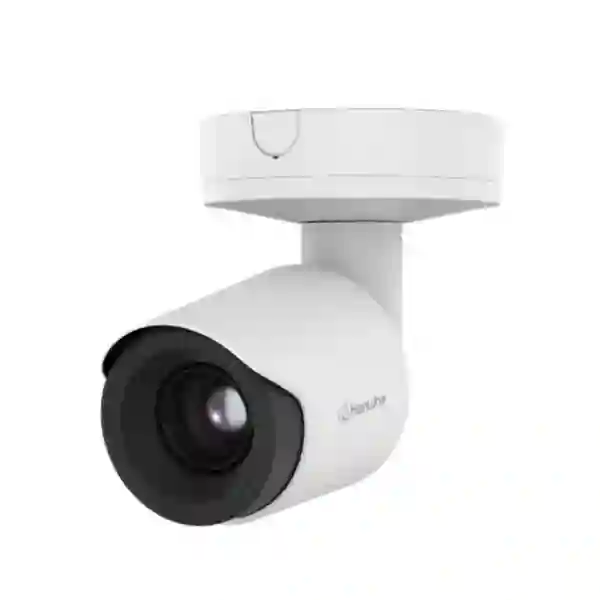
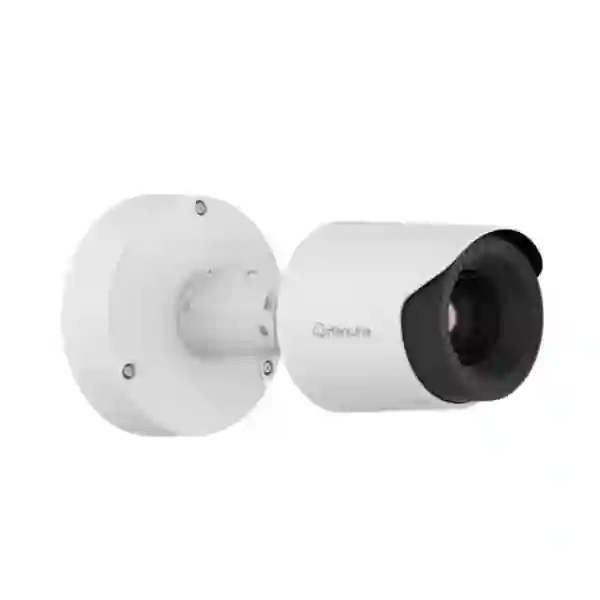
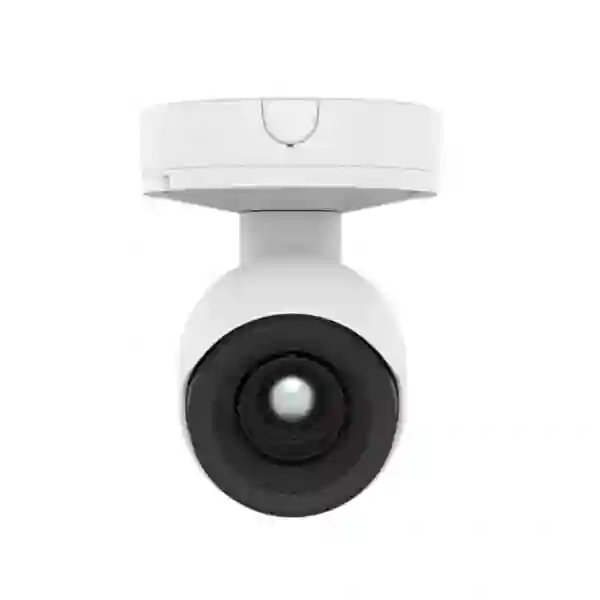
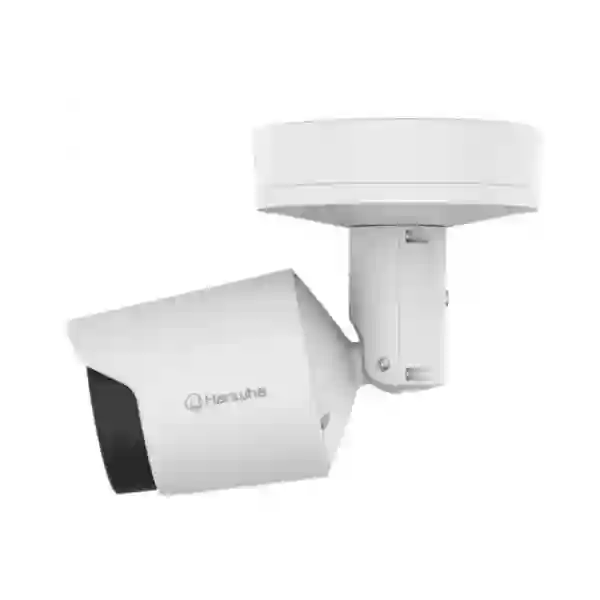
Hanwha TNO-C4060T VGA AI Thermal Camera
The Hanwha TNO-C4060T thermal camera is a fixed-lens, network-connected security camera for organisations that need to detect heat signatures and classify activity across demanding outdoor areas. Its native 640 × 480 thermal sensor, 35 mm lens and AI classification of people, vehicles and vessels make it a candidate for carefully designed perimeter, industrial and waterside monitoring.
For a project in Tanzania, the most important buying decision is not the headline detection distance alone. It is whether the lens geometry, real-world target size, environmental conditions, mounting position and security response process fit the site. Ask FourTeck Tanzania for a suitability review and quotation using your site layout and required detection zones; configuration and commercial availability should be confirmed before an order.
At a glance: specifications that shape your project
- Native thermal resolution: 640 × 480 uncooled microbolometer; output can be upscaled to 1280 × 960.
- Lens and view: 35 mm fixed athermalized F1.0 lens; 17.5° horizontal and 13.2° vertical field of view.
- Sensitivity: NETD ≤16 mK at 25°C, F1.0; thermal spectral range 8–14 μm.
- On-device analytics: classification of people, vehicles and vessels, with virtual line and area events.
- Integration: H.265/H.264/MJPEG, ONVIF profiles S/G/T/M, RTSP and network alarm options.
- Outdoor construction: IP66/IP67, IK10 and NEMA 250 Type 4X classifications listed by the manufacturer.
- Power and storage: IEEE 802.3af Class 3 PoE or 12 V DC; one microSD slot with manufacturer-listed support up to 1 TB.
Who should consider this thermal camera?
This model is most relevant where operators need dependable awareness of movement rather than a conventional colour picture. Examples include a fenced industrial boundary, a remote approach to a facility, a logistics yard at night or a restricted access area where ordinary lighting changes dramatically. Thermal imaging sees differences in emitted thermal energy, so its monitoring role is different from a standard daytime or infrared-illuminated CCTV camera. It should be evaluated as part of a complete security system, not as a standalone guarantee of detecting every threat.
The 35 mm lens is a telephoto-oriented selection within Hanwha Vision’s current VGA thermal series. Its relatively narrow view may help an operator examine a distant lane or selected perimeter sector, but it will cover less width nearby than a shorter-focal-length model. A project with several gates or wide adjacent zones may require additional cameras. For a narrow road, shoreline section or defined boundary corridor, careful positioning can make the field of view more useful than simply choosing the widest available image.
A prospective buyer should start with a site plan: the areas to protect, distances between camera and subjects, typical target direction, vegetation and structures, and the response expected after an alarm. Thermal imagery is especially relevant when visible-light images are inconsistent, yet obstacles remain obstacles: a wall, dense screen or intervening object can block the thermal view. Clear line of sight and thoughtful placement are essential, even with advanced analytics.
This is a security observation camera, not a substitute for a calibrated temperature inspection instrument. The manufacturer documents temperature-change detection among its analytics, but that alone does not establish the equipment as a radiometric thermometer that reports accurate temperatures for industrial process control. Buyers needing quantitative temperature measurements should confirm a separately specified radiometric model and the measurement requirements before selecting equipment.
Understanding the sensor, sensitivity and 35 mm lens
The TNO-C4060T uses an uncooled microbolometer with 640 × 480 sensing elements and a 17 μm pixel pitch. Its long-wave infrared operating band is 8–14 μm. These characteristics matter because a thermal image is built from thermal contrast rather than ordinary reflected colour information. A warm person may be visible against a cooler surface without the scene looking anything like a photographic image. The result is well suited to detecting the presence of objects, while visual identity and clothing colour are not supplied by the thermal channel.
Hanwha lists a noise-equivalent temperature difference, or NETD, of no more than 16 mK at its stated test point. In practical terms, lower NETD indicates sensitivity to small thermal contrast differences under defined conditions. It is a valuable comparison point, but not a promise that targets will always be recognisable in haze, rainfall or heat-soaked surroundings. Surface temperature, solar loading, reflections, background clutter and atmospheric conditions can reduce the usable separation between a target and its background.
The fitted 35 mm F1.0 athermalized lens is fixed-focus. Hanwha gives a horizontal field of view of 17.5°, vertical field of view of 13.2° and a minimum object distance of 36 m. These are especially important facts for close-range planning. Placing the camera directly above a nearby doorway, for example, would not exploit the intended long-view geometry. A fixed lens should be selected around a measured view corridor, rather than assuming optical zoom can later be adjusted to correct a poor position.
Hanwha supports image output up to 1280 × 960 through upscaling, alongside native-scale stream options including 640 × 480. Upscaling can change how an image appears on a screen, but it does not turn the native 640 × 480 detector into a higher-resolution sensing array. Buyers comparing cameras should distinguish sensor detail from digital output size. For accurate design comparisons, ask the integrator to calculate target pixel coverage from the native sensor, the proposed range and the selected lens.
The manufacturer also lists mechanical pan, tilt and rotation adjustment ranges for installation alignment. These mounting adjustments should not be confused with a remotely motorised pan-tilt-zoom camera. The TNO-C4060T is best treated as a fixed viewing direction once installed. If a control room needs to actively steer one camera across widely separated areas, a positioning thermal system or additional fixed cameras may be more appropriate.
AI detection distance versus theoretical DRI distance
Range figures deserve particular care because different measures answer different questions. Hanwha separately provides AI detection distances and values based on Johnson’s detection, recognition and identification criteria. An AI detection rating refers to a defined object-classification use case under test conditions. DRI calculations describe how many pixels across a standard target may be required for levels of visual task performance. The two sets of figures are not interchangeable and neither predicts a guaranteed event alarm under every site condition.
For this specific model, Hanwha gives AI detection distances of up to 296 m for a person of the stated test height, 423 m for a vehicle and 1,010 m for a vessel. The published vessel value uses a target height of 2.4 m measured from the waterline. These numbers help develop an initial site concept, but actual classification can change with scene angle, weather, contrast, target visibility, mounting vibration and analytics settings. A commissioning test using representative targets is necessary before accepting a design.
For the same model, the manufacturer’s Johnson-criteria table gives theoretical detection values of 1,247 m for a person and 3,188 m for a vehicle. It also lists recognition at 312 m for a person and 797 m for a vehicle, with identification at 156 m and 398 m respectively. Those long theoretical detection figures should never be presented as the distance at which the camera will reliably send a person-classified AI alarm. The distinction is central to procurement and to a realistic statement of performance.
Consider a facility whose outer fence lies 250 m from the intended mounting point. The designer should verify that the person detection task is suitable at that range, that the entire route falls within the 17.5° view, and that fencing, posts or vegetation do not hide critical movement. A project needing positive visual identification may also need a visible-light camera directed at an access point. Combining technologies can create a more informative security record than expecting one thermal view to satisfy every objective.
For water-facing deployments, test results must also account for changing backgrounds, vessel orientation, weather and water conditions. A small craft presents a different thermal outline from a larger vessel. Design decisions should therefore use defined target classes and agreed acceptance tests. Request a written statement of the intended detection zone, classification threshold, and response procedure, not just a quotation that repeats a headline range.
AI analytics for people, vehicles and vessels
The camera’s on-device AI engine can classify people, vehicles and vessels, and Hanwha documents event rules for object detection, virtual line crossing with direction, and virtual areas covering intrusion, loitering, entering, exiting, appearing and disappearing. These tools allow an integrator to translate a broad field of view into specific operational questions. Is a vehicle entering a restricted road? Has a person crossed a defined boundary? Is a vessel entering an area selected for closer observation? Each rule should correspond to a security decision.
Object classification can reduce the burden of alarms triggered by movement alone, but no detector eliminates false alerts. An animal, distant thermal clutter, weather event or partially obscured person may still challenge a classification engine. Equally, overly restrictive settings can miss an event. A useful design specifies what matters, tests known nuisance conditions and records how many useful alerts are produced. Analytics thresholds should be reviewed after the camera has seen the site through different operating conditions.
Virtual lines should be placed where a target will be visible long enough for confident classification, rather than directly behind a pole or at the edge of the picture. Direction-based rules can help distinguish movement into a site from movement out of it. Area alarms can be valuable around restricted equipment, but a large polygon covering an entire busy yard may create operator fatigue. Smaller, purposeful regions usually produce clearer response instructions and better auditability.
The BestShot thumbnail function and event metadata can support a review workflow where the receiving platform understands the relevant data. However, feature compatibility must be validated with the exact recorder, VMS version and event integration. Buyers should ask to see a test alert delivered to the actual monitoring interface, with timestamp and appropriate camera identification, rather than assuming every listed AI event will automatically appear in a third-party application.
What thermal video adds — and what it cannot replace
A thermal network camera is useful when lighting is absent, uneven or deliberately kept low. Unlike a normal visible-spectrum camera, it does not depend on a floodlight to display thermal contrast. This can be attractive for a remote perimeter or a waterside area where intense illumination is impractical. The benefit is greater continuity of observation under variable light, not immunity to every visibility problem. Severe weather and weak thermal separation still matter, and the final picture should be assessed on site.
Thermal and visible-light cameras answer different security questions. A thermal view can help show that something warm is moving where it should not be, while an optical camera may be needed to describe clothing, read a registration plate or provide familiar colour evidence. Where identification is an operational requirement, plan a layered system. A gate can use a conventional camera for documentation, with thermal monitoring looking across an approach corridor. This avoids asking a narrow thermal image to perform tasks for which it was not designed.
Thermal images also require operator training. White-hot, black-hot and colour palettes are display choices; a dramatic red or rainbow image does not itself prove a hazardous temperature. Hanwha lists multiple palettes, including white-hot, black-hot, rainbow and iron. The most useful view is usually the one that gives the control room a consistent method of spotting subjects and interpreting alerts. Establish a standard palette and recording policy before staff rely on images during incidents.
The camera is not a see-through-walls device. Opaque barriers, certain glazing arrangements and dense objects can obstruct the relevant thermal radiation. If a site has tall grass, temporary containers, seasonal plant growth or moving equipment, the scene may change between survey and operation. Provide a clear maintenance responsibility for restoring sightlines. Thermal capability should complement sound site design, physical security and appropriate human response rather than be described as a universal solution.
Outdoor durability and environmental planning
Hanwha lists IP66 and IP67 ingress protection, IK10 impact resistance and NEMA 250 Type 4X for the TNO-C4060T. These ratings are important to specifying outdoor equipment, but their precise testing context should be kept separate from a promise that a particular installation will withstand every event. Cable entries, conduit adapters, mounting hardware and junction boxes must be selected and installed so the weather protection of the complete assembly is not undermined.
The operating temperature range is specified as -40°C to +60°C with 0–95% relative humidity under non-condensing conditions. That does not remove the need to consider strong sunshine, heat reflected from nearby metalwork, salt-laden air, dust, condensation around cables or wind movement at an exposed mount. Positioning choices influence both longevity and image quality. For a coastal project in Tanzania, ask for a site-specific review of corrosion exposure and any additional mounting or maintenance measures required.
The manufacturer cites environmental test frameworks including NEMA TS 2 and selected MIL-STD-810H methods. These describe laboratory evaluations and listed standards; they should not be translated into unsupported claims of indestructibility or a general local government approval. If a tender specifies particular certifications, request the current manufacturer documentation for this exact model and confirm whether the relevant edition, report or declaration satisfies the contract.
Physical placement is another part of reliability. A narrow-view camera mounted on a long, flexible pole may shift enough in strong wind to change the region of interest. A solid foundation, appropriately rated bracket, protected cabling and measured alignment make the analytics more useful. Where the installation is difficult to reach, plan safe access for cleaning and inspection. A rugged camera still benefits from straightforward preventative maintenance.
Video streams, storage and network compatibility
The TNO-C4060T supports H.265, H.264 and MJPEG video compression, with a manufacturer-listed maximum of 30 fps in the relevant output modes, or 25 fps for the stated 50 Hz configuration. The actual project frame rate, bitrate and recording quality should be set around the monitoring task and the available network. A higher stream resolution does not add native sensor pixels, and a higher bitrate can increase storage demand without solving a poor camera placement.
Hanwha specifies a 10/100/1000BASE-T Ethernet connection, multiple stream profiles and ONVIF profiles S, G, T and M, alongside RTSP and its own SUNAPI interface. This offers several integration paths for network video systems. Standards support is a strong starting point, but recording, analytics metadata, event management and device configuration may be handled differently by different platforms. A real interoperability test is recommended before purchasing for an established control room.
One microSD/SDHC/SDXC slot is specified with support up to 1 TB. Edge storage may serve as an additional recording layer or support particular event policies, but usable retention depends on capacity, recording duty cycle, stream settings, card endurance and how the VMS interacts with edge footage. Do not assume the maximum listed capacity will automatically provide a specific number of days. Build a storage worksheet from the desired streams, retention period and recording triggers.
A field network often crosses several switches and links before reaching a recorder. Design for bandwidth headroom, prioritised security traffic where appropriate, time synchronisation and a safe method of recovering from connectivity interruptions. If the site uses a wireless bridge or mobile backhaul, assess the stability of that connection at the proposed bitrate. An apparently good camera cannot produce dependable remote alarms when the communications path is regularly unavailable.
Alarm actions, event routing and operator response
Hanwha documents configurable alarm input/output ports, event-based recording options, notifications, file transfers and methods for passing event information to other systems. The right approach depends on who is expected to act. An unattended industrial perimeter may send selected alerts to an authorised monitoring operator, while a staffed facility may display them in its existing VMS. Define the receiving person, the event description and the action required before configuring dozens of rules.
An effective event should answer a few basic questions: which camera saw the activity, which zone was crossed, whether the system classified a person or vehicle, and where the recording can be reviewed. Set up meaningful camera names and clear zone labels. A generic alarm that forces an operator to search several feeds adds delay and encourages missed events. A short response procedure for each alert class can be more valuable than a long list of available features.
Where alarm outputs connect to physical security controls or other building systems, integration should be reviewed by the responsible engineer. A camera alert should not be assumed to justify an automatic hazardous action without independent safeguards. For example, intrusion detection might request operator attention or a separate verified response rather than directly controlling machinery. Requirements for alarm acknowledgement, escalation and retention should be documented as part of the project.
Test the complete chain with a representative walk, drive or waterborne target where safe and permitted. Confirm the event is generated, transmitted, displayed, recorded and retrievable. Repeat with a disconnected network segment and restored connection where the architecture permits. This end-to-end exercise catches failures that a live-video demonstration alone will not expose, such as incorrect time settings, unsupported metadata fields or overly broad notification rules.
Cybersecurity and responsible deployment
A thermal camera connected to an IP network is also an IT endpoint. Hanwha lists features including secure boot, signed firmware, encrypted firmware, HTTPS, IEEE 802.1X options, access control, audit logs and encrypted microSD partitions. These are useful security capabilities, but the value depends on deployment policy and ongoing administration. They do not automatically compensate for shared passwords, flat networks, publicly exposed management interfaces or neglected firmware maintenance.
Before handover, assign a device owner and separate administrator responsibilities from ordinary operator access. Use strong unique credentials, restrict management interfaces, keep the device on an appropriate security network and configure encrypted connections where supported by the whole solution. Review how device certificates are managed in the organisation. Avoid exposing the camera directly to the public internet merely to make occasional remote viewing convenient.
Event clips can contain sensitive details about people and site operations. Agree who is authorised to view, export and retain footage, and choose retention periods based on the organisation’s policy and applicable rules. Keep audit logging useful without turning it into uncontrolled accumulation of data. For projects in Tanzania, privacy and any sector-specific requirements should be checked with qualified local advisers rather than assuming a hardware rating confers legal compliance.
Request the current manufacturer firmware guidance and a maintenance plan before final acceptance. Security updates should be evaluated in a controlled way so analytics and VMS interoperability can be re-tested after changes. Record the firmware version, network configuration, camera location and credentials handover procedure securely. A well-documented system is easier to maintain and less likely to become an unsupported device on an otherwise carefully managed network.
Power, mounting and practical installation
Power options listed for the TNO-C4060T are IEEE 802.3af Class 3 Power over Ethernet and 12 V DC. Hanwha reports maximum power consumption of approximately 7.8 W on PoE and 8.1 W on DC under its specified conditions. The numbers are modest, but a full security network may contain many cameras, switches, wireless links and recorders. Calculate the complete power budget including losses, infrastructure equipment and any separate accessory loads.
PoE can simplify a remote installation by carrying data and power over a suitably specified Ethernet cable. Nevertheless, copper link distance, surge protection, grounding, switching capacity and the route of external cabling all need engineering attention. A shoreline or industrial site may require extra attention to lightning exposure and electrical isolation. The camera’s low wattage alone does not establish that the power network is resilient, or that existing switches have sufficient spare PoE budget.
Hanwha lists a white housing made with aluminium and polycarbonate, approximately 107.3 mm in diameter by 275 mm long, with a weight around 2 kg. These dimensions should be considered when selecting brackets and enclosures. Verify the correct mount and any conduit adapter against the current accessories information for this specific model. Do not substitute an accessory by visual resemblance, especially where vibration, salt exposure or a demanding mounting surface is involved.
During positioning, mark the required surveillance corridor before drilling. Check the proposed pole height, whether a person will appear against the chosen background, and how large the target looks near the far edge of the zone. Use the available installation preview procedures with the authorised equipment; Hanwha describes a USB Type-C preview function requiring an appropriate Wi-Fi dongle. A provisional live image, measured targets and a final alignment record will be much more reliable than approximate aiming from the ground.
Suitable application scenarios in Tanzania
At an industrial facility, the camera may watch a defined approach to an external fence or a restricted compound after operating hours. The design question is not simply whether warm movement can be seen: it is whether a person or vehicle can be classified in time for an appropriate response. Site traffic, steam releases, hot machinery, routine guards and moving vegetation should be mapped so the alarm rules do not treat ordinary operations as repeated emergencies.
For an energy, utilities or telecommunications site, a thermal view can extend awareness across an exposed approach where lighting is limited. Remote sites raise additional requirements for power continuity, communications reliability, secure access and planned maintenance visits. A narrow-view thermal camera may cover a selected path well, but a large compound could require several views. A layered arrangement with conventional cameras at gates can support both approach detection and clearer incident documentation.
At a port, waterside store or marine-facing boundary, vessel classification can add a relevant detection category. The correct site design should establish the kind of vessels of interest, waterline geometry, permitted traffic and the point at which an alert should be useful. A camera intended to observe an entire harbour should not be selected solely because a laboratory figure appears long. Shoreline bends, obstacles, fixed structures and moving background sources can substantially change real performance.
A logistics and warehousing operator may want to distinguish a vehicle entering a restricted access lane from legitimate movement in the loading area. Here, thoughtful virtual zones and directional rules are often more important than using every available analytic feature. The TNO-C4060T is not a vehicle number-plate reader; combine it with a suitable visible-light camera where identification, gate evidence or detailed inspection is required. Each technology should have a defined role in the operational plan.
How to choose between this model and other thermal options
The strongest reason to choose the TNO-C4060T is a measured requirement for a fixed, relatively narrow 35 mm thermal view with AI classes that include people, vehicles and vessels. A shorter lens in the same manufacturer series may provide a wider nearby scene, while a longer lens can be considered for a different distance-and-coverage requirement. The decision should follow a drawing showing camera position, zone width, subject dimensions and required alert behaviour, not a general claim that longer is always better.
If the objective is monitoring activity very near the mounting point, pay particular attention to the stated 36 m minimum object distance and the geometry of the fixed lens. If the requirement includes steering the camera between sectors, evaluate a positioning or PTZ solution instead of expecting motorised remote pan and tilt from this fixed unit. If the requirement is to read temperatures for maintenance or process safety, evaluate a manufacturer-verified radiometric option rather than treating temperature-change analytics as calibrated measurement.
The difference between a thermal-only camera and a combined thermal/visible device is also worth assessing. A dual-sensor arrangement can simplify having both scene awareness and conventional image context, but adds its own design, cost and integration considerations. Alternatively, separate thermal and visible cameras can be positioned where each does its job best. Ask the integrator to present these choices with a simple coverage plan and an explanation of how incidents will be verified.
Finally, compare the operating system around the hardware. Camera price alone cannot capture the cost of mounting, power backup, network extension, recording licences, switching, surge protection, maintenance and operator procedures. A reliable procurement decision looks at life-cycle responsibilities and the usefulness of alerts, not just the camera specification sheet. A site-specific quote should distinguish the camera from all optional accessories and services so the scope is unambiguous.
Pre-installation survey checklist
Start with a scaled plan and photographs of each intended camera position. Mark the nearest and farthest subjects that matter, the permitted movement routes, likely vegetation changes and any obstructions. Include lighting only where it affects a companion optical camera or operator context; thermal sensing itself depends on usable thermal contrast. Record the target class—person, vehicle or vessel—and what action the site wants to take when it crosses a defined line or enters an area.
Next, confirm the physical infrastructure. Check that the proposed structure can hold the approximately 2 kg camera and the specified mounting equipment with adequate rigidity. Note exposure to wind, salt, dust, insects and accidental damage. Identify cable routing, surge and earthing requirements, network switch locations, backup power arrangements and safe access for installation. Document any distance-related cabling constraints before selecting switching or fibre-extension equipment.
Then examine the digital environment. List the VMS or NVR product and version, required stream codec, ONVIF profile needs, event metadata format and alarm-recipient workflow. Decide whether edge recording is required and how footage will be retrieved after a network failure. Record the organisation’s cyber requirements, including authentication, segmentation, firmware updates and access to logs. This makes it easier to test integration before equipment reaches a remote site.
Finally, set measurable acceptance criteria. A statement such as “monitor the perimeter” is too broad. Instead, define which target should trigger which classification in which zone under representative conditions, how quickly an operator must be notified, and how the video will be retrieved. Ensure the targets used for testing are safe, lawful and representative of normal site conditions. A defined acceptance plan reduces surprises when the installation becomes operational.
Commissioning, testing and handover
Commissioning should begin with geometry, not software. Verify that the fixed lens frames the agreed corridor and that targets at the near and far boundaries appear in useful positions. A daytime alignment check can identify obstructions and blind spots, but a night or low-contrast trial may reveal different weaknesses. Where practical, test across more than one background condition before approving a critical protection zone.
Configure only the analytics rules the site will actually use. Set distinct names for virtual lines and areas, then walk through representative entry, exit and loitering scenarios. Observe whether people, vehicles and, where relevant, vessels are classified in the real scene. Test legitimate traffic as well as abnormal movement so nuisance alerts can be addressed. Avoid promising a fixed detection success percentage without site-specific measurement and an agreed methodology.
Next, validate recording and operations. Confirm correct timestamps, playback, search, export and access permissions. Where an alarm routes to a VMS or monitoring team, check the exact event label, thumbnail or clip, and whether the event can be acknowledged. Simulate realistic connectivity interruptions where safe to do so. If a recorder or third-party service changes how analytic metadata is displayed, document that behaviour rather than assuming all features are identical across platforms.
Handover should include an as-built camera map, firmware and configuration record, authorised access procedure, maintenance schedule, known limitations and clear instructions for requesting service. Staff should know that thermal alerts indicate a classified event or scene change—not necessarily an identified individual or a proven incident. A short operator exercise using archived test footage improves readiness. The project should not be considered complete until the people responsible for acting on alarms understand the workflow.
Operations and maintenance over the camera life cycle
Plan periodic visual checks of the housing, mounting bolts, cable glands and protective surfaces. Weatherproof classifications do not prevent every problem caused by poor cable dressing or a damaged mount. If a thermal image becomes less clear, investigate contamination, water ingress around accessories, changed sightlines, mounting movement and scene conditions before assuming a sensor failure. Keep records so changes can be compared with the original commissioning results.
Review alarm performance with operators. The useful measures are not just the number of events but the proportion that lead to informed decisions, how often nuisance alerts recur and whether important paths remain covered. Adjust zones after vegetation growth, new construction or changes in site access. A virtual line that worked before a new storage container was installed may no longer protect the intended approach. Small operational reviews preserve value long after the installation team has left.
Schedule firmware and cybersecurity reviews according to organisational policy and the manufacturer’s current release guidance. Test the effect of updates on streams, events and recorder integration. Periodically verify that authorised accounts are current and that former contractors no longer have access. Check backup power, network monitoring and storage health as part of the same process; thermal capability is useful only if the rest of the system remains available.
Document any meaningful change to camera orientation or the security objective. If a site begins storing higher-value assets in a previously open yard, the original view and alarm conditions may no longer be suitable. Reassess the required subject class, range, evidence needs and response time. This discipline makes it possible to upgrade or expand the security installation based on actual risk rather than relying on old assumptions.
Key specifications — buyer reference
- Manufacturer and model: Hanwha Vision TNO-C4060T; VGA AI tele-lens thermal network camera.
- Thermal detector: uncooled 640 × 480 microbolometer; 17 μm pitch; 8–14 μm spectral range; NETD ≤16 mK at 25°C, F1.0.
- Lens and framing: fixed athermalized 35 mm F1.0 lens; 17.5° horizontal, 13.2° vertical view; 36 m minimum object distance.
- Video and compression: native-scale options and upscaled 1280 × 960 output; H.265, H.264 and MJPEG; maximum listed 30/25 fps depending on configuration.
- Analytics: classified person, vehicle and vessel detection; object, line and area events; device and tamper-related events.
- Networking: Gigabit-capable RJ-45 interface, ONVIF S/G/T/M, RTSP, SUNAPI, supported alarm and event interfaces.
- Power and local recording: IEEE 802.3af Class 3 PoE or 12 V DC; approximately 7.8 W maximum PoE consumption; one microSD slot up to 1 TB.
- Mechanical and environment: approximately 107.3 × 275 mm body, 2 kg mass; IP66/IP67, IK10, NEMA 250 Type 4X; -40°C to +60°C operating temperature under specified conditions.
Frequently asked questions
Does the TNO-C4060T work without visible light?
Thermal sensing does not require conventional visible illumination to form an image of a scene with suitable thermal contrast. This makes the camera relevant to low-light and night-time security. It does not mean that every subject will be equally clear in every environment. Strong rain, intervening objects, similar target and background temperatures, or an obstructed field of view can affect detection. Test the intended zone before committing to a critical monitoring outcome.
Is 1280 × 960 the camera’s native thermal resolution?
No. The detector itself is 640 × 480. The 1280 × 960 figure refers to an available upscaled output. For security planning, it is important to separate display output from sensor detail. A larger digital image does not create the same additional real scene information as a higher-resolution thermal detector. Compare target pixel coverage at the actual range and lens, especially if the project has a demanding classification requirement.
Can it recognise a person more than one kilometre away?
Do not confuse the manufacturer’s theoretical Johnson-criteria detection value of 1,247 m for a standard person target with the published AI person-detection figure of up to 296 m. These address different technical tasks. Neither is a guarantee of incident recognition or positive identity. If the contract requires classified person alerts at a particular range, the project needs a site-specific engineering assessment and acceptance test using representative targets.
Can the camera detect vessels?
Yes. Hanwha lists vessels as one of its AI object classes and publishes an AI vessel-detection distance of up to 1,010 m for the specified 2.4 m target height above the waterline. Performance will depend on the vessel, its orientation, visible thermal outline, the background and the environment. Establish which craft matter operationally and verify the intended alarm zones. An AI class alone does not establish reliable detection of every boat type.
Does it read temperature or detect fire?
The camera has thermal sensing and the manufacturer lists temperature-change detection as an event type. That should not be interpreted as evidence that it provides calibrated temperature measurement or approved fire detection for a safety-critical application. If temperature readings, industrial process alarms or a formal fire-protection function are required, specify those duties separately and obtain evidence for the exact equipment and installation standard involved.
Is the lens adjustable by remote PTZ commands?
The listed 35 mm lens is fixed and athermalized. Hanwha describes mechanical pan, tilt and rotation adjustment ranges for positioning during installation, but that is not the same as a motorised PTZ unit. Choose the mounting location and view corridor before commissioning. If control-room users need to steer across a broad area, assess an alternative positioning solution or a multi-camera layout rather than assuming this camera can sweep between views.
Can the camera connect to an existing recorder or VMS?
It provides common network video interfaces, including ONVIF profiles S, G, T and M, RTSP, and H.265/H.264 video. This offers useful compatibility possibilities, but not a universal guarantee that all AI metadata or alarm controls work identically on all third-party recorders. Check the exact VMS version, stream settings, event support and retrieval workflow. A short integration test is the safest way to confirm that the desired functions are available.
What are its power requirements?
Hanwha lists IEEE 802.3af Class 3 PoE and 12 V DC input, with maximum consumption around 7.8 W using PoE or 8.1 W at 12 V DC. The final project budget also needs to include switches, recording equipment, network links, accessories and power backup. Confirm cable lengths and power-source reliability before installation. A suitably designed network and backup arrangement matter more than the camera’s wattage considered in isolation.
Is the camera suitable for exposed coastal sites?
The listed IP66/IP67, IK10 and NEMA Type 4X classifications make it a candidate for demanding outdoor sites, but installation quality still matters. Ask the integrator to assess mounting rigidity, corrosion exposure, cable sealing, surge protection, safe access and maintenance intervals. Salt-laden air, wind and changing weather can affect hardware and image usefulness. Do not assume the camera’s rating alone certifies the completed site assembly for every coastal condition.
How do I request a quotation in Tanzania?
Provide FourTeck Tanzania with the model name TNO-C4060T, your application type, approximate distances, number of camera locations, site photographs or a drawing, and details of any existing recorder or VMS. Explain whether people, vehicles, vessels or a combination must trigger events. Ask the quotation to separate the camera, mounting accessories, network and power equipment, recording arrangements and any proposed commissioning work. Confirm current supply, price and commercial terms before ordering.
Planning a quotation for FourTeck Tanzania
For a meaningful proposal, share the exact model, a scaled sketch of the area, the approximate distance to the farthest important target, and the activity that should trigger an alert. Mention whether the site is an industrial yard, remote facility, controlled boundary or waterside area. Include any existing VMS or NVR details, outdoor mounting conditions, reliable network links and the available power source. This allows a supplier to check whether the 35 mm fixed view is the right fit rather than simply offering a camera by part number.
Ask the proposal to state its assumptions. Are the proposed detection zones within realistic AI classification range? Are additional cameras needed to eliminate blind spots? Which accessories, PoE equipment, recording options and cybersecurity tasks are included? What site testing and operator training are expected? Written answers make bids easier to compare and prevent an apparently attractive hardware price from hiding essential integration work.
Contact FourTeck Tanzania to request a project-specific review and quote for the Hanwha TNO-C4060T thermal camera. Product availability, pricing, installation services, warranty terms and lead times require direct confirmation for the intended transaction. A sound procurement decision will be based on the site’s actual protection objective, verified specifications and an agreed installation and acceptance scope, rather than on a generic statement of maximum detection range.
Request a TNO-C4060T project quotation
Tell FourTeck Tanzania what you need to protect, how far away the targets will be, and which events must reach your security team. Ask for a suitability review, a clear equipment scope and confirmation of current commercial terms before purchase.




Reviews
There are no reviews yet.