
Hanwha Vision · Industrial video security · Tanzania buying guide
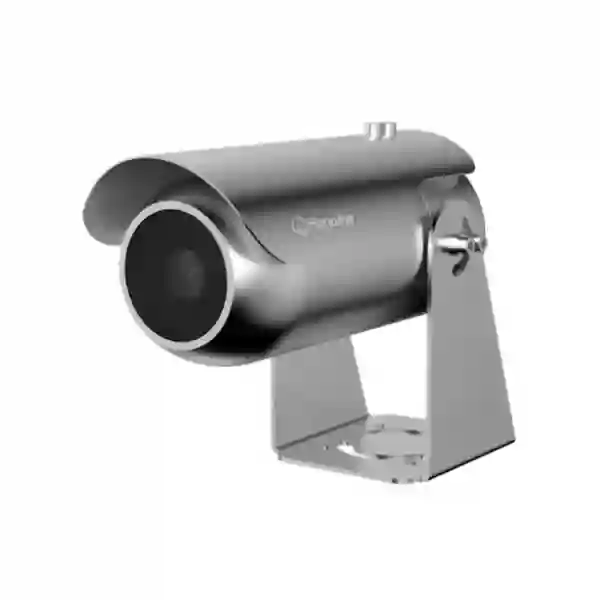
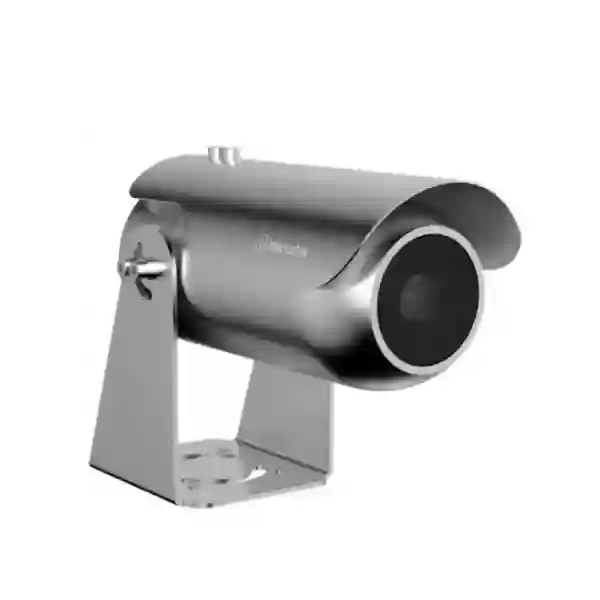
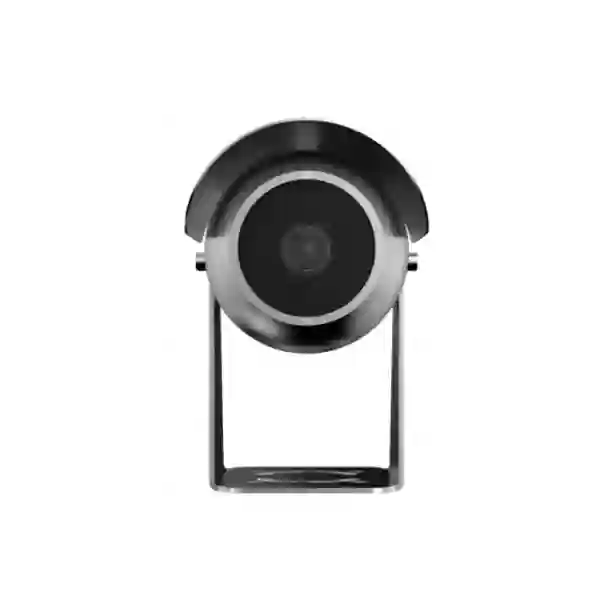
TNO-C8083E: 5MP explosion-proof AI surveillance for engineered industrial sites
The Hanwha TNO-C8083E explosion-proof camera brings high-resolution video, AI person and vehicle analytics and a 316L stainless-steel enclosure to projects that require a camera designed for hazardous-area applications. Its manufacturer documentation lists ATEX and IECEx protection markings, IP66 / IK10 ratings and a motorized varifocal lens. Suitable use still depends on the site classification, lighting, integration and certified installation arrangement.
Request a project-specific configuration review and quotation with your hazardous-area classification, required camera view, recording platform and installation constraints. Availability, price, delivery, warranty and local approvals must be confirmed for the actual offer.
At a glance: the buying essentials
- Image: 5MP CMOS, up to 30 fps at supported settings, motorized 3.2–10.2 mm lens.
- Analytics: people and vehicle classification, line and area events, counting-oriented functions.
- Protection: specified explosion-protection markings, stainless enclosure, IP66 and IK10.
- Integration: network IP video with H.265/H.264 and ONVIF Profiles S, T and M.
- Critical distinction: not a thermal camera and not the IR-equipped TNO-C8083ER.
Verified technical snapshot
| Model | Hanwha Vision TNO-C8083E |
|---|---|
| Product type | 5MP compact explosion-proof AI network bullet camera |
| Image sensor | 1/2.8-inch CMOS |
| Maximum resolution | 2592 × 1944 (5MP) |
| Frame rate | Up to 30 fps / 25 fps (60Hz / 50Hz) |
| Lens | 3.2–10.2 mm motorized varifocal, approximately 3.2x |
| Horizontal field of view | Approximately 95° wide to 29° telephoto |
| Wide dynamic range | 120 dB |
| AI classes | People and vehicles |
| Video codecs | H.265, H.264 and MJPEG |
| Network integration | ONVIF Profiles S / T / M and SUNAPI |
| Power | PoE, IEEE 802.3af Class 3 |
| Operating temperature | −30°C to +55°C, subject to stated conditions |
| Construction | 316L stainless-steel housing |
| Environmental protection | IP66 / IK10 |
| Explosion-protection documentation | ATEX and IECEx markings; verify suitability per installation |
| Approximate weight | 4.77 kg |
| Integrated IR illumination | Not specified for the TNO-C8083E; distinguish the ER variant |
Technical data follows Hanwha Vision’s exact-model product literature, including the later 2025 datasheet. Product details may change; confirm current submittals and certificate conditions before approval.
An industrial camera for the places ordinary CCTV cannot serve
Choosing video surveillance for a hazardous area involves much more than choosing a resolution. The site may contain flammable gases, vapours or combustible dust, and the safety documentation may specify where electrical equipment can be installed. The camera also needs to capture an actionable view, withstand the environment, communicate with the site’s recording system and remain accessible for planned maintenance. The Hanwha TNO-C8083E explosion-proof camera addresses this specialised brief with a compact stainless-steel enclosure, 5MP imaging and onboard AI analytics. It should be evaluated as one element in a correctly engineered hazardous-area surveillance system, not as a substitute for the facility’s safety procedures.
For Tanzania-based projects, the practical starting point is a site survey and the facility’s hazardous-area classification. Buyers should provide their required surveillance zones, electrical drawings, viewing distances, lighting conditions and video-system details before selecting a configuration. A camera’s international test markings describe its approved protection concepts and equipment characteristics, but a project engineer must establish whether those markings are appropriate to the specific location and the applicable installation rules. This approach helps procurement and engineering teams avoid the costly mistake of selecting a generally rugged camera that is unsuitable for the actual classified area.
Understand the exact model before requesting a quotation
The exact product considered here is TNO-C8083E, described by Hanwha Vision as a 5MP compact explosion-proof AI camera. The final letter matters. It must not be confused with TNO-C8083ER, which Hanwha identifies as a compact infrared-equipped explosion-proof AI camera. A quotation, equipment schedule and submittal should repeat the complete model code so that the selected lighting arrangement, enclosure, associated accessories and documentation can be checked. If several camera versions appear in a supplier catalogue, ask for a datasheet that matches the proposed part number rather than assuming similar names mean identical hardware.
The TNO-C8083E is a visible-light network camera, not a thermal imager. Its day/night capability and low-light sensitivity can be helpful where lighting changes, but those features are not the same as thermal measurement or built-in scene illumination. This distinction is especially important when the application involves unlit compounds, smoke, heat monitoring or equipment-temperature alarms. Describe the visual task precisely: identify people at an access gate, observe a pump area, track vehicles moving through a yard or verify an event after an alarm. The answer determines whether this model is the right fit or whether the project needs a different imaging technology.
Five-megapixel video and what resolution really means
Hanwha specifies a 1/2.8-inch CMOS image sensor with a maximum picture size of 2592 by 1944 pixels. The H.265 and H.264 video modes support up to 30 frames per second in a 60Hz setting, or 25 frames per second in a 50Hz setting. This resolution creates an opportunity to retain more visual detail than a lower-resolution camera when the lens, lighting and subject distance are appropriate. It does not independently guarantee facial identification, number-plate reading or evidential quality. Real-world results depend on scene geometry, image compression, exposure, the viewing angle and how much of the image the subject occupies.
When specifying the camera, draw the required field of view and identify the smallest relevant object in the picture. A camera mounted far away may produce a wide contextual overview but too few pixels across a face or a label to meet an identification objective. Conversely, tightly framing an entrance can improve useful detail while sacrificing coverage elsewhere. Engineering teams should use scene samples and a pixel-density assessment at the chosen focal length. The selected recording resolution, bitrate, frame rate and retention period should then be agreed with the operators who will investigate actual incidents.
Motorized varifocal lens: design around the scene
The specified 3.2 to 10.2 mm motorized varifocal lens provides about 3.2x optical adjustment. Hanwha gives the horizontal field of view as approximately 95 degrees at the wide end and 29 degrees at the telephoto end. That range allows installers to frame a broad operational area or narrow the scene toward a specific security task. Because the lens setting changes the visible coverage and subject size, it should be planned together with mounting position and expected viewing distance. The lens is a configuration aid; it does not turn this fixed bullet camera into a mechanical pan-tilt-zoom unit.
Start the lens decision with the operational question rather than selecting the longest possible view. In a vehicle approach lane, a moderately narrow framing may help distinguish one route from another. Around a process skid, a wider view can show relationships among valves, access points and personnel movement. At a boundary, a narrow view may increase detail but leave side approaches unseen. Verify the final composition after mounting, especially if pipework, handrails or equipment can hide subjects. Record the commissioned focal length so subsequent maintenance or camera replacement preserves the intended scene.
Low-light performance without assuming night illumination
The product datasheet lists minimum illumination of 0.07 lux in colour and 0.007 lux in black and white under specified exposure conditions. It also lists automatic day/night operation using an infrared-cut filter mechanism. These figures provide a useful basis for comparing camera sensitivity, but they are measured under defined conditions and should not be interpreted as a promise of usable detail at every dark installation. A long shutter exposure can make a static scene look brighter while causing moving people or vehicles to blur. Incident recognition therefore depends on lighting design as well as the sensor’s published sensitivity.
The TNO-C8083E should not be described as having the built-in IR illumination associated with the separate ER variant. Where a site requires reliable night-time coverage, establish the available ambient lighting, minimum operating brightness, movement speeds and any restrictions on placing luminaires in the classified area. If supplementary lighting is proposed, it must be assessed for its own installation and hazardous-area suitability. Conduct a night survey where possible and review actual recorded motion, not only a bright still image on an installation screen. Dark shadows and intense floodlights can both create problems for scene interpretation.
Handling high-contrast industrial scenes
The specified wide dynamic range is 120 dB, supported by backlight compensation and image-processing features. This is useful when a camera faces bright open yards from a sheltered structure, observes a doorway against intense daylight or sees a process area with light and shadow in the same frame. Wide dynamic range is designed to make more detail visible across contrasting parts of the image. Its benefit is still scene dependent, and it should not be treated as a complete cure for direct glare, reflections, dust-covered glass or poorly positioned lights.
During commissioning, test the most difficult times of day rather than assessing exposure only when the site is evenly lit. Check whether faces become silhouettes near gates, reflective metal surfaces overwhelm the image or bright safety lighting hides background activity. Review the picture on the recording client because its display and compression settings may differ from the live configuration interface. Where necessary, adjust the camera angle, establish appropriate exposure settings and improve lighting. A small change in mount position often delivers more useful evidence than increasing image processing or selecting an unnecessarily high bitrate.
AI object classification: useful filtering, not a safety controller
Hanwha lists AI-based classification of people and vehicles for this model, along with event functions such as object detection, crossing-direction monitoring, intrusion, entry, exit and loitering. The device can support practical workflows in which operators want notifications about relevant movement rather than every background change. Classification can reduce nuisance alerts from some environmental activity, but detection performance is affected by visibility, perspective, occlusion and configuration. No analytical event should be marketed as perfect or as a replacement for a certified safety system, emergency shutdown mechanism or required human supervision.
For each camera, agree what a meaningful event looks like. A line-crossing rule might monitor personnel entering a controlled path, while an intrusion rule may watch a fenced access zone outside ordinary operating hours. Keep legitimate work patterns in mind so a movement rule does not overwhelm operators during routine shifts. Configure events against actual sample scenes, measure how many notifications require attention and tune rules with the security and operations teams. If alerts feed a video management system or another platform, verify which event types that software actually receives and can display.
People and vehicle categories in practical workflows
The datasheet describes classification for people and vehicles and vehicle attributes such as car, bus, truck, motorcycle and bicycle. That distinction can help an operator prioritise certain movements around a facility. For example, a vehicle-focused event may be more useful along a restricted road, while a person-focused event may be more relevant to a pedestrian access point. These categories are not identity recognition or a guarantee that every vehicle class will be separated correctly at every viewing angle. Small, distant or obscured objects may not provide sufficient image information.
A useful deployment plan includes a representative test set. Observe workers wearing protective clothing, maintenance vehicles at different speeds and equipment that moves or vibrates in the background. Consider rain, night lighting and airborne particles as well as clear daytime images. Compare the alerts with what the operators expected to see and make a record of known blind spots. The aim is to provide more actionable video events while preserving the operator’s ability to review footage directly. Responsible analytics design is measured by operational usefulness, not by the number of rules activated.
Choosing line, zone and loitering rules
Virtual-line events and virtual-area events serve different purposes. A line is most effective where the camera can see an unambiguous passage from one side to the other. A virtual area is more suitable when entry into or prolonged presence in a defined zone matters. Loitering can be useful near sensitive equipment when a person remains where ordinary work does not usually occur. The camera’s listed analytics offer these rule types, but the correct setup depends on camera orientation, expected traffic, scene geometry and any software limitations attached to the chosen detection mode.
Avoid drawing detection boundaries directly along complex machinery outlines or over areas where a subject repeatedly disappears behind obstacles. Use an easily understood shape, set sensible directions and determine which work activities should be excluded. A pump house with regular inspection rounds needs different rules from an unattended outer perimeter. Capture example clips for each expected alarm condition and for ordinary non-alarm movement. If the project cannot describe who will respond to an event and what they will do, it is worth reconsidering whether that alert adds value.
Analytics for operational insight
The manufacturer’s specification also lists functions such as people counting, vehicle counting, queue management and heatmaps based on its AI engine. These capabilities may be useful where an organisation wants aggregate movement information rather than only incident clips. For example, an access route may benefit from directional counts, while a staging area may be studied for recurring congestion. Such outputs are estimates from video interpretation; they should not be presented as an independently audited measurement of attendance, production volume or safety compliance.
Before deploying operational analytics, decide where a count starts and ends, how the camera handles multiple people walking together, and whether the viewing angle allows clean crossings. Check the retention and access policies for data derived from video. In industrial environments, staff often share space with vehicles, machinery and temporary obstructions; this makes site testing especially important. Keep reports tied to a defined question, such as whether traffic peaks coincide with a gate delay. If the data will support management decisions, validate it with observations and document known limitations.
Explosion-protection markings require project-level interpretation
Hanwha’s published product documentation identifies ATEX and IECEx explosion-protection certifications with markings for gas and dust atmospheres, including Ex db IIC T6 Gb and Ex tb IIIC T80°C Db. These markings are central to the product’s specialised role. They are also precisely the type of information that must be reviewed in the context of the site’s hazardous-area classification, installation method and applicable rules. The presence of a certification label does not itself establish that every proposed installation is safe or that the product has a separate approval from a Tanzanian authority.
The engineering review should consider gas or dust group, temperature class or maximum surface temperature, equipment protection level, expected ambient conditions and all certification conditions. An enclosure marking is not permission to modify a cable entry or choose an uncertified fitting. Obtain the exact certificate and manufacturer installation instructions for the supplied version before procurement approval. The responsible engineer should confirm that the installed arrangement, not merely the boxed camera, meets the hazardous-area specification. Where the site has its own permit or inspection process, build those checks into the commissioning schedule.
Stainless-steel construction and environmental protection
The camera is described with a SUS316L or 316L stainless-steel enclosure and published IP66 and IK10 protection ratings. The stainless-steel construction is relevant where industrial atmospheres, moisture and cleaning practices place demands on ordinary camera housings. IP66 refers to dust-tight protection and resistance to powerful water jets under the applicable test method; IK10 refers to a defined impact-resistance classification. Neither rating means the camera can be submerged indefinitely, cleaned with every chemical or operated beyond all environmental restrictions. Installation quality and maintenance remain important.
At a proposed location, evaluate airborne chemicals, salt exposure, washdown methods, vibration, mechanical risk and the accessibility of the viewing window. Confirm that brackets and fasteners are suitable for the environment and do not compromise the enclosure or hazardous-area installation. A stainless housing can help address corrosion concerns, but the complete assembly may include other materials and joints that require inspection. Cleaning methods should follow approved manufacturer guidance, particularly where a damaged seal or inappropriate solvent could undermine the equipment. Include periodic image checks in the maintenance plan because a dirty lens window can erase the benefit of excellent electronics.
Operating limits and the effect of site conditions
The exact-model datasheet specifies an operating temperature range of approximately minus 30 to plus 55 degrees Celsius and a non-condensing humidity range up to 95 percent. It also notes that start-up should occur above the minimum specified temperature. These limits help assess environments ranging from outdoor locations to sheltered industrial installations, but ambient temperature is only part of the engineering calculation. Solar gain, hot process equipment, proximity to exhausts and a poorly ventilated mounting surface can increase the temperature experienced by the camera. Actual installation conditions must be checked against the equipment documentation.
Tanzania projects may include sites with intense sun, seasonal rain and airborne dust, yet the specific conditions vary greatly from location to location. Do not assume one general description of the country proves suitability at a particular facility. Measure or estimate the relevant extremes at the camera position and confirm any chemical or vibration exposures separately. Review how the enclosure is oriented and whether its view could be blocked during normal operations. A site-specific installation schedule should record the environmental assumptions so the owner can revisit them if equipment, lighting or nearby infrastructure changes.
Network connectivity and interoperability
The TNO-C8083E supports an Ethernet interface, H.265, H.264 and MJPEG compression, and the manufacturer identifies ONVIF Profiles S, T and M alongside its SUNAPI interface. Those technologies make the camera a candidate for integration with network video infrastructure, including systems that use standardised device discovery, live streaming, events or metadata. However, compatibility should be demonstrated with the actual software version and recorder in use. The existence of an ONVIF profile does not mean every third-party recorder exposes every analytic event or configuration option.
Before ordering, collect the target video management system name, current release, recording appliance capabilities, network address policy and desired event workflows. Test live and recorded video, timestamp behaviour, analytics metadata where needed, and recovery after a power or network interruption. Confirm which camera features require manufacturer-specific integration rather than basic video streaming. In multi-vendor estates, it is particularly important to preserve the distinction between basic camera visibility and full operational interoperability. Document successful test combinations instead of describing broad compatibility as unconditional.
Video compression, network load and storage
A 5MP camera can create significant recording demand if deployed without bitrate planning. H.265 and H.264 provide different compression and compatibility trade-offs, and Hanwha lists WiseStream III as a smart-codec capability for the product. Compression settings can help manage the relationship between file size and useful detail, but real results vary with scene motion, fine textures, lighting and the recording platform. A mostly static equipment room will behave differently from a busy yard with vehicles, moving shadows and rain. Storage calculations therefore need more than a single advertised resolution.
Estimate recording requirements using expected bitrate, number of cameras, recording hours and retention days, then add appropriate headroom. Consider whether continuous recording, event-based recording or a combination is required by the organisation’s security policy. Ask operators how quickly footage must be retrieved and whether multiple people may view streams simultaneously. Validate the chosen codec on the actual recorder because a high-efficiency encoding format is not useful if an older VMS cannot decode it reliably. Back up configuration information and test playback after changes to avoid discovering quality or retention problems only after an incident.
Power over Ethernet and power continuity
The manufacturer specifies IEEE 802.3af Class 3 Power over Ethernet for the TNO-C8083E. A later manufacturer datasheet lists a typical demand of about 5.30 watts and a maximum of about 9.5 watts for this model. Those numbers are useful for planning a compatible PoE switch and power budget; they are not a guarantee that every extended cable system or intermediary network device will deliver adequate power. The hazardous-area cable-entry design and certified installation requirements also have to be respected rather than treating the Ethernet lead as an ordinary office-network cable.
For reliable recording, check the entire power chain: upstream electricity, protected distribution, PoE switch capacity, cable length and quality, and any backup power arrangement required by the site. If a network cabinet or switch restarts after a brief outage, the recording gap may be longer than the outage itself. Test how the camera reconnects and how operators are informed about lost video. Confirm that any surge-protection, isolation, junction or network equipment proposed for the hazardous area has been reviewed by the responsible engineer. Power continuity should be considered together with the recorder and network, not as an isolated camera feature.
Cable entry and mechanical installation
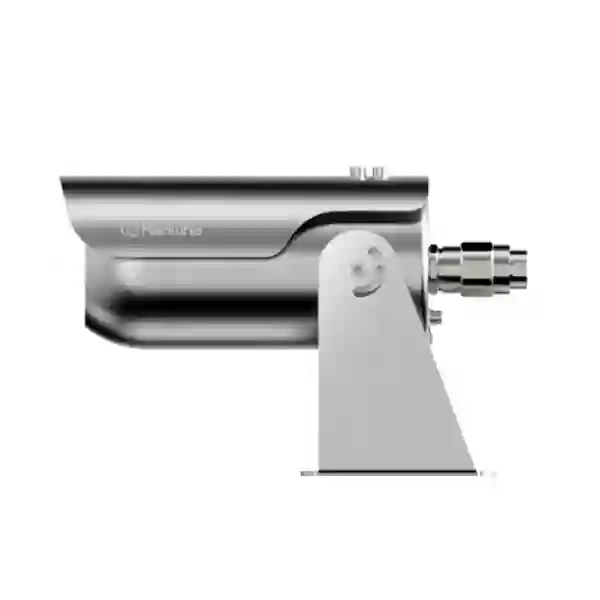
The product literature describes a one-half-inch cable-gland-type connection arrangement intended to support installation of the explosion-proof camera. This is an area where seemingly small details have major consequences. Cable glands, conduit seals, entry devices, thread engagement and the exact certification conditions must be selected and installed according to the supplied instructions and the hazardous-area design. A standard general-purpose gland should never be assumed acceptable merely because it appears to fit. Confirm the delivered camera’s mounting and entry configuration before purchasing accessories or preparing installation drawings.
Mounting work should account for the camera’s substantial mass, roughly 4.77 kilograms in the manufacturer specification, together with any bracket loads and the structural condition of the support. Consider cable protection, accessibility for adjustment and a stable sightline clear of vibration or obstruction. Leave enough safe working space to inspect the equipment without disrupting nearby operations. After installation, record the completed cable-entry arrangement and mounting details for future maintenance. Any subsequent relocation, enclosure opening or electrical modification should follow the site’s approved maintenance and permit procedures.
Mounting height and surveillance geometry
A camera mounted too high may provide an attractive wide overview but poor detail of faces, access cards or vehicle markings. A low camera can improve the angle to a target yet become vulnerable to obstruction and accidental impact. The TNO-C8083E’s fixed bullet form and adjustable lens make the mounting geometry central to performance. Define the operational purpose of the scene first, then place the camera so the required subject remains visible at a usable scale. Take account of protective barriers, storage stacks, parked vehicles and moving machinery that may change during operation.
Use a marked site drawing to identify likely blind spots and cross-check them at the planned mounting height. For access monitoring, consider whether people approach toward or across the camera. For vehicle approaches, make sure the image shows the relevant lane and that headlights or backlighting will not dominate the exposure. For industrial process monitoring, avoid framing a critical component only when the machinery is stopped. A second camera from another direction may be a better solution than over-stretching one field of view. Maintainability and safe access to the unit should influence the mounting decision as much as aesthetics.
Detection, observation, recognition and identification
The manufacturer publishes DORI distances based on a standard pixel-density framework. At the wide and telephoto lens settings, those nominal distances differ substantially because the lens changes how much of a scene is represented by each image pixel. DORI terminology is useful for early system design, but a detection distance does not equal a distance at which a person can be reliably identified. Image quality, illumination, motion, atmospheric conditions, compression and real scene contrast all influence an operator’s result. Treat the figures as design references rather than universal promises of performance.
A practical test plan should state which level of information the organisation needs at every target location. Detecting activity near a remote fence, recognising that a person is entering a restricted area and identifying an individual for investigation are different objectives. Use the chosen camera height, lens position and expected working conditions to validate each one. Include representative movement and night conditions in acceptance testing. If the project requires legally important identification or other stringent evidence, set acceptance criteria with the customer and system designer before installing the equipment, rather than relying on a catalogue range alone.
Security of the camera on an industrial network
Network cameras should be treated as managed computing devices. Hanwha’s exact-model specifications include signed firmware, secure boot, encrypted firmware, authentication controls, HTTPS, secure media transport and network authentication features. These capabilities provide tools for a stronger deployment, but they do not automatically create a secure system. Good security requires configuration, version management and controlled access. A camera connected to an operational technology or security network should not be left with permissive settings simply because it sits inside a physically controlled industrial area.
Coordinate account management and network design with the facility’s IT or OT team. Apply strong unique credentials, appropriate permissions and a documented process for firmware updates. Restrict management interfaces to authorised hosts, review available logging and determine whether the camera can reach networks it does not need. Record the approved configuration and establish who can change analytic rules, stream profiles or time settings. Where remote access is required, use the organisation’s approved secure architecture rather than assuming direct internet exposure is acceptable. Periodically review the configuration after software, staffing or network changes.
Alarms and operator response design
An analytic rule becomes valuable when it prompts an appropriate human or system response. The TNO-C8083E can generate event information and support integration workflows described in the manufacturer’s documentation. The implementation should specify which events appear in the VMS, which are recorded, which produce notifications and what priority they carry. A critical process boundary may warrant a different response than a general after-hours traffic event. When every movement becomes a high-priority alarm, operators may be less able to recognise a genuinely urgent situation.
Prepare an event matrix showing the camera name, rule, time schedule, notification destination and expected operator action. Consider maintenance shutdowns, shift changes and authorised contractor movements, since these can affect the normal pattern of activity. Test notifications from the actual video platform rather than judging success only by a camera-side configuration screen. Include alarm acknowledgement and escalation steps if the organisation needs them. Where the camera is used near industrial hazards, do not connect its ordinary video analytics to safety-critical control decisions without a separately engineered and approved safety architecture.
Video retention and investigation workflow
Recording quality matters only if the required footage can later be found and interpreted. Agree how long ordinary footage and event clips should remain available, who can export them and how exported files will be handled. The applicable organisational rules may vary by facility and purpose. A camera that creates classified-person alerts can speed searching in a compatible system, but the search result still needs a recorded image and an accurate timestamp. Plan the whole chain from camera clock synchronisation to recording server, storage management and controlled evidence export.
Work through a sample incident during commissioning. Ask an operator to find an event from a specified time, play it at normal speed, export the relevant sequence and confirm that the file retains enough context. Check that the camera name, location and time are consistent with site records. Test the effect of network loss or recording-server interruption on footage completeness. If the installation relies on removable camera storage, verify the exact supplied model’s documentation and the intended failover mode rather than assuming a memory card is included. Such tests often reveal issues that specifications alone cannot answer.
Where the camera can add value in oil and gas facilities
A hazardous-area video system may need to provide a remote view of access routes, process surroundings or equipment-adjacent activity without placing ordinary electrical equipment inside a classified location. The TNO-C8083E’s explosion-protection credentials make it a candidate for engineering review in such projects. Video can help operators confirm movement, investigate access events and inspect a scene before arranging a physical visit. It does not detect gas, measure process conditions or certify that an area is safe to enter. The camera is a surveillance component, not a replacement for instrumentation or an industrial safety system.
Project designers should identify the exact gas or dust classification at each camera position, then verify the device’s marking and installation conditions against it. Decide which visual details matter during routine operations and which are needed after an alarm. Consider whether the best view changes when vehicles, containers or temporary equipment are present. Use a representative visual test for lighting and distance before finalising camera quantity. In Tanzania, any claims about a particular facility, authority approval or service arrangement should be checked directly rather than inferred from the manufacturer’s international certifications.
Chemical plants, manufacturing and industrial storage
In chemical processing and some manufacturing environments, equipment selection can be constrained by a classified atmosphere and by corrosive or physically demanding conditions. The TNO-C8083E combines a purpose-designed explosion-proof enclosure with imaging features normally expected from a modern AI network camera. This can make it relevant to viewing controlled access, logistics movements or restricted process approaches, provided the installation is within the device’s approvals and environmental limits. Video analytics may support site awareness, but they cannot determine chemical exposure levels or the presence of flammable vapours.
For a factory or storage site, discuss the source of any potential explosive atmosphere, whether dust or gas conditions apply, and how the camera will be maintained safely. Chemical compatibility and cleaning routines may matter as much as the headline ingress rating. Ask whether routine work creates airborne particles that obscure video or generate false motion events. Review access-control procedures, privacy expectations and video retention requirements with the site owner. Where surveillance must cover multiple compartments or hidden process areas, plan multiple views instead of overpromising the visibility of a single camera.
Outdoor utility sites and remote industrial assets
Remote assets often present a different mix of risks: a small operations team, intermittent physical access, severe weather exposure, network constraints and long periods of low activity. In appropriately classified parts of such facilities, the TNO-C8083E may be considered for visual verification of a gate, route or equipment surroundings. Its 5MP video and AI events can support a workflow in which staff review an alert without immediately travelling to the location. This potential benefit depends on reliable communications, lighting, recording and a meaningful escalation process.
Plan the end-to-end communications path as carefully as the camera. Confirm whether the site has an appropriate secure network link, what bandwidth is available during peak periods and where footage will be stored. If connectivity fails, determine whether operators will receive a loss-of-video alarm. Consider power backup, surge exposure and the practical consequences of travelling to repair a remote unit. Do not assume cloud connectivity or remote video access is included in a particular service package. Confirm the capabilities of the exact camera firmware, recorder and the customer’s network-security policy before promising operational outcomes.
A focused comparison with conventional CCTV
A conventional industrial IP camera may have similar resolution or analytics yet be inappropriate for direct installation in a classified hazardous area. The decisive difference is not merely a metal housing or a rugged appearance. It is the certified explosion-protection design, its marking, installation limitations and the verified fit to a site’s area classification. The TNO-C8083E should therefore be compared with other suitably certified cameras for hazardous locations, not simply with ordinary weather-resistant bullet cameras. For a non-classified area, a specialist explosion-proof model may not be economically justified.
Compare candidate models across the actual requirements: protection marking, ambient limits, material, imaging technology, lens coverage, low-light plan, supported analytics, network compatibility, cable-entry design and maintainability. Ask for a complete installed-cost view that includes certified accessories and qualified work. An apparently cheaper unit can become expensive if it needs an unsuitable mounting arrangement or cannot integrate with the existing recorder. Equally, a technically advanced model may be unnecessary if the site’s task is only broad situational awareness. The best choice is the one that satisfies both the safety specification and the visual objective.
What to verify before placing an order
An effective request for quotation should list the exact model, desired quantity and intended mounting location, but also provide the hazardous-area classification and surveillance requirement. Include drawings or photographs when permitted by site policy, expected cable route, network platform, supply conditions and any special documentation required for procurement. If an engineering consultant has already specified ATEX or IECEx characteristics, attach that requirement rather than relying on a general statement that the camera must be explosion proof. State whether the team needs consultation on the lens view, enclosure integration or event setup.
The supplier response should identify the complete offered model, applicable manufacturer documentation and the accessory scope. Request confirmation of cable-entry components, mounting hardware, compatibility checks and any commissioning exclusions. Obtain any current commercial terms, lead times and local supply arrangements in writing; none should be assumed from a public product description. A clear specification makes different quotations easier to compare and reduces the likelihood that a generic camera or a similarly named variant is offered in place of the intended hazardous-area product.
A sensible installation and acceptance sequence
Begin with engineering review rather than hardware installation. Confirm the site classification, camera suitability, certified accessories, drawings and work permits. Next, review the camera’s position, target field of view, network route and recording requirements. Installation should be carried out by personnel competent for the applicable hazardous-area electrical and mechanical work, using the manufacturer’s instructions and site procedures. A visually correct mounting is not enough if the cable entry, sealing arrangement or equipment identification is inconsistent with the approved design.
Commissioning then moves from physical inspection to functional testing. Verify power and network communications, check image framing in both favourable and difficult light, confirm video recording and exercise each selected analytic rule. Test the event path into the actual video management system, document time synchronisation and verify access controls. Give operators a short practical review of playback, alarm handling and known blind spots. Complete a sign-off record with model identifiers, certificate documents, configuration backup, site photographs where permitted and the person responsible for future maintenance.
Ongoing maintenance and inspection
Hazardous-area camera maintenance has two parallel objectives: preserve certified equipment integrity and preserve useful image quality. The site’s inspection programme should address the enclosure, mounting, cable entries, seals, identification and any conditions specified by the product documentation. It should also review the lens window, image clarity, viewing angle, recording continuity and network-security status. Work requiring the equipment to be opened or altered must follow the appropriate site procedures and manufacturer instructions. Ordinary cleaning should not be assumed safe in every operating condition.
Schedule visual and functional checks at intervals appropriate to the site’s risk assessment and operating environment. Record corrosion, impact marks, loose brackets, contamination and changes to nearby equipment that affect the field of view. Review event performance after substantial lighting, traffic or process changes. Keep configuration copies and a history of approved software updates. An inspection should confirm not only that the camera is powered on, but also that authorised staff can retrieve a useful recording from the intended zone. Avoid making unverified claims about fixed maintenance-free periods or universal service life.
Why network, safety and security teams should work together
A hazardous-area camera crosses several organisational boundaries. Electrical or instrumentation specialists assess protection concepts and certified installation practices. Physical security teams define scenes, alerts and evidence needs. IT or OT teams manage network access, cybersecurity, video servers and time synchronisation. Procurement teams compare documentation, delivered equipment and contractual scope. The TNO-C8083E’s feature set is only fully useful when these decisions are coordinated. A camera selected solely by one department can meet one requirement yet fail an equally important part of the project.
A short joint design review can prevent many avoidable issues. Ask the safety representative to confirm location requirements, the operator to describe target incidents, the VMS specialist to verify integration and the installer to check access and mounting. Give each participant the same marked layout and equipment schedule. Document assumptions clearly, especially where the installation depends on existing lighting or network infrastructure. This collaborative approach offers more reliable outcomes than selecting a camera only because it has impressive resolution or a long list of analytics features.
Frequently asked questions
Is the Hanwha TNO-C8083E a thermal camera?
No. It is a 5MP visible-light CMOS network camera designed for explosion-protected installation contexts. It does not provide thermal temperature measurement or a thermal image. If the task is to identify unusual heat, compare equipment temperatures or work without any visible illumination, specify those requirements separately. A thermal camera and an explosion-proof visible-light camera solve different problems, and one should not be substituted for the other without engineering review.
Does the TNO-C8083E have a built-in infrared illuminator?
Do not assume it does. The exact TNO-C8083E documentation describes low-light day/night video, while Hanwha distinguishes the TNO-C8083ER as an infrared-equipped version. The similar names are easy to confuse. If a site needs a camera to view an unlit scene, confirm available lighting and the precise offered model. Any added illuminator must also be assessed for the environment and relevant hazardous-area requirements.
What makes this camera different from a standard IP bullet camera?
The specialised value lies in its explosion-protection design and associated certifications, together with a stainless enclosure and network-video functionality. A standard camera may have high resolution and weather resistance yet be unsuitable for a classified hazardous location. Selection still requires a check of the actual area classification, certification marking, cable-entry arrangement and installation instructions. Explosion protection is not achieved by choosing a rugged-looking housing alone.
Which resolution and frame rate does it support?
The manufacturer lists a maximum picture resolution of 2592 by 1944 pixels, normally described as 5MP. H.265 and H.264 modes support up to 30 frames per second at the specified 60Hz setting, or 25 frames per second in the corresponding 50Hz setting. Selected video profiles and recorder settings may change the effective stream. Image usefulness also depends on lens framing, lighting and compression.
Can the camera recognise people and vehicles using AI?
It provides AI-based classification for people and vehicles and supports relevant virtual-line and area events. This can help distinguish useful movement from some background activity, subject to configuration and scene conditions. The feature should not be described as guaranteed identity recognition. A person at a difficult angle, a distant vehicle or an obstructed subject may not be reliably classified. Test the intended rules on-site before relying on notifications operationally.
Will it work with an existing video management system?
The camera lists ONVIF Profiles S, T and M, plus Hanwha’s SUNAPI interface. These support integration planning, but interoperability depends on the specific VMS or recorder version and desired features. Live streaming may work when certain events or metadata do not. Ask for a compatibility test that covers the required video codec, recording, alarm events, user access and playback workflow before final acceptance.
Is the housing suitable for outdoor industrial use?
Hanwha specifies a 316L stainless-steel housing with IP66 ingress protection and IK10 impact resistance. It also lists an operating temperature range extending to approximately plus 55 degrees Celsius under the stated conditions. These are useful characteristics for demanding sites, but they do not establish universal resistance to chemicals, submersion, extreme process heat or every cleaning method. Confirm the installation’s actual environmental conditions and the requirements for brackets, seals and inspection.
What does explosion-proof certification mean for a Tanzanian project?
The model documentation provides international ATEX and IECEx protection markings. Those markings should be matched by the project’s qualified specialists to the hazardous-area classification and installation requirements at the proposed location. They must not be interpreted as proof of any separate Tanzanian product approval. Before purchasing, review the latest exact-model certificates, equipment conditions and the facility’s own engineering and permit processes.
How is the TNO-C8083E powered?
Hanwha specifies Power over Ethernet using IEEE 802.3af Class 3, with a published typical power demand of about 5.30 watts and maximum around 9.5 watts in the later exact-model datasheet. The PoE network path and backup power strategy should be designed for the site. Network and cable-entry requirements in a hazardous area must be reviewed separately. Do not assume an ordinary Ethernet cable installation is sufficient merely because PoE is supported.
Can one camera cover a large industrial yard?
Its motorized 3.2 to 10.2 mm lens offers a useful range of framing choices, but no single camera can guarantee detailed visibility across every large yard. A broad angle provides context while reducing the number of pixels devoted to distant subjects. For security investigations, calculate the useful field of view and subject size at each target location. Additional cameras may be necessary to address obstructions, multiple approaches or lighting differences.
Does AI remove the need for an operator?
No. AI analytics can help filter events and direct attention, but they are not perfectly reliable, and the camera is not a certified safety-controller replacement. Event detection needs realistic thresholds, testing and a documented response process. People may be hidden by machinery, and environmental conditions may change the results. Operators should retain access to live and recorded images, and any life-safety functions must be handled by suitable dedicated systems.
What information should be sent for a quotation?
Provide the exact TNO-C8083E model, required quantity, intended surveillance objective, hazardous-area classification, location drawings and expected viewing distances. Also include the existing video platform, network infrastructure, lighting conditions and installation constraints. Ask that the quoted scope identify suitable mounts, entries and other required components, together with the relevant technical documents. Price, stock, lead time, delivery and other commercial conditions should be confirmed in the actual quotation.
What should acceptance testing include?
Check the exact camera model and documentation, physical installation, network connectivity, video recording and user permissions. Verify the image at planned day and night conditions, then exercise each required analytics rule. Test event receipt and playback through the chosen VMS, not only the camera’s own interface. Keep the configuration record and the responsible engineer’s hazardous-area inspection documentation. Acceptance should reflect the customer’s scene requirements rather than a claim based solely on catalogue specifications.
Can FourTeck Tanzania confirm the right version and accessory scope?
A useful next step is to request a project-specific configuration review and quotation, providing the site classification and intended view. The exact model, documentation and any special fittings should be checked before an order is placed. This page does not assert local stock, warranty terms, engineering service coverage or a delivery schedule. Those details require confirmation for the intended procurement. A complete brief helps the teams identify what must be included in the supply and installation plan.
Why is a camera’s certification not enough on its own?
A certificate belongs to a defined equipment design and set of conditions, not to every possible way the equipment might be installed. The selected cable entry, mounting arrangement, ambient limits and site atmosphere remain part of the engineering decision. Any substituted accessory or modification may change compliance. Review the supplied documentation with qualified personnel and follow local facility procedures. Reliable video surveillance must support, not bypass, established hazardous-area safety controls.
Can the camera be used to measure equipment temperature or detect gas?
No temperature-measurement or gas-sensing function should be attributed to the TNO-C8083E. Its purpose is video observation and AI analysis of visual scenes. A useful image of a process area may help with human verification of an alarm generated by another system, but the camera does not replace calibrated gas detection, process instruments or thermal monitoring equipment. Specify those functions separately when they form part of the project objective.
Request a TNO-C8083E project quotation
Share your camera quantity, site classification, visual objective, lighting conditions, required recording platform and intended cable and mount arrangements. Ask for confirmation of the exact offered model, current certificate package, suitable accessories and commercial terms before procurement.
Next step: request an equipment and configuration review from FourTeck Tanzania. No unverified purchasing link or price is included.




Reviews
There are no reviews yet.