
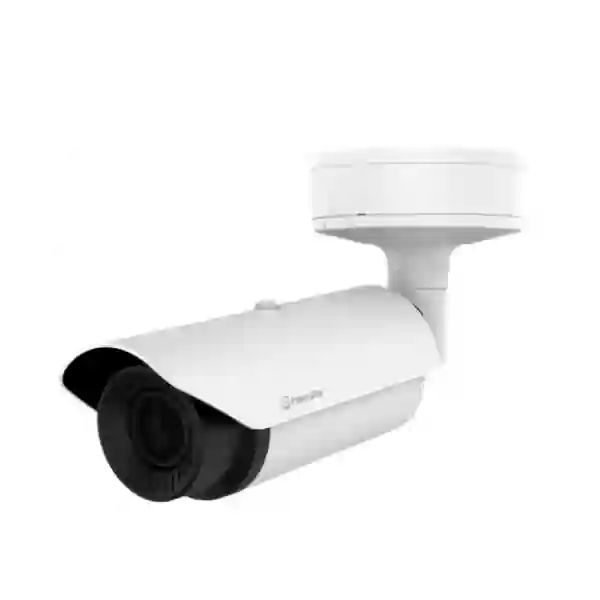
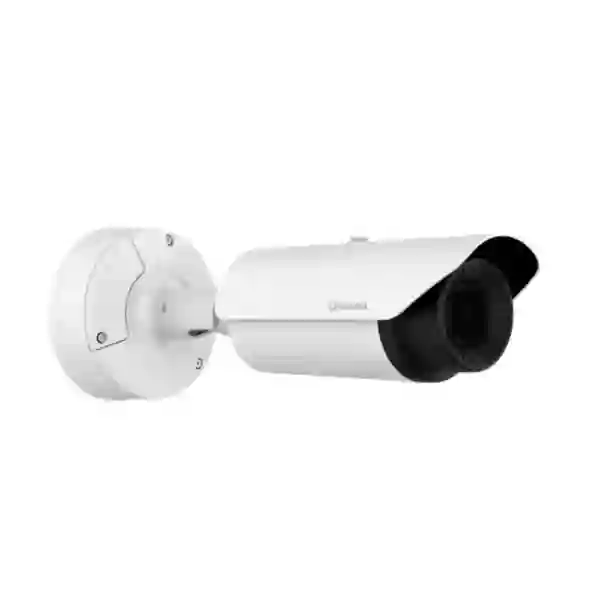
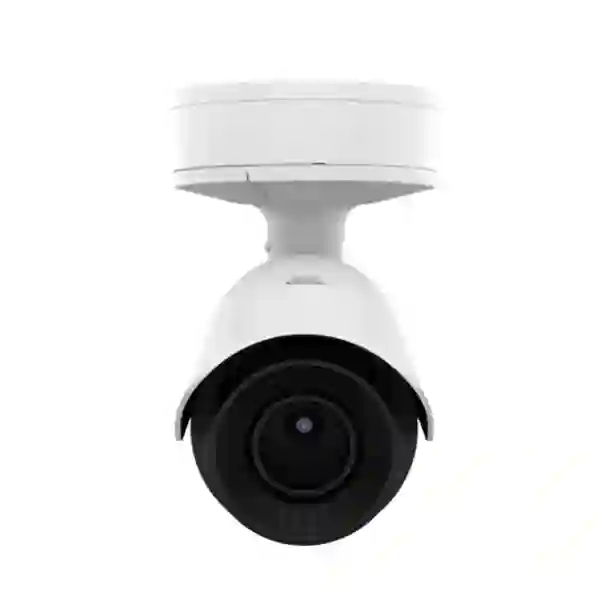
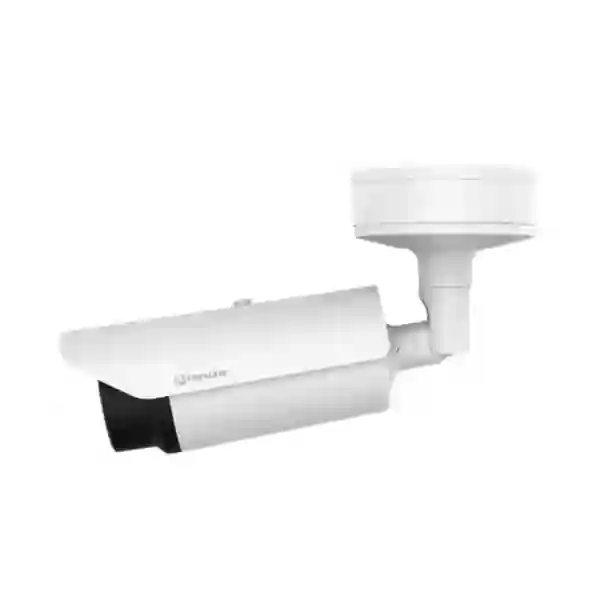
Hanwha TNO-L4050T VGA Thermal Bullet Camera
The Hanwha TNO-L4050T thermal camera delivers 640 × 480 thermal imaging through a fixed 35 mm lens for outdoor perimeter observation. It supports an 8 fps network stream, useful event analytics and PoE or alternative low-voltage power. Evaluate it where nighttime movement detection matters and where the narrower 17.2-degree horizontal view fits the actual security layout.
Need a Tanzania project quotation? Share your surveillance objectives, mounting distances, number of locations and existing video equipment through a verified FourTeck enquiry channel. Suitability and commercial terms require confirmation.
Quick buying decision
This is worth evaluating when your site requires thermal observation of a planned outdoor sector and the lens geometry suits the distance. Reconsider the choice when the main requirement is close-up gate viewing, normal-colour identification, high-frame-rate footage or precision temperature measurement. Confirm coverage and analytics through a site assessment before committing to hardware.
Technical specifications at a glance
The following quick reference is based on Hanwha Vision information for the exact TNO-L4050T model. Specifications may change by product revision; confirm the applicable manufacturer datasheet when finalising a project order.
| Specification | Verified information |
|---|---|
| Manufacturer / model | Hanwha Vision / TNO-L4050T |
| Camera category | Outdoor thermal network bullet camera |
| Thermal detector | Uncooled microbolometer; 640 × 480 |
| Selectable output | 640 × 480; 640 × 360; 320 × 240 |
| Maximum frame rate | 8 fps (H.265 / H.264 / MJPEG) |
| Fixed lens | 35 mm; F1.0 |
| Field of view | 17.2° horizontal; 13° vertical; 22° diagonal |
| Minimum object distance | 36 m |
| Spectral range / sensitivity | 8–14 μm; NETD ≤50 mK |
| Analytic examples | Virtual line, virtual area, motion, tampering, temperature events |
| Network video integration | RJ-45 10/100; ONVIF S / G / T; SUNAPI |
| Storage | One microSD / SDHC / SDXC slot; up to 256 GB |
| Power options | PoE IEEE 802.3af Class 3; 12 V DC; 24 V AC |
| Outdoor protection | IP66; IK10 (manufacturer product overview) |
| Operating temperature | −40°C to +60°C |
| Approximate dimensions / mass | Ø102 × 402 mm; 3.124 kg |
What this thermal camera is designed to do
The Hanwha TNO-L4050T thermal camera is a fixed-lens network surveillance device built for observing differences in thermal radiation rather than relying only on visible illumination. It can add a useful detection layer at boundaries, yards, roadsides and other outdoor areas where conventional colour cameras may struggle to reveal a person or vehicle in darkness. Its uncooled microbolometer produces a thermal image for operators and video systems to examine, while configurable video analytics can help direct attention to relevant movement.
Thermal video should be considered one part of a wider security design. It does not create the familiar facial, clothing or vehicle-colour detail of an optical camera. The best deployment normally combines a carefully surveyed thermal view with lighting, an appropriate visible-light camera, and a response procedure. This page explains the verified hardware capabilities, the decisions that affect a successful installation, and the information a buyer in Tanzania should assemble before requesting a project quote.
Who should shortlist the TNO-L4050T
Consider this model when the requirement is continuous awareness of a defined outdoor approach, especially where changes in light are a major problem. Typical discussions include industrial perimeter lines, storage compounds, utility infrastructure, remote site boundaries and selected access corridors. These are example use cases, not claims that the camera will meet a particular site’s detection range. The position, background, target size, expected movement and weather must all be assessed.
A buyer should be particularly interested in the 35 mm fixed focal lens and its comparatively narrow horizontal view. A narrow view can be useful when monitoring a deliberate sector rather than a very broad scene. It can also leave gaps if positioned without a layout study. If the requirement is near-field coverage, wide-area observation, rapid movement tracking or high-frame-rate video, review other camera types or lens variants instead of treating this thermal camera as a universal solution.
Understand the 35 mm lens before choosing a position
The built-in 35 mm lens is fixed rather than a motorised zoom. Hanwha specifies a horizontal field of view of 17.2 degrees, a vertical field of view of 13 degrees and a diagonal field of view of 22 degrees. These figures matter more than marketing descriptions such as long range. They determine how much ground falls inside the image at a given distance and how large a person, vehicle or other target appears in the available 640 by 480 pixels.
Before selecting the mount, draw the expected boundary on a site plan and identify near and far points of interest. Allow for turns, corners, gateways, vegetation, signs and buildings that can obscure part of the thermal scene. A narrower lens may increase target pixel coverage at a distance but reduces the amount of adjacent area visible. The final choice should balance clear coverage of the intended approach with the risk of blind spots at the sides of the scene.
Minimum object distance and practical coverage planning
The manufacturer’s listed minimum object distance is 36 metres. That figure is an important constraint, especially for buyers considering a camera above a narrow gate, pedestrian entrance or short driveway. It should not be assumed that the device is equally suitable for objects immediately below the mounting point. A separate nearer camera or a different thermal lens can be necessary when critical events occur close to the installation.
Do not choose an installation solely from the maximum distance between two fences on a drawing. Determine where a target enters the viewing sector, how long it remains visible, which obstacles cross its path and where a guard must make a decision. Check the actual site with an installation survey and an agreed test target. Manufacturers’ general detection examples, when provided, are not substitutes for project-specific acceptance tests under the lighting, weather, ground and background conditions expected in service.
Detection, classification and identification are different outcomes
A thermal camera can make a warm or cool object stand out against its surroundings, yet the ability to notice an object is not the same as determining what it is. Detection means something of interest is present. Classification means deciding whether it resembles a person, vehicle or another category. Identification needs substantially more visual detail and often requires a second imaging system. These outcomes should be written separately into the project specification.
For example, an operator might use a thermal alarm to locate movement near a restricted boundary and then select an optical PTZ view to obtain additional visual context. This can be a sound workflow when the cameras and response procedures are properly integrated. It does not mean facial identification is provided by the thermal feed. Ask the installer to demonstrate the specific outcome required at the farthest critical point, not merely to show an attractive thermal picture.
640 × 480 imaging and the 8 fps limit
The TNO-L4050T uses a 640 by 480 uncooled microbolometer. The published selectable output resolutions also include 640 by 360 and 320 by 240. Its maximum frame rate is 8 frames per second for H.265, H.264 and MJPEG. Eight frames per second can be adequate for some fixed-scene monitoring requirements, but motion will not look as fluid as it does on a 25 or 30 fps stream. This matters when fast vehicles, rapid direction changes or detailed motion review form part of the brief.
During design, confirm whether the video is intended mainly for live awareness, event verification, routine archiving or frame-by-frame investigation. A camera suitable for one purpose may be unsuitable for another. Do not confuse this product with Hanwha’s similarly named TNO-4050T, which has different published frame-rate specifications. The letter L in the model designation is important and should appear correctly on the quotation, order, installer schedule and final handover documents.
Thermal sensitivity and why scene contrast matters
Hanwha lists the device’s thermal sensitivity as a noise equivalent temperature difference of 50 millikelvin or less, with a spectral operating range of 8 to 14 micrometres. Thermal sensitivity helps explain the camera’s ability to render small temperature differences, but it does not guarantee that every subject will be clearly visible in every environment. The contrast between an object and its background may change throughout the day as sunlit walls, roofs, equipment and roads heat and cool.
Performance can also be influenced by environmental conditions, intervening surfaces, camera placement and the actual dimensions of the target in the image. A hot background can make an object less distinct, and some materials can obstruct or alter the thermal view. During site testing, examine both daytime and nighttime scenes instead of treating the night image as representative of every hour. Choose acceptance criteria around the actual detection task rather than a single sensitivity number.
Colour palettes make thermal information easier to interpret
The camera provides thermal display palette options including Whitehot, Blackhot, Rainbow, Rainbow2, Sepia, Red, Iron and Custom in the manufacturer’s specifications. These choices change the way thermal intensity is displayed to the viewer; they do not convert thermal imagery into conventional full-colour optical video. An appropriate palette can make a moving subject or a temperature contrast easier for an operator to recognise against a busy background.
Select palettes during commissioning with the people who will use the camera. Security teams may favour a simple monochrome view for rapid event verification, while another view may make contrasting regions more apparent during diagnostics. Train operators to understand that the palette colours represent processed thermal differences, not necessarily literal surface temperature values. Avoid selecting an unusual colour scale merely because it looks dramatic in a demonstration; legibility and consistent interpretation matter more.
On-camera analytics for perimeter rules
The published analytics include motion detection, tampering, virtual-line functions, directional crossing, loitering, intrusion, entering and exiting, appearing and disappearing, shock detection, and selected audio-related events. These capabilities allow an installer to design rules for specific monitored sectors rather than asking operators to watch every stream continuously. The usefulness of a rule depends on image geometry, target size, configuration and the practical meaning of an alarm at that location.
Begin with a small number of well-defined objectives. For example, a project might require an alert when movement crosses a restricted line toward a compound, but not when normal activity remains on the public side. A virtual area may be more appropriate when the intention is to watch prolonged activity around a piece of infrastructure. Test each rule against routine staff movement and environmental activity. Analytics reduce manual review only when nuisance events are managed, not when every movement is treated as a security incident.
Temperature detection is not automatically industrial thermography
Hanwha includes temperature detection among the supported analytics. That statement should not be interpreted as a promise of calibrated laboratory measurement, medical screening, fire certification or a guaranteed alarm at a particular surface temperature. The buyer must establish which functions, thresholds, event conditions and accuracy limits are documented for the actual camera and firmware. A thermal video image and a precision temperature-measurement instrument serve different objectives.
If the project is concerned with process overheating, fire risk or equipment monitoring, identify what must be measured, the allowable error, how background heat affects the scene, and which safety system ultimately responds. Request written validation of the proposed use before buying. Do not make life-safety decisions dependent on this camera alone without a suitably engineered and approved system. For general surveillance, treat temperature-related analytics as potentially useful supplementary information rather than a replacement for dedicated protection equipment.
Weather, darkness and physical obstructions
Thermal surveillance is valuable because it does not require ordinary visible-light illumination to create a picture. That can help with nighttime perimeter awareness and scenes affected by some visual obscurants. It does not mean that fog, rain, smoke, dust, condensation or heat haze have no effect. Heavy environmental conditions and weak temperature contrast can still reduce usable detail, and a thermal camera cannot see through solid walls or objects obstructing its line of sight.
Review the view along the actual corridor to be protected. Overhanging branches, moving foliage, vehicles parked near a gate and temporary storage containers can block the thermal image just as they can block a conventional camera. At coastal or dusty locations, plan a practical cleaning and inspection schedule. Where reliability is critical, consider overlapping views, sensible alarm verification and a contingency for network or power loss instead of relying on a single uninterrupted line of sight.
Power choices and electrical planning
The manufacturer lists three power options: IEEE 802.3af Class 3 Power over Ethernet, 12 V DC and 24 V AC. Power over Ethernet can simplify field cabling when a suitable network switch and cable run are available. The listed maximum PoE consumption is 10 W. The alternative power options have their own published consumption figures and require compatible electrical installation. These inputs are choices for system design, not an instruction to energise multiple supplies indiscriminately.
An installer should confirm source voltage, connector arrangement, cable length, earthing, surge exposure and the backup-power requirement at each location. Outdoor camera poles and long cable paths can introduce practical challenges that are not apparent from the camera’s nominal wattage. Specify adequate switch PoE capacity for the entire camera group, not just one unit, and allow for supporting equipment such as network links and recorders. Reliable power and communications are just as important as the imaging specification.
Recording options and realistic storage estimates
The camera includes one microSD, SDHC or SDXC slot supporting a card of up to 256 GB. Edge storage is useful for selected event recording or as part of a designed recording strategy. It should not be described as limitless retention or a guarantee that footage will survive every device failure. Actual recording duration depends on bitrate, codec, profile settings, recording schedule, scene activity and how the storage is managed.
Work backwards from a written retention requirement. Decide which events must be recorded, whether continuous or event-based recording is needed, how many days of footage operators require, and whether copies should reside on a network video recorder or other managed storage. Verify compatibility of the specific card and recording platform before deployment. Where evidence matters, define clock synchronisation, export procedures, access permissions and backup practices so important footage remains useful after an incident.
Streaming, codecs and bandwidth
H.265, H.264 and MJPEG are listed as the supported video compression options. Hanwha also lists WiseStream II and up to ten streaming profiles. These functions can help a system designer offer different streams for recording, live viewing and remote monitoring. The exact network load cannot be established from resolution alone; the scene, motion, selected bitrate and compression settings affect real-world traffic.
For an office connected to a remote gate or a multi-building installation, calculate aggregate bandwidth for the camera count and the number of simultaneous viewing stations. Avoid planning every link on a best-case compression figure. A lower-bandwidth monitoring stream may be appropriate for routine overview, while a higher-quality stream can be reserved for recording when the integration supports it. Document the actual configured settings and test the worst credible usage pattern, including playback and simultaneous operator access.
Integrating with NVRs, VMS and other cameras
Hanwha lists ONVIF Profiles S, G and T along with SUNAPI and an open-platform interface. These are useful indicators for planning integration with network video recorders and video management systems. However, the presence of a standards profile does not prove that every third-party platform supports every analytics event, alarm output, storage feature or configuration option. Some functions may require manufacturer-specific integration or a supported software version.
Before procurement, test the exact model and firmware with the recorder or VMS proposed for the site. Confirm live viewing, recording, time settings, event metadata, user permissions, playback and camera reconnection after network interruption. If PTZ handover is part of the desired response, check how the thermal alarm selects a suitable PTZ preset and whether the operator can verify the event. The camera is a component of a surveillance workflow, not a substitute for the software and operating procedures around it.
Cybersecurity and account management
The manufacturer’s network specification includes HTTPS, SRTP, IEEE 802.1X options, IP-based access controls and event or system logs. These capabilities support a more defensible installation when configured correctly. They are not automatic proof that a deployed system is secure. Weak passwords, unmanaged firmware, exposed management interfaces and unsegmented networks can still create risks in any connected video environment.
Use individual administrator accounts where practical, restrict access to the management interface, apply strong authentication and keep device access on an appropriately managed network. Confirm firmware suitability against the manufacturer documentation and the organisation’s change-control policy. Arrange logging, configuration backup and a recovery method before the site becomes operational. If remote monitoring is required, prefer an approved secure access architecture over placing camera management services directly on the public internet. Document who may view, export and change footage.
Privacy, governance and operator practice
Thermal cameras show heat-pattern information rather than conventional colour imagery, but the activity they record can still be sensitive. A site owner should define the legitimate surveillance purpose, the areas that must not be monitored, and who is permitted to use the video. The device has a published privacy-masking capability with polygonal zones, which can help with some site boundaries when appropriately configured.
Configure masking and camera direction alongside a written site policy, not as an afterthought. Inform relevant personnel as required by applicable rules and organisational practice. Establish a retention schedule, a process for reviewing incidents, and accountability for exported recordings. The specific legal obligations and any permissions relevant to a Tanzanian deployment should be checked for the intended application; this product description does not claim that the camera or an installation is automatically approved for a particular surveillance purpose.
Turning alarms into a workable response
A useful perimeter system needs more than an alert appearing on a screen. Define who receives the alarm, how the event is verified, what evidence must be retained and what happens if the responsible person is unavailable. Hanwha’s published camera functions include alarm inputs and outputs, event-triggered recording, notification functions and handover to a PTZ preset. The precise integration depends on the configured network services and the supporting equipment.
Design different responses for different zones. An approach toward a restricted fence might trigger a guard verification step, while repeated movements in a normal loading area could remain an operator-reviewed event. Include a process for false alarms, maintenance work, vegetation movement and changing site operations. Test the end-to-end workflow with an agreed scenario rather than relying on a camera menu screenshot. Response quality depends on the people and process receiving the alert as much as on the detector.
Housing, temperature and environmental limits
The TNO-L4050T is presented by Hanwha as an outdoor thermal bullet camera with IP66 and IK10 protection, and the manufacturer’s general specification lists NEMA 4X. Its stated operating temperature range is minus 40 to plus 60 degrees Celsius, with non-condensing relative humidity conditions. These ratings describe a defined environmental capability; they do not remove the need for correct seals, appropriate mounts and protection of power and network terminations.
Assess expected heat from direct sun, rooftop mounting, nearby exhaust outlets and surrounding industrial equipment. Confirm that junctions, cable entries and external connectors are protected to the standard the project requires. Salt exposure, wind-driven rain, dust accumulation and physical access can change the maintenance plan. A robust housing cannot compensate for an insecure pole or a connector left exposed to water. Specify installation accessories and maintenance access as part of the complete camera position.
Mounting geometry and service access
The camera has an integrated bullet-style form and is listed in white aluminium construction. Its published dimensions are approximately 102 millimetres in diameter by 402 millimetres long, with a device weight of about 3.1 kilograms. These figures help installers size mounts and service spaces, but the total loading of a finished assembly includes the bracket, cabling and any weather or support accessories.
Place each camera where it has a stable view, can be safely accessed for inspection and is less likely to be moved accidentally. Establish the mounting height by examining perspective and line of sight, not by applying one default height to every project. A very elevated view can cover an extended area but may produce an unhelpful target angle or obscure the relevant crossing point. Confirm structural suitability, fixings, cable protection and inspection access with the competent installer responsible for the site.
A practical installation sequence
Start with the security objective and a marked plan. Identify the exact boundary, monitored approaches, expected intrusion direction, important adjacent activity and the person responsible for response. Next, survey candidate camera positions and confirm that the 35 mm lens and 36-metre minimum object distance fit the requirement. Choose the recorder or VMS, decide how events will be handled, and verify the communications path before fixing hardware.
During installation, record the model, firmware, power arrangement, camera orientation and network settings. Configure only the required analytics zones initially, then observe performance across different times of day. Confirm recording, clocks, alarm destinations, permissions and fallback arrangements. Finally, supply an as-built drawing, an authorised configuration backup and a handover checklist. That sequence turns a component purchase into a maintainable installation and gives the end user a clear basis for acceptance.
Commissioning tests buyers should request
Ask for a demonstration using realistic movement at the nearest relevant point, the farthest relevant point and the edge of each intended sector. Include normal operations that should not cause unnecessary alarms. Verify whether a person moving across a boundary can be detected under agreed circumstances, how long the event takes to appear to the operator and whether associated recordings are available for review. Repeat key tests after any analytics or lens-position adjustments.
Test the system during daylight and darkness, and note environmental conditions for each result. Disconnect and restore the relevant network path under controlled conditions to observe reconnection and recording behaviour. Confirm that the chosen power backup supports the intended response period. A commissioning record should distinguish demonstrated performance from assumptions. If a requirement cannot be tested before handover, identify the outstanding condition and the acceptance method rather than recording it as already proven.
Planning a Tanzania security deployment
Projects in Tanzania can involve diverse site conditions, including open industrial plots, high-traffic yards, coastal exposure and remote compounds. These examples indicate why a local project survey matters; they do not imply a particular product is stocked, certified or installed by FourTeck in any named location. The final design should consider the site’s environmental exposure, electrical reliability, backhaul availability and operational staffing.
Where a camera must communicate over a long outdoor path, verify whether fibre, copper, point-to-point radio or another managed network is appropriate. Consider surge protection, equipment enclosures, spare capacity, service access and a realistic method for contacting the response team. Check any applicable legal, procurement or safety requirements for the actual customer and intended use. Request a project-specific quotation that states what equipment and services are included instead of assuming deployment costs from the camera model alone.
Thermal surveillance versus optical video
Thermal and optical cameras solve overlapping but different problems. Thermal video can help reveal differences between objects and their surroundings without requiring normal scene illumination. Optical video can offer recognisable colours, signage, clothing detail and other evidence that thermal imagery generally cannot provide. Neither sensor type guarantees reliable results through an obstructed scene or every kind of adverse weather.
Choose equipment by the decision an operator must make. If the first requirement is noticing movement at night, thermal observation may be useful. If the requirement is identifying a vehicle registration plate, reading a label or recognising a face, an optical camera with suitable lighting and pixel density is usually the relevant discussion. For complex perimeters, combining thermal detection with a suitable optical verification view can produce a more complete workflow than using either image type indiscriminately.
35 mm TNO-L4050T or a wider thermal view?
The 35 mm focal length is a key reason to shortlist this model. Hanwha’s TNO-L4040T is a different model in the same family with a 19 mm lens and an approximately 32-degree horizontal field of view, whereas the TNO-L4050T has a 17.2-degree horizontal field. The wider version can place more of a nearby area in one frame; the narrower version may concentrate more pixels on a selected distant sector. Both choices involve coverage trade-offs.
A lens comparison should use the proposed mounting point and the actual zones to be watched. A wide lens may reduce the number of blind spots but leave a distant subject too small for a particular analytics objective. A narrow lens may provide a useful view along a straight boundary yet miss movement that enters from the side. Ask for a coverage illustration and a realistic demonstration where possible. Do not substitute another model merely because its name differs by one character.
Maintaining image and alarm quality over time
Surveillance sites change. Trees grow, new storage containers appear, doors move, light sources and machinery change, and staff routes evolve. Any of these can affect a carefully tuned analytics zone. Schedule periodic checks of the field of view, physical mounting, housing condition, network status, storage health and event behaviour. Record changes to the surrounding environment and review whether the original crossing or intrusion rules still match the current security requirement.
Camera maintenance should include manufacturer-approved cleaning and inspection procedures and a planned method for firmware and configuration management. Confirm that alarms reach their intended destination after software changes or network maintenance. Conduct occasional drills so operators remain familiar with the image appearance and the correct response. Keeping an installation effective requires modest but consistent attention; a previously successful test cannot guarantee equally good results after a site has been reorganised.
Questions to settle before procurement
Before placing an order, confirm the exact TNO-L4050T model and any relevant revision, whether the required camera and accessories can be supplied for the project, and which recorder or VMS will be used. Specify the preferred power arrangement, mounting hardware, network route, recording duration and alarm response. If the project involves other cameras or an existing security platform, provide the make, model and software version so compatibility can be checked rather than assumed.
Ask the supplier or installer to distinguish hardware supply, design, installation, configuration, acceptance testing, training and ongoing support in the quotation. Request written details of the applicable warranty, delivery expectations and commercial terms for the particular offer. No Tanzania price, stock status, service coverage or delivery promise is asserted on this page. Those are transaction-specific details that need confirmation from the authorised sales process before a purchasing decision is made.
Building the total cost of a surveillance position
The camera itself is only one cost element. A complete position may require a bracket, cable protection, network switch ports, compatible power, surge protection, a pole or structural mount, recording capacity, software integration, access equipment and qualified installation. Sites with remote links or difficult maintenance access may need additional engineering. A quote that lists only a camera price cannot show whether the intended detection and response requirement will actually be delivered.
Compare proposals against the same site objectives and assumptions. Check whether commissioning tests, documentation and operator training are included. Review the cost of adding adjacent optical views, backup power or redundant networking when the security objective requires them. A solution with better scene coverage and practical alarm handling may provide more value than an apparently cheaper camera-only purchase. Make the technical acceptance criteria visible before selecting the lowest initial hardware figure.
What to include in a quotation request
A useful enquiry can be short but precise. State that the required product is the Hanwha Vision TNO-L4050T VGA thermal bullet camera, identify the type of premises, estimate the number of viewing sectors and describe the furthest point where a person or vehicle needs to be detected. Include any known mounting distances, likely obstructions, existing surveillance equipment and access to electrical power or a network link.
Explain whether you need only the device or a designed and commissioned solution. State the recording-retention period, whether there is an existing control room, and which alarm actions matter. If you have drawings or site photographs, share them through an appropriate verified quotation channel rather than posting sensitive security layouts publicly. This information makes it easier to assess lens suitability, integration risks and the accessories required before preparing commercial terms.
Common project scenarios
Industrial and logistics perimeters
For a long exposed boundary near a yard, a thermal image may help operators see movement after dark. The critical design tasks are choosing a line of sight, allowing for stacked goods and trucks, and selecting analytics that distinguish restricted-side crossings from legitimate activity. Use another view where visual identification or shipment details are required.
Utility and infrastructure compounds
A water, energy or communications compound may benefit from early notification of movement at a remote fence. The solution still needs dependable backhaul, suitable power continuity and a clear procedure for who will verify the alarm. The position should not be selected without checking equipment heat, fences, vegetation and any near-field blind spots.
Remote site approach monitoring
At a site where staff are not continuously present, thermal event detection could support a remote monitoring workflow. Verify the network path, video recording and response contact arrangement, especially during connectivity loss. A reliable event history and a practical way to dispatch verification are more important than an impressive live demonstration with no documented response plan.
Gates and controlled access areas
A gate may contain several detection needs: approach awareness, recognition of a person, vehicle details and close-range activity. A narrow-field thermal device may address only one of those needs. Review the 36-metre minimum object distance and consider complementary optical cameras or a different lens where people or vehicles appear close to the mounting point.
Frequently asked questions
Is the TNO-L4050T a normal colour CCTV camera?
No. It is a thermal network camera that creates an image from thermal radiation, so its displayed palettes are not ordinary colour photographs. This can be useful when the scene is dark, but it is not a replacement for optical video where clothing detail, written signs or other visible features must be examined. A combined thermal and optical installation may better meet both detection and verification needs.
Does it support full HD or 4K thermal video?
No. The manufacturer specifies a maximum thermal resolution of 640 by 480 pixels. It also lists selectable output resolutions of 640 by 360 and 320 by 240. A high-resolution monitor cannot add thermal detail that the sensor did not capture. Match the available pixel coverage and lens view to the required target and distance before assuming that a larger display improves surveillance performance.
Does this model record at 30 frames per second?
No. The TNO-L4050T is specified at a maximum of 8 frames per second across its listed H.265, H.264 and MJPEG formats. The similarly named TNO-4050T is a separate model with different frame-rate details. This distinction is especially important for fast-moving subjects, reviewing short events and checking the exact model on supplier paperwork.
Can the camera monitor objects very near its mounting point?
The listed minimum object distance is 36 metres, so close-range monitoring should be assessed carefully. A camera looking down onto a nearby gate or small yard may need a different lens or an additional nearby camera. Ask the installer to demonstrate the actual near edge of useful coverage and ensure that no critical approach falls outside the intended viewing zone.
Can it operate without visible lighting at night?
Thermal imaging does not depend on ordinary scene illumination in the same way a standard colour camera does. It may therefore support night monitoring without floodlighting. Nevertheless, performance depends on target contrast, scene geometry and environmental conditions, and rain, fog or obstructions can reduce usable detail. Night commissioning should include a meaningful detection test, not only a demonstration that an image appears.
Is the camera suitable for outdoor installation?
Hanwha presents the TNO-L4050T as an outdoor bullet camera with IP66 and IK10 ratings. That does not eliminate the need for weather-appropriate mounting, protected terminations, a suitable power design and periodic cleaning. The manufacturer’s operating conditions and the site’s specific climate and exposure should be checked before installation. Outdoor durability also depends on the quality of brackets and cabling.
Can it connect to an existing recorder or VMS?
Hanwha lists ONVIF Profiles S, G and T and SUNAPI support, which can assist network-video integration. Compatibility still needs to be checked with the exact recorder, VMS version and camera firmware. Confirm that recording, playback, event notifications and any analytic metadata needed by the project work in practice. Standards support alone does not guarantee every advanced feature will appear in third-party software.
How much storage does the camera provide?
It has one microSD, SDHC or SDXC slot with published support up to 256 GB. The number of days that can be retained cannot be inferred from the card capacity alone because bitrate and recording policies vary. Network storage or an NVR may be appropriate when a project requires longer retention, central management or stronger evidence handling. The retention calculation should be part of the final design.
Does temperature detection make it a certified fire alarm?
No such claim is established by the product specifications reviewed here. Temperature-related analytics may be useful for selected monitoring tasks, but their thresholds, measurement limits and supported uses must be confirmed. A life-safety or industrial protection project needs a dedicated engineered system and appropriate approvals. Do not assume that the existence of a temperature event menu is equivalent to certified fire detection.
What electrical supply is needed?
The manufacturer lists PoE compliant with IEEE 802.3af Class 3, 12 V DC and 24 V AC options. The installer should select a supported supply and design the surrounding electrical system appropriately. For PoE, confirm the capacity of the network switch and the complete cable route. Ask about surge protection and backup power where loss of video would materially affect site security.
Will an alarm automatically identify an intruder?
An analytics event can flag activity in a configured area or at a line, but that is not the same as positively identifying a person. Thermal imagery generally lacks the conventional visual details needed for facial or clothing identification. Alarms should be verified by a trained operator or a suitable additional camera, and an agreed response procedure should define the action taken after the event is received.
Can I get a confirmed Tanzania price or delivery date here?
This information has not been verified for the particular listing. Pricing, availability, shipment arrangements, warranty terms and installation scope depend on the actual quotation and supply channel. Request a written offer for the TNO-L4050T specifying quantity, required accessories, location and whether installation or commissioning is included. Avoid assuming that a price advertised in another market applies in Tanzania.
Request a TNO-L4050T project quotation
If the Hanwha TNO-L4050T thermal camera looks suitable for your site, prepare the viewing distances, number of positions, existing recorder details and required alarm response. Ask FourTeck Tanzania to confirm the exact model, supply options and appropriate system design through a verified enquiry channel. Prices, stock, delivery, installation coverage and warranty terms must be confirmed for the specific quote.




Reviews
There are no reviews yet.