
FORTINET SECURE NETWORKING
FortiGate 30G (FG-30G) Tanzania
A compact Fortinet next-generation firewall for small offices, branches, retail locations and distributed business sites that need firewalling, secure SD-WAN, IPsec VPN and coordinated security services in one FortiOS platform. Fourteck Tanzania helps procurement and IT teams evaluate the FG-30G against real bandwidth, inspection, VPN and growth requirements before purchase.
What is the FortiGate 30G?
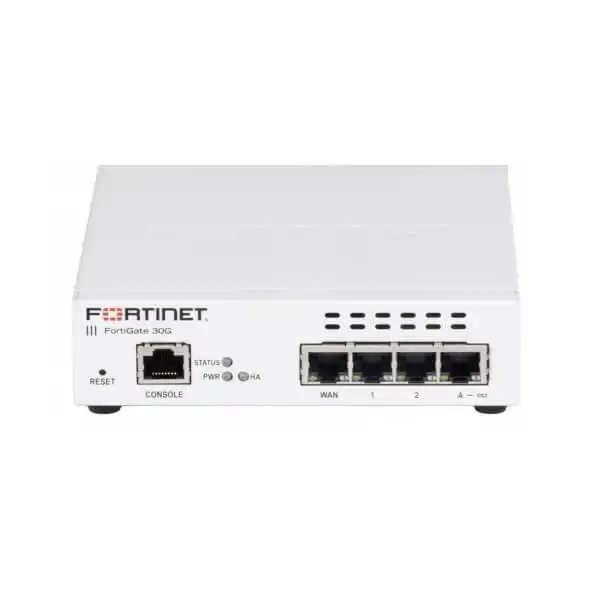
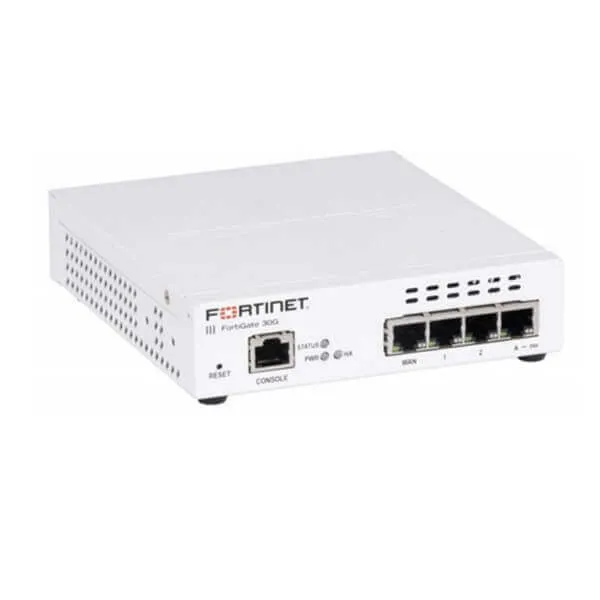
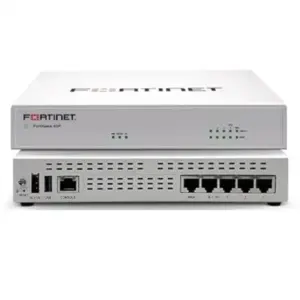
The FortiGate 30G is a desktop next-generation firewall in Fortinet’s 30G family. Fortinet positions the series for secure networking at distributed enterprise sites and small-business environments, bringing firewalling, SD-WAN and security functions together under FortiOS. The model uses four Gigabit Ethernet RJ45 interfaces and is designed for deployments where a compact footprint and integrated network-security policy are more important than a large physical port count. It can participate in the wider Fortinet Security Fabric and can use FortiGuard AI-powered security services when the relevant subscriptions are selected.
For buyers, the important distinction is between raw firewall forwarding and performance while security inspection is active. Fortinet’s May 2026 product matrix lists FG/FWF-30G firewall throughput at 4/4/3.9 Gbps for 1518/512/64-byte UDP traffic, IPsec VPN throughput at 3.5 Gbps, IPS throughput at 800 Mbps, NGFW throughput at 570 Mbps and threat-protection throughput at 500 Mbps. These are vendor test figures, not a promise that every production network will see the same result. Traffic mix, enabled profiles, encrypted inspection, policy design, logging, firmware, packet size and topology all influence practical capacity.
4 Gbps
Vendor-rated firewall throughput for larger packet sizes.
3.5 Gbps
Vendor-rated IPsec VPN throughput using 512-byte packets.
500 Mbps
Vendor-rated threat-protection throughput with Fortinet’s defined enterprise test mix.
4 × GE RJ45
Compact physical interface set suited to deliberately designed small-site networks.
FG-30G verified technical highlights
| Firewall throughput | 4 / 4 / 3.9 Gbps (1518 / 512 / 64 byte UDP) |
| IPsec VPN throughput | 3.5 Gbps (512 byte) |
| IPS throughput | 800 Mbps (enterprise mix) |
| NGFW throughput | 570 Mbps (enterprise mix) |
| Threat protection | 500 Mbps (enterprise mix) |
| Concurrent sessions | 600,000 |
| New sessions per second | 30,000 |
| SSL inspection throughput | 400 Mbps (IPS, average HTTPS) |
| Interfaces | 4 × GE RJ45 |
| Form factor | Desktop |
Performance values above are manufacturer ratings from Fortinet’s current product matrix and should be interpreted with Fortinet’s test conditions. Production sizing should account for the security services and traffic profile that will actually be used.
Security, SD-WAN and VPN value
The practical value of the FG-30G is consolidation. A small branch may otherwise use separate devices for internet routing, VPN, traffic steering and security controls. FortiOS provides a common operating environment for security and networking, which can simplify policy administration when the design is kept disciplined. Secure SD-WAN can be useful where a branch has more than one WAN path or needs application-aware path selection. IPsec VPN can connect offices to a headquarters, cloud network or another branch while maintaining encrypted site-to-site transport.
Security services should be selected according to the organization’s risk profile and operating model rather than purchased as labels alone. Intrusion prevention can inspect traffic for exploit patterns; application control can help identify and govern applications; web security and malware controls can add protection where licensed and configured. FortiGuard services are subscription-based services, so procurement teams should confirm the exact bundle, term and renewal plan included in a quotation. Hardware alone and a hardware-plus-security bundle are not equivalent purchases.
For broader planning, review Fourteck Tanzania’s technology services to understand how firewall deployment fits with switching, Wi-Fi, servers and lifecycle support. Buyers can also use the Tanzania technology shop and buying guide for capacity, compatibility, infrastructure and lifecycle checks before ordering.
How to size a FortiGate 30G correctly
Do not size the FG-30G from user count alone. Begin with the internet circuits and the security functions that must remain enabled at busy periods. Record the current WAN bandwidth, expected upgrade path, typical and peak traffic, cloud application use, encrypted web traffic, number of site-to-site tunnels, remote-access strategy, public services, VLAN count and logging requirements. Then compare the expected inspected traffic against the relevant Fortinet performance metric rather than only the 4 Gbps firewall headline.
The four-port physical interface count also deserves attention. A compact site can use managed switching and VLANs to create logical network segments, but the design must be intentional. If the site needs many directly connected routed interfaces, dedicated DMZ ports, multiple WAN handoffs or physical separation between several zones, a model with more interfaces may be operationally cleaner. Future growth matters: an appliance that fits today but leaves no practical bandwidth or interface headroom can create an early replacement project.
Power continuity, cooling and physical security remain relevant even for a desktop appliance. A firewall should normally sit with protected network infrastructure, use appropriate UPS protection where business continuity requires it, and have configuration backups and change documentation. The goal is not merely to install a box between the ISP and LAN; it is to create a maintainable security gateway with known policies, owners, recovery procedures and renewal dates.
FortiGate 30G Tanzania
Organizations evaluating FortiGate 30G in Tanzania often need a compact security gateway for a branch, professional office, shop, clinic, school administration network, hospitality back office or other site where business internet access must be separated from internal resources. The FG-30G can be considered when the site’s inspected throughput, VPN requirement and physical interface plan fit the appliance. Tanzania buyers should start with a written requirement that includes ISP speed, expected growth, critical applications, VLANs, guest access, servers, cameras, IP phones and wireless infrastructure. This makes the quotation process more useful because the firewall can be evaluated as part of the complete network rather than as an isolated model number.
For multi-site organizations, consistency is another consideration. Standardized naming, addressing, VPN design, policy templates, logging and configuration backup can make branch operations easier. A small branch may need only a few network zones, while a head office may require a larger FortiGate with more ports and higher inspected throughput. Using the 30G at smaller sites does not mean every location should use the same model; standardization works best when the operating approach is consistent but appliance sizing remains appropriate to each site.
Procurement should distinguish appliance price from lifecycle cost. Ask what FortiGuard services and FortiCare support are included, the subscription term, renewal date, power accessories, implementation scope and whether migration from an existing firewall is required. If the business depends on site-to-site VPN, document peer devices and encryption requirements before deployment. If internet resilience is required, document both WAN services and the desired failover behavior. Fourteck Tanzania’s integrated IT and security overview explains how firewalls relate to switching, Wi-Fi, servers, cabling and other business systems.
FortiGate 30G Dar es Salaam
A Dar es Salaam business considering the FG-30G may be replacing a basic ISP router, refreshing an older firewall, opening a new branch or introducing stronger segmentation between employees, guests, servers and operational devices. The first design question is what traffic the firewall must inspect during real business hours. Cloud productivity, video meetings, off-site backups, software updates and web applications can create peaks that are not obvious from a simple employee count. Where the site uses a high-speed fiber service, compare the required security profile with the 30G’s NGFW and threat-protection ratings rather than assuming raw firewall throughput represents fully inspected capacity.
Dar es Salaam sites can also benefit from deliberate WAN resilience planning. If two internet services are available, FortiOS SD-WAN capabilities can support a policy-driven multi-WAN design, but successful failover depends on correct health checks, routing, DNS behavior and application expectations. Some sessions will need to re-establish when the public IP changes. Critical cloud services should therefore be tested under actual failover conditions rather than considered protected merely because two cables are connected.
For offices with IP phones, cameras and Wi-Fi, segmentation should be coordinated with the managed switch. The firewall can enforce policy between VLANs, while the switch carries those VLANs to endpoints and access points. Document trunk ports, native VLAN behavior, DHCP responsibilities and management addresses. This avoids a common installation problem in which the firewall configuration is correct but switching does not deliver the intended networks. When requesting a Dar es Salaam quotation, include ISP speeds, existing switch model, desired security subscriptions, VPN peers and any deadline for cutover so the proposed scope reflects the complete migration.
FortiGate 30G Mwanza
For Mwanza organizations, the FortiGate 30G can be assessed as a compact branch-security platform where the network requires controlled internet access, VPN connectivity and segmentation without a large rack appliance. A useful procurement exercise is to map every network dependency before selecting the firewall: primary and backup internet, switching, wireless access points, business applications, CCTV, voice, printers and any locally hosted server. This reveals which systems need internet only, which require communication between VLANs and which must reach a head office or cloud environment through encrypted tunnels.
Branch VPN design deserves particular attention when Mwanza is part of a larger organization. The FG-30G’s vendor-rated IPsec performance provides substantial encrypted forwarding capability for a compact appliance, but tunnel design is more than throughput. Administrators should define subnets, route ownership, overlapping-address risks, encryption settings, monitoring and what should happen when the WAN changes. If the branch has dual internet links, VPN failover and route preference should be tested. Centralized services such as ERP, file access, voice or identity may behave differently during a WAN transition.
Power and recovery planning can be equally important. The firewall, ONT or modem, switch and access points form one connectivity chain; protecting only the firewall with UPS power does not keep the site online if another essential device shuts down. A documented startup sequence, configuration backup and administrator-access method help recovery after interruptions. Buyers should also clarify licensing and renewal ownership at purchase time. The appliance can provide core FortiOS networking capabilities, while advanced FortiGuard security services depend on the selected subscriptions. A clear bill of materials prevents a hardware-only quote from being mistaken for a complete security service package.
FortiGate 30G Arusha
Arusha businesses in hospitality, professional services, travel, education and branch operations may need to keep guest, employee and operational traffic separate while maintaining reliable access to cloud applications. The FG-30G can fit compact environments when its throughput and four Gigabit Ethernet interfaces match the design. Guest Wi-Fi should normally be isolated from trusted business systems, and management interfaces should not be exposed casually. Where cameras, access control or other IP devices share the LAN, dedicated VLANs and restricted inter-zone policies can reduce unnecessary lateral access.
Hospitality and customer-facing environments should pay special attention to traffic patterns. Guest usage can be bursty and unpredictable, while business systems such as reservations, payments, VoIP and staff applications need stable service. SD-WAN policies can help define preferred paths when multiple WAN links exist, but the business should decide which applications receive priority and what level of disruption is acceptable during failover. Firewall policy should follow those business priorities instead of becoming a long list of undocumented rules.
When replacing an existing gateway in Arusha, capture the current configuration before the cutover: public IP information, DHCP scopes, DNS settings, static routes, port forwards, VPNs, VLAN IDs and any third-party allowlists. Migration is easier when the old network is understood. The new firewall should also have a rollback plan and post-cutover checklist covering internet access, business applications, VPN, voice, Wi-Fi and remote administration. Procurement teams should ask for the exact FortiGuard/FortiCare term and implementation scope, because ongoing protection and support are lifecycle items rather than one-time hardware characteristics.
FortiGate 30G Dodoma
In Dodoma, the FG-30G may suit a small office or branch that needs policy-based internet access, IPsec connectivity to another location and centralized security functions in a desktop platform. Organizations should begin by classifying the site: number of users is useful, but internet speed, concurrent application activity, VPN traffic and enabled inspection profiles are better sizing inputs. A branch with few users transferring large files or running cloud backups can generate more traffic than a larger office doing light browser work.
Segmentation can improve both security and troubleshooting. Staff devices, guest wireless, printers, IP phones, cameras and management systems do not necessarily need unrestricted communication. A managed switch can carry separate VLANs while the FortiGate applies policy at the routing boundary. Before deployment, document which systems genuinely need to communicate and on which services. Starting from required flows produces cleaner rules than creating broad access and trying to restrict it later.
For public-sector, NGO, education or professional environments with formal procurement, a quote request should specify the exact model, subscription requirement, support term and deployment services separately. This makes competing offers easier to compare. Ask whether the quotation covers only FG-30G hardware or includes a FortiGuard bundle and FortiCare, and record renewal dates for budget planning. Where an existing firewall is being replaced, include migration, configuration backup and acceptance testing in the project scope. Fourteck Tanzania’s verified contact and quotation page provides a route to submit user count, internet details, existing equipment and project requirements.
FortiGate 30G UAE
UAE buyers evaluating the FortiGate 30G commonly need a compact security appliance for a small office, retail branch, remote site or distributed network edge. The decision should be based on inspected traffic and architecture rather than product generation alone. A site with fast broadband, extensive encrypted inspection or heavy VPN traffic may need more security-performance headroom even if the employee count is low. Conversely, a modest branch with controlled applications and a managed switch may benefit from the 30G’s compact footprint and converged FortiOS feature set.
Multi-branch organizations should define whether the firewall will be managed locally or through a broader Fortinet management strategy. Consistent templates for addressing, VLANs, SD-WAN, VPN and security profiles can reduce operational variation. If the UAE branch connects to other countries, latency and application behavior should be considered alongside tunnel throughput. The fastest appliance cannot remove distance-related latency, so SaaS breakout, centralized internet access and direct cloud access should be chosen according to application requirements and security policy.
Licensing is a key commercial comparison point. Buyers should compare like with like: appliance-only pricing, one-year security bundles and multi-year bundles represent different scopes. Confirm the FortiGuard package, FortiCare level, term and renewal responsibilities. For regional Fortinet-focused requirements, the Fourteck network includes Fortinet UAE security resources and Dubai firewall solution resources. These regional references can help organizations planning standardized security across Tanzania and UAE sites.
FortiGate 30G Uganda
Uganda organizations can evaluate the FG-30G for smaller branch and office deployments that require firewall policy, secure SD-WAN and encrypted site connectivity in a compact device. The most useful starting point is a branch profile covering WAN bandwidth, backup connectivity, application dependence, VPN peers and network zones. If the office is one location in an East African network, consistent policy naming and tunnel standards can make support easier while allowing each site to use a FortiGate sized to its actual traffic.
A dual-WAN design should include explicit decisions about active-active load use versus primary-backup behavior. Some applications tolerate source-address changes better than others. Health checks should test meaningful upstream reachability, not simply whether an Ethernet link remains up. When failover occurs, administrators need a clear way to determine which circuit is active and whether critical tunnels have re-established. These operational details often matter more than the existence of an SD-WAN feature checkbox.
For procurement, specify whether installation includes VLAN design, VPN creation, migration of port forwards, security profiles, administrator hardening, configuration backup and documentation. Also confirm subscription terms. FortiGuard services add threat intelligence and security capabilities, while FortiCare covers vendor support options according to the purchased entitlement. Organizations operating between Tanzania and Uganda can reference Fourteck Uganda technology solutions when coordinating regional requirements, while the Tanzania team can focus the local project around the exact network and security scope.
FortiGate 30G Kampala
Kampala branches frequently depend on cloud productivity, internet-based business platforms, VPN links and wireless access. An FG-30G deployment should therefore be designed around application flows. Separate employee, guest, voice and device networks where the business has a reason to isolate them, then allow only the required communication between zones. This improves visibility and makes troubleshooting more structured than a single flat subnet.
If the branch has a managed switch, the firewall’s four physical Gigabit interfaces do not necessarily limit the network to four logical segments because VLAN trunks can carry multiple networks. However, this architecture places importance on switch configuration and documentation. Record VLAN IDs, subnets, DHCP ownership, tagged interfaces and uplinks. A future technician should be able to understand how traffic reaches the FortiGate without reverse-engineering the site.
Bandwidth planning should consider security overhead and growth. Fortinet publishes 500 Mbps threat-protection throughput and 570 Mbps NGFW throughput for the 30G under its defined enterprise test methodology. Those figures provide more relevant reference points for a security-enabled deployment than the maximum firewall forwarding number. If a Kampala office expects internet upgrades beyond the practical inspected capacity required by policy, evaluating a larger model at procurement time can avoid premature replacement. Ask for a quotation that separates appliance, subscriptions, implementation and optional ongoing support so lifecycle responsibilities remain clear.
FortiGate 30G Arua
An Arua deployment may prioritize dependable branch connectivity and straightforward remote administration. The FG-30G can be considered where a compact desktop appliance meets the site’s traffic and interface requirements. Before installation, identify which services must continue during a primary internet outage. If a secondary link exists, determine whether it has enough bandwidth for all users or only critical applications. SD-WAN policy can then reflect business priorities instead of treating both circuits as interchangeable.
Remote support is easier when the branch network is documented. Keep current records of WAN addressing, LAN subnets, VLANs, VPN peers, administrator roles and configuration backups. Where management access is permitted remotely, use controlled methods and strong authentication rather than exposing administrative interfaces broadly. Maintenance windows should account for the possibility that a remote firmware change can affect connectivity and therefore the very path used to manage the device.
Procurement should also account for supporting infrastructure. The firewall depends on the ISP termination device and switch, so UPS planning should protect the connectivity chain appropriate to the business. If wireless access points or phones use PoE, ensure the switch and UPS have adequate power budgets. The FortiGate is one security component within that system. When requesting an Arua quote, include the current ISP service, backup-link plan, switch model, required VPN destinations, subscription term and whether configuration or migration assistance is required. This gives suppliers enough context to propose a complete and comparable scope.
FortiGate 30G Mbarara
For Mbarara businesses, a compact firewall can support a clean branch architecture when internet access, local segmentation and VPN requirements are clearly defined. The FG-30G’s desktop format makes it suitable for environments without a large security appliance requirement, but the model should still be treated as business infrastructure. Place it in a controlled location, protect relevant network equipment with appropriate power continuity, restrict administrative access and maintain backups.
A branch with cameras, point-of-sale systems, staff devices and guest Wi-Fi should avoid a flat network where every endpoint can reach every other endpoint. VLANs and firewall policy can create boundaries based on function. For example, guest clients may need internet access only, while business devices can reach approved internal services. Camera networks may require access to a recorder but not general employee endpoints. The exact design depends on the applications, and overly broad rules should be avoided.
If the Mbarara location connects to a head office, document which subnets traverse the VPN and whether internet traffic exits locally or centrally. Local breakout can reduce unnecessary backhaul for SaaS applications, while centralized egress may support a different security model. The choice should be intentional. Fortinet’s published performance ratings provide sizing references, but the production design must account for actual security inspection and traffic. Buyers should ask for the precise subscription bundle and support term in writing, because a FortiGate appliance and its ongoing security services are distinct parts of the lifecycle budget.
FortiGate 30G Gulu
Gulu organizations planning a new branch or security refresh can use the FG-30G as a candidate when the network is small enough for its interface and inspected-performance profile. Start by identifying critical workflows: cloud applications, email, web access, branch ERP, VoIP, remote administration, file transfer and any local servers. Map these to required network zones and WAN paths. This creates a technical brief that can be tested against the appliance instead of relying on a generic small-business label.
Internet resilience should be planned as an end-to-end service. A secondary WAN can provide useful continuity, but it may have different bandwidth, latency, addressing or data limits. Decide which traffic should use it during an outage and how VPN tunnels should behave. Test failover while users perform real critical tasks. A successful ping is not sufficient acceptance testing if business applications still fail after the path changes.
Security subscriptions and maintenance also need ownership. Record who receives Fortinet account notifications, who approves renewals, where configuration backups are stored and how firmware updates are assessed. Branch devices are easy to neglect after installation because they may run quietly for long periods. A simple maintenance schedule for backups, policy review, firmware, subscription status and administrator accounts can reduce that risk. For regional organizations, standardizing this operational checklist across Gulu, Kampala and Tanzania locations can be more valuable than forcing identical hardware into sites with different capacity needs.
FortiGate 30G Kenya
Kenya buyers can assess the FortiGate 30G for small branches, retail locations and offices where a four-port desktop NGFW is sufficient and the required inspected throughput falls within the appropriate vendor ratings. High-speed fiber availability makes correct sizing important: the presence of a gigabit internet circuit does not automatically mean a compact firewall should be selected by its raw firewall number. If threat prevention and encrypted inspection are central requirements, use those security-enabled performance figures and leave operational headroom.
A Kenya branch that is part of a Tanzania-led organization may need site-to-site IPsec VPN, standardized VLANs and common security policy. Before rollout, check for overlapping private subnets between offices; duplicate addressing can complicate routing and VPN design. Define a branch addressing plan early, especially when several sites will be added. SD-WAN can then steer traffic over available links according to application and health policy.
Commercially, compare quotations by exact scope: FG-30G hardware, FortiGuard bundle, FortiCare term, implementation, migration, documentation and any recurring managed service. Do not assume similarly named offers contain the same subscriptions. Organizations coordinating procurement in Kenya can consult Fourteck Kenya IT and network-security resources. For a Tanzania project with Kenyan branches, a single requirements document covering both countries can help keep policy and lifecycle standards consistent while allowing model sizing to vary by site.
FortiGate 30G Kuwait
Kuwait offices evaluating the FG-30G should focus on the relationship between fast WAN services and security inspection. A compact appliance can forward traffic at high raw rates, but NGFW, threat prevention and SSL inspection have lower published performance figures because those functions perform substantially more work. A buyer expecting to inspect a high-bandwidth connection should therefore compare the planned security stack with Fortinet’s relevant metrics and consider future circuit upgrades.
The physical network layout is also important. Four Gigabit Ethernet RJ45 interfaces can be sufficient when a managed switch carries internal VLANs, but some sites prefer more dedicated physical zones. If there are separate WANs, DMZ systems, management networks and multiple local segments, map every required connection before choosing the model. Logical VLAN flexibility does not eliminate the need for clear cabling and switch design.
For a Kuwait branch connected to Tanzania or other regional offices, VPN and routing policy should account for application location. Cloud applications may be better served by secure local internet breakout, while internal systems may need IPsec paths to another site. DNS, identity and security logging can influence that architecture. Procurement should request exact subscription and support terms and avoid comparing appliance-only pricing with bundled offers. Where the 30G is one part of a regional standard, maintain a shared configuration baseline but document country-specific WAN addressing, provider handoffs and support contacts.
FortiGate 30G Ghana
Ghana organizations can consider the FG-30G for compact offices and branch networks that require a FortiOS security gateway with VPN and SD-WAN capabilities. The selection process should begin with business applications and connectivity. Identify which services are cloud-based, which remain on-premises, which users work remotely and whether the branch must communicate continuously with another office. This defines the security and routing requirements more accurately than a simple device count.
For branches with two internet links, define health-check targets and failover priorities. A circuit can remain electrically up while upstream internet service is unavailable, so monitoring should test useful reachability. Decide whether backup capacity is intended for all traffic or only critical applications. Where IPsec VPN is essential, include tunnel recovery in failover testing. The 30G’s published IPsec rating is a capacity reference, but routing design and WAN quality still determine user experience.
Lifecycle planning should include FortiGuard subscription renewals, FortiCare entitlement, firmware management and configuration backup. Security devices should not become unmanaged appliances after installation. Assign ownership for policy changes and renewal notices, and document why important firewall rules exist. This makes later audits and troubleshooting easier. For organizations operating both Ghana and Tanzania sites, consistent policy structure and documentation can simplify support while each branch is sized for its own bandwidth. A quote should clearly separate hardware, subscription, deployment and optional support so procurement teams can compare complete solutions rather than headline device prices.
FortiGate 30G Nigeria
Nigeria businesses evaluating a FortiGate 30G may be looking for a small branch NGFW that can consolidate routing, firewall policy, IPsec VPN and SD-WAN. Where multiple internet providers or access technologies are used for resilience, the firewall design should distinguish link availability from application availability. SD-WAN health checks, route priorities and business rules should reflect what users actually need during an outage.
Security policy should be organized around trust boundaries. Employee endpoints, guest access, servers, voice, cameras and management systems have different exposure and communication requirements. Managed switching and VLANs can extend these zones through the site while the FortiGate controls traffic between them. With only four physical Gigabit interfaces, a well-documented VLAN architecture can be useful, but sites that require many dedicated physical interfaces should consider that need during model selection rather than after installation.
Performance planning is especially important when WAN capacity is high or security inspection is extensive. Fortinet rates the 30G at 800 Mbps IPS, 570 Mbps NGFW and 500 Mbps threat protection under defined test conditions. Those figures should guide security-enabled sizing, with allowance for production variability and growth. Procurement teams should also specify FortiGuard and FortiCare terms. Multi-year bundles may simplify renewal planning but represent a different commercial scope from appliance-only purchases. For cross-border organizations, maintain consistent security standards between Nigeria and Tanzania while documenting local ISP, addressing and application dependencies at each branch.
FortiGate 30G Seychelles
Seychelles businesses, hospitality properties and distributed offices may need a compact firewall that protects business systems while supporting guest connectivity and secure links to remote resources. The FG-30G can be evaluated for smaller sites when the required security throughput and interface layout fit. In hospitality or mixed-use environments, guest networks should be separated from administrative systems, payment-related devices, cameras and operational equipment according to the organization’s security policy.
Connectivity design should account for the actual WAN services available to the site and the business impact of an outage. Where a secondary circuit exists, decide whether it is a full-capacity alternative or an emergency path for selected applications. Secure SD-WAN can support policy-based path use, but failover should be tested with reservations, cloud applications, VPN, voice and other critical workflows. If public IP addressing changes between links, some external services or allowlists may also require planning.
For remote or island operations, maintainability is a major selection factor. Keep configuration backups, documented administrator access, cable labels and a simple recovery procedure. If replacement or on-site intervention could take time, network documentation helps local staff and remote engineers coordinate more effectively. Subscription status should be monitored so FortiGuard services do not lapse unexpectedly. When requesting a Seychelles quotation for a Tanzania-managed organization, provide both the local site requirements and the central VPN/security standards. This allows the firewall to be configured as part of the regional architecture rather than as an isolated internet gateway.
Related network planning for the FG-30G
Managed switching
Use managed switches when multiple VLANs, voice, cameras, wireless networks or structured segmentation must share the branch LAN. Confirm trunk configuration and uplink capacity.
Business Wi-Fi
Coordinate staff and guest SSIDs with firewall VLANs and policy. Wireless coverage and capacity remain separate design tasks from firewall throughput.
UPS and cabling
Protect the relevant connectivity chain and keep WAN, LAN and management cabling documented. A firewall cannot maintain service if its modem, ONT or switch loses power.
FortiGate 30G quotation checklist
A useful request for quotation should state the exact FortiGate 30G (FG-30G) model, quantity, required FortiGuard security bundle and term, FortiCare requirement, current and planned internet bandwidth, number of WAN links, approximate users and devices, VLANs, site-to-site VPN peers, remote-access requirement, existing switch and wireless environment, public services or port forwards, desired migration date and whether configuration, testing, documentation or ongoing support is required. If replacing another firewall, include its current network functions rather than only its brand and model.
Also identify growth. If internet bandwidth is expected to rise substantially, new branches will be connected, or encrypted inspection will become mandatory, mention that before the appliance is selected. A slightly more detailed requirement at quotation stage can prevent a much more expensive redesign later.
FortiGate 30G FAQ
Is FortiGate 30G suitable for a small business?
Fortinet lists the 30G in its small-business firewall range. Suitability for a specific business depends on internet bandwidth, security inspection, VPN demand, interfaces and expected growth, so the model should be sized from the network requirement rather than company size alone.
What is the FortiGate 30G threat-protection throughput?
Fortinet’s current product matrix lists 500 Mbps threat-protection throughput for FG/FWF-30G using its enterprise test mix. Real deployment performance varies with configuration and traffic.
Does FG-30G support IPsec VPN?
Yes. Fortinet publishes 3.5 Gbps IPsec VPN throughput for the 30G under its stated 512-byte test condition. VPN architecture, WAN quality and encryption settings still affect practical results.
How many Ethernet interfaces does FortiGate 30G have?
Fortinet lists four Gigabit Ethernet RJ45 interfaces. Managed switches and VLANs can provide additional logical segmentation, but sites needing many dedicated physical routed interfaces should account for the four-port design.
Are FortiGuard subscriptions included automatically?
The appliance and security-service entitlement should be checked in the exact quotation. FortiGuard services are available through subscriptions and bundles; buyers should confirm the package, term and renewal details rather than assume every hardware offer contains the same services.
Should I choose the 30G from the 4 Gbps firewall figure?
Not by that figure alone. If IPS, NGFW, threat protection or SSL inspection will be enabled, use the corresponding vendor performance figures and allow headroom for real traffic and future growth.
Decision recap
FortiGate 30G is a compact FortiOS-based NGFW with secure networking, SD-WAN, IPsec VPN and access to FortiGuard security services. Its current published ratings include 4 Gbps firewall throughput, 3.5 Gbps IPsec VPN, 800 Mbps IPS, 570 Mbps NGFW and 500 Mbps threat protection, with four Gigabit Ethernet RJ45 interfaces. It is most compelling when those capacities and the compact port layout align with the branch design. If the planned inspected bandwidth, interface count or growth exceeds that profile, evaluate a larger model before purchase.
The strongest procurement decision combines the appliance with a documented network design, exact subscription term, migration scope, backup plan and renewal ownership. This turns the firewall from a standalone product into a maintainable security control.
Discuss your FortiGate 30G requirement
Share your internet bandwidth, user and device count, existing firewall, switch environment, VPN destinations, number of WAN links and preferred security subscription term. Fourteck Tanzania can use those details to frame a product and deployment discussion around capacity, compatibility and lifecycle requirements rather than a generic hardware quote.



Reviews
There are no reviews yet.