
Industrial surveillance | Tanzania
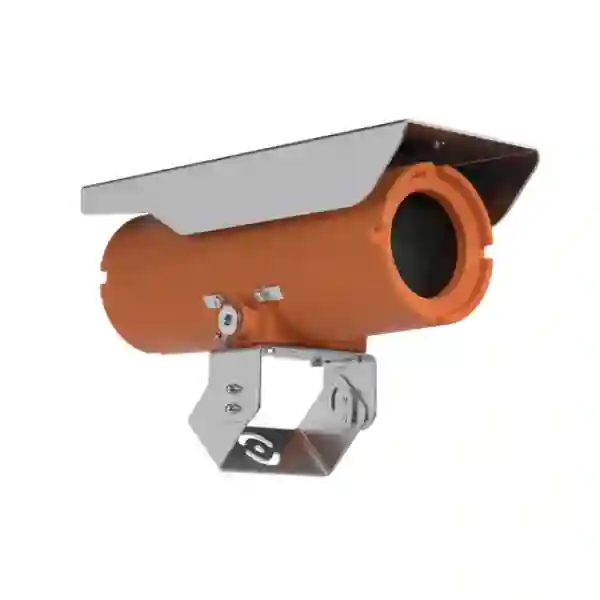
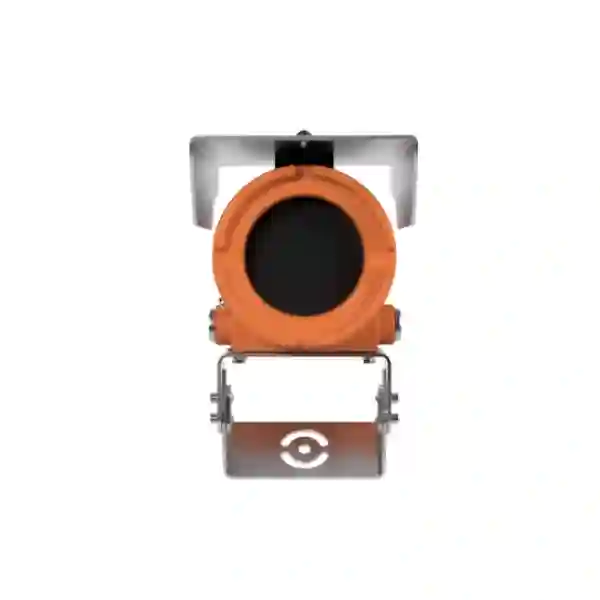
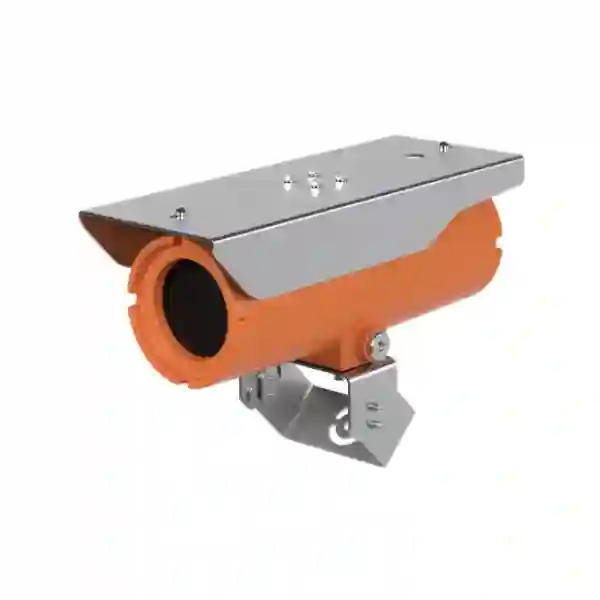
Hanwha TNO-X6074EPT1-Z Explosion-Proof Camera
A 2MP fixed optical network camera for appropriately assessed hazardous locations. Combine the verified enclosure rating, 2.8–9mm lens, Wisenet 9 imaging platform and 90W PoE design with a site-specific engineering review before procurement.
Request a quotation using your location classification, scene objective, camera position and proposed power and network arrangements.
Verified product at a glance
| Resolution | 2MP |
|---|---|
| Lens | 2.8–9mm |
| Platform | XNB-A6004 / Wisenet 9 |
| Video | H.265, H.264, MJPEG |
| Certification listing | FM, Class I Division 1 |
| Enclosure ratings | Type 4X, IP66 |
| Power | PoE only; 90W total with heater |
| Operating temperature | −50°C to +55°C |
| Wiper | No wiper |
The table summarises manufacturer’s headline data, not approval for an unassessed site. Check the exact model and complete installation documentation.
Why this is a specialised industrial camera
A standard outdoor security camera may be suitable for a warehouse perimeter, office entrance or vehicle park. A camera proposed for a hazardous process location requires a different conversation. The system designer needs to establish where combustible material may be present, what the site’s classification documentation allows, and whether the camera’s complete certification and installation method are appropriate. The Hanwha TNO-X6074EPT1-Z explosion-proof camera is intended for fixed video observation where an appropriately certified assembly is required, rather than as a general replacement for every outdoor CCTV device.
Hanwha identifies this exact model as a 2MP explosion-proof fixed camera using its XNB-A6004 camera core and Wisenet 9 platform. It lists a 2.8–9mm lens, IP66 and Type 4X ratings, FM Class I Division 1 certification, H.265/H.264/MJPEG codecs and PoE-only power. The headline operating range is −50°C to +55°C, with 90W total power stated when the heater is included. Those published characteristics make an initial selection possible, but a final proposal requires the actual certificate, installation instructions and a properly defined field of view.
Buyers should ask two questions at the outset. First, is the camera suitable for the physical and hazardous-area conditions of the exact installation point? Second, will it provide footage that addresses the user’s specific security task? A technically correct selection satisfies both. This page sets out the practical checks needed for a reliable project brief and informed quotation in Tanzania.
Understand what the model actually records
Despite an occasional retailer catalogue placing the device in a thermal-camera category, the manufacturer describes TNO-X6074EPT1-Z as an optical explosion-proof fixed network camera. Its imaging core is XNB-A6004, which is a visible-light 2MP camera platform. It is not sold by Hanwha as a radiometric temperature measurement device. Buyers looking for temperature values, hot-spot trends or thermal pictures through smoke should evaluate separately verified thermal equipment instead of relying on the TNO prefix or an incorrect reseller label.
An explosion-proof assembly and a thermal imager answer different questions. An explosion-proof design addresses use in particular hazardous environments under documented certification and installation conditions. Thermal imaging addresses the temperature-related radiation of subjects. A camera can be one, the other, both or neither; these categories cannot be inferred from a broad product title. Misunderstanding the difference can lead to a technically inappropriate purchase even if all other camera features look attractive.
This model is also a fixed observation camera. The listed 2.8–9mm lens range provides options for framing the selected scene, but it does not make the device a pan-tilt-zoom patrol camera. If the customer must continuously survey several directions or inspect distant details on demand, an alternative or additional camera may be required. Match the sensor and movement category to the actual operational goal before comparing prices or accessories.
Start with the site’s hazardous-area classification
The correct selection begins with the responsible site’s engineering documents. Areas around industrial processing and transfer activities can have different classifications even within one facility. An access doorway, outdoor pipe rack, loading interface, enclosed process unit and adjacent non-classified yard may present very different requirements. Equipment should not be chosen by guessing which area is hazardous from its appearance or its industry label.
Hanwha lists FM Class I Division 1 certification for this model, but the headline does not disclose every condition of installation or prove suitability for every gas, vapour, dust or temperature scenario. A qualified specialist should review the full certificate and nameplate, relevant groups and conditions, actual location classification, electrical design and applicable acceptance procedures. The site’s risk assessment and competent personnel determine whether the device may be installed where proposed.
A project in Tanzania must not assume that a manufacturer’s international FM listing is automatic evidence of every local regulatory or site approval. Ask for exact-model certification evidence and confirm how it applies to the current project. Do not import an ATEX, IECEx or other approval statement from a previous Hanwha product simply because its model number resembles this one. Certification claims are model-specific and often condition-specific.
Cable glands, seals, junction boxes, conduits, supports and power arrangements form part of the installed system. A certified enclosure is not a permission to improvise with accessories. Plan the entire camera assembly with the hazardous-area engineer before procurement, and never treat a seller’s shorthand marketing description as an installation instruction.
Select a useful scene rather than merely a camera position
The surveillance goal should be written in observable terms. Security staff may need to know who approached a process entrance, whether a vehicle entered a defined lane, or what happened near a controlled gate. A plant supervisor may want context for a routine incident review. Each purpose calls for a different view. An extremely wide image can show the surrounding area while giving too few pixels to a distant subject; a tighter image improves detail but loses some context.
Start with a site drawing and place the candidate camera relative to doors, barriers, equipment, vehicle paths and likely subject positions. Include pipework, machinery, walkways and other possible obstructions. Note whether staff need to see the ground, a control panel, a doorway or a longer approach route. This reduces the risk of ordering equipment before anyone knows what its lens is expected to capture.
A well-defined project distinguishes detection, observation, recognition and identification objectives without promising that 2MP automatically accomplishes all of them. Describe the distance to subjects, necessary scene width, typical movement and expected lighting. Ask the designer to provide a representative coverage view or test. The final result should be one or more camera positions with clear acceptance criteria, not a vague expectation that an industrial camera will see everything.
Plan carefully around the 2.8–9mm lens
Hanwha specifies a 2.8–9mm focal-length range. This gives the designer flexibility in choosing a wider contextual view or a narrower view that places more image detail on the important activity. It can be useful near a fixed gate, door, access corridor or compact process area. The right setting depends on camera-to-subject distance, intended evidence quality and nearby obstructions rather than on the camera’s maximum possible coverage alone.
For example, a camera viewing the entire width of a transfer bay may be very useful for reconstructing movement but less useful for seeing a small object held by someone at the far end. Moving to a narrower frame improves detail but may cut off an approach lane. Two independently planned viewing points can sometimes be more suitable than trying to force every objective into one image. This is an engineering choice, not a limitation solved simply by raising the bitrate.
Verify the permitted method of lens adjustment for the fully assembled hazardous-location camera. A camera core and a finished explosion-proof enclosure can have different practical access restrictions. Do not promise motorised remote zoom or unrestricted physical access without current assembled-model documentation. Any adjustment requiring a technician to approach or open equipment in a classified area must follow the manufacturer’s instructions and approved site procedure.
Resolution and the evidence you can expect
The TNO-X6074EPT1-Z has a manufacturer-listed 2MP image resolution, and its underlying XNB-A6004 platform supports Full HD 1920 × 1080 output. This is a practical resolution for carefully selected fixed views and common network video workflows. It should not be treated as an unlimited identification capability, however. Subject distance, scene width, light, motion, camera angle and encoding determine how much relevant detail reaches the recorded file.
A project team should test footage of the actual subject. A stationary sign photographed in good light is not an adequate test for vehicles moving past at night. Similarly, a close view of an empty entrance does not prove that staff can review the event they care about during a busy shift. Test representative movement and normal operating conditions. Where a specific level of identification is essential, define it independently and determine whether the planned optics and geometry can deliver it.
The XNB-A6004 camera platform supports advanced imaging features, but the exact frame rate and image mode available in the finished assembly should be checked before tender documents promise a particular combination. Image quality is an end-to-end result: it includes stable mounting, clean optics, suitable lighting, correct settings, appropriate recording and a viewing system that preserves useful detail.
Light, darkness and changing contrast
Industrial scenes can be difficult to expose. Bright daylight beyond an open doorway, glare from metallic machinery, headlights and harsh lamps can all create strong contrast. Hanwha describes multi-frame wide dynamic range and AI-oriented image processing on the Wisenet 9 platform. These are relevant capabilities when a scene contains both shadows and bright areas, but the outcome depends on the exact configuration and the conditions in which footage is captured.
Before selection, record whether the required view operates during the day, at night or around the clock. Check the type and direction of existing lights and whether a process area becomes much darker during shutdown. The underlying camera platform has low-light and day/night functionality, yet buyers should not confuse that with thermal imaging or assume that image processing removes the need for sensible illumination. Lighting design may be necessary to meet the evidence objective.
During commissioning, test the image with moving personnel or vehicles, not only a still target. Review motion blur, glare, shadows and colour detail. A setting that gives a pleasing static view may not be the best for fast motion. Keep an eye on the viewing window as well: accumulated dust, droplets and industrial residue can reduce contrast even when the internal electronics are working correctly.
AI functions and event-based monitoring
The XNB-A6004 uses the Wisenet 9 platform and supports AI-based analysis at the camera-core level. Hanwha describes object classification, virtual-line and area events, and other analytics capabilities on that platform. These tools may help security teams prioritise footage or find relevant activity, but the exact functions exposed by TNO-X6074EPT1-Z should be verified against its installed firmware, supported settings and video management system.
A useful analytic requirement is specific. “Notify an operator when an object crosses the defined access line” can be tested; “use AI for better security” cannot. Draw zones based on real site geometry and define the condition that should produce an alert. Consider typical background movement, passing vehicles, shadows, steam, dust and changing light. Test both missed and unwanted notifications before allowing operators to depend on an event workflow.
Analytics should assist people, not silently replace judgement. A video camera is not a certified hazardous gas detector, fire detector or process safety instrument. If the industrial site has emergency response systems, keep their purpose and control logic distinct from surveillance alerts. Also decide which metadata is necessary, who can access it and how long it is retained. The operational value of analytics comes from thoughtful configuration, validation and ongoing review.
Compression and video traffic
The product supports H.265, H.264 and MJPEG according to Hanwha. H.265 may be helpful when the recorder and viewing clients support efficient compression; H.264 is often relevant for compatibility with existing systems. MJPEG serves different integration needs and should be evaluated for its bandwidth characteristics. The right choice depends on the actual recording platform, number of viewers and network conditions.
Hanwha also describes WiseStream technology on the Wisenet 9 platform. Its purpose is to manage compression intelligently around video content. However, it would be misleading to guarantee a fixed storage saving for this particular industrial installation. Noise, light, movement and stream settings can change the real bandwidth substantially. Use a representative bitrate test when planning storage, especially if the camera observes moving machinery or busy traffic.
A network engineer should document which streams are needed for live viewing, continuous archive, event recording and integration clients. Check that video remains available at the required quality when multiple authorised users are connected. Storage calculations should include recording schedule, bitrate assumptions, retention period, redundancy, other cameras and planned growth. Resolution alone is not enough to determine a correct recorder or storage size.
Power design is a procurement priority
Hanwha states that the TNO-X6074EPT1-Z is powered through PoE only, with 90W total including the heater and no wiper. That total matters more than a buyer might expect from an ordinary box camera. Do not copy the comparatively modest power figure of the standalone XNB-A6004 core into the assembled product specification. The industrial assembly and its heater must be considered together.
An ordinary low-power PoE port should not be presumed adequate. The engineer must verify the exact compatible power source, power-delivery requirements, cable conditions, protection equipment and installation instructions. Avoid assuming a specific IEEE power class, injector model or cable length merely from the word PoE. The correct decision should be documented against the manufacturer’s current assembled-model guidance.
For a remote camera position, describe where power originates, the distance to the mounting point, whether backup electricity is available and how networking is carried to the recorder. Sites with critical recording requirements should assess what happens during mains failure and power restoration. Qualified electrical personnel must review all requirements for cable routing, isolation, protection and installation in a classified location. A correct power design is fundamental to reliable surveillance.
Environment, heater and weather exposure
Hanwha lists an operating range of −50°C to +55°C, along with IP66 and Type 4X ratings. Those figures are valuable starting information for exposed industrial sites, but they do not excuse a location-specific evaluation. Sun exposure, nearby hot process equipment, restricted airflow, wash-down procedures and corrosive materials can create conditions that need additional review. Examine the current instructions for orientation and installation limits.
IP66 relates to the enclosure’s ingress protection, not a universal guarantee against every form of environmental damage. Type 4X is another enclosure-related rating; neither label alone proves the complete installed system can tolerate any chemical or cleaning practice. Equipment selection should consider the actual environmental conditions and the suitability of all associated mounting and connection components.
The manufacturer identifies the camera as a no-wiper model. This is particularly relevant where dust, spray or deposits could accumulate on the viewing window. Ask how often the window could require cleaning and how safe access will be arranged. In Tanzania, specific facilities may face different dust, humidity, salt or heat exposure, so avoid assuming that every site needs the same maintenance interval.
Physical installation and mounting details
A good installation drawing includes the camera height, angle, supporting structure, cable entry route and access for inspection. Even if the video specification is satisfactory, excessive vibration or poor bracket rigidity can undermine image quality. Industrial locations may introduce mechanical impact risks, nearby moving machinery and restricted maintenance space, all of which should be considered before ordering mounting hardware.
Hanwha lists wall and pole mounting accessories in its product family, but a buyer should not assume that every accessory shown alongside an older model is automatically approved for this exact new assembly. Confirm the current compatible parts, loading requirements, construction material and installation drawing. Accessories and any required adapters should appear clearly in the itemised bill of materials.
Hazardous-location cable entry and enclosure work must be carried out by competent personnel following the correct documentation. An apparently convenient field modification may compromise the design and the certification conditions. Avoid unverified substitutions of glands, fittings, seals or brackets. Plan a safe inspection position and the permit requirements for future work; maintenance access is part of the true lifetime cost of the camera.
Network security and system ownership
As an IP camera, the device must be treated as part of an information system. The XNB-A6004 platform includes modern network security capabilities, but those capabilities are effective only when supported and correctly configured in the installed product. The customer’s IT or security team should determine network segmentation, addressing, time synchronisation, authentication, permitted traffic and how alerts are monitored.
Use appropriately controlled accounts and access privileges. Avoid exposing management interfaces directly to the public internet. Agree how firmware versions are assessed and updated, who approves changes and how configuration information is stored. Camera configuration should be backed up securely, and credentials should not appear in publicly shared installation records.
Some technical security certifications describe components or secure elements within the camera platform rather than every aspect of the finished hazardous-area assembly. If a procurement standard calls for a named certification or firmware feature, request exact product evidence instead of extrapolating from a core product page. Apply the same caution to cybersecurity claims as to electrical approvals: confirm what the complete model actually supports.
VMS integration and recording acceptance
The video management system is where the customer’s operational requirements become visible. A live image is only the beginning. Operators may need recording, playback, event search, footage export, system-health alerts and user permissions. Compatibility must be checked against the selected VMS edition and version, not assumed from a generic statement that the camera uses IP video.
Hanwha’s underlying XNB-A6004 core supports ONVIF-related network capabilities, but the final assembly, firmware and VMS implementation should be checked for any specific advanced function. Basic H.264 or H.265 viewing may work even when classification metadata or analytic alarm handling requires additional configuration. Confirm the features that actually matter to the customer, including licensing or integration requirements.
Design the evidence workflow before commissioning. Who may retrieve an incident clip? Are timestamps consistent with other systems? Does the archive retain the required period? Does loss of connection create an actionable notification? If the customer needs exportable recordings for investigations, test the export procedure and playback on an authorised workstation. A clear acceptance record helps prevent surprises after the installation is handed over.
An example: observation of a process-area entrance
Consider a controlled doorway beside an industrial process area. Security needs a stable video record showing entries and the surrounding activity during shift changes. The location’s classification and permissible equipment must first be established by the site engineer. After that, the camera designer can determine whether the TNO-X6074EPT1-Z offers the appropriate optics, operating conditions and integration for the observation task.
A useful view may include both the doorway and the approach route. Widening the frame provides more context, but too much width reduces detail on an individual subject. The 2.8–9mm lens can be evaluated against a planned position rather than selected at random. Lighting changes when the door opens, so test contrast and exposure in both states. Record realistic walking motion, not just an empty corridor.
If analytics are needed, a virtual-line event could be considered after its availability is verified in the actual assembled camera and VMS. The line should reflect genuine entry behaviour, and notifications must be tested for missed and unwanted alerts. Include safe access for cleaning and inspection. This example demonstrates how technical suitability, hazard assessment and operational requirements must come together before a purchase is justified.
An example: watching a transfer or loading position
A second scenario involves a defined transfer or loading point where security wants contextual evidence of vehicle and personnel activity. Moving plant equipment, temporary obstructions, headlights and dust can create a challenging scene. The first task is to document what must remain in view and how close the subjects will be. An overly wide camera image might capture the entire area without providing useful detail at the critical location.
The engineer should separately establish whether the proposed camera position is inside a classified area and, if so, which approvals and installation conditions apply. The camera’s hazardous-location listing is not a shortcut around that assessment. A safe design then incorporates the permitted mounting structure, network path, 90W power planning and an appropriate maintenance route.
Where the observation point is fixed and well defined, the model may be worth considering. If the operation requires several directions, a long-distance zoom or temperature measurement, complementary or different equipment may be needed. An industrial surveillance plan is more successful when it uses specialised devices where appropriate and avoids imposing one camera model on every scene.
Tanzania-specific project information to gather
For a project in Tanzania, begin with the actual facility rather than a list of assumed service cities. State the installation purpose, environment, classification documentation, requested quantity and whether the enquiry is for supply only or a separately scoped system proposal. This content makes no assumption about local product stock, branch offices, installer coverage or price; those details must be confirmed in the transaction.
Ask the responsible customer team for a site plan with camera locations, scene targets and likely distances. Include any special access procedures, scheduled shutdowns or contractor approval requirements. Note existing network equipment, recording platforms, available power and communications paths. If the installation relies on site-managed electrical or IT infrastructure, identify the person responsible for each part of the design.
Obtain written confirmation for any relevant local regulatory acceptance, import matters, commercial warranty terms, taxes and delivery arrangements. Do not rely on a price or warranty advertised by an unrelated overseas seller. For an industrial project, the accuracy of technical assumptions and clear allocation of responsibilities are often more valuable than a quick generic quote.
A practical technical quotation checklist
A precise request should name TNO-X6074EPT1-Z and ask for the current exact-model datasheet, installation manual, general arrangement drawing and applicable certification evidence. Check the manufacturer-listed 2MP resolution, 2.8–9mm optics, IP66 and Type 4X ratings, FM C1/D1 description, operating range and PoE power configuration. Where a specification is safety-relevant, review its formal documentation rather than treating a sales summary as the authoritative record.
Describe the surveillance purpose, site classification, proposed location, viewing distance and lighting. Ask for suitable mounting and power components to be explicitly identified. Include the VMS model and version, target recording period, remote access needs and event functions if any. Separate mandatory design requirements from optional improvements so that the quotation can be evaluated fairly.
A commercial proposal should distinguish the camera assembly from compatible accessories, electrical components, network materials, software licensing, storage, integration and any agreed services. Request any stock, lead-time, shipping, warranty, local acceptance and tax details in writing for the actual transaction. A quote is complete when the customer understands both what is included and what remains their own responsibility.
Commission the system against measurable outcomes
Commissioning starts after the required safety and installation checks have been performed by qualified personnel. Confirm that the supplied camera and all installed components match the approved documents. Review the power source and route, enclosure and cable-entry conditions, mounting integrity, firmware and network configuration. Record the technical baseline securely for later support.
Then assess the actual image. Capture footage under representative day and night conditions, including typical movement in the scene. Confirm that subjects appear at the required size and that glare, motion blur and image settings do not defeat the task. Test the chosen video codec with the final recorder. Verify playback, timestamps, user permissions, footage export and loss-of-connection reporting.
If analytics are configured, test each desired event using a defined safe procedure. Compare expected alerts against actual alerts and document limitations. Avoid promising perfect detection, because lighting, geometry and background activity may affect results. The handover should include approved drawings, support responsibility, relevant configuration records, acceptance evidence and maintenance procedures.
Preventive maintenance and ongoing review
An industrial camera needs periodic checks. The environment may change as equipment is added, lights are replaced or operating patterns evolve. Those changes can affect the usefulness of a once-correct view. Inspect recorded image quality, window cleanliness, supports, cable routes and the health of the recording system according to a site-approved schedule.
Because this model has no listed wiper, plan a safe way to inspect and clean the viewing surface in dusty or exposed areas. Cleaning materials and methods should be checked against manufacturer instructions. Personnel working in hazardous locations should observe the site’s isolation, permits and enclosure-handling procedures. Do not make unapproved field alterations to certified equipment.
Review firmware under change control, remove unnecessary access rights and test whether alerts and retention settings still meet operational requirements. Keep a clear process for reporting blurred footage, intermittent power, network outages or abnormal events. Ask the supplier to confirm the actual commercial support and warranty arrangement for the Tanzania order rather than assuming that another market’s terms apply.
Compare alternatives by task and certification
A general outdoor IP camera may be adequate in a non-classified position but should not automatically be substituted for a certified hazardous-location assembly. A high-resolution optical camera can provide more detail in a suitable setting, although it may change bandwidth and storage demands. A PTZ unit provides directional control but may not continuously watch every area. A thermal imager answers a different question from an optical Full HD camera.
The key decision is not which category has the longest feature list. First establish the hazardous-area requirements and the viewing objective. Then compare eligible models by certifications, lens geometry, actual image needs, power, integration, dimensions, supports and maintainability. A lower purchase price is not necessarily a lower system cost if major infrastructure changes are required.
Where a plant contains classified and non-classified areas, a mixed camera strategy may be appropriate when fully supported by site assessment. The system might reserve specialised assemblies for necessary positions while using different cameras elsewhere. Such a design should never be used as a workaround for correct classification requirements, and it should preserve the evidence objectives for every location.
Replacing the discontinued earlier model
Hanwha identifies TNO-X6073EPT1-Z as discontinued and names TNO-X6074EPT1-Z as its replacement. For existing sites, that is useful lifecycle information. It does not prove that the replacement is mechanically, electrically or digitally interchangeable without review. A new camera core, updated platform or different assembly details can affect integration even where product names and intended roles are similar.
An upgrade evaluation should compare current drawings, certification evidence, mounting interfaces, cable routing, PoE requirements, lens framing and VMS compatibility. Check whether the old power source and accessories remain suitable; do not transfer assumptions merely because the units look related. Re-test the resulting view, particularly where incident evidence or analytics has become important to operations.
Document the model change in the site’s equipment inventory and approved engineering records. If the earlier camera had special configurations or operator workflows, identify those explicitly and validate them again after installation. Replacement status can guide procurement, but a verified commissioning outcome is what demonstrates that the system still meets the customer’s objectives.
Why total project cost is more than camera price
The camera is only one element of a hazardous-location installation. The full project may require approved mounting, power sourcing equipment, cable work, network switches, protective equipment, recorder storage, VMS configuration, testing, permits and qualified labour. A quotation that lists only the camera can appear economical while leaving critical costs unresolved.
Some expenses arise from the physical environment: high mounting positions, restricted access, long communications routes or the need to coordinate work with plant shutdowns. Others arise from software and operations, such as integration testing, event configuration, archive retention and staff training. These factors differ by site and should be estimated from actual conditions rather than invented as universal project charges.
Procurement teams should compare proposals using the same equipment and service scope. Ask suppliers to document assumptions, exclusions and dependencies. A complete cost review also considers safe cleaning access, planned maintenance and the ability to obtain appropriate service support. The best value is a correctly engineered, understandable installation that meets its observation task over time.
Requesting a technically useful proposal
To request a quote, state the manufacturer and exact model, quantity and intended installation. Include the site location in Tanzania, hazardous-area information, scene distances, environmental exposure, available power and network details, and recording or analytics needs. If the certification is still under engineering review, say so rather than presenting a preliminary classification as a final determination.
Ask FourTeck Tanzania to review the enquiry and identify which product, accessory and project details require confirmation. Any promised availability, lead time, service coverage, warranty, taxes or local approval should be established separately before purchase. Avoid assuming that a public international listing provides all terms for a Tanzania transaction.
The result should be a clear technical and commercial discussion: a camera specification tied to a real observation task, with the safety and power requirements addressed and the scope of work transparent. This approach helps customers make a more confident decision without relying on exaggerated performance claims or an unsafe assumption about the intended installation.
Frequently asked questions
Is this a thermal-imaging camera?
No. Hanwha lists it as an explosion-proof fixed optical camera using XNB-A6004. It is not described as a radiometric temperature-measurement device. If temperature measurement is required, choose a separately verified thermal model.
What is the camera resolution?
The official product specification identifies 2MP. The underlying XNB-A6004 uses Full HD imaging. Suitable subject detail still depends on the camera position, scene width, optics and light conditions.
What is the lens range?
The manufacturer lists 2.8–9mm. Use that information for coverage design, and confirm permitted lens adjustment methods in the exact assembled-product installation documents.
Is FM Class I Division 1 sufficient for every hazardous site?
No. The complete certificate, location classification, applicable groups, conditions and local acceptance all require review by the responsible qualified personnel.
Can I use any PoE switch?
Do not assume so. The camera is PoE-only and Hanwha states 90W total including the heater. Verify the exact compatible power source, cable design and installation requirements.
Does the camera include a wiper?
No. Hanwha lists it without a wiper. Exposed sites should plan safe cleaning and inspection of the viewing surface, taking account of their environment.
Does it support H.265?
Yes. The manufacturer lists H.265, H.264 and MJPEG. Confirm the chosen codec and any associated features with the installed recording or VMS platform.
Can it operate outdoors?
Hanwha lists IP66, Type 4X and a −50°C to +55°C operating range. The complete installation must still be assessed for local exposure and the manufacturer’s conditions.
Are AI analytics available?
The camera uses an AI-capable XNB-A6004 and Wisenet 9 platform. Confirm exact analytics support, firmware, configuration and VMS compatibility for this assembled model.
Is it approved automatically for use in Tanzania?
An international manufacturer listing does not by itself confirm every local acceptance requirement. Have the responsible site engineer review the exact certification evidence and applicable rules.
Can it replace TNO-X6073EPT1-Z?
Hanwha names it as the replacement for that discontinued model. Nevertheless, power, mounting, accessories, firmware, certification conditions and integration need review before a retrofit.
How do I obtain a quote?
Provide the exact model and quantity, classified-location information, viewing objective, network and power plan, and any recording requirements. Ask for written confirmation of suitable components and commercial terms.
Request a TNO-X6074EPT1-Z project quotation
Contact FourTeck Tanzania with your quantity, hazardous-area documentation, viewing distances, environmental conditions, network details and power design. Request confirmation of exact-model suitability, compatible accessories, availability and commercial terms.
No unverified destination link or purchase promise is included. Obtain written technical and commercial confirmation before ordering.




Reviews
There are no reviews yet.