
Hanwha Vision / Industrial network video
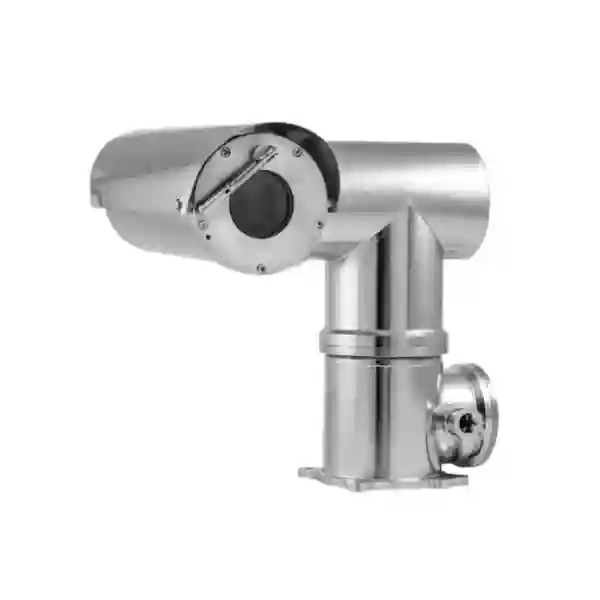
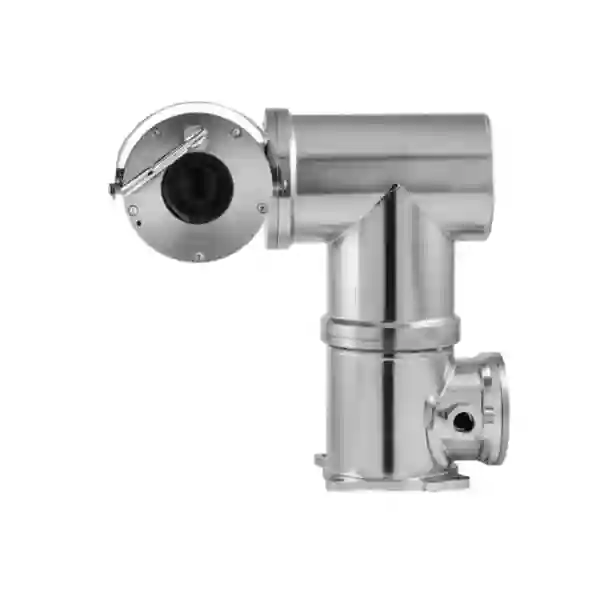
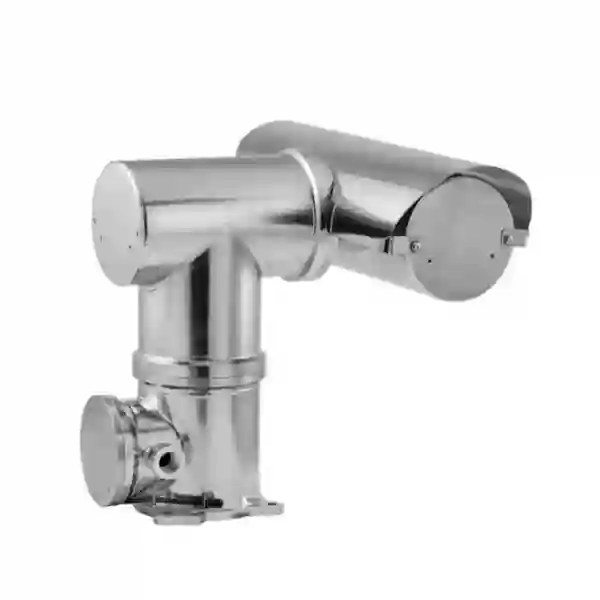
TNU-X6320A1WT1-Z Explosion-Proof PTZ Camera
The Hanwha TNU-X6320A1WT1-Z explosion-proof PTZ camera combines 2MP video, 32x optical zoom, controlled positioning and a stainless-steel industrial housing with integrated wiper. It is a specialist candidate for hazardous-area surveillance only after the exact certification, environment, power and installation requirements have been reviewed.
Buyer next step: Request a project-specific technical suitability assessment and quotation. The applicable approvals, availability and commercial terms must be confirmed for the proposed Tanzania installation.
Technical specifications at a glance
| Resolution | 1920 × 1080 (2MP) |
|---|---|
| Lens / optical zoom | 4.44–142.6 mm / 32× |
| Digital zoom | 16× |
| PTZ | 0–360° pan; -90° to +90° tilt |
| Image functions | Day/night ICR, 120 dB WDR, gyro-based DIS, defog |
| Video | H.265, H.264, MJPEG; WiseStream II |
| Network | RJ-45 10/100BASE-T; ONVIF S/G |
| Local media | 2 microSDXC slots, up to 256 GB each |
| Power | 24VAC; up to 80 W |
| Housing | 316L stainless steel; toughened-glass window; integrated wiper |
| Operating temperature | -40°C to +60°C |
| Ingress rating | IP66/IP67 |
| Hazardous-location listing | cLCus Class I, Division 1 (-Z variant) |
| Approximate size and weight | 418 × 457 × 401 mm; 33 kg |
Manufacturer-published specifications are presented as a selection aid. Verify the current model-specific datasheet and documentary approval requirements before final procurement.
Purpose and suitability
The Hanwha TNU-X6320A1WT1-Z explosion-proof PTZ camera is intended for industrial surveillance projects that need a controllable view and a camera station designed for demanding environments. It combines Full HD network imaging with pan-and-tilt positioning, a long optical zoom range and an integrated window wiper. These features make it a candidate for carefully designed observation points around industrial processes, transport facilities and other exposed operations. Selection must begin with the actual site conditions rather than with a list of headline features. The manufacturer’s certification markings, electrical requirements and environmental limits have to match the intended installation.
For a Tanzania project, request a technical assessment before purchasing this specialist camera. Provide the exact proposed location, hazardous-area documentation, cable infrastructure, viewing objectives and expected maintenance conditions. A 32x zoom lens may be useful for an overview-and-inspection task, but it cannot make one PTZ camera provide continuous simultaneous coverage of several independent locations. Likewise, a published hazardous-location certificate does not by itself establish acceptance under every country’s regulations or every project’s engineering specification. Treat the camera as a component in a documented solution involving engineering, video management, power, networking and safe ongoing maintenance.
What the explosion-proof designation requires
The phrase explosion-proof is not a broad guarantee that equipment is suitable wherever flammable gases, dust or vapours may be present. A classified site has specific area designations and installation requirements. Hanwha Vision identifies the -Z variant of this model with cLCus Class I, Division 1 certification. The buyer must check the actual certificate, equipment marking, permitted ambient range and applicable protection arrangements. An installation may also be subject to different classification terminology, additional technical standards or project-specific acceptance criteria. The exact model and its approved documentation must be assessed by qualified personnel.
Do not substitute an IP66/IP67 rating for explosion-protection evidence. IP ratings describe resistance to the entry of water and dust under defined tests, whereas hazardous-location equipment selection addresses ignition protection under particular conditions. Before procurement, the project engineer should review area-classification drawings, required gas or dust group and temperature class, cable-entry methods, accessories and installation practices. The evidence package should match this specific camera and all associated components. If another certification scheme is mandatory for a Tanzania site, seek confirmation of conformity before the equipment is offered as an approved solution. This page does not claim that local approval has been granted.
Use the camera for defined observation tasks
A positioning camera is valuable when a control-room operator needs to alternate between an overview and selected close-up views. A single mounting position may let an operator inspect a vehicle route, process equipment and the surroundings of a controlled access point, provided there is a clear line of sight. This ability can improve situational awareness without requiring the operator to approach every observation point. However, the camera records whatever direction it is currently facing. If a critical point must be recorded continuously, a separate fixed camera or additional coverage may still be required.
Write down the intended viewing tasks and how rapidly an operator must respond to an event. Determine whether the camera will normally remain in one overview, follow a preset patrol or be controlled manually. Establish what happens when two operators request control and whether important views must be restored after manual use. An effective CCTV design also recognises temporary obstructions, vehicle activity and changing plant layouts. These operational choices matter more than a claim that a single PTZ device can replace a particular number of fixed cameras. A measured coverage design provides a much more reliable purchasing basis.
Understanding the Full HD image
Hanwha lists 1920 by 1080 as the camera’s maximum image resolution, commonly described as Full HD or 2MP. This resolution is suitable for many industrial observation tasks, but a numerical pixel count does not establish a guaranteed identification distance. Actual useful detail is determined by the size of the object in the image, focal length, field of view, lighting and the amount of movement in the scene. A large tank may be easy to observe while a small instrument label in the same view remains unreadable. Compression settings further affect recorded detail.
Decide what the picture must prove. For some operations, the requirement is only to see that a vehicle is present; for others, personnel need to recognise a task or read markings on machinery. These objectives imply different pixel densities. A camera evaluation should therefore include representative targets at the proposed distances and in realistic weather and lighting. Check both live viewing and recorded playback, because recording choices can reduce detail. Where the evidence requirement is contractual, use a defined image-performance acceptance test rather than a general promise that Full HD is sufficient for every situation.
What 32x optical zoom contributes
The specified lens covers 4.44 to 142.6 mm and provides 32x optical zoom. Hanwha also lists 16x digital zoom. Optical zoom changes the portion of the scene projected onto the image sensor, allowing a wide overview or a tighter view of a selected target. Digital zoom enlarges image data and does not create optical detail that the sensor never captured. The published horizontal field of view changes from approximately 64.44 degrees at the wide end to 2.29 degrees at the telephoto end. This large difference makes framing and operator navigation important.
A drawing should indicate which important targets can be framed at both ends of the lens range. At high zoom, vibration, atmospheric haze, heat shimmer and small pointing errors become more visible. Heavy rain or dust can reduce useful range even when the lens can zoom farther. Do not present an arbitrary metre-distance as a guaranteed face-recognition or reading distance. If the job involves small targets, define the expected target dimensions and test the camera at an appropriate viewpoint. Use zoom to address a real operational need, not as an isolated measure of surveillance performance.
Pan, tilt and preset movement
For this model, Hanwha specifies a 0 to 360 degree pan range and a -90 to +90 degree tilt range. Published maximum preset speeds are 45 degrees per second for pan and 24 degrees per second for tilt. These values indicate the capabilities of the positioning mechanism; actual time to reach a scene also depends on the starting angle, command path and current settings. Presets are useful for repeatedly returning to important equipment, gates or observation lines. Their usefulness depends on the accuracy of the location survey and the operational procedures.
During commissioning, check the full travel range for possible interference from structural steel, cables, nearby enclosures and walkways. Agree control priorities between the security team, operations room and maintenance users. Presets should have understandable names and correspond to agreed map locations. An automatic tour can help routine oversight, but it also creates intervals when particular locations are outside the field of view. Document the normal home position and recovery behaviour after manual control or restart. A PTZ camera works best when the operators know what the surveillance plan expects them to do.
Day and night performance
Hanwha identifies automatic day-and-night operation through an infrared-cut filter. Its published minimum illumination figures are 0.05 lux in colour and 0.005 lux in black and white under the manufacturer’s test conditions. These are sensitivity measurements, not assurances of usable identification in total darkness. The camera may require suitable ambient or designed illumination to meet an operational image requirement. The lens also has different maximum apertures at its wide and telephoto settings, so low-light performance can change when an operator zooms in.
Survey the scene at night, not only during a daytime site visit. Industrial lighting can create uneven contrast, intense reflections and darker areas behind equipment. Moving vehicles and machinery may become blurred when an exposure setting favours brightness over shutter speed. Any supplementary lighting in a classified location must be assessed as suitable equipment in its own right. A night acceptance test should involve realistic target movement and the recorded video settings planned for normal use. It is better to discover a lighting limitation during design than after a camera has been installed high above hazardous equipment.
WDR, defog and digital stabilisation
The manufacturer publishes a 120 dB wide dynamic range figure for the current model. It also lists defog processing and digital image stabilisation with a built-in gyro sensor. These functions may assist where the scene combines bright and shadowed surfaces, reduced contrast or moderate vibration. They are supporting image-processing features rather than substitutes for proper camera placement. A camera pointed into severe glare may still produce difficult footage. Similarly, digital stabilisation cannot fully correct an unstable structure or severe movement at a long focal length.
Evaluate these functions against the actual scene. A transfer bay with illuminated equipment and deep shadows presents different challenges from a vehicle gate facing the rising sun. Verify which settings make important targets more visible and whether adjustments affect motion clarity or apparent image noise. Test the camera at the intended high-zoom positions where small vibrations are magnified. Defog processing should not be described as capable of seeing through a physical obstruction or heavy smoke. Save reference images and setting records so the team can distinguish later performance changes from normal site conditions.
The integrated window wiper
The TNU-X6320A1WT1-Z includes an integrated wiper for its toughened-glass viewing window. This is a practical feature for exposed locations where rain or spray can obstruct the image. It may help an operator maintain a clearer view during wet conditions, though it does not guarantee uninterrupted visibility through every contaminant. The broader series has optional washer-related accessories, but these should never be assumed to be bundled with this exact camera. The accepted bill of materials must state what has actually been included.
Consider the nature of deposits likely to reach the window. Water droplets, salt residue, fine dust and oily films do not respond identically to wiper movement. Abrasive particles can create a cleaning problem, while deposits left on the glass may require approved manual maintenance. Inspect wiper operation and its parked position during testing. Plan safe access for cleaning or blade replacement before choosing the mounting height. A technically impressive zoom system cannot be used effectively through a badly contaminated window. The cleaning plan is therefore part of optical performance and maintenance planning, not an afterthought.
316L stainless steel and mechanical design
Hanwha specifies electro-polished 316L stainless steel for the camera station’s welded assemblies and a toughened-glass window. This materials choice is relevant to challenging industrial exposure and potentially corrosive atmospheres. Nevertheless, stainless steel requires appropriate care. Surface contamination, contact with ferrous particles and unsuitable cleaning methods can contribute to corrosion or discolouration. The project should assess process chemicals, surrounding works, sea spray and environmental deposits rather than describing any metal housing as completely maintenance-free or universally resistant to corrosion.
Published physical dimensions are approximately 418 by 457 by 401 mm, and the weight is about 33 kg. These dimensions need to appear in mechanical design reviews. A mount must support the complete load and withstand local vibration, wind and other engineering loads, with adequate safety margins established by qualified designers. Check fixings, surrounding support steelwork and planned access for maintenance. A generic outdoor-camera wall bracket should not be considered automatically suitable. Mechanical reliability affects image steadiness, cable protection and the ability to service the station safely throughout its operating life.
Dust, water and ambient limits
The manufacturer lists IP66 and IP67 ingress-protection ratings for this model, along with an operating ambient range of -40 to +60 degrees Celsius. These figures are useful in specifying equipment exposed to industrial weather. They do not mean that the camera can remain submerged without limitation or withstand every chemical washdown method. The protection of an installed system also depends on correctly selected cable entries, seals, conduit arrangements and permitted fittings. Installation quality must preserve the conditions under which the camera’s protective features are intended to operate.
Assess local exposure at the actual mounting position. Solar heating above a metal surface, hot process equipment and limited air movement can produce conditions unlike those measured at a nearby weather station. A coastal location may combine wind-blown salt and high humidity; a dusty yard may require more frequent inspection. Site-specific data is more useful than assumptions based on a country’s general climate. Verify any minimum or maximum design temperature with engineering records. Any additional equipment in the installation, including power and network enclosures, needs its own environmental and hazardous-location assessment.
Video compression and bandwidth
The camera supports H.265, H.264 and MJPEG codecs, as well as Hanwha’s WiseStream II technology. These capabilities allow integrators to balance live-view compatibility, recording quality and bandwidth use. H.265 can offer more efficient encoding under suitable conditions, but no fixed percentage saving should be promised without testing the target scene and system. Busy industrial footage can contain moving equipment, particles, water and rapid changes in illumination, all of which influence compression behaviour. The VMS and every necessary decoder must support the selected format.
Select a codec by testing both the camera and the receiving system. Decide the resolution, frame rate, rate-control method and image-quality requirements before storage calculations are approved. Avoid reducing bitrates so aggressively that moving targets become unclear during playback. If security staff need low-latency manual PTZ control, measure the delay in the complete viewing chain. A high-efficiency stream that is difficult to decode on an operator workstation may not serve the job well. Keep the final stream settings in the handover documentation and review them when cameras, recorders or operational requirements change.
Recording and dual-card edge storage
Hanwha identifies two microSD/SDHC/SDXC slots, each with a stated maximum of 256 GB, giving a combined published maximum of 512 GB. Local media can support recording strategies that differ from a central video archive. Its value depends on approved compatible cards, recording settings, the selected event behaviour and how footage is recovered. A pair of slots does not independently guarantee uninterrupted recording, automatic cloud backup or a particular retention period. Such outcomes require a tested storage and operational configuration.
Before buying memory cards or choosing a recorder, define whether video must be recorded continuously or only following events. Estimate demand using realistic bitrates, the number of streams, recording hours and required retention. Consider who can retrieve a clip, how evidence is exported and which time source governs recorded timestamps. Test any expected recovery after network interruptions. If a central VMS is expected to reconcile missing periods from edge storage, verify that workflow on the precise software and firmware combination. Site operators should also know how media health is monitored and when approved replacement is needed.
Video analytics and event management
The listed analytics include motion detection, tampering, fog detection, shock detection, face detection, virtual lines and virtual areas with events such as intrusion, crossing, direction and loitering. These functions can help focus attention on changes within a camera view. They are not certified process-safety systems, fire or gas detectors, or guaranteed identification technologies. Face detection is not the same as recognising a particular person’s identity. Whether an event is useful depends on the installation, rules, image quality and the handling process that follows the alert.
Choose analytics rules only after deciding what action an event should trigger. Dust movement, reflections, normal maintenance and vehicle headlights can create unwanted notifications in industrial scenes. Excessive false alarms can reduce operator confidence. Test each relevant rule in daylight, darkness and representative operating conditions, and define whether it prompts visual confirmation, incident logging or escalation. Consider what happens when the PTZ camera moves away from a defined analytics region. Maintain an approved configuration history and periodically retest rules after major changes to lighting, process equipment or surveillance procedures.
Electrical supply and backup planning
This precise A1 model is specified for 24VAC input with a maximum power consumption of 80 W. It should not be treated as a Power-over-Ethernet camera. The electrical designer needs to select the appropriate power source, conductors, isolation, protective devices and routing methods. Voltage at the camera under expected load conditions must remain suitable. Design assumptions should not be copied from related variants that use different input voltages. The approved power architecture must be documented before the installer prepares the equipment for service.
Consider the complete consequence of a power failure. If a surveillance task requires backup operation, assess the upstream electrical supply and appropriate backup equipment; do not assume that the camera contains an internal battery. In hazardous areas, cable entries, earthing or bonding, isolation and associated components require specialist review against the applicable installation method. The quotation should make clear which power components are included and which are supplied by the site. A working picture during a brief bench demonstration is not sufficient evidence that the final industrial electrical installation is complete or safe.
RJ-45 network connection and related variants
The official specification for the TNU-X6320A1WT1-Z identifies an RJ-45 10/100BASE-T Ethernet interface. Hanwha also describes single-mode fibre connectivity for F2-designated versions within the wider product family. These are different configurations and should not be combined in one description. A project needing a fibre path must check the exact ordered variant and any associated network components. The presence of fibre technology elsewhere in the series does not mean that fibre is built into this requested model.
Prepare a network diagram showing the camera, managed switches, video recorder or VMS, operator endpoints and any approved remote access path. Check cable-run limitations, the installation environment, switch-port availability and whether any intermediate equipment is appropriate for the classified area. Consider traffic separation from unrelated industrial systems and the effects of network outages. In exposed locations, the physical cabling and downstream enclosures need environmental protection. The final design should also include time synchronisation, IP addressing and maintenance ownership, avoiding an incomplete scope in which the camera is supplied without a usable network connection.
ONVIF and video-management compatibility
Hanwha lists ONVIF Profiles S and G and manufacturer-specific SUNAPI support among the camera interfaces. This can make the camera a candidate for integration with a variety of professional video systems. It does not establish that every recorder or VMS supports every function, control or event. Live viewing may work while wiper commands, presets, analytics notifications or local-recording retrieval need additional compatibility checks. Firmware and software versions are part of the compatibility question and should be recorded in a project test plan.
Ask the integrator to demonstrate the specific actions the operators need. A useful checklist includes discovery, authentication, live stream selection, recording, event notification, PTZ movement, preset recall, access permissions and clip export. If the project requires automatic handover or recording triggered by analytics, test those sequences end to end. Establish whether a generic ONVIF driver or a manufacturer-specific interface is being used and who is responsible for updates. A documented test with the proposed software provides better purchasing evidence than a broad claim that a product is compatible with all network recorders.
Cybersecurity and access management
Network cameras should be commissioned as managed assets, not as unattended appliances. The manufacturer lists features including HTTPS, SRTP, 802.1X network authentication and IP-based access control. These capabilities become useful only when the installation team implements an appropriate security configuration. Establish strong account credentials, named administrative ownership, limited user privileges and approved network segmentation. Record the installed firmware and configuration so that future maintenance can distinguish a legitimate change from an unexpected one.
Decide whether remote access is needed and, if so, use the organisation’s authorised secure-access architecture rather than exposing camera management interfaces directly to the public internet. Disable services that are not required for the selected system while checking that recording and PTZ functions still work. Keep time settings and audit logs consistent with the site’s incident-review process. Plan how accounts are revoked when contractors change, and how updates and configuration backups are performed. Cybersecurity forms part of long-term operational availability, particularly where surveillance equipment shares infrastructure with other industrial technologies.
Finding the best mounting position
Good mounting geometry can be more valuable than an additional lens feature. Survey each required view to identify pipework, structures, moving vehicles, strong backlighting and possible blind spots. Check the entire PTZ movement envelope, not just a single stationary camera angle. At full telephoto, even a small vibration may create visible instability. Mounting on a structure affected by heavy machinery should be evaluated carefully. Location also affects the distance to cable routes, the number of additional enclosures and the complexity of the engineering works.
Evaluate maintenance access at the same time as the preferred viewing angle. If a technician cannot safely inspect the window, wiper and fixing points, the installation may become costly to sustain. A good location allows appropriate service methods while meeting the site’s safety rules. Consider whether nearby hot equipment creates unusual ambient conditions or whether routine operations could obstruct the lens. Test representative images from the planned height, especially for small targets. Make the final choice using drawings and a site survey agreed by operations, security, engineering and the party responsible for maintenance.
Hazardous-area documentation before procurement
For a classified installation, assemble the site drawings and project requirements before finalising the camera model. Documentation should identify the applicable hazardous-area scheme, gas or dust hazards, temperature class, environmental conditions and approved electrical installation practices. The exact -Z camera certificate and product marking must be matched to that design. Do not assume that an IECEx, ATEX, INMETRO or other approval applies to this precise variant solely because a related product carries a different suffix or certification.
A complete review should also address the mount, cable-entry components, conduit seals, associated power and network devices and the intended maintenance method. Competent personnel should determine which documents must be retained with the asset. Any special conditions of use need to be observed. Procurement should not proceed on the strength of a generic online description when the project requires certified hazardous-location equipment. Confirm with the responsible engineer and applicable authorities whether the proposed certification approach is acceptable for the intended Tanzania installation. The product description is technical buying guidance, not an installation certificate or regulatory approval statement.
Industrial process observation scenarios
The PTZ station can be considered where authorised operators need visual context around process equipment, transfer operations or restricted work areas. The ability to zoom and reposition can help the team inspect a selected scene from a remote control position. For example, a view may shift from an overview of a process area to a closer look at surrounding activity. The camera remains a visual surveillance device. It should not be offered as a substitute for independent instrumentation, emergency shutdown logic, hazardous-gas detection or any other engineered safety function.
Make the surveillance goal measurable. Determine whether operators must recognise a vehicle, observe personnel movement, see an equipment condition or read a distant indicator. Map each requirement to a field of view and a representative test. Where several points must remain visible simultaneously, include fixed coverage as needed. Identify the personnel who will respond when the camera shows something unusual and whether a recorded clip is required for review. A specific operating procedure turns an adjustable camera into a useful part of the facility’s awareness system without overstating the safety role of video.
Yards, access routes and vehicle movements
Industrial yards can combine large surveillance areas with dust, variable lighting and frequent vehicle movement. A 32x PTZ can show a wide context and then zoom toward a selected route or event. However, it can only face one direction at a time, which may be a limitation at gates or transfer points requiring continuous evidence. A design should consider whether a separate fixed view is required. The exact camera housing and certification choice must still be justified for the proposed mounting location; not every outdoor yard requires explosion-proof equipment.
Evaluate the likely vehicle positions, approach directions, obstructions and periods of strong glare. Test whether the image retains useful detail when vehicles move at realistic speeds and whether operators can return to important presets quickly. Consider window contamination caused by road dust and the maintenance required to keep the viewing path clear. Where a loading area is within a classified zone, the full hazardous-area equipment design remains essential. Treat the viewing plan, electrical installation and operating procedures as one coordinated requirement rather than assuming zoom alone will solve a difficult site.
Marine and coastal operating considerations
The TNU-X6320A series is presented by Hanwha for demanding onshore, offshore, marine and heavy industrial environments. For exposed coastal projects, the stainless-steel housing and wiper may be useful design features. Even so, salt deposits, spray, wind loading, vibration and access constraints can significantly affect performance and maintenance. Stainless-steel construction does not mean that all nearby brackets, fixings and cable glands automatically have equivalent resistance to the environment. Those components require their own materials and installation assessment.
Plan how the window will be cleaned and how corrosion or loosened mechanical parts will be detected. A maintenance schedule should reflect actual exposure and historical condition, not an unsupported universal interval. Long-zoom video can be particularly sensitive to structure movement, so the supporting steelwork needs careful review. The site should also decide what operators do when storms, spray or condensation prevent a useful view. In a hazardous area, weather protection and explosion-protection requirements must be met together. The complete installation is only as reliable as its least suitable component.
When a standard camera may be preferable
An ordinary industrial network camera may be a simpler choice where the location is not classified and the surveillance requirement does not call for a specialist explosion-proof station. The TNU-X6320A1WT1-Z has features tailored to demanding installations, but it also requires engineered mounting, 24VAC power and a carefully reviewed protection arrangement. Higher equipment complexity is not automatically beneficial in every outdoor setting. Compare the lifecycle implications of the proposed equipment against the actual environment, operator tasks and compliance requirements.
On the other hand, a high IP rating on a normal outdoor camera does not make it a replacement for appropriately selected certified equipment in a hazardous location. Safety and regulatory suitability come before price comparisons. If the area permits a simpler device, evaluate fixed versus PTZ coverage, optical detail, recording needs and service access. If certified equipment is needed, confirm its exact marking and the allowed installation method. Record the selection rationale for procurement, engineering and operations so that future replacements do not introduce incompatible assumptions.
Related models are not interchangeable
Hanwha’s TNU-X6320A family includes variants with different voltages, network options, temperature ratings and hazardous-location suffixes. The requested TNU-X6320A1WT1-Z has 24VAC power, a wiper and the specified -Z certification configuration. Other model codes can add F2 fibre options or change electrical and certification characteristics. Similar names should not be taken as evidence that two items can be substituted without review. Even a small model-code difference may affect the permitted wiring design or the certificate required for the installation.
Ask suppliers to use the full exact model identifier on the quotation, equipment schedule and purchase order. If an alternative is proposed, request a current model-specific datasheet, certificates and an explanation of the technical changes. Confirm whether the alternate version fits the planned power source and cable route. Do not merge the specifications of multiple related products into one offer. Version control is especially valuable on large projects, where design, procurement and installation may be handled by different organisations over an extended period.
Mounts, accessories and supply scope
The series literature lists optional mounting and washer accessories, but inclusion and compatibility must be confirmed for each procurement. A camera-only price may omit a suitable bracket, specialist cable-entry hardware, a power source, network equipment, recording licenses and access arrangements. In a classified location, even apparently minor accessories may require documented suitability for the installed protection concept. A project-specific bill of materials helps buyers identify gaps before installation begins.
Ask for clear separation of the camera, mounting hardware, fixings, accessories, network connections, electrical distribution, recorder integration and commissioning. Identify who supplies any cleaning consumables and how service tasks will be performed. Confirm all proposed accessories against the exact device and engineering specification, not only a catalogue image. If a washer tank or other option is desired, it should appear explicitly in the agreed scope. A complete offer is easier to compare and reduces the chance of surprise costs or technical changes after the site is ready for installation.
Commissioning and functional acceptance
An acceptance test should demonstrate that the installed system performs the project’s defined viewing tasks. Confirm the camera’s orientation, preset positions, wide and telephoto image quality, chosen codec, live viewing, recording and exported footage. Where relevant, test during daylight and darkness. Inspect the effectiveness of permitted wiper controls and any approved accessories. Verify that the device reaches planned angles without interfering with nearby structures. Video delay matters if operators must actively follow movement using PTZ controls.
Include system-recovery tests such as restarting the camera and reconnecting the network. Confirm time synchronisation, permitted user roles and the behaviour of configured events. The electrical and hazardous-area installation should receive its own inspection and documentation review by competent personnel. Save approved reference images and a record of the installed settings, firmware and network configuration. The final handover should tell operations who owns the equipment and how to report faults. A useful sign-off demonstrates an integrated working system rather than merely a camera image on a monitor.
Ongoing cleaning and inspection
The service plan should cover window condition, wiper operation, image sharpness, mechanical fixings, visible corrosion and the condition of associated cable entries. Maintenance frequency should be selected from manufacturer guidance, site hazards and actual inspection findings. Use approved cleaning procedures because aggressive methods or unsuitable materials can damage surfaces and compromise the intended protection arrangement. Check the camera’s recorded telephoto image against commissioning reference views; slight alignment or vibration changes may be more noticeable at high zoom.
Maintenance in a hazardous area must follow the site’s isolation, access and permit requirements. Repairs or alterations affecting the explosion-protected enclosure should be undertaken only through competent and authorised procedures. Keep records of firmware changes, approved replacement parts, servicing and any persistent event or image-quality issues. Plan access equipment before the camera is placed in service. Well-managed maintenance protects both the video requirement and the integrity of a specialist industrial installation over time.
Preparing a technically useful enquiry
Send the exact model TNU-X6320A1WT1-Z with the quantity and the intended surveillance objective. Describe the location, hazardous-area classification, environmental exposure, mounting height, target distances and the existing electrical and network infrastructure. Identify the intended recorder or VMS and any need for presets, analytics or event recording. Mention whether the camera will be installed in a new system or added to an existing one. This information allows a supplier or engineer to assess scope and suitability rather than quoting from a generic feature list.
Request confirmation of the current model-specific documents, required certificates, accepted installation method, optional equipment and the exact items included in the offer. Price, stock, local delivery, warranty and lead times must be verified for the actual transaction and are not asserted here. Ask that any proposed alternative model be separately identified and reviewed. For Tanzania projects, make the applicable certification acceptance and competent engineering review explicit decision points. A well-defined enquiry can prevent ordering a technically plausible camera that does not match the site’s electrical, networking or hazardous-area requirements.
Frequently asked buyer questions
Is this a normal outdoor PTZ camera?
No. It is an explosion-proof positioning camera station with a specific hazardous-location certification configuration. Site classification and installation requirements must be reviewed before selection.
Is PoE supported?
The manufacturer specifies 24VAC input and maximum 80 W power consumption for this exact model. Do not design it as a PoE-powered camera.
Does 32x zoom guarantee recognition at a set distance?
No. Useful detail depends on target dimensions, lighting, atmosphere, vibration, focal length and recording settings. Define a measurable target and validate with design calculations or a site test.
Does this particular model include fibre Ethernet?
Hanwha lists an RJ-45 connection on the requested model. The F2-designated series variants concern an optional single-mode fibre configuration and should not be assumed equivalent.
Can it record without an external recorder?
It has two microSD-family card slots with a published combined maximum of 512 GB. Suitable operation depends on compatible media, configuration, retention requirements and recovery testing.
Is its cLCus approval automatically accepted in Tanzania?
No. The exact certificate must be checked against the site’s area classification, required approval scheme and local or project acceptance criteria. A qualified responsible engineer should make that assessment.
Does the camera identify people using facial recognition?
The published analytics include face detection, but that should not be described as biometric identification. Any proposed event use must be assessed and tested.
Does the integrated wiper replace all cleaning?
No. It can help clear the window but deposits such as salt, dust or chemical films may still require approved manual cleaning and inspection.
What should be included in a quote request?
Send the exact model, quantity, target views, classification requirements, power and network details, VMS, mounting plans and accessory requirements. Confirm commercial terms separately.
Request a technical review and quote
The Hanwha TNU-X6320A1WT1-Z explosion-proof PTZ camera should be selected against the real surveillance task and the certified hazardous-area installation design. Provide the proposed mounting location, classification, intended views, network architecture, 24VAC power provision and required accessories. Ask for a written confirmation of suitability and a project-specific quotation before purchase.
Next step: Contact FourTeck Tanzania with the complete model identifier and your technical requirements.




Reviews
There are no reviews yet.