
HANWHA VISION · INDUSTRIAL SECURITY
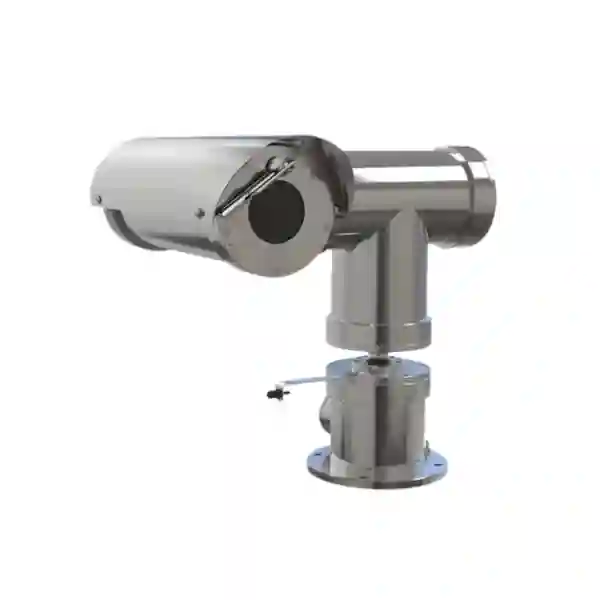
Hanwha TNU-X6320E2F2WT1-Z Explosion-Proof PTZ Camera
The TNU-X6320E2F2WT1-Z is a Hanwha Vision Full HD explosion-proof positioning PTZ network camera for specialist industrial surveillance. It offers 32x optical zoom, 1080p video at up to 60 fps, a wiper, single-mode fibre connectivity and a 110 V AC supply. The manufacturer has discontinued this exact model and identifies TNU-X6320A2F2WT1-Z as its replacement. For an industrial project in Tanzania, use the information below to define your viewing task, hazardous-area approval, electrical design, network integration and maintenance requirements before requesting a technical quotation.
Lifecycle notice: discontinued original model · Manufacturer-designated replacement: TNU-X6320A2F2WT1-Z
Quick technical reference
Use this verified high-level summary to establish whether the model merits a detailed engineering review. It does not replace the exact installation manual, certificate or the original datasheet. The complete variant identifier should appear on your equipment schedule.
Resolution
2MP · 1920 × 1080
Video speed
Up to 60 fps
Optical zoom
32×, autofocus
Wide dynamic range
150 dB (original model)
Network option
Single-mode fibre (F2)
Supply
110 V AC
Exposure protection
IP66 / IP67
Built-in accessory
Window wiper
The original manufacturer’s product notice marks this model discontinued. The listed specifications are reference information for selection and comparison; stock, suitability for a particular hazardous area, local authorization and commercial terms require separate confirmation.
BUYER GUIDE 01
What this explosion-proof PTZ camera is designed to solve
A camera fitted to a hazardous industrial area has a different purchasing brief from a standard outdoor surveillance camera. The surveillance team may need clear images, remote direction control and recording, while engineering and safety personnel need a suitable certified assembly, dependable power, secure communications and a maintainable installation. The TNU-X6320E2F2WT1-Z brings these requirements together in an integrated explosion-proof positioning camera. It is intended for evaluation against a site-specific hazard assessment, not as a universal camera for every industrial or explosive atmosphere.
The model has a Full HD network camera with remote pan, tilt and zoom functions, making it relevant where an operator must examine more than one point of interest from a fixed installation position. Its 32x optical zoom allows a distant area to be framed more closely without relying entirely on software enlargement. The camera is especially worth considering where there is already compatible Hanwha infrastructure or an installed unit that must be assessed for replacement. The discontinued status changes how a new purchasing decision should be approached.
For a Tanzania-based project, the first decision is not simply whether an image looks sharp. Buyers should identify the monitored process, hazardous-zone or division requirement, working distances, day and night lighting, alarm workflow and available fibre path. A camera can satisfy an imaging brief yet still be unsuitable for the location because the certificate, power supply or mechanical mounting has not been checked. Get those project facts agreed before treating the listed specification as proof of suitability.
This page describes the original TNU-X6320E2F2WT1-Z, not a generic member of the Hanwha T-series range. That distinction matters because very similar model strings can identify different power, communications, temperature or certification variants. The manufacturer’s current listing also marks this exact model discontinued. If the project is a fresh installation, ask the design team to compare the designated successor rather than assume the original can still be ordered on the same terms as a current product.
BUYER GUIDE 02
Confirmed feature overview and buyer interpretation
The original camera is specified for 1920 by 1080 video at up to 60 frames per second. A higher frame rate can be helpful when looking at moving personnel, equipment or vehicles, provided the recording and network design preserves it. The lens provides 32x optical zoom and autofocus, so an operator can switch between contextual coverage and narrower views. This remains a two-megapixel camera; optical magnification changes the field of view but does not create additional sensor pixels.
Hanwha lists 150 dB wide dynamic range for the earlier model. WDR can help when a scene contains bright and shaded areas together, such as an industrial doorway or process structure against the sky. Results still depend on scene lighting, shutter settings and configuration. The camera also offers intelligent video analytics, multiple streams, and dual microSD-family storage slots. These functions can support a layered monitoring design but are not a substitute for a planned security response or recording-retention policy.
An integrated wiper is a practical detail on an exposed camera station. It helps remove water from the viewing window and can reduce interruptions when rain or spray reaches the glass. The wiper does not eliminate lens-window maintenance, nor does it guarantee an unobstructed view through grease, dust or process deposits. The equipment schedule should identify who can safely inspect and service the camera and whether an appropriate washing arrangement is needed for the actual operating environment.
The F2 suffix identifies the single-mode fibre configuration, making this version particularly relevant to industrial fibre networks. The 110 V AC supply is equally important: the unit must not be assumed to run directly from a different supply merely because other members of the camera family use another voltage. Procurement documentation should keep the entire part number intact, and the installer should verify the available electrical and fibre interfaces against the exact equipment supplied.
BUYER GUIDE 03
Optics, scene coverage and operating detail
The published lens range for this camera family is approximately 4.44 to 142.6 mm. At the wide setting, the view supports situational awareness over a larger scene; at the telephoto setting, it can isolate a specific instrument, gate or process area. The camera needs a deliberately chosen mounting height and sightline to take advantage of that range. Structures, pipework and machinery can block lines of sight no matter how much zoom is available, so a viewing survey is more useful than a headline zoom figure alone.
Autofocus helps the operator move between targets at different distances, but industrial scenes can challenge autofocus when surfaces are reflective, low in contrast or obscured. During commissioning, test focus across the actual operating range rather than only against a nearby daytime target. A zoomed picture can also magnify vibration and atmospheric distortion. If a remote identification task is essential, agree a measurable image-quality requirement and test it from the intended installation point.
The positioning function allows a single camera to inspect several directions over time. It does not provide continuous, simultaneous detail in all directions: when the operator points the camera at one asset, other areas may fall outside the frame. For safety-critical oversight, continuous observation may require an additional fixed-view camera. Set expectations about patrols, manual control and incident priority so that automatic movement does not conceal the process or access area operators need to monitor.
A high-mounted camera may capture approaches, external plant equipment and broad process layouts, but a close detail view is still constrained by lighting, movement and distance. For example, a monitoring plan may need broad coverage around a tank area while allowing a supervisor to examine a designated entry point. Such a plan should define the required view at both zoom extremes. Do not infer a guaranteed recognition range or detection distance from the 32x number without an appropriate design calculation and field test.
The listed wide dynamic range, day and night capabilities and digital image processing are aids to operational visibility. They should be treated as configurable camera functions, not guarantees of colour detail in darkness or visibility through smoke and airborne contamination. If an area has minimal illumination, the designer should consider the actual ambient-light conditions, whether supplementary lighting is permitted in the classified zone and whether another sensing technology is needed for the monitoring objective.
BUYER GUIDE 04
Hazardous-location selection is a certification decision
The term explosion-proof describes an equipment design and certification context; it is not permission to install the camera in every place where vapours, gas or combustible dust might exist. The exact hazardous-area classification, gas or dust group, temperature class and ambient conditions must be matched to the full equipment marking and installation documentation. Engineering approval should follow the rules applicable to the project and the authority responsible for that installation. The camera specification cannot replace the site’s formal area classification.
Hanwha’s historical documentation identifies the Z version with cLCus Class I, Division 1 certification language, and the model family also lists relevant ingress-protection ratings. Those references are useful for identifying the intended variant, but a purchasing team should obtain the current certificate and complete marking for the precise assembly before making a safety decision. A designation on a product family page alone does not establish acceptance by every regulator, project owner or inspection authority in Tanzania.
Buyers should review cable entries, seals, glands, junction arrangements, earthing and mounting components as part of the certified installation system. An otherwise suitable enclosure can be compromised by incorrect field terminations or substitutions. Any repair affecting flame paths, enclosure integrity or certified parts requires the appropriate manufacturer procedure and qualified personnel. Do not assume that accessories from a non-hazardous camera installation are acceptable just because they fit mechanically or appear to use the same thread.
An explosion-proof video camera is not itself a gas detector, fire detector or functional-safety shutdown device. Video analytics may raise an alert about activity visible to the sensor, but the camera should not be presented as an independently validated protection layer for hazardous process operations. Site owners need separate, properly engineered safety systems where required. The useful role of this camera is remote visual surveillance and inspection support within a documented operational and safety architecture.
Where a tender calls for an international certificate or a particular classification scheme, verify the exact requested marking rather than translating one label into another informally. Clarify the application conditions, installation temperature, exposure to corrosive substances and acceptance of the complete certified assembly. A robust procurement process can compare the camera’s stated capabilities with the site’s hazardous-location requirements while preserving any unresolved certification question for competent technical review.
BUYER GUIDE 05
Environmental durability and mounting considerations
Hanwha identifies stainless steel construction for the earlier explosion-proof positioning family, with 316L material selected for the exposed enclosure. The design targets more demanding environments than an ordinary indoor camera, but stainless steel is not invulnerable to every chemical exposure. Ask the plant engineer to examine washdown substances, marine atmosphere, industrial emissions and cleaning agents before deciding on a mounting position. Local corrosion conditions, not a generic claim of ruggedness, determine the long-term maintenance plan.
IP66 and IP67 ratings describe standardized ingress-protection tests. They do not, by themselves, describe every potential exposure to steam jets, strong chemicals, pressure washing or continuous submersion. Consider how the camera will be oriented, where cables enter and how the assembly drains or sheds water. At handover, the inspector should confirm the correct cable seals and closure procedure because field installation has a direct influence on the environmental performance of the complete assembly.
The original positioning assembly is a substantial industrial unit, rather than a lightweight dome camera. Its mounting point must be checked for structural capacity, vibration, wind and service access using the exact manufacturer’s drawings and the selected bracket. Careful lifting and installation planning matters because the supporting structure may be above operating equipment or near restricted process areas. Do not estimate bracket loading from a photograph or reuse fixings without a documented suitability assessment.
A wiper and protective housing can improve practical reliability but should be paired with an inspection schedule. Plan for safe access to clean the window, review the wiper condition, check seals and inspect the cable route. If the equipment is mounted in an area where access requires a shutdown or permit, the maintenance plan must reflect that reality before the camera is installed. The best location balances surveillance coverage with the site’s ability to maintain the equipment safely.
BUYER GUIDE 06
Fibre-network integration and remote monitoring
This F2 model is associated with a single-mode fibre connection. Fibre can be attractive on a large industrial site because monitoring locations may be spread across process buildings, perimeter structures and plant infrastructure. A fibre connection nevertheless requires matching optical interfaces, suitable termination, tested links and a sensible network topology. Specify the physical fibre type, connector arrangement, available network equipment and link path as a complete design; the camera model number alone does not establish that an existing fibre circuit will be compatible.
Where the camera connects to a network video recorder or video management system, confirm both network reachability and the specific control functions the operator needs. Viewing a basic video stream is not the same as validating PTZ movement, presets, alarms, user permissions and recordings. Hanwha documents standards-based video integration within the model family, but a real project should test the proposed VMS version, firmware level and configured profiles. Avoid claiming universal compatibility with all recorders.
Choose a network architecture that can continue to support the required surveillance task when the primary control room is unavailable. This might involve managed switches, protected cabling, segmentation, carefully planned uplinks or other measures dictated by the site’s requirements. Each should be evaluated against actual infrastructure; they are not accessories automatically included with the camera. For remote facilities, maintenance teams also need a documented way to diagnose fibre issues without weakening network security.
Bandwidth planning should be based on the streams that will genuinely be recorded and displayed. Full HD at a higher frame rate can produce more traffic than a low-frame-rate overview, while H.265 compression and scene-adaptive coding may reduce bandwidth in suitable conditions. Measure representative busy and quiet scenes rather than promising a fixed data rate. Include simultaneous operator viewing, recorder ingest, event recording and any remote monitoring link in the network capacity calculation.
For resilient operation, discuss local edge recording and centralized storage separately. The dual card slots offer an option for recording at the camera, but cards have finite endurance and depend on correct configuration. An event retained on an SD card is not automatically an independently backed-up record. Establish ownership for retention duration, playback testing, clock synchronization, card health and incident export. These operating procedures can be as important to evidential quality as the video codec.
The network design should also account for access control. Administrators should use authenticated accounts, secure management methods and suitable logging, and they should restrict the camera’s exposure to unnecessary network segments. Check the manufacturer’s supported software and firmware status for this discontinued model before defining a long-term cybersecurity plan. A technically working legacy device may still need additional network controls or a replacement strategy because ongoing support terms differ from those of a current product.
BUYER GUIDE 07
Video recording, analytics and security operations
The earlier camera offers multiple streaming and H.265, H.264 and MJPEG support within the documented product family. These options allow recording and operator display to be planned for different tasks, subject to the recorder and VMS. For instance, a control room may value a detailed live feed while a secondary viewing station uses a lower-bandwidth profile. Confirm the exact encoding and frame-rate combinations rather than assuming every profile can use every setting simultaneously under real conditions.
On-camera analytics can assist operators with motion and virtual-area monitoring, but the appropriate alarm rules depend on the scene. Moving foliage, process steam, changing shadows or vehicle headlights may affect detection performance. Configure relevant detection zones and evaluate alarm rates during normal operations. An analytics configuration that repeatedly generates false alarms can make an otherwise useful camera less effective because staff eventually spend too much time dismissing events instead of responding to incidents.
Event-management design should connect the camera’s outputs to a written response process. Decide which events warrant immediate attention, who reviews footage and how operators distinguish routine industrial activity from a security issue. A recorded alarm with no responsible recipient produces little value. The camera can be one information source alongside access control, perimeter devices and plant procedures, but the integration details must be established during commissioning, not inferred from a feature list.
Privacy and cybersecurity are also practical buying considerations. Set camera presets and viewing permissions to match the authorized monitoring purpose, limit unnecessary recordings and establish retention controls. A high-zoom PTZ unit can capture detail beyond the primary target, so align viewing zones with the organization’s policies. Document who may reposition the camera, export recordings and change analytics. These decisions make the equipment easier to operate consistently and audit when an incident occurs.
BUYER GUIDE 08
110 V AC power and site electrical design
The TNU-X6320E2F2WT1-Z is identified as a 110 V AC version. Treat this as a non-negotiable specification during equipment selection and commissioning. Do not connect the camera directly to a higher-voltage circuit simply because that supply is present at the facility. The electrical design must provide the manufacturer’s specified input conditions with appropriately designed and approved equipment. Voltage compatibility should be checked before a quotation is finalized, because a later change can affect cost, documentation and installation method.
A process site may require continuity of video during brief outages or power transfers. If uninterrupted monitoring is important, define the required autonomy and the power-system design early. An external UPS, transformer or other electrical accessory should be selected by the project engineer and checked for its installation location; it must not be assumed to form part of the camera package. The certified-area boundary can be particularly important when selecting where power-conditioning components will sit.
Confirm the power consumption and protective-device requirements from the exact final datasheet and installation manual. Allow for commissioning tests, startup behavior and any integrated accessories specified by the manufacturer. Cable size, isolation, earthing and protection arrangements should follow the applicable electrical design and the hazardous-area installation rules. The purpose of this page is to identify the correct supply family, not to replace an electrical drawing, protection calculation or approved method statement.
A long cable run needs a coordinated design because power and communications may travel different routes and have different terminations. Site teams should document the camera endpoint, local isolation point, fibre termination, labelled cable route and maintenance responsibility. Correct labelling becomes especially valuable when similar Hanwha models exist on the same site but differ in operating voltage or fibre arrangement. Never assume that a replacement can reuse all existing cabling without inspection.
At handover, test video, PTZ operation, time synchronization and any event recording after the installation has been energized through the approved supply. Record the relevant settings and any deviations for the owner. If electrical commissioning uncovers an unexpected supply condition, resolve that issue rather than adapting the camera informally in the field. For industrial projects, a traceable commissioning package makes future troubleshooting and replacement substantially easier.
BUYER GUIDE 09
Practical industrial applications and limits
Oil and gas facilities are a common context for considering explosion-proof cameras because monitoring points may be close to controlled hazardous areas. A positioning camera can help operators inspect a designated approach route, equipment enclosure or process interface from a safer control location. It cannot establish that a process condition is safe, detect invisible hazards or replace a certified instrument. The project should first confirm area classification, then choose the surveillance views that support authorized plant operations.
Chemical manufacturing and bulk-material facilities may need remote visual checks of loading points, access routes or outdoor equipment. Here, the useful question is whether the camera can see the required activity at the needed zoom setting while remaining suitably protected from the local environment. Evaluate glare from metallic equipment, vapour clouds, nighttime lighting and vibration. The enclosure specification and optical performance are separate selection criteria, and both must be satisfied for a successful installation.
At energy infrastructure and industrial utilities, security teams may want a remotely controlled view of approach roads, fenced assets or operational yards. A PTZ design can offer operational flexibility where observation priorities change across a shift. However, if several locations need uninterrupted coverage at once, one movable camera may be insufficient. Use the camera to complement fixed viewpoints where that arrangement is justified by the site survey and security objectives.
Ports and coastal industrial installations create additional design questions about corrosion exposure, visibility and access for maintenance. The camera’s stainless-steel housing may be valuable in a demanding environment, yet the quality of cable terminations, mount materials and protective coatings is just as relevant. The environmental rating should not be interpreted as proof of suitability for every salt-spray, cleaning or chemical condition. Assess the installed assembly and the actual maintenance regime together.
For a legacy system with an installed TNU-X6320E2F2WT1-Z, the purchasing need may be quite different: a failed unit, a damaged wiper, missing spare parts or a planned modernization. In that case, establish which parts of the site infrastructure must be retained, what problem the existing camera developed and what recording platform is in use. A like-for-like replacement assumption may overlook changes in enclosure dimensions, cybersecurity support, power arrangements or certificates between the original and its designated successor.
BUYER GUIDE 10
Design and procurement checklist for Tanzania projects
Start with a short engineering brief naming the monitored assets, hazardous-area classification, required viewing angles, expected camera-to-target distances and operating conditions. Include the applicable project approval process and a designated technical reviewer. This avoids comparing cameras only on resolution and zoom while leaving unresolved whether they are acceptable at the installation point. It also helps the supplier distinguish between a request for the discontinued original model and a new-build solution using a currently listed replacement.
Next, specify the electrical and communications infrastructure. The brief should identify the available supply and whether a suitable 110 V AC circuit can be provided, along with fibre type, terminations, network routing and recorder location. Include any requirement for remote access, recording resilience or centralized alarms. If the camera must connect to existing equipment, list the hardware and software versions available for compatibility testing. An accurate site drawing is more useful than a generic statement that fibre and power exist.
Ask for the exact product identity and variant to appear on every commercial and technical document. Small suffix differences can affect the meaning of a quote. The installation package should identify the enclosure, applicable certificate, ambient conditions, accessories, brackets, cable entries and installation instructions. When a tender has a specified country or project standard, the buyer and installer should resolve its acceptance requirements before an order is placed. No website description can substitute for that review.
Include operational questions in the purchasing process: who will control the PTZ function, how presets are prioritized, where alarms appear and how long recordings need to be kept. Define which video management features must be demonstrated during acceptance testing. For any analytics use, agree representative test scenes and acceptable false-alarm behaviour. These requirements give the integrator a way to show value beyond powering on the camera and displaying a live picture.
A new procurement request should make commercial uncertainties explicit. Since the older model is discontinued, confirm whether the desired outcome is a spare, a refurbishment assessment, an engineering comparison or a current-model quotation. Do not rely on historic lead times, prices or availability statements as current offers. The buyer should request written confirmation of the exact equipment, support arrangements and supplied accessories for the intended Tanzania project.
Finally, plan safe installation and maintenance access before selecting the mounting point. Determine lifting arrangements, permits, equipment isolation needs and the method for cleaning or servicing the viewing window. If work requires process downtime, this may dominate the installation schedule. A camera position that seems ideal for video can be impractical if technicians cannot inspect it safely, so combine the security design with plant engineering input.
BUYER GUIDE 11
Installation acceptance and documentation
The incoming goods inspection should compare the delivered part number with the approved bill of materials. Check the physical marking, enclosure condition, supplied documentation and any ordered mounting hardware before installation begins. If the assembly has been stored or transported for a long period, the engineering team should determine whether additional inspection is required. This is especially relevant for discontinued equipment sourced from legacy holdings, because the condition of a stored unit cannot be established from its model number.
Commission the camera with a defined scene test rather than a generic video demonstration. Verify the required wide-angle view, the zoomed target, focus performance, movement to expected positions and operator response. Test under representative lighting conditions if possible. Record the date, camera location, video profile and test outcome so the owner can assess future changes. The acceptance record should clearly identify any scene that the system cannot cover rather than hiding that limitation.
Network acceptance should include more than confirming a connection light. Test the production recording path, correct time and timezone handling, the expected retention configuration, operator viewing permissions and the camera’s response to a network interruption. Where edge recording is configured, confirm that retrieval works and that operations staff understand the difference between local and central recordings. Involve the cybersecurity administrator before opening remote access or exposing management services beyond the intended network.
Test the wiper through its supported controls and inspect the viewing window in the safe manner described by the manufacturer. Confirm the camera moves without contacting adjacent pipework, cable trays or building elements. The full motion envelope must be assessed before energizing automated preset or patrol routines. Mechanical clearance and suitable mounting are particularly important for a positioning unit because its physical movement differs from a fixed bullet camera behind a stationary housing.
Provide a handover pack with the installed part number, relevant drawings, certified installation records, approved electrical design, network addressing plan, VMS configuration and maintenance guidance. Access credentials should be managed securely rather than embedded in openly shared documentation. Assign responsibility for backups of settings, firmware review and incident export procedures. Good documentation makes troubleshooting less dependent on the original installer and helps the plant plan a future replacement.
BUYER GUIDE 12
Maintenance, lifecycle and the designated successor
Hanwha Vision marks this exact older model as discontinued and names TNU-X6320A2F2WT1-Z as the replacement. This is important context for procurement, not evidence that every component is physically interchangeable. A responsible comparison should examine the new model’s enclosure dimensions, weight, optical performance, wide dynamic range, electrical requirements, fibre interface, certificates and supported software features. Even a designated replacement may require revised brackets, drawings, access procedures or approval paperwork at a particular installation.
The replacement model is separately documented by Hanwha with a two-megapixel sensor, 32x zoom, 110 V AC and single-mode fibre. Its published wide dynamic range figure is 120 dB rather than the earlier model’s 150 dB, so a specification review should not simply copy the old feature sheet into the new equipment schedule. This difference does not by itself determine which model will perform better in every scene, but it is a material detail for an engineer comparing stated requirements.
When a site already owns the original unit, first establish its operational condition and why a replacement is needed. A defective network path, power supply or recorder configuration can resemble a failed camera. Troubleshoot only with competent personnel following the approved safety procedure, especially where access involves a hazardous area. If a camera must be removed or repaired, maintain the traceability of its certified assembly and avoid unauthorized changes to protective components.
Maintenance planning should include safe visual inspection, enclosure and mounting checks, lens-window cleaning, wiper-condition review, recording tests and verification that the control room still receives the intended views. Frequency should be set from the site risk assessment, operating conditions and manufacturer guidance. Where available, monitor supported firmware and cybersecurity information, but do not assume continued updates indefinitely for a discontinued product. Establish an upgrade plan if the device’s support position no longer meets site policy.
The choice between retaining an existing device and deploying a successor depends on the project’s acceptance requirements as well as its budget. Reusing infrastructure can reduce work only if compatibility and condition are proven. A new assembly might improve the lifecycle position but require mechanical or engineering changes. Present both options to the project owner with a clear list of verified matches, unresolved differences and costs to be confirmed through a quotation.
Frequently asked questions
Is this the same camera as TNO-X6320E2F2WT1-Z?
No. The model on this page begins with TNU and is a positioning PTZ camera. The similarly named TNO camera is a different explosion-proof zoom camera configuration. Product prefixes and suffixes matter for the housing, mechanical application and installation assumptions. Always confirm the complete exact model on the manufacturer’s document and the quotation; a shortened reference can lead to procurement of the wrong equipment.
Can I order this exact camera for a new project?
Hanwha Vision marks the original TNU-X6320E2F2WT1-Z discontinued. That does not establish whether a particular supplier holds legacy stock or can offer a service option. Treat any stock, delivery or warranty statement as requiring separate written confirmation. For a new project, also ask for a review of TNU-X6320A2F2WT1-Z, the replacement model identified by Hanwha, against the site’s engineering brief and certification requirements.
Does explosion-proof mean it can be used anywhere hazardous?
No. The exact certification and marking have to match the site’s area classification, relevant gas or dust conditions, temperature requirements and the governing approval process. The complete installation matters, including cable entries and accessories. An installer or hazardous-area specialist should verify suitability for the named location before equipment is ordered or energized. The presence of an explosion-proof enclosure does not remove the need for a formal site assessment.
Does the camera require fibre?
The requested F2 version is identified with single-mode fibre connectivity. The project should confirm the fibre cable, optical interface, network endpoint and supported termination arrangements before specifying the complete system. It is not safe to assume any existing fibre strand will work without testing. The purchasing brief should also identify whether the camera must integrate with a particular recorder or video management platform and which control functions need to be available.
Can it be powered from a standard site circuit?
This exact model is specified for 110 V AC, so the design must provide the appropriate rated supply. Do not infer compatibility with a different voltage based on other Hanwha variants or general building wiring. A competent electrical designer should confirm power conditioning, protection, isolation and hazardous-area installation requirements. Any transformer, UPS or other supply equipment would need to be selected and approved separately for the actual site.
What does 32x optical zoom help with?
Optical zoom narrows the field of view so an operator can examine a more distant area while retaining the native sensor imaging process. It is useful for switching from overall plant context to a particular approach, gate or equipment location. The actual usable detail still depends on distance, lighting, atmosphere, focus and vibration. A field-of-view survey and acceptance test are needed for any specific recognition or inspection requirement.
Will it record video without a central recorder?
The product family provides dual microSD-family storage slots, which can support configured edge recording. Capacity, endurance, recording modes and retrieval must be verified against the exact software and media used. Local storage is not a substitute for an agreed retention and backup policy. Where the owner needs central archive, incident search or operator integration, verify the selected video management or recorder system and its tested configuration before deployment.
What should be supplied to request an accurate quote?
Provide the exact model, quantity, intended installation country, hazardous-area classification, power availability, fibre details, camera-to-target distance, preferred recording platform and any approved accessory requirements. Say whether the request is for an existing-unit replacement or a new installation. A complete brief helps the supplier distinguish a legacy equipment enquiry from a successor-model proposal and identify technical questions requiring engineer approval before pricing or procurement proceeds.
Request an engineering-led product quotation
For Tanzania industrial surveillance requirements, ask FourTeck to review the exact Hanwha part number, project quantity, classified-area requirements, available electrical supply, fibre network and recording platform. State whether you need an assessment of a legacy unit or a proposal for the designated replacement. The next step is a technical and commercial enquiry; no current stock, price, delivery period, warranty or installation coverage is implied here.
Contact FourTeck with your project brief to request product verification and a quotation.




Reviews
There are no reviews yet.