
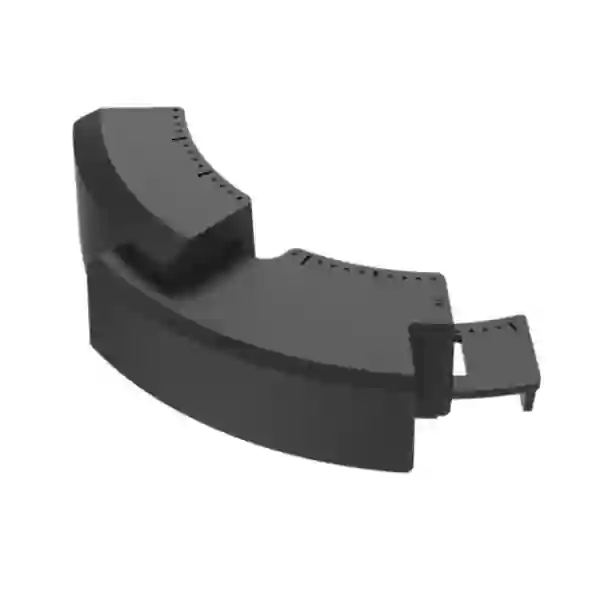
Hanwha SPC-100AC AC Power Module — 24VAC Camera Compatibility Guide
Need to maintain a compatible Hanwha outdoor dome camera using a 24V AC power source? The Hanwha SPC-100AC AC power module is a model-specific accessory for that purpose. Before purchasing, match your exact camera variant and check the condition of the installed power system. Hanwha Vision identifies this module as discontinued, so obtaining a suitable unit or choosing another supported power arrangement requires verification rather than assumption.
At a glance
What is the SPC-100AC, and what problem does it solve?
The SPC-100AC is an AC power module developed for specific Hanwha Vision outdoor vandal-resistant dome cameras. Its job is narrow but important: it supports the camera’s ability to use a 24V AC power input in the configurations documented by the manufacturer. It is an accessory within a camera installation, not a complete surveillance system. If a compatible camera has been deployed with an existing low-voltage AC supply, the correct module may matter when repairing, servicing or reproducing that installation. The useful buying question is therefore not simply whether a part is labelled as a power module; it is whether this exact module belongs in the exact camera and electrical arrangement being maintained.
It is easy to confuse camera power accessories with transformers, external adapters or network components. The SPC-100AC is not a device intended to accept ordinary building mains voltage directly, and its 24V AC designation does not authorize connecting it to an unverified supply. It does not carry video, create a network connection, operate a PTZ joystick or improve the image sensor. Its value comes from being a documented accessory for a small group of camera models. That distinction helps prevent ordering the wrong part, creating avoidable downtime or asking an installer to adapt hardware that was not designed for the camera.
Verified technical specifications
Hanwha’s published product information describes a compact black unit made from plastic, identified as polycarbonate in its mechanical specification. The individual module dimensions are 75.9 mm by 85 mm by 29.4 mm, equivalent to approximately 2.99 by 3.35 by 1.16 inches. The published weight is about 55 grams or 0.12 pounds. These are accessory dimensions, not the dimensions of the connected camera, its mounting bracket, a transformer or its packaging. When evaluating physical fit, distinguish the module’s body from the complete installed assembly, and use the relevant camera’s service or installation documentation.
The manufacturer’s published accessory data identifies 24VAC as the module’s input voltage and names compatible XNV camera variants. Other electrical quantities, such as a universal transformer rating, a universal output connector or an approved wire length, should not be inferred from this summary. A qualified technician should use the exact camera manual, module instructions, and supply information to determine how an installed system must be wired. A seller’s generic power-module listing is not enough to establish those details. The recorded specifications help identify the correct item, but installation eligibility still depends on the camera’s exact model and the complete power arrangement.
Specification reference
| Brand | Hanwha Vision (Wisenet / legacy Hanwha Techwin naming) |
|---|---|
| Model | SPC-100AC |
| Product type | AC power module |
| Documented input | 24 V AC |
| Purpose | Power input accessory for selected outdoor vandal-resistant network dome cameras |
| Dimensions | 75.9 × 85 × 29.4 mm |
| Weight | Approximately 55 g |
| Color / material | Black / plastic (polycarbonate) |
| Manufacturer lifecycle | Discontinued |
| Target-site SKU | Not supplied or verified |
Specifications are for identification and planning. Confirm the manufacturer’s instructions for the particular camera, revision and installation before electrical work.
Which Hanwha camera models are documented as compatible?
Manufacturer accessory information names five applicable outdoor XNV models: XNV-6081Z, XNV-8081Z, XNV-6081, XNV-6081R and XNV-8081R. Those names should be used precisely. The letter suffix matters because neighboring members of a product family may have different physical design, connectors, power options or accessory requirements. For a replacement job, read the complete model from the camera label and cross-check it with the original documentation. Treat the list as the documented application scope of this accessory, not as a promise that every camera containing the characters XNV, 6081 or 8081 can accept it.
Manufacturer camera manuals also reference the SPC-100AC in installation-accessory sections for particular XNV variants. This is stronger evidence than a reseller’s broad statement that the product works with all X-series or Wisenet cameras. A camera may share imaging technology or a mounting family with a supported model yet have a different internal power path. If the exact model is absent from the published list, do not assume compatibility based on appearance, generation or resolution. Seek a manufacturer-confirmed part reference for the exact camera before ordering. That precaution is especially important when older systems contain several similar-looking domes installed at different times.
Documented camera compatibility
| Camera model | Basis for inclusion | Buyer action |
|---|---|---|
| XNV-6081Z | Listed in manufacturer accessory documentation | Confirm exact label, revision and 24VAC installation |
| XNV-8081Z | Listed in manufacturer accessory documentation | Confirm exact label, revision and 24VAC installation |
| XNV-6081 | Listed in manufacturer accessory documentation | Confirm exact label, revision and 24VAC installation |
| XNV-6081R | Listed in manufacturer accessory documentation | Confirm exact label, revision and 24VAC installation |
| XNV-8081R | Listed in manufacturer accessory documentation | Confirm exact label, revision and 24VAC installation |
The table does not expand compatibility to other XNV, XND, P-series or Q-series variants.
How to perform a reliable compatibility check
Start with the exact camera model and its full suffix. If available, note the hardware revision, the existing accessory identification, and a photograph of the camera’s rating label. Then establish whether the installation was actually built to use 24V AC. The presence of a nearby low-voltage cable is not sufficient evidence: a technician needs to identify the source and measure or otherwise verify it using appropriate procedures. Ask whether the camera previously operated with an SPC-100AC, whether a module is missing, or whether the project proposes a power-system redesign. These situations may lead to different purchasing decisions.
Next, compare the camera installation instructions with the module documentation, including its intended mounting position and connector arrangement. Review any environmental sealing steps that are part of the camera installation; an outdoor-rated camera can still be compromised by incorrect reassembly. Finally, resolve whether a genuine, suitable replacement module can be sourced at all. Because Hanwha Vision marks the SPC-100AC discontinued, a compatibility match does not automatically mean a new unit is obtainable. If the manufacturer or knowledgeable supplier cannot verify supply, discuss an explicitly supported alternative rather than substituting an unrelated adapter. Record the result so future maintenance teams do not repeat the same uncertainty.
Understanding the 24V AC power path
In a conventional building, the availability of electricity does not mean that every accessory can connect directly to the mains. The SPC-100AC is specified for a 24V AC input within a supported camera application. A complete installation may include upstream power equipment, protection, cabling, the module and the camera; each part has a separate role. The correct power source and its capacity must be established from the camera documentation and the real site design. A module listed for 24V AC should never be interpreted as a plug-in device for ordinary 230V building wiring. The task of delivering safe and appropriate low-voltage power belongs to the system design, not to marketing shorthand.
A technician assessing an older system should trace the actual path rather than assuming the previous installation is correct merely because it worked for some time. Verify identification of cables, junctions and supply equipment, and consider the effect of changes made during earlier repairs. Long runs, shared supplies, poor connections or undocumented transformers can complicate diagnosis, but a replacement module alone cannot be promised to solve them. Make the power-path check a separate step from identifying the Hanwha camera. It is also worth confirming which components will remain in service after the repair, so that a procurement decision does not unintentionally preserve a larger, unsuitable configuration.
How this differs from Power over Ethernet
Power over Ethernet, often abbreviated PoE, is a method of supplying power over a compatible Ethernet network connection. The SPC-100AC is not a PoE injector, PoE splitter or Ethernet adapter; it belongs to a documented 24V AC input arrangement. Some supported camera models have other power options described in their own manuals, but those alternatives need to be checked at model and revision level. Selecting a camera power method is an infrastructure decision involving the camera, switching equipment, cabling, electrical conditions and maintenance policy. A buyer should not purchase this module simply because the site has a network switch or because the camera is an IP camera.
When comparing an existing AC-powered dome with a possible network-powered arrangement, assess what is already installed, where power is protected and monitored, the distance and condition of cabling, and how faults are diagnosed. A PoE design may centralize power in supported networking equipment; an AC arrangement may retain existing dedicated low-voltage infrastructure. Neither choice is universally better for every legacy site. Most importantly, this accessory should not be presented as a converter between the two systems. Any migration requires a separate, manufacturer-supported wiring and camera-power review, with the appropriate equipment identified before site work begins.
Who is this product intended for?
The most relevant buyers are security-system maintenance managers, qualified installers, facilities teams and integrators responsible for existing compatible Hanwha XNV cameras. They may be seeking an exact replacement for a missing or damaged accessory, investigating a camera that no longer powers up, or planning to keep an older dome operating while the broader surveillance system is reviewed. The product is less relevant to someone building a new installation from scratch without an identified supported camera. For new work, the useful first step is to choose the camera and its supported power design, rather than begin with a discontinued accessory.
Procurement teams can also use the SPC-100AC model as a way to reconcile old equipment schedules and purchase requests. A site inventory may use legacy Wisenet or Hanwha Techwin terminology, while present-day manufacturer pages use Hanwha Vision. That naming difference should not override model verification. Ask the person requesting the item for a photo, the full model name and the business reason for the purchase. If the intended use is a retrofit, request installation drawings or a concise description of the planned supply and environment. A small number of accurate project details can prevent a costly mismatch and help evaluate whether a repair is proportionate to the remaining life of the equipment.
What discontinued status means for a purchase
Hanwha Vision’s current product listing marks the SPC-100AC as discontinued. That is a manufacturer lifecycle signal, not a statement about the inventory of every seller in every country. An individual supplier might have remaining stock, refurbished stock or no stock at all, and conditions can change. The listing should therefore not claim that units are available in Tanzania, that delivery is guaranteed or that the item has an approved direct successor. It should also not imply a particular warranty or certification for an individual sourced unit without documentation. A discontinuation label is a reason to improve the purchasing checklist, not to invent a supply answer.
Before arranging a purchase, ask whether the offered part is the exact SPC-100AC, whether its condition is new or used, whether packaging and identification are intact, and what return or acceptance terms apply. Compare any proposed substitute against explicit manufacturer compatibility rather than superficial similarity. It may be sensible to hold a critical spare when a verified unit is available, but the case for doing so depends on the installed camera fleet and repair strategy. If replacement is uncertain or financially disproportionate, review a supported modern camera and power arrangement. Both routes should be assessed on total work involved, not the accessory’s unit price alone.
Why a generic 24V AC accessory is not automatically a replacement
The figure 24V AC describes only one electrical characteristic. It does not prove that an accessory has the same dimensions, contacts, mechanical securing method, internal arrangement or certification basis as the SPC-100AC. Similarly, a visually similar black module from another product family may be designed for a different housing. A technician should be able to point to a manufacturer-approved application or a formal replacement part reference. If that proof is missing, a buyer should not treat an alternative as a drop-in replacement and should avoid any instruction to modify the camera housing, connector or weather protection to make it fit.
This becomes particularly important when the proposed substitute is marketed as a universal converter. A converter sold for another purpose may require its own housing, protection and installation method, and it may not fit inside the camera or preserve the intended environmental design. The safe decision is to request a documented match from the manufacturer or a suitably qualified integrator. For an older surveillance site, another sensible option is to compare the cost and risk of finding an exact accessory against replacement of the entire camera with a current supported model. That evaluation should be done before dismantling a functioning system or committing to components with unclear compatibility.
Site survey: information to collect before ordering
A concise survey reduces delays and ambiguous purchase requests. Record the camera location, complete manufacturer model, serial or hardware revision if relevant, the existing supply method, the reason the module is needed, and the count of affected cameras. Add a note about access conditions and whether the unit is mounted outdoors, under cover or in a difficult service position. Photographs of external identification, the mounting area and the installed power equipment can be useful when taken safely. Avoid opening live electrical equipment merely to obtain photographs; a qualified technician should collect details that require access to wiring or protected enclosures.
Check the installed infrastructure as well as the camera itself. A failed camera may be caused by a disconnected lead, damaged cable, unsuitable upstream source, moisture or a different internal fault. The SPC-100AC should not be ordered as a speculative cure without some diagnostic basis. Where several cameras share a supply, compare symptoms to determine whether the fault is isolated or systematic. The survey does not need to become a large engineering report, but it should capture the evidence needed for a defensible procurement decision. A good brief allows the technical reviewer to confirm either the exact accessory or the need for further inspection.
Planning safe installation and electrical work
Installation should follow the manufacturer’s module instructions and the installation manual for the exact camera. Work on electrical systems should be performed by appropriately qualified personnel using site-approved isolation and testing practices. Verify the supply before a connection is made, and do not interpret a nominal voltage printed on a label as proof that the actual circuit is correct. The SPC-100AC is specified for a 24V AC application; it is not permission to bypass the power equipment and protective measures needed upstream. The installer should also confirm how the accessory fits within the camera assembly before energizing the system.
The camera’s housing and any external cable entries should be reassembled according to its documented installation method. This matters especially for outdoor surveillance cameras, where a disturbed gasket, badly sealed entry or strained cable can cause problems unrelated to the module. Keep records of which parts were replaced and which supply was tested. If the actual installation does not match the manual, stop and resolve the discrepancy rather than improvise. This page does not replace the manufacturer manual, site electrical procedure or local professional assessment. It supports more accurate part selection and a clear handover between the buyer and the person performing the work.
Environmental considerations for outdoor cameras
The SPC-100AC is associated with compatible outdoor vandal-resistant dome cameras, but the camera’s outdoor suitability must not be transferred carelessly to the module when it is removed from its intended assembly. Do not assume that a loose module can be mounted openly in weather, placed in an unrelated enclosure or exposed to moisture without following manufacturer instructions. The relevant environmental protection comes from the complete approved camera installation, including its housing, mounting and cable-entry arrangement. If the housing has been damaged, repairing only the power accessory may not restore the installation’s original protective design.
Sites in Tanzania can differ substantially in exposure to heat, rainfall, dust and access for maintenance. These are practical inspection factors, not claims that one accessory is certified for every setting. During a service visit, check whether the existing housing and cable routing remain appropriate for that particular environment. Review condensation, corrosion, water ingress and mechanical damage before deciding on a repair. An accessory replacement should be part of a complete maintenance judgment: a camera with compromised weather sealing may need more extensive attention or replacement. Document any environmental problem separately from the electrical fault to avoid treating symptoms rather than causes.
Commissioning and acceptance after a repair
After a qualified technician completes the approved installation, the commissioning process should verify more than the presence of a power light or a single camera image. Confirm that the intended camera starts reliably, that the connected network and recording system see the expected device, and that the site operator can view its normal video feed. Compare the result with the site acceptance criteria, including any expected recording, time settings or event behavior. Those functions belong to the complete camera and video system; they are not features performed by the SPC-100AC itself. A power-module repair should not be credited with restoring unrelated functionality until it has actually been tested.
Keep the results simple and traceable. Note the camera model, location, installed part, date of intervention, checked source and observed operating status. If performance remains abnormal, avoid immediately blaming the new or replacement module. Review the camera, cabling and upstream infrastructure as separate components. For sites with many cameras, a consistent acceptance checklist helps compare repairs performed by different teams. It also supports practical future decisions: repeat failures at the same location may point to conditions that justify a wider redesign instead of repeated accessory replacement. A clear record is often as valuable to the maintenance process as the part invoice.
Troubleshooting a camera that will not power on
A camera that is not responding can have several causes. It may have an upstream supply problem, an interrupted cable, an accessory issue, a camera-side fault or a problem that merely looks like a power failure because the network path is unavailable. Start by recording the visible symptoms and identifying whether the camera was previously operating. Determine whether other cameras on the same infrastructure remain functional. A qualified technician can then follow the manufacturer-approved diagnostic process and verify the appropriate power source without exposing personnel or equipment to unsafe tests. Replacing the SPC-100AC before the fault has been narrowed down may waste time and money.
An IP camera can also be powered yet unreachable from a viewing workstation. In that case, video management, switching, addressing or recording configuration may need investigation, none of which is repaired simply by changing an AC power module. Keep the diagnosis evidence-led. Ask whether the camera receives the documented power, whether the device starts, and whether it is visible on the expected network before concluding that the module is defective. If the hardware is discontinued, a careful diagnosis is particularly valuable because replacement parts may be difficult to obtain and a failed speculative repair could delay a more reliable solution.
Investigating intermittent outages
Intermittent operation is harder to diagnose than a camera that is consistently off. Note when the problem occurs, whether it correlates with other site equipment, and whether there is a recorded sequence of disconnects or resets. A maintenance technician may need to assess supply quality, cable condition, environmental exposure and the camera itself. Avoid attributing every intermittent outage to the SPC-100AC solely because the module is in the power path. A replacement should follow evidence that the installed accessory is damaged, unsuitable or otherwise implicated by the correct technical assessment.
Where repeated interruptions affect safety monitoring or business operations, discuss the full cost of the fault rather than just the cost of a small accessory. That includes repeated visits, access equipment, security blind spots and the difficulty of sourcing legacy parts. The best next step may be to restore the original configuration, correct upstream power infrastructure or replace the camera with a verified modern alternative. The decision depends on site conditions and supported equipment options. Documenting the pattern of failures helps the technician and buyer choose a proportionate response instead of repeating a temporary intervention.
What the module does not change
The SPC-100AC does not change the camera’s image resolution, frame rate, lens, video analytics, cybersecurity functions, storage arrangement or viewing software. It has no independent network address and does not add recording capacity. It should not be selected as a solution for blurry images, poor lens focus, network congestion, incorrect camera positioning, missing recordings or video-management licensing issues. Those problems belong to different parts of the system. This separation matters in a quotation because it avoids assigning unrelated benefits to a power accessory and gives the buyer a realistic expectation of what a correctly completed replacement will accomplish.
The useful expected outcome of a suitable module, in a correct installation, is support for the camera’s documented 24V AC input arrangement. Even that outcome is conditional on the camera, source and remaining components being serviceable. If the buyer needs improved video quality or a new security feature, the purchasing conversation should move to cameras, recording equipment and system design. If the buyer needs a specific power-input repair for a listed XNV model, the SPC-100AC may be relevant subject to verification and sourcing. A precise statement of scope makes technical acceptance and future support clearer.
Repair, replace or redesign: making a proportionate decision
Repairing an older camera can make sense when the camera still meets operational requirements, the fault is narrow, an exact suitable part can be obtained, and the surrounding infrastructure is healthy. It may also minimize changes to existing cable routes, mounting positions and operator procedures. However, a discontinued accessory can introduce procurement and future-service uncertainty. If the camera already has several faults, replacement parts are uncertain, or access costs dominate, continuing to repair may be less attractive. The correct decision depends on the actual installed system rather than the age of a component alone.
A redesign may involve selecting a current supported dome camera and its approved power arrangement, checking the existing recorder or video platform, and planning any necessary cable, mounting or commissioning changes. Avoid promising that a new model will reuse every existing connector or mounting point without documented evidence. For an organization with multiple older cameras, a phased approach can be easier to manage than unplanned emergency replacement. Prioritize locations with operational importance and repeated failures, then evaluate the rest of the fleet. Whether repairing or upgrading, keep the exact SPC-100AC compatibility evidence in the service record so no one assumes it is a universal part.
Managing mixed camera fleets
Real sites often contain cameras installed in different years, with different suffixes and power methods. A purchasing request that says only ‘Hanwha dome power module’ is therefore incomplete. Build a small register of camera model, installed location, supply type, existing accessories and known faults. Identify the five models covered by the published SPC-100AC compatibility list separately from other XNV or XND devices. This prevents a single part number from being assigned across an entire fleet where it may not fit. It also helps the buyer estimate actual quantity rather than ordering one accessory per dome by default.
A mixed fleet benefits from a repeatable technical review process. Before the team orders any spare, confirm the exact model, the operational objective and the required part reference. Record any verified substitution as a distinct item with its own documented compatibility. Keep camera, mounting, power and networking concerns separate in the maintenance register. When an item is discontinued, flag the lifecycle status so it informs future budgeting, but do not automatically classify all installed cameras as unusable. The register should support planned decisions, not create premature replacement commitments.
Procurement checks for Tanzania buyers
For a Tanzanian buyer, the first commercial question is whether a verifiable SPC-100AC unit can be sourced for the specific project. No local selling price, stock quantity, regional warranty or delivery promise is established here. Obtain a written quotation identifying the manufacturer model, quantity, condition, lead-time assumptions and applicable commercial terms. Ask whether the proposed item is an exact original module or an alternative requiring separate technical approval. Where the camera is operationally critical, also ask what happens if the order cannot be fulfilled. A quotation should make assumptions visible rather than hiding them behind a broad accessory description.
Plan the procurement around the site visit and the installation risk. For example, if accessing a camera requires special arrangements, it may be worth performing a diagnostic survey before finalizing the order. If the request covers many locations, group cameras by exact model and observed symptoms. Do not infer local electrical compliance, tax treatment, regulatory approval, installation coverage or origin of supply from the Hanwha brand alone. Those matters depend on the actual supplier, equipment and project, and should be independently confirmed as needed. A clear scope and accurate technical brief are the best starting points for a realistic purchase decision.
What to include in a quote request
An effective request should identify the item as ‘Hanwha Vision SPC-100AC AC Power Module’ and state the exact camera model, preferably one of the manufacturer-listed XNV variants. Include the number of units required and whether the purpose is repair, replacement stock or a planned project. State that the system is intended to use a 24V AC input only if that fact has actually been confirmed by the installer. If the site team is unsure about the power arrangement, say so and request a technical review rather than guessing. Provide the camera model label or original documentation when available.
Also explain any practical constraints: whether the camera is installed outdoors, whether the existing module is missing or faulty, whether access is difficult, and whether substitution is acceptable only with manufacturer evidence. Ask the supplier to identify product condition, actual availability and commercial terms in its response. If the SPC-100AC cannot be provided, request a separate proposal for an explicitly supported solution; do not treat any generic module as equivalent. The clearer the first request, the more useful the resulting answer will be to the security team, technical installer and purchasing approver.
Common deployment and maintenance scenarios
Replacing an identified failed module
The existing camera is one of the listed XNV variants, and a qualified technician has evidence that the installed power accessory requires replacement. The priority is to verify an exact SPC-100AC, confirm the supply arrangement and check the condition of the camera housing before ordering. Because the model is discontinued, obtain clear information about item condition and availability. After replacement, commission the whole camera rather than assuming that the part number alone proves the system is healthy.
Restoring a legacy 24VAC camera location
A maintenance team discovers an older compatible dome that previously used an AC supply but is currently out of service. The team should first confirm whether the module is actually absent or defective, inspect the upstream source, and review the camera model’s installation instructions. There may be other reasons for the outage. Use the SPC-100AC reference to locate documentation and discuss exact-part sourcing. If the camera cannot be restored reliably, consider a supported replacement strategy before committing to repeated service visits.
Comparing power methods during a network upgrade
A site is updating switches, cabling or recording infrastructure while keeping some older Hanwha domes. The SPC-100AC remains relevant only where the documented 24V AC camera configuration is to be retained. Do not describe the accessory as a PoE adapter or as a general bridge between old and new power systems. Compare the actual options supported by each camera and the new infrastructure, then decide which sites can keep their existing electrical arrangement and which require a separately designed change.
Preparing a maintenance spare register
A facilities team wants to document which hard-to-source accessories are associated with its existing camera estate. List the SPC-100AC alongside the five published compatible XNV model numbers, mark its discontinued lifecycle and identify the installed sites that actually use the module. Do not assume every XNV device consumes one spare. Review service history and operational importance before choosing a holding quantity. Keep any future approved substitution as a separately recorded reference so purchases remain traceable.
Investigating repeated camera restarts
Several restarts have been reported at a single outdoor location. The presence of a 24V AC module is useful diagnostic context, but it is not proof of the failure’s cause. A technician should review site evidence, supply, connections, environmental condition and camera health. If the module is implicated and the camera is one of the verified compatible models, evaluate a replacement subject to sourcing. If problems continue, assess wider infrastructure or camera replacement rather than repeatedly ordering identical parts without a confirmed diagnosis.
Planning a phased security-system refresh
An organization still relies on older compatible dome cameras but expects to modernize parts of the estate. It may be sensible to repair a limited number of units while planning a transition to supported current models. For each location, compare camera condition, power infrastructure, service access and the practicality of obtaining the discontinued accessory. Avoid assuming new cameras will share existing housings, network settings or power methods. A phased plan allows repair spending and modernization decisions to follow operational evidence.
A practical decision sequence for buyers
First, identify the exact camera. Second, establish whether a 24V AC configuration applies and whether the SPC-100AC is the accessory specified for it. Third, diagnose the actual fault or document the reason a spare is being requested. Fourth, confirm physical and electrical suitability using primary technical documentation. Fifth, ask about genuine product condition and sourcing because the manufacturer has discontinued the model. Only then compare the cost of an exact repair with a supported alternative. This order prevents purchasing a component before establishing that it is both needed and usable.
After the decision, define what acceptance will mean. For an exact-part repair, the acceptance criteria might include documented safe installation and normal camera operation under site conditions. For a redesign, acceptance will involve the approved replacement hardware and system-level commissioning. Keep approvals and responsibilities clear: the supplier can quote the item and its commercial terms, the qualified installer can assess the existing equipment, and the customer can decide what level of repair or modernization best serves the site. The SPC-100AC is a specific component, and a specific component deserves an equally precise purchasing decision.
Frequently asked questions
What is the Hanwha SPC-100AC?
It is a model-specific AC power input accessory for certain Hanwha Vision Wisenet XNV outdoor vandal-resistant dome cameras. The manufacturer’s documentation describes it as an AC power module for use with 24V AC input. It is not a standalone camera, transformer for building mains, recorder or controller. The buying decision should begin with the exact camera model and installed power arrangement, rather than the broad description ‘CCTV power supply’.
Does the SPC-100AC use 24V AC or 24V DC?
The published module specification identifies a 24V AC input. Do not substitute a DC supply based only on the presence of the number 24, and do not connect the module directly to ordinary mains voltage. The camera and module manuals should determine the correct wiring and installation. Where a site has uncertain or undocumented electrical equipment, a qualified technician should verify the actual supply before a purchase or connection is made.
Which cameras are on the published compatibility list?
Hanwha accessory documentation lists XNV-6081Z, XNV-8081Z, XNV-6081, XNV-6081R and XNV-8081R. The exact suffix is part of the identification. If your camera has another model number, including a different XNV or an XND prefix, do not assume this part fits. A broad product-family name is not a substitute for documented accessory compatibility. Obtain confirmation for the exact model and revision before ordering.
Will it work with every Hanwha Wisenet dome?
No universal compatibility is established. Hanwha markets many network dome cameras across different families and generations, and the SPC-100AC is linked to particular models. Physical resemblance, camera resolution or a shared brand name cannot prove that an accessory belongs inside a device. Confirm the camera label and consult its documented accessory list. If the model is not named, seek manufacturer-backed guidance rather than modifying the camera to accept a part.
Is it compatible with XNV-6081R?
Yes, XNV-6081R appears in the manufacturer’s published applicable-model list for the SPC-100AC. That is a compatibility reference, not a diagnosis that your particular XNV-6081R needs this part or that the existing wiring is suitable. Before purchasing, confirm the camera has the intended 24V AC installation arrangement and that an exact suitable module is obtainable. A qualified technician should review any damage or prior changes to the equipment.
Is it compatible with XNV-8081Z?
Yes, XNV-8081Z is a documented applicable camera model. The same product page also lists other related XNV models, but that does not mean all related models are automatically covered. Read the complete camera identification and follow the installation manual for the specific unit. If the installation has been altered or the power source cannot be confirmed, resolve those uncertainties before connecting a replacement module. Compatibility and safe electrical installation are two distinct requirements.
Is the SPC-100AC discontinued?
Hanwha Vision currently marks the SPC-100AC as discontinued on its product listing. That statement concerns the manufacturer’s lifecycle information; it does not establish what any individual seller has in stock. Buyers should therefore request confirmation of availability, item condition and the terms of supply. Do not assume a quoted component is a manufacturer-approved replacement simply because it is described as equivalent. If exact sourcing is not practical, ask for a separate evaluation of supported camera and power options.
Can I order it for a new CCTV project?
It is better to start a new design with the selected camera’s current supported accessories and power methods. The SPC-100AC belongs to a defined group of compatible cameras and is marked discontinued, so it should not be treated as a general-purpose component for new installations. If the project specifically uses one of the published compatible older cameras, an integrator can assess whether the accessory remains appropriate. The customer should understand the future servicing and sourcing implications before finalizing the design.
Is the module a transformer for 230V electricity?
No. The published input designation is 24V AC. The module should not be represented as an ordinary mains transformer or connected directly to building mains. Any upstream power conversion, isolation, protection and cabling must be designed and checked according to the camera’s instructions and applicable professional practice. If the existing installation has unclear wiring, do not infer its safety from the presence of the module. Have the power source identified and verified by qualified personnel.
Can this module replace a PoE injector or network switch?
No. A PoE injector or compatible switch supports a network-based power delivery arrangement, while the SPC-100AC is an accessory for a documented 24V AC camera input. It is not a networking device and does not convert Ethernet into a camera power feed. If the project is migrating between power methods, the camera’s supported options and the existing site infrastructure must be assessed separately. A suitable change may require different equipment and professional redesign.
Does installing the module improve video quality?
No image-quality upgrade is promised by this power accessory. Resolution, lens performance, image settings, lighting and video processing are properties of the camera and broader surveillance system. A correct power arrangement can be necessary for the camera to operate, but it does not add imaging capabilities. If a buyer reports blurred images, dark scenes or missing recordings, those symptoms need a separate diagnosis. Replacing the SPC-100AC should not be sold as a remedy for unrelated video-performance problems.
Does the SPC-100AC include a CCTV camera?
No. It is the AC power module only, not a complete dome camera, lens, network recorder, mounting kit or external power system. Packaging and quantities must be confirmed with the supplier for the specific offer. The manufacturer’s accessory dimensions and weight describe an individual module and should not be confused with the equipment needed for a full installation. Buyers planning a repair should identify what components are already present and request a written item description in the quotation.
How large and heavy is the module?
Hanwha publishes individual module dimensions of 75.9 × 85 × 29.4 mm and a weight of approximately 55 g. The unit is black and made from plastic, specified as polycarbonate in current mechanical information. These details are useful for confirming the correct part, but they do not prove fit inside an unsupported housing. For installation planning, the shape of connectors, camera geometry and the manufacturer-approved assembly instructions are more important than comparing only the outside dimensions.
Can it be installed outdoors by itself?
Do not infer a standalone outdoor mounting rating for a loose accessory. The module is intended for use with specified outdoor vandal-resistant dome camera installations, and the camera’s protective housing, cable entries and assembly procedures are relevant to environmental integrity. Exposing an internal accessory independently to rain or moisture could be unsuitable. Use the exact installation instructions and inspect housing condition before service. If the camera has damaged seals or corrosion, the repair scope may extend beyond the power module.
How do I know whether the module has failed?
A no-power or intermittent fault does not by itself identify a defective SPC-100AC. Other causes can include the upstream supply, cabling, connections, camera electronics or a network issue mistaken for a power issue. A qualified technician should compare symptoms against the manufacturer’s diagnostic procedures and test the appropriate system elements safely. Avoid purchasing a scarce discontinued accessory as a first guess. Recording the fault evidence can improve the chance of a successful, economical repair.
Is there a direct current replacement part?
This page does not claim a specific approved successor because no exact replacement model has been verified from manufacturer documentation for the requested use. A generic converter with a similar voltage or shape is not enough. Ask a qualified supplier or the manufacturer to identify a documented alternative for the precise camera model and installation. If no suitable module is available, it may be necessary to evaluate an approved different power method or replace the camera rather than forcing an unverified accessory.
Can I use the same module with XND dome cameras?
The published SPC-100AC applicable-model list identifies specific XNV outdoor dome models. A nearby XND model may appear in camera accessory documentation for other purposes, but that does not automatically make the SPC-100AC an approved accessory for that XND camera. Check the exact XND model’s own accessory list and obtain manufacturer confirmation. Do not rely on the existence of similarly named Wisenet products, shared accessories or general dealer descriptions to expand the module’s documented scope.
What information should I send when requesting a quote?
Provide the exact camera model, quantity required, reason for the request, and any confirmed existing power arrangement. Explain whether the module is missing, physically damaged or being considered for planned spare stock. Where possible, share safe photographs of model labels and the installation context. Ask the supplier to state the condition and actual availability of any offered SPC-100AC, together with the relevant commercial terms. Request separate technical evidence for any proposed alternative.
Is price or stock in Tanzania confirmed?
No price, warehouse stock, delivery period, installation coverage or warranty is confirmed by this content. Those depend on the specific supplier and quotation. The manufacturer also states that availability can vary by region and marks the model discontinued. For an accurate commercial response, buyers should send a complete model-and-quantity request and ask for current sourcing details in writing. A published historical listing from another market should not be treated as a current Tanzanian price or delivery commitment.
What if several compatible cameras need attention?
Create a short list of each camera’s full model, location, power method, symptom and service priority. Separate proven module failures from unexplained camera outages, because the same visible symptom can have different causes. Then obtain a technically accurate quantity and a sourcing assessment for exact parts. Where a large installed fleet depends on discontinued hardware, compare the cost of spare procurement with a phased modernization plan. Document any approved replacement route so future repairs remain consistent.
Can this accessory solve frequent power cuts at a site?
The SPC-100AC is not an uninterruptible power supply, battery backup or general power-conditioning device. It is a model-specific module for a documented 24V AC camera input. If outages are caused by interruptions elsewhere in the facility or in the supply chain, replacing the module does not create backup power. A site-wide resilience plan might require separate power design, equipment protection and acceptance testing. The responsible installer should identify the actual failure mechanism before recommending hardware.
What should be checked after replacement?
Confirm the documented electrical installation was completed correctly, the camera starts normally, the expected live image is available, and its recording or management system recognizes the device where relevant. Also inspect housing closure and cable routing as required by the camera manual. Keep the replaced part reference and work performed in the maintenance record. If the fault remains, continue diagnosing the wider power and camera system instead of assuming the module was the only possible cause.
Why does the page use Hanwha Vision and Wisenet names?
Wisenet is a product branding term associated with Hanwha’s surveillance equipment, and older documents may carry Hanwha Techwin naming. The model reference SPC-100AC is the decisive identifier for this specific accessory. Branding variations do not establish a different electrical specification or a wider compatibility list. When comparing historical records with a current purchasing request, match the complete model and manufacturer documentation rather than relying solely on a logo printed in an old equipment schedule.
Long-term planning for a supported camera system
An organization can make better choices about discontinued camera accessories when it links individual repairs to a longer-term maintenance plan. Consider whether the camera remains appropriate for its security purpose, whether its firmware and recording environment are maintained, how often technicians must visit the location, and whether additional failures are likely to be costly. Those considerations do not establish that every legacy camera needs immediate replacement. They help distinguish a reasonable isolated repair from an asset that repeatedly consumes maintenance resources. The SPC-100AC compatibility and lifecycle information are useful inputs to that review, not the full answer.
Where replacement is being considered, create a separate specification for the current camera, approved power arrangement, installation accessories, network integration and operational acceptance. Confirm supported products against current manufacturer documentation. A modern replacement is not automatically plug-compatible with an older dome, and reuse of a cable, mount or enclosure should never be assumed. If the existing camera is kept in service, maintain the exact accessory reference and power details in the asset record. Both decisions benefit from clear documentation and a realistic understanding of sourcing uncertainty.
A clear next step for the SPC-100AC
If you are maintaining a listed Hanwha XNV dome in Tanzania, begin by checking the complete camera model and whether the installation is designed for 24V AC. Then establish why a replacement is required, the quantity needed and the results of any technician’s diagnosis. Use those details to request an exact-part sourcing and compatibility review. Because the SPC-100AC is discontinued, the response must confirm actual availability and condition rather than assuming it. If an exact part is not appropriate or obtainable, seek an evidence-based alternative proposal for the camera and site’s power infrastructure.
For a security-system buyer, the most useful outcome is a trustworthy decision: an exact compatible module sourced with clear terms, a verified other supported approach, or a planned camera replacement. The Hanwha SPC-100AC AC power module should be selected only where manufacturer documentation and the real installation support its use. This reduces mismatches and protects service teams from avoidable rework. Collect the camera model, safe identification photographs and the existing power details, then ask for a written review that separates technical fit from price, stock and delivery assumptions.
Request an SPC-100AC compatibility and sourcing review
Provide the full Hanwha camera model, quantity, confirmed power arrangement and reason for replacement. Ask for confirmation of exact-part suitability, current product condition and availability, and separate technical evidence for any alternative. A precise request supports a practical decision for your CCTV maintenance or upgrade project in Tanzania.
Call to action: request a quote or technical review through FourTeck Tanzania’s established contact or sales channel. A direct destination is intentionally not linked because no exact verified internal page URL was available.




Reviews
There are no reviews yet.