
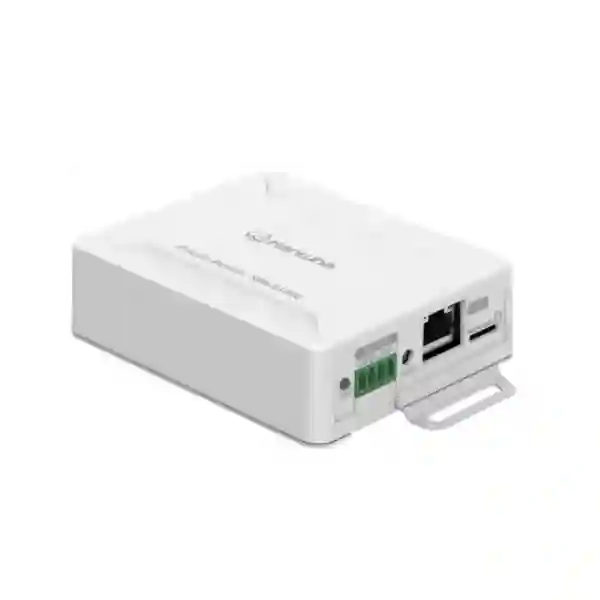
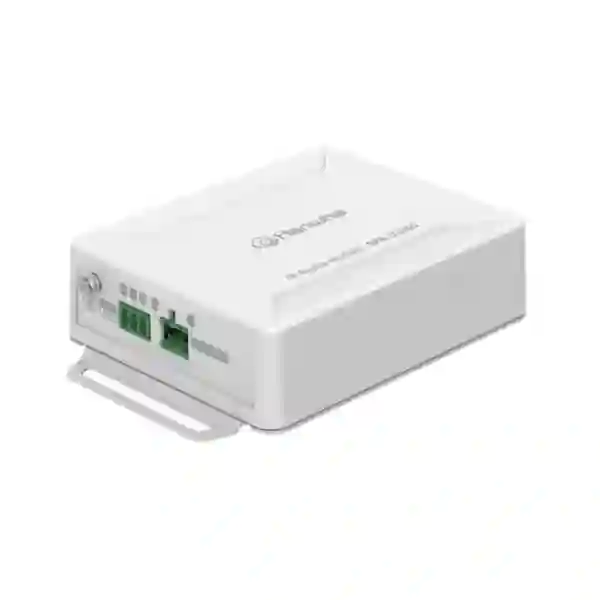
Hanwha SPA-D1000 IP Audio Module
Give a compatible analogue speaker network audio capability, or plan a controller role in a Hanwha audio system. The SPA-D1000 combines 10W amplification, PoE power, scheduling and integration options in a compact module for carefully designed business paging.
For Tanzania projects: request a project-specific quote and confirm speaker matching, software compatibility, power, environment and installation scope before ordering.
Key features at a glance
This summary highlights the main selection points. Full deployment decisions require the exact speaker load, controller role, current firmware, local network policies and acoustic coverage to be checked together rather than judged from one feature in isolation.
Understanding the SPA-D1000
The Hanwha SPA-D1000 IP audio module is intended for buyers who want more control over announcements than a simple amplifier and loudspeaker can provide. In speaker mode, it receives network audio and drives a properly matched analogue speaker through its integrated Class D amplifier. In a controller role, it can participate in the organisation and operation of compatible network audio devices. Those are different jobs; a quotation should identify which role the installation needs rather than assume one unit automatically covers every possible use case.
This distinction matters for a Tanzanian office, learning centre, retail property or managed facility. The buyer may already own ceiling speakers and want targeted messages, or may be planning a completely new network speaker estate. The SPA-D1000 is attractive where an IP connection, scheduled audio, available integration methods and central control are valuable. It is not a complete sound system in the box: the application may still require a speaker, Ethernet switching, mounting materials, configured software and site-specific testing.
Is this the right device for your project?
Start by writing down what the people in your building actually need to hear. A small reception area may only need occasional paging; several floors may require independent zones, a timetable and priorities for competing announcements. A warehouse could require a louder or more directional speaker than a meeting room. The module’s role should therefore be selected after the sound-coverage problem is understood. Buying based on the module’s feature list alone can lead to poor speaker placement or unnecessarily complex management.
The strongest match is a controlled network audio project with an appropriate 8-ohm analogue speaker or a verified Hanwha IP audio control design. Buyers seeking a weather-rated outdoor all-in-one speaker, a high-power conventional public-address amplifier or a certified emergency voice evacuation system should evaluate other equipment and regulatory requirements. The SPA-D1000’s published specification lists no IP ingress-protection rating. That is a useful limitation to recognise before placing electronics in a damp or exposed location.
The built-in 10W amplifier
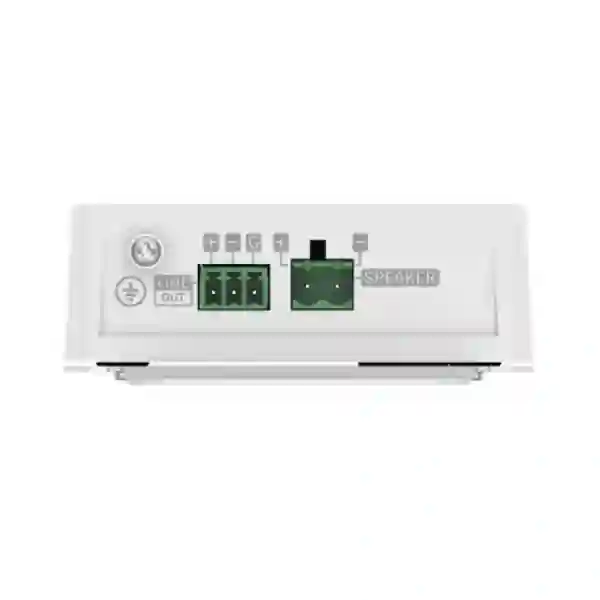
Hanwha specifies a built-in 10W Class D amplifier and a 10W, 8-ohm analogue speaker output. The manufacturer’s manual describes using the module as an IP speaker with an analogue loudspeaker rated for at least 10W input and having 8-ohm impedance. The correct electrical match is important: low-impedance speaker circuits should not be treated as interchangeable with 70V or 100V distributed speaker lines. An installer should check the actual speaker terminals, impedance and rating, not just the shape of the loudspeaker.
Power capacity is not the same as intelligibility. Speech must remain clear at the listener’s distance despite competing noise from fans, vehicles, conversations or equipment. Speaker sensitivity, mounting height, room reflections and ambient sound all affect the result. The sensible approach is to select a matching speaker, estimate the coverage, position it correctly and then test understandable spoken messages at realistic site noise levels. A nominal 10W rating does not guarantee that one speaker can serve an entire hall or factory floor.
Analogue speaker output versus line output
The module provides a connection for an analogue speaker and a separate line output. The speaker terminal is intended to drive the compatible 8-ohm load using the onboard amplifier. By contrast, a line-level connection is meant to feed a suitable external audio device such as an amplifier; it should not be confused with a second high-power speaker channel. Hanwha specifies a line output level of +6 dBV with a tolerance of ±3 dB. The external amplifier’s input requirements should be checked before a connection is designed.
This choice is especially important when modernising a building with existing loudspeakers. If the speakers are individual 8-ohm units and the load is within the supported design, direct connection may be appropriate. If the building has a central amplifier and many distributed speakers, integration might use the line output and require a separately engineered amplifier and zoning arrangement. An installer should document whether the desired result is one endpoint, a new amplifier input or a network-wide paging upgrade.
PoE and PoE+ power planning
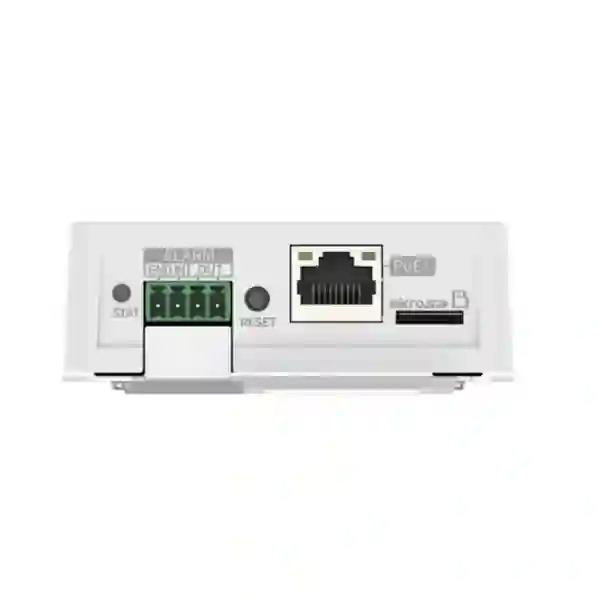
The SPA-D1000 supports IEEE 802.3af Class 3 PoE and IEEE 802.3at Class 4 PoE+. Both network data and device power can travel over the Ethernet link, reducing the need for an electrical socket beside the module. However, it is not enough for a switch simply to advertise PoE. The engineer should verify the exact switch capabilities, remaining power budget across all ports, cable length and cable condition, and the relevant device operating mode. An unpowered port will not run the module.
When several units are installed, add their allocation into the network’s overall PoE budget along with cameras, access points and other connected endpoints. Confirm any mode-specific power requirements in the current manual, rather than assuming the two PoE standards are equivalent in all operating configurations. At sites where announcements must continue through mains interruptions, consider the power continuity of the network switches, upstream equipment and audio sources. PoE makes cabling simpler; it does not by itself provide backup power.
Ethernet design and network reachability
The published Ethernet interface is 10/100 Base-T. A dedicated gigabit audio port is not necessary for the module itself, but it still needs a correctly configured network path, reliable cabling and an IP-addressing plan. Decide which VLAN or network segment will carry audio, who manages DHCP or static addressing, and whether the controllers and endpoints must communicate across subnets. Record device addresses and names in the site documentation so a technician can diagnose faults without guessing.
For group paging, multicast operation may be important. Multicast traffic should be designed with the actual switches and routers in mind; security controls, multicast filtering and routing policies can affect delivery even when an individual speaker works normally. Test the required source-to-destination paths before commissioning. Avoid assuming an internet connection alone guarantees the service: local switching, name resolution, time synchronisation and management access can each be separate dependencies. These are engineering checks, not promises of a particular network performance.
Scheduler for routine announcements
Scheduling is useful for predictable messages such as an opening announcement, a shift reminder or a closing notice. Instead of relying on a staff member to remember every prompt, the system can be configured to trigger approved audio at specified times. That can make daily operations more consistent, provided the schedules, source files and time settings have been correctly programmed. A schedule does not replace responsible operational procedures or a clear process for changing messages when a building’s hours change.
Before deployment, list each scheduled item with an owner, the correct audience, repeat pattern, priority and an agreed review date. For a Tanzania installation, confirm the device time zone and network time settings and test local clock changes after configuration. If different floors or teams have different routines, the zone map should reflect that rather than broadcasting everything everywhere. A well-managed timetable can be valuable; a poorly maintained one can confuse visitors and interrupt work.
Background music and speech coexistence
Background music is a published feature, but a purchasing decision should consider how music and speech will coexist. When messages take precedence over music, the controller, audio sources and priorities should be configured and tested to make that behaviour understandable and reliable. The design should establish who can start or stop playback, which zones receive each programme and how quiet spaces are protected from unwanted interruptions. Staff should also know how to mute inappropriate content when required.
Music sources require attention to content rights and operational policy, separate from the hardware purchase. A module supporting MP3 or WAV does not grant licences for commercial music or guarantee compatibility with every streaming service. Ask the project team to identify the permitted audio sources before installation. Where the objective is simply background music over a large area, compare the administrative overhead of a network system with the needs of the site; choose IP audio because its control capabilities are useful, not because it is the newest technology.
Text-to-speech: understand the language limitation
Hanwha lists text-to-speech support for English in US and UK variants, German, French, Spanish and Russian. Swahili is not included in that published list, so it would be misleading to promise native Swahili TTS for this product. For a project serving a mixed-language audience, the team can assess whether approved prerecorded Swahili announcements meet the requirements, using audio files in a supported format after testing the complete playback workflow. That approach should be demonstrated rather than assumed to work in every controller configuration.
Good announcements are written for listeners, not simply converted from long documents. They should use short sentences, consistent terminology and a voice that remains clear over the chosen speaker. Plan for the pronunciation of names, departments and safety instructions; inspect recorded files for loudness and background noise. In public-facing environments, consider accessible communication needs, including visual alternatives where audio alone may be insufficient. The device is a delivery component, not a substitute for an inclusive communication plan.
Audio files and local storage
The SPA-D1000 has 1GB of internal memory and a microSD slot, with support stated for SDHC cards up to 32GB. Its published audio-format information covers WAV and MP3, mono or stereo, within the indicated supported bitrates and sampling rates. Storage size is only one consideration: a file must still be imported or registered through the supported operating workflow before it can be played when requested. Test a representative library rather than assuming every file labelled MP3 will be accepted.
A useful file-management scheme names each recording by location, purpose, language and revision. Keep an approved master copy away from the device, so a failed or replaced module does not become the only place the content exists. Review outdated recordings when staffing, directions or opening arrangements change. Estimate storage demand based on actual recordings, not on the full advertised memory alone. Backups, configuration exports and a change log are valuable when multiple people manage the audio estate.
SIP paging and telephony checks
SIP support creates options for interaction with a compatible telephony environment. The manufacturer’s published information lists testing with selected SIP clients, including examples from Grandstream, Yealink, Cisco and MicroSIP, and an Asterisk PBX. It also lists DTMF using RFC2833 and codecs including PCMU, PCMA and Speex variants. These statements demonstrate supported interfaces and examples, not blanket certification of every handset, PBX version or telecoms provider. A call flow should be lab-tested against the exact equipment in the quotation.
For a phone-initiated announcement, define who may call, what they can broadcast, how users authenticate and what happens if the destination is busy. Confirm numbering, codec negotiation and DTMF behaviour with the actual PBX configuration. A corporate telephony network may have firewall, NAT or session settings that affect a SIP connection. Avoid promising seamless connection to any particular Tanzania mobile network or SIP trunk without a specific compatibility test. Keep the paging function’s security separate from ordinary phone access.
SUNAPI, ONVIF Profile S and integration scope
Hanwha identifies SUNAPI through an HTTP API and ONVIF Profile S among the system integration interfaces. This offers a basis for designing interactions with other systems, but the existence of a protocol label is not the same as universal feature compatibility. An integration needs a clear event source, the correct permitted action, valid credentials, the target endpoint and tested handling of errors. The development team should use the current manufacturer guidance for the precise operation, not a command copied from a different product.
For purchasing purposes, specify the outcome instead of merely asking whether a system is ONVIF compatible. For example, the requirement may be to play a stored message when an authorised operator selects a camera event. That outcome needs proof with the exact software release and source devices. It also needs documentation of message priority and the people allowed to change the rule. Integration testing should produce an observable result that an operator and technician can repeat.
Controller mode versus speaker mode
A key decision is whether the SPA-D1000 will provide a local analogue-speaker endpoint or serve as an audio controller. Hanwha’s support material includes a workflow in which the SPA-D1000 acts as a controller for other network speakers and is configured with registered devices, sources, zones and groups. That is meaningfully different from directly feeding an 8-ohm speaker. The project diagram must show the chosen role, the devices being controlled and the audio endpoints that ultimately deliver sound.
In a small single-room design, a separate controller architecture may be unnecessary. In a multi-zone project, control and orchestration can become the main reason for choosing this module. Confirm which combination of controller and speaker roles is supported by the intended software and firmware. An installer should also verify whether a dedicated server or other management components are required in a larger design; do not interpret a maximum zone figure as proof that every system of that size needs no additional equipment.
Zones, groups and audio-source limits
Published system figures include up to 48 multicast sources across the described audio and microphone channels, up to 15 simultaneous audio channels, up to 256 multicast zones, up to 20 unicast zones and up to 255 groups. These are the manufacturer’s stated controller capabilities under its specified design assumptions, not a prediction of achievable system size on an arbitrary network. Actual design capacity also depends on traffic, endpoint selection, audio behaviour and the configuration of the surrounding infrastructure.
A zone represents an operational destination, such as a department or floor, while groups can combine destinations for convenience. Document the map in human terms so operators select the right audience. For example, a shared ‘All Staff’ group might include several departments, while a public waiting area receives different notices. Test single-zone, multi-zone and all-zone actions separately. Avoid a complex zone tree unless staff can understand it during a busy workday. Simple naming and clear priorities often matter more than the largest technical limit.
Multicast and unicast decision-making
A multicast design can distribute an audio stream to many subscribed receivers without creating an independent stream for every endpoint. That can be useful for coordinated paging, but only when the network permits the necessary multicast delivery. A unicast design sends directly to individual destinations and can be easier to reason about in some smaller or constrained networks. Hanwha publishes separate zone limits for these operating approaches, so the selected method has real architectural implications.
The engineering team should test group membership, network segmentation and playback at the edges of the installation. A device may respond in the same room yet fail from a different VLAN because the path is not available. Document what changes are required on switching equipment and who owns them. Do not casually enable broad multicast forwarding across an organisation without IT approval. The correct configuration preserves both intelligible paging and the network’s wider operational requirements.
Dry-contact input and relay output
The module includes one dry-contact input and one normally-open dry-contact output. In an engineered workflow, a dry-contact input can act as a simple signal from an appropriate external device, while the output may be used to operate a compatible external circuit under the device’s electrical restrictions. These are integration connections rather than general-purpose power outputs. An installer must check contact ratings, wiring diagrams and isolation requirements before connecting a bell, control panel or other equipment.
A request such as ‘play a notice when this door opens’ may sound straightforward, but the actual logic needs to define which contact change counts, how false triggers are prevented and who can override or acknowledge an event. The external sensing system must be suitable for the use case and properly commissioned. Do not imply that one module provides a complete fire, intrusion or life-safety control system. Where a regulatory safety function is involved, use equipment and design practices specifically approved for that duty.
Monitoring and operational visibility
Hanwha lists connection verification, system logging and a built-in speaker-testing function based on a graphical level meter. These features can support troubleshooting and preventive checks. They do not, by themselves, prove that every person in a zone heard a message clearly. An operator should distinguish network status, audio-file presence, a configured route and actual acoustic output. Each is a different part of an end-to-end successful announcement.
A practical maintenance procedure identifies the expected speaker locations and includes a periodic listening test. Record which device was tested, the message used and any audible distortion or silence. Investigate repeated dropouts along with switch logs and power events. Keep an accurate inventory of firmware versions and settings, subject to the organisation’s IT change process. Operational visibility is most valuable when it leads to a clear action rather than a collection of unexplained indicators.
Physical environment and enclosure selection
The published operating temperature is -20°C to +50°C with 10% to 85% non-condensing relative humidity. Hanwha does not state an ingress-protection rating for this module on the product specification. Temperature range should not be confused with permission to expose electronics directly to rain, dust or wash-down conditions. For a site with roof heat, humidity, industrial dust or outdoor speaker runs, the mounting location and suitable enclosure arrangement need an engineering review.
Plan access for future servicing, safe cable entry, strain relief and grounding according to the installation guidance. Do not place the module where liquids can collect or where unauthorised people can alter wiring. If the audio destination is outside, the outdoor speaker and its cable route need separate protection appropriate to their exposure, even when the module remains inside. Ask installers to confirm the total acoustic path, enclosure cooling and safe maintenance access before the installation is approved.
Deployment example: an office and reception area
In an office, the goal may be to give reception staff a way to make a brief announcement without disturbing every meeting room. A suitable design could use defined zones for reception, general office space and service areas, with a controlled paging source and clear operator permissions. Before specifying hardware, count the acoustic areas, note noise levels and identify whether analogue speakers are already installed. One SPA-D1000 may suit a particular endpoint or controller function depending on the chosen architecture.
If visitor messages are required in more than one language, prepare and approve the recordings before go-live. Agree which announcements are allowed during working hours and when background music should be lowered or stopped. Test a live message from the intended paging device with doors open and closed, and check that people in nearby rooms can still work normally. A successful office deployment is measured by sensible daily communication, not the number of technical features enabled.
Deployment example: education and training facilities
A training centre may value scheduled start, break and closing notices along with messages for specific teaching areas. The design needs to respect the fact that some spaces are occupied while others are quiet. List the desired time slots and the people responsible for schedule changes, then decide which zones should be combined for common messages. A timetable-based installation is easier to maintain when content and schedules are documented rather than held only in one administrator’s memory.
In a school or learning venue, speech clarity and the needs of people who cannot reliably hear announcements deserve special attention. Use visual or human communication methods as appropriate. Do not treat general paging hardware as a certified evacuation or mass-notification solution without a separate safety assessment. If the facility has an established alarm system, any proposed interaction must be evaluated by qualified installers and the relevant responsible parties. Convenience paging and formal emergency communication are different requirements.
Deployment example: stores and customer spaces
Retail operators may want short promotional messages, opening notices or staff paging while maintaining an unobtrusive sound environment for customers. In this setting, message length, frequency and volume matter as much as network specifications. A design should identify public-facing zones separately from stock rooms or staff areas. Avoid broadcasting internal operational messages to customers unless that behaviour is deliberate. The use of scheduled playback should support the visitor experience rather than create repeated interruptions.
If the store already has speakers, inspect their electrical type before deciding whether the module can drive them. Existing 100V line speakers, for example, call for a different connection strategy from a single 8-ohm analogue unit. Consider a line-level interface to a suitable existing amplifier only after checking compatibility and signal control. The final design should include who can change promotions, how old audio files are retired and how staff can stop an inappropriate announcement promptly.
Deployment example: warehouses and production areas
Industrial and logistics environments often have changing noise from ventilation, tools, vehicles and moving inventory. The module may be part of a paging plan, but the speaker selection and sound-coverage study are especially important. A 10W 8-ohm speaker output may be insufficient on its own for a large, noisy area. Directional, higher-output or distributed speakers may be more suitable, with a separately engineered network audio configuration where appropriate. Never promise audibility over machinery solely from an amplifier wattage figure.
Review mounting locations against forklifts, vibration, maintenance access and dust exposure. Define whether messages are for one work cell, an entire warehouse or administration spaces. During commissioning, test speech at normal operating noise rather than in an empty quiet building. If an announcement is operationally critical, establish an alternative communication path and documented escalation procedure. Production requirements should shape the architecture before a purchase order is finalised.
Deployment example: hospitality and public facilities
A hotel, conference venue or shared facility may need background music and occasional announcements for distinct areas. Guests in a lobby should not automatically hear a service message intended for a kitchen or maintenance team. Site planning starts with an accurate area map and a list of sources, schedules and operator permissions. It also identifies zones that should remain quiet and periods when announcements are inappropriate. This is where network-based grouping can offer useful operational flexibility.
Audio quality expectations can vary between a corridor, restaurant and conference room. Verify the speaker design for each zone and check volume transitions so an announcement is understandable without a disruptive jump. Decide what happens to ongoing music when a message begins and ends. A trial using real staff and normal background noise can reveal confusing controls before launch. Music licensing, guest privacy and any local site policies remain separate responsibilities from the module’s technical capability.
Security and administrator access
A network audio controller is part of the organisation’s IT environment and should be managed accordingly. Hanwha identifies password-protected roles and authentication-related features in its specifications. Administrators should use unique credentials, restrict unnecessary access and review firmware and security guidance through an approved process. The management interface and any automation API should not be broadly exposed to untrusted networks. A speaker announcement system can cause disruption if unauthorised users can trigger it.
For integration scenarios, define separate privileges for those who design the rules and those who operate day-to-day paging. Log meaningful changes where supported, and remove credentials when personnel change. Document backup access for a genuine service incident without sharing administrator passwords casually. Confirm the security properties of the exact firmware and deployment rather than assuming that a protocol’s presence provides encryption or authentication in every mode. Network segmentation and configuration review are important parts of procurement.
Time, naming and configuration discipline
Time synchronisation matters for scheduled announcements and for tracing reported problems. Set the correct Tanzania time-zone configuration and ensure the module can reach an approved time source if the deployment requires one. Give every device a meaningful name, combining its functional area and physical position. Keep the device register consistent with zone and group labels. A name such as ‘Reception East’ is more useful to a local operator than an unexplained numeric address alone.
Document who has the authority to edit schedules, upload audio, modify group membership and update firmware. Agree on a basic change procedure, especially when messages might be heard by visitors or the public. After a configuration change, repeat the tests that confirm that intended destinations receive the correct audio. A configuration export or backup should be stored securely where supported. These administrative steps may seem modest, but they prevent costly time spent reconstructing a system after staff turnover.
Using Hanwha WAVE camera events responsibly
Hanwha’s support guidance describes using a SPA-D1000 controller with compatible IP speakers in a WAVE workflow that plays audio after a configured camera analytics event. The described process includes registering devices, identifying audio sources, arranging zones and groups, testing playback and then configuring a WAVE event rule. This is a specific example of possible integration, not a promise that every camera, software build or analytics event automatically works with every SPA-D1000 installation.
If this function is required, the buyer should identify the exact WAVE version, camera model, event type and desired recording. Test the event using a controlled scenario and observe whether the announcement reaches the correct audience. Review false-trigger behaviour and whether operator confirmation is preferable in sensitive spaces. Protect any credentials used by the integration and restrict who can alter event rules. The objective is a useful, appropriately governed alert, not an indiscriminate loudspeaker response to every detected movement.
What should be included in the quotation?
A clear quotation identifies the SPA-D1000 by its correct manufacturer model and states its intended operating role. Where it drives an analogue speaker, include the specific 8-ohm speaker model, rating, mounting hardware and cabling. Where it coordinates network speakers, list the supported endpoints, controlling equipment and any required software or commissioning tasks. Include network-switch and PoE requirements, the number of zones and groups, the expected audio sources and whether any existing amplifier must be integrated.
Commercial details require explicit confirmation. Ask for the current Tanzania price, taxes or duties where applicable, supply arrangements, installation scope, warranty terms and support responsibilities rather than assuming international listings apply locally. A quotation should also distinguish hardware from design, programming, training and site acceptance work. If stock or lead time is important, obtain written confirmation for the exact model and requested quantity. No stock position, delivery date or local authorisation is asserted by this page.
Site survey checklist before buying
A good survey begins with a walk-through. Record each listening area, its approximate dimensions, obstacles and typical noise levels. Note existing loudspeakers, amplifiers, telephone equipment, switches and network cabinets. Identify whether wiring can reach each proposed module and whether it will be installed in a suitable protected location. Ask the people who operate the building which announcements they actually need, who initiates them and which groups may hear them. This can reveal unnecessary zones or missing controls early.
The survey should also identify critical constraints: available PoE capacity, network security policies, electrical backup, permitted mounting routes and any protected or sensitive areas. Confirm whether messages must be live, scheduled, triggered by an event or stored for repeat use. List languages required by users, remembering the product’s published TTS language list. The output should be a small architecture diagram, speaker plan and acceptance checklist that buyers can review before committing funds.
Installation workflow for the project team
Begin with an approved design, not with ad hoc connections. Confirm the module model, speaker load, Ethernet connectivity and intended role. Install and ground equipment according to the latest manufacturer instructions and the applicable site electrical rules. Configure addressing and time settings, then establish authenticated management access. In speaker mode, connect the approved analogue load; in controller mode, register and verify the intended endpoint devices. The exact menus and firmware procedure should be taken from the current manual.
After the basic connection works, import approved recordings, create necessary source entries, assign zones and groups and configure only the schedules or integrations actually needed. Keep a change log while building the system. A controlled pilot with one endpoint or one representative zone can uncover errors before the design is scaled. Avoid presenting a generic sequence as a substitute for the manufacturer’s instructions; responsibilities for cabling, network changes and audio programming should be assigned to appropriately qualified people.
Commissioning and acceptance tests
Acceptance testing should confirm more than power and a green status light. Test a spoken message at each planned listening position under representative site conditions. Verify direct paging, a stored recording, a timed announcement and any relevant event trigger. Check that only intended zones receive each message and that users understand how to stop playback. If music is used, test the expected behaviour when a higher-priority announcement begins. Record whether the selected volume and sound quality are practical.
Next simulate ordinary failures in a controlled way, such as disconnecting an approved test endpoint or interrupting a permitted network path, and observe the monitoring and recovery procedure. Confirm that administrators can access the correct logs and restore an authorised configuration. For integrations, test failed authentication and wrong-target scenarios without exposing sensitive systems. The handover should include device inventory, account ownership, backup procedure, operating guide and a list of open issues. This gives the customer evidence that the installation meets its actual requirements.
Support, updates and long-term ownership
IP audio systems need ongoing ownership after commissioning. Identify who handles password resets, uploaded messages, schedule changes, speaker faults, firmware review and network changes. A switch replacement or new firewall rule can affect delivery even when the speaker and module are healthy. Maintain a small, current diagram with the devices, relevant subnets, zones and integration points. Keep all privileged credentials in the organisation’s approved secure record system rather than on a printed sheet beside the unit.
Review important announcements periodically and delete or replace superseded recordings. Schedule site tests proportionate to the operational importance of the messages. Confirm updates against the exact current Hanwha documentation and perform them under change control, with an appropriate backup and rollback plan. If the installation grows, revisit multicast behaviour, controller capacity and operator usability rather than assuming the original design will scale without adjustment. Clear ownership helps the system remain useful beyond its initial installation.
Comparing the SPA-D1000 with an all-in-one IP speaker
The SPA-D1000 is a module, not an enclosure with a built-in loudspeaker cone for general installation. It is useful when the buyer has a compatible analogue speaker to drive or needs the module’s control role. An all-in-one IP ceiling, wall, horn or pendant speaker may be more convenient when the project calls for a complete endpoint with an integrated transducer and a mounting form suited to the location. A weather-rated horn speaker is a different purchase decision from a protected electronics module.
Compare the total installed design, not only the price of one device. A module-plus-speaker combination may offer flexibility around an existing layout, while an integrated endpoint can reduce the number of separately selected components. Check sound coverage, environmental rating, power requirement, network compatibility and permitted integration on the exact alternative model. If the site needs a specialised public-address or evacuation standard, evaluate products explicitly intended for that system rather than treating every IP audio device as equivalent.
Technical specification snapshot
The manufacturer’s listed specification identifies a white IP audio module with 10/100 Base-T Ethernet, a built-in 10W Class D amplifier and an 8-ohm analogue speaker output. It includes 1GB of internal storage, an SDHC microSD slot supporting up to 32GB, one dry-contact input and one normally-open dry-contact output. Published power options are IEEE 802.3af Class 3 PoE and IEEE 802.3at Class 4 PoE+. The line output is stated at +6 dBV ±3 dB and the line-output frequency response at 20Hz to 20kHz.
Hanwha lists approximately 123 by 80 by 30.6mm dimensions, a weight of about 0.24kg, an operating-temperature range of -20°C to +50°C, and 10% to 85% non-condensing operating humidity. It identifies no IP ingress rating. The broader feature set includes scheduler, background music, supported text-to-speech languages, SIP, SUNAPI, ONVIF Profile S, audio monitoring and configured multi-zone control. Specifications and regional availability should be reconfirmed against the manufacturer’s current documentation before design sign-off.
Where the product has limits
The SPA-D1000 should not be specified as if it were a high-output amplifier for a chain of many passive speakers. Its directly driven analogue-speaker specification is 10W at 8 ohms, and the installer must check the connected load. It should not be assumed to support Swahili text-to-speech natively, because that language is absent from the published list. It does not have a stated weather-protection IP rating. Nor is every SIP server or ONVIF software package guaranteed to support every desired workflow.
Published theoretical source, zone and group counts are not a substitute for a design tested with the real endpoints and network. The feature list does not establish a certified fire-evacuation solution, guaranteed acoustic coverage, local service availability or a particular Tanzania retail price. None of these caveats makes the module unsuitable; they simply define the questions that a responsible buyer and integrator should answer. A successful proposal matches a proven device capability to a specific, testable operational need.
Decision guide for Tanzania buyers
Choose the SPA-D1000 when the project needs a compact network audio element, a 10W 8-ohm analogue speaker interface or a relevant controller function and the network design can support it. Bring the purchasing discussion back to practical inputs: how many areas must hear audio, which speaker type already exists, who can send messages, which languages are needed, and what happens during a power or network fault. These answers determine whether the module is an efficient component or whether a different endpoint or amplifier is more appropriate.
For procurement in Tanzania, request a design-specific quotation rather than relying on an overseas advertised price. Share the intended building use, number of zones, existing speakers or amplifiers, PoE equipment and integration requirements with FourTeck Tanzania. Ask for any assumptions and exclusions to be written down. Where the requirements are uncertain, consider a small pilot to verify paging audibility and interoperability. The goal is a dependable, maintainable system that staff can operate confidently, with no unsupported promise about stock or delivery.
Manufacturer specification reference
| Attribute | Published information |
|---|---|
| Device type | IP audio module |
| Amplifier | Built-in 10W Class D; 8-ohm analogue speaker output |
| Ethernet | 10/100 Base-T |
| Power | PoE 802.3af Class 3; PoE+ 802.3at Class 4 |
| Storage | 1GB internal; SDHC microSD up to 32GB |
| Audio files | WAV and MP3, within supported format settings |
| Audio line output | +6 dBV ±3 dB; 20Hz to 20kHz frequency response |
| I/O | One dry-contact input; one normally-open dry-contact output |
| Integration | SUNAPI HTTP API, ONVIF Profile S, SIP and P2P-SIP |
| TTS languages | English (US/UK), German, French, Spanish and Russian |
| Environment | -20°C to +50°C; 10% to 85% RH, non-condensing; no IP ingress rating stated |
| Dimensions and weight | Approximately 123 × 80 × 30.6mm; 0.24kg |
Use the latest manufacturer documentation and the actual installation drawings as the final authority for the selected hardware and operating mode. The table is a purchasing summary, not a replacement for installation instructions.
Frequently asked questions
Is the SPA-D1000 itself a loudspeaker?
No. It is an IP audio module. When configured for an appropriate endpoint role, it can drive a compatible external analogue loudspeaker using its built-in amplifier. You still need to select and connect the speaker, position it for the listening area and provide suitable network power. In controller use, the module can participate in managing other supported network audio devices. A complete audio solution may require additional components depending on the project.
What speaker impedance and power rating should I choose?
Hanwha specifies an 8-ohm analogue speaker output rated at 10W. Its manual describes an analogue speaker with 8-ohm impedance and permissible input of at least 10W. Do not attach a lower-impedance load, multiple speakers in an unapproved arrangement or a 100V distributed line as though those were equivalent connections. Let a qualified installer confirm the specific speaker’s electrical characteristics, the wiring and the real acoustic coverage before commissioning.
Can I use an existing 100V public-address speaker line?
Not directly as a simple substitute for an 8-ohm loudspeaker. Conventional 70V or 100V distribution is a different system architecture. Depending on the existing installation, the SPA-D1000’s line output may offer an interface to a suitably matched external amplifier, but levels, grounding, priorities and zone control all need to be verified. Request a site assessment of the current amplifier and speaker wiring rather than connecting the module to an unfamiliar circuit.
Does it need a separate power adaptor?
The manufacturer’s product specification lists Power over Ethernet using IEEE 802.3af Class 3 and IEEE 802.3at Class 4 PoE+. A suitable network switch or other compliant power source must provide the required power through the Ethernet connection. Confirm mode-specific power needs and available switch budget before installation. For operations that rely on announcements during a mains interruption, check backup arrangements for the switch, source systems and the rest of the network.
Can the SPA-D1000 make announcements in Swahili?
Swahili is not among the text-to-speech languages listed by Hanwha for this model. The published TTS list includes English variants, German, French, Spanish and Russian. For Swahili messages, a project team can evaluate prerecorded, approved audio and test the files within the actual playback configuration. Do not assume that typing Swahili text into the TTS tool will produce an intelligible or supported native voice. Language requirements should be agreed before buying.
Can it work with a SIP phone system?
Hanwha lists SIP and cites testing with example client devices and an Asterisk PBX, along with specific supported DTMF and audio-codec features. That is a starting point for planning phone-originated paging, not a guarantee of plug-and-play operation with every PBX, handset, local operator or software release. Confirm call routing, authentication, codec negotiation, reachability and user permissions against the exact telephony system. A demonstration or acceptance test is recommended when SIP paging is a central requirement.
Can it play messages on a schedule?
Scheduling is a stated feature. The organisation still needs to define message content, timing, target zones and responsibility for changes. During setup, ensure time settings are correct for the site and verify that the intended source is registered and playable. A schedule should be tested on the final equipment and checked after major configuration changes. For important notices, maintain an alternative communication procedure in case a device or network path becomes unavailable.
Does the module support background music?
Yes, background music is among its published functions. The right design depends on the number of listening zones, source files, required volume and how paging should interrupt or override music. Hardware support does not include commercial music rights or confirm every streaming service is compatible. Test any approved music source together with live and scheduled announcements so operators understand the actual priority behaviour. This avoids a pleasant feature becoming a source of disruption.
How many zones and groups does it support?
Hanwha publishes controller-oriented figures of up to 256 multicast zones, up to 20 unicast zones and up to 255 groups, along with related source and simultaneous-channel limits. These are specification limits under supported operating conditions rather than guaranteed capacity for an untested network. A deployment must verify endpoints, multicast reachability, source setup and audio performance. For a small site, focus first on a clear, manageable zone plan instead of trying to use every available theoretical group.
Is it suitable for outdoor installation?
The published specifications do not give the SPA-D1000 an IP ingress-protection rating. It should not be represented as a weatherproof outdoor module. If your site needs sound outdoors, ask a qualified installer to design a protected location for the electronics and appropriate weather-rated speakers and cable routes. Review heat, moisture, dust, grounding and service access. The module’s operating-temperature range is not the same as an enclosure rating for direct rain or dust exposure.
Can camera analytics trigger an announcement?
Hanwha describes a WAVE integration workflow using a SPA-D1000 controller and compatible IP speakers, with configured sources, zones, groups and SUNAPI actions. The exact result depends on the WAVE version, source event, speaker models, permissions and network configuration. Ask for an end-to-end demonstration of the intended event rule. Consider false alarms and operator approval where appropriate. This capability should not be equated with a certified emergency alert or evacuation system.
Does it support MP3 and WAV files?
The manufacturer lists WAV and MP3 audio with defined bitrate and sample-rate ranges and provides 1GB internal memory plus SDHC microSD expansion up to 32GB. The team should confirm the actual file encoding, upload method and source registration with the current user guide. Prepare a small set of approved test announcements before moving a full library. Keep backup copies, descriptive file names and a content approval process so old recordings do not remain in daily use.
What information should I send to request a quotation?
Share the intended application, the number and size of listening zones, whether you already own speakers or an amplifier, available network and PoE equipment, and any SIP, WAVE or other integration goals. Include required announcement languages, whether the device will be protected indoors, expected schedule features and whether installation or commissioning is part of the request. Ask FourTeck Tanzania to confirm product price, availability, warranty and the exact scope in writing. Do not assume these from foreign listings.
Is the SPA-D1000 a certified fire alarm or evacuation controller?
Do not assume that it is. Its standard product description covers network audio, announcements and integration features; that does not establish the certifications, redundancy or supervised architecture required for a formal life-safety voice system. For an emergency application, obtain professional design advice against the applicable project requirements and choose expressly suitable certified components. General convenience paging can complement site communications, but it must not displace an independently required safety or alarm system.
Request a Hanwha SPA-D1000 quotation for Tanzania
Tell FourTeck Tanzania what you want the audio system to achieve, where it will be installed, whether the speakers already exist and which network or phone systems must be involved. Ask for a quote that identifies the SPA-D1000’s role, compatible speakers, required accessories and the scope of commissioning. Availability, pricing, taxes, warranty and support terms should be confirmed for the particular enquiry.
Next step: request a project-specific quote and technical fit review from FourTeck Tanzania.




Reviews
There are no reviews yet.