
Network paging • Outdoor audio • Hanwha Vision
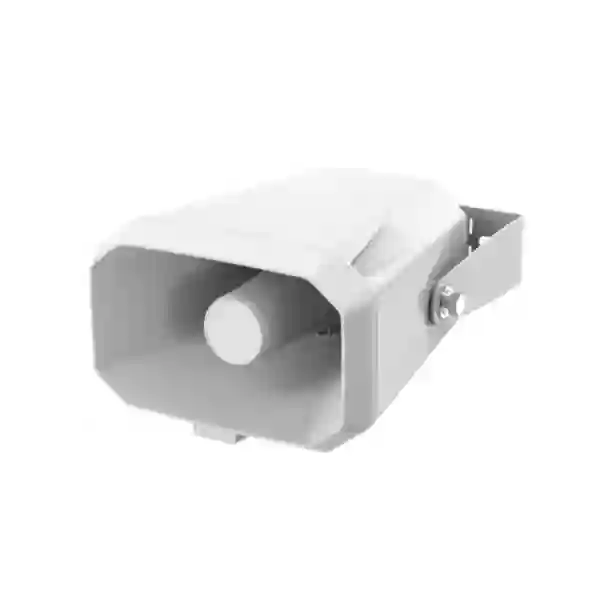
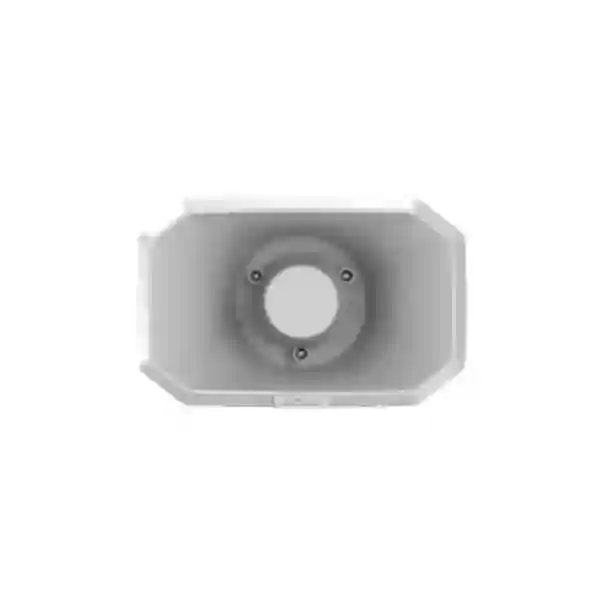
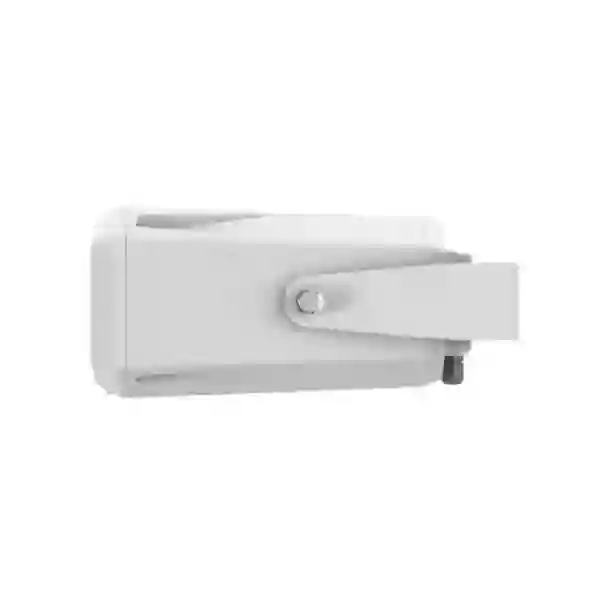
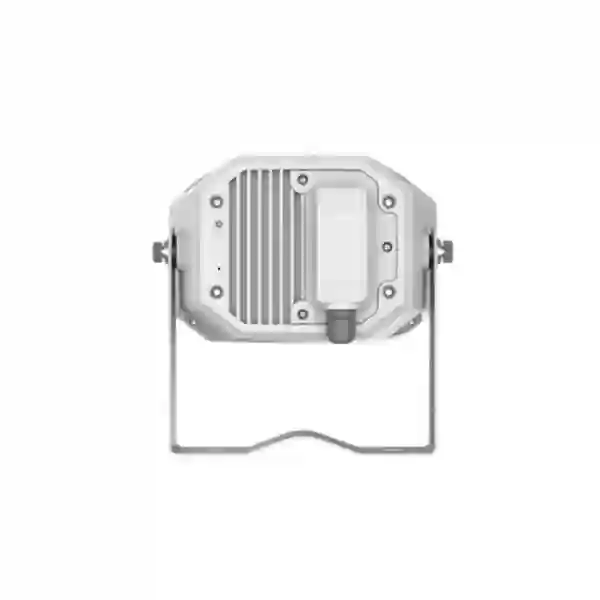
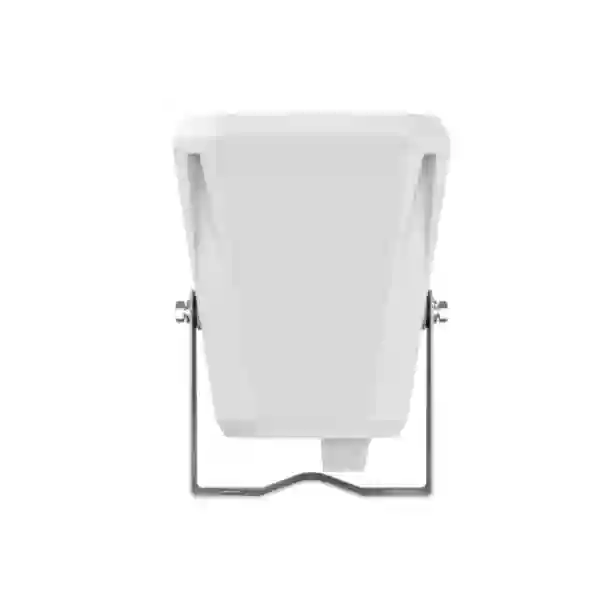
Hanwha Vision SPA-H100W IP Horn Speaker
The Hanwha SPA-H100W IP horn speaker brings high-output network paging to outdoor and demanding operational environments. It combines a built-in 10 W Class D amplifier, an IP66-rated white housing, Ethernet connectivity and support for PoE or PoE+ power. Hanwha rates the maximum sound pressure at 121 dB on standard PoE and 124 dB on PoE+, making the power source an important design decision.
At a glance: where it fits
Choose this model for a planned IP audio deployment where clear operational messages need to reach listeners in an outdoor compound, security perimeter or industrial work area. Built-in scheduling, recorded-message playback, text-to-speech in the manufacturer’s listed languages, two-way audio and integration interfaces broaden its use beyond a basic horn. The correct quantity, audio level and interoperability must still be validated for the actual project.
For a Tanzania installation, check message languages, power continuity, network routing, protected outdoor cabling and the systems authorised to broadcast. This listing does not assume that regional stock, price, warranty, delivery or a particular local certification has been verified. Request a project-specific technical and commercial review before ordering.
Manufacturer-published technical specifications
The details below describe the SPA-H100W model and distinguish standard PoE from PoE+ performance. Specifications can change with manufacturer revisions, so the latest model documentation and proposed firmware should be checked before contractual sign-off.
| Attribute | Published detail |
|---|---|
| Model | Hanwha Vision SPA-H100W, white IP horn speaker |
| Amplifier | Built-in 10 W Class D |
| Maximum SPL | 121 dB with PoE; 124 dB with PoE+ |
| Sensitivity | 111 dB at 1 W |
| Frequency range | 650 Hz–5.3 kHz (−10 dB) |
| Driver | 1-inch high-frequency dome-type driver |
| Power | IEEE 802.3af PoE Class 3; IEEE 802.3at PoE+ Class 4 |
| Network | 10/100 Base-T Ethernet |
| Ingress protection | IP66 |
| Internal storage | 1 GB |
| Supported recorded formats | WAV and MP3; manufacturer lists 64–320 kbps and 16–48 kHz |
| Integration | SIP, SUNAPI HTTP API and ONVIF Profile S listed |
| Local contacts | One dry-contact input; one normally open output |
| Operating temperature | −40°C to +55°C; cold start −35°C |
| Humidity | 10–85% RH, non-condensing |
| Dimensions / weight | 241 × 155 × 307 mm; approximately 3.7 kg |
| Listed built-in TTS languages | English (US/UK), German, French, Spanish, Russian |
Specification note: Published SPL values are maximum ratings, not site-specific audibility, intelligibility or safe-listening guarantees. Product model and manufacturer part identification should not be confused with the seller’s inventory SKU.
What this IP horn speaker is designed to solve
The Hanwha Vision SPA-H100W is a network-connected horn speaker intended for people who need spoken instructions, warnings or operational messages to be noticed in spaces where a small indoor speaker is not an appropriate choice. It combines a high-output horn, a built-in Class D amplifier and network audio functions in a single white housing. Rather than treating it as a simple loudspeaker that connects to the output terminals of an analogue amplifier, buyers should plan for a managed IP audio endpoint connected to the correct data network and power source.
A useful project begins with the message recipients and the action those recipients should take. A vehicle-yard announcement may ask a driver to report to the loading bay; a perimeter warning may ask visitors to leave a restricted area; a factory message may direct workers to a meeting point. These examples do not require identical speaker placement, trigger logic or operating procedures. The right design considers background noise, distance, obstructions, the languages actually spoken on site, and whether live or recorded instructions are needed.
For buyers evaluating an IP horn speaker in Tanzania, the SPA-H100W can be considered for industrial compounds, logistics sites, outdoor security perimeters and similar settings where networked announcements are useful. That is a product suitability assessment, not a statement about local stock, approved emergency-system use or installation availability. A quotation should confirm the required quantity, network integration, mounting conditions and support arrangements before a purchase decision is made.
Understand 124 dB before planning coverage
Hanwha specifies a maximum sound pressure level of 124 dB when the SPA-H100W is powered using PoE+, compared with 121 dB under standard PoE. These are published maximum output figures, not a promise that speech will remain intelligible across a particular number of metres. The audible result depends on the test conditions, message recording level, surrounding sound, listener position, mounting orientation and obstructions between the speaker and the listener. A loud sound can still be difficult to understand if words arrive with competing noise or excessive reverberation.
The speaker uses a one-inch high-frequency driver and has a published frequency range of 650 Hz to 5.3 kHz at minus 10 dB. That profile helps explain why it should primarily be assessed as a paging and intelligible-message product rather than a full-range music system. Hanwha also lists a sensitivity figure of 111 dB at one watt. Sensitivity and maximum sound-pressure level are different specifications, and neither should be turned directly into a reliable coverage-radius claim without a proper acoustic assessment.
High output must be controlled responsibly. Installers should set levels for the actual occupied environment and avoid exposing people close to a horn to unnecessarily loud announcements. For noise-sensitive boundaries, a project may need lower volume, a different location, more speakers operating at moderate volume, or time-dependent message rules. Commissioning should include listening tests where people actually work or travel, rather than relying only on the advertised 124 dB headline.
Outdoor-ready housing and practical environmental checks
The SPA-H100W carries an IP66 ingress-protection rating. That makes the device relevant to locations with dust exposure and rain, including many outdoor industrial settings. An IP rating does not eliminate the need for correct mounting, cable protection, suitable connectors, drainage practices and adherence to the manufacturer’s installation instructions. A weather-resistant speaker is only one part of an outdoor system; the cable path, network switch and any intermediate enclosures may be exposed to very different risks.
Hanwha lists an operating-temperature range from minus 40 degrees Celsius to plus 55 degrees Celsius, with a separate cold-start figure of minus 35 degrees Celsius. Operating humidity is listed as 10 to 85 percent relative humidity, non-condensing. These manufacturer limits should be checked against the actual installation, especially where direct sun heats the mounting area, condensation is expected, or equipment cabinets have poor ventilation. The specification should not be interpreted as an unrestricted guarantee in every environmental condition.
Before selecting a position, check roof overhangs, service access, support structure, nearby electrical equipment and the route taken by Ethernet cable. Outdoor hardware should be mechanically secure and protected from accidental impact. Where lightning, surge exposure or difficult cable distances are relevant, the network design needs an appropriate electrical and protection review. Confirm that the chosen mounting method can support the speaker’s specified weight of approximately 3.7 kg with an adequate engineering margin.
PoE versus PoE+: a power decision that affects output
The device accepts IEEE 802.3af Class 3 PoE and IEEE 802.3at Class 4 PoE+. This can simplify installation because data and power are delivered over Ethernet from suitable network equipment, but it does not mean every network port provides the same audio performance. Hanwha explicitly differentiates the published maximum sound-pressure levels: 121 dB on PoE and 124 dB on PoE+. If the design assumes the higher figure, the power budget and source equipment must support the PoE+ arrangement.
Count the total power requirements of all speakers before specifying switches or injectors. A switch may advertise PoE capability while offering a shared power budget that limits how many connected devices can operate as planned. The relevant questions are whether the individual ports can deliver the required class, whether the overall budget is sufficient, and what remains available when every endpoint is active. Network power resilience also matters: when the supplying switch loses power, the speaker will not continue operating just because it contains an amplifier.
An engineer should check existing cabling, connector integrity, cable type, allowable run lengths and the location of backup power before installation. Do not assume an ordinary non-PoE Ethernet port can energise this device or that a separate mains adaptor is part of the product. Ask for a clear power topology showing switch or injector, protective equipment, network segmentation and the expected behaviour during a power outage.
Ethernet connectivity and network readiness
Hanwha specifies a 10/100 Base-T Ethernet interface for the SPA-H100W. It is an IP endpoint and therefore needs the same disciplined network planning as other managed devices: appropriate addressing, reachable services, stable time settings and documented access permissions. A physical link light alone does not show that audio paging, time scheduling or event control will work. Routing and firewall rules can affect SIP signalling, audio transport, management access and any multicast flows used by the chosen design.
Give the speaker an addressing plan suitable for the site’s IT policy. DHCP may be acceptable in some networks, while centrally managed reservations or fixed addressing may be better where alarms or controllers need a stable endpoint. Confirm DNS and time synchronisation if the workflow relies on names or scheduled events. A separate network segment for security and operational devices can make access control clearer, provided the required communication paths between approved systems are deliberately configured.
Before approving deployment, clarify who owns network changes and who will troubleshoot faults after handover. The IT team, security integrator and operational owner should agree on the systems allowed to trigger broadcasts, the paths needed for management, and the effects of planned switch maintenance. When the installation spans buildings or network segments, test the actual route end to end instead of assuming two devices on the same organisation’s network can communicate automatically.
Live paging, two-way audio and operational communication
The SPA-H100W supports two-way audio and is intended to participate in network-based public-address workflows. A live announcement can be useful when staff need to give instructions that cannot be predicted precisely, such as guiding vehicles, managing access to a loading zone or contacting personnel near a perimeter. The operator interface and the quality of microphone input are part of the wider solution; the speaker alone does not automatically provide a staffed control desk or a complete dispatch platform.
Define who can initiate a live page, which speakers receive it and what should happen when another audio source is active. A site with reception, gate control and a security room may need different permissions for each team. Clear operating rules help avoid interruptions and accidental announcements. The manufacturer’s published support for two-way audio should not be interpreted as guaranteed compatibility with every intercom or every voice platform; that must be confirmed with the exact devices and software involved.
Voice messages should be short, calm and actionable. A phrase that clearly identifies the location and the required action is more useful than a long announcement full of background information. If the listener needs to respond, test whether the selected end-to-end audio workflow supports the required conversation, including its user interface and network path. Recorded acknowledgements, dispatch logs and operational procedures are separate requirements that should be evaluated individually.
Scheduled announcements and repeated messages
Hanwha lists a scheduler among the SPA-H100W’s features. This can suit predictable tasks such as shift notices, loading-area reminders, opening and closing messages or periodic operational instructions. The value comes from consistent timing and a known message, especially when staff cannot monitor a paging console continuously. Scheduling should be planned around the real site calendar, including weekends, public holidays, seasonal operating patterns and temporary maintenance windows.
A reliable schedule requires correct time settings and disciplined change control. During commissioning, verify the configured time zone and clock source, then test the scheduled action at the intended local time. A message that runs at the wrong time can be more disruptive than no message. Assign an owner who can approve changes, archive old recordings and remove instructions that no longer apply. Where announcements cross staff shifts, include a check that the chosen wording remains appropriate to all affected workers.
Scheduled messaging is not the same as an emergency notification system. For urgent events, the design may need immediate manual override, dedicated triggers, escalation procedures or independent life-safety controls. Determine what has priority when a scheduled recording, live page and alarm-related announcement all compete for the same endpoint. Priority and override behaviour must be tested within the final integrated solution, not assumed from the presence of a scheduler feature.
Recorded audio, storage and language planning
The manufacturer lists 1 GB of internal memory and support for WAV and MP3 audio files, including mono or stereo material within stated encoding and sample-rate ranges. This makes prerecorded announcements practical for standard procedures, provided the deployment and firmware support the intended playback workflow. Preparing approved files in advance can improve consistency: staff can replay the same safety instruction, directional message or operational notice without improvising wording under pressure.
Hanwha also identifies text-to-speech functionality, but the published built-in TTS language list includes English variants, German, French, Spanish and Russian. Swahili is not on that list. For a Tanzanian site requiring Swahili announcements, an appropriate approach is to create professionally checked Swahili audio recordings in a supported file format and validate playback; do not sell the built-in TTS feature as native Swahili TTS. Other language requirements should be checked against the current firmware and manufacturer documentation.
Recordings should be designed for comprehension rather than maximum loudness. Use clear pronunciation, a reasonable pace and straightforward wording. Keep separate versions when different languages, locations or site procedures require them, and apply a naming convention so operators select the intended recording. Test each file on the actual speaker at a representative volume. Audio that sounds clean through headphones may be less intelligible through a high-output horn in a noisy yard.
SIP and phone-system integration: check the exact workflow
The published specification includes SIP functionality and identifies tests with several SIP clients and an Asterisk-based PBX environment. That makes the SPA-H100W a candidate for projects that want a page or announcement initiated from a compatible voice endpoint. However, a compatible protocol label is not a universal plug-and-play guarantee. Registration, call routing, authentication, codecs and the particular paging behaviour must be assessed against the selected phone system.
Before procurement, document the intended call flow: which extension or application initiates the announcement, whether a call should ring or auto-answer, whether a recording plays, and how the session ends. Hanwha lists relevant SIP audio codecs including PCMU and PCMA and support for DTMF under RFC 2833. The system designer should check which of these functions the connected phone platform exposes and whether its security policy permits the chosen method.
Testing should include failed registration, network interruption, simultaneous calls, changing phone credentials and restore after power loss. If a site needs a complex call queue, a recorded audit trail or centrally managed paging permissions, those functions may depend on separate PBX or public-address software. Request an integration demonstration or a documented compatibility assessment for the actual platform rather than assuming that every SIP-capable service is supported.
SUNAPI, ONVIF and event-driven audio
Hanwha publishes SUNAPI HTTP API support and ONVIF Profile S as integration interfaces for the SPA-H100W. These features are useful when engineers are evaluating connections with security workflows, but they require careful interpretation. ONVIF Profile S on a specification sheet does not prove that every video management system can drive every audio or alarm function. Actual event handling, permissions, application versions and vendor implementations determine the working result.
An event-driven announcement could be triggered by an approved access-control or security action, provided a compatible event source, integration path and message workflow have been designed. Example scenarios include a supervised gate warning or a procedural announcement after a verified event. Avoid treating automated loudspeaker output as a substitute for accurate detection: a false alarm or incorrectly mapped event can create needless disturbance and cause operators to distrust the system.
Hanwha’s own support material describes particular audio-event configurations that involve supporting controllers and specific steps. This is a reminder to scope the complete system rather than pricing only a speaker. Ask the integrator to identify every controller, license, API dependency and configuration needed for the intended alarm workflow. Then witness a live demonstration that proves the chosen event reaches the correct speaker group with the correct message and operational priority.
Dry contacts and local event connections
The published hardware specifications describe one dry-contact input and one normally open dry-contact output. These interfaces can provide a useful link between network audio and selected local signals, but they should be treated as integration points rather than an unrestricted power supply for field devices. The electrical ratings, wiring arrangement and operational meaning of each contact must be confirmed against the correct installation documentation and site design.
For example, a local contact input might form part of a supervised workflow in which an external controller requests a predefined audio action. An output contact could potentially participate in an approved downstream control sequence, subject to interface ratings and compatible system behaviour. Exact actions depend on the product configuration and broader controller logic. Never connect unknown loads or safety-critical circuits solely because a dry-contact terminal is present.
Installers should label terminals, document the configured input and output functions, and test normal, active and fault states. The commissioning record should include which device controls a contact, which message or action is expected, and how the system behaves when either side loses power. Any connection to access gates, fire systems, machinery or other regulated equipment requires its own competent engineering review and applicable approvals.
Zones, groups and growing to multiple speakers
The SPA-H100W is designed for managed audio networks rather than just one-speaker operation. Hanwha publishes capabilities for multicast zone control, unicast zones and groups, including figures of up to 256 multicast zones, 20 unicast zones and 255 groups. These are manufacturer feature limits under stated system conditions, not proof that any arbitrary network can support the same number of simultaneous, intelligible announcements without planning.
Start by defining operational zones in language that people understand: gate approach, warehouse loading side, yard perimeter or a separate staff area. A speaker should belong to a zone because the messages for that area are relevant, not merely because it shares a switch with nearby devices. For areas that overlap acoustically, designers need to avoid delays and mismatched audio levels that make instructions harder to follow. Group policies should be readable and maintainable by the team responsible for the site.
Multicast distribution can be efficient for larger deployments, but network infrastructure must support the chosen topology and traffic handling. Confirm switch settings, routing boundaries and the behaviour of any wireless or wide-area network segments. Maintain a current speaker-to-zone register and test an announcement in every zone from the intended operator interface. The capacity shown in a datasheet should guide system architecture, while practical commissioning establishes whether the actual design meets its objective.
Not a standalone fire alarm or certified evacuation system
A loud IP speaker can support operational communication and some security use cases, but it should not be presented as a complete fire-alarm, evacuation or life-safety system on the strength of an IP66 rating and high output alone. Such applications may demand supervised circuits, dedicated control equipment, redundancy, battery endurance, audibility and intelligibility measurements, approved integration, and relevant local regulatory or project-specific compliance. Those requirements go beyond a generic product description.
If an organisation intends to use the SPA-H100W in an emergency communication workflow, the responsible system designer must establish the applicable standards, acceptance criteria and role of each device. Determine whether the horn will provide supplementary operational announcements or whether a separately certified emergency voice arrangement is required. The difference affects specification, testing, training and sign-off. Avoid any unsupported claim that one network speaker guarantees evacuation coverage.
The same caution applies when linking the device to machines, barriers or access systems. A design should make the consequences of a network outage, false trigger or power interruption explicit. Keep independent safety measures where required. For buyer evaluation, request a diagram showing failure states and a written statement describing which functions are safety-critical, which are convenience features and who is responsible for approving the overall installation.
Positioning, aiming and intelligibility on site
The published horn geometry and output figures cannot determine placement on their own. Real listening areas vary widely: an open yard absorbs and disperses sound differently from a steel-roofed industrial building, and a long corridor behaves differently from an exposed compound. Obstacles, moving vehicles, reflective walls and routine machine noise can all make a powerful speaker less effective. Mapping the actual listening area before finalising quantities is therefore essential.
Position speakers to address the intended listeners without unnecessarily broadcasting into unrelated spaces. Think about mounting height, orientation, direct line of sight, likely vehicle movement and the risk that workers will stand immediately beneath the horn. One very loud device may produce uneven coverage; several correctly aimed devices at controlled levels may deliver clearer instructions. These are design options to evaluate, not a claim that any fixed speaker count is correct for every installation.
Use representative spoken messages during the site survey and final acceptance test. Evaluate the farthest relevant listener position, the noisiest routine operating condition and any point where echoes or overlap reduce clarity. Ask a person unfamiliar with the exact message to repeat its meaning. That simple practical test can reveal problems that are missed when the team only checks that sound is coming from the speaker.
Practical Tanzania use cases to assess
A logistics compound may need short announcements directing vehicles to a designated entry lane or instructing drivers to wait for clearance. A network horn near the relevant access route could be one component of that solution, particularly when security staff already use an IP-based control environment. The design should make the paging zone specific enough that instructions do not confuse drivers in another part of the property. Message length, background traffic noise and operating hours are important considerations.
At a factory or large workshop, routine communications might include shift changes, safety reminders or maintenance notices. The SPA-H100W can be evaluated for outdoor or high-noise areas, while different speaker styles may suit indoor offices and meeting spaces better. A project should not apply the same output level to every building. Define which messages are general, which are for particular work zones, and when manual staff instructions take precedence.
For a guarded perimeter or utility property, an announcement can complement cameras and human review by providing a clear verbal instruction after an approved incident workflow. It should not be presented as a deterrent that always prevents intrusion. Tanzania-specific considerations include the language of the intended audience, reliable electrical supply to the networking equipment, cabling in exposed locations, and the service model for a site that may be far from specialist technical support.
Cybersecurity and controlled access
An IP loudspeaker that can broadcast public messages is part of the site’s operational security surface. Hanwha lists password protection, role categories, digest authentication and user-access logging among the SPA-H100W’s security features. These features are valuable only when configured and managed properly. Default credentials should be changed, accounts should be assigned according to responsibility, and unnecessary management exposure should be limited by the network.
Before deployment, the IT owner should review the current firmware, supported management protocols and available security controls in the exact release being installed. Segregate systems where appropriate and limit administrative access to authorised staff. A speaker should not be accessible from the public internet simply because remote operation sounds convenient. If remote support is needed, it should follow the organisation’s approved secure-access architecture.
Record who is authorised to change schedules, upload recordings, alter zones or initiate live announcements. Audit procedures become especially important where a mistaken warning could disrupt operations. When an administrator leaves the organisation, revoke access promptly. A handover should include configuration backup or recovery instructions where supported, a contact route for incidents and a process for evaluating future firmware updates without disrupting critical operational periods.
Choosing equipment for a complete installation
The speaker is only one item in a workable network public-address system. Depending on the project, the bill of materials may also need PoE+ switching or injectors, suitable Ethernet cabling, outdoor-rated protective accessories, mounting hardware, a compatible controller or paging interface, configuration services and an appropriate backup-power arrangement. Avoid hiding these dependencies behind a low unit price. A useful quote makes the system boundary clear and separates the speaker from other required infrastructure.
If announcements will originate from a PBX, include verification of the exact PBX version, supported SIP settings, registration process and user permissions. If they will be triggered from security events, identify the source device, management platform, controller, message file and fail-safe behaviour. For multi-zone designs, include the planned number of endpoints, switch ports, traffic paths and testing scope. This helps buyers compare proposals on an equivalent basis.
Commercial evaluation should distinguish capital equipment, installation work, ongoing software or controller requirements, network changes and future maintenance. Neither the product name nor the existence of PoE means there are no integration costs. Request clear assumptions, exclusions and documentation deliverables, including a network diagram, speaker schedule and acceptance-test record. Any Tanzania-specific price, warranty, stock or delivery statement should be confirmed with the seller for the precise order.
Installation sequence and a disciplined site handover
A practical project starts with an agreed message objective and location plan, followed by power and network confirmation. Next, the team should verify the mounting position, physical cable route, switch port allocation and device addressing. Only after the infrastructure is ready should the speaker be registered or configured in its intended control environment. This order helps prevent expensive changes after equipment has been installed in difficult-to-reach places.
During configuration, document the device identity, network address, assigned audio zone, authentication responsibilities and any schedule or event mapping. Upload only approved recordings and make it clear which messages are live, scheduled or triggered by another device. Keep a record of the software and firmware versions used for commissioning, because later updates can change configuration options and integration behaviour. Where supported, maintain a secure recovery copy of settings.
At handover, demonstrate the real operational workflow with the people who will use the system. A technician successfully opening a device interface is not enough. The security operator should initiate a page, the relevant staff should hear and understand it, and the authorised administrator should know how to remove an obsolete recording. Provide a fault-reporting contact and clarify whether the customer or integrator owns network, audio and power troubleshooting.
Commissioning and acceptance-test checklist
Check the physical condition of the speaker, the integrity of its mounting and the protection of exposed cables. Confirm that the correct PoE class is being delivered and that the connected switch has adequate total headroom. Record the actual network address and verify reachability from each approved control source. Confirm that time settings are correct, especially before testing scheduled messages. These checks create a baseline for future maintenance.
Exercise every intended mode, not just a test tone. Play a recorded announcement, run a manual page, test the defined SIP call flow, and activate each approved event input or integration path. Where zones are present, verify both the intended destination and the absence of audio in unrelated zones. Repeat representative tests during normal site activity so background noise is realistic. Record any areas where speech is unclear and correct the design rather than marking the test successful based only on detectable sound.
Finally, test recovery after a controlled power or network interruption, within the project’s safety rules. Confirm who receives fault notifications, how the issue is identified and how operation is restored. Give the customer an acceptance record listing test conditions, known limitations and any follow-up work. This provides a more dependable handover than a promise of universal coverage based on a maximum SPL figure.
Daily use, maintenance and change management
Once the SPA-H100W is installed, most long-term problems are operational rather than dramatic hardware failures. A schedule is left enabled after a procedure changes; a recorded message names an old gate; a switch port is reassigned; or access credentials are no longer known. A simple ownership model can prevent many of these incidents. Nominate someone to approve messages and someone to maintain the device and its network dependencies.
Create periodic checks that confirm audio is still intelligible in the intended listening areas, not merely that the endpoint answers on the network. Inspect external mounting and cable protection in accordance with site conditions. Review speaker-zone membership after building or traffic-layout changes. Retest key workflows after changes to firewall policy, PBX configuration, switching hardware or system software. Store configuration details securely rather than leaving undocumented settings on one technician’s laptop.
Plan for people as well as equipment. New operators should learn which button or extension broadcasts to which zone, when live messaging is appropriate and how to stop an unwanted announcement. Include clear instructions for reporting unclear audio, missed scheduled messages or unexpected broadcasts. A well-maintained system gives users confidence that announcements are purposeful and current.
Common mistakes to avoid before ordering
One common mistake is confusing the model number with amplifier power. The SPA-H100W is not described by Hanwha as a 100-watt amplifier; the published built-in amplifier is 10 watts. Another is assuming that the 124 dB maximum applies with any PoE port. Hanwha specifies a lower maximum SPL under standard PoE. These distinctions matter when specifying switching, estimating sound level and comparing competing equipment.
Another mistake is relying on features without checking the end-to-end workflow. A SIP logo does not replace a PBX test, ONVIF support does not guarantee every analytics-driven announcement, and a TTS feature does not establish native Swahili synthesis. The right evidence is a documented design and a successful test using the actual firmware, control software, language files and network. Avoid accepting copied specifications from an unrelated product variant or an older reseller listing when they conflict with the current manufacturer information.
Finally, do not leave site preparation until after purchasing. A high-output speaker in the wrong place can disturb neighbours and still fail to reach the intended audience clearly. A weather-resistant enclosure with unprotected wiring remains a weak outdoor installation. A working paging feature without assigned operator responsibilities may quickly become unreliable. Addressing these practical issues early usually provides more value than simply choosing the loudest number on a datasheet.
When a different speaker format may be better
The SPA-H100W is a sensible model to investigate when outdoor paging and focused operational messaging are priorities. It may be less suitable for a quiet reception area, a conference room or a space where natural-sounding full-range music is the main requirement. The published frequency range and horn form factor should guide those decisions. If the intended audience sits near a speaker in a small enclosed room, a lower-output wall or ceiling speaker may allow more comfortable listening.
Where an application covers both offices and external yards, a mixed-speaker design can be preferable to forcing one model into every zone. The outdoor horn can address open or noisy areas while a more appropriate indoor endpoint serves staff facilities. The selection still depends on system compatibility, acoustics and operating procedures. It is important that any alternative speaker is checked against the same control platform and management requirements before it is substituted.
Projects that need music reproduction, advanced emergency voice functionality or very detailed intercom interaction should specify those objectives directly. Do not infer them from the general term IP audio. Compare models using verified performance, relevant certifications where required, integration depth, maintenance needs and total system cost. This keeps a purchasing decision tied to practical outcomes instead of a headline output figure.
Information to include in a Tanzania quotation request
A strong request starts with the exact model, Hanwha Vision SPA-H100W, and identifies the intended installation type. Describe the physical area, approximate site layout, likely background-noise conditions and the audience who must hear each message. State whether the project is a single outdoor paging point or a multi-speaker system, and distinguish routine announcements from security events. This information helps an integrator determine whether the horn’s form factor is a good fit.
Include the existing network and power environment: switch models or available PoE classes, cable infrastructure, expected backup power, segmentation rules and whether a telephony or video-management platform is already deployed. Identify any specific SIP PBX, controller or event system that needs to interoperate. If the system must announce in Swahili, English or another language, state whether prerecorded files are acceptable and who will approve the wording.
Ask the supplier to confirm current product availability, delivered pricing in the appropriate local currency if quoting locally, applicable warranty terms, required accessories, implementation services and testing responsibilities. None of those commercial items should be inferred from an international datasheet. Request that any claimed integration or site-coverage result be stated as a tested outcome or a project assumption, so the final purchase is made on a clear technical and commercial basis.
Frequently asked questions
These answers focus on practical questions commonly raised before specifying a network horn speaker. Where a question depends on site infrastructure, the correct answer requires an integration or acoustic test rather than a product-only assumption.
Is the SPA-H100W a 100 W loudspeaker?
No. The model number should not be read as its power rating. Hanwha specifies a built-in 10 W Class D amplifier. The product is an IP horn speaker, so procurement should identify the complete model and its network-audio features rather than ordering by an assumed wattage.
How loud is the Hanwha SPA-H100W?
Hanwha lists a maximum SPL of 124 dB when using PoE+ and 121 dB when using standard PoE. These are manufacturer maximum values, not guaranteed sound levels at a customer’s listening position. Audibility and intelligibility require attention to background noise, location, orientation and field testing.
Can I run it from a normal Ethernet switch?
The unit needs a compatible Power over Ethernet source. Hanwha lists IEEE 802.3af PoE Class 3 and IEEE 802.3at PoE+ Class 4 support. A non-PoE port does not supply operating power. Use the right switch or injector and check the shared switch power budget for the number of connected speakers.
Can I install the white SPA-H100W outdoors?
The speaker is IP66 rated and is intended for outdoor as well as indoor applications. Proper mounting, cable protection, suitable connectors and adherence to operating limits remain necessary. Assess the actual exposure at the installation location, including direct sun, condensation, maintenance access and protection for associated network equipment.
Does it support Swahili text-to-speech?
Native Swahili TTS is not in the manufacturer-published language list for this model. Hanwha lists English, German, French, Spanish and Russian. A Tanzanian project that needs Swahili can evaluate properly recorded audio messages using supported formats, followed by playback and intelligibility tests on the final installation.
Can it make live announcements from a phone?
The SPA-H100W supports SIP functions and two-way audio, so compatible voice-based paging workflows can be investigated. Exact behaviour depends on the phone system, account settings, codecs, network and control configuration. Ask for an integration test against the actual PBX or client before treating this as a confirmed feature of the overall solution.
Will it work automatically with my CCTV system?
Not necessarily. Hanwha lists SUNAPI and ONVIF Profile S interfaces, but third-party system support for audio playback, event triggering and control differs by product and software version. The integrator should document the event path, any required controller or software, and the exact action demonstrated during acceptance testing.
Can one unit announce to several separate zones?
Zones are part of the wider network-audio configuration, not a way for one physical speaker to create different acoustic destinations. Hanwha publishes multicast and unicast zone-management capabilities for supported deployments. To address different places independently, the design generally needs appropriate endpoint placement and correct zone assignment.
Does the speaker keep working when power fails?
It relies on powered network infrastructure. If the supplying PoE equipment loses power and there is no effective backup-power arrangement, the speaker will not operate. Review the complete power path, including switches, network devices and controllers, if continued service during an outage matters to the site.
Is the SPA-H100W suitable for background music?
Background-music functionality is listed, and the device supports WAV and MP3 playback. However, its high-output horn design and published 650 Hz to 5.3 kHz frequency range make it a more natural candidate for speech and alerts than high-fidelity music. Evaluate an alternative speaker format where rich music reproduction is a central requirement.
What details are needed for an accurate quote?
Provide the exact model, required quantity, site layout, mounting environment, network and PoE arrangements, desired paging and alarm workflows, languages, and any PBX or security systems that must integrate. Also ask the supplier to state clearly which accessories, configuration services, tests and commercial terms are included.
Is the product approved as a standalone emergency voice system?
A high SPL or IP66 rating does not establish approval as a complete emergency voice or evacuation system. If the project is safety-critical, a qualified designer should identify the applicable requirements, supporting certified equipment, power resilience, supervision, intelligibility tests and formal acceptance process before specifying a final solution.
Request a project-specific SPA-H100W quote
Tell FourTeck Tanzania about your intended locations, number of speakers, PoE infrastructure, required languages and any SIP or security-system integration. A useful quotation can then address the correct equipment, installation scope, commissioning tests and current commercial terms without making unsupported assumptions about stock or site performance.
Ask for verification of model availability, technical compatibility and the complete solution before placing an order.




Reviews
There are no reviews yet.