
FORTINET HIGH-END NEXT-GENERATION FIREWALL
FortiGate 3500F (FG-3500F) Tanzania
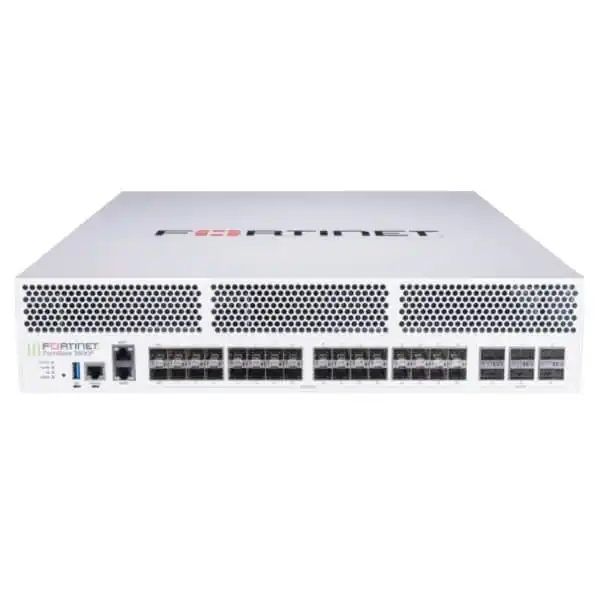
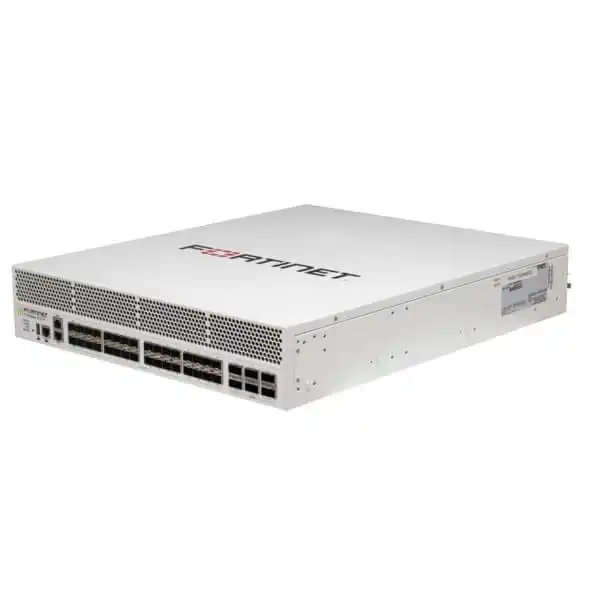
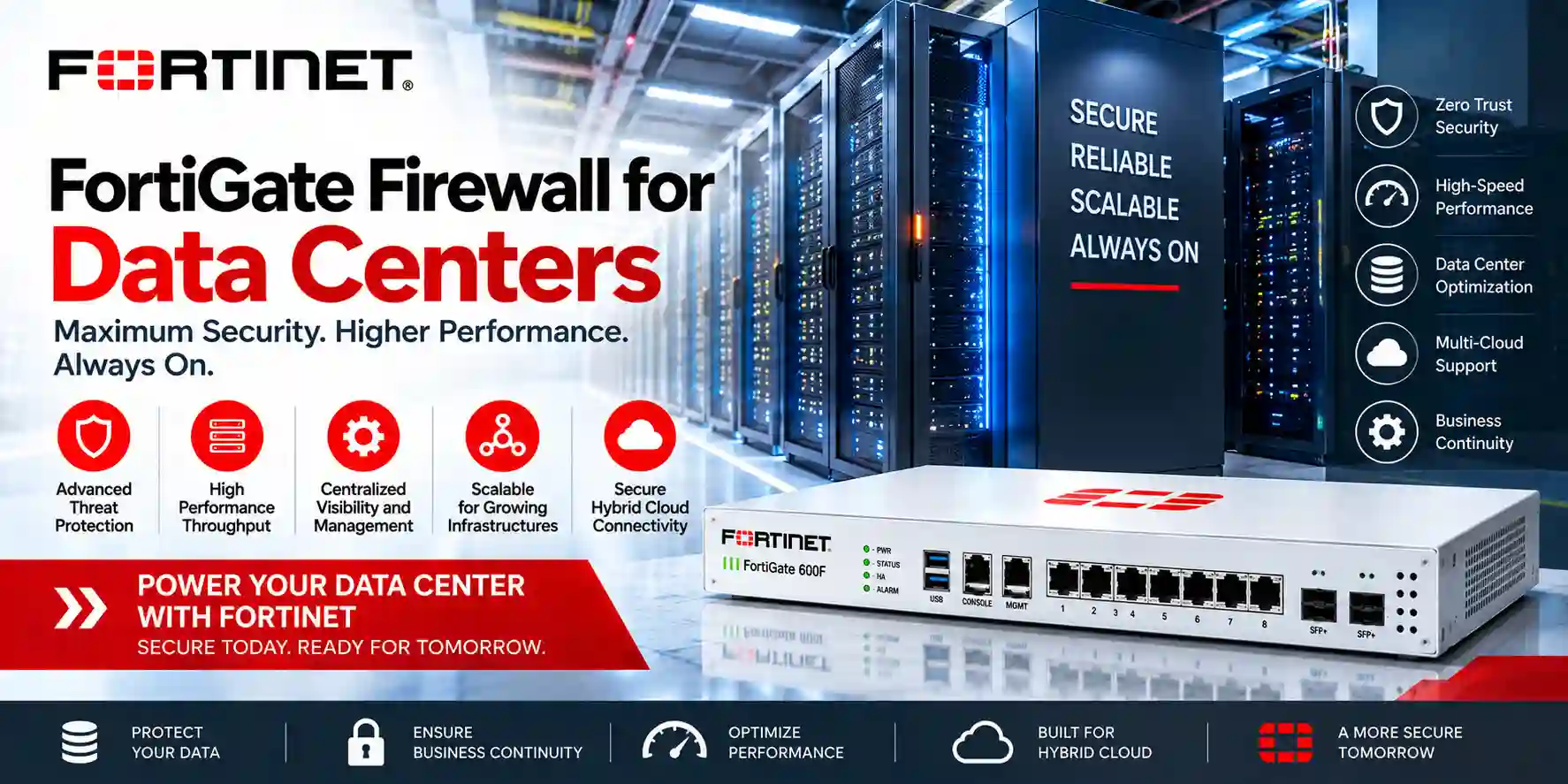
The FortiGate 3500F is designed for organizations that need high-throughput security at data-center, enterprise-core and hybrid-network boundaries. It combines accelerated networking, security inspection, VPN, segmentation, SD-WAN and Fortinet Security Fabric integration in a 2RU platform intended for demanding traffic volumes.
IPS throughput published by Fortinet for the 3500F Series.
NGFW throughput with firewall, IPS and application control enabled.
Threat-protection throughput under Fortinet’s stated enterprise test mix.
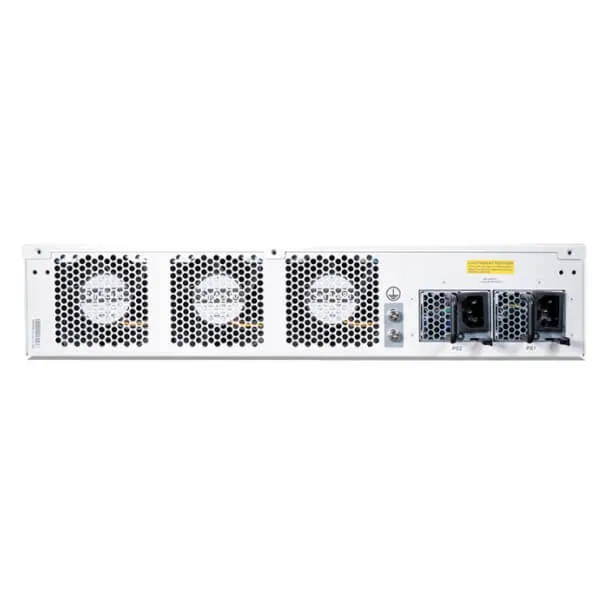
Rack-mount form factor with default dual hot-swappable AC power supplies.
FortiGate 3500F overview
FortiGate 3500F is positioned for high-performance environments where a firewall must inspect substantial east-west or north-south traffic without becoming an avoidable bottleneck. Fortinet’s current datasheet lists IPv4 firewall throughput of up to 595/590/420 Gbps for 1518/512/64-byte UDP packets, 165 Gbps IPsec VPN throughput, 63 Gbps SSL inspection throughput and 135 Gbps application-control throughput. These are vendor test figures and actual results vary with configuration, traffic characteristics, enabled security profiles, firmware and deployment design. Procurement teams should therefore size the appliance against inspected production traffic rather than comparing only headline firewall throughput.
Interface density is a major reason to consider this model. FG-3500F provides six hardware-accelerated 100 GE QSFP28 / 40 GE QSFP+ slots and thirty-two hardware-accelerated 25 GE SFP28 / 10 GE SFP+ / GE SFP slots, plus two management ports. Fortinet documentation describes three NP7 processors connected through an integrated switch fabric, allowing supported data traffic between front-panel interfaces to benefit from hardware acceleration. For organizations building redundant data-center fabrics, large campus cores or high-capacity internet edges, this combination creates flexibility for multiple high-speed zones and uplinks.
The FG-3500F differs from the FG-3501F in onboard storage: the current datasheet lists no onboard SSD storage for FG-3500F, while FG-3501F includes two 1.92 TB SSDs. Buyers should keep that distinction clear when preparing a bill of materials. The platform supports active-active, active-passive and clustering high-availability configurations, and Fortinet publishes support for up to 500 virtual domains, subject to licensing and platform rules. A design review should establish HA topology, interface mapping, routing, segmentation, logging destination and subscription requirements before purchase.
Verified FG-3500F technical specifications
| IPS throughput | 72 Gbps |
| NGFW throughput | 65 Gbps |
| Threat protection | 63 Gbps |
| IPsec VPN | 165 Gbps |
| SSL inspection | 63 Gbps |
| Concurrent TCP sessions | 140 million; higher published hyperscale figure requires the applicable license |
| 100/40 GE slots | 6 |
| 25/10/1 GE slots | 32 |
| Form factor | 2 RU rack mount |
| Dimensions | 89 × 443 × 556 mm |
Performance figures are Fortinet-published “up to” values and depend on configuration and test conditions. Confirm the current datasheet, FortiOS release, subscriptions and transceiver requirements during solution design.
Where the FortiGate 3500F fits
A high-end firewall should be selected from the workload outward. FG-3500F can be relevant for data-center internet edges, high-capacity campus gateways, inter-data-center security, segmentation between major trust zones, cloud on-ramp connectivity and environments with substantial encrypted traffic. Its high-speed interfaces can align with 25, 40 and 100 Gigabit network designs, while VPN capacity can support large site-to-site architectures when the rest of the WAN and routing design is sized appropriately.
Security inspection is only one layer of a deployment. Routing design, BGP or OSPF requirements, VLANs, virtual domains, link aggregation, upstream carrier handoffs, downstream switching, DNS, authentication, logging, SIEM integration and change-control procedures all influence the finished architecture. Buyers should also decide whether they require Secure SD-WAN, ZTNA workflows, FortiGuard security services, FortiManager centralized administration or FortiAnalyzer logging and analytics. Those requirements affect licensing and the broader bill of materials.
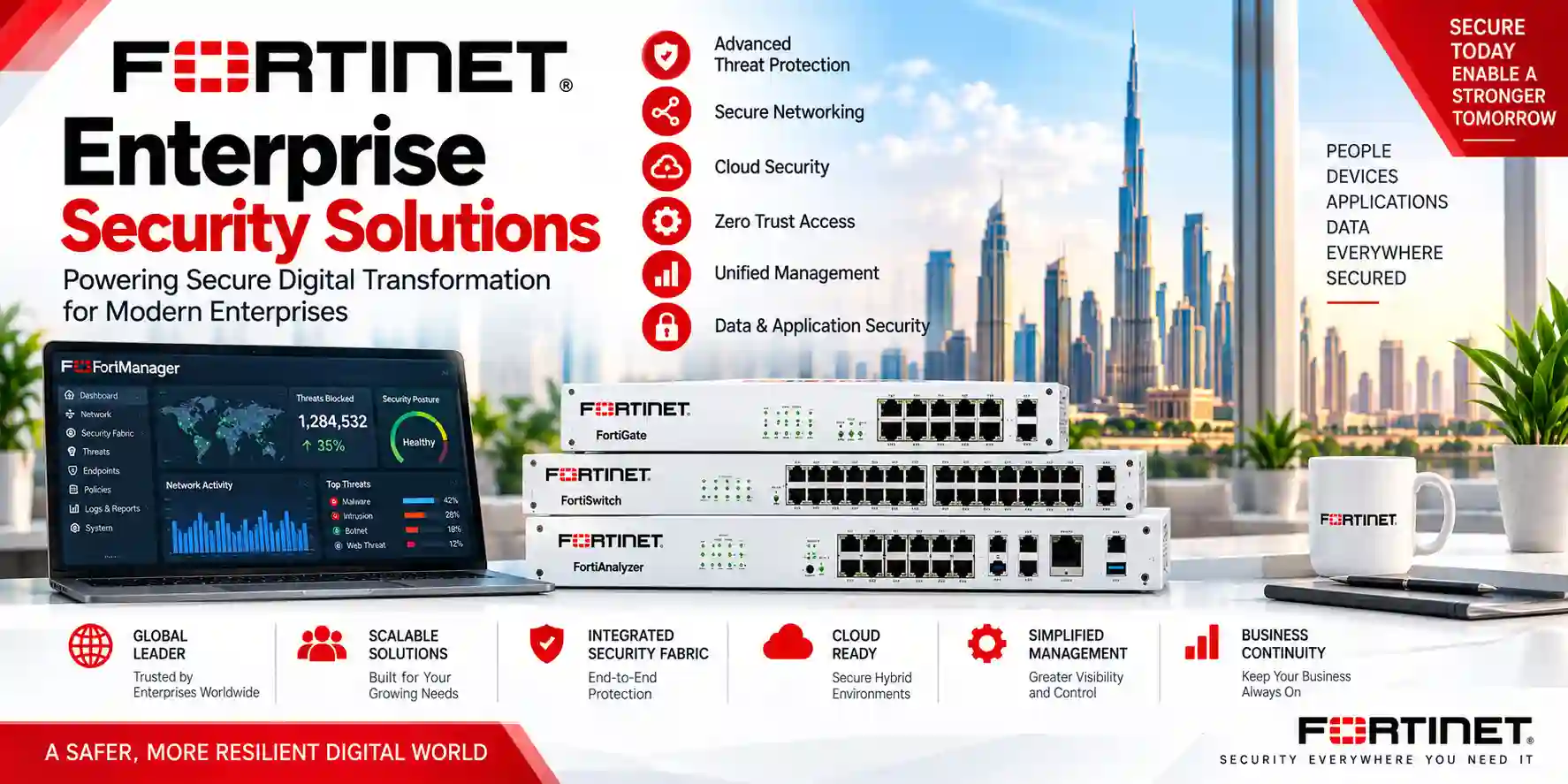
For a wider project view, FourTeck Tanzania’s firewall and network security guidance explains how firewalls relate to VPN, segmentation and policy design. The same Tanzania resource also covers network switching and LAN infrastructure, business Wi-Fi planning, servers and storage, structured cabling, racks and UPS, and integrated IT lifecycle services. These dependencies matter because a firewall upgrade can expose bottlenecks in switching, optics, cabling, power or upstream connectivity.
Licensing, subscriptions and high availability
The hardware appliance is only part of a FortiGate procurement. Security functions and support entitlements can depend on the selected FortiGuard and FortiCare package, while hyperscale capabilities may require separate licensing. A quotation should state the appliance model, support term, security-service bundle, renewal period, optics or transceivers, rack and power requirements, and any management or analytics products. Avoid comparing quotations solely on appliance price when the subscription scope differs.
For resilient deployments, determine whether a two-appliance HA pair is required. The FG-3500F supports active-passive, active-active and clustering configurations according to Fortinet’s datasheet, but topology should follow application behavior and operational requirements. Redundant carrier links, switch paths and power feeds are also important; firewall HA cannot compensate for a single upstream switch, single ISP or unprotected power circuit. Define failure scenarios and maintenance procedures before installation.
FortiGate 3500F Tanzania
Organizations evaluating the FortiGate 3500F in Tanzania are usually dealing with requirements beyond a normal branch firewall: high internet capacity, major data-center workloads, many concurrent sessions, extensive VPN traffic, multiple security zones or a need for high-speed 25/40/100 Gigabit interfaces. The first procurement step should therefore be a traffic and architecture assessment. Document current and planned WAN bandwidth, peak inspected throughput, encrypted traffic percentage, public applications, remote-access requirements, site-to-site tunnels, routing protocols and the number of network segments. This information helps determine whether FG-3500F capacity is appropriate and prevents a decision based only on user count.
Tanzania deployments should also account for the physical environment. The appliance is a 2RU rack system and Fortinet lists average/max power consumption of 760/1174 W for FG-3500F, with front-to-back airflow and an operating range of 0°C to 40°C. Data-center rack depth, cooling, dual power feeds, UPS capacity and cable management should be checked before delivery. If the firewall connects to existing core switches, confirm interface speeds and optical standards rather than assuming that every SFP28 or QSFP28 module is interchangeable.
A Tanzania quotation request is stronger when it specifies whether the project is a new perimeter, replacement of an existing firewall, HA refresh, data-center segmentation project or WAN consolidation. Include existing firewall model, internet circuits, required FortiGuard services, support duration, transceiver count and desired implementation scope. FourTeck Tanzania’s verified contact and quotation page can be used to submit these details. No assumption should be made about stock or delivery timing until availability is confirmed for the requested configuration.
FortiGate 3500F Dar es Salaam
For a FortiGate 3500F deployment in Dar es Salaam, enterprise buyers may be connecting headquarters, data centers, cloud services, internet exchanges, branch WANs or customer-facing systems. The useful sizing question is how much traffic will be inspected with real security profiles enabled. A network may have a 10 or 20 Gbps internet circuit but considerably more east-west traffic between server, user, DMZ and partner zones. If internal segmentation is part of the design, interface allocation and routing architecture can matter as much as WAN throughput.
Before replacing an existing perimeter firewall, inventory public IPs, NAT policies, VIPs, VPNs, routing adjacencies, authentication integrations, certificate dependencies and logging destinations. Migration planning should include a rollback path and a maintenance window. For organizations with two carriers, decide whether links will be used for failover, load distribution or application-aware SD-WAN. The uploaded FourTeck image resource on dual-WAN design can support this topic, while the actual production policy should be engineered from carrier behavior and business priorities.
Dar es Salaam buyers should include rack position, power availability, upstream/downstream switch models, optical modules and patching in the bill of materials. A high-end firewall can only deliver expected capacity when adjacent infrastructure is compatible. For broader enterprise security resources across the FourTeck network, the Fortinet specialist site provides complementary Fortinet context, while Tanzania-specific enquiries should use the verified local contact page. Request the exact FG-3500F hardware, subscription term, support, HA quantity and implementation scope so quotations can be compared on equivalent terms.
FortiGate 3500F Mwanza
A Mwanza organization considering FG-3500F may be planning a regional hub, large campus, industrial network, service-provider environment or centralized security gateway for multiple sites. Start by mapping traffic sources and destinations. Internet traffic, branch VPNs, server traffic, guest networks, operational systems and cloud applications can have different inspection requirements. Segmenting these flows into clear zones makes firewall policy easier to understand and reduces the risk of an oversized flat network.
Connectivity resilience deserves particular attention when the firewall serves many downstream sites. Two internet circuits do not automatically create resilient service if they share the same physical route, upstream device or power source. Document carrier handoffs, BGP requirements, SD-WAN rules and failover expectations. If branch offices use IPsec tunnels, estimate aggregate encrypted throughput and tunnel count, and plan address spaces so routes remain manageable as the network grows.
Operational readiness is equally important. Define who will administer FortiOS, how configuration backups are protected, where logs are retained, how firmware changes are approved and how security alerts are escalated. If local IT teams need centralized visibility, FortiManager or FortiAnalyzer requirements can be evaluated as part of the architecture rather than added after deployment. For a Mwanza quotation, provide the current topology, circuit speeds, expected growth, security-service bundle and required optics. This produces a more useful bill of materials than asking only for “FortiGate 3500F price in Mwanza.”
FortiGate 3500F Arusha
FortiGate 3500F in Arusha can suit organizations that centralize significant application, internet or branch traffic and need a security platform with high-speed interfaces and substantial inspection capacity. Hospitality groups, large institutions, multi-site enterprises and infrastructure operators should first decide where enforcement belongs. Some traffic may need perimeter inspection, some may require internal segmentation, and remote sites may need local policy rather than backhauling every flow through one central appliance.
For an Arusha headquarters or data-center project, prepare an interface matrix before ordering. List each carrier, core switch, DMZ, server zone, management network, HA link and any dedicated partner connection. Match required speed to Fortinet-supported interface groups and compatible transceivers. This reduces late changes during rack installation. The FG-3500F has extensive high-speed connectivity, but physical design remains important: rack depth, airflow, redundant power and structured fiber patching should all be included in implementation planning.
Security subscriptions should reflect actual use. If IPS, malware protection, application control, web security or other FortiGuard services are required, make that explicit in the quotation. If the organization already uses Fortinet switching, wireless, endpoint or centralized management products, identify those integrations so policy and telemetry can be planned consistently. FourTeck Tanzania’s contact page lists Arusha among its office contacts and provides a common enquiry route. Buyers can submit the exact model, quantity, term and technical scope there without assuming availability before confirmation.
FortiGate 3500F Dodoma
Organizations evaluating FG-3500F in Dodoma should frame the purchase around service continuity, inspection requirements and governance. Large public-sector, institutional or enterprise networks often contain multiple departments, server environments, guest access, remote sites and third-party connections. A high-capacity firewall can provide a central policy point, but policy structure should remain understandable. Use named zones, consistent objects, documented rules and clear ownership instead of accumulating exceptions that become difficult to audit.
If the project involves migration from another platform, collect existing firewall rules and classify them before conversion. Remove obsolete objects where change control permits, identify rules that need application-aware controls, verify VPN cryptography and document certificates. A migration is an opportunity to improve segmentation rather than reproduce years of legacy configuration. Performance testing should focus on the enabled production security stack and critical applications, especially where encrypted inspection is planned.
For procurement, specify whether one appliance or an HA pair is required, the support and security-service term, required interface optics, management/analytics products and professional services. Power and cooling should be checked against the vendor’s current environmental data. FourTeck Tanzania’s contact page identifies Dodoma among its office contacts, and the enquiry form can be used for model-specific requests. Include network diagrams or sanitized interface requirements where possible; they help technical teams validate the configuration before a commercial quotation is finalized.
FortiGate 3500F UAE
For UAE enterprises, FG-3500F is relevant to high-throughput data-center and campus security designs where dense 25/40/100 Gigabit connectivity and accelerated inspection are important. Buyers operating multiple data centers or cloud on-ramps should quantify inter-site traffic, internet traffic and encrypted application flows separately. The appliance’s published IPsec performance can support demanding encrypted links, but real design capacity depends on cryptographic settings, packet size, routing, security services and the wider network.
A UAE procurement may also involve strict change windows and redundant facilities. Build the HA and disaster-recovery plan before ordering: identify whether appliances will operate as a local HA pair, how state synchronization is handled, which switches and carriers are redundant and what happens during maintenance. If workloads span cloud and on-premises environments, document route ownership and security boundaries to avoid asymmetric paths that can complicate stateful inspection.
The FourTeck network includes a dedicated Fortinet UAE specialist resource and the broader FourTeck UAE site. These can provide regional context for UAE requirements, while this product page remains focused on the FG-3500F platform. Request current licensing, support and availability information for the exact project rather than relying on static online pricing, because enterprise firewall quotations can vary substantially with service bundles, subscription terms and accessories.
FortiGate 3500F Uganda
FortiGate 3500F Uganda enquiries often make sense for organizations building a central security hub for many users, branches, servers or high-capacity services. A good design begins with a traffic baseline: current peak throughput, projected growth, VPN load, inspected TLS traffic, session count and the number of high-speed links. This establishes whether a 3500F-class platform is justified and which security services can be enabled with adequate headroom.
For multi-site Ugandan networks, branch connectivity should be designed as a system. Determine whether remote sites connect through IPsec, SD-WAN overlays, MPLS or mixed transports. Establish route summarization and address planning early. Centralized internet breakout can simplify some controls but may add latency and dependency on the hub; local breakout can improve application paths but requires consistent security policy. FortiGate capabilities can support either approach when architecture and operations are planned carefully.
The FourTeck Uganda technology site provides regional IT and network-security context. For the FG-3500F itself, quotations should identify appliance quantity, HA requirement, FortiCare/FortiGuard term, optics and implementation services. If existing Fortinet equipment is already deployed, provide models and FortiOS versions so interoperability and migration can be assessed. Avoid assuming that configurations can be copied unchanged between generations; interface names, feature behavior and recommended software trains should be validated against current documentation.
FortiGate 3500F Kampala
A Kampala data-center or headquarters deployment may use FG-3500F to protect high-capacity internet, server, partner and branch traffic. Before selecting interfaces, map the switching architecture. If the core operates at 100 Gigabit, determine how many 100G links are required for production, redundancy and growth. If aggregation is 25G, document LAG design and interface grouping. High interface density is useful only when cabling, optics and switch compatibility are planned as part of the same project.
Security policy should follow business services. Public web applications, internal databases, user networks, backup systems, management traffic and guest services should not all share identical access rules. Segmentation reduces blast radius and can improve auditability, but excessive micro-segmentation without operational ownership can create complexity. Define zones that reflect risk and administration, then apply IPS, application control and other inspection profiles where they provide meaningful protection.
Kampala procurement teams should also budget for lifecycle requirements. Subscription renewals, firmware management, log retention, configuration backup and periodic rule review are recurring operational tasks. If the organization needs centralized reporting, include that requirement in the initial solution. The Uganda FourTeck site can support regional discussions, while exact FG-3500F availability and commercial terms should be confirmed by quotation. Share circuit speeds, topology, user/application profile and required service term to reduce back-and-forth during sizing.
FortiGate 3500F Arua
For Arua, an FG-3500F requirement is likely to be driven by a large centralized environment, service aggregation or a design that must support substantial future expansion. Because this is a high-end platform, validate whether the workload genuinely needs its capacity. Collect WAN and LAN throughput, expected security inspection, VPN concurrency and interface requirements. A smaller model can be more appropriate for a conventional branch, while the 3500F becomes relevant when traffic and resiliency requirements justify the platform.
Where the firewall supports remote or distributed sites, operational resilience can be more important than raw throughput. Plan out-of-band management, configuration backups, spare optics, documented carrier escalation and remote recovery procedures. Dual power supplies help appliance resilience, but the rack should also have appropriate UPS and power distribution. If a site depends on long-distance fiber or carrier circuits, document handoff types and demarcation equipment so the firewall interfaces match the real network.
Arua buyers can prepare a procurement checklist that includes the exact FG-3500F model, quantity, HA requirement, security subscription bundle, support term, optical modules, rack accessories and deployment assistance. Include current network equipment and target topology. This allows a supplier to distinguish a hardware-only request from a complete implementation. For Uganda-wide project context, the FourTeck Uganda resource can be used alongside Fortinet’s official datasheet and documentation.
FortiGate 3500F Mbarara
Mbarara organizations considering FortiGate 3500F should evaluate the platform against expected growth rather than a single day’s bandwidth. Data-center consolidation, new cloud applications, video workloads, additional branches and faster carrier circuits can increase inspected traffic over the appliance lifecycle. At the same time, excessive oversizing can add cost without operational benefit. A capacity model should include realistic security profiles and reserve headroom for bursts, upgrades and failover conditions.
If the network uses two data centers or a primary and disaster-recovery site, define how traffic shifts during an outage. The firewall may need to accommodate the surviving site’s full load, not just normal steady-state traffic. IPsec capacity, dynamic routing convergence, NAT behavior and DNS/application failover all need consideration. Test plans should cover more than whether a link comes up; verify that critical applications remain reachable and that security policies still apply after path changes.
For a Mbarara quotation, specify the implementation boundary. Some customers need hardware and subscriptions only; others require policy migration, VPN recreation, routing, HA commissioning, testing and documentation. These scopes are commercially different. Provide enough information to separate mandatory items from optional services. The regional FourTeck Uganda site offers a route for broader IT solution discussions, while official Fortinet documentation should remain the authority for appliance specifications and supported features.
FortiGate 3500F Gulu
A Gulu FG-3500F deployment should be planned around the services the firewall must protect. If it terminates branch VPNs, publishes applications, performs SSL inspection and segments server networks simultaneously, each function contributes to resource use and operational complexity. Build a requirements matrix with traffic volume, security profile, source/destination zones, availability target and business owner. This gives engineers a clearer basis for sizing and policy design.
Management access deserves deliberate treatment. Administrative interfaces should be isolated from normal user traffic where practical, protected by strong authentication and restricted to authorized management networks. Logging should be sent to an appropriate platform so security events and configuration changes can be reviewed without depending only on local appliance storage. This is particularly relevant to FG-3500F because the base model does not include the onboard SSD storage listed for FG-3501F.
For procurement in Gulu, request a line-item quotation that identifies hardware, support, security services and accessories separately. Confirm whether transceivers are included or must be ordered for each link. Fortinet’s datasheet lists two SFP+ SR 10GE transceivers as included, but the actual project may require different or additional optics. Verify current ordering information at the time of purchase. The Uganda FourTeck site can provide regional context for broader networking requirements.
FortiGate 3500F Kenya
FortiGate 3500F Kenya projects can include data-center perimeters, high-capacity enterprise campuses, financial or service platforms and multi-branch security hubs. The model’s high-speed interfaces make it suitable for architectures that have moved beyond traditional 1/10 Gigabit firewall connectivity. Before selecting it, confirm how many 25G and 100G connections are required and whether existing switches support the same optics, speeds and breakout arrangements.
Kenyan enterprises using cloud services should consider traffic paths as part of security design. Backhauling all cloud traffic through a central firewall can simplify inspection but may create latency or capacity constraints. Direct internet or cloud connectivity at multiple sites can improve performance but needs consistent policy and visibility. Secure SD-WAN, centralized management and standardized templates can help, provided the operating team has clear change control and monitoring procedures.
The FourTeck Kenya site provides regional IT, VoIP and network-security context. Buyers seeking an FG-3500F quotation should provide internet bandwidth, data-center topology, HA requirements, FortiGuard bundle, support duration and implementation expectations. For cross-border organizations with Tanzania and Kenya sites, consistent naming, routing, VPN and policy standards can reduce support complexity even when carrier conditions differ by location.
FortiGate 3500F Kuwait
For Kuwait enterprises, FG-3500F can serve high-throughput perimeter and data-center roles where encrypted inspection and high-speed interfaces are required. The appliance should be sized using the security features that will actually run. Fortinet’s threat-protection and NGFW figures are more useful for many production comparisons than raw firewall throughput because they reflect additional inspection functions. Even then, real traffic mixes and configuration choices can produce different results.
Data-center environmental planning is important for this 2RU appliance. Verify rack depth, front-to-back airflow, cooling, dual power feeds and UPS capacity. Network engineers should document each QSFP28 and SFP28 link and identify the required optical standard, fiber type and peer device. This is especially important when connecting equipment from multiple vendors, because physical form factor alone does not guarantee interoperability.
For Kuwait procurement, compare complete lifecycle cost: appliance, security subscriptions, FortiCare, optics, HA peer, management/analytics and implementation. A lower initial hardware quote may not represent the same security coverage or support term as another proposal. FourTeck’s regional network can support multi-country requirements, and Tanzania-based projects should continue to use the Tanzania contact route for the local quotation. Always request current commercial terms because enterprise security licensing and product availability can change.
FortiGate 3500F Ghana
A FortiGate 3500F Ghana deployment may be appropriate for a large enterprise or data-center environment that requires substantial security inspection and VPN capacity. Start with a dependency map: carriers, core switches, server fabrics, cloud connections, branch tunnels, authentication, DNS and logging. This reveals single points of failure and ensures that the firewall upgrade is coordinated with adjacent systems instead of installed as an isolated appliance.
For organizations migrating from older FortiGate hardware, avoid assuming that the new platform should simply inherit every existing rule. Review objects, services, VIPs, policies and VPNs, remove obsolete entries through approved change processes and document exceptions. If virtual domains are used, define administrative ownership and resource boundaries. Fortinet publishes support for multiple VDOMs on FG-3500F, but the required license and operational model should be confirmed for the planned scale.
Ghana buyers should request a configuration that includes the correct FortiGuard services and support period for the organization’s security objectives. Ask separately about HA, optics, installation and migration so the commercial scope is transparent. If the firewall will connect to remote African sites, standardize VPN parameters and monitoring where possible while allowing for differences in carrier quality. Current official Fortinet documentation should be used for specifications, with quotation-stage confirmation for ordering details.
FortiGate 3500F Nigeria
Nigeria enterprises with large internet edges, data centers or nationwide branch networks may evaluate FG-3500F for its high inspection capacity and interface density. Traffic planning should distinguish user internet access, data-center application traffic, partner links, remote access and site-to-site VPN. Each category can have different security profiles and growth rates. A clear baseline helps determine how much headroom is needed and whether traffic should be distributed across zones or appliances.
Carrier diversity and power design are important parts of availability. A firewall HA pair should ideally connect through resilient switching and independent paths where the business requires high uptime. Define what happens if one carrier, switch, firewall or power feed fails. Test routing and session behavior under those scenarios. Operational runbooks should state who declares an incident, who can make emergency policy changes and how configuration is restored if necessary.
When requesting FG-3500F pricing for Nigeria, provide the appliance quantity, FortiCare/FortiGuard term, required security services, interface optics and deployment scope. If centralized management or logging is needed, include it in the initial architecture. This makes the quotation easier to compare and reduces the risk of discovering missing subscriptions after purchase. Cross-border organizations can also use consistent Fortinet standards across Tanzania, Nigeria and other markets while adapting WAN design to local carrier conditions.
FortiGate 3500F Seychelles
FortiGate 3500F Seychelles requirements should be evaluated carefully because island connectivity and centralized infrastructure can make resilience and remote administration especially important. A high-end firewall may be appropriate for a major data-center, telecom, hospitality group, financial environment or multi-site hub, but conventional offices may not need this class of appliance. Size from real bandwidth, VPN, session and security-inspection requirements rather than brand preference alone.
Where external connectivity has limited alternate paths, design failover with realistic expectations. Dual WAN links can protect against some failures, but they may share upstream infrastructure. Monitor latency, packet loss and application experience, not just link status. If remote support is important, create a secure management path and maintain tested configuration backups. Spare transceivers and documented fiber patching can also reduce recovery time when high-speed links are involved.
For a Seychelles quotation, identify the exact deployment role, number of appliances, support term, security-service bundle and required optics. Include rack, power and cooling information if the appliance will be installed outside a purpose-built data center. If the project spans multiple countries, align policy standards and logging while documenting local connectivity differences. The result should be a supportable architecture rather than a collection of identical configurations that ignore site conditions.
Related infrastructure for an FG-3500F deployment
High-end firewall projects often touch several infrastructure categories. Core and aggregation switches must provide the required high-speed ports; structured fiber and optics must match those interfaces; server and virtualization environments determine east-west traffic patterns; Wi-Fi and user networks create segmentation requirements; and UPS/rack design supports physical availability. FourTeck Tanzania’s network switching guidance, server and storage guidance, Wi-Fi planning guidance and structured cabling and UPS guidance can help frame these dependencies.
For regional projects, FourTeck Kenya, FourTeck Uganda, Fortinet UAE, FourTeck UAE and FourTeck Africa provide additional network context. Links are included as related regional resources, not as claims of stock or local authorization.
FortiGate 3500F quotation checklist
✓ Single unit or HA pair
✓ Internet and internal link speeds
✓ Required 25G/40G/100G optics
✓ FortiCare support term
✓ VPN and remote-user requirements
✓ Central management/logging needs
✓ Routing protocols and VLAN/VDOM design
✓ Rack, UPS and power feeds
✓ Installation, testing and documentation
Frequently asked questions
What is the FortiGate 3500F threat-protection throughput?
Fortinet’s current 3500F Series datasheet publishes up to 63 Gbps threat-protection throughput. The vendor notes that performance values are “up to” figures and vary with configuration and test conditions.
How many high-speed interfaces does FG-3500F provide?
The datasheet lists six hardware-accelerated 100 GE QSFP28 / 40 GE QSFP+ slots and thirty-two hardware-accelerated 25 GE SFP28 / 10 GE SFP+ / GE SFP slots, plus two management ports.
Does FortiGate 3500F include onboard SSD storage?
The FG-3500F is listed without onboard storage. The related FG-3501F is listed with two 1.92 TB SSDs. Keep the model distinction clear when specifying logging and storage requirements.
Can FG-3500F be deployed in high availability?
Yes. Fortinet lists active-active, active-passive and clustering configurations. The correct design depends on topology, applications, routing and availability requirements.
What information is needed for a FortiGate 3500F Tanzania quote?
Provide appliance quantity, HA requirement, WAN/LAN speeds, security services, support term, VPN requirements, optics, current firewall, expected growth and whether migration or implementation services are needed.
Decision recap
FortiGate 3500F is a high-end platform for demanding enterprise and data-center security. Its published performance and dense high-speed connectivity make it relevant when inspected traffic, VPN, segmentation and interface requirements exceed conventional branch or midrange firewall needs. The correct buying decision depends on real production traffic, subscriptions, HA, optics and adjacent infrastructure. Validate these elements before placing the order.
Consultation panel
Send FourTeck Tanzania your topology, current firewall model, internet bandwidth, required security services, number of sites and desired support term. The enquiry can then focus on sizing, compatibility and a complete bill of materials rather than a hardware-only price.



Reviews
There are no reviews yet.