
FortiGate VM64 Google Cloud
FortiGate VM64 Google Cloud is intended for organizations evaluating FortiGate virtual next-generation firewall protection for substantial Google Cloud environments. FortiGate-VM can be deployed on Google Cloud as an NGFW and VPN gateway, extending FortiOS security controls to cloud workloads while supporting hybrid and multi-cloud operating models. The practical design question is not simply how many virtual CPUs are available. Buyers should define inspected traffic, east-west and north-south flows, VPN demand, interfaces, availability, security subscriptions, management, logging, routing and expected growth before selecting the final FortiGate-VM entitlement and Google Cloud compute configuration.
What FortiGate-VM does in Google Cloud
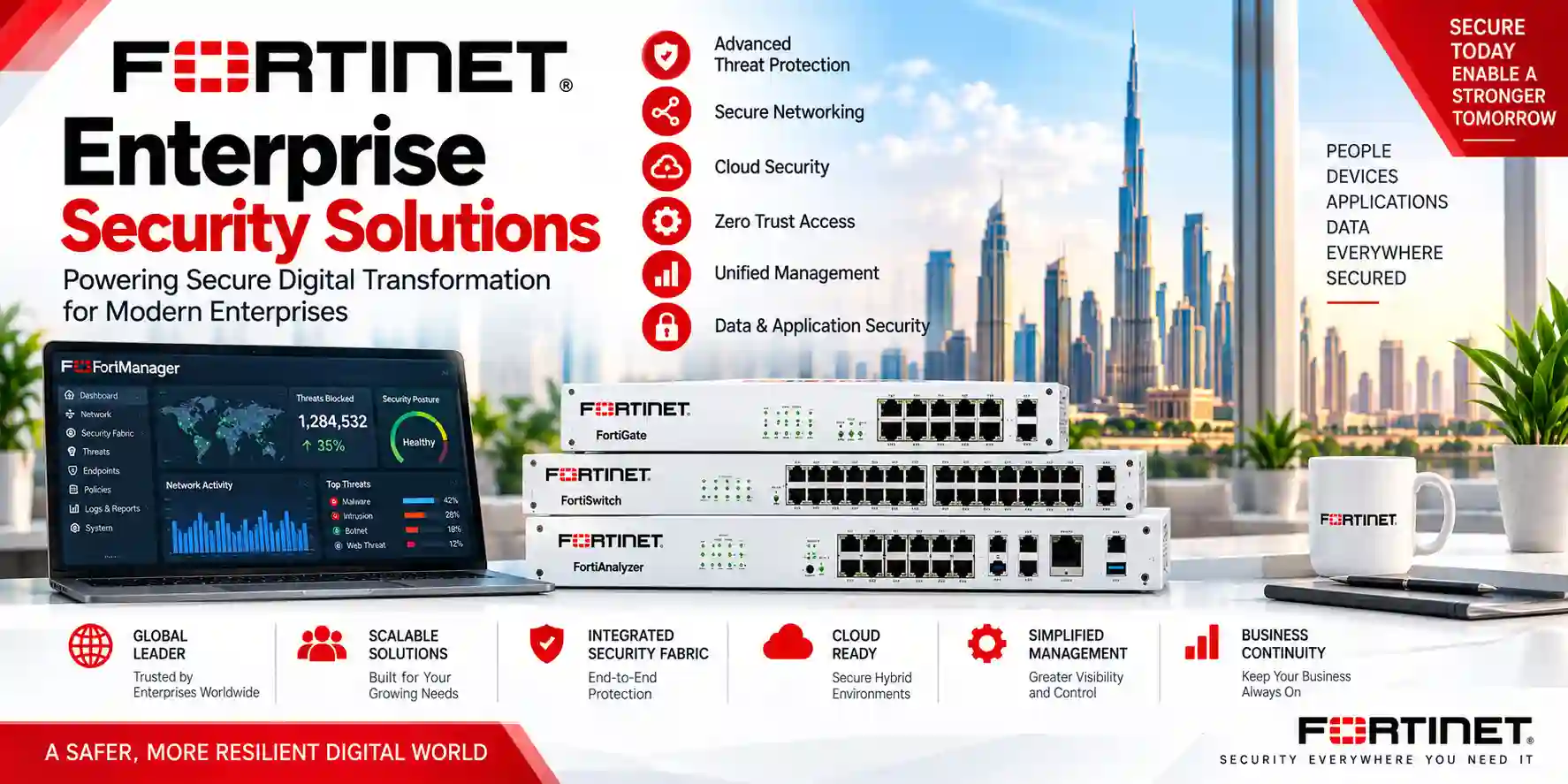
FortiGate-VM brings Fortinet next-generation firewall capabilities into Google Cloud. Official Fortinet and Google Cloud material describes support for advanced network security, intrusion prevention, application control, web filtering, VPN, segmentation and SD-WAN functions. Google Cloud also documents FortiGate-VM as an in-band security integration partner capable of inline inspection for VPC traffic. Fortinet documents deployment through Google Cloud Marketplace and through Compute Engine/custom-image methods, with Terraform and other automation approaches available for suitable architectures.
The name VM64 should be treated carefully during procurement. Current Fortinet public virtual-appliance material prominently presents VM01, VM02, VM04, VM08, VM16, VM32 and unlimited tiers, while Google Cloud Marketplace billing documentation includes a FortiGate PAYG licensing band for virtual machines with 64 to 95 vCPUs. Therefore this page does not invent a fixed VM64 throughput figure or imply that every 64-vCPU Google Cloud deployment has identical performance. Final sizing should be validated against the current Fortinet datasheet, FortiOS release, Google Cloud machine family, enabled inspection features and selected licensing model.
NGFW protection
Apply stateful firewall policy and advanced inspection to selected Google Cloud traffic paths, with controls such as IPS, application control and web filtering when licensed and configured.
Hybrid connectivity
Use FortiGate-VM as part of secure connectivity between cloud networks, branches and data centers, including VPN and SD-WAN designs appropriate to the architecture.
Cloud integration
Fortinet documents integration with Google Cloud services including Network Connectivity Center and cloud networking constructs, helping teams maintain consistent policy across hybrid environments.
Flexible licensing
FortiGate VM cloud options include PAYG, BYOL/private-offer approaches and FortiFlex in supported scenarios. Commercial terms and entitlements should be confirmed for the exact deployment.
Architecture, high availability and sizing
Google Cloud’s published FortiGate architecture guidance describes an active-passive pair across two availability zones in the same region as a recommended high-availability pattern for many deployments, while active-active and autoscaling patterns can be used for requirements that justify them. Architecture affects licensing, routing, source NAT, failover behavior and management. A quotation should therefore identify whether the requirement is a standalone firewall, resilient pair, autoscaled security tier, VPN gateway, segmentation point or shared security service.
Sizing starts with traffic rather than a model label. Record internet throughput, inter-VPC traffic, encrypted VPN throughput, concurrent sessions, new connections, SSL inspection requirements, IPS/application-control use, logging volume and anticipated growth. Google Cloud instance type, NIC behavior and CPU allocation also matter. Where multiple network interfaces are required, Fortinet documentation notes that interface planning must be done at deployment because Google Cloud does not allow the number of network interfaces on an existing VM instance to be changed later.
FortiGate VM64 Google Cloud Tanzania
Organizations in Tanzania considering FortiGate VM64 Google Cloud are commonly solving a broader architecture problem: how to apply enterprise firewall policy to cloud workloads while keeping branch offices, data centers, remote users and internet-facing applications connected under a manageable security model. A useful procurement process begins by mapping the workloads hosted in Google Cloud, the VPCs and regions involved, the traffic that must be inspected, the locations that connect to those workloads and the services that require inbound or outbound access. This prevents the virtual firewall from being selected only from a vCPU number without understanding the flows it must process.
For a Tanzanian enterprise, hybrid connectivity can be especially important when business systems remain partly on premises. ERP, file services, identity platforms, databases, application servers and backups may move at different stages. FortiGate-VM can provide a familiar FortiOS policy layer in Google Cloud while physical FortiGate or other compatible edge equipment continues to serve offices and data centers. The design should define routing ownership, VPN topology, redundancy, DNS dependencies, logging and administrator access. If the business expects rapid cloud growth, the design should also leave room for new VPCs, projects and additional protected applications.
Licensing needs the same discipline. PAYG can align firewall licensing with cloud consumption, while BYOL or FortiFlex may suit organizations with different commercial or lifecycle requirements. The correct choice depends on procurement preference, duration, scaling pattern and entitlement requirements. Fourteck Tanzania can help prepare the technical bill of requirements before a quotation. Buyers can also review the Fourteck Tanzania technology portfolio, Tanzania IT and security services, business technology shop, and quotation contact page when the cloud firewall is part of a wider network or cybersecurity project.
FortiGate VM64 Google Cloud Dar es Salaam
For organizations in Dar es Salaam, a FortiGate VM64 Google Cloud project may connect headquarters, branches, hosted applications and remote users to workloads running in Google Cloud. The planning focus should be the application path. Identify which users reach cloud applications, which systems communicate back to office servers, which public services need controlled inbound access and which administrative services must never be exposed directly. This traffic map becomes the basis for firewall zones, routing, security policies and logging.
Businesses operating from a major commercial center often have multiple internet circuits, data-center relationships or branch links. A cloud firewall design should not assume that all connectivity follows one path. Site-to-site VPN, SD-WAN policy and Google Cloud connectivity can be coordinated so that security inspection remains predictable during normal operation and during circuit or appliance failure. If high availability is required, the organization should document recovery objectives and test how routes, sessions and external dependencies behave during failover rather than treating HA as a checkbox.
The procurement request should state expected throughput after security inspection, not only raw link speed. IPS, application control, web filtering and encrypted-traffic inspection consume resources differently, and application behavior can create bursts that are not obvious from monthly bandwidth averages. Logging destination and retention are also relevant because security operations teams need useful telemetry without creating unnecessary cost or noise. Fourteck can use this information to structure a clearer quotation discussion around FortiGate-VM licensing, Google Cloud deployment topology and related network requirements. Dar es Salaam buyers with existing Fortinet estates should include current FortiOS versions, FortiManager use, VPN peers and policy standards so the cloud design can be assessed as part of one operational environment.
FortiGate VM64 Google Cloud Mwanza
A Mwanza organization adopting Google Cloud may be connecting regional offices, operational sites, warehouses, healthcare systems, education platforms or business applications to a centralized cloud environment. FortiGate VM64 Google Cloud can be evaluated as the security control point for selected cloud traffic, but the design should reflect how users actually reach those applications. Where connectivity varies between sites, resilient VPN and routing policy can be as important as firewall inspection.
Start by separating critical traffic from convenient traffic. Transaction systems, identity, management and production applications may require stricter policy and higher availability than general browsing or software updates. Segmentation in Google Cloud should complement, rather than replace, VPC and identity controls. FortiGate policies can then enforce the permitted flows between security zones and provide additional inspection where required. Administrators should define who can change policies, how configuration is backed up, how logs are reviewed and how emergency access is controlled.
For procurement, Mwanza buyers should provide a simple architecture diagram even if the project is early. Mark cloud VPCs, on-premises networks, internet links, remote-access users, public applications and expected VPN peers. Include expected growth for the next planning period and whether the deployment needs a standalone instance, active-passive HA or a more elastic design. If the term VM64 refers to a desired 64-vCPU class deployment, validate the current Fortinet licensing and Google Cloud machine compatibility rather than assuming a legacy model specification. The objective is a supportable security architecture with enough capacity for enabled services, not the largest virtual machine by default. Fourteck can then discuss the cloud firewall alongside switching, WAN, VPN and security requirements that remain at the physical sites.
FortiGate VM64 Google Cloud Arusha
Arusha businesses may use Google Cloud for customer applications, collaboration systems, databases, analytics, tourism platforms, development workloads or centralized services shared by several locations. A FortiGate VM64 Google Cloud design should identify which of those workloads genuinely need next-generation firewall inspection and which controls are better implemented through native Google Cloud security features. This layered approach avoids routing every packet through a security appliance without a defined reason.
Where FortiGate-VM is placed inline, route design is fundamental. Network teams should determine ingress, egress and east-west paths, then verify that return traffic remains symmetrical where the chosen architecture requires it. If multiple interfaces are planned, they should be defined during deployment. High-availability designs need health checks, route changes and operational runbooks. A firewall pair is useful only when the surrounding cloud network can direct traffic correctly during a failure.
Arusha procurement teams should also separate Google Cloud infrastructure cost from Fortinet licensing and security-service subscriptions. PAYG can simplify consumption-based purchasing, while BYOL or FortiFlex may provide different commercial flexibility. The selected FortiGuard services should correspond to the required security controls; a license should not be purchased merely because it is available. Include management and reporting requirements in the scope, especially if the organization already uses FortiManager, centralized logging or a security operations platform. Fourteck can help turn these requirements into a structured request covering topology, license approach, implementation assumptions and post-deployment support. This produces a more meaningful comparison than asking only for a VM64 price without traffic, feature or availability context.
FortiGate VM64 Google Cloud Dodoma
In Dodoma, organizations planning cloud-hosted services may need controlled connectivity between administrative offices, remote users, partner networks and Google Cloud workloads. FortiGate VM64 Google Cloud can be considered where Fortinet policy consistency, VPN, advanced inspection or hybrid-cloud integration is part of the requirement. The security architecture should begin with data and application classification so that the strictest controls are applied to the most important systems.
Public-sector, institutional and regulated environments often require strong change control and documentation. Even where specific regulatory obligations vary, good operational practice includes named administrators, least-privilege management access, configuration backups, controlled policy changes, logging, vulnerability management and a tested recovery procedure. FortiGate-VM can contribute network security controls, but it does not replace identity governance, secure application design, endpoint protection, backups or cloud configuration management.
A Dodoma quotation request should state whether workloads are internet-facing, private, or shared with other projects; whether traffic must pass through a centralized inspection VPC; and whether connections to physical sites use VPN or another Google Cloud connectivity service. Include peak bandwidth, number of VPN peers, expected remote users, security profiles and HA expectations. For large virtual-machine classes, validate the current Fortinet entitlement and supported Google Cloud instance choices at order time. Fourteck’s Tanzania business technology overview explains the broader integrated approach, while the verified contact page can be used to submit architecture and quotation details. A precise requirement allows licensing, cloud resources and implementation work to be evaluated together rather than as disconnected line items.
FortiGate VM64 Google Cloud UAE
For UAE organizations with operations connected to East Africa, FortiGate VM64 Google Cloud can form part of a common security architecture across cloud and branch environments. A multinational design benefits from standardized policy naming, VPN conventions, logging and change processes while still allowing each country or business unit to have the routes and controls it needs. FortiGate-VM’s use of FortiOS can be useful to teams already familiar with FortiGate appliances in offices or data centers.
The UAE requirement may involve cloud applications serving users across several countries, making latency and traffic path design important. Security teams should avoid unnecessarily backhauling traffic through distant locations when Google Cloud and Fortinet architecture can provide a more direct controlled path. Network Connectivity Center integration and SD-WAN designs may be relevant depending on the wider topology. The final architecture should be reviewed against the exact Google Cloud regions, branch connectivity and application dependencies in use.
Commercially, enterprises may compare PAYG, BYOL, private offers and FortiFlex based on project duration, committed cloud spend, license portability and scaling expectations. No single model is automatically cheapest for every workload. Build a cost model that includes Google Cloud compute, storage and networking, Fortinet licensing, security subscriptions, logging and operational management. UAE teams can also review Fourteck UAE and the specialist Fortinet UAE resource for related regional requirements. For a Tanzania-led project, keep the central architecture consistent while documenting which team owns licensing, cloud billing, policy administration and incident response.
FortiGate VM64 Google Cloud Uganda
Ugandan organizations using Google Cloud can evaluate FortiGate VM64 as a virtual security layer for cloud applications, hybrid connectivity and VPN services. The first design decision is placement: determine whether the firewall protects internet ingress, outbound traffic, connections between networks, branch-to-cloud traffic or several of these flows. Each role creates different routing, capacity and availability requirements.
Organizations with branches in both Uganda and Tanzania can benefit from repeatable FortiGate policy and VPN standards. Standardization reduces configuration drift, but it should not mean copying policies without reviewing local network ranges, applications and connectivity. Use clear address objects, documented route ownership, controlled administrative access and consistent logging. Where high availability is required, test failure scenarios that include the Google Cloud network around the FortiGate instances, not only the appliances themselves.
For sizing, collect real or estimated peak traffic for business hours, backups, software distribution and remote access. Security inspection profiles affect resource demand, so raw firewall throughput alone is not a sufficient planning number. Procurement should identify the desired license model and whether centralized management or FortiGuard services are required. The Fourteck Uganda technology site provides a regional point of reference for related networking requirements, while Tanzania project enquiries can remain coordinated through Fourteck Tanzania. A good request includes the Google Cloud project structure, target regions, VPC layout, branch locations, VPN peers, expected bandwidth and the security controls to be enabled.
FortiGate VM64 Google Cloud Kampala
Kampala enterprises often operate as headquarters for distributed branch networks, making cloud connectivity and policy consistency important. FortiGate VM64 Google Cloud can be evaluated for protecting workloads that support finance, customer service, ERP, web applications or shared infrastructure. Rather than extending the office perimeter unchanged into the cloud, security teams should design zones around cloud workload sensitivity and permitted application flows.
VPN architecture deserves particular attention. Branches may connect directly to Google Cloud, through a central site, or through an SD-WAN design. Each pattern affects latency, resilience and troubleshooting. FortiGate can participate in site-to-site VPN and SD-WAN architectures, but route advertisements, tunnel monitoring and failover priorities should be documented. If remote users require access, define authentication, permitted applications and device-security expectations separately from site-to-site connectivity.
Kampala buyers requesting a VM64-class deployment should specify why that compute scale is required. Large vCPU allocation can support demanding workloads, but licensing and performance must be checked against current Fortinet and Google Cloud documentation. Include encrypted traffic inspection, IPS, application control and logging in the performance assumptions where those features will be used. A staged deployment can be valuable: establish routing and base policy, validate application flows, enable inspection profiles, test HA, then measure performance under representative load. This sequence makes faults easier to isolate. Fourteck can use the resulting architecture and test criteria to structure procurement and deployment discussions without making unsupported assumptions about throughput or cloud cost.
FortiGate VM64 Google Cloud Arua
For Arua operations connecting to centralized Google Cloud applications, reliability may depend on both the cloud security layer and the quality of branch connectivity. FortiGate VM64 Google Cloud can secure the cloud side of the architecture, but the complete service path includes local LAN, ISP connectivity, VPN tunnels, cloud routing, firewall policy and the application itself. Troubleshooting is much easier when these layers are monitored separately.
A branch-oriented design should prioritize essential business applications during degraded connectivity. SD-WAN policy can be relevant where multiple WAN links are available, while VPN redundancy can provide alternate paths into Google Cloud. The cloud FortiGate should have routes and policies that match the intended failover design. Security rules should remain explicit: backup links should not become a way to bypass inspection or expose management services.
Procurement teams in Arua should send details about branch subnets, number of sites, expected traffic, critical applications and whether internet access is local or centralized. If the Google Cloud firewall is shared by several branches, aggregate throughput and concurrent sessions matter more than the requirements of any single site. Licensing should be matched to the deployment model and enabled services, and cloud network egress charges should be considered separately from firewall licensing. Documentation should include tunnel names, peer addresses, route priorities and contacts responsible for ISP and cloud changes. These operational details often determine whether a distributed environment remains manageable after handover. Fourteck can help frame the cloud firewall requirement alongside branch networking and security rather than treating VM64 as an isolated software purchase.
FortiGate VM64 Google Cloud Mbarara
Mbarara organizations moving selected applications to Google Cloud may need a security architecture that supports gradual migration rather than an immediate all-cloud transition. FortiGate VM64 Google Cloud can be used in a hybrid model where some systems remain at the office or data center while new workloads operate in Google Cloud. Consistent FortiOS policy can help network teams apply familiar controls during that transition.
Migration planning should identify dependencies before traffic is redirected. Applications may rely on local DNS, directory services, databases, file shares, licensing servers or third-party endpoints. A firewall policy that permits the obvious application port can still fail if these supporting services are omitted. Capture the full flow matrix, then create narrowly scoped rules and test each application. Where encryption inspection is enabled, confirm application compatibility and certificate handling.
For availability, determine whether downtime during maintenance or instance failure is acceptable. If not, evaluate the documented Google Cloud FortiGate HA patterns and include the surrounding network components in the test plan. For procurement, state whether the solution will use PAYG or another license method, which FortiGuard services are needed, and how management and logs will be handled. A 64-vCPU licensing band should not be translated into an invented fixed performance figure; actual results depend on the deployed configuration. Mbarara buyers should also consider growth: additional branches, more cloud workloads and increased encrypted traffic can change sizing. A design that is documented and measurable can be expanded more safely than one selected only from a product name.
FortiGate VM64 Google Cloud Gulu
Gulu businesses and institutions that depend on centralized cloud services can use a FortiGate VM64 Google Cloud design to enforce network security around selected Google Cloud traffic. The strongest architecture begins with service priorities. Identify systems that must remain reachable during link degradation, systems that contain sensitive information and services that can tolerate delay. This information influences VPN redundancy, route preference, inspection policy and monitoring.
Cloud security should be layered. Google Cloud identity, VPC controls and workload security remain important even when FortiGate-VM is deployed. The virtual firewall adds advanced inspection and consistent network policy where those capabilities are required. Avoid creating a single security choke point without resilience; if the firewall protects critical applications, evaluate an HA design and test how traffic is redirected during maintenance or failure.
Gulu procurement requests should include cloud region, VPCs, network ranges, number of sites, WAN options, VPN peers, peak bandwidth and expected security profiles. Administrators should define logging destinations and alert ownership before production launch so events are not collected without anyone reviewing them. Where central Fortinet management already exists, include that environment in the scope. Licensing should be confirmed against current Fortinet terms and the chosen Google Cloud instance size. Fourteck can use this information to discuss the FortiGate-VM requirement with related branch firewall, switching and WAN needs. The goal is a repeatable design that technicians can understand at both ends of the connection, reducing the risk that cloud and branch teams maintain separate undocumented assumptions.
FortiGate VM64 Google Cloud Kenya
Kenyan enterprises operating regionally may use Google Cloud as a shared platform for applications consumed from Nairobi, Tanzania, Uganda and other markets. FortiGate VM64 Google Cloud can support a centralized security architecture where next-generation firewall inspection, VPN and consistent FortiOS policy are required. Regional designs should map user and application geography because sending all traffic through one security location can create unnecessary latency.
A hub-and-spoke cloud network, distributed security model or combination may be appropriate depending on scale. Fortinet integration with Google Cloud Network Connectivity Center can be relevant to broader connectivity designs. Teams should define which routes are advertised, where inspection occurs and how segmentation is maintained between business units or environments. Development, test and production networks should not be merged merely to simplify firewall configuration.
Kenya procurement teams should compare license models using the expected operating period and scaling behavior. PAYG can be useful where consumption flexibility matters, while BYOL, private offers or FortiFlex may align with other procurement strategies. The total cost includes Google Cloud infrastructure and network charges in addition to Fortinet licensing. If VM64 refers to a large 64-vCPU class, verify current entitlement, supported instance type and performance expectations before order. The Fourteck Kenya site can support related regional technology discussions. For multi-country projects, maintain one architecture document with country-specific connectivity appendices so policy intent, naming and monitoring stay consistent while local network details remain clear.
FortiGate VM64 Google Cloud Kuwait
Kuwait organizations using Google Cloud for regional workloads can consider FortiGate VM64 where they require advanced firewall inspection, secure connectivity and consistent Fortinet policy in the cloud. A cross-region deployment should first establish data-flow requirements and any organizational rules governing where workloads and logs are hosted. Network security design should follow those requirements rather than deciding cloud routes solely from convenience.
For internet-facing applications, separate application publishing from administrator access. Management interfaces should be restricted and protected, while public services should expose only required ports through documented policies. IPS, application control and other FortiGuard services can add inspection where appropriate. For private applications, VPN or other cloud connectivity can keep access off the public internet, but authentication and segmentation are still required.
Kuwait buyers should include high-availability expectations, maintenance windows and recovery objectives in the quotation request. Google Cloud and Fortinet publish architecture guidance for resilient deployments, but implementation details depend on the exact topology. Licensing choices should be evaluated against project duration, scale and operational model. Centralized FortiManager or security operations integration may reduce administrative overhead for larger estates. The Fourteck Kuwait regional site can be used for related technology requirements, while a Tanzania-led multi-country project can keep shared cloud security standards under one design. Before ordering a 64-vCPU class deployment, validate the current FortiGate-VM licensing band and supported Google Cloud compute option to avoid assumptions based on outdated naming.
FortiGate VM64 Google Cloud Ghana
Ghanaian organizations adopting Google Cloud may need a virtual firewall to connect branch networks, protect cloud workloads and maintain policy consistency with existing Fortinet infrastructure. FortiGate VM64 Google Cloud can be evaluated for these roles, with sizing based on actual inspected traffic and enabled security services. The project should document which VPCs and applications sit behind the firewall and which traffic paths are intentionally left to native cloud controls.
Where branches connect through VPN, define tunnel redundancy and routing behavior before deployment. A security appliance can be healthy while an application remains unreachable because return routes are wrong, so network diagrams should show both forward and return paths. For organizations with several cloud projects, centralized inspection may simplify governance, but it can also concentrate traffic and failure impact. HA and capacity planning therefore become more important as shared use increases.
Procurement should cover Fortinet licensing, security subscriptions, Google Cloud compute and network charges, implementation and ongoing management. Logging can generate significant operational data, so define what is retained and who reviews alerts. Ghana teams can reference Fourteck Ghana business IT solutions for related regional infrastructure. If the requested VM64 designation corresponds to a 64-vCPU PAYG band, confirm the current marketplace SKU and Fortinet support position at quotation time. This verification is preferable to publishing a fixed throughput claim that may not apply to the chosen machine family, FortiOS release or inspection profile. A clear requirements document gives the supplier enough information to propose a defensible architecture rather than a generic license.
FortiGate VM64 Google Cloud Nigeria
Nigeria’s large and distributed business environments can create demanding cloud-security requirements, especially where many branches, remote users or public applications converge on Google Cloud. FortiGate VM64 Google Cloud can be considered as a high-capacity virtual firewall tier, but the architecture should be based on measured or realistically estimated workload. Large vCPU allocation alone does not guarantee application performance if routing, inspection policy or surrounding cloud network design is inefficient.
For multi-branch organizations, segment connectivity by business need and avoid broad any-to-any VPN policies. Branches should reach only the cloud services they require, and management networks should be separated from user traffic. SD-WAN and VPN capabilities can support resilient connectivity, while centralized policy management can help maintain standards. Security operations should receive logs that identify source, destination, application and action clearly enough to investigate incidents.
Nigeria procurement teams should provide expected aggregate throughput, number of sites, concurrent sessions, remote users, encrypted traffic percentage and required FortiGuard services. If autoscaling is being considered, review Fortinet’s current Google Cloud architecture and licensing requirements because scaling models can impose different commercial and operational constraints. The Fourteck Nigeria technology site can support related regional discussions. For multinational deployments, define one owner for global firewall policy and another process for approved local exceptions. This governance is as important as the appliance specification because unmanaged policy growth can reduce security and complicate troubleshooting. Validate VM64 licensing terminology at the time of order and document the exact entitlement on the final bill of materials.
FortiGate VM64 Google Cloud Seychelles
Seychelles organizations in hospitality, professional services, government, finance or other sectors may use Google Cloud to host applications that must remain securely reachable from island sites and remote users. FortiGate VM64 Google Cloud can provide a Fortinet security layer around those workloads, but WAN resilience and traffic-path efficiency are particularly important when connectivity is geographically constrained.
A practical design identifies which applications must continue during partial connectivity loss and whether alternate internet paths are available. VPN monitoring and route failover should be tested with realistic scenarios. Cloud firewall high availability protects against an appliance or zone issue, but it cannot compensate for every upstream connectivity problem; resilience must be designed end to end. Where local users access SaaS and public internet services directly, avoid unnecessary backhaul through Google Cloud unless inspection requirements justify it.
For sizing, separate ordinary user traffic from application-to-application transfers, backups and large data synchronization. Peaks may occur outside office hours and can still affect firewall capacity. Security subscriptions should be selected for the controls the organization intends to operate, and logging should be aligned with available monitoring resources. A Seychelles quotation should include cloud region, VPC structure, site count, WAN links, VPN requirements, expected traffic and availability objectives. If a 64-vCPU class FortiGate deployment is requested, current Google Cloud and Fortinet compatibility should be confirmed rather than relying on a generic VM64 label. Fourteck can use the same architecture brief to coordinate a regional solution with Tanzania or other Fourteck network locations where the organization has connected operations.
Compatibility, integration and deployment checklist
Before deployment, confirm the target Google Cloud regions, VPC and subnet design, number of required interfaces, route model, load balancers, Network Connectivity Center requirements, public IP use, HA pattern, VPN peers and management access. Fortinet documentation notes that Google Cloud Marketplace and Compute Engine/custom-image methods are available, and Terraform can be used for automated reference architectures. Google Cloud also documents FortiGate-VM support in Network Security Integration for inline packet interception.
Security configuration should be built from explicit application flows. Define firewall rules, NAT, IPS, application control, web filtering, SSL inspection, remote access and site-to-site VPN only where required. Decide how administrators authenticate, where configuration backups are stored, how FortiOS upgrades are tested and where logs are sent. Existing FortiManager or security operations integrations should be declared early so management is part of the architecture rather than an afterthought.
Related Fourteck resources
Only verified same-domain pages are linked here; additional unverified product URLs have not been invented merely to increase link count. For connected regional projects, relevant Fourteck network sites include Kenya, Uganda, Ghana, Nigeria and Fortinet UAE.
FortiGate VM64 Google Cloud FAQs
Is FortiGate-VM supported on Google Cloud?
Yes. Fortinet publishes a Google Cloud administration guide and Google Cloud documents FortiGate-VM architecture and integrations. Deployment options include Google Cloud Marketplace and other documented Compute Engine approaches.
What does VM64 mean for Google Cloud?
Google Cloud Marketplace billing information includes a FortiGate PAYG licensing tier for virtual machines with 64 to 95 vCPUs. Current Fortinet public VM product material uses VM01 through VM32 plus unlimited tiers, so buyers should validate the exact entitlement rather than assume a universal fixed VM64 specification.
Can FortiGate-VM be deployed in high availability?
Yes. Google Cloud’s FortiGate architecture guidance describes active-passive HA across two zones in a region as a recommended pattern for many deployments, with other patterns available for different scale requirements.
Which licensing models are available?
Fortinet cloud material describes PAYG, BYOL/private-offer approaches and FortiFlex options. Availability and commercial terms should be confirmed for the exact Google Cloud deployment at quotation time.
Can FortiGate-VM integrate with Google Cloud Network Connectivity Center?
Fortinet and Google Cloud describe FortiGate VM integration with Network Connectivity Center for cloud and hybrid connectivity use cases. The exact design should be matched to the organization’s topology.
Quotation checklist for FortiGate VM64 Google Cloud
For a useful quotation, provide the Google Cloud region and VPC layout, expected peak and average traffic, number of protected applications, internet ingress and egress design, site-to-site VPN peers, remote-access requirements, HA requirement, security services to be enabled, SSL inspection expectations, logging destination, centralized management requirements, preferred PAYG/BYOL/FortiFlex approach, target implementation window and any existing Fortinet environment that must integrate with the new deployment.
Also identify whether the requested VM64 wording specifically means a 64-vCPU Google Cloud instance or is an internal product label. This distinction allows the current Fortinet entitlement and compatible cloud machine type to be verified before order.
Decision recap and consultation
FortiGate-VM on Google Cloud is designed to extend Fortinet next-generation firewall, VPN, SD-WAN and advanced security capabilities into cloud environments. A successful deployment depends on architecture and sizing: traffic flows, interfaces, HA, routing, security inspection, licensing, management and logging all affect the final solution. For Tanzania and regional organizations, the most useful next step is to share a simple cloud and branch topology with expected traffic and security requirements. Fourteck can then discuss a configuration and quotation without relying on unsupported assumptions about a VM64 label.
For a Tanzania-led requirement, use the verified Fourteck Tanzania contact page and include existing FortiGate models, FortiOS versions, Google Cloud projects, VPCs, regions, VPN peers and expected growth where known.



Reviews
There are no reviews yet.