
FortiAP FAP-234F Tanzania
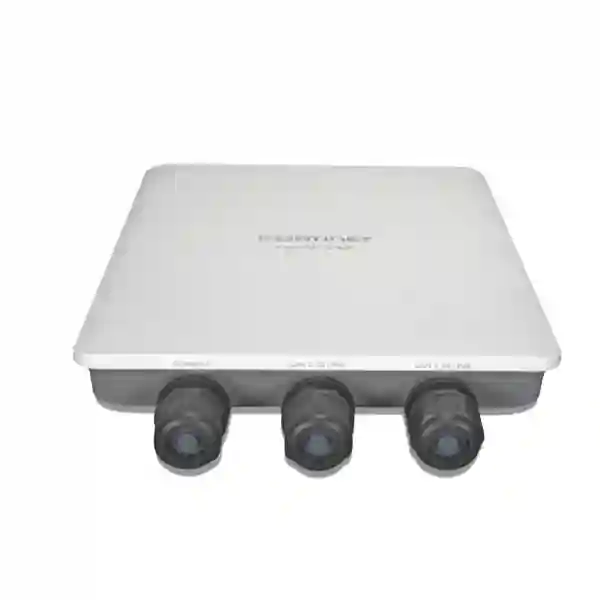
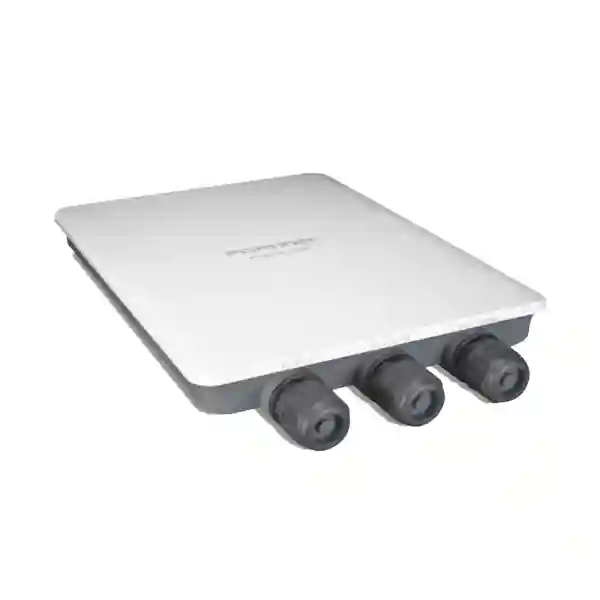
Fortinet FortiAP FAP-234F is an enterprise-class Wi-Fi 6 access point designed for ruggedized indoor and outdoor wireless deployments. Its architecture combines a 2.4 GHz client radio, a 5 GHz client radio, a dedicated dual-band scanning radio and BLE capabilities, helping organizations deliver business connectivity while maintaining continuous radio monitoring. For Tanzanian businesses evaluating wireless coverage for offices, campuses, warehouses, hospitality areas, schools, clinics, logistics facilities or outdoor operational zones, the FAP-234F provides a focused combination of Wi-Fi 6 efficiency, integrated antennas, PoE deployment and centralized Fortinet management.
What is the FortiAP FAP-234F?
The FAP-234F is a Fortinet ruggedized indoor/outdoor access point in the FortiAP family. Fortinet positions it for 802.11ax outdoor use, with three radios plus BLE. Two radios provide client access: a 2.4 GHz 2×2 radio with a maximum data rate up to 574 Mbps and a 5 GHz 2×2 radio with a maximum data rate around 1.2 Gbps. The third radio performs dual-band frequency scanning rather than serving ordinary client traffic. This separation is useful because wireless monitoring can continue while the primary radios remain available to connected users.
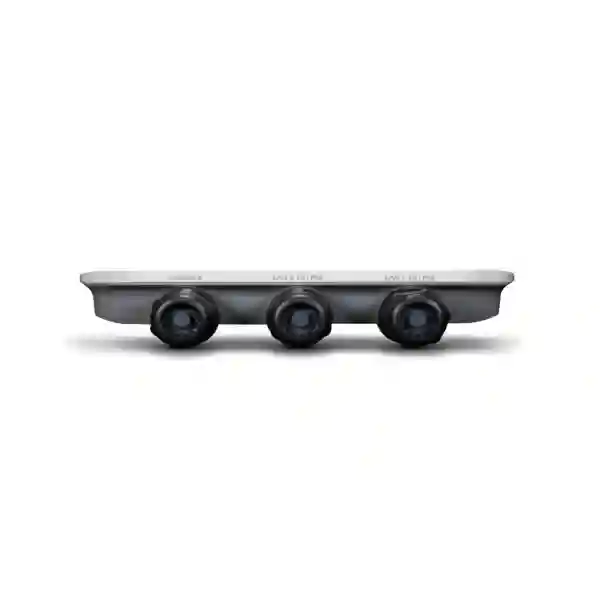
The unit uses internal Wi-Fi antennas and provides two 10/100/1000 Base-T RJ45 interfaces plus an RS-232 RJ45 serial interface. Power over Ethernet simplifies placement where a nearby electrical outlet would be inconvenient. Fortinet documentation lists support for modern wireless mechanisms including OFDMA, MU-MIMO and WPA3-related authentication options. Exact regulatory domain, supported channels, transmit power and order suffix should always be confirmed for the destination country before procurement.
Wi-Fi 6 efficiency
802.11ax capabilities such as OFDMA help improve radio efficiency when many compatible devices share the wireless environment.
Dedicated scanning
A separate scanning radio can monitor 2.4 GHz and 5 GHz spectrum while the two client radios continue providing access.
Outdoor-ready design
The ruggedized indoor/outdoor form factor is suited to deployment plans where conventional indoor access points are not appropriate.
Fortinet management
FortiAP devices can be managed through supported Fortinet platforms, including FortiGate-integrated wireless control and cloud-oriented options.
Verified FAP-234F technical highlights
| Item | FortiAP FAP-234F |
|---|---|
| Hardware type | Ruggedized indoor/outdoor access point |
| Wireless generation | Wi-Fi 6 / IEEE 802.11ax |
| Radio architecture | 3 radios + 1 BLE radio |
| Client radio streams | 2×2 MU-MIMO |
| 2.4 GHz maximum data rate | Up to 574 Mbps |
| 5 GHz maximum data rate | Up to approximately 1,200/1,201 Mbps |
| Third radio | 2.4/5 GHz scanning |
| Ethernet | 2 × Gigabit Ethernet RJ45 |
| Serial | RS-232 RJ45 serial port |
| Power | PoE; confirm power mode and injector requirements for the ordered variant |
| SSID modes | Local bridge, tunnel and mesh are documented for the model family |
Deployment planning before ordering
An outdoor access point should not be selected from radio specifications alone. A useful design starts with the coverage area, client count, applications, mounting height, building materials, expected interference, Ethernet route, PoE source, lightning and surge strategy, network segmentation and management platform. Directional characteristics and mounting orientation matter because the FAP-234F is not simply an indoor AP placed in a weather-resistant enclosure. For a multi-AP site, channel reuse, roaming boundaries and wired uplink capacity should be planned together.
Organizations already using FortiGate can also evaluate how FortiAP management, VLANs, firewall policies, guest access and security monitoring fit into the existing architecture. Businesses starting a new network should size the switching layer and PoE budget at the same time as the access points. See FourTeck Tanzania’s business technology overview for the relationship between wireless, switching, firewalls and structured infrastructure, and use the IT integration services page when the requirement extends beyond hardware supply.
FortiAP FAP-234F Tanzania
For organizations searching for FortiAP FAP-234F Tanzania, the most important buying question is whether the access point matches the actual outdoor or semi-outdoor radio environment. A Dar es Salaam office compound, inland warehouse, hospitality property, education campus or operational yard can each present different wall materials, open-space distances, user densities and interference patterns. The FAP-234F is attractive where Wi-Fi 6 client service and continuous scanning are required in a ruggedized platform, but coverage should be designed from the site rather than inferred from a generic distance figure.
Tanzanian procurement teams should provide the intended mounting area, approximate number of concurrent users, device types, required SSIDs, existing firewall and switch models, available PoE capacity and any guest-network requirement when requesting a quotation. This makes it easier to determine whether FAP-234F is the right model, how many units may be needed and whether supporting components should be included. If the project uses FortiGate, the wireless design can be considered together with segmentation and security policy. If another gateway is already installed, management and integration requirements should be confirmed before finalizing the bill of materials.
Power and cabling deserve particular attention. Outdoor AP locations may be far from the communications rack, and copper Ethernet distance limits still apply. Cable routes should be protected, labeled and tested, while surge protection and grounding should be considered according to the building and installation practice. The PoE source must provide the required power mode without exhausting the switch’s total power budget. Where several APs, cameras and IP phones share one PoE switch, total consumption and uplink capacity need to be reviewed together.
FourTeck Tanzania presents Wi-Fi as part of an integrated business network rather than an isolated radio purchase. Buyers can review the Tanzania technology shop for broader product procurement context and the Tanzania sales contact page to submit the exact model, quantity, site type and project requirements. Availability, final regional SKU suffix, warranty terms and commercial pricing should be confirmed in the quotation rather than assumed from listings in other markets.
FortiAP FAP-234F Dar es Salaam
A FortiAP FAP-234F Dar es Salaam deployment can be relevant for corporate compounds, hospitality facilities, logistics operations, education sites, warehouses and mixed indoor/outdoor business environments. In a dense commercial area, radio planning should account for neighboring Wi-Fi networks and other RF activity. The dedicated scanning radio is useful in this context because it allows spectrum and wireless monitoring activity without taking the main 2.4 GHz and 5 GHz client radios away from their access role.
For offices that extend wireless coverage to courtyards, entrances, loading zones or outdoor seating, placement should be selected from the required user area rather than from the easiest cable route. Mounting height and orientation influence the usable footprint. A site survey or at least a floor/site plan can help identify obstacles such as reinforced concrete, metal cladding, glass, shelving and machinery. Capacity is equally important: an AP may provide a visible signal over a wide area while still becoming congested if many active clients share the same radio.
Businesses in Dar es Salaam frequently combine Wi-Fi with cloud applications, VoIP, video meetings, CCTV and guest access. These traffic types have different priorities and security requirements. The wireless project should therefore include VLAN design, DHCP scope planning, firewall rules, Quality of Service where appropriate and an uplink design that does not create a bottleneck behind the access point. The two Gigabit Ethernet interfaces are part of the hardware platform, but the complete network path from AP to switch, firewall and internet service still determines application experience.
When requesting a Dar es Salaam quotation, include the number of floors or outdoor zones, approximate concurrent users, existing FortiGate or controller environment, switch model and PoE budget, cable distances, required guest access and any roaming requirement between APs. FourTeck’s verified Tanzania contact page identifies Dar es Salaam among its contact locations and provides a central enquiry route. This information allows a quotation to focus on compatibility and deployment scope instead of simply listing an access point.
FortiAP FAP-234F Mwanza
For FortiAP FAP-234F Mwanza requirements, buyers may be planning wireless connectivity across offices, lakeside hospitality properties, education facilities, healthcare environments, warehouses or operational sites where indoor and exposed areas meet. The FAP-234F’s ruggedized format and internal antenna design make it a candidate for planned outdoor Wi-Fi 6 coverage, while its dedicated scanning radio helps maintain wireless visibility alongside normal client access.
A Mwanza deployment should start by separating coverage needs from capacity needs. Coverage asks where users must receive a stable signal; capacity asks how many devices will actively transmit and what applications they use. A lightly used outdoor walkway and a busy event or hospitality area may cover similar physical space but need different AP density. Likewise, a warehouse with handheld terminals can have different roaming and latency priorities from a guest network used primarily for web access.
Infrastructure planning should confirm the cable route, PoE source, switch uplink, network segmentation and physical mounting. If an AP is installed on an exterior wall or pole, technicians should consider environmental exposure along the entire installation path, not just the AP enclosure. Cable entry, weather protection, grounding practice and surge risk can affect long-term reliability. For multiple access points, consistent naming, VLAN mapping and documentation make troubleshooting easier when the network expands.
Procurement teams should ask for the exact Fortinet regional part-number suffix applicable to the destination and should not assume that a suffix listed by a foreign reseller is correct for Tanzania. They should also confirm what mounting and power accessories are included in the quoted package, the support option being proposed and the management method. A well-scoped request includes model, quantity, site description, existing network equipment and desired deployment outcome. FourTeck Tanzania can use those details to frame product selection and integration discussions without relying on unsupported assumptions about stock or lead time.
FortiAP FAP-234F Arusha
FortiAP FAP-234F Arusha searches often align with organizations that need business Wi-Fi beyond a conventional indoor office. Hospitality properties, tourism operations, education campuses, compounds, warehouses and professional facilities may require connectivity across verandas, outdoor circulation areas, reception approaches or separate buildings. The FAP-234F is designed as a ruggedized Wi-Fi 6 AP and combines two client-serving radios with a separate scanning radio, which can be useful when wireless service and monitoring must operate together.
In hospitality and visitor-facing environments, the network design should distinguish guest traffic from operational systems. Guest devices may need internet-only access, captive portal policies or bandwidth controls, while staff devices may need access to internal applications. CCTV cameras, point-of-sale devices and building systems should not automatically share the same unrestricted segment. FortiGate-managed deployments can coordinate wireless and firewall policy, but the exact architecture should reflect the site’s security requirements and existing equipment.
Arusha projects may also involve several low-rise buildings or outdoor spaces rather than one dense office floor. That changes the cabling and roaming discussion. Long copper runs, building-to-building links and power availability need to be checked before selecting mounting points. Where distances exceed normal Ethernet limits, the broader network design may need fiber or an intermediate distribution point. The AP should be placed where it serves users effectively, not merely where an existing cable happens to terminate.
A quotation request should state whether the FAP-234F is intended as a new standalone wireless deployment, an extension of an existing Fortinet environment or a replacement for older access points. Include approximate client counts, important applications, coverage zones, current switch and firewall details, and any need for centralized monitoring. The verified FourTeck Tanzania contact page lists Arusha as a contact location and can be used to begin a product and deployment discussion.
FortiAP FAP-234F Dodoma
For FortiAP FAP-234F Dodoma projects, government-adjacent offices, enterprises, institutions, campuses, accommodation facilities and growing business sites may need wireless connectivity that extends into outdoor or semi-outdoor spaces. The FAP-234F provides Wi-Fi 6 service on 2.4 GHz and 5 GHz with 2×2 MU-MIMO and maintains a dedicated scanning radio, making it relevant when administrators want a ruggedized AP integrated into a managed business network.
The correct AP count should be based on a coverage and capacity plan. A long corridor, open courtyard, meeting area and warehouse yard each behave differently. Walls, metal structures, trees, elevation and neighboring radio sources can change signal distribution. Rather than promising a fixed coverage radius, the project should define target areas and validate placement. For business-critical roaming, testing should include movement between AP cells and the behavior of actual client devices, because roaming decisions are partly made by clients.
Dodoma deployments should also plan resilience at the network level. An outdoor AP can remain powered and operational only if its PoE switch, upstream links, firewall and internet path are available. UPS protection for network equipment may be relevant where continuity is important. Configuration backups, documented VLANs, controlled administrator access and firmware lifecycle procedures make the wireless environment easier to operate after installation.
When sourcing FAP-234F, ask the supplier to identify the exact quoted SKU suffix, included accessories, support terms and management assumptions. Do not rely on a generic international listing for local commercial conditions. FourTeck Tanzania’s contact page lists Dodoma among its contact locations. A useful enquiry includes quantity, building/site type, intended mounting areas, user count, existing Fortinet equipment and target timeline so the commercial response can distinguish the AP hardware from any cabling, switching, configuration or survey work required.
FortiAP FAP-234F UAE
FortiAP FAP-234F UAE buyers typically compare outdoor Wi-Fi 6 capability, Fortinet integration, regional SKU, mounting accessories, PoE and support options. The model is positioned for ruggedized indoor/outdoor use with 2×2 Wi-Fi 6 client radios, a dedicated scanning radio, BLE and dual Gigabit Ethernet. UAE reseller listings also commonly describe the pole/wall mounting and PoE package, but buyers should rely on the specific quotation and Fortinet ordering information for the exact regional variant being supplied.
In commercial buildings, hospitality venues, compounds, warehouses and logistics environments, heat exposure and mounting location should be considered alongside radio performance. Outdoor installations require appropriate cable routing, surge and grounding practice, and a network cabinet or PoE source designed for the environment. Where the AP serves a high number of transient guest devices, SSID design, authentication and bandwidth policy can matter as much as maximum PHY rates.
Organizations already standardized on Fortinet can evaluate the FAP-234F as part of a broader secure networking architecture. FortiGate-integrated wireless control can reduce the number of separate management systems, while cloud-oriented Fortinet management options may fit distributed environments. The choice depends on existing licenses, topology, operational preferences and the number of sites. Procurement teams should confirm compatibility with the intended FortiOS or management release rather than assuming every software combination behaves identically.
For UAE project support and broader regional procurement context, visit FourTeck UAE. A useful request specifies FAP-234F, quantity, emirate/site, management platform, existing switch/PoE environment and whether installation is required. Pricing and availability can change, so they should be confirmed in a current quotation instead of copied from public reseller pages.
FortiAP FAP-234F Uganda
FortiAP FAP-234F Uganda projects can include business campuses, hotels, warehouses, schools, healthcare sites and distributed branch environments that need managed Wi-Fi across indoor/outdoor boundaries. The access point’s Wi-Fi 6 radios support modern client connectivity while the third radio is reserved for scanning, a useful design for organizations that want ongoing RF awareness without sacrificing a client-serving radio.
Ugandan deployments should evaluate both the access point and its supporting network. PoE budget, Ethernet distance, switch uplinks, VLAN design, firewall policy and internet capacity all affect the final experience. If several APs are installed across a property, administrators should document channel plans, names, switch ports and management settings. For guest Wi-Fi, traffic isolation and acceptable-use controls may be required; for business devices, access should be limited according to role and application need.
Procurement planning should also distinguish hardware from service scope. A product-only quotation is different from a project that includes survey, cabling, mounting, configuration, testing and documentation. Buyers should request the correct regulatory-domain SKU and verify support coverage and included accessories. The model name alone is not enough to determine all commercial details.
FourTeck’s Uganda technology site provides regional context for networking and security requirements. For a cross-border organization operating in both Tanzania and Uganda, using a consistent Fortinet architecture can simplify policy and support, but each site’s RF design still needs to reflect local building layout and user density.
FortiAP FAP-234F Kampala
A FortiAP FAP-234F Kampala deployment may need to contend with dense neighboring Wi-Fi, multi-floor commercial buildings and a mixture of office, guest and mobile-device traffic. The FAP-234F’s dedicated scanning radio is particularly relevant in busy RF environments because it can observe the bands while the primary 2.4 GHz and 5 GHz radios remain focused on client service.
For office compounds and hospitality environments, administrators should define SSIDs by purpose rather than creating unnecessary networks. Staff, guest and operational-device traffic can be separated with VLANs and firewall policy. The wired network must carry those VLANs correctly from AP to switch and gateway. If voice or collaboration applications use Wi-Fi, channel utilization, roaming and upstream internet quality should be tested under realistic load.
Physical deployment in Kampala should consider where the AP can be securely mounted, how Ethernet will reach it and how the cable path will be protected. Outdoor placement should be planned with weather exposure, surge risk and service access in mind. For sites with several APs, avoid simply maximizing transmit power; balanced cell design can produce better roaming and reuse than oversized overlapping cells.
A Kampala quotation request should include the exact model, expected quantity, floor plans if available, concurrent client estimates, existing FortiGate and switch models, internet bandwidth and whether guest access or centralized management is required. These details help determine whether the FAP-234F fits the use case and what supporting network work should be scoped.
FortiAP FAP-234F Arua
FortiAP FAP-234F Arua requirements may arise in branch offices, institutions, hospitality properties, warehouses or operational sites where reliable wireless must extend beyond climate-controlled rooms. A ruggedized Wi-Fi 6 access point can be useful in these scenarios, but successful deployment depends on power, backhaul and physical infrastructure as much as radio specifications.
Where technical support access or replacement logistics may take longer than in a major capital, good documentation becomes especially valuable. Network teams should record AP names, switch ports, IP addressing, VLANs, mounting positions and configuration backups. A spare strategy may be considered by the customer according to business criticality, but it should be based on operational needs rather than an assumption about local stock.
The FAP-234F can serve 2.4 GHz and 5 GHz clients while its third radio scans the spectrum. That architecture is useful for managed environments, but it does not eliminate the need for careful channel planning. In a smaller site, one correctly placed AP may outperform multiple poorly placed units; in a larger compound, multiple APs may be required for both coverage and roaming. A site plan helps turn the requirement into an engineering question rather than a guess.
For procurement, confirm the regional SKU, PoE requirements, mounting package, support option and management method. If the project is part of a Uganda-wide rollout, standard configuration templates can help create consistency across Arua and other branches while still allowing site-specific radio settings.
FortiAP FAP-234F Mbarara
Businesses considering FortiAP FAP-234F Mbarara may be planning Wi-Fi for commercial premises, education, healthcare, hospitality, warehouses or multi-building sites. The model combines Wi-Fi 6 client access with a scanning radio and BLE in a ruggedized form factor, giving network teams a platform that can fit outdoor or semi-outdoor business coverage requirements.
A practical design should identify critical applications first. Barcode scanners, cloud ERP, voice, video, guest browsing and staff laptops create different traffic patterns. The 2×2 radios can provide strong business connectivity, but actual throughput depends on client capabilities, channel width, interference, distance and shared airtime. Published maximum data rates are radio-layer figures and should not be treated as guaranteed application throughput.
The wired LAN should be checked before deployment. PoE switches need enough power capacity, VLAN trunks must be configured correctly, and uplinks should have sufficient bandwidth for the combined AP traffic. Outdoor cable paths should be installed and protected appropriately. If the AP is added to an existing Fortinet environment, software compatibility and management design should be verified before rollout.
Mbarara buyers requesting a quote can improve accuracy by including site size, number of users, existing AP count, current firewall/switch equipment, desired coverage zones and any guest network or roaming requirement. That information helps separate the product requirement from cabling, switching and configuration work.
FortiAP FAP-234F Gulu
FortiAP FAP-234F Gulu deployments can support organizations that need Wi-Fi 6 coverage in branch compounds, education sites, hospitality environments, offices or operational facilities. The access point’s ruggedized construction is designed for indoor/outdoor use, while its internal antenna system simplifies the hardware package compared with designs that require separate external Wi-Fi antennas.
Network planners should still treat antenna orientation and mounting as design variables. The coverage pattern is not identical in every direction, and obstacles can reshape the usable signal area. A mounting position that looks central on a map may perform poorly if metal roofs, reinforced walls or equipment block the intended path. Validation with real client devices is valuable after installation.
For sites with limited IT staff, centralized management can reduce operational effort. Fortinet offers FortiGate and cloud-oriented management approaches for FortiAP, allowing administrators to monitor and configure multiple APs from a common platform when the selected architecture supports it. The exact licensing and management choice should be confirmed during design because procurement can differ depending on the operating model.
A Gulu procurement request should identify whether the project needs hardware only or an end-to-end scope. Include quantity, site description, cabling status, PoE switch details, firewall model and required SSIDs. Confirm current commercial terms directly rather than assuming availability, delivery or warranty from another country.
FortiAP FAP-234F Kenya
FortiAP FAP-234F Kenya buyers may evaluate the model for outdoor office coverage, campuses, warehouses, hospitality, retail compounds and distributed enterprises. Wi-Fi 6, 2×2 MU-MIMO, dedicated scanning, BLE and dual Gigabit Ethernet make it a capable managed access point for environments where outdoor durability and Fortinet integration are important selection criteria.
For Nairobi and other dense commercial locations, co-channel and adjacent-channel interference can be a major factor. The best deployment is not necessarily the one with the highest transmit power. Channel allocation, cell size and AP placement should support reuse and roaming. For warehouses and logistics environments, shelving, inventory and moving equipment can alter propagation, so a survey or post-install validation is useful.
Enterprises operating across Kenya and Tanzania can benefit from standardizing naming, VLAN structures, security policies and management procedures, while still tuning radio settings per site. A standardized bill of materials can simplify procurement, but it should not force the same AP count into buildings with different layouts. The FAP-234F should be selected where its outdoor/ruggedized characteristics and 2×2 radio design fit the requirement.
For regional product and project context, visit FourTeck Kenya. When asking for pricing, provide the required regulatory-domain SKU if known, or ask the supplier to confirm it, together with quantity, support term, mounting requirements and deployment scope.
FortiAP FAP-234F Kuwait
FortiAP FAP-234F Kuwait deployments can be considered for business compounds, logistics facilities, hospitality, education and other environments needing managed outdoor Wi-Fi 6. In hot climates, installation design should consider the actual environmental exposure, mounting surface, cable protection and equipment specifications rather than treating all outdoor locations as equivalent.
The model’s two client-serving radios provide 2.4 GHz and 5 GHz access, while a third radio performs scanning. This can support wireless monitoring in environments where nearby networks and changing RF conditions are common. BLE capability can also support beacon/location-related use cases where the surrounding solution is designed for it, though buyers should confirm the exact application requirements and software platform.
For a Fortinet-based network, the AP can form part of a broader secure networking architecture with firewall policy and managed switching. VLANs can separate guest, employee and device traffic, while centralized configuration helps maintain consistent SSID and security settings. The network team should verify FortiOS compatibility, PoE supply and any subscription/support requirements before purchase.
FourTeck’s Kuwait IT solutions site provides regional context. A quotation should confirm the exact FAP-234F suffix, included accessories, current availability, warranty/support terms and any installation scope instead of relying on public prices from unrelated markets.
FortiAP FAP-234F Ghana
FortiAP FAP-234F Ghana has documented commercial relevance: public trade data has recorded FORTIAP-234F outdoor wireless AP imports into Ghana. For enterprises evaluating the model, the more important engineering question is how the AP will be integrated into the local site. The FAP-234F is a ruggedized Wi-Fi 6 unit with two client radios, dedicated scanning and BLE, suited to managed outdoor or semi-outdoor business connectivity.
Accra offices, hospitality properties, warehouses and institutions can have very different RF profiles. Dense neighboring networks may increase interference, while open compounds may create longer coverage paths. A proper plan identifies user locations, client density and applications, then chooses AP positions and channels accordingly. Maximum PHY rates should be treated as technical capabilities rather than promised end-user throughput.
The network behind the AP should be designed for PoE, VLANs, firewall policy and sufficient uplink bandwidth. If a site combines Wi-Fi with cameras, voice and other PoE devices, the switch’s total power budget becomes a shared resource. Documentation of switch ports, cable routes and AP configuration can reduce troubleshooting time later.
For regional procurement and solution discussions, see FourTeck Ghana. Buyers should request a current quotation for the appropriate regional SKU and confirm support, accessories and deployment services separately. Public import records demonstrate market movement but do not establish current stock, price or delivery time.
FortiAP FAP-234F Nigeria
FortiAP FAP-234F Nigeria searches show active reseller interest around outdoor Wi-Fi 6, Fortinet integration and quotation-based procurement. For businesses in Lagos, Abuja and other markets, the product can fit outdoor office areas, hospitality, campuses, warehouses and operational sites where a ruggedized AP is preferable to a conventional indoor model.
In high-density environments, radio design should prioritize usable airtime rather than simply signal strength. The FAP-234F supports modern Wi-Fi 6 mechanisms and 2×2 MU-MIMO, but client mix, channel utilization and interference still determine real performance. A dedicated scanning radio can help administrators maintain visibility into the RF environment without sacrificing the two main client radios.
Organizations with multiple Nigerian branches can standardize FortiAP templates and security policy through supported Fortinet management architectures. Each site should nevertheless have its own channel and power plan. Wired infrastructure also needs review: PoE, VLAN trunks, switch uplinks and firewall capacity should be sized for the combined traffic rather than one AP in isolation.
For broader regional IT and security context, visit FourTeck Nigeria. Buyers should compare quotations on equivalent SKU, support and service scope. A low advertised hardware price may exclude installation, support or the correct regional variant, so procurement teams should compare complete commercial terms rather than headline numbers.
FortiAP FAP-234F Seychelles
FortiAP FAP-234F Seychelles requirements can be particularly relevant to hospitality, resorts, offices, education and properties where wireless service extends through outdoor guest or operational areas. A ruggedized Wi-Fi 6 AP is useful only when the installation is planned for the actual environment. Coastal conditions, mounting exposure, cable routes and maintenance access should all be considered by the project team.
Guest wireless designs should separate visitor access from hotel or business operations. Staff systems, point-of-sale devices, cameras and building services may require different VLANs and policies. The FAP-234F can participate in a managed Fortinet wireless environment, but the complete security design belongs at the firewall and network layers as well as the AP.
For properties with multiple buildings, copper distance and inter-building connectivity are important. An AP cannot compensate for an unsuitable backhaul. Fiber links or appropriate distribution architecture may be needed between buildings, while PoE switching should be located and protected appropriately. Roaming expectations should be tested across paths where users actually move.
Seychelles procurement teams should confirm the correct regional part number, regulatory compatibility, mounting/power accessories and support arrangement before purchase. If equipment is being sourced through a regional hub, logistics and warranty handling should be stated in the quotation. The design brief should include site plans, guest capacity, operational applications and existing network equipment so the wireless solution can be sized on evidence.
Compatibility, management and security considerations
Fortinet positions FortiAP as part of its secure networking portfolio. Depending on the deployment model, FortiAP access points can be configured and controlled with supported FortiGate, FortiEdge Cloud or FortiSASE-related architectures. This can be valuable for organizations that want wireless configuration, network segmentation and security policy to be coordinated rather than operated as unrelated systems. The precise management features available depend on product generation, software release and subscriptions, so compatibility should be checked against current Fortinet documentation before an upgrade or new deployment.
Authentication options documented for the FAP-234F family include enterprise EAP methods and WPA/WPA2/WPA3 approaches. A business deployment should select authentication according to device capabilities and security policy. Guest access can be isolated from internal resources, while corporate devices can use stronger identity-based controls where the environment supports them. Legacy compatibility should be enabled only when required because older protocols can constrain security or radio efficiency.
Wireless security also includes operational discipline: change default administrative practices, restrict management access, keep firmware supported, back up configurations and monitor for unexpected devices. A dedicated scanning radio is useful for RF monitoring, but it should be part of a broader operational process. Alerts need owners, and configuration changes should be documented.
Related Tanzania network planning resources
FourTeck Tanzania home
Review the integrated portfolio covering Wi-Fi, switches, firewalls, cabling and related infrastructure. Explore Tanzania solutions.
Technology shop
Use the shop as a starting point for broader product procurement and related network equipment. Browse the Tanzania shop.
Integration services
Wireless projects may require switching, cabling, firewall and configuration work beyond the AP hardware. Review FourTeck Tanzania services.
Sales and quotation
Send the exact model, quantity, site type and existing infrastructure for a more useful response. Contact FourTeck Tanzania.
The Tanzania website currently exposes several solution topics as sections on the homepage rather than distinct permanent page URLs. This page therefore uses the verified distinct same-domain URLs available instead of inventing product/category paths solely to increase internal-link count.
FAP-234F quotation checklist
A precise quotation request reduces back-and-forth and makes hardware comparisons more meaningful. Include the exact product name FortiAP FAP-234F; required quantity; destination country and city; indoor, sheltered or outdoor mounting location; approximate number of concurrent users; important applications; number of SSIDs; guest Wi-Fi requirements; existing FortiGate model and FortiOS version if applicable; existing PoE switch model and available power budget; cable distances; number of buildings or floors; desired management platform; required support term; and whether survey, installation, configuration, testing or documentation should be included.
For replacement projects, also provide the current AP model, number of existing units, known dead zones and reasons for replacement. For new construction, floor plans and network-room locations can help identify cabling and switch requirements before equipment is ordered. For multi-country projects, ask for the correct regulatory-domain variant for each destination rather than assuming one suffix is universal.
Frequently asked questions
Is FortiAP FAP-234F an outdoor access point?
Yes. Fortinet describes the FAP-234F as a ruggedized indoor/outdoor Wi-Fi 6 access point and lists outdoor 802.11ax as its suggested use case. Installation still needs appropriate mounting, cabling and environmental planning.
Does FAP-234F support Wi-Fi 6?
Yes. It supports IEEE 802.11ax Wi-Fi 6 on its client-serving radios, including 2×2 MU-MIMO and OFDMA-related capabilities.
What are the maximum radio data rates?
Fortinet documentation lists up to 574 Mbps on the 2.4 GHz client radio and approximately 1,200/1,201 Mbps on the 5 GHz client radio. These are radio-layer maximum data rates, not guaranteed internet or application throughput.
Why does the FAP-234F have a third radio?
The third radio is used for dual-band scanning. It allows monitoring of the wireless environment while the main 2.4 GHz and 5 GHz radios continue serving clients.
Can FAP-234F be managed by FortiGate?
Fortinet lists FortiGate-integrated wireless control among supported FortiAP management approaches. Compatibility should be checked for the intended FortiOS version and deployment architecture before procurement.
Does the access point use PoE?
Yes. The model supports Power over Ethernet. Confirm the required PoE mode, switch power budget and the accessories included with the exact regional SKU being quoted.
How many FAP-234F access points do I need?
There is no reliable universal number based only on floor area. AP quantity depends on layout, materials, user density, applications, interference, mounting position and required roaming. A survey or coverage plan is the appropriate way to determine quantity.
Where can I request FAP-234F pricing in Tanzania?
Use the FourTeck Tanzania contact page and provide the model, quantity, destination, existing network equipment and installation requirements. Current price, stock, regional SKU and delivery terms should be confirmed in the quotation.
Decision recap: when FAP-234F fits
Consider the FortiAP FAP-234F when the requirement calls for a ruggedized indoor/outdoor Wi-Fi 6 access point, 2×2 client radios, dedicated RF scanning, integrated BLE, Gigabit Ethernet and management within a supported Fortinet architecture. It is particularly relevant when an organization values integrated wireless and security operations rather than treating the AP as an unmanaged standalone device.
Before purchase, validate coverage and capacity, regulatory-domain SKU, PoE, switching, cabling, management compatibility and service scope. If the project needs higher radio density, newer Wi-Fi generations or a different antenna arrangement, compare the FAP-234F with other current FortiAP models instead of assuming one AP suits every environment.
Plan a FortiAP FAP-234F deployment
FourTeck Tanzania can discuss product selection, wireless planning and the surrounding network requirements for a FortiAP deployment. Send the intended quantity, city, building/site type, expected users, current FortiGate and switch environment, coverage zones and whether you require hardware only or a wider implementation scope. This gives the sales and technical discussion enough context to address compatibility, PoE, switching, cabling and management requirements.
For projects outside Tanzania, the FourTeck regional network includes UAE, Kenya, Uganda, Ghana, Nigeria and Kuwait, supporting consistent regional conversations while allowing each site to be engineered for its local conditions.



Reviews
There are no reviews yet.