
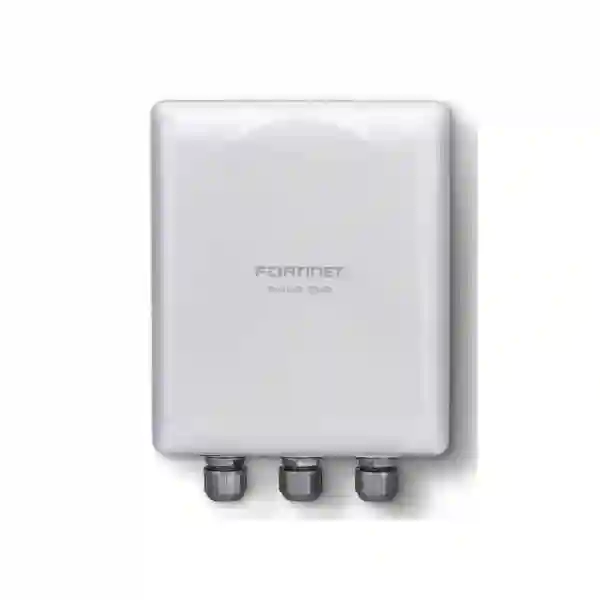
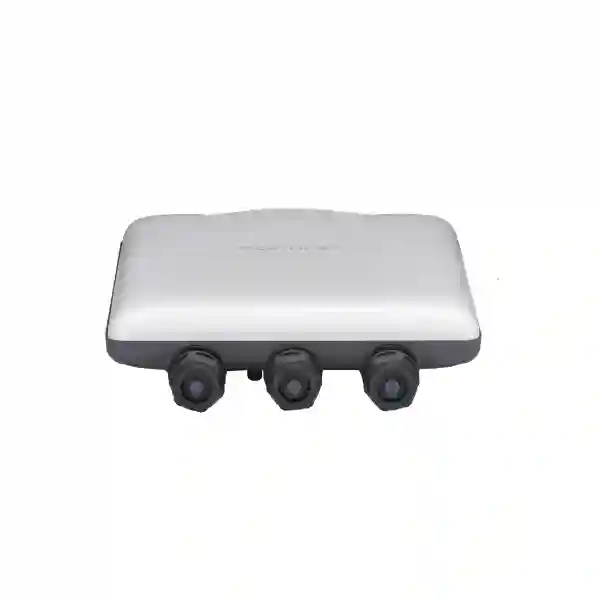
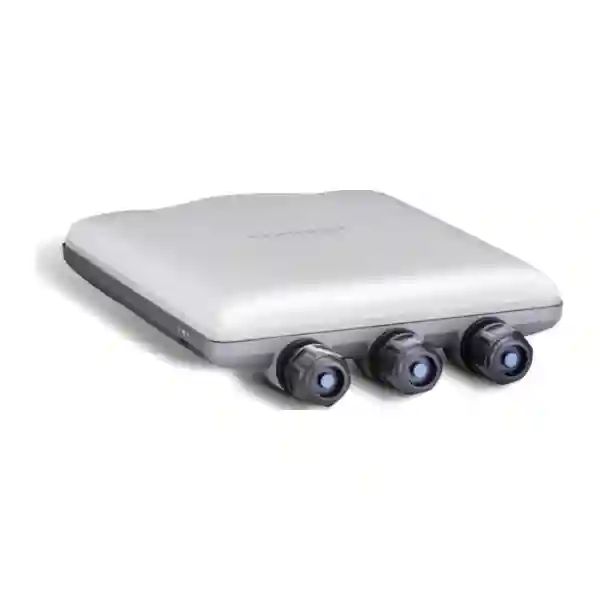
FortiAP FAP-234G Tanzania
The Fortinet FortiAP FAP-234G is an enterprise-class ruggedized indoor/outdoor Wi-Fi 6E access point for organizations that need secure wireless coverage beyond conventional office spaces. Fortinet positions the FAP-234G as a three-radio, two-spatial-stream platform with internal antennas, support for the 6 GHz band where local regulation permits, OFDMA, multigigabit Ethernet connectivity and integrated Bluetooth Low Energy. It can be managed through FortiGate, FortiEdge Cloud or supported SASE workflows, helping organizations combine wireless access with a broader secure-networking architecture. For Tanzania buyers, the important procurement questions are not only radio speed but also site conditions, PoE design, switch uplinks, controller strategy, client capability, mounting position and the regulatory availability of 6 GHz operation.
Wi-Fi 6E / IEEE 802.11ax platform designed for modern enterprise WLAN deployments.
Three radios with 2×2 service and flexible 2.4 GHz, 5 GHz and 6 GHz or scanning roles.
Ruggedized indoor/outdoor form factor with internal antennas for demanding coverage areas.
FortiAP FAP-234G Overview
FAP-234G is designed for organizations that want to extend managed Fortinet wireless networking into courtyards, campuses, warehouses, transport areas, industrial compounds, hospitality grounds and other locations where a standard indoor access point may not be appropriate. Fortinet documentation identifies eight internal Wi-Fi antennas, an internal BLE antenna and internal GPS capability. The radio design can deliver simultaneous 2.4 GHz, 5 GHz and 6 GHz service, or can be configured for alternative radio roles including scanning. The practical value is flexibility: a wireless architect can choose a mode that fits client mix, spectrum availability and security-monitoring priorities instead of treating every deployment as identical.
Fortinet lists headline PHY rates of up to 574 Mbps on 2.4 GHz, 1201 Mbps on one 5 GHz service and 2402 Mbps on the third radio when configured appropriately. These are radio link figures, not guaranteed application throughput. Real user experience depends on channel width, client radios, distance, interference, backhaul, security inspection, WAN capacity and site design. The access point also supports OFDMA and MU-MIMO functions associated with efficient multi-client Wi-Fi 6/6E operation.
The FAP-234G should therefore be selected as part of a WLAN design rather than by headline speed alone. FourTeck can help buyers assemble a quotation around the AP model, compatible PoE switching, FortiGate or cloud management requirements, mounting plan and any required support or subscription components. For broader secure networking context, review FourTeck Tanzania technology solutions, FourTeck Africa regional solutions and FourTeck enterprise networking.
Verified FAP-234G Technical Highlights
| Wireless class | Wi-Fi 6E, IEEE 802.11ax |
| Radios | Three Wi-Fi radios plus BLE |
| Spatial streams | 2×2 service |
| Antennas | Internal antenna design |
| Ethernet | Multigigabit Ethernet connectivity; verify exact port and PoE design against the current regional datasheet before ordering |
| Management | FortiGate, FortiEdge Cloud or supported SASE management |
| 6 GHz note | Use is subject to approval by the applicable regional regulatory authority |
Deployment, Integration and Buying Guidance
Before requesting a quotation, document the physical environment, expected concurrent users, application mix, available switch ports, PoE budget, cable distances, controller preference and existing Fortinet infrastructure. Outdoor WLAN performance is strongly affected by mounting height, line of sight, obstructions, reflective surfaces, weather exposure and client capability. A site survey or at least a structured coverage plan is more useful than simply counting access points by floor area.
Where a FortiGate already controls branch security, integrated WLAN management can simplify policy alignment and visibility. Cloud-managed architectures may suit distributed sites where centralized operations are preferred. In either case, buyers should confirm software compatibility, support entitlement and licensing requirements for the intended management mode at the time of purchase. For switching and security architecture, FourTeck’s wider regional resources include FourTeck Uganda, FourTeck Kenya and Fortinet-focused UAE solutions.
Do not assume that every Wi-Fi 6E client can use 6 GHz in every country. Regulatory status, permitted channels and client certification vary. A sound design should still deliver useful service on 2.4 GHz and 5 GHz while treating 6 GHz as an additional capacity opportunity where legally and technically available.
FortiAP FAP-234G Tanzania
Organizations evaluating FortiAP FAP-234G in Tanzania typically need a secure outdoor wireless platform that can fit into a broader enterprise network rather than operate as an isolated hotspot. The model is relevant for corporate compounds, universities, hospitality properties, warehouses, manufacturing areas, transport facilities and multi-building campuses where users move between indoor and outdoor zones. A Tanzania deployment should begin with coverage objectives: identify where users actually need service, what applications they run, which devices support Wi-Fi 6E and whether the priority is capacity, roaming, security monitoring or coverage reach. Those decisions determine AP placement, channel planning and switch requirements.
Procurement teams should request a bill of materials that clearly separates access point hardware from PoE infrastructure, management, support and any subscription services. Existing FortiGate environments may provide an attractive operational model because FortiAP can be centrally controlled with security policies aligned to the wider Fortinet Security Fabric. New deployments should verify the FortiGate or cloud-management design before ordering so that the selected architecture, firmware path and support coverage are clear. Cabling and surge-protection planning are also important for outdoor or semi-outdoor installations, particularly when copper runs leave protected building spaces.
For Tanzania, 6 GHz availability must be treated as a regulatory design input rather than a guaranteed feature in every deployment. Fortinet explicitly notes that FAP-234G use of 6 GHz is subject to regional regulatory approval. Buyers should therefore confirm the applicable rules and region code at order time. A quotation request is stronger when it includes site count, approximate coverage areas, user density, existing firewall and switch models, desired management method and installation environment. This lets the supplier evaluate the complete wireless solution rather than quote an AP in isolation.
FortiAP FAP-234G Dar es Salaam
Dar es Salaam buyers often evaluate enterprise Wi-Fi for offices, logistics compounds, hospitality venues, education sites, retail environments and mixed indoor/outdoor facilities. The FAP-234G can be considered where ruggedized placement and modern Wi-Fi 6E capability are more appropriate than a conventional indoor AP. In coastal environments, the physical installation deserves careful attention: mounting hardware, cable entry, weather exposure, grounding practices and equipment placement should be reviewed as part of the deployment plan rather than after the hardware arrives.
For busy business sites, capacity planning matters as much as nominal coverage. A courtyard with many phones and laptops, a warehouse using handheld terminals, and a hotel outdoor area have very different traffic patterns. Wi-Fi 6/6E functions such as OFDMA can improve efficiency with many clients, but the WLAN still needs sensible channel planning and an adequate wired uplink. Network teams should also check whether endpoint fleets actually support 6 GHz; older devices will continue to rely on 2.4 GHz or 5 GHz.
A Dar es Salaam quotation should state whether the project requires supply only, configuration guidance or a broader secure-networking design. Include existing FortiGate models, switch PoE capability, VLAN requirements, guest-access needs and expected SSIDs. If the site spans several buildings or outdoor areas, provide a simple map or approximate dimensions. That information helps determine whether FAP-234G is the right model for every zone or whether a mixed FortiAP design would be more efficient.
FortiAP FAP-234G Mwanza
In Mwanza, the FAP-234G can fit projects that need managed wireless coverage across business compounds, hotels, educational facilities, warehouses, workshops or outdoor customer areas. A ruggedized AP is most valuable when the installation genuinely requires environmental resilience or outdoor mounting; indoor rooms may be better served by a dedicated indoor FortiAP model. Designing with the correct form factor by zone can reduce cost while preserving coverage quality and manageability.
Wireless planning should account for building materials, elevation changes, external walls and interference from neighboring networks. High transmit power is not a substitute for balanced client-to-AP communication because mobile devices often transmit at lower power than an access point. A professional design therefore focuses on cell size, overlap and roaming behavior rather than trying to cover the largest possible area from a single device. For high-value business applications, test critical client types before finalizing channel widths and radio settings.
Procurement teams in Mwanza should also verify power and switching. The AP’s multigigabit capability can be useful only when the wired network, PoE source and upstream switching are sized accordingly. If the project already uses FortiGate, include firewall software version and available controller capacity in the planning discussion. Where cloud management is preferred, confirm the required service terms. These checks help avoid a common procurement gap: buying capable wireless hardware without matching it to the controller, PoE and support architecture needed to operate it effectively.
FortiAP FAP-234G Arusha
Arusha organizations may consider the FAP-234G for hospitality grounds, campuses, offices with outdoor spaces, tourism operations, logistics facilities and institutional compounds. These environments often mix staff devices, guest traffic, operational terminals and mobile endpoints. Segmentation should therefore be planned early. SSIDs, VLANs, authentication methods and security policies should reflect business roles rather than placing every device on one shared network.
For hospitality and guest-facing deployments, user experience depends on more than peak radio speed. Roaming consistency, captive-portal design, internet capacity, DNS responsiveness and backhaul reliability can have greater day-to-day impact. The FAP-234G’s tri-radio architecture gives designers flexibility, including configurations that dedicate radio resources to access or scanning. The best mode depends on local spectrum conditions and security requirements, so it should be selected during WLAN design rather than assumed from a generic template.
When requesting an Arusha quote, specify whether APs will be mounted on walls, poles, exterior structures or sheltered areas, and note the approximate height and cable path. Mention whether the network must support guest Wi-Fi, voice, surveillance-related connectivity, point-of-sale devices or operational applications. This context helps establish priorities for roaming, segmentation and bandwidth. It also allows a more accurate discussion of related FortiGate and FortiSwitch requirements instead of treating the access point as a standalone purchase.
FortiAP FAP-234G Dodoma
For Dodoma enterprises, institutions and distributed organizations, the FAP-234G offers a route to centrally managed outdoor or ruggedized Wi-Fi where security policy and operational visibility matter. Campuses and administrative sites often have multiple user groups, so wireless architecture should define staff, guest, contractor and device access separately. FortiGate-managed FortiAP deployments can help align WLAN controls with firewall policy, while cloud-oriented management may be considered for distributed operations.
Site planning should identify open areas, shaded outdoor workspaces, corridors between buildings, warehouses and any locations where a conventional indoor AP cannot be mounted safely. The AP should not be selected merely because it is rugged; radio placement still determines performance. A survey can reveal attenuation, interference and roaming boundaries. If 6 GHz is permitted and supported by clients, it can add clean spectrum and capacity, but its propagation characteristics and regulatory rules should be incorporated into the design.
A Dodoma procurement request should include the number of sites, estimated AP count, existing switching, required PoE, internet links and preferred support term. Buyers should also clarify whether they need hardware-only pricing or a complete bill of materials. Asking for the full architecture reduces ambiguity around management services, licenses and support. For public-sector or formal procurement, model and region-code accuracy should be checked carefully against tender specifications before purchase.
FortiAP FAP-234G UAE
UAE deployments of the FAP-234G may include enterprise campuses, warehouses, hospitality properties, outdoor retail spaces and industrial facilities where ruggedized Wi-Fi is required. Buyers should confirm the exact regional SKU and the regulatory status of 6 GHz operation for the intended deployment. Fortinet’s documentation makes clear that 6 GHz use is subject to local authority approval, so radio planning and procurement should follow the rules applicable to the installation location.
High-density outdoor environments benefit from disciplined RF planning. Wider channels can increase peak rates but consume more spectrum and may be unsuitable where many APs must coexist. Designers should balance channel width, transmit power and AP spacing with the actual client population. Where many endpoints remain 5 GHz-only, preserving strong 5 GHz service can be more valuable than optimizing exclusively for 6 GHz. The FAP-234G’s flexible radio architecture gives teams options for such mixed environments.
For regional project coordination, buyers can review FourTeck UAE networking solutions and the Fortinet-focused regional resource linked above. A useful quotation request includes site type, number of APs, management platform, existing FortiGate/FortiSwitch estate, PoE availability and support expectations. That information helps distinguish hardware price from the total deployed solution and reduces the risk of missing required components.
FortiAP FAP-234G Uganda
Uganda organizations evaluating FAP-234G may be planning secure wireless for campuses, hospitality sites, logistics yards, warehouses, education facilities or distributed business locations. The first decision is whether ruggedized outdoor placement is truly needed. If it is, the model’s Wi-Fi 6E tri-radio platform and internal antenna design provide a modern foundation, while central Fortinet management can align wireless access with wider security operations.
Projects should validate spectrum rules and client support before depending on 6 GHz. Even in a Wi-Fi 6E deployment, 2.4 GHz and 5 GHz remain important for compatibility with existing endpoints. Network teams should inventory key device types, especially scanners, IoT equipment, phones and laptops used for business-critical workflows. This prevents a design that looks strong on paper but leaves older operational devices with poor coverage or unsuitable authentication.
For procurement, document controller choice, switch uplinks, PoE capacity, cable routes, mounting points and required support. If multiple Ugandan sites are involved, standardize a repeatable template but allow RF settings to vary by environment. A Kampala office compound, a regional warehouse and an outdoor hospitality site will not share identical coverage needs. The linked FourTeck Uganda resource can support broader regional solution discovery while the Tanzania page remains focused on FAP-234G product planning.
FortiAP FAP-234G Kampala
Kampala deployments frequently combine dense office areas with courtyards, parking zones, warehouses or adjacent buildings. The FAP-234G is relevant where the AP must serve outdoor or environmentally demanding locations while remaining part of an enterprise-managed WLAN. Capacity planning should identify peak concurrent users rather than total registered users, because simultaneous demand drives airtime consumption and influences AP density.
A well-designed Kampala WLAN should separate coverage, capacity and security objectives. Coverage answers where a usable signal is required; capacity addresses how many clients and applications must operate there; security defines who can connect and what they can reach. FortiAP integration with FortiGate can help bring these controls into a common policy framework. Guest traffic, employee access and operational devices can then be designed with appropriate segmentation instead of sharing one trust level.
Before ordering, verify the region code, management compatibility and support terms. Include switch model numbers and available PoE budget in the request, especially if the project uses existing infrastructure. If new switching is planned, consider multigigabit ports where the design needs to preserve the AP’s wired capacity. Finally, plan installation and commissioning as part of the project budget; correct placement, firmware alignment and validation testing are essential to realizing the value of the hardware.
FortiAP FAP-234G Arua
Arua businesses and institutions considering FAP-234G may be focused on reliable managed connectivity across compounds, hospitality spaces, educational sites or operational facilities. In locations where IT staff are centralized elsewhere, remote manageability becomes particularly important. A Fortinet-managed WLAN can provide consistent configuration and visibility, but the exact management architecture should be chosen before purchase so that licensing, support and controller requirements are understood.
Resilience planning should consider the complete path from client to application. An outdoor AP can remain operational while users still experience disruption if the PoE switch, WAN link, DNS service or upstream firewall is unavailable. For critical sites, map these dependencies and decide which components require redundancy. The FAP-234G includes radio flexibility, but wireless redundancy is only one layer of service continuity.
A practical quotation request for Arua should list coverage zones, expected users, business applications, available Ethernet cabling, mounting constraints and any existing Fortinet equipment. Where a site has limited structured cabling, do not assume that an outdoor AP can simply be placed at the far edge of a property; Ethernet distance, power delivery and surge protection must be considered. A clear site brief allows the supplier to recommend a workable bill of materials and identify when additional network infrastructure is required.
FortiAP FAP-234G Mbarara
Mbarara projects can use the FAP-234G where secure wireless must extend into outdoor business areas, campuses, warehouses or hospitality properties. The model’s ruggedized form factor should be paired with thoughtful mounting and RF design. Obstructions such as walls, shelving, machinery and vehicles can reshape coverage, so AP positions should reflect real operating conditions rather than an empty-site drawing.
Client mix is another important design factor. New laptops and phones may take advantage of Wi-Fi 6E capabilities, while older devices remain on legacy bands. A mixed-client environment should be tested for roaming and authentication behavior. Business applications such as voice, inventory systems or cloud software may also need different performance priorities. Quality of service and network segmentation should be coordinated with the wired network and firewall policy.
For purchasing, ask for clarity on what is included with the AP and what must be ordered separately. Verify support coverage, management services and power requirements against the current Fortinet documentation and regional SKU. If installation is part of the project, provide photos or drawings of intended mounting locations where possible. Better site information produces a more accurate solution and helps avoid late changes to brackets, cabling, switching or AP quantity.
FortiAP FAP-234G Gulu
Gulu organizations seeking enterprise wireless may consider FAP-234G for outdoor or ruggedized zones that need to remain under the same management framework as indoor corporate Wi-Fi. Central policy can be valuable for organizations with multiple buildings or branch sites because it reduces configuration drift. However, standardized configuration should not mean identical RF settings everywhere; channel use and transmit power should reflect each site’s physical environment.
The AP’s tri-radio capability supports flexible service and scanning choices. Security-conscious deployments may value continuous radio monitoring, while high-capacity areas may prioritize client service across available bands. The correct choice depends on threat model, user density and spectrum conditions. 6 GHz should be enabled only where regulatory rules and client compatibility allow it, and teams should retain a strong 5 GHz plan for broad device support.
Gulu procurement teams should include the desired management method, site count, support term and installation scope in quote requests. If the WLAN is part of a new branch rollout, coordinate firewall, switching and access points together. This makes it easier to size PoE budgets, uplinks and VLANs consistently. For an expansion project, provide current FortiGate and FortiSwitch models so compatibility and capacity can be reviewed before additional APs are ordered.
FortiAP FAP-234G Kenya
Kenya enterprises may deploy FAP-234G in outdoor campuses, hospitality facilities, warehouses, logistics sites, education environments and other locations that need ruggedized Wi-Fi. Regional projects should confirm the appropriate Fortinet SKU and 6 GHz regulatory status for Kenya. This is particularly important when organizations operate the same WLAN standard across several countries, because permitted spectrum and regional product codes can differ.
For multi-site Kenyan networks, central management can reduce operational effort, but design standards should define more than SSID names. Establish minimum requirements for cabling, PoE, switch uplinks, firmware, authentication, VLANs, guest access and monitoring. Then allow site surveys to determine AP placement and radio tuning. This approach creates consistency without forcing unsuitable RF settings onto different buildings and outdoor spaces.
Buyers can use FourTeck Kenya for regional solution context. When requesting FAP-234G pricing, specify whether the quote is for hardware only or should include support, management and associated Fortinet infrastructure. Include expected deployment dates but request current availability rather than assuming stock. For larger projects, provide quantities by site and indicate whether all locations share the same installation environment.
FortiAP FAP-234G Kuwait
Kuwait projects that require outdoor enterprise wireless should evaluate environmental conditions, mounting exposure and client density alongside the FAP-234G’s Wi-Fi 6E capabilities. Rugged hardware helps address demanding placement, but installation quality remains critical. Cable protection, grounding, PoE source, mounting stability and thermal exposure should all be considered during planning.
The model’s 2×2 tri-radio architecture can support modern clients while preserving service for common 2.4 GHz and 5 GHz devices. In dense deployments, careful channel reuse may matter more than maximum channel width. A design that uses many wide channels can create contention or limit reuse, so RF settings should reflect the number of APs and neighboring networks. 6 GHz availability should be checked against current local regulations.
For Kuwait procurement, request the exact region-appropriate part number and verify support terms at the time of quote. If the project integrates with FortiGate, provide firewall models and software versions. If cloud management is preferred, clarify the service requirement and term. This ensures commercial comparisons are made on equivalent solution scope rather than comparing hardware-only pricing against a quote that includes management or support.
FortiAP FAP-234G Ghana
Ghana organizations considering FAP-234G can use it as part of a secure wireless design for outdoor business areas, education sites, hospitality properties, industrial compounds and logistics operations. The strongest business case appears when rugged placement, centralized management and integration with Fortinet security are all relevant. Indoor-only zones should still be compared with indoor FortiAP models to ensure the most suitable form factor and cost.
Network teams should identify client capabilities and application needs before enabling advanced radio features. Wi-Fi 6E adds 6 GHz capability, but not every endpoint can use that band. Maintaining appropriate 5 GHz coverage is essential for compatibility, while 2.4 GHz may remain important for certain IoT or legacy devices. Segmentation can keep these device classes separated according to risk and business purpose.
A Ghana quote request should list site locations, estimated quantities, existing Fortinet equipment, PoE switching and desired support. For multi-site organizations, include whether centralized management is already deployed. Confirm local regulatory requirements for 6 GHz and the correct regional SKU before purchase. These details help create a procurement package that is technically aligned rather than based solely on a model number and quantity.
FortiAP FAP-234G Nigeria
Nigeria enterprises may evaluate FAP-234G for large campuses, hospitality sites, warehouses, industrial locations and outdoor business spaces. In larger deployments, WLAN design should be coordinated with WAN and security architecture. Wireless performance can be constrained by internet links or upstream inspection capacity, so the end-to-end path should be sized according to application demand.
Operational planning should include firmware management, monitoring, configuration backup and incident response. FortiGate-integrated management can help security and networking teams work from a common environment, while cloud management may support distributed operations. The appropriate model depends on the organization’s existing Fortinet footprint, administrative preferences and subscription requirements.
When requesting pricing in Nigeria, state quantities by site, required delivery region, management platform, support term and whether installation services are needed. Verify current availability rather than relying on generic online stock indicators. For 6 GHz, confirm the current regulatory position and client compatibility. A phased deployment can be useful for large estates: validate one representative site, refine RF and policy settings, then apply the lessons to subsequent locations.
FortiAP FAP-234G Seychelles
Seychelles deployments may place particular emphasis on hospitality, resorts, offices and outdoor guest environments. In these settings, coverage must often extend across open spaces while maintaining separation between guest, staff and operational networks. The FAP-234G’s ruggedized design and centralized management options make it a candidate for such zones, but installation planning should carefully address exposure, cabling and mounting.
Guest experience depends on roaming, internet backhaul and authentication as much as radio capability. A resort or hospitality site should map guest movement paths and high-occupancy areas, then position APs to provide consistent service rather than isolated high-speed cells. Staff devices, payment systems and operational equipment should use appropriate network segmentation and security policy. Wi-Fi 6E can add capacity for compatible devices where permitted, while 5 GHz remains important for broad compatibility.
Procurement teams should provide site maps, approximate outdoor dimensions, building materials and expected client density when asking for a design-oriented quotation. Confirm the regional SKU, 6 GHz rules, management method and support scope. For island deployments, planning spare strategy and remote management can also be valuable because replacement logistics may influence service restoration time. These operational considerations belong in the design conversation before final hardware quantities are approved.
FAP-234G Use Cases and Selection Checklist
The FAP-234G is particularly relevant when an organization needs an outdoor-capable FortiAP with Wi-Fi 6E and wants to keep wireless access within a Fortinet-managed security architecture. Common use cases include campus courtyards, warehouse yards, hospitality grounds, exterior workspaces, logistics areas and rugged indoor zones. It is not automatically the best AP for every room; indoor FortiAP models may be preferable for conventional offices, and higher-stream models may be appropriate for exceptionally dense or demanding areas.
Before requesting a quote
Prepare AP quantity, site type, mounting environment, user density, key applications, existing FortiGate/FortiSwitch models, available PoE, preferred management, support term and required installation scope.
Before deployment
Confirm regulatory settings, region code, firmware compatibility, VLAN design, authentication, channel plan, cable protection, mounting, grounding practices and validation testing for critical client devices.
FortiAP FAP-234G FAQs
Is FortiAP FAP-234G an outdoor access point?
Yes. Fortinet lists the FAP-234G as a ruggedized indoor/outdoor Wi-Fi 6E access point. Deployment still requires correct mounting, cabling and environmental planning.
Does FAP-234G support 6 GHz?
Yes, the platform supports the 6 GHz band as part of Wi-Fi 6E, but Fortinet states that use of 6 GHz is subject to regional regulatory authority approval. Confirm local rules and the correct region code before ordering.
How is FortiAP FAP-234G managed?
Fortinet supports centralized management through FortiGate and cloud/SASE-oriented options such as FortiEdge Cloud and supported FortiSASE workflows. The best choice depends on your existing architecture and service requirements.
Should I choose FAP-234G for every access-point location?
Not necessarily. It is optimized for ruggedized indoor/outdoor use. Conventional indoor spaces, extremely high-density areas or locations requiring external antennas may call for different FortiAP models. A mixed-model WLAN can be more appropriate.
What information is useful for an FAP-234G quotation?
Provide quantity, country and site, installation environment, existing firewall and switch models, PoE availability, management preference, support term, expected users and whether installation or configuration services are required.
Decision Recap
Choose the FortiAP FAP-234G when your project needs a ruggedized Wi-Fi 6E access point with three-radio flexibility, internal antennas and integration into Fortinet-managed networking. Validate 6 GHz regulation, controller choice, PoE and switching, client mix and mounting environment before purchase. For a formal quote, include enough site information to build the complete bill of materials rather than requesting only a unit price.
FourTeck Tanzania can use your site and infrastructure details to frame product selection and quotation requirements. Current stock, pricing, delivery schedules and support terms should always be confirmed at quotation time rather than assumed from generic web listings.
Plan Your FortiAP FAP-234G Deployment
Share your site type, approximate coverage area, user density, current Fortinet equipment and preferred management approach. A well-scoped request makes it easier to evaluate AP quantity, switching, PoE, management and support together and helps reduce procurement surprises during deployment.



Reviews
There are no reviews yet.