
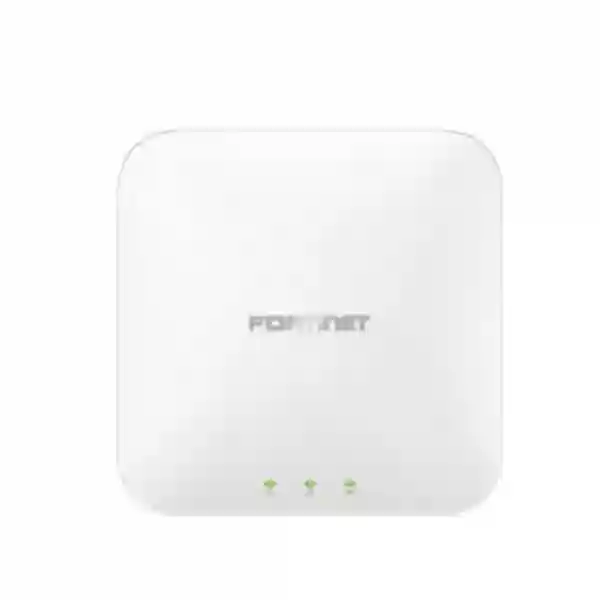
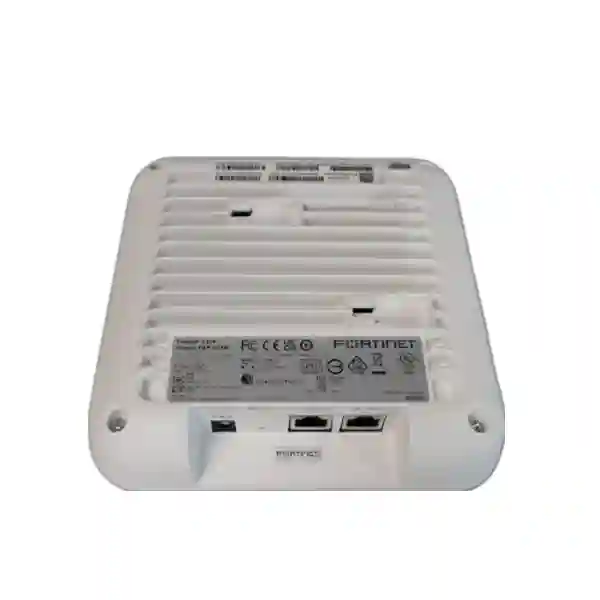
Fortinet FortiAP FAP-231K Tanzania
Fortinet FortiAP FAP-231K is a Wi-Fi 7 indoor access point for organizations that want modern wireless performance together with centralized security and management choices across the Fortinet ecosystem. The model uses a 2×2 internal-antenna design and is positioned for secure indoor deployments where teams need to refresh client connectivity, plan for newer Wi-Fi devices and maintain consistent network policy. For Tanzania buyers, the practical purchasing conversation should include coverage, client density, cabling, PoE readiness, switching capacity, FortiGate or cloud-management architecture, firmware compatibility and the regulatory availability of wireless bands before a final bill of materials is approved.
Wi-Fi 7 platform
FAP-231K belongs to Fortinet’s Wi-Fi 7 access-point family. It is an indoor 2×2 model with internal antennas and support for Fortinet SASE management scenarios.
Tri-band planning
The platform includes 2.4 GHz, 5 GHz and 6 GHz radio capability. Actual channel and band use should be validated against local regulatory rules and the client estate.
Security-led management
FortiAP can be managed through supported Fortinet architectures including FortiGate, FortiEdge Cloud and FortiSASE, allowing wireless planning to align with broader security policy.
Verified FAP-231K capabilities
Fortinet identifies the FAP-231K as an indoor Wi-Fi 7 access point with three Wi-Fi radios plus Bluetooth Low Energy capability. Its radio design covers 2.4 GHz, 5 GHz and 6 GHz operation, with 2×2 service streams. Fortinet documentation also identifies Multi-Link Operation support on all three Wi-Fi bands when the applicable FortiAP firmware and FortiOS feature support are in place. MLO is a Wi-Fi 7 capability that can allow compatible clients to use multiple links, helping improve throughput, latency and connection resilience. Feature availability depends on compatible client hardware, software releases and permitted radio operation in the deployment country.
The model also supports Secure Boot, and Fortinet release documentation notes a high factory security level that permits officially certified GA firmware images. This is useful for organizations that want the wireless edge to follow controlled firmware practices. Procurement teams should still validate the intended FortiOS and FortiAP firmware combination against Fortinet’s current compatibility matrix before rollout, particularly when an existing FortiGate estate is being retained.
Deployment and buying guidance
Selecting an access point is not only a model-number exercise. A dependable design starts with floor plans, construction materials, expected concurrent clients, application mix, roaming requirements and the uplink environment. High-density meeting rooms, open offices, classrooms, guest areas and warehouse-adjacent spaces can create very different RF requirements. Wi-Fi 7 does not remove the need for a proper survey or sensible AP placement. Buyers should also verify switch port speed, PoE capability, VLAN design, DHCP scope, authentication method, guest access policy and upstream firewall capacity.
Organizations already using Fortinet can evaluate the FAP-231K as part of a wider Security Fabric strategy. Buyers starting a new deployment can compare controller and cloud-management approaches before deciding how policies will be administered across sites. Explore FourTeck Tanzania technology solutions for related infrastructure planning, FourTeck Africa for broader regional projects, FourTeck Kenya for Kenya requirements, FourTeck Uganda for Uganda projects and FourTeck UAE for UAE procurement enquiries.
Fortinet FortiAP FAP-231K Tanzania
Tanzania organizations evaluating the Fortinet FortiAP FAP-231K are usually balancing two priorities: improving everyday wireless experience and creating an architecture that can remain manageable as client devices and application demands evolve. The FAP-231K fits conversations around secure indoor Wi-Fi 7 for offices, branch locations, education environments, professional services, hospitality administration areas and other business premises. A sensible Tanzania deployment begins by identifying the real coverage requirement rather than simply replacing older access points one for one. Building materials, room layout, ceiling height, interference and the number of active devices influence the number and position of APs. A site with many meeting rooms may require a different cell design from an open-plan office with the same floor area.
Procurement should also consider the wired network beneath the wireless layer. Confirm PoE availability, switching capacity, VLAN requirements, uplink design and the management platform that will control the APs. If FortiGate will manage the WLAN, check the current FortiAP/FortiOS compatibility matrix and confirm that the planned firmware combination supports the required features. If cloud or SASE management is part of the design, define licensing and operational responsibilities before purchase. The 6 GHz capability associated with Wi-Fi 7 should be treated as a regulatory and client-compatibility planning item; permitted channels and power rules vary by jurisdiction, and older clients may continue using 2.4 GHz or 5 GHz.
For quotation preparation in Tanzania, provide the number of sites, approximate floor area, expected concurrent users, critical applications, current firewall and switching models, PoE details and whether guest access, corporate authentication or roaming is required. This allows a proposal to address the surrounding infrastructure instead of quoting an isolated access point. Where a business is migrating from an older Wi-Fi generation, phased deployment can also be considered so that coverage, client behavior and policy integration can be validated before wider rollout.
Fortinet FortiAP FAP-231K Dar es Salaam
Dar es Salaam businesses often operate in environments where wireless networks carry a mixture of employee laptops, smartphones, collaboration devices, voice applications, guest traffic and cloud services. The FAP-231K can be evaluated for modern indoor deployments where Wi-Fi 7 capability and integration with Fortinet management are relevant. In multi-floor offices, retail administration sites, hotels, clinics, education facilities and commercial premises, AP placement should follow actual RF conditions rather than a simple distance rule. Reinforced walls, glass partitions, dense occupancy and neighboring wireless networks can affect channel reuse and signal quality.
A Dar es Salaam project should document how the WLAN connects to switching and security infrastructure. Check whether existing switches provide suitable PoE, whether uplink capacity matches the expected traffic profile and how corporate and guest networks will be segmented. Organizations with FortiGate can plan SSIDs, VLANs, authentication and security policies as part of the wider network design. Those considering cloud-managed operations should establish who will monitor sites, apply firmware updates and respond to alerts. Wi-Fi 7 features such as MLO are most useful when supported by compatible clients and software, so they should be considered part of a forward-looking design rather than assumed to transform every legacy endpoint.
When requesting a FAP-231K quotation for Dar es Salaam, include floor plans where available, current AP count, user density, application priorities and any known coverage problems. Also identify whether the project is a new build, refresh or expansion. This context helps distinguish between a straightforward hardware requirement and a deployment that needs switching, firewall, authentication or cabling changes. A technically complete quote should make assumptions visible and give the buyer a clear path to validate compatibility before implementation.
Fortinet FortiAP FAP-231K Mwanza
For Mwanza organizations, the FAP-231K can support secure indoor wireless modernization in offices, education sites, healthcare administration areas, hospitality environments and distributed business locations. Buyers should first define what problem the WLAN refresh needs to solve: insufficient coverage, congestion, an increase in modern clients, inconsistent roaming, new guest-access requirements or a desire to consolidate network and security management. Each objective leads to a different design emphasis. Coverage-driven projects focus on RF placement, while capacity-driven projects require careful client-density and channel planning.
The FAP-231K provides a Wi-Fi 7 platform with 2.4, 5 and 6 GHz capability, but not every device will use every band. A mixed estate is normal, particularly during technology transitions. Network teams should therefore maintain appropriate service for legacy clients while planning how newer devices can take advantage of modern capabilities. Before enabling specific 6 GHz features, confirm local regulatory requirements and client support. On the wired side, assess PoE, switch port capability and upstream capacity so that the access layer does not become the limiting factor.
Mwanza buyers planning multiple sites should also establish a repeatable configuration model. Standard SSIDs, segmentation, naming, authentication and firmware policies can reduce operational complexity as the WLAN grows. Fortinet management options can help centralize these tasks when designed correctly. For a quotation, share site count, expected users, building type, current Fortinet equipment and desired management approach. This provides a better basis for sizing and avoids treating every location as identical when their RF and operational needs may differ.
Fortinet FortiAP FAP-231K Arusha
Arusha businesses evaluating FAP-231K may include hospitality operations, offices, training facilities, professional services and organizations supporting a mixture of staff and visitor connectivity. These environments benefit from separating coverage, capacity and security requirements during design. A guest-heavy site may prioritize simple onboarding and traffic isolation, while an office may emphasize identity-based corporate access, roaming and application consistency. The access point is one component of that experience; switching, authentication, firewall policy and internet connectivity remain equally important.
For hospitality and visitor-facing deployments, avoid assuming that a higher Wi-Fi generation automatically fixes poor room coverage. Walls, corridors, floor separation and furniture can alter propagation, making survey-led placement valuable. For office environments, meeting-room density and video collaboration can create concentrated demand at particular times. The FAP-231K’s modern radio platform gives designers flexibility, but channel planning and transmit-power decisions still need to match the site. The 6 GHz band can offer additional spectrum where permitted and supported, while 5 GHz remains important for broad client compatibility.
Arusha procurement teams should request a proposal that states the intended management method, dependencies and any licensing assumptions. If FortiGate management is planned, verify firmware compatibility before deployment. If a cloud-managed approach is selected, confirm subscription requirements and administrative ownership. Include AP mounting, PoE, switch ports and cabling in the project checklist. A complete quote should identify whether installation, configuration or survey services are required rather than assuming hardware alone meets the business objective.
Fortinet FortiAP FAP-231K Dodoma
In Dodoma, organizations considering secure wireless upgrades can evaluate the FAP-231K for indoor offices, institutional environments, education, meeting facilities and distributed administrative sites. A procurement-led project should translate business needs into measurable wireless requirements: number of users, device types, application priorities, guest demand, authentication method, expected growth and the locations where reliable roaming matters. This prevents the purchase decision from being based only on headline Wi-Fi specifications.
The FAP-231K’s tri-band Wi-Fi 7 architecture provides a path for newer client devices while continuing to serve common 2.4 and 5 GHz use cases. Local regulatory rules determine how 6 GHz can be used, so deployment teams should validate permitted operation before making coverage assumptions around that band. Wi-Fi 7 MLO can provide advantages for compatible clients and supported firmware configurations, but network design should still account for legacy endpoints and ordinary single-link operation.
For Dodoma multi-building or departmental projects, centralized policy can be particularly valuable. Define SSID standards, VLAN mapping, access controls, firmware processes and monitoring responsibilities before scaling. Check FortiGate and FortiAP software compatibility if controller-based management is planned. A quotation request is stronger when it includes floor plans, current network equipment, PoE details, site count and the desired operational model. These inputs help determine whether FAP-231K is suitable throughout the estate or whether different FortiAP models should be considered for special indoor, outdoor or high-density areas.
Fortinet FortiAP FAP-231K UAE
UAE buyers can consider the FAP-231K for secure indoor Wi-Fi 7 projects in offices, branches, hospitality administration areas, education and commercial facilities. The market often includes modern client estates and high expectations for collaboration and cloud application performance, making capacity planning as important as raw coverage. A good design maps user concentration, room usage and roaming paths before AP quantities are finalized. Dense meeting areas can require more careful cell planning than corridors or lightly occupied spaces.
The FAP-231K supports Fortinet management choices and can form part of a broader security architecture. Organizations with FortiGate should validate the exact firmware matrix and required features before implementation. Teams considering FortiSASE or FortiEdge Cloud should define subscriptions, administrative workflows and monitoring responsibilities. The 6 GHz band can be valuable for compatible modern clients, but permitted spectrum and configuration must follow current UAE regulatory requirements and the capabilities of endpoint devices.
For procurement, specify whether the project requires AP hardware only or also switching, PoE, firewall integration, cabling, survey and configuration. Include the number of sites, approximate areas and expected concurrent users. Multi-site buyers should standardize WLAN policy where practical while allowing site-specific RF tuning. This approach makes the FAP-231K part of an engineered wireless service rather than an isolated device purchase and provides clearer criteria for acceptance testing after deployment.
Fortinet FortiAP FAP-231K Uganda
Uganda organizations evaluating FAP-231K can use the model in planning for secure indoor Wi-Fi 7 across offices, branches, schools, hospitality environments and other enterprise sites. The first step should be defining the expected client mix and operational goals. Some projects need better coverage, others need more capacity, and some are driven by security standardization or centralized management. The right AP quantity and placement can only be determined after those goals and the physical environment are understood.
Tri-band capability gives designers access to 2.4, 5 and 6 GHz technologies where regulation and client support allow. Older devices will continue to rely on established bands, so migration planning should preserve compatibility. For new Wi-Fi 7 endpoints, supported features such as MLO can improve the way compatible clients use available links, subject to software and configuration requirements. Verify the current Fortinet compatibility matrix when pairing the AP with FortiGate.
Uganda procurement requests should include current firewall and switch models, PoE availability, site count, expected users and the intended authentication approach. This helps determine whether the project also needs switching or security changes. For organizations operating in more than one city, a standard configuration template can simplify management while each location receives its own RF plan. Buyers can use FourTeck Uganda as a regional reference point for related solution enquiries while coordinating Tanzania-led multi-country requirements.
Fortinet FortiAP FAP-231K Kampala
Kampala deployments may involve dense offices, mixed-use commercial buildings, education sites and branch networks where neighboring WLANs add to the RF environment. In these conditions, simply increasing transmit power can create more interference rather than better service. FAP-231K projects should therefore consider channel reuse, AP spacing, user density and the balance between 5 GHz, 6 GHz and legacy 2.4 GHz connectivity. Survey and post-installation validation are valuable for identifying weak areas and excessive overlap.
Security architecture is another important consideration. Corporate and guest users typically require different access policies, and IoT devices may need their own segmentation. Fortinet-managed WLAN designs can align SSIDs and network access with wider security controls, but the exact design depends on the customer’s FortiGate, identity and switching environment. Firmware compatibility should be checked before rollout, especially when existing FortiGate hardware is being retained.
A Kampala quotation should state the number of APs requested only when the buyer already has a validated design. Otherwise, provide floor area, occupancy, application types and existing equipment so sizing can be discussed. Include mounting, PoE and cabling requirements as well. For businesses expecting growth, consider how management and monitoring will scale across additional floors or branches. This avoids a short-term purchase that becomes operationally inconsistent as the network expands.
Fortinet FortiAP FAP-231K Arua
Arua organizations considering FAP-231K may prioritize reliable business connectivity, manageable branch operations and a platform that can fit into a wider Fortinet security environment. Distributed sites often benefit from standardized wireless policy because local IT resources may vary. A central design can define SSIDs, VLANs, authentication, firmware and monitoring expectations, while AP placement remains tailored to each building. This combination of standard policy and site-specific RF planning is more dependable than copying an identical physical layout between branches.
The FAP-231K is designed for indoor use and supports modern Wi-Fi 7 capabilities. Before specifying 6 GHz coverage, confirm local spectrum rules and whether the intended clients support that band. Retain 2.4 and 5 GHz planning for devices that need them. Also check the wired access layer: insufficient PoE, congested uplinks or poorly designed VLANs can undermine the benefits of a new access point.
For Arua procurement, communicate whether the AP will join an existing FortiGate-managed environment or form part of a new network. Provide the FortiGate model and software version when available so compatibility can be checked. If remote or cloud management is desired, identify licensing expectations and who will administer the service. A complete request should also describe coverage pain points and growth plans, enabling the solution to address the operational need rather than focusing only on unit price.
Fortinet FortiAP FAP-231K Mbarara
Mbarara businesses can evaluate the FAP-231K for indoor wireless refreshes where secure management, newer client support and long-term network planning are priorities. Offices, education facilities, healthcare administration and hospitality environments often combine staff devices with guests and specialized endpoints. Segmenting these user groups and understanding their bandwidth needs helps determine SSID design, authentication and upstream security policies.
Wi-Fi 7 introduces useful capabilities, but deployment quality still depends on RF fundamentals. APs should be positioned to serve users rather than hidden according to convenient cabling alone. Building materials, interference and occupancy need consideration. The FAP-231K’s 2×2 architecture can suit many general business areas, while unusually dense or specialized spaces may warrant comparison with other FortiAP models. Model selection should therefore follow site requirements rather than a single standard applied everywhere.
For a Mbarara quote, specify current switches, PoE, firewall, site dimensions and user estimates. If the organization already operates FortiGate, provide software details so the supported FortiAP firmware pairing can be validated. Clarify whether the project includes installation, survey or configuration. These details reduce ambiguity and make it easier to prepare a bill of materials that covers mounting and infrastructure dependencies alongside the access points.
Fortinet FortiAP FAP-231K Gulu
Gulu buyers planning an indoor WLAN can assess FAP-231K where Wi-Fi 7 readiness and Fortinet security integration match the organization’s technology roadmap. Branch and institutional deployments should start by documenting critical applications and expected client counts. Voice, video, cloud applications and guest internet access have different traffic characteristics, while IoT endpoints may have older radio capabilities. The wireless design should accommodate this mixture rather than assuming all users will immediately move to Wi-Fi 7.
The AP’s tri-band architecture provides flexibility for modern devices, subject to local spectrum rules. For existing devices, 2.4 and 5 GHz remain part of the service design. When compatible Wi-Fi 7 clients and software are available, MLO can use multiple links to improve performance characteristics. However, coverage and capacity remain dependent on placement, channel planning and the wired network. Confirm PoE and switching requirements before procurement.
Gulu organizations with multiple branches can benefit from a documented deployment template covering SSIDs, VLANs, authentication, firmware and monitoring. Site surveys or validation testing can then tune radio settings for each location. When requesting pricing, include FortiGate details if relevant, expected AP quantities, building information and whether cloud or firewall-based management is preferred. This supports a more accurate technical discussion and highlights any dependencies that should be included in the project budget.
Fortinet FortiAP FAP-231K Kenya
Kenya enterprises considering FAP-231K can evaluate it for indoor Wi-Fi 7 deployments in offices, education, hospitality and distributed commercial sites. The decision should account for user density, device generation, roaming patterns and the organization’s existing security stack. A modern AP is most effective when the switching, PoE and upstream firewall environment can support the intended service levels. Planning should therefore include both wireless and wired infrastructure.
Organizations with FortiGate can consider integrated WLAN management, while other Fortinet management paths may fit distributed operations. Check current software compatibility before deployment and identify any subscriptions required by the chosen model. The 6 GHz radio capability should be configured in accordance with current Kenyan regulation and client support. In mixed estates, 5 GHz will continue to carry substantial traffic, with 2.4 GHz retained where devices or range characteristics require it.
For Kenya procurement, provide floor plans, site count, concurrent users and current network equipment. Where branches differ greatly in size, do not assume identical AP quantities. A repeatable policy design can coexist with site-specific RF layouts. Buyers coordinating East African projects can also align Kenya and Tanzania requirements around common Fortinet standards while validating country-specific radio and procurement considerations separately.
Fortinet FortiAP FAP-231K Kuwait
Kuwait organizations evaluating FAP-231K may be refreshing office, hospitality, education or commercial WLANs to support newer client devices and stronger centralized management. Indoor environments can range from open offices to heavily partitioned spaces, so RF planning should consider construction, occupancy and neighboring networks. The goal is balanced coverage and capacity rather than maximum signal strength everywhere.
The FAP-231K provides a tri-band Wi-Fi 7 platform and supports Fortinet management architectures. Confirm which radio channels and power settings are permitted under current Kuwait regulation before finalizing the design. Also identify the client mix: newer devices may use 6 GHz and Wi-Fi 7 features, while legacy equipment continues on established bands. For FortiGate-managed deployments, validate the supported FortiAP and FortiOS software pairing.
A Kuwait quotation should include site area, user counts, current switching and PoE, firewall environment and any guest or corporate authentication requirements. If cloud management is desired, clarify subscription and operational needs. Multi-site organizations should define standard WLAN policies while allowing RF settings to be tuned locally. This produces a deployment that is easier to operate and more closely aligned with actual building conditions.
Fortinet FortiAP FAP-231K Ghana
Ghana buyers can consider FAP-231K when planning secure indoor Wi-Fi 7 for business offices, schools, hospitality operations and branch environments. A useful evaluation begins with coverage maps, expected users and the applications that matter most. Where internet bandwidth is limited or variable, local WLAN performance is only one part of user experience, so upstream connectivity and traffic policy should be considered alongside AP specifications.
The model’s 2.4, 5 and 6 GHz capabilities allow a mixed-client strategy, subject to Ghana’s current spectrum rules. Not every endpoint needs or supports Wi-Fi 7, and a staged migration is normal. Compatible devices and supported software can use advanced features such as MLO, while older clients remain on conventional links. Verify FortiGate/FortiAP firmware compatibility if integrated management is part of the design.
For procurement in Ghana, state whether the requirement is hardware supply, a network refresh or a complete deployment. Include current firewall and switch details, PoE capacity, building information and user estimates. If the business operates multiple branches, consistent SSID and security policy can simplify operations. Site-specific placement should still be validated because construction and interference differ between locations. A detailed request makes it easier to identify dependencies and prepare a more useful bill of materials.
Fortinet FortiAP FAP-231K Nigeria
Nigeria organizations planning enterprise wireless upgrades can evaluate FAP-231K for indoor environments where modern client support and Fortinet-integrated management are required. Larger offices and distributed businesses should distinguish between coverage, capacity and resilience goals. A single floor with many users may need more APs than a larger low-occupancy space. Meeting rooms, training areas and visitor zones can create localized demand that needs deliberate RF planning.
The FAP-231K is a Wi-Fi 7 2×2 indoor model with tri-band capability. The 6 GHz band can provide additional spectrum for supported clients where local regulation permits. MLO support can enhance compatible Wi-Fi 7 connections when the appropriate Fortinet software versions are deployed. Buyers should check the current compatibility matrix and not assume every existing FortiGate software release supports every feature.
Nigeria procurement teams should include switch and PoE readiness, firewall capacity, authentication, VLANs and monitoring in the project scope. Power and infrastructure design should also consider the operating environment of network closets and upstream equipment. For multi-branch projects, standard configurations can reduce administrative overhead, but each site should receive suitable AP placement. A quotation request that includes these details supports more accurate model selection and reduces surprises during installation.
Fortinet FortiAP FAP-231K Seychelles
Seychelles deployments may include hospitality, professional offices and distributed business sites where reliable guest and staff connectivity is important. FAP-231K can be considered for indoor Wi-Fi 7 areas, while outdoor or exposed locations should be matched with equipment specifically designed for those conditions. In hospitality environments, room construction, corridors and floor separation make RF planning essential, and guest capacity can vary significantly through the day.
The model’s tri-band design supports modern wireless planning, but local regulation determines 6 GHz use and channel availability. A mixed client base should be expected, so 2.4 and 5 GHz remain relevant. Organizations using FortiGate can integrate WLAN management with broader security policy, subject to compatible software. Guest traffic should be segmented appropriately from business systems, with authentication and bandwidth policy designed around the property’s operational requirements.
For Seychelles procurement, identify whether access points are intended for guest rooms, public indoor areas, offices or back-of-house operations. Provide floor plans, construction details where known, user estimates, switch and PoE information and the current firewall environment. Where multiple buildings are involved, consider uplink design and centralized management as part of the project. A complete scope helps distinguish indoor FAP-231K placements from areas requiring different hardware and supports a more realistic deployment plan.
Compatibility, integration and lifecycle planning
Before ordering, validate the current Fortinet compatibility matrix for the FortiGate and FortiAP software versions in use. Fortinet recommends matching FortiAP firmware with the respective FortiOS version when available. This is especially important when advanced Wi-Fi 7 features are part of the project. Also confirm the chosen management architecture, authentication sources, VLAN design and monitoring workflow. For new installations, document configuration standards so additional APs can be deployed consistently.
Physical planning should cover mounting location, cable routes, switch ports and PoE. Fortinet lists compatible mounting accessories for the FAP-231K, but the exact accessory requirement depends on the ceiling or wall environment. Procurement teams should request the required mounts as part of the bill of materials rather than discovering the need during installation. Where the AP is installed in a difficult-to-access location, operational considerations such as maintenance access should be included in placement decisions.
Quotation checklist for FAP-231K
Site information: country and city, number of sites, floor plans, approximate floor area, ceiling type, indoor usage areas and any difficult construction materials.
User profile: expected concurrent clients, device types, voice/video usage, guest access, roaming requirements and anticipated growth.
Existing network: FortiGate model and FortiOS version, switch models, PoE capability, VLANs, authentication systems and current access points.
Project scope: hardware only, survey, installation, configuration, migration, cloud management, support requirements and any multi-site standardization goals.
Frequently asked questions
Is the FortiAP FAP-231K a Wi-Fi 7 access point?
Yes. Fortinet lists FAP-231K as a Wi-Fi 7 indoor access point with a 2×2 internal-antenna design.
Does FAP-231K support 6 GHz?
The hardware supports 6 GHz operation as part of its tri-band design. Actual use depends on country regulations, configured region code, compatible clients and supported software.
Can FAP-231K use Wi-Fi 7 Multi-Link Operation?
Fortinet documents MLO support for FAP-231K across 2.4, 5 and 6 GHz with supported FortiAP firmware and FortiOS feature versions. Client devices must also support the capability.
Can FortiGate manage the FAP-231K?
Fortinet supports FortiGate management for FortiAP models, but the exact FortiOS and FortiAP firmware pairing should be checked against the current compatibility matrix before deployment.
How many FAP-231K access points do I need?
There is no reliable universal AP-per-square-metre rule. Quantity depends on floor layout, materials, interference, client density, applications and required roaming. A survey or design review is recommended for business deployments.
Decision recap
FAP-231K is best evaluated as part of a complete secure WLAN design: Wi-Fi 7 indoor access hardware, appropriate switching and PoE, compatible Fortinet management, sound RF planning and policies that match the organization’s users and applications. Its tri-band platform and supported Wi-Fi 7 capabilities make it relevant to organizations refreshing for newer clients, while its Fortinet integration can help teams maintain consistent security and operational control. Confirm country radio rules, firmware compatibility and site-specific sizing before purchase.
Plan your FortiAP FAP-231K deployment
Send the project location, floor plan or approximate area, expected users, existing FortiGate and switch details, and whether you require hardware supply only or deployment assistance. These details allow the wireless requirement to be reviewed in context and support a clearer quotation for Tanzania or a coordinated regional project.


Reviews
There are no reviews yet.