
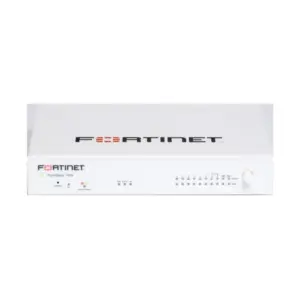
FortiSwitch FS-348G-FPOE Tanzania
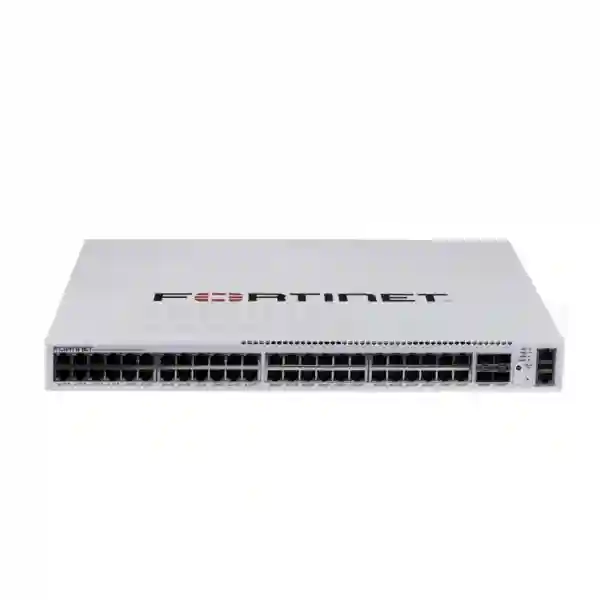
Build a higher-capacity wired edge for Wi-Fi, surveillance, voice, business endpoints and demanding campus devices with a Fortinet switch that combines 24 x 1GE RJ45 ports, 24 x 2.5GE RJ45 ports and four 10GE SFP+ uplinks. The FS-348G-FPOE supports IEEE 802.3bt PoE with a maximum 1540W PoE output, MACsec and Layer 2/3 operation, making it relevant for organizations planning dense powered-device environments and Fortinet-integrated networks.
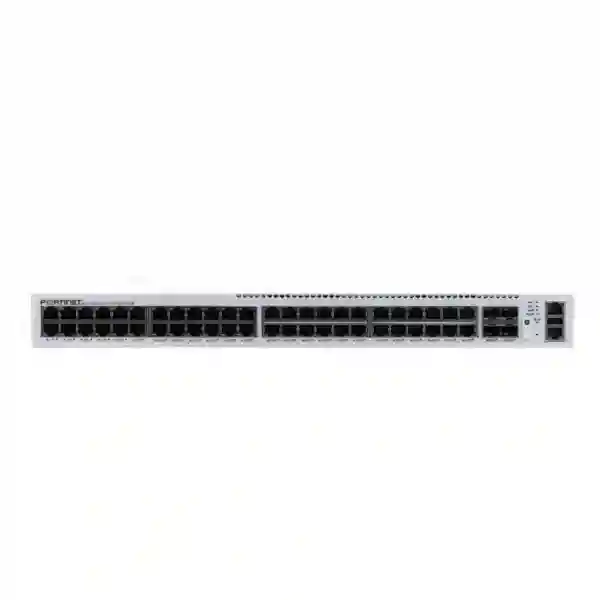
A mixed access design provides 24 Gigabit Ethernet RJ45 and 24 multi-Gigabit 2.5GE RJ45 interfaces.
IEEE 802.3bt support and a maximum 1540W PoE output provide substantial power headroom for compatible powered devices.
Four 10GE SFP+ uplinks help connect the access layer to distribution, aggregation or other network infrastructure.
What is the FortiSwitch FS-348G-FPOE?
The FortiSwitch FS-348G-FPOE is a Layer 2/3 FortiGate switch-controller-compatible Ethernet switch designed for modern access networks. Its defining characteristic is the combination of conventional 1GE access and 2.5GE multi-Gigabit access in one 48-port platform. This makes it useful when an organization has a mixed endpoint estate: ordinary workstations, printers, phones and cameras may not require multi-Gigabit access, while newer wireless access points, high-throughput workstations or other capable endpoints can benefit from 2.5GE links. Instead of assigning premium multi-Gigabit capability to every endpoint, network planners can map faster ports to devices that can use them.
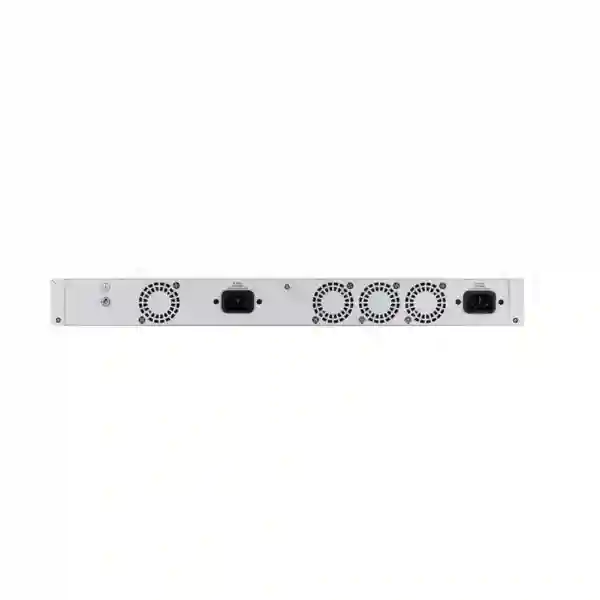
The switch also addresses power density. IEEE 802.3bt PoE and a maximum 1540W PoE output give designers room to plan around access points, cameras, phones, sensors and other compatible powered devices. PoE design still requires careful calculation: the switch budget is only one part of the equation, because each endpoint has its own negotiated requirement, cabling must be suitable, rack power must be planned and UPS capacity should reflect the real connected load. Buyers should therefore provide a device list and expected power requirements when requesting a quotation.
For Fortinet environments, FortiGate switch-controller compatibility and FortiLink deployment can help bring switching into a broader security and networking workflow. The model also supports MACsec, which is relevant where link-layer protection is part of the architecture. Organizations should validate the exact intended topology, FortiOS/FortiSwitchOS compatibility, optics and support entitlement before deployment.
Verified FS-348G-FPOE technical highlights
| Access interfaces | 24 x 1GE RJ45 + 24 x 2.5GE RJ45 |
| Uplinks | 4 x 10GE SFP+ |
| Switching role | Layer 2/3, FortiGate switch-controller compatible |
| Power over Ethernet | IEEE 802.3bt, maximum 1540W PoE output |
| Link security | MACsec |
Where the FS-348G-FPOE fits
The strongest use case is a business or campus access layer with many powered endpoints and a meaningful requirement for multi-Gigabit connectivity. A floor with Wi-Fi access points, IP cameras, phones and user devices can consume both port count and PoE capacity quickly. The mixed 1GE/2.5GE layout lets a designer reserve the 2.5GE ports for higher-throughput devices while continuing to serve standard Gigabit endpoints efficiently. Four 10GE SFP+ uplinks provide a practical path toward upstream switches or fiber-connected network segments.
The switch should be selected as part of a network design rather than by port count alone. Count endpoints, identify which devices need PoE, document their maximum power class, determine which devices can actually negotiate 2.5GE, calculate uplink traffic, decide whether redundant uplinks are required, and check rack power and UPS capacity. Organizations using a FortiGate should also decide whether the operational preference is FortiLink-integrated management or another supported management approach.
FortiSwitch FS-348G-FPOE Tanzania
For Tanzania organizations evaluating the FortiSwitch FS-348G-FPOE, procurement should begin with the network edge rather than the model number. List every device expected to connect to the switch, separate ordinary 1GE endpoints from devices that can benefit from 2.5GE, and identify which endpoints require PoE. This approach is particularly useful for office campuses, hospitality properties, education environments, healthcare facilities, surveillance-heavy sites and organizations modernizing Wi-Fi infrastructure. The switch can consolidate many powered edge devices, but a successful design depends on matching the endpoint mix to the available copper interfaces and power budget.
Power planning deserves special attention. A 1540W maximum PoE output is substantial, yet the actual design must consider the combined endpoint draw, rack electrical circuit, UPS sizing, heat and future additions. Buyers deploying higher-power wireless access points or cameras should provide exact endpoint models during quotation so the expected PoE allocation can be reviewed. Cabling quality also matters for multi-Gigabit Ethernet; existing structured cabling should be assessed instead of assuming every legacy run will deliver the intended link rate reliably.
Organizations already using FortiGate can evaluate FortiLink-based switching as part of their security architecture. That can make the FS-348G-FPOE especially relevant for projects where firewall policy, segmentation, device visibility and LAN operations are being planned together. Review FourTeck Tanzania integrated IT solutions to place switching alongside firewall, Wi-Fi, CCTV, voice and infrastructure requirements, or use the Tanzania technology enquiry page with the switch quantity, endpoint list, uplink requirements and site details.
FortiSwitch FS-348G-FPOE Dar es Salaam
In Dar es Salaam, the FS-348G-FPOE can suit organizations consolidating high-density office, hospitality, retail, logistics or campus access networks. A practical deployment may combine ordinary Gigabit endpoints with newer wireless access points that can use 2.5GE. The mixed port architecture helps avoid a design where every port is over-specified while still providing multi-Gigabit capacity where it has operational value. The four 10GE SFP+ interfaces can be considered for distribution uplinks, fiber runs between communications areas or aggregated paths depending on the topology.
Before ordering, document the building layout and telecommunications rooms. A single 48-port switch may serve one floor or zone, but cable distances, rack locations, redundancy requirements and endpoint distribution determine the correct architecture. Where cameras, access points and IP phones share switching infrastructure, use VLAN and policy design to keep services organized. If the project uses FortiGate, assess FortiLink integration and software compatibility during design rather than after installation.
For quotation preparation in Dar es Salaam, provide the number of switches, number and models of PoE devices, required SFP+ optics, patching requirements, rack and UPS information and whether configuration or migration support is needed. This creates a more meaningful bill of materials than requesting only the switch hardware. The verified FourTeck Tanzania contact page lists Dar es Salaam contact information and can be used to begin the requirement discussion.
FortiSwitch FS-348G-FPOE Mwanza
For Mwanza deployments, the FortiSwitch FS-348G-FPOE is worth considering when a site needs many powered network endpoints and expects traffic growth beyond basic Gigabit access on selected connections. Businesses can assign 1GE ports to conventional users and appliances while reserving 2.5GE ports for capable wireless access points, content-heavy workstations or other multi-Gigabit devices. That port mix supports phased modernization without requiring every connected device to change at once.
A Mwanza project should also evaluate the upstream path. Forty-eight active edge ports can generate significant aggregate traffic, particularly when wireless, video surveillance and business data converge on the same access layer. The four 10GE SFP+ uplinks provide options, but the topology should be calculated around real application patterns, server locations and inter-VLAN routing design. Fiber type, optic compatibility and link distances should be specified before procurement.
PoE planning should use a device schedule rather than a simple endpoint count. Cameras, phones and access points can have very different power requirements. Add future headroom, consider UPS runtime and ensure the rack electrical environment can support the intended load. For a remote or multi-site operation, management and troubleshooting workflows are equally important. FortiGate-integrated FortiLink deployment can be evaluated where the wider environment uses Fortinet security infrastructure.
FortiSwitch FS-348G-FPOE Arusha
Arusha organizations in hospitality, tourism, professional services, education and distributed business environments may need a switching layer that powers wireless, surveillance and voice endpoints while keeping enough capacity for user traffic. The FS-348G-FPOE combines 48 copper access interfaces with a split between 1GE and 2.5GE. This can be useful in a property or campus where newer high-throughput access points coexist with cameras, phones and standard business endpoints.
Hospitality-style networks illustrate why design matters. Guest wireless, operational systems, cameras, staff devices and voice services should not simply be placed into one flat network. Segmentation, uplink capacity and firewall policy need to be planned together. The switch’s FortiGate controller compatibility makes it relevant for organizations considering an integrated Fortinet approach, while MACsec can be evaluated where protected Ethernet links are part of the security requirement.
For an Arusha quotation, identify the number of rooms, buildings or network zones, access-point models, camera count, voice endpoints and any fiber backbone. Specify whether the requirement is a new build, an upgrade or an expansion of an existing Fortinet environment. This helps determine whether the FS-348G-FPOE is the appropriate access switch and what optics, support and infrastructure components should accompany it.
FortiSwitch FS-348G-FPOE Dodoma
In Dodoma, the FS-348G-FPOE can address enterprise, institutional and multi-department network requirements where endpoint density, PoE and segmentation are important. The 24 2.5GE ports are particularly relevant to modern wireless designs because compatible access points can exceed the practical capacity of a single 1GE connection. The additional 24 1GE ports remain useful for ordinary Ethernet devices, helping network planners balance capability and port allocation.
Institutional deployments should define network zones early. Administration, guest access, cameras, voice, building systems and specialized applications may have different security and performance requirements. Layer 2/3 capabilities and integration with FortiGate can form part of that design, but policy architecture, IP addressing and routing responsibilities should be documented before configuration. For high-availability environments, upstream redundancy and power resilience should also be reviewed.
Procurement teams in Dodoma should request a complete technical quotation covering hardware, compatible transceivers where required, FortiCare options, rack power and any implementation services. The official model identifier should be preserved throughout procurement to avoid confusion with non-PoE or lower-power FortiSwitch variants. FourTeck Tanzania’s verified contact page lists a Dodoma office contact and provides an enquiry route for exact-model requests.
FortiSwitch FS-348G-FPOE UAE
For UAE projects, the FS-348G-FPOE can serve as a dense access-layer switch where businesses are upgrading wireless capacity, IP surveillance or converged office infrastructure. The combination of 1GE and 2.5GE copper ports allows network teams to assign bandwidth according to endpoint capability rather than deploying the same speed everywhere. Its four 10GE SFP+ uplinks provide high-speed paths toward aggregation or distribution infrastructure.
UAE deployments frequently involve structured procurement with detailed bills of materials. Include the exact FS-348G-FPOE model, required quantities, optic types, cable standards, FortiCare support period and any FortiGate integration requirements. For PoE-heavy designs, submit the powered-device schedule so the expected load can be compared with the maximum 1540W PoE output. UPS and electrical sizing should be based on the full rack rather than the switch alone.
Organizations coordinating Tanzania and UAE infrastructure can use FourTeck UAE as a regional technology resource while keeping model selection and configuration standards consistent across sites. Consistent VLAN naming, switch templates, firmware policies and documentation can reduce operational differences between locations.
FortiSwitch FS-348G-FPOE Uganda
Uganda organizations considering the FS-348G-FPOE should evaluate whether their access network needs both high PoE density and multi-Gigabit connectivity. The switch is most compelling when many powered endpoints coexist with newer 2.5GE-capable devices. A typical design might use 1GE ports for phones and conventional cameras while allocating 2.5GE ports to wireless access points or high-throughput endpoints.
For multi-site businesses, standardization can be as valuable as raw capacity. Using a consistent switching family with documented FortiLink settings, VLANs, uplink conventions and monitoring practices can simplify branch support. However, each location should still be sized individually because device count, PoE load and upstream bandwidth vary. Confirm optics and fiber requirements for every site rather than assuming the same transceiver fits all links.
Uganda procurement can be coordinated with the FourTeck Uganda regional site. When requesting pricing, include whether the switch will operate with an existing FortiGate, the current firmware environment, expected powered devices and the desired support term.
FortiSwitch FS-348G-FPOE Kampala
Kampala offices, campuses and commercial properties can use the FS-348G-FPOE as a high-density edge platform where wireless, voice, surveillance and user access converge. The 2.5GE ports can reduce an access-layer bottleneck for compatible Wi-Fi infrastructure, while standard 1GE ports remain available for endpoints that do not need additional bandwidth. This creates a practical migration path when a network is modernized in stages.
The high PoE ceiling should be translated into a real power plan. List every powered endpoint, its expected class and whether it may draw more power under peak operation. Add reasonable expansion headroom and size UPS runtime around operational priorities. In a building with security cameras and wireless access points, power continuity can affect both physical security and connectivity, so switch resilience should be considered as part of the facility design.
For Kampala deployments integrated with FortiGate, review FortiLink topology, switch-controller limits for the selected firewall model and software interoperability before rollout. A technically complete quotation should also identify SFP+ optics, patch cords, rack accessories and configuration scope so the access switch is not purchased without the components needed to commission it.
FortiSwitch FS-348G-FPOE Arua
For Arua sites, the FS-348G-FPOE may be useful when an organization wants a consolidated switch capable of serving many PoE endpoints while supporting selected multi-Gigabit connections. The mixed-speed access design is valuable for branches that expect gradual technology refreshes: standard Ethernet devices can remain on 1GE while newer wireless or specialist endpoints use 2.5GE.
Remote-site operations should place extra emphasis on manageability and documentation. Label ports, record VLAN assignments, maintain configuration backups and document uplink optics. Where FortiLink is used, integrated visibility can support a consistent operational model with the FortiGate environment. Remote troubleshooting is easier when physical port mapping and endpoint inventory are accurate.
Power and environmental planning are equally important. A large PoE budget does not eliminate the need for stable rack power and appropriate UPS protection. Calculate the actual endpoint load and expected runtime rather than sizing only from the switch’s maximum specification. For procurement, provide the full endpoint and site schedule so the bill of materials can include suitable accessories and support.
FortiSwitch FS-348G-FPOE Mbarara
Mbarara businesses and institutions upgrading campus or building networks can consider the FS-348G-FPOE where port density and PoE are major requirements. The switch can support a diverse edge, with 1GE allocated to conventional devices and 2.5GE allocated to endpoints that need more throughput. This is particularly useful when wireless infrastructure is upgraded while existing wired endpoints remain in service.
Network planners should calculate the oversubscription relationship between access ports and uplinks. Four 10GE SFP+ uplinks offer useful flexibility, but the correct number of active uplinks depends on traffic patterns, resilience requirements and the distribution design. Camera traffic, wireless client traffic and local server access can create very different load profiles. Measure or estimate those flows before deciding topology.
A complete Mbarara requirement should include FortiGate model if applicable, expected VLANs, number of powered endpoints, optic distances, rack and UPS information and whether migration must occur without extended downtime. Those inputs help determine not only whether FS-348G-FPOE fits, but also how it should be introduced into the existing network safely.
FortiSwitch FS-348G-FPOE Gulu
For Gulu deployments, the FS-348G-FPOE offers a combination of dense copper access, high PoE capacity and multi-Gigabit ports that can support growing institutional or commercial networks. Rather than replacing all edge devices at once, an organization can use the 2.5GE interfaces where they provide measurable benefit and continue to connect ordinary Gigabit equipment to the 1GE interfaces.
Sites with IP cameras and wireless access points should consider both bandwidth and power. Video traffic can be continuous, while wireless traffic can be bursty and dependent on client density. Separating these services logically and ensuring sufficient upstream capacity improves predictability. PoE calculations should account for endpoint startup and peak requirements, not only average draw.
If the switch will be part of a Fortinet Security Fabric environment, document how FortiGate policies, FortiLink management and network segmentation will interact. A standardized configuration template can be valuable for organizations operating multiple branches, but local addressing, uplink and power conditions should still be documented for the Gulu site.
FortiSwitch FS-348G-FPOE Kenya
Kenya organizations can evaluate the FS-348G-FPOE for enterprise access, hospitality, education, healthcare and office modernization projects that require a large PoE envelope. The 24 x 2.5GE ports are relevant to newer wireless deployments and other multi-Gigabit endpoints, while the 24 x 1GE ports preserve capacity for the much larger installed base of standard Ethernet devices.
For a campus design, map the switch to the physical topology. Determine whether it sits in an intermediate distribution frame, main equipment room or branch rack; identify fiber distances; and choose compatible optics accordingly. Where multiple switches are deployed, consider uplink resilience, spanning-tree or other supported design choices and how Layer 3 boundaries will be handled.
Regional procurement and project coordination can reference FourTeck Kenya. Buyers should request the exact FS-348G-FPOE model and identify support, optics and implementation requirements separately so quotations are comparable on scope rather than hardware price alone.
FortiSwitch FS-348G-FPOE Kuwait
Kuwait projects requiring dense powered access can consider the FS-348G-FPOE for office, campus and facility networks. The 48 copper ports combine standard and multi-Gigabit Ethernet, allowing planners to reserve 2.5GE capacity for high-throughput devices while serving ordinary endpoints efficiently. Four 10GE SFP+ uplinks support connections to upstream network infrastructure.
High-density PoE deployments should be coordinated with rack power, UPS and cooling planning. The switch’s maximum 1540W PoE output describes its endpoint-power capability, but the complete electrical design must account for the switch itself and all other equipment sharing the rack or circuit. Endpoint models should be listed explicitly to verify their PoE standards and expected draw.
For Kuwait procurement, FourTeck Kuwait provides a regional route for technology requirements. Include the existing FortiGate model where FortiLink integration is planned, plus firmware, fiber and support requirements, to reduce configuration surprises during deployment.
FortiSwitch FS-348G-FPOE Ghana
Ghana businesses can assess the FS-348G-FPOE where a single access-layer platform needs to serve conventional Ethernet devices and newer multi-Gigabit endpoints. This can simplify staged upgrades because 1GE devices remain supported while selected 2.5GE connections provide additional edge bandwidth. The large PoE budget is relevant for networks with many cameras, access points, phones or other compatible powered devices.
A Ghana deployment should be sized from the application inventory. For wireless, record access-point Ethernet capability and maximum PoE requirement. For CCTV, record camera count, bitrate assumptions and recorder location. For voice, document VLAN and quality-of-service requirements. Combining these inputs makes it possible to judge whether uplinks and power are appropriately sized.
Regional enquiries can use FourTeck Ghana. For organizations standardizing across Africa, consistent switch templates and documentation can simplify operations while each country site retains the addressing, optics and electrical design appropriate to its environment.
FortiSwitch FS-348G-FPOE Nigeria
Nigeria enterprise and campus networks can consider the FS-348G-FPOE for high-density access where PoE demand and wireless modernization are major design drivers. The mix of 24 x 1GE and 24 x 2.5GE ports supports heterogeneous endpoint estates, while four 10GE SFP+ uplinks provide higher-speed connectivity toward the distribution layer.
Power resilience can be particularly important for converged networks because a switch outage may simultaneously affect Wi-Fi, cameras and IP phones. UPS planning should therefore consider business continuity priorities and realistic load. The maximum PoE output should not be mistaken for expected consumption; actual draw depends on the attached devices. Monitoring PoE utilization after deployment can also help identify headroom for expansion.
Organizations coordinating procurement can reference FourTeck Nigeria. A complete request should identify quantity, FortiGate integration, support duration, optics, powered-device schedule and implementation scope. This makes it easier to compare a hardware-only quotation with a complete deployable solution.
FortiSwitch FS-348G-FPOE Seychelles
Seychelles organizations, including hospitality and multi-building properties, may find the FS-348G-FPOE relevant when wireless access, surveillance and business connectivity converge on the same switching layer. The mixed 1GE and 2.5GE port arrangement allows high-capacity access points to receive multi-Gigabit links while standard devices continue to use Gigabit Ethernet.
Property networks should pay close attention to topology and fiber. Separate buildings or communications rooms may require optical uplinks, and the four 10GE SFP+ ports can be incorporated into an appropriate backbone design. Confirm fiber type, distance and transceiver compatibility before procurement. Network segmentation is also important where guest services, operations, surveillance and administration share infrastructure.
PoE capacity should be mapped against access points, cameras, phones and other powered devices zone by zone. This helps avoid concentrating too much load in one rack and makes UPS sizing more accurate. Where FortiGate is already deployed, FortiLink integration can be assessed as part of a unified operational approach, with firmware and topology compatibility checked before implementation.
Integration, deployment and buying guidance
Start by producing a port schedule. For each endpoint, record location, device type, expected Ethernet speed, PoE requirement and VLAN. Allocate 2.5GE ports deliberately rather than randomly. Then create an uplink schedule showing upstream switch, fiber medium, optic type, desired link speed and redundancy. This simple documentation reduces installation errors and makes future troubleshooting easier.
For FortiGate-managed deployments, confirm that the firewall platform, FortiOS release and intended FortiSwitchOS release are compatible with the design. FortiLink can simplify integrated management, but the exact topology and scale should be checked against current Fortinet documentation. Organizations should also decide who owns switch configuration, firmware updates, monitoring and backups after handover.
Security design should include segmentation, management access, unused-port policy, endpoint authentication requirements and whether MACsec is required on specific links. MACsec capability is valuable only when the surrounding architecture and peer devices support the intended protected link. Avoid enabling features simply because they exist; use them where they address a defined requirement.
For broader network planning, the Tanzania site describes network switches, routing and LAN infrastructure alongside Wi-Fi, firewalls, CCTV, structured cabling and UPS requirements. This is relevant because an access switch is dependent on upstream security, cabling and power systems.
Quotation checklist
For an accurate FS-348G-FPOE quotation, provide: required switch quantity; deployment city and site type; existing FortiGate model if any; number of 1GE endpoints; number of 2.5GE endpoints; complete PoE device list; expected future port growth; required 10GE uplinks; fiber type and distances; required SFP+ transceivers; rack and UPS status; FortiCare support preference; configuration or migration scope; and target deployment timeline. For a replacement project, also include the existing switch model and current VLAN/uplink design.
Frequently asked questions
How many access ports does the FS-348G-FPOE have?
It provides 48 copper access ports: 24 x 1GE RJ45 and 24 x 2.5GE RJ45. It also has four 10GE SFP+ uplinks.
Does the FS-348G-FPOE support PoE?
Yes. Fortinet lists IEEE 802.3bt PoE with a maximum 1540W PoE output. Actual endpoint power planning should be based on the devices connected and the complete rack power design.
Can it be managed with FortiGate?
The model is FortiGate switch-controller compatible. For a production deployment, confirm FortiGate model, FortiOS/FortiSwitchOS compatibility, FortiLink topology and scale against current Fortinet guidance.
Why are 2.5GE ports useful?
They can provide more than Gigabit access bandwidth to compatible endpoints, including suitable modern wireless access points and other multi-Gigabit devices. The endpoint and cabling must support the intended link rate.
What should I include in a Tanzania quote request?
Include quantity, city, endpoint count, PoE device models, required uplinks, fiber distances, FortiGate model, support preference and any configuration or installation requirement.
Decision recap
Choose the FS-348G-FPOE when the project specifically benefits from a 48-port mixed 1GE/2.5GE access layer, high IEEE 802.3bt PoE capacity, four 10GE SFP+ uplinks, MACsec and FortiGate switch-controller compatibility. Validate the choice against endpoint speeds, PoE load, uplink design, cabling, rack power, UPS capacity and Fortinet software compatibility. A well-scoped quotation should cover the complete deployable configuration rather than the switch chassis alone.
Consult FourTeck Tanzania about FS-348G-FPOE
Send your exact model requirement, quantity, site location and network details through the verified FourTeck Tanzania contact page. If you are still sizing the solution, include the endpoint list and current network architecture so the discussion can cover port allocation, PoE, uplinks, FortiGate integration and supporting infrastructure.


Reviews
There are no reviews yet.