
FortiSwitch FS-2048F Tanzania
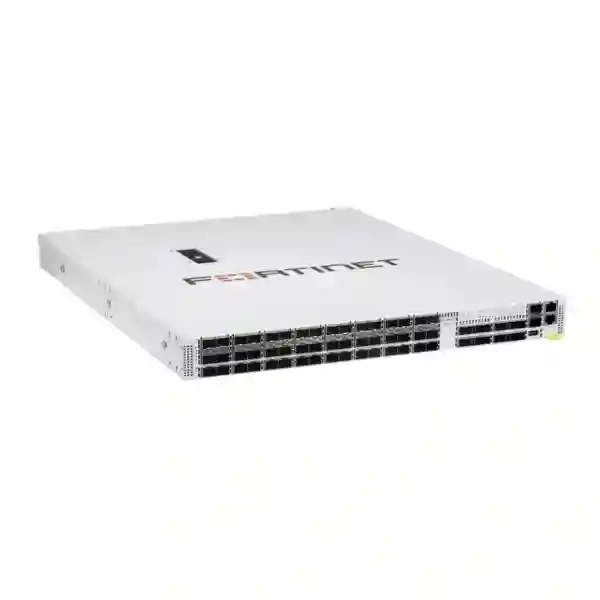
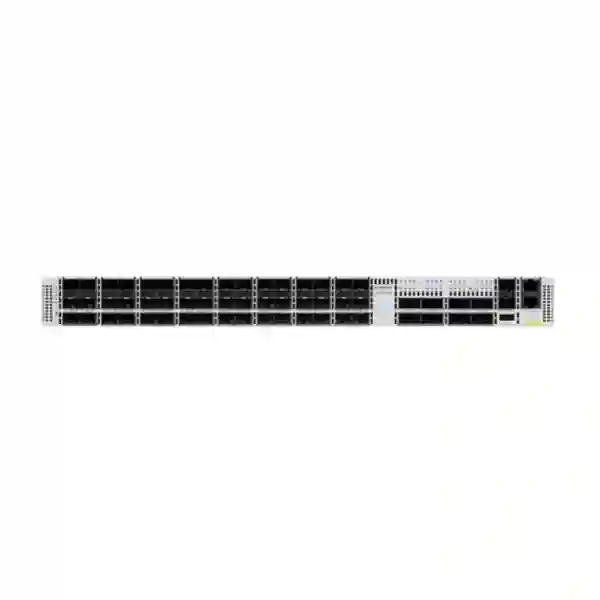
FortiSwitch FS-2048F is a high-density 1RU campus-core and data-center switch for organizations that need 25 Gigabit server or aggregation connectivity and 100 Gigabit uplinks. Fortinet specifies 48× 25G/10G/1G SFP28/SFP+/SFP ports, 2× 10G/1G SFP+/SFP ports and 8× 100G/40G QSFP28/QSFP+ ports. The platform supports Layer 2/3 operation, FortiGate switch-controller compatibility, IPv4/IPv6 routing and a duplex switching capacity of 4000 Gbps. For Tanzanian enterprises, service providers, data centers and large campuses, the practical buying decision should include the required optics, fiber plant, rack airflow, redundancy design, management model and migration path—not simply the switch chassis.
SFP28-class interfaces supporting 25G/10G/1G connectivity.
QSFP28-class interfaces supporting 100G/40G connectivity.
Fortinet-published duplex switching capacity with 4000 Mpps forwarding.
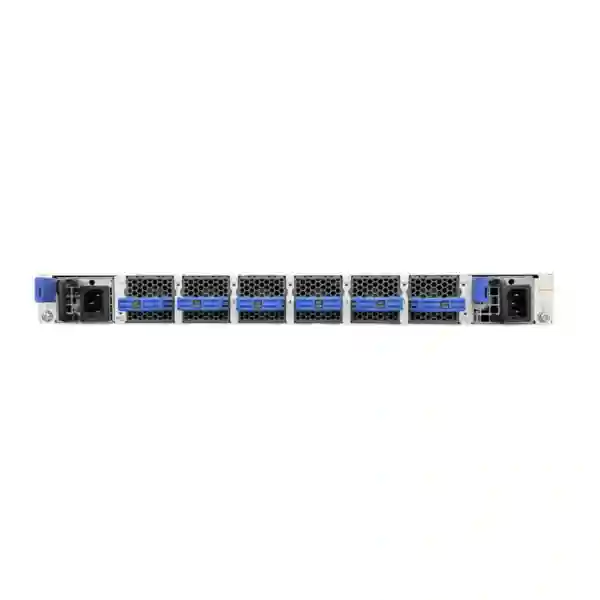
Dense rack-mount form factor with dual AC power supplies.
What the FortiSwitch FS-2048F is designed to solve
Modern data-center and campus-core designs can outgrow conventional 1G and 10G switching when virtualization hosts, storage platforms, backup systems, analytics workloads and high-capacity distribution layers converge. The FS-2048F provides a dense fiber-based platform that lets designers terminate up to 48 high-speed SFP28-class connections while retaining multiple QSFP28-class interfaces for 40G or 100G uplinks. This makes the model relevant where network teams want fewer bottlenecks between compute, aggregation and core layers while retaining a familiar Fortinet management ecosystem.
The model should be selected from an architecture rather than from port count alone. Buyers should identify how many links need 1G, 10G, 25G, 40G and 100G operation, which fiber standards and distances are involved, whether redundant paths are required, and how the switch will connect to existing firewalls, routers, storage and server NICs. Transceiver compatibility should be checked against current Fortinet documentation before ordering optics. Airflow direction is also important in a data-center rack: the standard FS-2048F and the FS-2048F-B2F variant serve different airflow planning needs, so the exact part number must match the hot-aisle/cold-aisle design.
Verified FortiSwitch FS-2048F specifications
| Network interfaces | 48× 25G/10G/1G SFP28/SFP+/SFP; 2× 10G/1G SFP+/SFP; 8× 100G/40G QSFP28/QSFP+ |
| Switching capacity | 4000 Gbps duplex |
| Packet rate | 4000 Mpps at 64 bytes |
| MAC address storage | 96K |
| Network latency | Less than 1 microsecond |
| VLANs | 4K |
| Routing | IPv4/IPv6 routing supported |
| Packet buffer / queues | 32 MB / 8 queues per port |
| Form factor | 1RU rack mount |
Integration and deployment planning
A successful FS-2048F deployment begins with physical and logical design. At the physical layer, document rack position, power feeds, airflow, fiber type, patching, connector format and optic reach. At the logical layer, define VLANs, routed boundaries, link aggregation, redundancy, addressing, monitoring and management access. The switch supports FortiLink and can participate in a Fortinet-centered architecture, but the final operating model should reflect the scale of the environment and the team’s administration requirements.
For organizations already using FortiGate, integration can reduce the operational separation between security policy and switching visibility. That does not eliminate the need for careful change management. Core and data-center switching affects many dependent systems, so migration plans should include configuration backups, rollback steps, maintenance windows, link validation and application testing. Where 25G server links replace 10G connections, confirm that server NICs, transceivers, fiber and negotiated speeds align. Where 100G uplinks are introduced, verify both ends of every link and reserve capacity for growth rather than designing only for current utilization.
FortiSwitch FS-2048F Tanzania
Organizations evaluating the FortiSwitch FS-2048F in Tanzania are typically dealing with a capacity, consolidation or modernization requirement rather than a basic access-switch replacement. A useful procurement brief should state the number of 25G endpoints, required 100G uplinks, current switching platform, expected east-west traffic, redundancy objective, rack and power arrangement, fiber distances and management preference. This information allows the chassis, optics and associated services to be scoped as one system. It also helps avoid a common procurement problem: purchasing a capable switch while leaving transceiver, cabling or peer-device compatibility unresolved.
Tanzanian deployments can span enterprise data rooms, service-provider environments, financial organizations, universities, government infrastructure and private data centers. Each has different traffic patterns. A virtualization cluster may prioritize predictable low-latency server connectivity; a campus core may emphasize resilient aggregation and routed segmentation; a storage-heavy environment may focus on sustained east-west throughput. The FS-2048F’s high-density fiber interface mix can address these designs when the rest of the network is sized accordingly. For broader LAN planning, review FourTeck Tanzania’s business networking and infrastructure portfolio, which places switching alongside firewalls, servers, Wi-Fi, cabling and power considerations.
Before requesting a Tanzania quotation, prepare the exact model, quantity, required airflow direction, optics list and support requirements. The current Fortinet data sheet distinguishes FS-2048F from FS-2048F-B2F, so airflow should never be assumed. Buyers should also identify whether deployment will be standalone or integrated into a Fortinet environment. FourTeck’s verified Tanzania technology enquiry page accepts model-specific requirements and project context, enabling the discussion to focus on fit, compatibility and quotation scope.
FortiSwitch FS-2048F Dar es Salaam
For Dar es Salaam organizations, the FS-2048F is relevant to high-capacity network cores where server, storage, internet edge and distribution traffic must be aggregated without forcing every workload through slower links. Businesses planning data-center refreshes should map existing 1G and 10G connections against future 25G adoption, then decide how many 100G uplinks are required for resilient core connectivity. This staged approach is useful when the organization expects infrastructure growth but cannot replace every server interface at once, because the SFP28-class ports support multiple speeds documented by Fortinet.
A Dar es Salaam procurement request should include rack location, fiber runs, peer switches, firewalls, server NICs and any link-aggregation requirements. Data-center thermal planning matters as much as throughput. Confirm the intended airflow direction before selecting between the standard and B2F model, and coordinate the switch with rack blanking, cooling and cable management. If the switch will connect to FortiGate, define FortiLink and management expectations during design rather than after installation. This gives administrators a clearer path for segmentation, monitoring and operational ownership.
For projects combining switching with perimeter security, buyers can also consider the wider Fortinet ecosystem through FourTeck’s Fortinet-focused regional resource. The purpose of that link is architectural context; availability and Tanzania-specific commercial terms should still be requested separately. For local project discussion, provide FourTeck Tanzania with the exact FS-2048F quantity, optics, link distances, redundancy targets and desired implementation window so the quotation can distinguish hardware from integration needs.
FortiSwitch FS-2048F Mwanza
In Mwanza, organizations considering FS-2048F may be centralizing applications, building a private cloud, upgrading a campus backbone or connecting high-throughput server infrastructure. The switch is not a conventional copper access model: its value comes from dense fiber-based 25G connectivity and 100G-class uplinks. Procurement teams should therefore begin by identifying which systems genuinely need high-speed fiber and which access-layer devices remain better served by separate PoE or copper switches. Separating core requirements from edge requirements prevents unnecessary cost and keeps the topology easier to operate.
Network designers should document every intended uplink and downlink, including speed, optic type, fiber medium, distance and peer interface. If existing equipment uses 10G, the migration plan can account for supported lower-speed operation while future hosts move to 25G. The eight QSFP28/QSFP+ interfaces provide substantial design flexibility for 40G/100G connections, but actual topology should be driven by resilience and traffic analysis. Link aggregation, routed boundaries and failover behavior should be tested before production cutover.
Mwanza buyers should also plan operational details such as configuration ownership, monitoring, spare optics, maintenance windows and power redundancy. High-capacity switching can concentrate business-critical traffic, making documentation and rollback procedures especially important. When sending a request, include current network diagrams where available and state whether the project is a new deployment, capacity expansion or replacement. That context allows the FS-2048F to be evaluated as part of the network rather than as an isolated bill-of-material item.
FortiSwitch FS-2048F Arusha
Arusha enterprises and institutions evaluating FortiSwitch FS-2048F should first determine whether their requirement belongs at the campus core, data-center aggregation layer or high-speed server access layer. Fortinet positions this family for campus core and data-center use, and its 48 SFP28-class ports provide density that can simplify designs otherwise requiring several lower-capacity devices. The decision should nevertheless be based on measured or forecast traffic, not simply the highest available port speed.
For a campus environment, designers can use high-speed uplinks to aggregate distribution switches while keeping routing and segmentation aligned with security policy. For a server environment, 25G links can support virtualization, backup and application traffic where compatible NICs and optics are installed. For either design, confirm VLAN scale, routing needs, redundancy and management before ordering. Fortinet publishes support for 4K VLANs, IPv4/IPv6 routing and link aggregation on the FS-2048F, providing a strong technical basis for segmented enterprise architectures.
Arusha procurement teams can improve quotation accuracy by specifying exact quantities and distinguishing chassis, optics, fiber patching and implementation services. If the network includes wireless, voice or surveillance systems, those edge workloads may require separate access switches with PoE capabilities, while FS-2048F operates upstream as a high-capacity aggregation platform. This layered approach creates a clearer design and helps avoid using a data-center-class fiber switch for endpoints it was not intended to power directly.
FortiSwitch FS-2048F Dodoma
Dodoma organizations planning resilient institutional, enterprise or public-sector networks can evaluate FS-2048F where a dense, high-throughput core is required. The 1RU chassis can consolidate many fiber connections into a compact rack footprint, but rack density increases the importance of disciplined airflow and cabling. Before deployment, confirm front-to-back or back-to-front requirements against the exact ordered variant and document power-feed diversity for the dual AC power supplies.
A sound Dodoma design should also define failure domains. Core switches are commonly deployed with redundant paths so a single link, optic or device failure does not isolate major network segments. The precise topology depends on the surrounding infrastructure, but the FS-2048F’s high-speed interface mix and Layer 3 capabilities give architects options for routed or aggregated designs. Testing should include link failure, restoration, routing convergence where applicable and management reachability.
For procurement, avoid treating transceivers as generic accessories. Check the latest Fortinet compatibility information for every required 1G, 10G, 25G, 40G or 100G optical connection. Include distance and fiber type in the bill of materials, and identify any DAC or other direct-attach requirement separately. A complete Dodoma quotation request should also state whether configuration, migration assistance, documentation or post-deployment support is needed, so commercial comparison is based on equivalent scope.
FortiSwitch FS-2048F UAE
UAE data-center and enterprise buyers often evaluate high-density switching around rack utilization, east-west bandwidth, redundancy and integration with security platforms. The FS-2048F’s 48×25G-class server/aggregation interfaces and eight 100G-class ports make it suitable for designs that need a substantial concentration of high-speed fiber in 1RU. When comparing architectures, buyers should calculate required bandwidth per rack or application cluster and determine whether 100G uplinks provide sufficient headroom for peak and failover conditions.
Environmental planning is particularly important in dense facilities. Airflow direction must align with the rack’s hot-aisle/cold-aisle arrangement, and the correct FS-2048F variant should be selected accordingly. Power feeds, spare PSU strategy, optic thermals and cable routing should be considered before installation. Network teams should also determine whether FortiGate-managed FortiLink operation or another supported management approach best fits their operating model.
For related UAE infrastructure requirements, FourTeck UAE provides regional technology context across networking and security. A quotation request should list the exact part number, required quantity, optics and desired support scope rather than relying on a generic request for a “48-port switch.” This matters because FS-2048F is a specialized high-speed fiber platform, and accurate accessory selection is central to successful deployment.
FortiSwitch FS-2048F Uganda
Ugandan organizations evaluating FS-2048F can use it as part of a data-center modernization or campus-core strategy where conventional 10G aggregation no longer provides sufficient headroom. The planning process should identify server and distribution interfaces that can move to 25G, then map resilient 40G/100G uplinks toward the core, firewall or adjacent switching layer. This makes the migration measurable and avoids upgrading links that do not contribute to a current or forecast bottleneck.
Because the platform concentrates many high-speed links, monitoring and change control should be designed from the beginning. Administrators should define management addressing, authentication, logging, configuration backup and alerting practices. VLAN and routing design should follow organizational segmentation policy, while redundancy should be tested under realistic failure conditions. Where FortiGate is already deployed, FortiLink compatibility can be considered as part of the operational model.
For Uganda-specific technology enquiries, the FourTeck Uganda regional site can provide complementary regional context. Buyers should request current commercial terms rather than assuming price or availability from another market. Include optics, fiber distances, airflow, quantity and deployment scope in the request so the proposed bill of materials can be checked against the actual network design.
FortiSwitch FS-2048F Kampala
Kampala enterprises, financial institutions, service organizations and data-center operators can consider FS-2048F when high-speed aggregation is required between compute, storage and network layers. Its interface density can reduce the number of devices needed for a 25G-focused design, but capacity planning should account for oversubscription and failover. If several 25G links converge toward a small number of uplinks, traffic engineering should reflect actual workloads and peak utilization rather than theoretical port totals.
Migration from an existing core should be sequenced carefully. Teams can inventory VLANs, routed interfaces, trunks, link aggregates and monitoring dependencies, then reproduce only the required configuration on the new platform. A controlled cutover with validation steps is safer than carrying forward years of unused configuration. Where application owners depend on low-latency east-west traffic, test representative workloads after migration and retain a documented rollback procedure.
Kampala quotation requests should identify whether the project requires hardware supply only or broader design and deployment assistance. Optics should be specified by speed, fiber medium and distance. If redundant FS-2048F switches are planned, describe the intended topology and peer devices. This level of detail helps procurement compare like-for-like proposals and reduces the risk of discovering missing transceivers, incompatible links or airflow mismatches during installation.
FortiSwitch FS-2048F Arua
For Arua organizations, FS-2048F is most appropriate when the network requirement justifies data-center-class fiber density rather than ordinary office access switching. A regional headquarters, institutional core or centralized server environment may need to aggregate multiple downstream networks and high-throughput systems. In such cases, the 25G and 100G interface mix can provide room for growth while maintaining a compact rack footprint.
The design should account for the complete path between endpoints. A 25G port on the switch does not create 25G application performance if server NICs, storage, cabling or upstream links remain constrained. Map the path end to end, identify bottlenecks and prioritize upgrades accordingly. Similarly, 100G uplinks should be paired with compatible interfaces and optics at the far end, with fiber type and distance confirmed before procurement.
Arua buyers should include resilience and support expectations in their procurement brief. State whether dual-switch architecture, redundant power feeds, spare optics or scheduled maintenance support are required. If the environment uses FortiGate, mention the exact firewall model and software context so management integration can be considered. A detailed request gives suppliers enough information to distinguish the core switch requirement from the access, cabling and security components surrounding it.
FortiSwitch FS-2048F Mbarara
Mbarara businesses and institutions planning server-room or campus upgrades should assess FS-2048F against a documented traffic and port plan. Start with the number of current 10G links, expected 25G hosts, 40G/100G aggregation requirements and desired growth horizon. The switch’s multi-speed optical interfaces can support transition scenarios, but compatibility must be checked for each transceiver and peer device. This approach makes the investment easier to justify and reduces unnecessary overprovisioning.
Operational simplicity is another consideration. High-capacity switches often sit at the center of many services, so configuration standards, naming conventions, VLAN documentation and monitoring should be established before cutover. If routing is moved onto the FS-2048F, document route ownership and failure behavior. If routing remains elsewhere, define trunks and Layer 2 boundaries clearly. Either approach can work when aligned with the wider security and network architecture.
For procurement, request the exact FS-2048F model rather than a loosely described equivalent, and list airflow direction, power requirements and optics separately. Ask for current lead-time and commercial information at quotation stage rather than relying on static web pricing. If implementation assistance is required, include rack installation, configuration, migration, testing and documentation as explicit scope items so the final proposal can be evaluated transparently.
FortiSwitch FS-2048F Gulu
Gulu network projects that centralize business applications or aggregate multiple buildings can benefit from a high-capacity core only when the surrounding infrastructure is designed to use it. The FS-2048F provides dense fiber connectivity, but access-layer switches, wireless systems and endpoint networks may continue to operate at lower speeds. A hierarchical design can place FS-2048F at the aggregation or core layer while appropriately sized access switches serve users and PoE devices.
Fiber planning deserves particular attention. Record each run’s distance and medium, select compatible optics and ensure patch panels and connectors are suitable for the intended speeds. Where links traverse buildings or sites, account for the physical route and redundancy. High-speed interfaces are valuable only when the optical path is clean, documented and maintainable. Labeling and as-built diagrams reduce troubleshooting time later.
Gulu buyers should also consider lifecycle operations: who will manage firmware, configurations, alerts and change requests; what spares are practical; and how failures will be escalated. These questions are especially important for a core device. Include them in the procurement process alongside hardware specifications. A strong quotation request should identify the existing network, target topology, exact port speeds and desired services, enabling the proposed solution to reflect operational needs rather than only equipment quantity.
FortiSwitch FS-2048F Kenya
Kenyan enterprises and data-center teams can evaluate FS-2048F for 25G server aggregation, high-capacity campus cores and 100G uplink designs. When comparing it with alternative platforms, focus on interface mix, forwarding capacity, management integration, redundancy, optics ecosystem and operational fit. Fortinet publishes 4000 Gbps duplex switching capacity, 4000 Mpps forwarding, sub-microsecond network latency, 96K MAC storage and 4K VLAN support for the model.
A Kenya deployment should be sized from actual workload requirements. Virtualization clusters, backup networks, storage systems and high-volume application platforms can create very different traffic patterns. Estimate normal and peak east-west flows, account for link or device failures, and ensure uplinks retain sufficient capacity during degraded operation. If the design uses multiple switches, document how traffic will be distributed and how maintenance can occur without unnecessary service interruption.
For regional sourcing context, visit FourTeck Kenya. Commercial details should be confirmed for the exact project and destination. Provide part number, quantity, optics, support needs and target topology in the request. This is particularly important for high-speed switching, where a complete bill of materials may include transceivers, fiber assemblies and related network components beyond the chassis itself.
FortiSwitch FS-2048F Kuwait
Kuwait organizations considering FS-2048F should evaluate rack environment, airflow and high-speed fiber architecture together. Dense 25G and 100G switching is commonly associated with server, storage and core workloads where uptime and predictable performance are important. The 1RU form factor conserves rack space, while dual AC power supplies support designs that use separate power feeds. Exact resilience depends on the complete topology and facility design.
Network teams should verify the supported optics for each planned connection and avoid assuming that an existing transceiver will work simply because the nominal speed matches. Document connector type, wavelength, distance and fiber medium. For 100G uplinks, also confirm the peer device and any breakout or link-aggregation design. Configuration planning should cover VLANs, routing, management access, logging and change control before the switch enters production.
Kuwait procurement can be supported with regional context from FourTeck Kuwait. A request for quotation should identify the exact FS-2048F variant, desired quantity and project scope. If the purchase is part of a larger data-center refresh, include adjacent firewall, server, storage and cabling requirements so dependencies can be reviewed before ordering rather than discovered during installation.
FortiSwitch FS-2048F Ghana
Ghanaian organizations building or refreshing data-center and campus-core networks can consider FS-2048F when they need a concentrated set of 25G links and multiple 100G uplinks. The first design question should be whether the workloads justify this class of switch. If most endpoints remain 1G copper or require PoE, a separate access layer will normally be needed; FS-2048F can then provide upstream aggregation for those networks and direct high-speed connectivity for suitable systems.
Capacity planning should include growth and failure scenarios. A design that works only when every uplink is healthy may become congested during maintenance or a fault. Estimate how traffic redistributes when a link fails and ensure remaining paths can carry priority workloads. Where Layer 3 routing is used, define route convergence and gateway placement. Where Layer 2 aggregation is preferred, control broadcast domains and document VLAN boundaries carefully.
Procurement teams should request current availability and quotation information for Ghana rather than extrapolating from prices shown in other markets. Include optics and fiber requirements explicitly, and identify whether implementation services are needed. A clear technical schedule allows proposals to be compared on equivalent scope and helps prevent omissions that can delay a data-center cutover.
FortiSwitch FS-2048F Nigeria
Nigeria’s large enterprise, financial, service-provider and data-center environments can generate the east-west traffic levels that make 25G server connectivity and 100G aggregation relevant. FS-2048F offers a dense interface profile for these architectures, but selection should follow workload analysis. Determine whether the requirement is server leaf connectivity, campus-core aggregation, a routed distribution layer or another role, then validate port counts and uplink ratios against that role.
For resilience, consider redundant switches, diverse fiber paths and independent power feeds where business requirements justify them. The switch’s dual AC supplies are one component of availability, not a complete availability design. Administrators should also prepare configuration backup, monitoring and firmware procedures, and should test failover behavior before carrying production-critical traffic. If FortiGate integration is planned, management and security responsibilities should be documented clearly.
Nigeria quotation requests should specify the exact model and airflow requirement, quantities, optics, peer equipment and desired services. Avoid using marketplace prices as a substitute for a project quotation because support, logistics and accessories can materially change scope. For organizations with multi-country infrastructure, standardizing naming, configurations and spare strategies across sites can make operations more predictable while still allowing local network requirements to differ.
FortiSwitch FS-2048F Seychelles
Seychelles organizations with centralized server infrastructure, hospitality data environments, service-provider networks or institutional cores may evaluate FS-2048F when high-speed fiber aggregation is required. Because island deployments can make logistics and spare planning especially important, procurement should consider the complete operational package: exact chassis, compatible optics, fiber assemblies, power arrangement, documentation and any practical spares identified by the organization’s support strategy.
The network design should separate high-speed core requirements from edge connectivity. User devices, cameras, phones and access points may connect through other access switches, while FS-2048F aggregates those networks and connects servers or upstream systems at higher speeds. This division of roles can make troubleshooting and capacity planning clearer. VLANs and routed boundaries should be designed around security and application needs, not simply around physical switch locations.
Before ordering for Seychelles, validate transceiver compatibility and fiber distances, confirm airflow direction, and document peer interfaces. Include a migration plan if the switch replaces an existing core. A staged cutover with preconfigured links, validation tests and rollback steps can reduce disruption. Procurement requests should state delivery destination and required scope so current commercial and logistics information can be confirmed specifically for the project.
Buying and quotation checklist
For a useful FS-2048F quotation, provide: exact model and quantity; standard or B2F airflow requirement; number and speed of 1G/10G/25G/40G/100G links; fiber type and approximate distance for each optical run; peer switch, router, firewall, server and storage models; desired redundancy topology; rack and power arrangement; FortiGate/FortiLink integration requirement; management preference; installation and migration scope; configuration and documentation requirements; and the target project schedule. Where support subscriptions or cloud-management options are required, ask for the current applicable Fortinet offering for this model rather than assuming a package.
Frequently asked questions
How many 25G ports does FortiSwitch FS-2048F have?
Fortinet specifies 48 SFP28/SFP+/SFP interfaces supporting 25G, 10G and 1G operation, plus two additional 10G/1G SFP+/SFP interfaces and eight 100G/40G QSFP28/QSFP+ interfaces.
What is the switching capacity of FS-2048F?
The current Fortinet Campus Core and Data Center Series data sheet lists 4000 Gbps duplex switching capacity and 4000 Mpps packet forwarding at 64-byte packets.
Is FS-2048F a Layer 2 or Layer 3 switch?
Fortinet describes FS-2048F as a Layer 2/3 FortiGate switch-controller-compatible switch. The data sheet also lists IPv4/IPv6 routing support.
What is the difference between FS-2048F and FS-2048F-B2F?
The published interface and core performance specifications are aligned, while the B2F designation identifies the back-to-front airflow variant. Airflow should be matched to the data-center rack design before ordering.
Does FS-2048F work with FortiGate?
Yes. Fortinet lists the model as FortiGate switch-controller compatible and includes FortiLink support in its ordering guidance. The precise management architecture should be designed around the wider Fortinet deployment.
Which optics should I order?
Choose optics only after confirming required speed, distance, fiber type, connector and peer interface. Compatibility should be validated against current Fortinet transceiver documentation for the exact deployment rather than inferred from speed alone.
Decision recap
FortiSwitch FS-2048F is a specialized high-density switch for campus-core and data-center designs that need 25G connectivity, 100G uplinks, Layer 2/3 functionality and Fortinet ecosystem integration. Its 1RU density and 4 Tbps published switching capacity make it a strong architectural building block where the workload genuinely needs this performance class. The purchasing decision should include optics, airflow, power, redundancy, management and migration planning. Buyers who define those details before requesting a quote are better positioned to receive a complete bill of materials and avoid deployment-stage surprises.
Discuss your FS-2048F requirement
Send FourTeck Tanzania your required quantity, port-speed plan, optics, fiber distances, peer devices and target topology. For broader security architecture, the FourTeck network provides additional regional technology context. Tanzania-specific enquiries should use the verified contact page below so the requirement can be reviewed against the intended deployment.




Reviews
There are no reviews yet.