
FortiExtender Vehicle 212F (FEV-212F) Tanzania
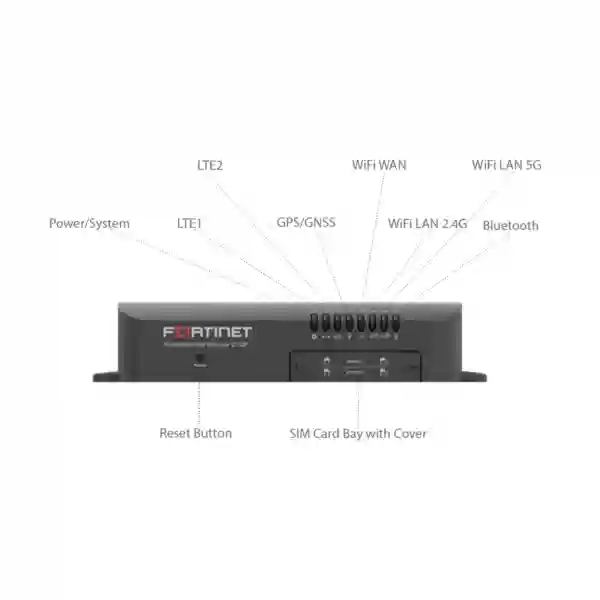
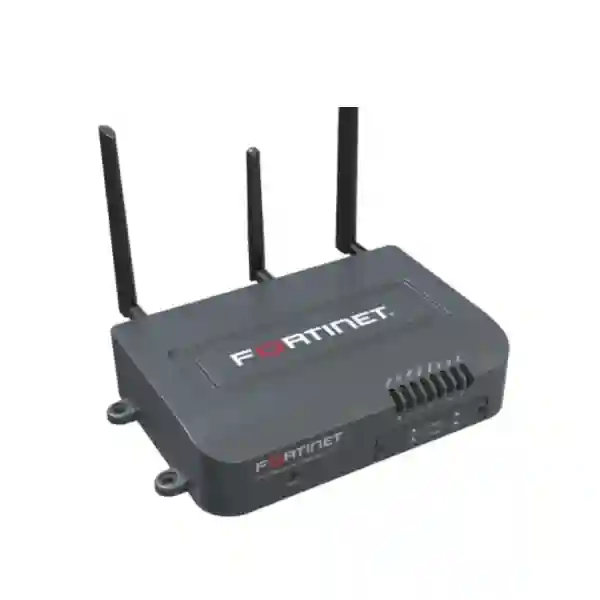
Fortinet FortiExtender Vehicle 212F (FEV-212F) is built for organizations that need dependable cellular WAN connectivity in vehicles and rugged operational environments. For fleet operators, public-service vehicles, field engineering teams, mobile command environments, transport organizations and distributed operational technology, the platform provides a practical way to combine dual LTE connectivity, wired networking, Wi-Fi and location services in one ruggedized appliance. FourTeck helps buyers evaluate the FEV-212F against the actual vehicle, carrier, antenna, power, security and management requirements of a deployment rather than selecting a mobile router on headline specifications alone.
Two CAT-12 LTE modems provide a foundation for resilient multi-carrier mobile WAN designs, subject to carrier, SIM and coverage planning.
The rugged platform is positioned by Fortinet for vehicle and OT applications where ordinary indoor networking hardware may be unsuitable.
One GE WAN, four GE LAN ports, 2×2 dual-band 802.11ac Wi-Fi and GPS/GNSS support simplify mobile network architecture.
What the FEV-212F solves
A connected vehicle often needs more than a single modem. Cameras, onboard computers, ticketing systems, telemetry devices, tablets, sensors and passenger or staff applications may all compete for reliable connectivity while the vehicle moves through areas with changing cellular conditions. The FEV-212F addresses this architecture by combining two LTE CAT-12 modem modules with two dual-SIM arrangements. This does not guarantee uninterrupted service—real performance always depends on carrier networks, antennas, radio conditions, subscriptions and installation quality—but it gives network designers more options for resilience than a simple single-modem endpoint.
The appliance also reduces the number of separate networking components that may be required inside a vehicle. Its wired WAN and LAN interfaces support integration with onboard systems, while built-in dual-band Wi-Fi can serve appropriate local wireless use cases. GPS/GNSS capabilities support location-aware operational designs. An external LTE antenna is required and is not included with the standard FEV-212F, so antenna selection and mounting should be treated as part of procurement rather than as an afterthought.
Verified FEV-212F technical highlights
| Platform | Rugged broadband wireless WAN router for vehicle and OT applications |
| Cellular | 2 × CAT-12 LTE modem modules, up to 600 Mbps downlink / 150 Mbps uplink module rating |
| SIM | Two dual-SIM arrangements |
| Ethernet | 1 × GE WAN and 4 × GE LAN RJ45 ports |
| Wireless LAN | 2×2 2.4/5 GHz 802.11ac Wi-Fi |
| Location | GPS/GNSS systems |
| Antenna note | External LTE antenna required; antenna is not included |
Deployment and Fortinet integration
FEV-212F can participate in Fortinet-managed network designs, including FortiGate LAN Extension scenarios documented for the FortiExtender family. Current Fortinet compatibility documentation lists FEV-212F support across relevant FortiOS 7.x combinations and FortiExtender OS releases, but production deployments should always match the exact firmware and management design to the current compatibility matrix before rollout. This matters for fleets because a standardized software baseline can simplify support, configuration control and change management across many vehicles.
For broader security architecture, buyers can review FourTeck Tanzania networking and security solutions and the wider Fortinet solution portfolio. Organizations operating across East Africa can also use FourTeck Kenya and FourTeck Uganda as regional reference points, while FourTeck Africa supports broader multi-country solution planning.
FortiExtender Vehicle 212F Tanzania
For Tanzania, the FEV-212F is relevant to organizations planning connected fleets across a mix of urban corridors, regional roads and operational sites. The strongest procurement case is usually not simply “mobile internet in a vehicle.” Buyers should define what must stay connected, which applications are operationally critical, how much data they consume, whether the vehicle returns to a depot, and whether two cellular providers are required. The FEV-212F provides the hardware basis for a dual-modem design, but the final outcome depends on SIM plans, carrier coverage, antenna placement, cable routing, vehicle power and application priorities.
Tanzanian fleet projects can include logistics vehicles, buses, service fleets, emergency or public-service vehicles, mobile offices, field engineering units and vehicles supporting remote industrial operations. Each profile creates different requirements. Video traffic can create sustained uplink demand. Telemetry may use little bandwidth but require consistent reachability. Staff Wi-Fi can introduce variable usage. Payment, dispatch or ticketing systems may need traffic prioritization. A useful design workshop therefore maps applications to ports, Wi-Fi, cellular paths and security policy before hardware quantities are finalized.
Carrier diversity is especially important to evaluate. Two modems and multiple SIM positions create options, but inserting multiple SIMs does not automatically create the desired resilience policy. Organizations should decide how links will be selected, how failover will be monitored, which subscriptions will be active, and what happens when a vehicle crosses areas with different radio performance. External LTE antennas are required, so vehicle type, roof material, mounting location, cable length and exposure conditions should be reviewed with the installer. Procurement teams should include compatible antennas and installation accessories in the bill of materials.
For quotation planning in Tanzania, provide the number and type of vehicles, expected deployment locations, preferred mobile operators, required wired devices, Wi-Fi users, GPS/GNSS use, existing FortiGate environment and desired management model. This allows a solution discussion to focus on deployment fit instead of treating FEV-212F as a generic router. Firmware compatibility, subscriptions and supporting Fortinet components should also be confirmed against the intended architecture before ordering.
FortiExtender Vehicle 212F Dar es Salaam
Dar es Salaam deployments often combine dense urban mobility with high operational dependence on connectivity. Logistics fleets serving ports, warehouses, distribution centers and customer locations may need onboard applications to remain connected while vehicles move through different parts of the city. Service fleets may rely on dispatch systems, cloud applications, VoIP, tablets and telemetry. FEV-212F gives designers dual LTE modem resources, Ethernet connectivity and local Wi-Fi in a rugged platform that can consolidate these requirements.
An urban deployment should still be engineered rather than assumed to work uniformly. Buildings, traffic routes, network congestion and vehicle construction can influence radio performance. External antennas should be selected and mounted for the vehicle and frequency environment, with attention to separation, grounding, cable quality and physical protection. Where two operators are planned, teams should test representative routes rather than relying only on coverage maps. The objective is to understand where each provider performs well and how the network should react when conditions change.
For fleets with existing Fortinet security, the FEV-212F can be evaluated as part of a consistent branch, vehicle and remote-access architecture. That can help administrators apply repeatable configuration and monitoring practices across fixed and mobile environments. Before rollout, however, teams should validate the FortiExtender OS and FortiOS combination they intend to use. A pilot group of vehicles is a sensible step for testing modem behavior, Wi-Fi coverage inside the vehicle, application performance and installation durability.
A Dar es Salaam quotation request should identify fleet size, typical routes, onboard endpoints, expected traffic, operator preferences and whether the project requires integration with FortiGate. This information helps determine not only the FEV-212F quantity but also antenna, cabling, mounting, SIM and management requirements. For business-critical fleets, documenting acceptance tests—such as link recovery, application reachability and management visibility—can make deployment sign-off more objective.
FortiExtender Vehicle 212F Mwanza
Mwanza organizations evaluating FEV-212F may be supporting transport, distribution, field services, utilities or mobile operational teams that move between city environments and wider regional routes. This makes route-aware cellular planning important. A vehicle router should be selected around the complete operating pattern, not only performance at a depot. Dual CAT-12 LTE modems can support a resilient design using suitable carrier services, while wired LAN and Wi-Fi provide flexible connections for onboard equipment.
Projects should begin by listing critical and non-critical traffic. Dispatch and telemetry may require dependable low-volume connectivity, while video, software updates and general Wi-Fi can consume much more bandwidth. Separating these requirements makes it easier to define policies and data plans. It also helps procurement teams estimate monthly usage more realistically. When vehicles operate beyond dense urban coverage, testing external antenna choices and carrier combinations becomes particularly important.
The FEV-212F includes GPS/GNSS functionality, which can support location-oriented network or operational designs where properly integrated. Buyers should clarify whether location data will be used by the networking platform, another onboard application or a fleet system, and confirm integration requirements separately. The presence of GPS/GNSS capability should not be interpreted as a complete fleet-management application by itself.
For Mwanza procurement, include the intended number of vehicles, vehicle classes, route geography, existing network security platform, required ports, local Wi-Fi use, preferred carriers and installation responsibility. External LTE antennas are mandatory and not included, so they must be part of the planning conversation. A staged deployment allows teams to validate antenna mounting, power behavior, cellular performance and remote management before scaling across the full fleet.
FortiExtender Vehicle 212F Arusha
Arusha-based transport, tourism, field-service and enterprise fleets may need connectivity across varied operating areas rather than one predictable urban footprint. For these buyers, FEV-212F is most useful when dual cellular resources are designed around route diversity. Two LTE CAT-12 modems and multiple SIM options can support carrier-diverse architecture, while onboard Ethernet and Wi-Fi allow cameras, terminals, laptops, sensors or other approved devices to connect locally.
The quality of a mobile WAN deployment depends heavily on installation. External antennas need appropriate positioning on the vehicle, and installers should consider cable routing, connector protection, interference and serviceability. Power design should reflect the vehicle electrical environment and operational expectations. Network teams should also decide whether Wi-Fi is intended for staff, operational devices or another controlled use, then apply suitable access and security policies.
Where the fleet is part of a larger Fortinet environment, compatibility and centralized operations can be important selection factors. Current Fortinet documentation includes the FEV-212F in supported FortiExtender OS and FortiOS matrices. The exact production combination should still be checked at deployment time, especially when upgrading existing firewalls or standardizing firmware across many sites and vehicles.
Arusha buyers can improve quotation accuracy by describing routes and application priorities rather than asking only for a unit price. State whether the project requires dual operators, how many wired devices will connect, whether Wi-Fi is needed, whether GPS/GNSS will be used, and how the vehicle will be managed remotely. This information helps identify accessories and integration work early, reducing the risk that essential antennas, subscriptions or installation components are missed.
FortiExtender Vehicle 212F Dodoma
Dodoma deployments can include government, enterprise, utility, service and transport fleets that need secure, manageable connectivity while moving between offices, facilities and field locations. FEV-212F provides a rugged platform with dual LTE modem capacity, wired interfaces, Wi-Fi and GPS/GNSS. Its value is strongest where mobile connectivity forms part of an operational workflow and where administrators want a structured network architecture rather than consumer-grade hotspot devices.
A good design separates connectivity availability from application availability. Dual modems can improve WAN options, but applications also depend on DNS, VPNs, cloud services, security policy and remote systems. Testing should therefore include real business transactions rather than only speed tests. If a vehicle supports dispatch, document access, voice, telemetry or video, each workload should be tested under representative movement and failover conditions.
Procurement should also account for lifecycle management. Large fleets benefit from consistent device naming, configuration templates, firmware policy, SIM records, installation documentation and replacement procedures. The FEV-212F can fit a centrally managed Fortinet environment, but operational processes determine whether that capability translates into simpler support. Teams should define who monitors connectivity, who manages carrier accounts and who handles physical vehicle maintenance.
For a Dodoma quote, include deployment scale, vehicle type, intended operators, application list, security requirements, existing FortiGate equipment and expected installation schedule. Confirm external antenna requirements for each vehicle type and identify any environmental constraints. A small pilot can provide useful evidence before a broader rollout, especially when vehicles operate on routes with materially different coverage conditions.
FortiExtender Vehicle 212F UAE
UAE organizations can evaluate the standard FEV-212F for fleet, field and OT connectivity where a rugged dual-LTE architecture is appropriate. Use cases may include logistics, service vehicles, construction support, mobile operations and enterprise fleets. The model combines two CAT-12 LTE modems, multiple SIM positions, Ethernet, dual-band Wi-Fi and GPS/GNSS, allowing several onboard networking functions to be consolidated.
The procurement process should distinguish the standard FEV-212F from the FEV-212F-AM. Fortinet identifies the AM variant for North America, while the standard model is positioned for global markets and its published rugged-series description references EU/APEC/LATAM carrier bands. Buyers should always validate carrier band compatibility and certification requirements for the intended UAE mobile service before purchase rather than assuming compatibility from the model name alone.
Vehicle installations in hot environments require careful attention to the complete installation specification, including equipment location, ventilation, antenna exposure and cabling. Rugged hardware does not remove the need for proper engineering. Fleet teams should also consider whether connectivity will support operational devices only or broader passenger/staff Wi-Fi, because traffic patterns and data-plan requirements can differ significantly.
For multi-country organizations, standardized Fortinet management can be useful when the same security and operational teams support vehicles across regions. A quote request should include vehicle count, operators, application traffic, antenna requirements, management architecture and integration with existing FortiGate systems. Confirm firmware compatibility and carrier requirements before finalizing the bill of materials.
FortiExtender Vehicle 212F Uganda
Ugandan fleets operating between cities, regional centers and field locations can use the FEV-212F as the foundation for a multi-carrier mobile WAN design. Dual LTE modems provide more architectural flexibility than a single cellular connection, while Ethernet and Wi-Fi allow the router to connect onboard operational systems. For organizations already using Fortinet, this can also support a more consistent approach to remote networking and security operations.
Coverage diversity should be tested on real routes. Two SIMs or operators are useful only when the network policy and subscriptions are configured to meet the desired resilience objective. Teams should define what constitutes a failed link, how quickly applications must recover and which traffic should use which connection. Data-plan limits and roaming arrangements should be considered alongside technical configuration.
External LTE antennas are required, making installation design a critical procurement item. Vehicle body type, antenna position and cable routing can influence performance. For fleets serving remote operational sites, installation consistency is particularly valuable because troubleshooting physical issues after deployment may be difficult. Standard installation drawings and photographs can improve support quality across a large fleet.
Uganda buyers should include vehicle types, fleet size, route profile, preferred carriers, onboard devices, Wi-Fi needs and Fortinet integration requirements when requesting a quote. This helps ensure the proposal covers accessories and management needs as well as the appliance. Multi-country customers can also align Uganda deployments with a common regional architecture where appropriate.
FortiExtender Vehicle 212F Kampala
Kampala fleet projects often require reliable connectivity for logistics, corporate transport, field service and mobile operations in a busy urban environment. FEV-212F can connect wired onboard systems through four GE LAN ports and provide local dual-band Wi-Fi, while two LTE CAT-12 modems offer options for carrier diversity. The design should be based on business applications and route behavior rather than maximum theoretical LTE throughput.
Urban radio conditions can change with congestion, building density and movement. Pilot testing should cover representative routes and operating hours. Where business applications depend on persistent sessions, teams should test how they behave during link changes. This is particularly important for VPNs, voice, cloud terminals and real-time dispatch systems. Application behavior can be as important as raw cellular availability.
A standardized vehicle network can also simplify support. Document port assignments, Wi-Fi purpose, SIM ownership, antenna installation and firmware baseline for every vehicle. If the organization uses FortiGate, evaluate the supported management and LAN Extension options against the current Fortinet compatibility matrix. Keeping these records helps operations teams distinguish carrier issues from hardware, configuration or application problems.
Kampala buyers should request a solution-oriented quotation that includes the required antenna and installation components. Provide expected fleet growth so the management approach can scale. If different vehicle classes have different connectivity requirements, define separate profiles instead of forcing one design across all vehicles.
FortiExtender Vehicle 212F Arua
Arua-focused deployments may involve regional logistics, service vehicles, NGOs, field operations and organizations whose vehicles travel beyond dense metropolitan coverage. In these scenarios, the FEV-212F should be assessed primarily as a resilient communications platform. Dual LTE modems and flexible SIM arrangements create options for using more than one cellular service, while onboard Ethernet and Wi-Fi connect operational equipment.
Route surveys are valuable because carrier performance can vary substantially across a working area. Teams should identify critical stops, long road segments and operational sites, then test the intended operators with production-like antennas. External antenna quality and placement matter, and the required antenna is not included with the FEV-212F. Procurement should therefore treat the antenna system as an essential component.
Remote support planning is also important. Administrators need a clear method for monitoring devices, managing firmware and diagnosing cellular issues without physically visiting every vehicle. Where Fortinet management is already used, the FEV-212F can fit into a familiar ecosystem. The exact software versions should be validated before deployment and maintained through a controlled update process.
For Arua quotations, describe operating routes, fleet size, required applications, data volumes, preferred operators and whether the vehicles cross borders. Cross-border operation can introduce roaming, subscription and regulatory considerations that should be addressed separately. A well-defined deployment profile helps turn the hardware purchase into a supportable mobile-network solution.
FortiExtender Vehicle 212F Mbarara
Mbarara organizations with distribution, agriculture-support, field-service, utility or transport fleets can evaluate FEV-212F where vehicles need managed connectivity across changing locations. The dual-modem architecture can support carrier-diverse designs, while four LAN ports and Wi-Fi allow a range of onboard endpoints to share the WAN connection under defined network policy.
Before selecting quantities, map the endpoint inventory inside each vehicle class. A simple service vehicle may connect only a laptop and telemetry device, while a larger mobile unit may carry cameras, terminals, sensors and multiple users. These profiles affect bandwidth, LAN-port use, Wi-Fi capacity and data subscriptions. They may also affect whether additional security or switching components are required.
Installation should be repeatable. Antenna location, cable lengths, device mounting and power connections should be documented so every vehicle follows an approved pattern. This improves troubleshooting and makes fleet expansion easier. Because cellular performance depends on external conditions, acceptance testing should include real routes and application tests rather than relying only on a stationary signal reading.
Mbarara procurement teams should include the existing Fortinet environment, if any, in their request. This allows management and compatibility requirements to be considered from the beginning. Confirm the required firmware combination, cellular subscriptions and external antennas before ordering, and use a pilot deployment to validate assumptions before full-scale installation.
FortiExtender Vehicle 212F Gulu
Gulu deployments may serve transport, humanitarian, public-service, commercial and field teams whose vehicles need connectivity across urban and regional operating areas. FEV-212F provides dual CAT-12 LTE modem resources, wired networking, Wi-Fi and GPS/GNSS in a rugged form factor. This combination can reduce the need for separate cellular and local-network devices inside a vehicle.
For operationally important fleets, resilience should be specified in measurable terms. Define which applications must remain available, acceptable recovery times and how users should work during a carrier outage. Two modems can support a more resilient architecture, but actual service depends on operator coverage, SIM status, antenna performance and configuration. Testing both carriers on representative routes provides better evidence than assuming network diversity.
Security teams should decide how onboard devices are segmented and which services can reach corporate resources. If the FEV-212F is integrated with FortiGate, use current compatibility documentation to select supported software versions. Standardized configuration templates and centralized monitoring can be valuable when vehicles are widely distributed and physical access is limited.
A Gulu quotation should include route information, vehicle classes, endpoint counts, Wi-Fi purpose, expected data consumption and preferred operators. Include external antennas, mounting accessories and installation requirements in the bill of materials. If the fleet may expand, establish a repeatable naming, provisioning and support process from the first deployment phase.
FortiExtender Vehicle 212F Kenya
Kenyan enterprises can consider the FEV-212F for logistics, transport, field service, mobile operations and OT connectivity where rugged dual-LTE capability is needed. Two CAT-12 modems allow designers to plan carrier diversity, while the integrated GE WAN, four GE LAN ports and dual-band Wi-Fi support onboard network connectivity. GPS/GNSS adds location capability for designs that require it.
For fleets moving between major cities and regional routes, carrier testing should be performed against the actual operating footprint. Data usage should also be modeled by application. Video and passenger Wi-Fi can consume far more data than telemetry or dispatch, and this difference affects subscription cost and traffic policy. Defining business-critical traffic helps administrators prioritize the applications that matter most.
Organizations with Fortinet infrastructure can evaluate FEV-212F as part of a consistent security and management architecture. Current Fortinet documentation supports the model in modern FortiExtender OS releases and lists compatibility with relevant FortiOS versions. Production teams should verify the exact matrix at deployment time and maintain a controlled firmware baseline.
Kenya quotation requests should state fleet size, vehicle types, operators, antenna requirements, onboard endpoints, management preferences and any cross-border operation. External LTE antennas are required and should be selected for the intended installation. A pilot across representative routes is recommended before a large rollout so performance, failover and application behavior can be measured.
FortiExtender Vehicle 212F Kuwait
Kuwait fleet and field operations can evaluate FEV-212F for rugged cellular WAN connectivity where dual LTE, local Ethernet and Wi-Fi are useful. Logistics, service, industrial-support and enterprise vehicles may benefit from consolidating mobile WAN and onboard networking into a single Fortinet platform. Carrier band compatibility and local service requirements should be validated before purchase.
Environmental installation planning deserves particular attention. Equipment location, antenna mounting, cable protection and thermal conditions can affect long-term reliability. The FEV-212F requires external LTE antennas, so buyers should include compatible antenna components and professional installation in the project scope. Vehicle power behavior and maintenance access should also be reviewed.
Dual modems create options for resilience, but organizations should define how two services will be used. Possible designs can prioritize one carrier and retain another for backup or use policy appropriate to the network architecture. The correct approach depends on application criticality, subscriptions and management requirements. Testing should include application sessions during link changes, not only basic connectivity.
For Kuwait procurement, provide the fleet profile, required operators, onboard systems, Wi-Fi requirements and existing Fortinet infrastructure. This helps determine whether FEV-212F is the correct model and what supporting components are needed. Firmware compatibility and management architecture should be confirmed before production rollout.
FortiExtender Vehicle 212F Ghana
Ghanaian logistics, field-service, utility and enterprise fleets can use the FEV-212F as a platform for mobile WAN designs that need more flexibility than a single cellular modem. Its two CAT-12 LTE modules, multiple SIM options, Ethernet connectivity, Wi-Fi and GPS/GNSS support a broad range of connected-vehicle architectures.
A successful deployment starts with route and application analysis. Teams should identify where vehicles operate, which carrier services are suitable and which applications are essential. If cameras are involved, uplink demand may become a key design factor. If the vehicle mainly carries telemetry and dispatch traffic, consistency may matter more than peak throughput. Data-plan sizing should reflect these differences.
External antennas must be included in planning because they are required and not bundled with the appliance. Vehicle construction, mounting position and cable quality influence radio performance. Standardizing installation across the fleet improves support and makes performance comparisons more meaningful. A pilot phase can reveal route-specific coverage issues before a large investment.
Ghana buyers should also consider management and security integration. If FortiGate is already deployed, evaluate supported FortiExtender integration and firmware versions. A quotation request should include fleet scale, operators, applications, antennas, installation expectations and management requirements so the proposal reflects the complete deployment rather than only the router.
FortiExtender Vehicle 212F Nigeria
Nigeria’s large and varied operating environments make route-specific planning important for connected fleets. FEV-212F can support logistics, service, energy, field operations and enterprise transport with two CAT-12 LTE modems, Ethernet, Wi-Fi and GPS/GNSS. Dual cellular resources can help organizations design around more than one carrier where appropriate.
Network design should account for the actual application mix. Operational telemetry, payment systems, dispatch, cloud applications, voice and video have different bandwidth and latency sensitivities. Classifying these workloads helps teams choose data plans and determine how traffic should behave when one cellular path becomes unavailable. Carrier diversity should be validated on representative routes.
Physical installation is equally important. External LTE antennas are required, and their placement can materially affect performance. Procurement teams should ensure antenna, mounting, cabling and power components are specified for each vehicle type. Large fleets benefit from a repeatable installation standard and a documented acceptance process covering signal, connectivity, Wi-Fi and remote management.
Nigeria quotation requests should include the regions and routes served, vehicle count, carrier preferences, application inventory, security requirements and Fortinet integration. If vehicles cross national borders, roaming and subscription requirements should be identified separately. The FEV-212F hardware can provide a strong mobile-network foundation, but deployment quality depends on the complete solution design.
FortiExtender Vehicle 212F Seychelles
Seychelles organizations with transport, hospitality-support, utility, service and operational fleets may evaluate FEV-212F when vehicles need centrally manageable cellular connectivity. The platform’s dual LTE modems, wired LAN, Wi-Fi and GPS/GNSS can consolidate several mobile-network functions while supporting a rugged deployment model.
Because operating geography and carrier options differ from larger markets, buyers should validate cellular compatibility and service availability for the exact islands and routes involved. Dual modems can provide architectural flexibility, but resilience depends on whether genuinely diverse network services are available in the required areas. A route test is therefore more useful than assuming that two SIMs automatically provide independent coverage.
External antenna planning remains essential. Antenna selection, mounting position, environmental exposure and cable routing should be reviewed for each vehicle type. Where fleets operate near coastal environments, installers should also follow appropriate equipment and accessory handling practices for the deployment conditions. Any environmental rating or accessory claim should be confirmed from current Fortinet documentation before specification.
For Seychelles procurement, describe the number of vehicles, operating islands, applications, expected data volumes, carriers and management requirements. If the organization uses FortiGate, include the current platform and software version so compatibility can be checked. A small pilot can validate cellular behavior and remote management before scaling the solution.
Buying and sizing guidance
Choose the FEV-212F when the deployment specifically benefits from rugged vehicle/OT positioning, two LTE CAT-12 modem modules, multiple SIM options, integrated Ethernet, Wi-Fi and GPS/GNSS. Do not select it solely because two modems appear to promise double performance. The primary design value is flexibility and resilience. Real throughput is influenced by carrier networks, radio spectrum, signal conditions, subscriptions, antenna systems and traffic load.
Before ordering, verify carrier compatibility, external antenna requirements, vehicle power and mounting, required Ethernet ports, Wi-Fi purpose, firmware compatibility and the management model. Determine whether the organization needs integration with FortiGate and whether the deployment requires additional security, switching or application components. For a fleet rollout, standardize installation and configuration profiles wherever possible.
Common FEV-212F use cases
Connect dispatch terminals, telemetry, approved cameras and driver applications while supporting multi-carrier WAN planning.
Provide mobile connectivity for technicians, laptops, diagnostic systems and cloud workflows across changing service locations.
Support vehicles used as temporary workspaces or operational units where Ethernet, Wi-Fi and resilient cellular WAN are needed.
Frequently asked questions
Does FEV-212F support two LTE modems?
Yes. Fortinet’s current rugged-series documentation lists two CAT-12 LTE M.2 modem modules for the FEV-212F, with two dual-SIM arrangements.
What Ethernet ports are included?
Fortinet lists one Gigabit Ethernet WAN port and four Gigabit Ethernet LAN RJ45 ports.
Does it include Wi-Fi?
Yes. The standard FEV-212F includes 2×2 2.4/5 GHz 802.11ac Wi-Fi.
Is an LTE antenna included?
No. Fortinet states that an external LTE antenna is required and is not included with the standard FEV-212F.
Can FEV-212F integrate with FortiGate?
Fortinet documents FortiGate LAN Extension support for the FEV-212F family and publishes FortiOS compatibility matrices. Always verify the exact software combination planned for production.
What should I provide for a quotation?
Provide fleet size, vehicle types, deployment regions, mobile operators, onboard devices, Wi-Fi requirements, existing Fortinet equipment, antenna needs and any installation or management requirements.
Quotation checklist
For an accurate FEV-212F proposal, prepare the vehicle count and type; operating cities, countries and routes; preferred cellular operators; required SIM strategy; application list; expected data use; wired endpoint count; Wi-Fi purpose; GPS/GNSS requirements; existing FortiGate models and firmware; external antenna expectations; installation responsibility; rollout schedule; and any cross-border roaming requirements. This information allows the appliance, accessories and integration scope to be reviewed together.
Decision recap
FortiExtender Vehicle 212F is designed for rugged vehicle and OT connectivity where dual LTE resources, wired networking, Wi-Fi and GPS/GNSS are useful in one platform. Its strongest fit is a professionally engineered fleet network that values carrier flexibility, remote manageability and integration with a broader Fortinet environment. The appliance should be purchased as part of a complete design that includes external antennas, compatible cellular services, installation, firmware planning and operational support.
Plan your FortiExtender Vehicle 212F deployment
Share your fleet size, routes, operators, vehicle systems and Fortinet environment with FourTeck. A requirements-led discussion can help identify whether FEV-212F is the right platform and which antennas, subscriptions, installation components and management considerations belong in the final bill of materials.




Reviews
There are no reviews yet.