
FortiExtender Vehicle 511G (FEV-511G) Tanzania
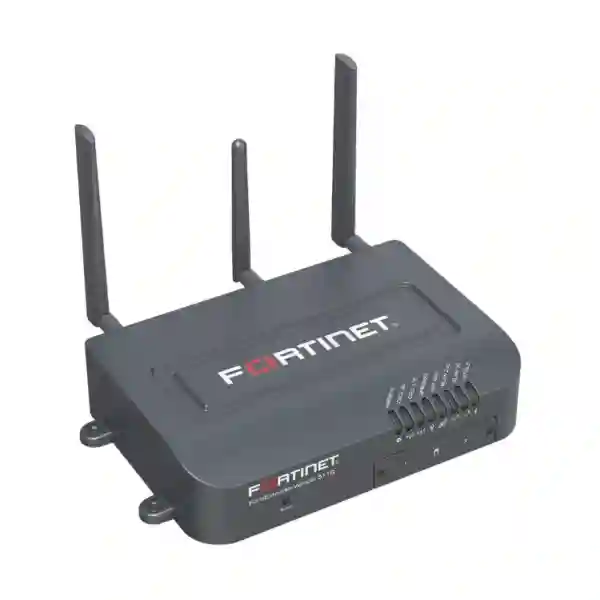
Bring resilient cellular connectivity to connected fleets, service vehicles and operational environments with Fortinet FortiExtender Vehicle 511G. FEV-511G is purpose-built as a 5G vehicle gateway, combining cellular WAN, Wi-Fi 6, wired interfaces, GNSS and rugged construction in one platform. For Tanzanian organizations planning mobile branches, field operations, telemetry, passenger connectivity, public-safety communications or industrial vehicle networking, the practical value is not simply faster cellular access: it is a manageable network edge designed to travel with the operation.
Dual-SIM cellular architecture supports resilient wireless-WAN planning where carrier coverage, data plans and route conditions can vary.
Integrated concurrent 2.4/5 GHz Wi-Fi 6 can serve vehicle users and connected devices without adding a separate access point for suitable deployments.
IP64 protection, wide operating temperature range and shock/vibration qualification suit demanding mobile and OT use cases.
What is FortiExtender Vehicle 511G?
FortiExtender Vehicle 511G, model FEV-511G, is Fortinet’s rugged broadband wireless WAN router for vehicle and operational-technology applications. It uses a 5G Sub-6 GHz cellular modem and supports 4G/LTE fallback, while its integrated Wi-Fi 6 capability provides local wireless connectivity. Fortinet positions the platform for connected fleets, mobile operations, private 5G scenarios and locations where a conventional fixed broadband connection is unavailable, unsuitable or needs a cellular alternative.
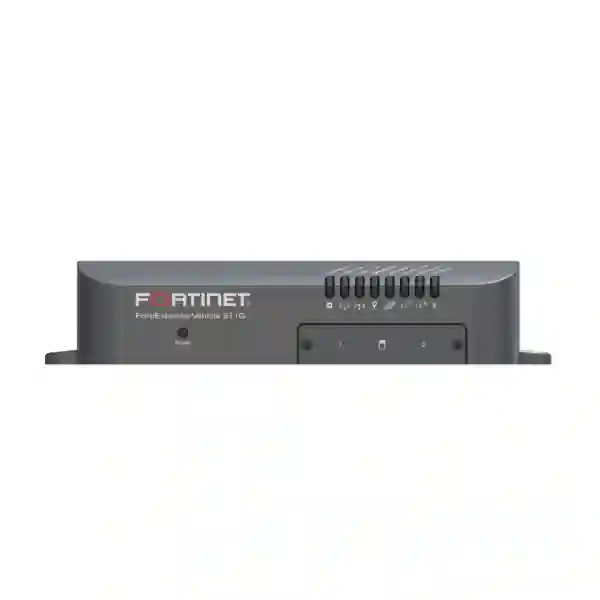
The physical interface set is unusually useful for a vehicle gateway. FEV-511G provides one 2.5GbE WAN interface, four 1GbE LAN interfaces, USB 2.0 Type-A, a console connection and industrial digital I/O for external device control. A dedicated GNSS antenna connection supports location-aware deployments. Power input is designed for 7–50 VDC, making installation planning compatible with a range of vehicle and industrial power designs when implemented according to Fortinet guidance.
Organizations should distinguish FEV-511G from the indoor FortiExtender 511G and the outdoor FortiExtender Rugged 511G. The Vehicle 511G has its own enclosure, interfaces, mounting considerations and environmental profile. Procurement teams should therefore quote the exact FEV-511G model and confirm regional ordering code, carrier requirements, antennas, support and installation accessories before purchase.
Verified FEV-511G technical highlights
| Cellular | 5G NR SA/NSA with LTE/3G support; carrier and band operation depends on software, modem firmware and carrier configuration. |
| SIM | Dual-SIM support with intelligent failover functions; micro-SIM 3FF. |
| Wi-Fi | Concurrent 2.4/5 GHz Wi-Fi 6 (802.11ax). |
| Ethernet | 1 × 2.5GbE WAN plus 4 × 1GbE LAN. |
| Other interfaces | USB 2.0 Type-A, console, digital I/O and dedicated GNSS antenna connection. |
| Power | 7–50 VDC; Fortinet lists 18.5 W average and 20 W maximum consumption. |
| Environment | IP64; operating temperature -40°C to 70°C; 5–95% RH non-condensing. |
| Dimensions / weight | 192 × 130 × 45 mm; approximately 0.96 kg. |
Connectivity planning matters more than headline speed
A vehicle router operates in a changing radio environment. Routes move between cells, terrain and buildings affect signal quality, and different operators can perform differently along the same journey. For that reason, buyers should evaluate FEV-511G around route coverage, SIM strategy, antenna placement, expected concurrent users, application criticality, data consumption and integration with the wider Fortinet network. The dual-SIM capability can support continuity strategies, but failover cannot create coverage where neither selected carrier has usable service.
Vehicle, fleet and OT use cases
FEV-511G can form the connectivity edge for buses, logistics vehicles, field-service fleets, emergency or public-service vehicles, mobile offices and industrial equipment. Wired LAN ports can connect onboard systems while Wi-Fi can support tablets, laptops, handheld devices or passenger-facing access where the deployment policy permits it. GNSS can contribute location information to solutions that make use of positioning data, while digital I/O creates options for integrations requiring external device control.
For operational technology, the benefit is architectural consistency. Instead of treating every mobile asset as an isolated consumer hotspot, network teams can plan the vehicle as a managed branch-like environment. FortiExtender can participate in Fortinet management approaches, including integration with FortiGate and FortiManager, helping administrators apply repeatable connectivity and operational practices across distributed assets.
FortiExtender Vehicle 511G Tanzania
Organizations evaluating FortiExtender Vehicle 511G in Tanzania should begin with the routes and operational environments the connected vehicle must actually cover. Tanzania combines dense urban corridors, intercity highways, industrial zones, ports, tourism routes, mining and agricultural operations. A cellular gateway may therefore experience very different radio conditions during a single working day. FEV-511G gives network designers a capable platform for this variability through 5G/LTE cellular connectivity, dual SIMs, external antennas and wired/Wi-Fi client connectivity, but the quality of the deployment still depends on carrier selection and antenna engineering.
For fleet procurement, define whether connectivity supports mission-critical dispatch, telemetry, cameras, point-of-sale, workforce applications, passenger Wi-Fi, VPN access or a combination. These workloads have different bandwidth and latency expectations. Video can dominate data consumption; transaction and telemetry applications may use less bandwidth but demand continuity. Separate business-critical and guest traffic through an appropriate network design rather than treating the gateway as an unmanaged hotspot.
A Tanzania quotation should identify the exact FEV-511G regional variant, required vehicle antenna kit, SIM/carrier plan, mounting method, DC power design, FortiCare requirement and any FortiGate or FortiManager integration. Carrier-band compatibility should be checked against the chosen Tanzanian operator and the firmware/carrier configuration at deployment time. FourTeck can help structure the bill of materials and clarify how the gateway fits the wider Fortinet architecture without assuming that a particular carrier, route or radio technology is universally available.
For organizations already using Fortinet security, a further consideration is operational consistency. A vehicle edge that fits existing Fortinet management can reduce the number of unrelated platforms the network team must administer. Explore FourTeck Tanzania technology solutions for related infrastructure and procurement context, and use the quotation process to validate the complete vehicle connectivity design before ordering.
FortiExtender Vehicle 511G Dar es Salaam
Dar es Salaam is a natural fit for connected-fleet projects because transport, logistics, port-linked operations, field services and distributed commercial activity all create demand for reliable mobile connectivity. An FEV-511G deployment can connect onboard operational systems over 5G/LTE while providing Ethernet and Wi-Fi interfaces for local equipment. For fleets that spend much of their time in the metropolitan area but also travel beyond it, dual-SIM planning can provide an additional continuity option when one selected network becomes weak or unavailable.
Urban deployments require more than checking whether 5G exists somewhere in the city. Signal conditions change around buildings, depots, industrial areas and congested corridors. The vehicle antenna should be installed according to vendor guidance with attention to cable routing, grounding, separation and physical protection. A roof-mounted antenna can help place the cellular and GNSS elements in a better radio position than an improvised in-cabin installation. Power should also be engineered for the vehicle electrical environment rather than connected casually.
For logistics operators, useful design questions include whether scanners, tablets, cameras, telematics controllers or onboard computers require wired ports; whether drivers need corporate Wi-Fi; whether passengers receive a separate service; and whether applications tunnel back to a central security platform. These answers determine VLAN, security and bandwidth policies. Four Gigabit LAN ports provide flexibility for local devices, while the 2.5GbE WAN interface can support wired connectivity scenarios when the vehicle is docked or operating at a fixed facility.
Dar es Salaam buyers should request a quotation that separates gateway hardware, support, antennas, installation accessories and any central security or management components. This makes comparison easier and avoids overlooking a small but essential part of the deployment. For broader Fortinet requirements, the FourTeck Fortinet specialist site provides additional Fortinet solution context.
FortiExtender Vehicle 511G Mwanza
In Mwanza, FEV-511G can support mobile operations that move between urban business areas, regional roads and remote work locations. Fleet connectivity requirements may come from distribution, field maintenance, utilities, healthcare outreach, construction or other organizations that need applications and devices to remain reachable while vehicles travel. The gateway’s 5G/LTE architecture provides a modern cellular foundation, while dual SIMs allow planners to evaluate two carrier relationships rather than relying on a single service profile.
Route surveys are especially valuable for regional fleets. A carrier that performs well at a depot may behave differently on long routes or at customer sites. Before scaling to dozens of vehicles, a pilot should test representative journeys, measure practical application behavior and document handover or coverage gaps. Where continuous service is essential, define what applications should do during an outage and whether local buffering is available. Cellular redundancy improves resilience but does not eliminate every failure mode.
The FEV-511G enclosure is IP64 and Fortinet specifies operation from -40°C to 70°C, characteristics intended for demanding vehicle environments. Installation teams should still protect connectors, cables and antennas from damage, moisture paths, vibration and maintenance activity. The device should be mounted where airflow, service access and cable strain are appropriate. Vehicle power design should account for the supported 7–50 VDC input and follow Fortinet’s installation guidance.
Mwanza procurement teams can improve quotation accuracy by documenting vehicle type, fleet quantity, expected applications, preferred mobile operators, antenna requirements, central Fortinet infrastructure and support term. This information lets a supplier validate the intended architecture instead of quoting a gateway in isolation. For cross-border or regional projects, FourTeck Africa can also provide context for wider African technology requirements.
FortiExtender Vehicle 511G Arusha
Arusha organizations may evaluate FEV-511G for tourism transport, field services, regional logistics, project vehicles and mobile teams that require business applications away from fixed offices. In these deployments, connectivity often crosses a mixture of city streets, highways and less densely served areas. A rugged vehicle gateway provides a stronger architectural starting point than consumer tethering because the network can be planned around external antennas, wired endpoints, Wi-Fi clients and centrally managed policies.
Tour and transport operators should decide whether the gateway is primarily for operational systems or also for customer connectivity. Those are different services. Operational traffic may include dispatch, booking, vehicle telemetry, payment or staff communication. Passenger Wi-Fi can produce far greater and less predictable consumption. Segmentation, usage policies and suitable mobile data plans are therefore important. The integrated Wi-Fi 6 radio makes local wireless access possible, but capacity planning should be based on actual client counts and applications rather than the Wi-Fi generation alone.
External antenna placement deserves careful attention. Vehicle bodywork, tinted glass, cargo and surrounding structures can influence radio performance. A properly selected and mounted vehicle antenna can improve the gateway’s ability to use available cellular networks and GNSS. Fortinet lists a vehicle roof-mounted antenna accessory for the FortiExtender Vehicle family; the correct accessory and cable arrangement should be confirmed for the exact installation.
For an Arusha quotation, provide fleet size, vehicle electrical characteristics, typical routes, number of wired and wireless devices, required management model and whether a FortiGate already exists at headquarters or the data center. This turns procurement into a solution-sizing exercise and reduces surprises during installation. The objective is a repeatable vehicle network that operations teams can support consistently as the fleet grows.
FortiExtender Vehicle 511G Dodoma
FEV-511G in Dodoma can suit government-related fleets, utilities, contractors, logistics operators, service organizations and enterprises that need secure mobile connectivity between facilities and field locations. Its combination of 5G/LTE, Wi-Fi 6 and Ethernet interfaces lets one device serve as the communications hub for several onboard systems. The ruggedized design is particularly relevant where equipment experiences heat, vibration, dust exposure and frequent movement.
For organizations operating beyond central Dodoma, route-level carrier evaluation is important. Dual SIMs enable intelligent failover strategies, but procurement should not assume that two SIMs automatically equal uninterrupted service. Select operators based on the actual geography of operations, test representative routes and define how applications respond if both cellular links are unavailable. Mission-critical systems may need local application resilience in addition to network redundancy.
The four Gigabit LAN ports can connect fixed onboard equipment, while Wi-Fi 6 can serve mobile devices inside or around the vehicle. Network designers should decide which devices belong to operational, administrative or guest segments and apply suitable controls upstream. Fortinet also supports management and integration approaches that can connect FortiExtender deployments with FortiGate and FortiManager environments, which is useful for organizations standardizing on Fortinet.
A well-prepared Dodoma procurement request should include quantity, intended application, vehicle type, routes, SIM strategy, antenna and mounting requirements, power constraints, management preference and support duration. Ask for confirmation of the exact regional ordering code rather than assuming every FEV-511G suffix is interchangeable. Regional variants exist, and cellular deployments must be matched carefully to the intended carrier environment.
FortiExtender Vehicle 511G UAE
In the UAE, FortiExtender Vehicle 511G is relevant to logistics fleets, field-service organizations, transport operators, construction projects, mobile command environments and industrial operations that require a managed 5G edge. Dense urban 5G coverage can create strong performance opportunities, while routes between emirates and work sites still require careful carrier and antenna planning. The gateway’s 5G/LTE support and dual-SIM design allow network teams to build around changing radio conditions rather than a single fixed access method.
High temperatures and vehicle installation conditions make hardware selection important. Fortinet specifies an operating range up to 70°C for FEV-511G and IP64 ingress protection, but these ratings do not replace correct installation. Avoid locations with unnecessary heat concentration, ensure cables and connectors are secured against vibration, and follow the vendor’s vehicle power and antenna guidance. For fleet projects, standardize the installation kit so each vehicle is built consistently.
Organizations already using FortiGate can consider how vehicle connectivity fits SD-WAN, VPN, security and central management policies. The goal is to avoid creating a separate unmanaged network for every vehicle. Define corporate and guest traffic, remote administration, firmware operations and incident procedures before mass rollout. A pilot fleet can reveal practical data usage and radio behavior before full procurement.
For UAE-specific Fortinet procurement and solution context, visit FourTeck Fortinet UAE. A quotation should identify the exact regional FEV-511G code, antenna kit, support requirement and integration components instead of relying on a generic 511G description.
FortiExtender Vehicle 511G Uganda
Ugandan fleets can use FEV-511G as a vehicle connectivity platform for logistics, service delivery, utilities, transport, mobile teams and remote operational applications. The combination of 5G/LTE and dual SIMs is useful where vehicles travel across areas with differing carrier performance. Rather than selecting connectivity solely by the network available at headquarters, fleet planners should map the roads, towns and sites that matter to the business.
Wired interfaces make the gateway suitable for more than driver Wi-Fi. Four Gigabit LAN ports can attach onboard computers, cameras, telemetry gateways or other Ethernet devices, while integrated Wi-Fi 6 can serve authorized wireless endpoints. Where multiple classes of users share the connection, traffic segmentation and data-plan governance become important. Video, software updates and guest usage can consume mobile data quickly, so policies should reflect business priorities.
The rugged design supports demanding mobile conditions, but deployment quality remains critical. Secure the enclosure, protect cabling, install the appropriate external antennas and design the DC connection according to vehicle electrical requirements. For remote fleet support, document SIM ownership, APN settings, device identifiers, firmware baseline and escalation procedures so maintenance does not depend on one technician’s memory.
For projects extending across Uganda, FourTeck Uganda offers a regional route for related technology enquiries. Buyers should request confirmation of carrier compatibility and exact ordering variant for the intended deployment rather than treating global band listings as a guarantee for every operator configuration.
FortiExtender Vehicle 511G Kampala
Kampala’s dense traffic, commercial fleets and distributed service operations create a practical environment for vehicle networking. FEV-511G can provide cellular WAN for delivery vehicles, service teams, mobile offices and operational fleets while connecting local equipment through Ethernet or Wi-Fi 6. Because a vehicle moves through varying signal conditions, antenna installation and operator selection remain central to performance even in a major city.
A useful pilot should represent real working conditions: depot departure, central-city traffic, customer stops and routes outside the metropolitan core. Record application behavior rather than focusing only on speed-test results. Dispatch responsiveness, VPN stability, transaction completion, camera upload behavior and reconnection after weak coverage can be more meaningful than a single peak-throughput number.
Fleet IT teams should also define management responsibilities. Decide who owns SIM changes, firmware upgrades, security policy, device replacement and carrier escalation. If FortiGate or FortiManager is already part of the enterprise environment, evaluate the supported FortiExtender management model and software compatibility before rollout. Fortinet publishes hardware and FortiOS compatibility matrices, so software versions should be checked as part of change control.
When requesting a Kampala quotation, include the number and type of vehicles, expected deployment schedule, mobile operators under consideration, antenna requirements, support term and integration needs. This gives the supplier enough information to build a relevant bill of materials rather than simply pricing the base gateway.
FortiExtender Vehicle 511G Arua
For operations around Arua and routes serving north-western Uganda, a vehicle gateway should be evaluated around coverage continuity and field maintainability. FEV-511G supports modern 5G/LTE networking, but the strongest design may involve LTE operation in areas where that is the available service. Fortinet’s broad cellular support gives the hardware flexibility; the actual result depends on local operator networks, selected SIMs, antennas and software configuration.
Organizations working in logistics, development projects, field service or regional distribution should identify which applications must remain online. Lightweight telemetry and messaging can tolerate very different network conditions from live video or large file transfers. Prioritizing traffic and planning for temporary disconnection can improve operational reliability. If a vehicle regularly crosses borders, roaming policy, SIM contracts and carrier compatibility need additional review.
Physical installation is equally important for remote operations. Use secure mounting, strain relief and a suitable roof antenna arrangement. Keep installation records for every vehicle, including serial number, SIM assignments, antenna type and power connection. Standardization simplifies troubleshooting when vehicles are far from the central IT team.
Arua buyers should ask for the exact FEV-511G regional variant and verify the cellular bands and carrier requirements applicable to their chosen networks. Include support and spare strategy in the procurement discussion. A robust gateway is one component of continuity; documented operational processes, tested SIMs and replaceable installation components are also part of a maintainable fleet design.
FortiExtender Vehicle 511G Mbarara
Mbarara is a useful base for fleets serving western Uganda, where vehicles may alternate between urban service and longer regional journeys. FEV-511G provides a platform for connecting operational devices, workforce applications and managed Wi-Fi through cellular WAN. Dual SIMs can be configured as part of a failover strategy, allowing planners to use two operator relationships when that improves route coverage or commercial flexibility.
Before rollout, classify applications by importance and consumption. Point-of-sale, dispatch and telemetry may be business critical but relatively light on data. Camera systems, passenger Wi-Fi and cloud synchronization can be far heavier. This distinction helps determine mobile plans and traffic policy. Where vehicles use Fortinet security upstream, the design can also align mobile connectivity with established enterprise controls.
Environmental specifications such as IP64 protection and a wide operating-temperature range make FEV-511G suitable for demanding conditions, yet installers should still choose a protected location and maintain service access. Antennas should be positioned for radio performance rather than convenience alone. The dedicated GNSS connection also needs a suitable view and antenna installation for applications relying on positioning information.
Procurement teams in Mbarara should supply a route profile, fleet quantity, device count per vehicle, expected data applications, preferred operators and central network architecture when asking for a quote. This lets the design account for SIMs, antenna kits, support and management rather than pricing only the router. Pilot testing on representative western routes is recommended before standardizing a large fleet.
FortiExtender Vehicle 511G Gulu
Gulu-based organizations may need mobile connectivity for regional transport, field programs, utilities, logistics or service fleets covering northern Uganda. FEV-511G can act as the onboard communications hub, offering 5G/LTE WAN, four Gigabit LAN ports and Wi-Fi 6 for connected devices. Its value is strongest when deployed as part of a documented fleet architecture rather than as an isolated router.
Coverage planning should focus on the roads and destinations that vehicles actually use. Test at different times and locations, and compare operators where continuity is important. Dual-SIM failover can help manage changes in signal or service, but no design should promise uninterrupted cellular access. Applications should be able to recover cleanly after a temporary loss of connectivity.
For remote support, central visibility and standardized configuration are valuable. FortiExtender supports Fortinet management approaches, and compatibility with the organization’s FortiOS environment should be checked against Fortinet’s current matrix. Document firmware versions and maintenance windows so fleet devices do not drift into inconsistent states over time.
Gulu procurement requests should include installation accessories, antenna requirements, support and any central Fortinet components in addition to the FEV-511G base appliance. Confirm the correct regional ordering suffix and chosen carrier compatibility. If vehicles operate across national borders, include roaming and SIM-management requirements from the beginning, because those commercial decisions can be as important as hardware capability.
FortiExtender Vehicle 511G Kenya
Kenyan enterprises can consider FEV-511G for logistics, transport, field services, utilities, security operations and mobile workforces that need an enterprise-oriented 5G/LTE edge. The gateway supports local wired devices and Wi-Fi 6 clients, enabling a vehicle to operate as a small mobile branch. Dual-SIM support is particularly useful for fleets whose routes cross areas served differently by mobile operators.
A Nairobi-only fleet has different requirements from vehicles traveling to Mombasa, Kisumu, Nakuru or remote project locations. Build the carrier plan around representative routes and application requirements. For high-data workloads such as video, estimate monthly consumption and upload behavior. For transaction or telemetry systems, prioritize resilience and recovery. Passenger Wi-Fi should normally be separated from operational traffic and governed by appropriate usage policies.
Vehicle installation should standardize antenna placement, mounting, power, cable protection and device labeling. FEV-511G accepts 7–50 VDC and is designed for demanding environments, but correct electrical integration remains an installer responsibility. Where GNSS is used, position the relevant antenna to support reliable satellite reception.
For Kenyan procurement and related enterprise technology, visit FourTeck Kenya. Ask for a bill of materials that identifies the exact regional FEV-511G model, antenna accessories, support term and integration requirements. This is especially important because similarly named FortiExtender 511G products have different form factors and interfaces.
FortiExtender Vehicle 511G Kuwait
In Kuwait, FEV-511G can support service fleets, logistics, oil-and-gas field vehicles, mobile teams and industrial operations where cellular connectivity must travel with the asset. Fortinet’s vehicle platform combines 5G/LTE, Wi-Fi 6, Ethernet, GNSS and rugged construction, reducing the need to assemble several consumer devices into a mobile network.
Heat and installation conditions require disciplined engineering. Although Fortinet specifies operation up to 70°C, equipment should not be placed where avoidable solar or engine heat pushes the installation beyond its design envelope. Secure cables and antennas against vibration and service activity. Power integration should follow the vehicle and vendor requirements, with appropriate protection and maintenance access.
For industrial and field operations, determine whether the gateway connects telemetry, laptops, cameras, sensors or specialized equipment. The four LAN ports can support multiple wired endpoints, while Wi-Fi 6 can serve mobile clients. Segment traffic according to risk and operational priority. Where central Fortinet security is used, validate the desired FortiGate/FortiManager management architecture and compatible software versions before deployment.
Kuwait buyers can use FourTeck Kuwait for regional technology enquiries. Request confirmation of the correct FEV-511G regional ordering code and carrier compatibility, and include antennas, support and installation components in the quotation scope.
FortiExtender Vehicle 511G Ghana
Ghanaian fleets can deploy FEV-511G where business operations require a managed cellular network inside vehicles. Logistics, utilities, field service, transport and mobile project teams can connect onboard devices over Ethernet or Wi-Fi while the gateway uses 5G/LTE for wide-area access. Dual-SIM capability can support a carrier-diversity strategy when routes pass through areas with different network strengths.
For Accra-centric fleets, urban radio performance may be strong but congestion, buildings and route changes still affect service. Vehicles traveling nationally need a broader coverage assessment. A proof of concept should test the applications that matter, not just raw throughput. Confirm VPN stability, cloud application recovery, telemetry delivery and any video upload requirements across representative journeys.
Antenna and power installation influence the quality and reliability of the result. Use the appropriate vehicle antenna system and follow Fortinet installation guidance. Keep cables protected and label SIM assignments clearly. For large fleets, maintain a configuration inventory that records hardware, firmware, carrier and installation details for each vehicle.
A Ghana quotation should include the exact FEV-511G variant, antenna kit, support term and any central Fortinet components. Confirm mobile carrier compatibility at the time of deployment because cellular band support is affected by modem firmware, Fortinet software and carrier configuration. The hardware provides broad capability, but deployment validation remains essential.
FortiExtender Vehicle 511G Nigeria
Nigeria’s scale and diversity make route-specific planning especially important for vehicle connectivity. FEV-511G can support corporate fleets, logistics, energy operations, field services, transport and mobile teams by combining 5G/LTE WAN, Wi-Fi 6 and wired Ethernet in a rugged platform. Dual SIMs give network teams a way to design around more than one operator, subject to coverage and commercial requirements.
A fleet operating within Lagos faces different conditions from vehicles traveling between states or serving industrial and remote sites. Build a radio profile around actual routes and select carriers accordingly. For mission-critical applications, define offline behavior and reconnection logic because even a multi-carrier strategy cannot guarantee continuous service everywhere. Where video or passenger Wi-Fi is involved, model data usage carefully to avoid unexpected mobile costs.
FEV-511G’s Ethernet interfaces make it possible to connect onboard computers, cameras and other networked equipment directly. Wi-Fi 6 can serve staff devices or controlled passenger services. Network segmentation should protect operational systems from less-trusted clients. If the enterprise uses FortiGate, consider how vehicle traffic will be secured and centrally managed as part of the wider architecture.
For procurement, specify vehicle count, route geography, operator preferences, device types, antenna requirements, support and deployment schedule. Confirm the exact regional ordering code and current carrier compatibility. This avoids confusion with indoor and outdoor FortiExtender 511G models and gives the supplier enough detail to quote a complete deployment.
FortiExtender Vehicle 511G Seychelles
Seychelles deployments may involve service vehicles, hospitality transport, utilities, government operations and mobile teams working across island road networks. FEV-511G offers a compact enterprise vehicle gateway with 5G/LTE, Wi-Fi 6, Ethernet and GNSS capabilities. The device can consolidate connectivity for multiple onboard systems while providing a manageable platform for organizations that already use Fortinet technologies.
Island geography means procurement should focus on actual local carrier technology and coverage rather than assuming that every global 5G capability will be used. Verify the supported bands and operator configuration for the selected FEV-511G regional variant. Dual SIMs can provide flexibility, but the value depends on available carrier diversity and the organization’s data plans.
For hospitality or passenger transport, separate operational connectivity from guest access. Booking systems, driver communications and payment applications should not compete uncontrolled with passenger streaming. Wi-Fi 6 provides the local radio platform, while suitable traffic policies and mobile plans determine the user experience. For utility and service fleets, prioritize telemetry, work-order and communication applications according to operational needs.
Vehicle installation should account for antenna position, salt-laden environments, cable protection, power and maintenance access. IP64 protection is useful, but connectors and installation components still require appropriate care. A quotation should cover the complete installation kit and support requirements, with carrier validation completed before fleet-wide rollout.
Management, FortiGate integration and software compatibility
Fortinet positions FortiExtender as part of its Secure Networking portfolio. Depending on deployment mode, organizations can manage FortiExtender through Fortinet platforms and integrate cellular WAN with FortiGate. This is useful when the vehicle or remote edge must follow the same operational standards as fixed branches. Enhanced LAN Extension uses VXLAN-based techniques to extend networking from a FortiGate toward FortiExtender deployments.
Software compatibility must be treated as a change-control item. Fortinet publishes FortiExtender hardware/FortiOS and FortiExtender OS compatibility matrices. FEV-511G is supported by current FortiExtender OS releases, while FortiOS support varies by FortiOS version. Before upgrades, check the current matrix rather than assuming a version combination is supported indefinitely.
How to select and size an FEV-511G deployment
1. Map routes
List cities, highways, remote sites and border crossings. Test carrier performance where the fleet actually operates.
2. Inventory applications
Separate critical telemetry and transactions from high-volume video, updates and guest traffic.
3. Define interfaces
Count wired endpoints, Wi-Fi clients, GNSS requirements and any digital-I/O integration.
4. Engineer installation
Choose antenna placement, mounting, DC power protection and cable routes suitable for each vehicle type.
5. Plan management
Confirm FortiGate/FortiManager integration, firmware lifecycle, monitoring and remote-support responsibilities.
6. Pilot before scale
Test representative vehicles and routes before standardizing hardware, SIMs and installation kits across the fleet.
Quotation checklist
For a more accurate FortiExtender Vehicle 511G quotation, provide the number of vehicles, vehicle types, operating countries and routes, preferred mobile operators, expected wired endpoints, approximate Wi-Fi client count, key applications, anticipated video use, GNSS requirement, mounting constraints, available DC power, desired antenna arrangement, existing FortiGate/FortiManager environment, required support term and deployment schedule. Also state whether the project needs only hardware supply or assistance with design and integration planning.
Frequently asked questions
Is FEV-511G a 5G router for vehicles?
Yes. Fortinet identifies FortiExtender Vehicle 511G as a 5G vehicle gateway / rugged broadband wireless WAN router intended for vehicle and OT applications.
Does FortiExtender Vehicle 511G support Wi-Fi 6?
Yes. FEV-511G supports concurrent 2.4 GHz and 5 GHz Wi-Fi 6 (802.11ax), allowing suitable onboard wireless clients to connect locally.
How many Ethernet ports does FEV-511G have?
Fortinet lists one 2.5GbE WAN port and four 1GbE LAN ports on the Vehicle 511G.
Does it support two SIM cards?
Yes. The platform supports dual SIMs with intelligent failover features. Actual continuity depends on the selected carriers, coverage and configuration.
Is FEV-511G waterproof?
Fortinet specifies an IP64 ingress-protection rating. That means the enclosure has defined dust and splash/water protection, but it should not be described as suitable for immersion. Installation must follow the vendor’s environmental guidance.
Can FEV-511G work with FortiGate?
Fortinet supports FortiExtender integration and management with FortiGate in supported configurations. Always verify the current FortiOS compatibility matrix for the intended software versions.
What should I confirm before ordering in Tanzania?
Confirm the exact regional ordering variant, mobile operator compatibility, SIM strategy, antenna kit, vehicle power and mounting requirements, support term and integration with existing Fortinet infrastructure.
Decision recap
Choose FEV-511G when the project needs an enterprise-oriented cellular gateway specifically designed for vehicles or demanding OT environments, with 5G/LTE, dual SIMs, Wi-Fi 6, multiple Ethernet ports, GNSS and rugged construction. The strongest deployments pair the hardware with tested carrier coverage, a correctly installed antenna system, standardized vehicle power/mounting and a clear central-management design. Do not select it only by the 5G label; select it because its complete interface and management architecture matches the fleet requirement.
Talk to FourTeck about FEV-511G
Share your fleet size, routes, applications, preferred carriers and existing Fortinet environment. FourTeck can use those details to prepare a more relevant procurement discussion for FortiExtender Vehicle 511G, associated antennas, support and related network components. For broader regional requirements, FourTeck network resources include FourTeck Africa, FourTeck Kenya, FourTeck Uganda and the primary FourTeck Tanzania website.




Reviews
There are no reviews yet.