
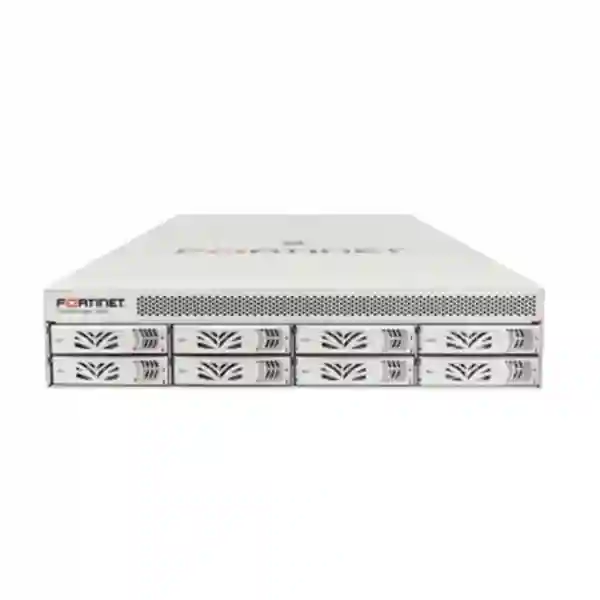
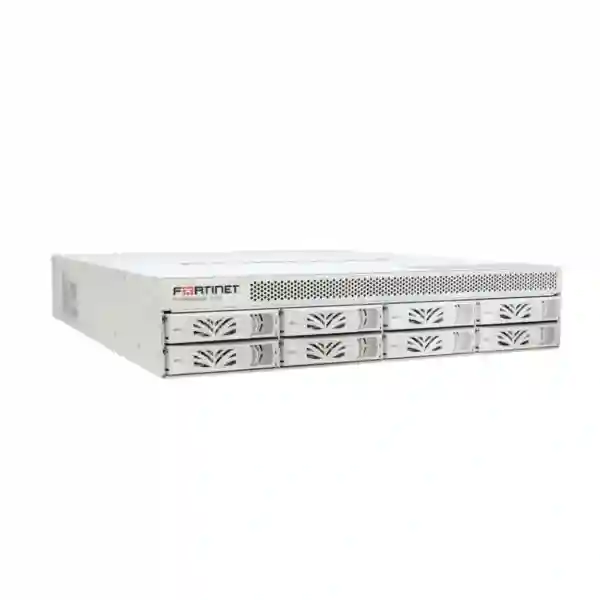
FortiManager FMG-410G Tanzania
FortiManager FMG-410G is a dedicated Fortinet centralized-management appliance for organizations that need consistent administration across distributed security infrastructure. The current Fortinet datasheet specifies support for 150 devices or VDOMs by default, a sustained log rate of 50, 2 GB/day, 32 TB raw storage using eight 4 TB drives, 24 TB usable storage after RAID, a default RAID 50 configuration, four GE RJ45 ports, two SFP interfaces and a 2RU rackmount form factor. For Tanzanian enterprises, service providers and multi-site organizations, the practical value is centralized policy administration, controlled configuration workflows and a common operational point for managed Fortinet environments.
Default appliance capacity published by Fortinet. Each VDOM on a physical or virtual device counts as one licensed network device.
Eight 4 TB drives with 24 TB usable capacity after RAID and broad RAID-level support.
Rackmount platform with four GE RJ45 and two SFP interfaces for management connectivity.
Centralized Fortinet Management for Distributed Networks
The FMG-410G is suited to organizations whose security estate has moved beyond isolated firewall administration. A centralized management platform can help administrators organize policy packages, device configuration, administrative domains and controlled changes across many managed systems. This is especially relevant when branches, data centres, campuses or customer environments need repeatable configuration practices. Buyers should size the platform against the number of managed devices and VDOMs, operational growth, administrative separation requirements, software compatibility and support lifecycle rather than choosing only by current firewall count.
Fortinet publishes RAID 0, 1, 1s, 5, 5s, 6, 6s, 10, 50 and 60 support for the FMG-410G, with RAID 50 as the default. The appliance supports removable hard drives and lists an optional redundant hot-swap AC power supply rather than an included redundant supply. Procurement teams should therefore confirm the exact bill of materials, support term and any optional hardware before issuing a purchase order.
FortiManager FMG-410G Verified Specifications
| Official hardware code | FMG-410G |
| Devices/VDOMs default | 150 |
| Storage | 32 TB (8 × 4 TB); 24 TB usable after RAID |
| Default RAID | RAID 50 |
| Interfaces | 4 × GE RJ45, 2 × SFP |
| Form factor | 2RU rackmount |
| Console | RJ45 |
| Airflow | Front to back |
FortiManager FMG-410G Tanzania
Organizations evaluating FortiManager FMG-410G in Tanzania are usually solving an operational problem rather than simply adding another appliance. As Fortinet deployments grow across headquarters, branches, remote sites and hosted environments, separate administration can increase configuration drift and make controlled change management harder. FMG-410G provides a purpose-built centralized platform whose published default capacity of 150 devices or VDOMs gives procurement and security teams a concrete sizing reference. A Tanzania deployment plan should document every managed Fortinet device, every VDOM that counts toward licensing, anticipated growth, administrative domains, configuration ownership and the software versions in use. That inventory makes the quotation more accurate and reduces the risk of choosing a platform around only today’s estate.
Infrastructure planning should also cover rack space, power, cooling, management-network addressing and resilience. FMG-410G is a 2RU appliance with front-to-back airflow. Fortinet lists an optional redundant hot-swap AC power supply, so buyers requiring power redundancy should make that requirement explicit instead of assuming a second supply is standard. Storage planning should distinguish the published 32 TB raw capacity from 24 TB usable capacity after RAID. Organizations with governance requirements can also evaluate how centralized administration fits change approvals, administrator roles, backups, audit processes and disaster-recovery procedures.
For a Tanzania quotation, provide the number and models of Fortinet devices, VDOM count, current FortiOS versions, expected expansion, preferred support period, rack and power requirements and whether migration from an existing FortiManager environment is involved. FourTeck can then frame the commercial request around the actual environment instead of a generic hardware quote. Related security planning can begin at FourTeck Tanzania, while broader Fortinet solution context is available through FourTeck’s Fortinet specialist site.
FortiManager FMG-410G Dar es Salaam
For businesses in Dar es Salaam, FortiManager FMG-410G can be considered when network security operations span a head office, branch locations, data-centre resources or multiple business units. The core buying question is whether centralized administration will simplify the operational model. Teams should map managed FortiGate systems and VDOMs, identify which administrators need access, determine how policy changes are reviewed, and define how configuration templates should be applied. With 150 devices/VDOMs supported by default, the FMG-410G targets environments where a dedicated management appliance can consolidate a meaningful Fortinet estate without jumping immediately to the much larger appliance tiers.
Dar es Salaam procurement teams should separate hardware capacity from deployment readiness. Rack availability, management VLAN design, DNS and NTP dependencies, backup procedures, software compatibility and support coverage should all be documented before installation. The appliance’s four GE RJ45 and two SFP interfaces provide management connectivity choices, while its 2RU chassis requires appropriate rack planning. Because the second hot-swap AC supply is optional according to Fortinet’s current datasheet, organizations with dual-power rack designs should include that option in their requirements. The published storage figures should likewise be read correctly: 32 TB is raw storage and 24 TB is usable after RAID.
A useful request for quotation should state the current number of devices and VDOMs, expected three-year growth, FortiManager migration requirements, support term, and whether implementation assistance is required. This helps distinguish a hardware-only purchase from a complete centralized-management project. Buyers can also review FourTeck Africa solutions for wider regional technology context and use the Tanzania contact route for a project-specific commercial discussion.
FortiManager FMG-410G Mwanza
Mwanza organizations with distributed branches, warehouses, campuses or service locations can use centralized management to reduce the operational burden of maintaining security policies device by device. FMG-410G should be evaluated as a management control point: administrators can plan consistent policy deployment, configuration standards and controlled changes while retaining an architecture appropriate to their organization. The published 150-device/VDOM default capacity is particularly useful during sizing because VDOMs must be counted, not just physical appliances. A network with fewer physical firewalls can still consume more management capacity when virtual domains are used extensively.
Deployment preparation in Mwanza should include reliable management connectivity between the FortiManager appliance and the systems it will administer. Teams should define addressing, routing, access-control rules, name resolution, time synchronization and operational backup procedures before onboarding production devices. Physical installation also deserves attention: the FMG-410G is 2RU, uses front-to-back airflow and supports a broad set of RAID modes. Fortinet lists 24 TB usable storage after RAID from 32 TB raw capacity. These facts help infrastructure teams plan rack and storage expectations without relying on reseller shorthand.
When requesting pricing, describe the managed estate rather than asking only for an FMG-410G unit price. Include device models, VDOMs, firmware versions, locations, administrative teams, growth expectations and desired support duration. If the project also includes branch firewall upgrades or connectivity redesign, identify those workstreams separately so the management platform can be sized around the future architecture. A structured scope gives procurement, IT and security stakeholders a common basis for evaluating the quotation.
FortiManager FMG-410G Arusha
Arusha enterprises, hospitality groups, institutions and multi-site businesses may consider FMG-410G where consistent Fortinet administration across geographically separated environments has become difficult. Centralized management is most valuable when the organization first establishes clear ownership of policies, templates, device groups and change approvals. FMG-410G’s default 150 devices/VDOMs capacity offers a defined boundary for initial sizing, but planners should reserve room for expansion and remember that each VDOM counts as a licensed network device under Fortinet’s published notes.
For deployment, treat the appliance as critical management infrastructure. Document rack position, dual-power expectations, management interfaces, backup strategy and administrator access before migration. The chassis provides four GE RJ45 and two SFP interfaces and occupies 2RU. Its eight 4 TB drives provide 32 TB raw capacity with 24 TB usable after RAID, and Fortinet specifies RAID 50 as the default. Organizations that require redundant hot-swap power should explicitly request the optional second AC power supply in the bill of materials.
A strong Arusha procurement brief should explain whether this is a new deployment, a replacement, or a migration from virtual or older FortiManager infrastructure. Include the current and target device counts, VDOM totals, FortiOS versions, support requirements and internal change-management process. That information enables a more useful discussion about hardware, services and operational readiness. For broader East African requirements, FourTeck Kenya provides a related regional technology resource.
FortiManager FMG-410G Dodoma
Organizations in Dodoma considering FortiManager FMG-410G may include institutions and enterprises that need centralized governance for a growing Fortinet environment. The appliance can provide a consistent management layer, but successful deployment depends on policy and process design as much as hardware. Begin by listing every managed Fortinet device and VDOM, grouping them by function or location, identifying administrators and approval roles, and documenting which configurations should be standardized. This turns the project from an appliance purchase into an operational improvement initiative.
Capacity planning should use Fortinet’s current specifications: 150 devices/VDOMs by default, 32 TB raw storage, 24 TB usable after RAID, four GE RJ45 plus two SFP interfaces, and a 2RU rackmount chassis. The appliance supports multiple RAID modes and defaults to RAID 50. Power resilience should be checked during quotation because Fortinet describes the redundant hot-swap AC power supply as optional. These details should appear in the technical requirement so bidders are responding to the same scope.
For Dodoma projects, also define software compatibility, onboarding sequence, backup and recovery procedures, administrative access, and support escalation expectations. If existing firewalls are already in production, migration should be staged to protect service continuity. Procurement teams can request separate line items for hardware, support and any professional services so commercial comparisons remain transparent. The goal is a management platform that fits the documented environment and leaves a practical path for future Fortinet growth.
FortiManager FMG-410G UAE
UAE organizations evaluating FMG-410G often operate dense branch, campus, data-centre or managed-service environments where consistent configuration and policy control are important. The appliance’s default capacity of 150 devices/VDOMs provides a clear starting point for medium-scale centralized management. Buyers should count VDOMs accurately and model future expansion before selecting the platform. Where separate business units or customer environments need administrative separation, the design should document governance boundaries and operational responsibilities before onboarding begins.
Data-centre planning should account for the 2RU chassis, front-to-back airflow, management interfaces and power architecture. The FMG-410G includes four GE RJ45 and two SFP interfaces. It has eight 4 TB drives for 32 TB raw storage and 24 TB usable after RAID, with RAID 50 as the default. Fortinet lists the redundant hot-swap AC power supply as optional, an important detail for UAE facilities designed around A/B power feeds. Confirm the exact bill of materials and support package at quotation stage.
For UAE commercial and technical enquiries, buyers can consult FourTeck UAE and the Fortinet-focused FourTeck resource. A useful RFQ includes device and VDOM counts, software versions, support term, implementation scope, migration needs and expected growth. This creates a more reliable basis for sizing and pricing than a request based on model name alone.
FortiManager FMG-410G Uganda
Ugandan organizations with Fortinet deployments across branches or business units can evaluate FMG-410G when decentralized administration is becoming difficult to govern. Central management can support repeatable configuration practices and clearer operational control, but buyers should first inventory physical devices and VDOMs. Fortinet’s default limit of 150 devices/VDOMs means sizing should reflect both current consumption and planned expansion. Organizations should also identify how many administrators require access and how responsibilities are divided across teams.
Infrastructure readiness includes rack capacity for the 2RU appliance, management-network connectivity, power, cooling and recovery procedures. The appliance offers four GE RJ45 and two SFP interfaces. Storage is 32 TB raw with 24 TB usable after RAID, and RAID 50 is the published default. If redundant AC power is required, specify it because the second hot-swap supply is optional. These details matter when preparing a technically complete procurement request.
For projects spanning Uganda, FourTeck Uganda can provide regional context. An RFQ should state device models, VDOM count, software versions, locations, support duration, migration requirements and expected growth. Where professional services are needed, define whether the scope includes design, installation, onboarding, policy migration, testing or administrator handover so the quotation reflects the required outcome.
FortiManager FMG-410G Kampala
Kampala enterprises may use FMG-410G as the centralized management tier for Fortinet infrastructure serving headquarters, branches and hosted workloads. The strongest business case usually comes from reducing fragmented administration and establishing a controlled way to manage changes across multiple devices. Before procurement, teams should document the number of Fortinet appliances and VDOMs, identify standard configuration elements, and decide how exceptions will be handled. This gives the deployment a governance model rather than treating centralization as a purely technical installation.
The FMG-410G hardware profile should be checked against the data-centre environment: 2RU rackmount form factor, front-to-back airflow, four GE RJ45 and two SFP interfaces, 32 TB raw storage and 24 TB usable after RAID. Fortinet publishes RAID 50 as default and supports several alternative RAID levels. The optional redundant hot-swap power supply should be included in requirements when dual power is mandatory.
Kampala buyers should request quotations using a deployment inventory that includes current versions and projected growth. If existing FortiManager infrastructure is being replaced, provide migration details and maintenance windows. For broader Uganda technology enquiries, the FourTeck Uganda site is the relevant regional resource. Clear scoping helps align hardware, support and services with operational expectations.
FortiManager FMG-410G Arua
For organizations operating from Arua or managing remote sites from the region, centralized Fortinet management can help establish consistent administrative practices despite geographic distribution. FMG-410G is designed as a dedicated management appliance, and its 150-device/VDOM default capacity can suit environments that have grown beyond a small collection of independently managed firewalls. Count VDOMs carefully and forecast new branches, segmentation projects or customer environments before finalizing capacity.
Connectivity between the management appliance and remote Fortinet devices is a key design consideration. Teams should validate routing, management access, name resolution, time synchronization and secure administrative paths. At the physical layer, plan for a 2RU chassis, front-to-back airflow and the required rack power. The platform provides four GE RJ45 and two SFP interfaces. Its 32 TB raw storage becomes 24 TB usable after RAID under Fortinet’s published specification.
An Arua quotation request should include the complete managed-device inventory, VDOMs, firmware versions, support term and implementation expectations. If remote-site connectivity is intermittent or constrained, raise that during design rather than after installation. Separating appliance procurement from migration and operational services can also make the scope easier to evaluate. The objective is to create a manageable platform with documented processes for onboarding, change control, backup and future expansion.
FortiManager FMG-410G Mbarara
Mbarara businesses and institutions with distributed Fortinet security infrastructure can evaluate FMG-410G for centralized configuration and policy administration. The decision should be based on the size and complexity of the managed estate. Fortinet publishes 150 devices/VDOMs as the default capacity, so physical appliances and virtual domains both need to be included in the count. Planning a capacity buffer can avoid a procurement cycle immediately after new branches or segmentation projects are introduced.
The appliance occupies 2RU and uses front-to-back airflow. It provides four GE RJ45 and two SFP interfaces, allowing the management design to align with available network connectivity. Storage comprises eight 4 TB drives, providing 32 TB raw and 24 TB usable after RAID. RAID 50 is the default configuration, while other RAID modes are supported. Buyers who require redundant power should explicitly include the optional hot-swap AC supply.
For Mbarara deployments, prepare a concise design brief with network topology, managed device list, VDOM count, versions, administrative roles, support expectations and migration scope. This information helps technical teams identify prerequisites and helps procurement request comparable quotations. Centralized management works best when operating procedures are defined alongside the appliance, including configuration backups, change approvals, administrator access reviews and a tested recovery process.
FortiManager FMG-410G Gulu
Gulu organizations can consider FMG-410G where Fortinet administration must cover several sites without relying on separate configuration practices at every location. Centralization can make policy governance more systematic, but it should start with an accurate inventory. The default 150-device/VDOM capacity needs to be measured against both the current network and expected expansion. Where VDOMs are heavily used, the licensing count can be materially higher than the number of physical appliances.
Physical deployment requirements are straightforward but important: 2RU rack space, suitable cooling for front-to-back airflow, management-network access and appropriate power. Four GE RJ45 and two SFP interfaces are available. The appliance has 32 TB raw storage and 24 TB usable after RAID, with RAID 50 as the default. Redundant hot-swap AC power is optional, so it should be specified when required by the rack design.
Gulu procurement teams should request a bill of materials that clearly separates the FMG-410G appliance, support coverage and any optional hardware or implementation services. Include software versions and migration requirements to reduce ambiguity. If the project spans multiple Ugandan regions, use FourTeck Uganda as a regional reference while documenting each site’s operational needs in the project scope.
FortiManager FMG-410G Kenya
Kenyan enterprises and service providers managing multiple Fortinet environments can evaluate FMG-410G as a dedicated centralized-management platform. Its default support for 150 devices/VDOMs positions it for organizations that need more than entry-level management capacity while remaining below the larger FortiManager appliance tiers. Sizing should include physical devices, VDOMs and growth. Administrative-domain requirements, team structure and policy ownership should also be documented because they influence how the platform is organized operationally.
The hardware is a 2RU rackmount appliance with four GE RJ45 and two SFP interfaces. Eight 4 TB drives provide 32 TB raw capacity and 24 TB usable after RAID; RAID 50 is the default. For data-centre installations, confirm rack depth, airflow, power and whether the optional redundant hot-swap AC supply is needed. A complete technical scope should also include management addressing, DNS, NTP, backup, recovery and software compatibility checks.
Kenyan customers can review FourTeck Kenya for regional enquiries. When requesting a quotation, include current and planned device counts, VDOM totals, support term, implementation scope and any migration from an existing management platform. This lets the commercial response address the actual project rather than presenting hardware pricing without the dependencies needed for successful deployment.
FortiManager FMG-410G Kuwait
Organizations in Kuwait can evaluate FortiManager FMG-410G for centralized administration of a distributed Fortinet security estate. The platform is particularly relevant when branches, campuses or data-centre environments require repeatable policy and configuration processes. Fortinet’s published default capacity of 150 devices/VDOMs should be compared with the full management inventory, including virtual domains. Capacity planning should include expected growth and any organizational separation needed for administrators or business units.
For installation, allocate 2RU rack space and account for front-to-back airflow. Connectivity options include four GE RJ45 and two SFP interfaces. Storage is 32 TB raw and 24 TB usable after RAID, with RAID 50 configured by default. Organizations with resilient power standards should request the optional redundant hot-swap AC power supply as part of the bill of materials. Support and software compatibility should also be confirmed before deployment.
Kuwait enquiries can be aligned with FourTeck Kuwait. A useful RFQ includes device models, VDOM count, current software versions, projected expansion, desired support term, rack requirements and whether professional services are needed for installation or migration. Clear requirements allow technical and procurement stakeholders to assess the same solution scope and avoid assumptions about optional components.
FortiManager FMG-410G Ghana
Ghanaian organizations operating multiple Fortinet security devices can consider FMG-410G when they need a dedicated central point for management. Rather than sizing only by the number of physical firewalls, count every managed device and VDOM because Fortinet treats each VDOM as one licensed network device. With 150 devices/VDOMs supported by default, the appliance can serve substantial distributed environments when its capacity aligns with the organization’s present and forecast requirements.
Infrastructure teams should plan the appliance as part of the management network. The 2RU chassis uses front-to-back airflow and provides four GE RJ45 plus two SFP interfaces. Storage comprises 32 TB raw capacity with 24 TB usable after RAID and RAID 50 as default. Where power resilience is required, the optional redundant hot-swap AC power supply should be included explicitly. Operational planning should cover administrator access, backups, recovery and change control.
For Ghana-focused enquiries, FourTeck Ghana is a relevant regional resource. Procurement teams should provide a managed-device inventory, VDOM totals, versions, support period and migration requirements when seeking a quote. If professional services are requested, state the expected deliverables such as design review, rack installation, onboarding, migration, testing and administrator handover so the commercial proposal reflects the full project.
FortiManager FMG-410G Nigeria
Nigerian enterprises with distributed Fortinet infrastructure can evaluate FMG-410G to consolidate management across branches, data centres and business units. The 150-device/VDOM default capacity gives planners a measurable starting point, but the inventory should include VDOMs and future growth. Centralized management projects also benefit from documenting administrative roles, policy ownership and standard configuration requirements before technology is deployed, because governance determines how effectively centralization is used.
The appliance requires 2RU of rack space and uses front-to-back airflow. It provides four GE RJ45 and two SFP interfaces. Eight 4 TB drives deliver 32 TB raw storage and 24 TB usable after RAID, with RAID 50 as default. Fortinet lists redundant hot-swap AC power as an optional item, so resilient data-centre deployments should specify it during procurement. Management connectivity and software compatibility should be validated as part of implementation planning.
For regional commercial context, visit FourTeck Nigeria. A complete RFQ should list device models, VDOMs, current versions, target support term, growth forecast and any migration or implementation services. This approach gives stakeholders a transparent basis for evaluating appliance, support and services together while avoiding unsupported assumptions about stock, delivery or service coverage.
FortiManager FMG-410G Seychelles
Organizations in Seychelles with security infrastructure spread across offices, hospitality properties, service sites or hosted environments can evaluate FMG-410G for centralized Fortinet management. Geographic separation makes disciplined remote administration especially valuable, but the project should begin with a full inventory and connectivity assessment. Fortinet’s default 150-device/VDOM capacity should be measured against both physical devices and virtual domains, with headroom for future expansion.
The appliance’s 2RU form factor, front-to-back airflow and power requirements should be checked against the intended rack environment. Management connectivity is provided through four GE RJ45 and two SFP interfaces. Storage is 32 TB raw and 24 TB usable after RAID, with RAID 50 as the default. The redundant hot-swap AC power supply is optional, so it should be requested where power resilience is part of the design.
For island deployments, project planning should pay particular attention to remote onboarding procedures, backup and recovery, secure management paths and support escalation. A quotation request should include device and VDOM counts, software versions, desired support term and whether installation or migration assistance is required. Broader African technology context is available at FourTeck Africa, while Tanzania enquiries can use the main FourTeck Tanzania contact route.
Buying and Deployment Checklist
Before requesting FortiManager FMG-410G pricing, record the number of managed devices, total VDOMs, FortiOS versions, current management method, expected growth, administrative teams, rack and power requirements, support duration, migration scope and desired implementation assistance. Confirm whether the optional redundant power supply is required. If replacing an existing FortiManager system, document backup, migration and rollback requirements. A clear scope helps separate mandatory components from optional services and reduces ambiguity during procurement.
Related FourTeck Security Resources
For Tanzania-focused technology enquiries, start with FourTeck Tanzania. Regional projects can also reference FourTeck Africa, FourTeck Kenya, FourTeck Uganda, FourTeck Ghana, FourTeck Nigeria, FourTeck Kuwait, FourTeck UAE and the Fortinet specialist resource. These links provide relevant regional and specialist context when a deployment spans more than one market.
FortiManager FMG-410G FAQ
How many devices can FMG-410G manage by default?
Fortinet’s current datasheet lists 150 devices/VDOMs by default. Each VDOM operating on a physical or virtual device counts as one licensed network device, so capacity planning should include VDOMs as well as physical appliances.
What storage does the FMG-410G provide?
Fortinet specifies 32 TB raw storage using eight 4 TB drives and 24 TB usable storage after RAID. RAID 50 is the default configuration, with several other RAID modes supported.
Is redundant power standard?
Fortinet’s datasheet marks redundant hot-swap AC power as optional for FMG-410G. Buyers requiring dual power should confirm the additional supply in the quotation and bill of materials.
What should I provide for a quotation?
Provide device models, VDOM count, software versions, growth forecast, support duration, rack and power requirements, migration scope and any implementation assistance needed. This allows the solution to be scoped around the real environment.
Decision Recap and Consultation
FMG-410G is a dedicated 2RU FortiManager appliance with a default 150-device/VDOM management capacity, 32 TB raw storage, 24 TB usable storage after RAID and six published network interfaces across GE RJ45 and SFP. It should be selected through capacity, compatibility, resilience and operational-process planning rather than model name alone. FourTeck Tanzania can use your environment details to prepare a project-specific commercial discussion without assuming stock, delivery time or support scope.




Reviews
There are no reviews yet.