
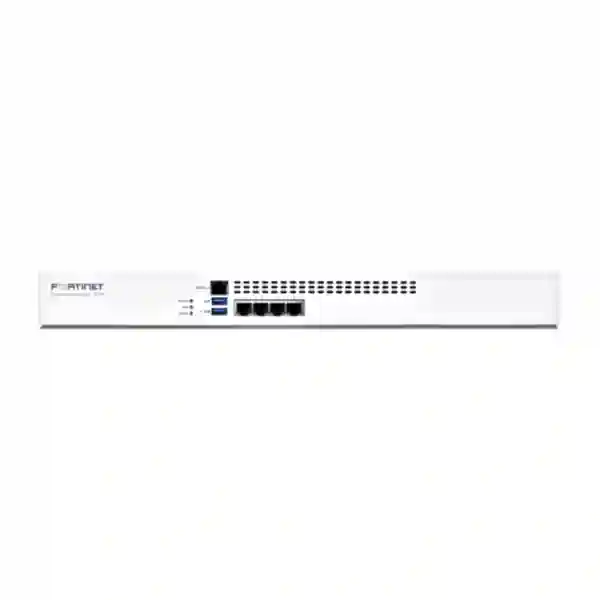
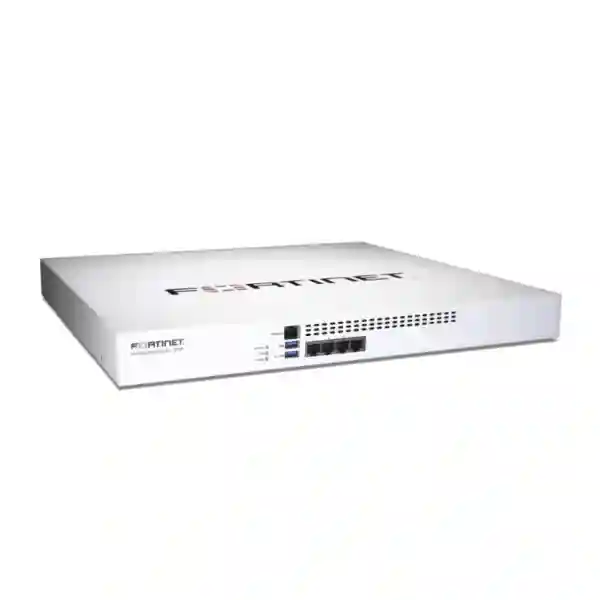
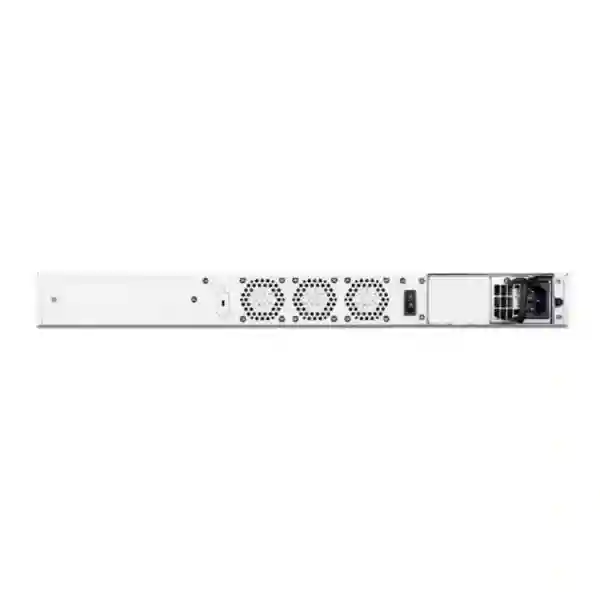
FortiAuthenticator FAC-300F Tanzania
FortiAuthenticator FAC-300F is a purpose-built Fortinet identity and access management appliance for organizations that want to centralize authentication, strengthen user verification, simplify single sign-on and manage certificates across protected networks. For Tanzanian enterprises building identity-aware access around FortiGate and mixed-vendor infrastructure, the FAC-300F provides a practical hardware platform with a base capacity of 1,500 local plus remote users and an upper supported limit of 3,500 users when the appropriate hardware upgrade licensing is applied.
What FortiAuthenticator FAC-300F Does
Identity has become a central security control because network access decisions increasingly depend on who the user is, how the user authenticates and which resources that identity should reach. FAC-300F consolidates authentication and identity functions that would otherwise be distributed across firewalls, directories, applications and separate authentication systems. Fortinet documents support for RADIUS, TACACS+, LDAP, SAML, OAuth/OIDC and certificate-oriented workflows, enabling the appliance to participate in both traditional enterprise authentication and modern federated identity designs.
Central authentication
Use centralized identity services to support controlled access for users, administrators and network-connected services while reducing fragmented authentication policy.
MFA and FortiToken
Add stronger verification using supported FortiToken and one-time-password methods, helping organizations move beyond password-only access for sensitive systems.
SSO and federation
Support identity-aware access with Fortinet SSO and standards such as SAML and OIDC for environments that span internal resources and cloud applications.
FAC-300F Verified Technical Specifications
| Interfaces | 4 × 10/100/1000 copper RJ45 |
| Local storage | 2 × 1 TB hard disk drives, RAID 1 |
| TPM | Yes |
| Users | 1,500 base / 3,500 upper limit |
| FortiTokens | 3,000 |
| RADIUS clients | 500 NAS devices |
| User groups | 150 |
| Certificates | 10 CA certificates / 7,500 user certificates |
| Form factor | Rack mountable 1RU |
| Management | CLI, direct console DB9 CLI, HTTPS |
Deployment, Integration and Buying Guidance
A successful FAC-300F project starts with identity architecture rather than simply appliance selection. Buyers should document user populations, authentication sources, FortiToken requirements, RADIUS clients, certificate needs, administrative authentication, VPN use, wireless or wired 802.1X plans, cloud application federation and high-availability expectations. The base user entitlement and hardware ceiling should be checked against both present headcount and expected growth. Organizations near the platform limit should evaluate larger FortiAuthenticator models rather than designing around minimal spare capacity.
Fortinet lists active-passive HA and configuration synchronization capabilities. Where authentication is operationally critical, procurement teams should therefore discuss redundancy, rack placement, power design, network paths and recovery procedures before ordering. The FAC-300F power platform supports a redundant 300W auto-ranging supply design with an optional dual 1+1 arrangement; the exact ordered configuration should be confirmed in the quotation. Buyers should also distinguish the appliance SKU from FortiCare support and any user upgrade requirements so that the commercial proposal matches the intended lifecycle.
Related FourTeck Security Resources
Identity security normally sits within a broader network-security design. Explore FourTeck Tanzania for regional technology procurement enquiries, FourTeck Fortinet UAE for Fortinet-focused solution context, FourTeck Uganda for East African requirements, FourTeck Kenya for Kenyan projects, and FourTeck Africa for wider regional solution discussions. These links help procurement teams coordinate identity, firewall, switching, wireless and supporting infrastructure requirements across multi-country deployments.
FortiAuthenticator FAC-300F Tanzania
For organizations in Tanzania, FAC-300F is relevant when user identity must become a dependable input to network and application access. Banks, professional services firms, universities, healthcare organizations, hospitality groups, public-sector environments, industrial businesses and multi-branch enterprises may all have different authentication workflows, but the procurement questions are similar: how many users need authentication, where identities are stored, which services consume RADIUS or LDAP, whether MFA is required, and how authentication should integrate with FortiGate security policy. A Tanzania deployment should begin with a current-state identity map that identifies Active Directory or other directory sources, remote-access populations, administrators, contractors, guest users and certificate-dependent devices.
The FAC-300F base capacity of 1,500 local plus remote users can fit a substantial mid-sized organization, while upgrade licensing can extend the supported user level to 3,500. Capacity planning should not use employee count alone. Service accounts, external identities, remote users and future expansion can affect the design. Organizations operating multiple sites should also count the RADIUS clients or network access servers that will rely on the platform. Fortinet specifies support for 500 RADIUS clients on this model, which gives architects a concrete boundary for distributed access designs.
Tanzanian buyers should request a quotation that separates the FAC-300F appliance, required user expansion, FortiCare support, FortiToken requirements and any implementation services. This makes renewal and lifecycle planning clearer and avoids treating identity security as a one-time hardware purchase. For deployments tied to VPN access, Wi-Fi authentication or administrator security, the implementation plan should include testing, fallback authentication, directory connectivity, time synchronization, certificate handling and change-control procedures. FourTeck can use this requirement set to prepare a solution discussion without assuming stock, lead time or service scope until those items are confirmed in the quotation.
FortiAuthenticator FAC-300F Dar es Salaam
Dar es Salaam organizations frequently combine headquarters, branch connectivity, remote users, data-center resources and cloud services. In that type of environment, FAC-300F can provide a central identity layer rather than allowing every firewall, VPN, wireless controller or application to maintain isolated credentials. The design objective is to make authentication policy consistent while preserving appropriate separation between workforce users, privileged administrators, guests and third parties. SAML and OIDC capabilities can support federation scenarios, while RADIUS, TACACS+ and LDAP address established enterprise access patterns.
Before procurement, a Dar es Salaam IT team should inventory authentication dependencies and identify which systems must continue operating if a directory or WAN path is unavailable. High availability should be evaluated for environments where authentication downtime could prevent users from reaching business systems. Fortinet documents active-passive HA and configuration synchronization for FortiAuthenticator, but an HA design also depends on switching, routing, DNS, NTP, power and upstream identity services. The appliance therefore belongs in a broader resilience plan rather than being treated as an isolated security box.
For quotation preparation, provide the expected user count, number of RADIUS clients, number of FortiTokens, existing FortiGate models, directory platform, SSO applications, certificate requirements and preferred support term. This information helps distinguish a straightforward FAC-300F deployment from a project requiring user upgrades, redundant appliances or more extensive integration. Buyers should also identify whether deployment is primarily for VPN MFA, network access, administrator authentication, SSO, certificate services or a combination, because that affects implementation sequencing and acceptance testing.
FortiAuthenticator FAC-300F Mwanza
In Mwanza, distributed organizations can use centralized authentication to reduce the operational burden of managing credentials independently at each branch or protected service. A FAC-300F architecture can authenticate users against supported identity sources and provide identity information to security infrastructure, helping policies follow verified users and groups rather than relying only on IP addresses. This is particularly useful where employees move between office networks, remote access and shared business applications.
Planning should consider WAN reliability between Mwanza sites and the systems that hold authoritative identity data. If branch access depends on centralized RADIUS or directory services, architects should document failure behavior and determine whether high availability, local fallback mechanisms or redundant paths are needed. The FAC-300F itself provides four Gigabit Ethernet copper interfaces and RAID-1 local storage, but overall authentication availability is determined by the complete chain of dependent services. Power protection and rack environmental conditions should also match Fortinet operating requirements.
Procurement teams should avoid selecting the model purely by current employee count. The 1,500-user base and 3,500-user upper limit need to be evaluated alongside token capacity, RADIUS-client count and certificate use. If the organization expects acquisitions, new campuses or a large external-user population, growth should be modeled before purchase. A useful quotation request will state the desired authentication use cases, current directory environment, number of locations, Fortinet products already deployed and whether professional configuration or migration assistance is expected.
FortiAuthenticator FAC-300F Arusha
Arusha businesses in hospitality, tourism, education, professional services and multi-site operations often need to separate employee access from guest, contractor and administrative access. FortiAuthenticator includes guest management and identity services that can form part of such a design, while certificate and MFA capabilities provide additional options for strengthening access to sensitive resources. The correct architecture depends on whether authentication is required for corporate Wi-Fi, VPN, firewall administration, internal applications, cloud applications or several of these services together.
For wireless and wired access projects, buyers should map the network devices that will act as RADIUS clients and verify that the overall design fits the FAC-300F capacity. Certificate-based authentication projects should also define certificate enrollment, renewal, revocation and device ownership processes before implementation. Technology alone does not resolve identity lifecycle issues; onboarding, role changes and offboarding procedures must align with directory and HR processes so that authentication remains accurate over time.
When requesting an Arusha quotation, specify whether the requirement is appliance-only procurement or a broader deployment covering MFA, SSO, FortiGate integration and certificate services. Include estimated user growth over the intended lifecycle and any requirement for redundant authentication. This allows the proposal to address the correct hardware and licensing components. FourTeck should confirm commercial terms, availability and implementation scope at quotation stage rather than buyers relying on assumptions from international listings.
FortiAuthenticator FAC-300F Dodoma
Dodoma organizations evaluating identity security can position FAC-300F as a central control point for authentication and authorization workflows across protected networks. Public-sector bodies, institutions, enterprises and service organizations may need stronger administrator authentication, consistent remote-access controls and traceable identity integration. FortiAuthenticator supports established enterprise protocols alongside SAML and OIDC, allowing it to participate in both traditional network authentication and federated application access.
A procurement specification should define the security outcome instead of listing only a model number. For example, an organization may require MFA for FortiGate VPN users, RADIUS authentication for network infrastructure administrators, SSO for selected applications and certificate services for managed endpoints. Mapping those outcomes to users, groups and systems reveals whether the FAC-300F base license is sufficient and whether FortiToken or user-upgrade licensing is needed. It also provides a test plan for deployment acceptance.
Operational planning should cover backup, HA, administrator roles, logging, certificate protection, firmware maintenance and support entitlement. The appliance includes TPM support and RAID-1 storage, but those hardware features do not replace sound operational controls. Buyers should identify responsible administrators and establish documented recovery procedures. A detailed quotation request for Dodoma should therefore include technical requirements, desired support duration, expected deployment date and any integration assistance needed, while leaving price, stock and delivery commitments to the formal commercial response.
FortiAuthenticator FAC-300F UAE
For UAE deployments, FAC-300F can serve organizations that operate hybrid environments with FortiGate, cloud applications, branch networks and centralized directories. Its identity services support a design in which user verification is separated from individual enforcement points, allowing firewalls and other systems to consume consistent authentication results. Enterprises should evaluate whether a hardware appliance is preferred over FortiAuthenticator Cloud or virtual deployment options based on data-center strategy, operational ownership and integration requirements.
Regional procurement frequently involves multi-site projects, so architects should confirm whether one FAC-300F can meet the combined user and RADIUS-client requirements or whether separate appliances and HA pairs are more appropriate. The model supports 1,500 users at base and up to 3,500 with hardware upgrade licensing. Organizations approaching those limits should compare larger FortiAuthenticator platforms rather than planning with little capacity headroom. Support and lifecycle requirements should be included from the start.
UAE buyers can also use FourTeck Fortinet UAE as a related Fortinet-focused resource when planning identity integration alongside firewall and security infrastructure. A complete RFQ should list user counts, FortiToken needs, directory sources, SSO applications, RADIUS clients, HA expectations and support term. That information allows commercial and technical discussions to focus on a correctly sized configuration instead of a generic appliance quote.
FortiAuthenticator FAC-300F Uganda
Ugandan organizations with centralized IT and distributed branches can use FortiAuthenticator to establish a common authentication service across firewalls, VPN access, network devices and applications. The FAC-300F is especially relevant where the organization has outgrown authentication configured independently on multiple devices and needs clearer identity governance. RADIUS and TACACS+ can address network access and administration use cases, while SAML and OIDC support federation-oriented application scenarios.
The design should account for connectivity between branch sites and central identity services. If authentication traverses WAN links, resilience planning must include more than the FAC appliance: redundant network paths, directory availability, DNS and NTP are all part of successful access. Fortinet supports active-passive HA on the platform, which can be considered where authentication is business critical. The appropriate architecture should be documented before hardware is ordered.
For procurement, FourTeck Uganda provides a regional route for related technology discussions. Buyers should request a configuration based on actual user and token quantities rather than simply asking for FAC-300F by name. Include anticipated growth, FortiGate integration, certificate needs, number of RADIUS clients and support expectations. This reduces the risk of discovering after purchase that additional licensing or a different platform size is required.
FortiAuthenticator FAC-300F Kampala
Kampala enterprises often operate a mixture of headquarters users, remote employees, branches and cloud services. FAC-300F can consolidate identity functions for this mixed environment, helping administrators create repeatable authentication workflows and strengthen privileged or remote access with MFA. Where FortiGate is already deployed, FortiAuthenticator can contribute user identity context to identity-based security policy and Fortinet Single Sign-On designs.
A Kampala implementation workshop should identify every authentication consumer and identity source. Network infrastructure, VPN gateways, wireless access, applications and administrator logins may each use different protocols. FortiAuthenticator supports RADIUS, TACACS+, LDAP, SAML and related standards, but each integration should be validated against the exact application and firmware combination. Certificate requirements should be planned separately because enrollment and lifecycle processes need clear ownership.
Commercially, buyers should ask for a bill of materials that clearly separates appliance, support, FortiToken and capacity upgrades. The FAC-300F base entitlement supports up to 1,500 users, while supported upgrades can raise the ceiling to 3,500. If expected growth is close to that upper level, comparing a larger appliance can provide a cleaner long-term path. Availability and delivery should be confirmed at quotation time for the specific project rather than inferred from reseller listings in other markets.
FortiAuthenticator FAC-300F Arua
For organizations operating in Arua, centralized identity can simplify security administration when users need access to resources hosted at another branch, a central data center or cloud platform. FAC-300F can act as the authentication layer while FortiGate and other enforcement systems apply network policy. This separation is useful for growing organizations because identity policy can be managed more consistently than maintaining separate local user databases across devices.
Connectivity and operational resilience deserve particular attention in distributed deployments. Before centralizing branch authentication, document how users will authenticate during WAN disruption and which services are essential. Where business requirements justify it, evaluate HA and redundant infrastructure. The appliance is rack mountable and uses RAID-1 local storage, but the broader design should also cover protected power, environmental limits, backups, logging and controlled administrator access.
An Arua RFQ should state the number of local and remote users, sites, RADIUS clients and MFA users, plus the existing directory and firewall environment. This lets the supplier determine whether base capacity is adequate and whether user upgrade or token components are required. Buyers should also state whether they need configuration guidance, migration assistance or only hardware and support procurement. Clear scope improves quotation accuracy and makes it easier to compare proposals on equivalent requirements.
FortiAuthenticator FAC-300F Mbarara
Mbarara organizations can use FAC-300F to improve identity consistency across corporate networks, especially when authentication has become fragmented between VPN users, network administrators, wireless access and internal applications. Centralization makes it easier to align access with directory groups and apply stronger verification to higher-risk access. MFA can be introduced for selected populations rather than forcing every service to implement its own second-factor mechanism.
Sizing should include future business changes. A company with fewer than 1,500 employees may still consume more identity capacity depending on external users and service design, while a smaller workforce may have a large number of network devices acting as RADIUS clients. FAC-300F supports up to 500 RADIUS clients and 3,000 FortiTokens according to Fortinet specifications. Those limits should be checked against the actual architecture, not treated as target utilization levels.
For a practical Mbarara deployment plan, identify a pilot group, integrate the authoritative directory, test one access service at a time and define rollback procedures. MFA enrollment and user communication should be included in the project because authentication changes directly affect employees. Procurement should include the required support entitlement and any capacity upgrades identified during design. Exact commercial terms, stock and implementation schedules should be confirmed through the project quotation.
FortiAuthenticator FAC-300F Gulu
Gulu institutions and businesses evaluating stronger access control can use FortiAuthenticator as part of a structured identity-security program. The FAC-300F supports authentication methods that are widely used in enterprise networking and can centralize identity services for Fortinet and third-party systems. This helps reduce reliance on device-local credentials and supports a more consistent approach to administrator, workforce and remote-user authentication.
A deployment should classify access by risk. Privileged administrators and remote VPN users may justify MFA first, while certificate-based network access or broader application federation can be phased later. This approach reduces implementation complexity and gives the IT team measurable milestones. The appliance supports multiple identity and federation standards, but application-specific compatibility should be checked during design and testing rather than assumed solely because a protocol is listed.
Gulu buyers should prepare a quotation checklist covering current user count, three-year growth estimate, authentication use cases, number of FortiTokens, network devices, directory systems, FortiGate environment and redundancy requirements. Support term and implementation scope should be explicit. This turns the RFQ into a solution specification and helps avoid comparisons between proposals that include different licensing or services. Where the organization is expanding across Uganda, the identity architecture should also account for additional branches and WAN resilience.
FortiAuthenticator FAC-300F Kenya
Kenyan enterprises with Fortinet security infrastructure can use FAC-300F to centralize authentication, MFA, SSO and certificate-related identity services. The appliance can be particularly useful for organizations that need a controlled identity layer across headquarters, branches, remote users and hybrid applications. Instead of configuring credentials independently at every enforcement point, administrators can design policies around verified identities and groups.
When sizing a Kenyan project, the headline user capacity is only one factor. Teams should count RADIUS clients, FortiTokens, certificate demand and growth, then determine whether the FAC-300F or a larger FortiAuthenticator model provides appropriate headroom. The model has four copper Gigabit interfaces and no SFP interfaces, so physical connectivity requirements should also be checked against the data-center design. For HA projects, rack space, power and network redundancy need to be included in the bill of materials.
Visit FourTeck Kenya for related regional technology requirements. A useful FAC-300F quote request should specify whether the objective is FortiGate VPN MFA, administrator authentication, enterprise RADIUS, SSO federation, certificates or a combined IAM deployment. It should also state the preferred support period and whether implementation assistance is needed. Exact price and availability should be requested for the project date because international web prices are not reliable indicators of Kenyan commercial terms.
FortiAuthenticator FAC-300F Kuwait
Kuwait organizations can position FAC-300F as a centralized identity component within a Fortinet Security Fabric or mixed-vendor enterprise network. The platform supports RADIUS, TACACS+, LDAP and federation standards, making it applicable to administrator authentication, remote access, network access and application SSO. Central identity policy can also simplify audit preparation because authentication services are designed around managed identities rather than scattered local accounts.
The procurement process should establish capacity and resilience requirements before requesting final pricing. FAC-300F supports 1,500 users in the base configuration and can be expanded to 3,500 with supported hardware user upgrade licensing. Organizations expecting rapid growth should compare that ceiling with their lifecycle forecast. FortiToken requirements and certificate volumes should be included in the same exercise, as should the number of RADIUS-connected devices.
For multi-country organizations, configuration standards should be documented so identity policies remain consistent across sites while accommodating local application and network differences. HA may be appropriate where authentication is a critical dependency. Buyers should request appliance, support, licensing and professional services as separate line items where possible, making ongoing cost and responsibility easier to understand. The final design should be validated against current Fortinet documentation and the exact firmware selected for deployment.
FortiAuthenticator FAC-300F Ghana
In Ghana, FAC-300F can support enterprises moving from device-by-device authentication toward centralized identity and stronger MFA. The appliance is suitable for designs where FortiGate firewalls, network infrastructure and business applications need to reference a common authentication service. It can also support certificate management and guest authentication scenarios, helping organizations consolidate several identity functions within one platform.
Ghanaian buyers should identify whether the project is driven by compliance, remote work, administrator security, Wi-Fi access, application federation or a broader zero-trust initiative. The answer affects the integration plan and the users who should be onboarded first. A phased rollout can begin with privileged and VPN authentication, followed by network access and SSO once operational processes are stable. User enrollment, help-desk procedures and recovery methods should be designed alongside the technology.
Capacity planning should leave room for growth rather than treating 3,500 users as a desired operating target. The FAC-300F has a 1,500-user base license and supported upgrade path, but larger models may be more suitable for organizations expecting substantial expansion. The quotation should state required support, tokens, upgrades and implementation scope. For cross-border projects, standardizing identity architecture can simplify operations, while local procurement terms and delivery commitments should still be confirmed separately for each destination.
FortiAuthenticator FAC-300F Nigeria
Nigerian enterprises with large branch footprints and remote-user populations can benefit from central authentication architecture, but sizing and resilience become especially important as the number of sites grows. FAC-300F provides a defined mid-range hardware platform with 1,500 users at base and an upper limit of 3,500, plus support for 500 RADIUS clients. Those figures allow architects to test whether the model fits the organization rather than relying on general labels such as mid-size or enterprise.
For distributed networks, the authentication dependency chain should be mapped end to end. Directory services, WAN connectivity, DNS, NTP, FortiAuthenticator and enforcement devices all affect successful access. Where a failure could block critical operations, HA and network redundancy should be evaluated. MFA enrollment should also be planned with user support in mind, particularly for large remote workforces where device changes and lost tokens can create operational tickets.
A Nigeria procurement request should include user count by category, expected growth, FortiToken quantity, number of network devices, FortiGate models, directory sources, SSO targets and certificate requirements. This enables a properly scoped bill of materials and avoids underestimating licensing. Support term and implementation responsibilities should be explicit. For organizations spanning several African markets, FourTeck Africa can be used as a related regional resource while each country’s commercial requirements are confirmed individually.
FortiAuthenticator FAC-300F Seychelles
Seychelles organizations in hospitality, financial services, government, professional services and other sectors may need secure authentication across a relatively compact workforce but multiple sites, remote users or guest-facing environments. FAC-300F can centralize enterprise authentication while supporting MFA, SSO and certificate services. The value of the platform is not simply user capacity; it is the ability to apply consistent identity controls across systems that otherwise maintain separate authentication configurations.
For island deployments, infrastructure resilience and support planning should be included early. Authentication is a dependency for access to other systems, so buyers should consider redundancy, replacement strategy, backups and documented recovery. Fortinet lists active-passive HA and configuration synchronization, allowing architects to evaluate an HA pair where justified. Physical deployment also requires appropriate rack space, power protection and environmental conditions for the 1RU appliance.
The RFQ should identify whether FortiAuthenticator will serve VPN, wireless, wired access, administrators, applications, guests or certificate use cases. Include base and forecast user numbers and required FortiTokens. If the organization has fewer users but a complex multi-property environment, RADIUS-client count and operational topology may be more important than headcount. Commercial terms, shipping and service arrangements should be confirmed specifically for Seychelles rather than assumed from another market.
FortiAuthenticator FAC-300F FAQ
How many users does FAC-300F support?
Fortinet specifies 1,500 local plus remote users in the base configuration and an upper supported limit of 3,500 users using the applicable FortiAuthenticator hardware upgrade licensing.
Does FAC-300F support multi-factor authentication?
Yes. FortiAuthenticator supports two-factor and multi-factor authentication workflows including FortiToken options and OTP methods. The exact token quantity and licensing should be specified for the project.
Can FAC-300F integrate with Active Directory and FortiGate?
FortiAuthenticator is designed to integrate with directory services and Fortinet infrastructure, including FortiGate identity use cases. Exact integration behavior should be validated against the selected firmware and environment during solution design.
What storage is included?
The FAC-300F specification lists two 1 TB hard disk drives configured as RAID 1 local storage.
Does it support high availability?
Fortinet documents active-passive HA and configuration synchronization. A complete HA design should also address network paths, directories, DNS, NTP, power and operational recovery.
Quotation Checklist
For an accurate FAC-300F discussion, prepare the current and forecast user count, FortiToken quantity, number of RADIUS clients, directory platform, FortiGate models, SSO applications, certificate requirements, HA preference, support duration, deployment locations and required implementation scope. Also identify whether existing authentication must be migrated and whether downtime windows are restricted. These details allow the hardware, licensing and services to be aligned with the actual project rather than quoted as disconnected components.
Decision Recap
FAC-300F is a strong candidate when an organization needs a dedicated FortiAuthenticator hardware appliance and its requirements fit the documented 1,500-user base, 3,500-user upper limit, 3,000 FortiToken capacity and 500 RADIUS-client capacity. Buyers should compare larger models if forecast demand approaches these boundaries, and should include HA, support and user/token licensing in lifecycle planning. The most effective next step is a requirements-based quotation that confirms the exact bill of materials and commercial terms for the deployment region.
Plan Your FAC-300F Deployment
Share your user count, authentication use cases, FortiGate environment, MFA requirement and deployment locations with FourTeck Tanzania. The resulting discussion can focus on model sizing, licensing, integration and support requirements without assuming unverified stock or delivery commitments.


Reviews
There are no reviews yet.