
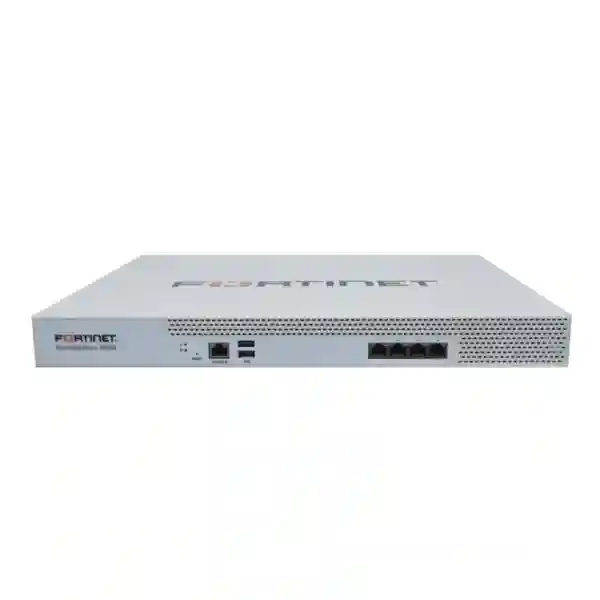
FortiSandbox FSA-500G Tanzania
FortiSandbox FSA-500G gives security teams a dedicated on-premises environment for analyzing suspicious files and detecting advanced malware that may evade conventional signature-based controls. Fortinet positions FortiSandbox as an AI-powered breach-protection and malware-behavior-analysis platform that can integrate with FortiGate, FortiMail, FortiClient, FortiWeb, FortiADC, FortiProxy and other security products. For Tanzanian organizations that want deeper visibility into unknown files, ransomware behavior and targeted threats while retaining local control of an appliance, the FSA-500G provides a current FortiSandbox hardware option in a compact 1RU form factor.
Investigate suspicious content in isolated virtual environments to identify behavior that static inspection alone may not reveal.
Use FortiSandbox alongside supported Fortinet security products to enrich detection and response workflows across the Security Fabric.
Deploy dedicated sandbox infrastructure where local appliance ownership, controlled file handling and predictable integration are important.
What FortiSandbox FSA-500G Does
Modern attacks often use files, scripts, documents and payloads that are deliberately changed to avoid simple signature matches. A sandbox adds another decision layer by executing or observing suspicious content in a controlled environment and evaluating what it attempts to do. This is useful when a file appears new, obfuscated or otherwise uncertain. FortiSandbox is designed to automate advanced malware detection and provide actionable intelligence that other controls and security teams can use.
The FSA-500G is the entry hardware appliance in Fortinet’s current G-generation FortiSandbox hardware range alongside larger FSA-1500G and FSA-3000G appliances. The correct model should be selected from the actual submission rate, file mix, integration points, desired virtual-machine capacity, retention expectations and growth plan rather than appliance name alone. A quotation should also separate the base appliance from required support, threat-intelligence services, optional virtual-machine licensing and implementation work.
Fortinet documentation for current FortiSandbox releases lists FSA-500G as supported and documents Windows 10 (2021 Edition), Windows 11 and Office 2021 environments for the model. Fortinet states that the FSA-500G supports two VM hosts by default and can be expanded to a maximum of fourteen VM hosts for Fortinet-published images, subject to licensing and resource requirements. These figures are platform limits, not a promise that every deployment should use the maximum; workload sizing remains important.
Verified FSA-500G Hardware Specifications
| Product | FortiSandbox FSA-500G |
| Form factor | 1RU appliance |
| Network interfaces | 4 × GE RJ45 ports |
| Storage | 1 × 960 GB |
| Trusted Platform Module | Supported |
| Dimensions | 44 × 438 × 380 mm |
| Weight | 5.18 kg |
| Power supply | 1 × 100–240V AC, 50/60 Hz |
| Average / maximum power | 71.8 W / 87.8 W |
| Operating temperature | 0°C to 40°C |
| Humidity | 10% to 90% non-condensing |
Specifications should be reconfirmed against the current Fortinet data sheet and ordering guide at procurement time because firmware, bundles and commercial options can change.
Integration and Deployment Planning
FortiSandbox becomes most useful when it is connected to the security controls that encounter suspicious content. Fortinet documents integrations across products such as FortiGate, FortiMail, FortiClient, FortiWeb, FortiADC and FortiProxy. The design question is therefore not simply where the appliance sits in a rack. Teams should identify which systems will submit files, how verdicts will be consumed, what content is permitted to leave each source system, which network routes and policies are required, and what response should occur when FortiSandbox returns a malicious verdict.
For a FortiGate-centered environment, the architecture may include network security controls forwarding eligible content for additional analysis. Mail-security teams may use sandboxing to deepen inspection of suspicious attachments. Web and application security workflows can have different submission patterns. Each integration should be checked against the exact product and firmware versions in use. Fortinet publishes compatibility guidance by major release, so implementation planning should record the FortiSandbox version, integrated-product versions and intended upgrade path.
Physical deployment also deserves attention. The FSA-500G is a 1RU appliance with front-to-back forced airflow and a single power supply. Rack position, ventilation, clean power and UPS planning should therefore be considered. The management network should be protected, administrative access should be restricted, configuration backups should be scheduled, and monitoring responsibilities should be assigned. Sandbox infrastructure is a security control and should be operated with the same change-management discipline applied to firewalls, SIEM platforms and other critical security systems.
Licensing and Quotation Guidance
Do not assume that an appliance-only quote includes every virtual machine, threat-intelligence entitlement, support service or cloud expansion option required by the project. Fortinet ordering guidance separates hardware, upgrades, threat intelligence and support. Before ordering, confirm the exact base product, FortiCare/support term, threat-intelligence services, VM requirements, integration scope and implementation services. This avoids a common procurement problem in which the hardware arrives before the commercial rights needed for the intended analysis workflow are fully understood.
FortiSandbox FSA-500G Tanzania
Organizations in Tanzania considering the FortiSandbox FSA-500G are usually trying to solve a problem beyond basic perimeter firewalling: how to inspect suspicious content that cannot be confidently classified by ordinary controls and how to turn that analysis into useful security decisions. This can matter for banks, insurers, public institutions, universities, healthcare organizations, telecom environments, large commercial groups and other enterprises where ransomware, phishing attachments, targeted malware and unknown files create operational risk. The FSA-500G provides an on-premises path for teams that want a dedicated Fortinet sandbox appliance rather than relying only on cloud-delivered analysis.
A Tanzania deployment should begin with the existing security architecture. Record the FortiGate, FortiMail, endpoint, web-security and logging systems already present; note firmware versions; estimate how many suspicious files may be submitted; and define which traffic or file types need deeper analysis. The team should also decide who will review sandbox verdicts, what happens after a malicious result, and whether findings will be consumed by a SIEM or broader incident-response workflow. These operational questions are as important as the appliance specification because a sandbox that generates findings without an owner creates limited business value.
Infrastructure planning should include rack space, cooling, UPS capacity, protected management connectivity and resilient access for administrators. Tanzania sites can differ considerably in power quality, internet connectivity and support access, so the deployment plan should reflect the actual facility. Where a business operates multiple branches, it may be preferable to centralize the sandbox in a well-managed data-center or head-office environment and integrate remote security controls over appropriate protected connectivity, subject to latency, privacy and bandwidth requirements.
Procurement teams should request a quote that identifies the exact FSA-500G appliance, support term, threat-intelligence subscription, VM licensing or expansion needs, installation scope and integration targets. For wider infrastructure planning, review FourTeck Tanzania business technology solutions and the Tanzania technology shop to coordinate firewall, switching, server, rack and power dependencies around the sandbox project.
FortiSandbox FSA-500G Dar es Salaam
Dar es Salaam enterprises often concentrate internet gateways, data-center resources, security operations and shared services in the city, making it a natural location for a centrally managed FortiSandbox FSA-500G deployment. A business with multiple offices can use the project to standardize how suspicious files are escalated for analysis instead of allowing each branch to follow a different process. The first design step is to map which Fortinet controls will submit content and which teams will receive the resulting intelligence.
For organizations operating busy headquarters, financial platforms, customer portals or high-volume email environments, sandbox sizing should reflect real workload rather than employee count alone. File-submission volume, peak periods, mail attachment patterns, web downloads, integrated products and VM requirements can all affect capacity. Security teams should define which file types require analysis, which content must be excluded for privacy or policy reasons, and how long investigation artifacts need to remain available. Those decisions help produce a more accurate bill of materials and operating model.
The physical environment matters as well. The FSA-500G uses a 1RU rack form factor and front-to-back airflow, so it fits conventional server-room and data-center layouts when adequate ventilation is maintained. Its single power supply makes upstream UPS and power-quality planning particularly relevant for organizations that require continuous analysis. Management interfaces should be placed on controlled networks, administrative access should use named accounts and change control, and configuration backups should be included in normal security operations.
Dar es Salaam buyers should ask vendors to separate hardware supply from subscriptions, implementation and post-deployment support. The quote should identify integration tasks, testing criteria and handover documentation. A useful acceptance test verifies that selected source systems can submit eligible content, that verdicts return correctly, that administrators can investigate results and that escalation procedures are understood. This turns the FSA-500G from a rack-mounted appliance into an operational security capability.
FortiSandbox FSA-500G Mwanza
Mwanza organizations evaluating FortiSandbox FSA-500G may include regional enterprises, healthcare providers, educational institutions, financial operations, logistics companies and businesses supporting distributed sites around the Lake Zone. In these environments, a sandbox project can be valuable when local IT teams need stronger analysis of unknown files while security governance may be shared with a central office. The architecture should define whether the appliance will serve one site or receive submissions from multiple protected locations.
Connectivity planning is especially important when remote branches will use a centralized sandbox. Teams should estimate file-submission traffic, confirm protected routes, consider latency and ensure that sandbox integration does not create fragile dependencies for normal business traffic. Where internet or WAN links vary in quality, policies should be designed so temporary connectivity issues do not produce unpredictable user experiences. Administrators should also document what happens when the sandbox is unavailable and how integrated products behave during maintenance windows.
The FSA-500G hardware itself should be installed in an environment with controlled temperature, suitable rack depth, clean power and UPS support. Fortinet specifies an operating range of 0°C to 40°C and non-condensing humidity conditions. These limits are technical boundaries rather than recommended room targets; normal data-room environmental practice should aim for stable conditions well within supported ranges. Cable labeling, rack documentation and management-network separation make future troubleshooting easier for local and remote support teams.
For procurement, Mwanza buyers should provide the exact Fortinet products already in use, firmware versions, expected number of submitting devices, preferred support term and any requirement for optional VM expansion. If the organization is still deciding between hardware and virtual sandbox approaches, the evaluation should include control requirements, virtualization capacity, operational ownership and expected growth. The goal is to select a deployment model that the local team can operate consistently, not simply to purchase the newest appliance.
FortiSandbox FSA-500G Arusha
Arusha businesses, hospitality groups, institutions and regional organizations may need advanced malware analysis for environments that combine corporate users, guest-facing services, remote access and connections to other offices. FortiSandbox FSA-500G can form part of that layered security design by providing an isolated environment for deeper analysis of suspicious content. It should complement, rather than replace, preventive controls such as endpoint security, secure email, web filtering, firewall policy and identity protection.
A practical Arusha deployment begins by identifying the highest-risk file flows. Email attachments, downloaded documents, files arriving through web applications and content observed by Fortinet security controls may have different business sensitivity. Security policy should state what can be submitted, who may view analysis results and how sensitive information is handled. This is particularly important for organizations dealing with guest data, financial records, employee information or regulated business processes.
Operational readiness should include named administrators, alert review routines, escalation contacts and a documented response process. When FortiSandbox identifies malicious behavior, the security team needs a clear next action: isolate an endpoint, block an indicator, investigate related users, search logs or coordinate with another team. Integrations can help automate parts of this process, but automation should be tested so that a sandbox verdict produces the intended control action without creating unnecessary disruption.
Arusha procurement teams should ask for a configuration that reflects the intended workflow. The FSA-500G has four GE RJ45 interfaces and 960 GB of storage, but interface count and disk size alone do not determine project suitability. VM capacity, submission rate, integrated products, support entitlement and incident-response process matter just as much. Include installation, firmware baseline, integration testing, administrator handover and documentation in the project scope where those services are required.
FortiSandbox FSA-500G Dodoma
Dodoma organizations considering FortiSandbox FSA-500G may be focused on protecting government, administrative, education, healthcare and enterprise systems from targeted malware and ransomware. An on-premises sandbox can be attractive where the organization wants direct control over the analysis appliance and a defined integration path with existing Fortinet security controls. The business case should connect the purchase to measurable security workflows such as suspicious-file investigation, email-threat analysis, incident triage or advanced-malware detection.
Before deployment, create an inventory of source systems and data flows. Document firewalls, mail gateways, endpoint tools, web security, network segments and logging platforms that may interact with FortiSandbox. Confirm software versions and compatibility before change windows are scheduled. Fortinet publishes release-specific integration information, so using the current documentation for the planned FortiSandbox release reduces the risk of building an architecture around outdated assumptions.
Security governance should define who can administer the appliance and who can view submitted samples and reports. Separate administrative duties where appropriate, protect credentials, restrict management access and include the sandbox in vulnerability, backup and firmware-management routines. If the environment has formal change control, record integration changes and rollback steps. These controls help keep a powerful analysis platform from becoming an unmanaged exception inside the security architecture.
For a Dodoma quotation, provide the model FSA-500G, desired support duration, existing Fortinet estate, estimated analysis workload, VM requirements and target implementation schedule. Ask for clarity on which subscriptions and support services are included. If the appliance will serve other regions or branches, include WAN and privacy considerations in the design. A complete procurement decision should cover hardware, licensing, integration, operational ownership and lifecycle support together.
FortiSandbox FSA-500G UAE
UAE organizations can use FortiSandbox FSA-500G as an on-premises advanced-threat-analysis component where local appliance control and integration with a broader Fortinet estate are priorities. Enterprises in Dubai, Abu Dhabi and other emirates frequently operate hybrid environments spanning offices, cloud workloads, data centers and remote users. In that context, the sandbox should be designed as part of an end-to-end detection and response architecture rather than treated as a standalone malware scanner.
The architecture can connect FortiSandbox with supported Fortinet controls that encounter suspicious files. Security teams should determine which sources will submit content, which virtual environments are required, how verdicts are shared and whether indicators will be forwarded to SIEM, SOC or automation platforms. Organizations with strict data-handling policies should also review what file content is permitted to enter the sandbox and whether any cloud-expansion features fit internal governance requirements.
Commercial planning should distinguish the appliance from subscriptions, support and optional VM expansion. Fortinet’s ordering guidance presents hardware appliances, threat intelligence and support as separate considerations. Buyers should request a line-by-line quotation that maps each item to the intended design. This is especially useful for enterprise procurement teams comparing capital appliance deployment with virtual or hosted alternatives.
For UAE Fortinet planning, the FourTeck Fortinet UAE resource provides regional context for Fortinet products and security operations. Multi-country organizations can use a consistent integration standard while adapting data-handling, connectivity and support processes to each location. The objective is a repeatable sandbox workflow that security teams can understand across the region.
FortiSandbox FSA-500G Uganda
Uganda businesses evaluating the FSA-500G should first determine whether they need dedicated on-premises sandbox capacity for a central security location or whether another FortiSandbox deployment model better matches their scale. Organizations with FortiGate, FortiMail or other supported Fortinet products can evaluate how suspicious files would move from those controls into the sandbox and how returned verdicts would be operationalized.
For a Kampala-based headquarters serving regional branches, centralization can simplify administration, but WAN quality and file-submission policies must be considered. For organizations with distributed sites, define how branch systems behave if the central sandbox is temporarily unreachable. Logging and monitoring should make failed submissions visible so security teams can distinguish a clean verdict from a file that was never analyzed.
The appliance requires normal data-room discipline: rack space, stable cooling, UPS protection, secure management and documented cabling. Administrators should establish a firmware baseline, backup procedure and access-control model before production integration. Testing should use approved benign samples and vendor-recommended procedures rather than uncontrolled malware. Change records should document each integrated product and the policies that cause content submission.
For regional procurement context, review FourTeck Uganda technology solutions. A quotation request should include the exact FSA-500G model, desired support term, Fortinet products already deployed, expected file-analysis workload, VM requirements and implementation scope. This gives commercial and technical teams enough information to prepare a more meaningful proposal.
FortiSandbox FSA-500G Kampala
Kampala is a practical location for a centralized FortiSandbox FSA-500G when an organization operates a head office, data room or security team that supports multiple Ugandan branches. The deployment can provide a consistent point for advanced file analysis while allowing branch firewalls, mail systems or other supported controls to follow centrally defined policies. This approach can reduce differences in how suspicious content is handled across sites.
Sizing should use observed or estimated submission volume rather than broad labels such as small, medium or enterprise. Security teams can review mail attachment counts, web-download patterns, existing malware alerts and peak business periods to estimate demand. They should also identify optional VM requirements, because different operating-system environments may be needed to reproduce suspicious behavior accurately. Fortinet documents model-specific VM host limits, but maximum supported capacity should not be confused with recommended production sizing.
Kampala implementations should include network segmentation and management controls. The sandbox management plane should not be exposed unnecessarily, administrative access should be logged, and integrations should use only the connectivity required by the design. If security analysts need remote access, that access should follow the organization’s privileged-access and VPN standards. Regular configuration backups and documented recovery steps reduce downtime when maintenance or upgrades are required.
The buying decision should also include people and process. Decide who monitors verdicts, who owns incident escalation, who manages subscriptions and who approves firmware upgrades. A technically correct installation can still underperform if no team owns the alerts. Procurement documentation should therefore include handover, training and operational acceptance criteria alongside the hardware and subscription line items.
FortiSandbox FSA-500G Arua
Arua organizations may approach advanced sandboxing differently from a large capital-city data center. If the site is a regional branch, logistics hub, institution or distributed operation, the key question is whether the FSA-500G should be installed locally or whether the site should consume sandbox analysis from a centralized corporate location. That choice depends on connectivity, file volume, data-handling policy, local IT capability and the importance of maintaining analysis during WAN interruptions.
Where centralization is preferred, the network design should protect file submissions in transit and document how integrated products respond when the remote sandbox is unavailable. Where local deployment is justified, the site needs appropriate rack space, cooling, power conditioning and administrative access. The FSA-500G’s compact 1RU format helps with rack planning, but environmental and power requirements still need to be treated as part of the security design.
Operational procedures can be kept simple. Define which files are submitted, who receives high-risk alerts, what evidence is retained and how incidents are escalated. Avoid creating an analysis workflow that depends on one individual. Shared documentation, named roles and periodic testing help the organization maintain capability through staff changes and support events.
For procurement, Arua buyers should specify whether the requirement is appliance supply only or a complete deployment including configuration and integration. Include existing Fortinet models and firmware, desired subscription duration, expected workload and any centralized management or logging requirements. This enables the quotation to address the actual security outcome instead of presenting the FSA-500G as an isolated box.
FortiSandbox FSA-500G Mbarara
Mbarara businesses and institutions that handle sensitive files, email attachments or distributed branch traffic can consider the FortiSandbox FSA-500G when conventional security controls need an additional layer for unknown-file analysis. The value is strongest when the sandbox is integrated into a defined detection process. Suspicious content should reach the appliance automatically where appropriate, and returned intelligence should be connected to a clear response action.
A project workshop should identify business-critical applications, user groups, internet gateways, email systems and existing Fortinet security products. From there, the team can determine where file submission is technically supported and operationally appropriate. Privacy and confidentiality rules should be included because sandboxing may involve copies of files that originated from users or business applications.
For a local server room, confirm rack depth, ventilation, UPS capacity and secure network access. The appliance uses front-to-back airflow, so rack orientation and neighboring equipment should not obstruct cooling. Monitoring should cover appliance health as well as analysis activity. If administrators are based elsewhere, remote management should use controlled access rather than broad internet exposure.
A complete Mbarara quotation should state hardware, subscriptions, support, implementation and documentation separately. Buyers should ask how VM licensing is handled, what support term is included and which integrations are in scope. This clarity helps compare proposals on equivalent terms and reduces the risk of discovering missing components after installation begins.
FortiSandbox FSA-500G Gulu
Gulu organizations evaluating FortiSandbox FSA-500G should connect the purchase to a defined threat model. If ransomware, malicious attachments, unknown executables or targeted files are important risks, sandbox analysis can add evidence beyond basic reputation and signature checks. The appliance can help security teams observe suspicious behavior in isolated virtual environments and use those findings to improve detection and response.
The design should consider whether analysis is triggered by FortiGate, FortiMail or other supported products and whether the organization needs central logging of sandbox events. A security operations workflow can correlate sandbox findings with firewall, endpoint and identity logs to understand whether a suspicious file was merely observed or actually reached a user or system. This context helps prioritize response.
Infrastructure planning remains important even for a security appliance. Provide clean power, UPS protection, controlled temperature and secure management connectivity. Keep firmware and support entitlements current according to organizational policy, back up configuration before upgrades and document integration settings. Fortinet release notes should be reviewed when changing major versions because compatibility and VM requirements can evolve.
For purchasing, Gulu buyers should include the number of integrated systems, expected submission rate, preferred support period, VM requirements and any remote-management needs. If the appliance will support several sites, include branch connectivity and data-handling constraints. The resulting proposal should explain not only what is being purchased but how the sandbox will fit into day-to-day security operations.
FortiSandbox FSA-500G Kenya
Kenyan enterprises can deploy FortiSandbox FSA-500G as a dedicated analysis layer for unknown and suspicious files in a Fortinet-centered security architecture. Organizations with headquarters in Nairobi and branches in other cities may use a central appliance to standardize analysis, while larger groups can evaluate higher-capacity FortiSandbox models or virtual options based on workload. The correct choice should follow measured demand and integration requirements.
Security architects should map submission sources, network paths and response actions before procurement. If FortiGate firewalls, FortiMail gateways or other Fortinet products will integrate with the sandbox, confirm compatibility for the intended firmware versions. Decide whether malicious verdicts will trigger automated blocking, analyst review or both. Automated actions can reduce response time, but they should be tested and governed to avoid unintended business impact.
Kenya buyers should also assess data residency and internal policy requirements. An on-premises appliance can provide direct organizational control over the sandbox platform, but optional cloud expansion and external services may have separate data-flow implications. Review those choices with security, legal and compliance stakeholders where required. The technical design should document which file classes are permitted for analysis and how reports are retained.
For related regional planning, visit FourTeck Kenya. When requesting an FSA-500G quotation, include existing Fortinet products, expected workload, desired support term, VM needs and implementation scope. This helps align hardware, licensing and professional services with the organization’s actual threat-analysis objectives.
FortiSandbox FSA-500G Kuwait
Kuwait organizations considering FortiSandbox FSA-500G may prioritize on-premises analysis for regulated, sensitive or high-value environments. The appliance can support a layered defense strategy by examining suspicious content in isolated virtual environments and returning intelligence that can inform Fortinet security controls and SOC processes. The business value depends on integrating the appliance with real security workflows rather than operating it as a separate investigation tool.
Deployment planning should identify submission sources, supported file flows, virtual environments and incident-response ownership. Enterprises with centralized SOC teams may integrate sandbox findings into broader monitoring and case-management processes. Smaller teams may prefer a simpler workflow in which only high-confidence or unknown files are escalated. In either case, alert volume and analyst capacity should be considered together.
The physical FSA-500G requires one rack unit, front-to-back airflow and stable AC power. Because the model has a single power supply, upstream UPS and power resilience deserve attention. Management access should be restricted, logging enabled and configuration backups maintained. If the appliance is deployed in a shared data center, document network segments, IP addresses, rack location and ownership so future changes remain controlled.
Kuwait procurement teams should ask for exact part identification, support term, threat-intelligence services, VM licensing and implementation scope. Avoid comparing quotes solely on the appliance line because one proposal may include services that another excludes. A transparent bill of materials makes lifecycle cost and operational readiness easier to evaluate.
FortiSandbox FSA-500G Ghana
Ghana organizations can use FortiSandbox FSA-500G to strengthen advanced malware analysis in environments where suspicious documents, email attachments and downloaded files require deeper inspection. Banks, enterprises, service providers, educational institutions and public organizations may have different risk profiles, so the sandbox policy should be tailored to the content and systems that matter most to each organization.
A central Accra deployment can potentially support other business locations when network design and policy permit. Before choosing that approach, estimate submission traffic, confirm secure connectivity and document behavior during WAN outages. The team should also define whether branch administrators can view results or whether all investigation remains with a central security group. Clear role separation makes incident handling more predictable.
Integration testing should verify the complete path from suspicious file to verdict and response. It is not enough to confirm that the appliance is reachable. Administrators should verify that selected Fortinet products submit eligible content, that FortiSandbox processes it, that results return as expected and that logs are available for investigation. Testing should follow safe vendor-supported procedures.
For Ghana procurement, the quote should identify appliance, support, subscriptions, VM requirements and implementation. Buyers should also include rack, UPS, switching and management-network needs if these are not already available. A sandbox project is easier to support when infrastructure dependencies are included from the beginning instead of being discovered during installation.
FortiSandbox FSA-500G Nigeria
Nigeria enterprises operating high-volume digital services, distributed offices or security operations centers may evaluate FortiSandbox FSA-500G as an on-premises component for advanced file analysis. The model is suited to organizations whose required workload fits its platform capacity; larger environments should compare the FSA-1500G, FSA-3000G or virtual approaches rather than assuming the entry G-series appliance is automatically sufficient.
Sizing can start with measurable indicators: daily and peak suspicious-file submissions, number of integrated products, required VM environments, retention needs and expected growth. Security teams should also examine how sandbox results will affect controls. If a malicious verdict is returned, the response may involve firewall blocking, endpoint investigation, mail remediation or SOC escalation. The workflow should be documented before go-live.
For sites in Lagos, Abuja or other major business centers, the physical deployment should follow data-center practice: controlled temperature, UPS protection, restricted management access, rack documentation and monitored connectivity. Multi-site companies should assess whether one central sandbox can serve branches reliably and whether file submission aligns with internal data policies. Where connectivity is inconsistent, failure behavior and retry logic should be understood.
Procurement teams should request a complete commercial breakdown and avoid unsupported assumptions about stock or delivery. Confirm the current appliance code, support period, threat-intelligence entitlement, VM options and professional-services scope. This produces a more defensible purchase decision and makes future renewal planning easier.
FortiSandbox FSA-500G Seychelles
Seychelles organizations may have compact IT teams supporting high-value hospitality, financial, government or service environments. In that context, FortiSandbox FSA-500G can provide dedicated on-premises malware analysis when the organization has a clear need for local sandbox control and compatible Fortinet integrations. The operational model should remain manageable for the available staff.
Before choosing local hardware, compare the benefits of an appliance with virtual and cloud-delivered options. Consider internet reliability, virtualization resources, data-handling requirements, local rack facilities, support model and expected file volume. If the FSA-500G is selected, define which systems submit files and which administrator owns daily monitoring. A small team benefits from focused policies that prioritize meaningful events rather than generating unnecessary analysis volume.
Because island environments can make replacement logistics and remote support planning especially important, document the configuration, firmware baseline, subscriptions and recovery process carefully. Provide UPS protection, suitable cooling and secure remote administration. Maintain backups before upgrades and record how integrated products behave when the sandbox is offline for maintenance.
A Seychelles quotation should state the exact hardware, subscription and support components, implementation scope and any optional VM licensing. Include remote commissioning, handover documentation and training if required. The final decision should reflect the organization’s ability to operate the sandbox consistently throughout its lifecycle, not only the initial purchase.
Selection and Sizing Checklist
Related Security and Infrastructure Planning
FortiSandbox is only one part of an enterprise security architecture. The effectiveness of the deployment depends on the controls that feed it, the network that carries those submissions and the team that acts on its findings. When planning a Tanzania project, review firewall policy, secure email, endpoint controls, segmentation, logging, backup, privileged administration and incident-response processes at the same time. FourTeck’s Tanzania site describes integrated firewall, networking, server and infrastructure planning that can help frame these dependencies.
Organizations operating across borders can also standardize architecture while keeping local procurement and support requirements separate. A group with Tanzania, Kenya, Uganda and UAE sites might define one sandbox integration standard, one naming convention and one incident workflow, then adapt network paths and operational ownership to each country. Consistency simplifies troubleshooting and makes security findings easier to compare across branches.
FortiSandbox FSA-500G FAQs
What is FortiSandbox FSA-500G?
It is a Fortinet 1RU hardware sandbox appliance designed for advanced malware behavior analysis and detection of suspicious or unknown content. It can integrate with supported Fortinet security products and is part of the current FortiSandbox hardware family.
How many network ports does the FSA-500G have?
Fortinet’s current data sheet lists four GE RJ45 network interfaces on the FSA-500G.
How much storage is included?
The current Fortinet data sheet lists one 960 GB storage device for the FSA-500G.
Can FSA-500G integrate with FortiGate?
Yes. Fortinet documents FortiSandbox integration with FortiGate and several other Fortinet products. Exact integration behavior should be checked against the firmware versions planned for the deployment.
Does the appliance include every license needed?
Do not assume so. Fortinet ordering guidance separates appliance, support, threat-intelligence and optional VM considerations. A quotation should identify each required entitlement explicitly.
What information is needed for a Tanzania quote?
Provide the exact model, quantity, current Fortinet products and firmware, expected submission workload, required VM environments, preferred support term, deployment location and whether integration, testing, documentation or training are required.
Quotation Checklist for FortiSandbox FSA-500G
For a useful quotation, send the FSA-500G quantity, target country and city, current Fortinet estate, FortiSandbox software version preference if defined, expected daily and peak submission volume, required Windows/Office analysis environments, support term, rack and power readiness, integration targets, logging or SIEM requirements, implementation window and administrator-training needs. If you are replacing an older FortiSandbox model, include the existing model, firmware, license status and migration expectations.
Decision Recap
Choose FortiSandbox FSA-500G when your organization needs a current Fortinet on-premises sandbox appliance and the expected workload fits the model after proper sizing. Confirm integration compatibility, subscriptions and VM requirements before ordering. Plan the appliance as part of an operational detection-and-response workflow, with named owners for administration, monitoring and incident escalation. If submission volume, VM demand or resilience requirements exceed the FSA-500G design, compare larger FortiSandbox hardware or virtual deployment options rather than oversizing the entry appliance through assumptions.
Consult FourTeck About FortiSandbox FSA-500G
FourTeck can use your current Fortinet environment, expected sandbox workload and deployment location to frame a product and implementation discussion. Share the security products already deployed, approximate file-analysis demand, VM requirements and desired support term. The objective is to prepare a quotation that clearly separates the appliance, subscriptions and implementation scope while avoiding unsupported assumptions about stock, delivery or licensing.



Reviews
There are no reviews yet.