

FortiVoice VM 500 Tanzania
FortiVoice VM 500 is a software-based Fortinet enterprise phone system for organizations that want to consolidate business calling, extensions, SIP connectivity, voicemail, conferencing and unified communications on virtual infrastructure. Fortinet currently specifies the FVE-VM-500 for up to 500 extensions and 50 VoIP trunks. Its current enterprise datasheet lists 75 concurrent calls, 50 auto attendants, 20 conference bridges, up to 20 attendees per bridge and a maximum of 55 call-center agents. For organizations in Tanzania, this makes the platform relevant to medium-sized and distributed environments that need a centrally managed PBX while retaining the flexibility of a virtual-machine deployment.
Maximum extensions listed by Fortinet for FVE-VM-500.
VoIP trunks supported at this FortiVoice virtual-machine tier.
Concurrent calls in the current FortiVoice Enterprise datasheet.
Recommended virtual compute and RAM resources published for VM-500.
FortiVoice VM 500 Overview
The FortiVoice Enterprise family combines business telephony with centralized administration. The VM models are useful when an organization already operates a supported virtualization environment and prefers to provision communications services as software rather than install another dedicated server appliance. Fortinet identifies VMware ESX/ESXi and Microsoft Hyper-V among supported FortiVoice virtualization environments. Infrastructure compatibility should always be checked against the software release and Fortinet documentation selected for the deployment before procurement.
VM-500 sits between the smaller VM-200 and larger VM-2000 tiers. This sizing position is important: choosing an IP PBX is not simply a matter of counting employees. A practical design should account for registered extensions, expected simultaneous calling, SIP trunks, call queues, auto attendants, conference demand, remote users, recording requirements, storage, branch topology and growth. The 500-extension label therefore provides an upper sizing reference, while the published 75-concurrent-call capacity provides another essential planning limit.
Fortinet lists audio codec support including G.711 μ-law/A-law, G.729a, G.722 and Opus, plus H.263 and H.264 video codec support in the FortiVoice Enterprise specifications. Fortinet also offers FortiFone endpoints and a mobile-friendly softclient ecosystem. Organizations should verify the exact licenses and add-ons required for their desired workflow rather than assuming every optional capability is included in a base entitlement.
Key FortiVoice VM 500 Capabilities
Virtual PBX deployment
Deploy the phone system as a virtual appliance and align communications infrastructure with an existing virtualization strategy. Capacity planning should include compute, memory, storage, networking, backup and high-availability requirements.
Centralized business calling
Manage extension plans, call routing, greetings and other PBX functions from a centralized platform. This is particularly useful for organizations standardizing communications across departments or multiple sites.
Branch survivability planning
Fortinet documents central management and local-survivability architecture for VM-500 and larger models. The VM-500 can manage supported survivability branches, helping organizations design centralized communications with branch continuity considerations.
Call-center expansion
Fortinet lists Call Center among available add-ons and publishes a VM-500 maximum of 55 call-center agents. Confirm licensing, workflow and feature requirements during quotation preparation.
FortiVoice VM 500 Technical Planning
| Model | FVE-VM-500 / VM-500 |
| Recommended vCPU | 2 |
| Recommended RAM | 8 GB |
| Virtual network interfaces | 4 in the current enterprise datasheet |
| Extensions | 500 |
| VoIP trunks | 50 |
| Concurrent calls | 75 |
| Auto attendants | 50 |
| Conference bridges | 20 |
| Maximum call-center agents | 55 |
Published capacities are design limits, not a promise that every deployment will use all limits simultaneously under every workload. Software release, licenses, storage, endpoint mix, network quality and configuration can affect the final design. A quotation should therefore capture the intended call pattern and operational requirements rather than rely on model name alone.
Deployment, SIP and Network Considerations
A successful FortiVoice VM 500 deployment begins with the network. Voice traffic is sensitive to latency, jitter, packet loss and congestion. The project should identify LAN and WAN paths, VLAN design, QoS policy, firewall traversal, DNS and time services, SIP-provider requirements and remote-access patterns. When multiple sites are involved, document which services must remain available if a WAN link fails and whether local survivability is appropriate.
SIP trunk procurement deserves its own design step. Confirm the provider, number of channels, numbering plan, inbound numbers, outbound caller identity, emergency-calling obligations, codec support and any provider-specific registration or IP-authentication requirements. FortiVoice capacity and a carrier service are separate procurement elements. A 50-trunk system capacity does not itself provide carrier minutes or telephone numbers.
Virtual infrastructure planning should reserve adequate CPU, RAM and storage rather than treating the PBX as an opportunistic workload. Backups, snapshots and disaster-recovery practices should be designed around Fortinet guidance and the organization’s recovery objectives. Where call recording is required, storage consumption and retention policy become especially important. Regulatory, privacy and employee-notification requirements should also be reviewed before recording is enabled.
FortiVoice VM 500 Tanzania
Organizations evaluating FortiVoice VM 500 in Tanzania typically need a business phone platform that can grow beyond a small-office PBX while fitting into an established server and network environment. The VM-500 is especially relevant when the organization wants to consolidate communications infrastructure in a virtual data-center stack, maintain a single extension plan, or connect departments and branches through centrally governed call routing. Procurement teams should begin by mapping users, extensions, shared phones, reception positions, meeting spaces, call queues and SIP capacity. This turns the 500-extension specification into a practical design rather than a headline number.
For Tanzania deployments, carrier and connectivity planning should be treated separately from the FortiVoice license. Confirm SIP service availability and commercial terms with the selected telecom provider, then align the trunk design with expected simultaneous calls. WAN links between offices should be assessed for quality as well as bandwidth. Voice can perform poorly on a nominally fast link if jitter, loss or congestion is unmanaged. Network segmentation and QoS are therefore useful parts of the pre-deployment checklist.
Businesses with branches can also assess Fortinet’s documented local-survivability architecture. Fortinet states that VM-500 and larger models can manage survivability branches, and current documentation lists VM-500 support for up to 15 gateways in that architecture. Whether this design is appropriate depends on the branch count, local line requirements, resilience objectives and chosen FortiVoice branch equipment. It should be engineered rather than enabled by assumption.
For a Tanzania quotation, provide the estimated extension count now and over the planned lifecycle, concurrent-call estimate, SIP provider, required FortiFone or third-party endpoints, call-center needs, softclient users, recording requirements, branch locations, virtualization platform and desired resilience. FourTeck can then structure the discussion around the VM-500 tier and related infrastructure instead of offering an underspecified PBX package.
FortiVoice VM 500 Dar es Salaam
Dar es Salaam organizations often combine headquarters functions, customer-facing teams, warehouses, service desks and remote or branch users. FortiVoice VM 500 can suit this type of environment when the planned scale remains within its published capacities and the business prefers a virtual PBX. A design workshop should identify which departments need direct numbers, which calls flow through reception or IVR, how after-hours routing works and whether customer-service teams require queues, reporting or call-center functionality.
Virtualization can simplify data-center consolidation, but voice availability still depends on the surrounding platform. The VM host, storage, switching, power protection, Internet connectivity and SIP carrier are all part of the service chain. For a Dar es Salaam head office, consider redundant upstream connectivity where business continuity justifies it, and document how inbound and outbound calling should behave during an ISP or WAN interruption. FortiVoice local survivability may be relevant when branch sites form part of the design.
Endpoint planning is equally important. Reception, executives, meeting rooms, customer-service desks and mobile staff may have different requirements. Fortinet’s FortiFone ecosystem and softclient options can be evaluated alongside the VM-500, but the exact endpoint and license mix should be confirmed during solution design. Avoid ordering 500 identical phones simply because the PBX supports 500 extensions; many environments combine desk phones, softclients, common-area devices and specialized positions.
When requesting a Dar es Salaam quote, include current PBX pain points and migration constraints. Existing telephone numbers, SIP service, analogue devices, paging, door phones, fax workflows or integrations may affect the project scope. A structured inventory helps determine which components can migrate directly, which need gateways or redesign, and what should be tested before cutover.
FortiVoice VM 500 Mwanza
For Mwanza businesses, FortiVoice VM 500 can provide a centralized communications foundation for a growing organization that has outgrown basic PBX functionality. The strongest fit is not defined by industry name alone; it comes from extension count, simultaneous calling, site topology and operational workflow. Hotels, trading businesses, professional services, education environments, healthcare administration and multi-department enterprises can all have different call patterns even at a similar employee count.
Start by measuring busy-hour calling rather than using total employees as the only sizing metric. Fortinet lists 75 concurrent calls for VM-500, so a design should estimate peak internal and external calls, conference use and call-center demand. SIP trunks should then be sized with the carrier according to the required external concurrency. Internal extension-to-extension calls and external carrier channels are related but not identical planning dimensions.
For Mwanza sites linked to a central office elsewhere, WAN resilience deserves particular attention. Determine whether branch users can tolerate a temporary loss of centralized calling, whether local lines are required, and whether survivability architecture should be considered. Fortinet documents survivability support for the VM-500 tier, which can help in multi-site designs when paired with supported branch components and correctly engineered network paths.
A procurement brief should also specify the virtualization platform and available resources. Fortinet’s current datasheet recommends 2 vCPUs and 8 GB RAM for VM-500, but storage and operational design should reflect voicemail, recording and retention needs. Ask for the solution to be scoped as a system—virtual PBX, licensing, endpoints, gateways where needed, SIP readiness, network preparation and implementation—not merely as a software SKU.
FortiVoice VM 500 Arusha
Arusha organizations considering FortiVoice VM 500 may include hospitality groups, tour operators, NGOs, professional offices, institutions and businesses with dispersed teams. These environments often place a high value on reliable reception, transfers, hunt groups, departmental numbers and the ability to maintain consistent calling workflows across offices. The VM-500 offers enough published extension capacity for a substantial mid-sized deployment, while virtual delivery can align with organizations already consolidating server workloads.
Hospitality and service-oriented buyers should map guest-facing and staff-facing communications separately. If hotel-management integration is required, Fortinet lists Hotel Management among FortiVoice add-ons, but compatibility, licensing and integration scope should be validated for the target property-management environment before purchase. The same principle applies to call-center functions and softclients: treat them as design requirements to verify, not assumptions based on the product family name.
Arusha deployments with remote teams should consider how users connect when away from the office, how corporate numbers are presented and what security controls protect voice services. Firewall policy, remote connectivity, certificates, endpoint security and SIP exposure should be reviewed as part of the architecture. A business phone system is an application on the network, so security and communications teams should agree on the deployment model before cutover.
For quotation accuracy, provide a floor-by-floor or department-by-department extension estimate, endpoint preferences, reception requirements, conference usage, branch details and expected growth. Include existing numbers and carrier arrangements if they must be retained. This information helps determine whether VM-500 is appropriately sized and which supporting components belong in the project.
FortiVoice VM 500 Dodoma
FortiVoice VM 500 in Dodoma can be considered by organizations that need centrally administered telephony for several departments, buildings or connected offices. Government-adjacent enterprises, institutions, NGOs and commercial organizations may need structured extension numbering, reception workflows, call queues and auditable administration. The virtual form factor can be attractive where server virtualization is already part of the IT operating model.
The first design question is capacity. Fortinet publishes 500 extensions, 50 VoIP trunks and 75 concurrent calls for VM-500. These numbers should be compared with the organization’s expected peak usage, not simply the number of names in an employee directory. Shared devices, meeting rooms, common areas, service accounts and future hires can increase extension requirements, while contact-center or reception activity can raise concurrency.
The second question is continuity. If Dodoma is the central site for branches, document what happens when inter-site connectivity fails. Fortinet’s survivability architecture allows supported branch equipment to provide local access to lines during a loss of communication with the central unit. The VM-500 tier is documented as a central manager for survivability branches. A detailed design should confirm the branch models, gateway count and desired failover behavior.
The third question is governance. Decide who administers extensions, how configuration changes are approved, how recordings and voicemail are retained, and how backups are protected. These operational details can matter as much as initial installation. A complete quote should therefore include implementation assumptions, licensing, endpoint scope, carrier dependencies and support expectations so procurement can compare proposals on equal terms.
FortiVoice VM 500 UAE
Organizations evaluating FortiVoice VM 500 for UAE operations should first verify current regional availability, telecommunications requirements and carrier interoperability for the intended deployment. Fortinet notes that FortiVoice products are subject to regional telecommunications regulations. This makes regulatory and provider validation an important procurement step, particularly for businesses connecting SIP trunks, public telephone numbers or cross-border offices.
The VM-500 tier can serve as a centralized virtual PBX for up to 500 extensions, with 50 VoIP trunks and 75 concurrent calls in the current Fortinet enterprise specifications. UAE businesses with headquarters-and-branch structures can assess whether centralized administration and Fortinet’s survivability architecture align with their resilience objectives. Multi-site designs should document which calls stay local, which traverse WAN links and how carrier services are presented to each location.
Virtual infrastructure should be treated as production communications infrastructure. Allocate compute and memory according to Fortinet guidance, and plan storage, backup, monitoring and host resilience. If call recording is required for business or compliance purposes, define retention and access controls before estimating storage. If contact-center functions are needed, validate the Call Center add-on and agent requirements against the published VM-500 maximum.
FourTeck’s broader UAE technology resources can be explored at FourTeck UAE for related infrastructure context. A FortiVoice quote should still be based on the exact site, carrier, endpoint and license requirements rather than a generic regional bundle.
FortiVoice VM 500 Uganda
For Uganda deployments, FortiVoice VM 500 can be evaluated as a virtual IP PBX for organizations that need hundreds of extensions without deploying a dedicated FortiVoice hardware appliance. A multi-site business should begin with a communications map covering the main office, branches, SIP services, extension ranges and WAN connectivity. This clarifies whether the VM-500 should operate as a central system and whether branch survivability is needed.
Fortinet’s published capacity provides useful guardrails: 500 extensions, 50 VoIP trunks and 75 concurrent calls. Call-center requirements deserve separate attention because Fortinet lists a maximum of 55 agents for VM-500 and identifies Call Center as an add-on. A customer-service operation should define queues, supervisors, reporting, recording and expected busy-hour volume before finalizing the system tier.
Network preparation is central to voice quality. Review LAN segmentation, QoS, Internet stability and inter-site paths. Where branches depend on the central PBX, assess the business impact of WAN interruption. The survivability option documented by Fortinet may help support continuity at selected branches when implemented with compatible equipment and an appropriate topology.
For regional procurement and related technology information, FourTeck Uganda provides a dedicated FourTeck market site. For the Tanzania product request, however, the quotation should identify where the FortiVoice license will be deployed and which country’s carrier and regulatory conditions apply.
FortiVoice VM 500 Kampala
Kampala businesses with centralized IT teams can use the VM-500 sizing tier as a basis for consolidating office telephony into virtual infrastructure. This can reduce dependence on a separate PBX server appliance while keeping enterprise calling functions under a FortiVoice management environment. The key is to confirm that the organization’s extension and concurrency profile fits the model.
A Kampala headquarters may support sales, finance, operations, reception and customer-service teams with very different call patterns. Build a busy-hour estimate for each function. Reception and contact-center groups may generate substantially more simultaneous external calls than back-office teams. That estimate informs SIP-channel procurement and helps determine whether the published 75-concurrent-call capacity leaves adequate room for growth.
If Kampala acts as the hub for up-country branches, evaluate WAN quality and continuity requirements. Fortinet documents VM-500 as supporting central management of survivability branches. A branch that must continue local calling during a WAN outage may need compatible survivability equipment and local line access. This should be part of the architecture and bill of materials, not an afterthought.
Migration planning should inventory existing numbers, handsets, analogue interfaces, call flows and integrations. Determine what must be retained and what can be redesigned. A staged pilot with representative users can validate audio quality, routing and user workflows before broad migration, reducing cutover risk for a busy Kampala office.
FortiVoice VM 500 Arua
Arua organizations considering a centralized FortiVoice deployment should focus on connectivity and continuity as much as PBX capacity. VM-500 can provide centralized administration for a sizeable extension estate, but a branch’s user experience depends on the quality and resilience of the path to the virtual system. Measure latency, loss and jitter across the intended WAN and ensure voice receives appropriate network treatment.
Where Arua is a branch of a larger Uganda or regional organization, determine whether local calls must continue if the WAN connection to headquarters is unavailable. Fortinet’s documented local-survivability design may be relevant. The correct approach depends on supported branch equipment, local line availability and the organization’s recovery objectives, so the design should be validated before licenses or gateways are ordered.
Endpoint choices should reflect job roles. Some users may require a desk phone, others a softclient, while reception or shared areas may need different devices. The VM-500’s 500-extension capacity should therefore be translated into an endpoint matrix. Add expected growth and temporary users so the initial deployment does not consume the available scale immediately.
A quotation request should include site connectivity, extension count, external-call concurrency, carrier details, virtualization environment, branch relationship, endpoint quantities and any call recording or queue requirements. Providing this data makes it easier to distinguish the FortiVoice software requirement from network upgrades, carrier services and implementation work.
FortiVoice VM 500 Mbarara
Mbarara enterprises can evaluate FortiVoice VM 500 when they require a centrally controlled phone system with room for departmental growth. The platform’s virtual-machine form factor is particularly relevant to organizations already operating a managed virtualization cluster. Rather than adding another physical PBX appliance, the communications workload can be planned within the existing data-center strategy, subject to Fortinet’s supported environment and resource requirements.
Sizing should start with the expected number of active extensions and busy-hour calls. Fortinet’s current specifications list 500 extensions and 75 concurrent calls. A business with 300 users can still have demanding concurrency if it operates a call-heavy service desk, while a 450-user institution may have modest external calling. This is why concurrency and workflow matter alongside user count.
For a branch or distributed organization, identify which services are centralized and what must survive a WAN outage. Local survivability can be assessed where continuity justifies the additional design. Network teams should also review QoS, VLANs, firewall policy and bandwidth contention to protect voice quality during peak data usage.
Before procurement, document the desired call flow: main number, reception, departmental menus, queues, after-hours destinations, voicemail and escalation rules. This call-flow map helps implementation teams configure the system efficiently and gives business stakeholders a clear basis for acceptance testing after deployment.
FortiVoice VM 500 Gulu
For Gulu offices, the VM-500 can be part of a regional communications design when a central virtual PBX is preferred over independent phone systems at every location. Centralization can simplify extension planning and administration, but it also makes WAN design important. The project should define how Gulu users reach the FortiVoice system and what continuity is required if the primary link becomes unavailable.
Fortinet’s VM-500 capacities provide a clear ceiling for initial assessment: 500 extensions, 50 VoIP trunks and 75 concurrent calls. These values should be matched to the entire system if Gulu shares the PBX with other sites, not considered as a separate allowance for each branch. The combined extension estate and combined peak calling demand determine whether the tier is suitable.
For users who travel or work remotely, define softclient requirements and security controls. Fortinet lists the FortiFone Softclient as an available add-on for VM models. Licensing and supported client behavior should be checked for the intended release. Remote access should be designed with appropriate authentication, network security and device-management practices.
A well-prepared quote request should separate mandatory day-one functions from optional future capabilities. This helps procurement compare the cost of the core PBX, endpoints, SIP connectivity, call-center features, recording, branch survivability and implementation without obscuring which elements are actually required.
FortiVoice VM 500 Kenya
Kenya organizations assessing FortiVoice VM 500 can use the platform for centralized enterprise telephony where virtual infrastructure and IP networking are already established. The 500-extension tier can suit a substantial office or a group of connected sites, but the deployment should be sized around actual concurrent calls, trunk requirements and branch topology.
A Nairobi-centered or multi-county organization, for example, may need a single extension plan with branch dialing and central reception. In that design, the WAN becomes part of the phone system. Assess link quality, redundancy and QoS, and determine whether selected branches require local survivability. Fortinet documents VM-500 as a model capable of managing survivability branches.
Carrier integration must be validated with the selected Kenya telecommunications provider. Confirm SIP authentication method, number porting where applicable, codecs, channel count and emergency-calling obligations. Do not assume that a FortiVoice license includes carrier service. The PBX capacity and the telecom subscription are separate parts of the solution.
For Kenya-specific FourTeck technology resources, visit FourTeck Kenya. Cross-border organizations can use a common technical design framework, but carrier, regulatory and implementation details should still be validated independently for each country.
FortiVoice VM 500 Kuwait
Kuwait buyers considering FortiVoice VM 500 should verify regional product availability and local telecommunications requirements before procurement. Fortinet explicitly notes that FortiVoice products are subject to regional telecom regulations. For any virtual PBX project, the selected SIP carrier, numbering service and deployment architecture should be checked against applicable requirements.
From a technical perspective, the VM-500 tier provides capacity for 500 extensions, 50 VoIP trunks and 75 concurrent calls. It can fit an organization that wants centralized calling on virtual infrastructure while retaining room for multiple departments and branches. The published limits should be tested against busy-hour demand and growth projections before choosing the model.
Virtual-machine planning includes more than the minimum compute allocation. Define storage for voicemail and recordings, backup procedures, host resilience, monitoring and recovery objectives. If the phone system is business-critical, the infrastructure surrounding the VM should be designed with the same operational discipline as other critical applications.
For related Kuwait market information from the FourTeck network, see FourTeck Kuwait. When requesting a FortiVoice quotation, specify the deployment country, carrier and intended extension footprint so the solution can be reviewed against local requirements.
FortiVoice VM 500 Ghana
Ghana businesses can evaluate FortiVoice VM 500 when a virtual, centrally managed PBX matches their IT strategy. The platform can support a large mid-market extension estate, but a good design begins with call-flow analysis. Identify reception numbers, departments, queues, direct inward dialing needs, after-hours behavior, conferencing and remote-user requirements before translating those needs into licenses and endpoints.
The current Fortinet enterprise datasheet lists 75 concurrent calls for VM-500. This is an important sizing metric for organizations with active customer-service or sales operations. If a contact center is part of the project, Fortinet publishes a maximum of 55 call-center agents for this model and lists Call Center as an add-on. Confirm the required features and licensing during design.
For organizations connecting Accra or other Ghana sites to regional offices, WAN quality and branch resilience should be evaluated. Centralized calling can simplify administration, but it creates dependency on network paths. Fortinet’s local-survivability architecture can be considered for supported branches where business requirements justify local continuity.
Regional information is available through FourTeck Ghana. A Ghana deployment should still be scoped against the selected local carrier, infrastructure and regulatory environment rather than copied from another country’s design.
FortiVoice VM 500 Nigeria
Nigeria enterprises with multiple departments or locations may consider FortiVoice VM 500 as a virtual IP PBX for centralized communications. The model’s 500-extension capacity can support a sizeable user population, while the 75-concurrent-call specification helps frame busy-hour planning. Businesses with intensive sales or customer-service activity should model concurrency carefully rather than selecting the system solely from headcount.
Connectivity diversity can be important in distributed deployments. If branches depend on a central VM, document primary and backup WAN paths, QoS policy and the expected behavior during outages. Fortinet’s survivability capabilities can form part of the design for supported branch architectures, but compatible branch equipment and local service arrangements must be included in the plan.
Security should also be designed explicitly. Voice systems interact with SIP carriers, endpoints, user accounts and sometimes remote clients. Apply controlled network exposure, strong administration practices, segmentation and monitoring appropriate to the organization’s risk model. Coordinate firewall and voice teams so SIP connectivity is enabled without unnecessarily exposing management or internal services.
For Nigeria-focused FourTeck information, see FourTeck Nigeria. For cross-border deployments, prepare a country-by-country carrier matrix while keeping extension numbering, administration and user experience as consistent as practical.
FortiVoice VM 500 Seychelles
Seychelles organizations evaluating FortiVoice VM 500 may include hospitality, professional services, public-facing institutions and multi-site businesses that value centralized telephony. The virtual appliance approach can be attractive where IT services are already consolidated on virtualization infrastructure, reducing the need for a separate dedicated PBX server form factor.
For island and multi-property environments, connectivity planning should be explicit. Identify which sites depend on the central VM, the quality of inter-site links and what calling must remain available during a WAN interruption. Fortinet’s documented survivability architecture can be reviewed for supported branch scenarios. The final topology should reflect actual resilience objectives and carrier availability.
Hospitality buyers should validate any desired hotel-management integration, guest-room workflow and analogue requirements before procurement. Fortinet lists Hotel Management among VM-500 add-ons, but the target integration and licensing should be confirmed. Similar validation applies to call-center, notification and softclient functions.
A Seychelles quotation should identify extension count by property or department, SIP provider, external-call concurrency, endpoint mix, recording requirements and virtual platform. This creates a clear basis for determining whether VM-500 is the right tier and what supporting network or gateway components are required.
Compatibility and Integration Checklist
Before ordering FortiVoice VM 500, confirm the target hypervisor and FortiVoice release, virtual CPU and memory allocation, storage plan, virtual networking, DNS and NTP, SIP carrier parameters, endpoint models, VLAN and QoS design, firewall policy, remote-user requirements, branch connectivity and backup procedures. If existing telephone numbers must be retained, confirm the porting process with the carrier and plan a cutover window.
Legacy analogue devices can change the bill of materials. Fax machines, analogue phones, paging systems, door phones or PSTN interfaces may require gateways or workflow changes. Inventory these items before the solution is quoted. Likewise, do not assume third-party SIP endpoints or applications are supported merely because they use SIP; verify interoperability and required features for the selected FortiVoice release.
Related FourTeck Resources
Organizations planning FortiVoice commonly need adjacent network, security and infrastructure work. The FourTeck Tanzania technology portal is the primary regional reference for available Tanzania content and consultation. Cross-border projects can also use the verified FourTeck regional sites linked in the UAE, Uganda, Kenya, Kuwait, Ghana and Nigeria sections above to frame country-specific procurement conversations.
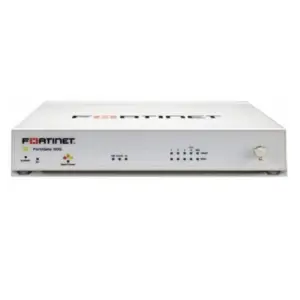
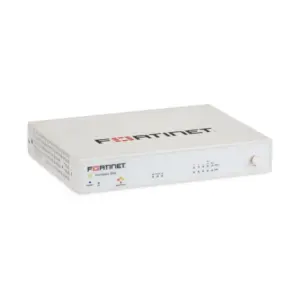
The supplied Tanzania image library was reviewed, but its listed assets are FortiGate firewall and dual-WAN graphics rather than FortiVoice VM 500 product imagery. They are intentionally not embedded here because using a firewall-specific image as the primary FortiVoice product visual could misrepresent the product.
FortiVoice VM 500 Buying Guidance
Choose the VM-500 tier only after validating scale. Count current and planned extensions, then estimate peak concurrent calls. Document SIP channels, auto attendants, conferences, call-center agents and branches. If the design approaches several published limits at launch, compare the next FortiVoice tier rather than relying on minimal headroom. Growth planning is usually less disruptive before deployment than after the communications platform is heavily integrated.
Next, identify optional capabilities. Fortinet lists FortiFone Softclient, Call Center, Hotel Management, Call Trunks and Notification among add-ons for FVE-VM-500 on its current product page. Availability and licensing can vary, so the quote should state which options are required. This prevents a base system price from being mistaken for the cost of a fully configured solution.
Finally, define implementation. Decide whether the project includes configuration, endpoint provisioning, number migration, carrier coordination, network changes, user training, acceptance testing and post-cutover support. A product license and a completed communications deployment are different deliverables. Procurement documents should make the boundary clear.
Quotation Checklist
FortiVoice VM 500 FAQ
How many extensions does FortiVoice VM 500 support?
Fortinet’s current FortiVoice Enterprise specifications list 500 extensions for FVE-VM-500. Extension capacity should be considered together with concurrent calls, trunks and optional feature requirements.
How many concurrent calls are supported?
The current Fortinet enterprise datasheet lists 75 concurrent calls for VM-500. This is different from the 50-VoIP-trunk capacity and should be evaluated separately during sizing.
What virtual resources are recommended?
Fortinet currently lists 2 recommended vCPUs and 8 GB recommended RAM for VM-500. Storage, networking and operational requirements should be planned according to the deployment and software documentation.
Can FortiVoice VM 500 be used for branches?
Yes, Fortinet documents VM-500 and larger virtual models as capable of central management for local-survivability deployments. The correct branch equipment and topology must be selected for the intended design.
Does the VM-500 include SIP carrier service?
No carrier service should be assumed from the PBX specification. SIP trunks, telephone numbers and calling plans are telecom services that must be arranged and validated separately with the selected provider.
Is FortiVoice VM 500 suitable for a call center?
Fortinet lists Call Center as an add-on and publishes a maximum of 55 call-center agents for VM-500. Confirm licensing and the required queue, supervisor, recording and reporting functions before procurement.
Decision Recap
FortiVoice VM 500 is best evaluated as a complete communications platform rather than a stand-alone software line item. Its published scale—500 extensions, 50 VoIP trunks and 75 concurrent calls—provides a clear starting point. The final solution depends on virtualization, SIP services, endpoints, branch connectivity, optional licenses, security, storage and migration requirements. Organizations that document these inputs before requesting pricing receive a more useful bill of materials and a clearer implementation scope.
Plan Your FortiVoice VM 500 Deployment
Share your extension count, site list, SIP requirements, virtualization platform and desired features with FourTeck. The objective is to validate the VM-500 tier, identify supporting components and prepare a quotation that reflects the actual communications environment rather than a generic package.


Reviews
There are no reviews yet.