
FortiCamera FCM-CD55 Tanzania
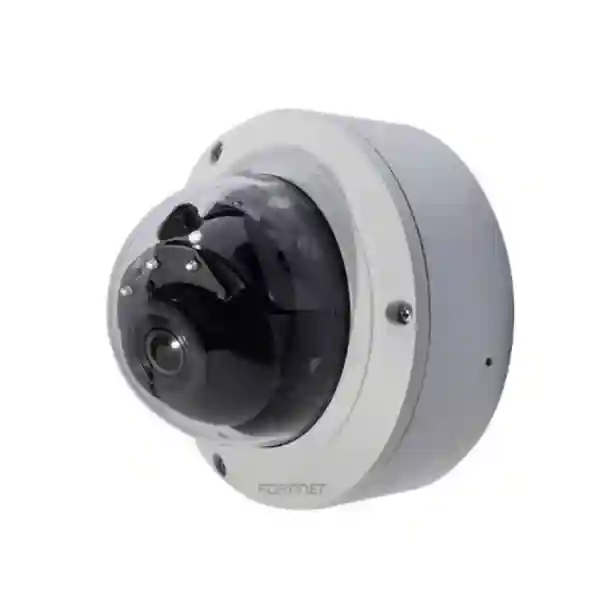
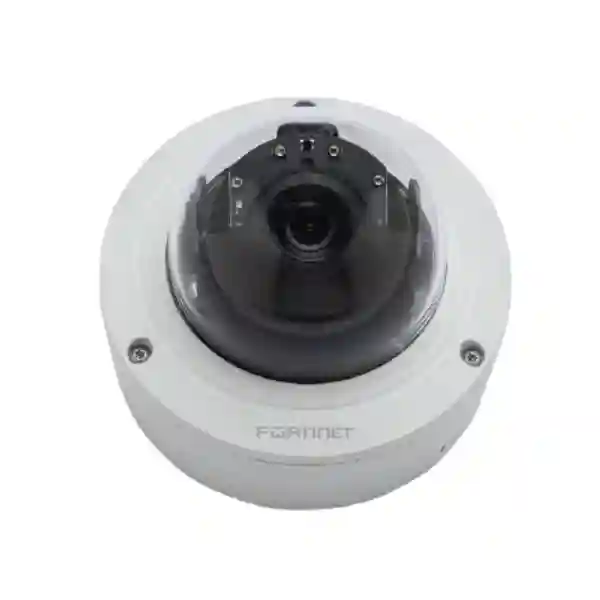
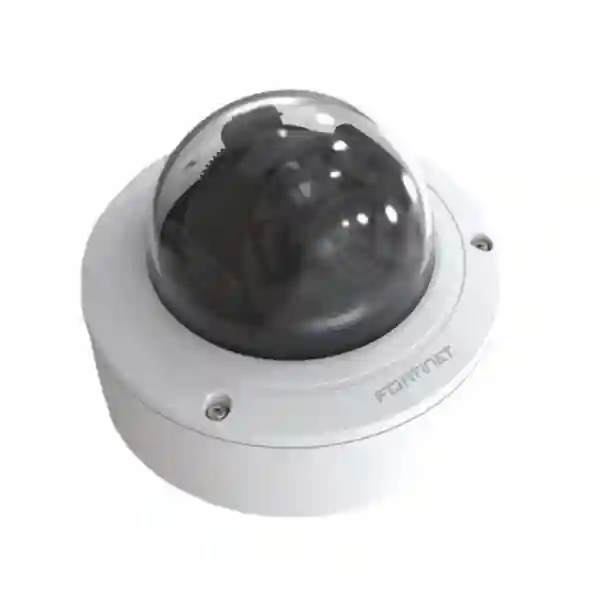
FortiCamera FCM-CD55 is a Fortinet 5-megapixel fixed-dome IP camera designed for professional network video surveillance. Its motorized 2.7–13 mm autofocus lens gives installers practical framing flexibility, while 20m+ dimmable infrared illumination, HDR, H.264/H.265 compression, a built-in microphone and PoE support help create a clean, manageable deployment. For Tanzanian organizations planning surveillance for offices, retail premises, campuses, warehouses, hospitality sites or controlled outdoor areas, the FCM-CD55 provides a strong fit where a durable dome form factor and adjustable field of view are important.
What makes the FortiCamera FCM-CD55 useful?
The FCM-CD55 combines a 5 MP low-light CMOS sensor with a 2.7–13 mm motorized lens and 4x optical zoom. Fortinet documents horizontal viewing angles from approximately 29° to 99°, allowing a deployment team to tune coverage for a wider scene or a narrower area of interest without changing to a different fixed lens. The camera supports HDR above 80 dB and 3D noise reduction, useful capabilities when entrances, corridors and perimeter-facing scenes contain challenging differences between bright and dark areas.
Fortinet specifies 5 MP resolution at up to 30 fps for the CD55 family, supporting detailed business surveillance without positioning the camera as a consumer webcam.
The 2.7–13 mm motorized autofocus lens provides flexible scene composition and a 4x optical zoom range.
Dimmable infrared illumination is specified at 20m+, complemented by low-light operation and HDR for variable lighting conditions.
Verified technical highlights
| Format | Fixed dome, indoor/outdoor |
| Sensor | 5 MP, 1/2.8-inch low-light CMOS |
| Lens | 2.7–13 mm motorized autofocus, 4x optical zoom |
| Compression | H.264 / H.265; RTSP supported |
| Night illumination | 20m+ dimmable IR |
| Network / power | 1 × 10/100 Ethernet, IEEE 802.3af Class 3 PoE |
| Other connectivity | Wi-Fi and BLE |
| Audio | Built-in microphone |
| Protection | IP67-rated, vandal-resistant construction |
Deployment, integration and buying guidance
A surveillance camera should be selected as part of a complete video system rather than by megapixel count alone. Before ordering FCM-CD55 units, define the scene width, mounting height, target detail, lighting, retention period, network topology, PoE capacity and recorder or cloud-management architecture. Fortinet positions FortiCamera alongside FortiRecorder and FortiCentral, while cloud-enabled variants can also participate in FortiCamera Cloud deployments. The exact camera suffix, recorder choice and subscriptions should therefore be confirmed against the intended architecture before procurement.
PoE simplifies installation by carrying network connectivity and power through Ethernet, but switch port availability, PoE budget and cable distance still need to be engineered. H.265 can reduce bandwidth and storage demand compared with older compression choices in compatible workflows, although actual consumption depends on frame rate, scene complexity, retention policy and recording settings. Organizations with multiple sites should also plan user permissions, remote access, monitoring responsibilities, incident export procedures and cybersecurity controls before rollout.
FortiCamera FCM-CD55 Tanzania
For buyers in Tanzania, the FCM-CD55 is relevant to projects that need an enterprise IP camera with an adjustable dome lens rather than a basic fixed-view device. Procurement teams can begin by mapping each proposed camera to a clear objective: entrance monitoring, corridor coverage, reception visibility, loading-area observation, retail loss prevention or general property surveillance. This prevents over-ordering cameras while leaving critical scenes inadequately covered. The motorized lens is particularly useful where the installer needs to fine-tune framing after mounting, and the IP67 rating makes the model suitable for appropriately designed indoor or outdoor installations.
A Tanzania quotation request should specify camera quantity, site count, intended recorder or cloud platform, desired retention period, available PoE switching, mounting conditions and whether remote viewing is required. Customers should also identify existing Fortinet infrastructure because video surveillance can be planned alongside the broader network and security environment. FourTeck can use those project details to help shape a bill of materials rather than treating the camera as an isolated line item. Buyers comparing solutions should verify exact model suffixes and current Fortinet ordering information, since cloud-enabled and recorder-oriented deployment choices can affect the final architecture.
Environmental planning is equally important. Camera placement should avoid unnecessary glare, uncontrolled backlighting and physical obstruction, while outdoor cabling and mounting should follow appropriate installation practices. The FCM-CD55’s HDR, low-light capability and infrared illumination provide useful imaging tools, but they do not replace good scene design. For wider Fortinet planning, explore FourTeck Tanzania technology solutions and discuss how surveillance, switching, connectivity and cybersecurity can be coordinated within one procurement plan.
FortiCamera FCM-CD55 Dar es Salaam
Organizations sourcing the FortiCamera FCM-CD55 in Dar es Salaam may be planning surveillance for commercial offices, retail facilities, hospitality properties, warehouses, logistics operations or multi-tenant premises. In dense business environments, camera placement and network design should be treated together. The adjustable 2.7–13 mm lens lets a deployment team tune a camera for a broad lobby scene or a more focused access point, while 5 MP imaging provides a useful detail level for professional monitoring. For sites with changing daylight at doors and windows, HDR can help manage high-contrast scenes.
Before requesting a quote, document each camera location and whether it is indoor, sheltered outdoor or fully exposed. Identify the nearest network cabinet, available PoE ports and expected cable route. Where several cameras share a switch, calculate the total PoE requirement rather than checking only a single port. Recording retention is another procurement driver: longer retention or continuous recording can materially affect storage planning. The chosen FortiRecorder or cloud workflow should therefore be sized around the whole system, not simply the number of cameras being purchased today.
For phased deployments, buyers can plan the first group of cameras around priority entrances and operational areas, then expand after validating image framing and monitoring workflows. This approach also makes it easier to standardize naming, permissions and incident procedures. Dar es Salaam buyers who already operate Fortinet security can coordinate physical surveillance with their wider network roadmap. For regional Fortinet context, the FourTeck Africa technology portfolio can help procurement teams consider adjacent infrastructure requirements while the Tanzania contact route remains the appropriate starting point for this product enquiry.
FortiCamera FCM-CD55 Mwanza
Mwanza organizations evaluating FCM-CD55 cameras should start with the surveillance outcome rather than a generic camera count. A warehouse may prioritize loading points and controlled access, a hotel may focus on entrances and shared circulation areas, and an office may need reception and perimeter coverage. The CD55’s motorized autofocus lens gives the installer useful flexibility to adjust framing at commissioning, reducing the constraints associated with a single fixed focal length. Its 20m+ infrared illumination also supports night-time scenes where suitable placement and environmental conditions are maintained.
Network readiness is a key part of a Mwanza deployment. The camera uses 10/100 Ethernet and supports 802.3af Class 3 PoE, so the proposed switching layer should be checked for port count, PoE budget, uplink capacity and resilience. Where surveillance is business-critical, consider how switch or recorder outages would affect recording and live viewing. H.264/H.265 support provides codec flexibility, but storage calculations should use realistic recording settings and retention requirements rather than a generic estimate.
Procurement documentation should include the exact FCM-CD55 model, camera quantities, mounting requirements, recorder or management platform, retention expectations and any integration needs. If the project will grow, include expected future camera counts so the recording and switching architecture is not undersized. Outdoor deployments should account for proper cable routing and physical installation even though the camera itself is IP67-rated. A well-prepared request enables a more useful quotation and reduces revisions after purchase. Buyers can also review FourTeck’s wider enterprise technology portfolio when a surveillance project forms part of a larger infrastructure refresh.
FortiCamera FCM-CD55 Arusha
In Arusha, FCM-CD55 projects may involve hospitality, offices, educational facilities, retail environments or mixed indoor/outdoor premises. The camera’s fixed-dome format is suited to professional installations where a compact ceiling or wall-mounted surveillance point is preferred. Its adjustable motorized lens can be commissioned for the actual scene after mounting, which is valuable when architectural drawings do not fully represent the final furniture, counters, gates or pedestrian flow.
For hospitality and customer-facing environments, surveillance planning should balance useful coverage with appropriate privacy and access controls. Determine who may view live feeds, who can retrieve recordings and how long footage should be retained under the organization’s policies and applicable requirements. Technical planning should include PoE switch capacity, recorder sizing, network segmentation and secure remote administration. Fortinet’s broader video platform supports centralized management approaches, so multi-building or multi-site projects can be designed around operational workflows rather than isolated cameras.
When preparing an Arusha request for quotation, provide floor plans or camera schedules when available, desired fields of view, approximate mounting points and lighting concerns. Note any existing FortiRecorder, Fortinet switching or security infrastructure. The CD55 supports HDR and low-light operation, but installers should still avoid placing cameras where direct glare, reflective surfaces or obstructions compromise useful footage. For procurement teams, the key decision is whether the CD55’s lens flexibility, rugged enclosure and platform fit match the scene. FourTeck can then help align cameras with associated network and recording components without making assumptions about stock or delivery until the specific enquiry is reviewed.
FortiCamera FCM-CD55 Dodoma
Dodoma buyers considering the FortiCamera FCM-CD55 can use it as part of a structured IP surveillance design for offices, institutional premises, campuses and commercial facilities. The 5 MP sensor, motorized 2.7–13 mm autofocus lens and dome enclosure make the model useful when a project needs both detail and adjustable framing. Rather than specifying the same camera for every location, classify scenes by purpose and distance. Wide-area entrances may need a different lens setting from narrow corridors or controlled access points.
A complete design should account for recording architecture, storage retention, monitoring stations and network resilience. If cameras are powered from centralized PoE switches, ensure the total power budget and UPS strategy match the operational requirement. The FCM-CD55 supports H.264 and H.265, RTSP and a built-in microphone, so the design team should decide which capabilities are required and permitted in each area. Audio use in particular should be governed by organizational policy and applicable requirements rather than enabled automatically.
For public-sector, education or larger institutional procurement, a detailed bill of quantities can reduce ambiguity during evaluation. Include exact model numbers, quantities, mounting accessories, switching, recorder or cloud requirements, support expectations and commissioning scope. Avoid relying on generic phrases such as “complete CCTV system” without defining retention and viewing requirements. FourTeck Tanzania can work from a documented requirement to prepare a more precise commercial response. The result is a procurement process centered on verified capabilities and project fit, with any availability, lead-time or commercial terms confirmed specifically at quotation stage.
FortiCamera FCM-CD55 UAE
For UAE projects, the FortiCamera FCM-CD55 can suit organizations standardizing Fortinet-based physical surveillance across offices, retail, logistics, hospitality or distributed branches. The model’s 5 MP resolution and motorized lens make it practical where installers need to adjust the field of view after physical mounting. IP67 protection supports properly installed outdoor use, while PoE can simplify cabling by combining power and network connectivity.
Regional or multinational organizations should consider whether UAE and Tanzania sites will share operational standards. Standard camera naming, retention policies, user roles and incident-export procedures can make a multi-country deployment easier to support. However, site-specific requirements still matter: lighting, scene distance, local network design and recording capacity should be assessed independently. Buyers should also confirm the exact Fortinet camera variant and management architecture before purchase, particularly where FortiCamera Cloud or FortiRecorder workflows are being considered.
A useful UAE quotation brief should include camera count, locations, recorder or cloud preference, retention targets, PoE infrastructure and remote monitoring needs. If the project is part of a wider security refresh, document firewall, switching and WAN dependencies as well. FourTeck’s UAE enterprise technology site provides a regional route for broader infrastructure enquiries. For cross-border projects, keep the bill of materials consistent while allowing for site-level engineering differences, and request confirmation of current commercial availability rather than assuming inventory or delivery timing.
FortiCamera FCM-CD55 Uganda
Uganda organizations planning network video surveillance can evaluate the FCM-CD55 where a robust fixed dome and adjustable optical field of view are required. The 2.7–13 mm motorized autofocus lens is a practical differentiator for projects containing varied scenes because installers can tune coverage without selecting a separate fixed-lens model for every position. The camera also combines 5 MP imaging, infrared illumination, HDR, PoE and network connectivity in a business-oriented form factor.
For a multi-site Uganda rollout, first decide whether recording will be centralized, site-based or cloud-oriented. WAN bandwidth, outage behavior and retention needs can influence that choice. Local recording and recorder-based designs may reduce dependence on continuous WAN connectivity, while centralized visibility can simplify operations. The final architecture should follow the organization’s risk profile and available infrastructure. PoE switching should be sized with enough capacity for both the initial deployment and realistic expansion.
Procurement teams should provide a camera schedule and identify areas requiring wider coverage, narrower observation, night monitoring or outdoor installation. This allows the CD55’s lens range and IR capability to be matched to actual scenes. For Uganda-specific infrastructure enquiries, visit FourTeck Uganda. Cross-border organizations operating in both Uganda and Tanzania can use common technical standards while obtaining region-appropriate commercial quotations. Current pricing, availability, warranty terms and delivery should always be confirmed in the formal quote rather than inferred from third-party listings.
FortiCamera FCM-CD55 Kampala
Kampala commercial sites often require surveillance designs that handle entrances, customer areas, internal circulation and perimeter-facing scenes within one network. The FCM-CD55 can address several of these positions because its motorized lens supports both relatively wide and tighter viewing angles. This flexibility is useful during commissioning when exact mounting geometry differs from the original plan. HDR and low-light capability can assist at entrances where daylight and interior lighting create contrast.
For office towers, retail premises or distributed branches, network segmentation and user access deserve as much attention as camera placement. Surveillance devices should be incorporated into the organization’s network-security architecture, with appropriate administrative controls and secure management. Recording retention should be determined from business and compliance needs, then translated into storage requirements. Avoid selecting recorder capacity solely from camera quantity because resolution, frame rate, codec, scene activity and recording schedule all influence storage.
A Kampala bill of materials should distinguish cameras, mounting accessories, PoE switching, recorder or cloud services and any professional deployment scope. If remote monitoring is required from another city or country, include that requirement early so bandwidth and permissions can be planned. The FCM-CD55 is best evaluated as one component of this complete workflow. Buyers comparing quotations should confirm that the exact Fortinet part number is offered and that proposed supporting components align with the required camera count and retention target.
FortiCamera FCM-CD55 Arua
For Arua deployments, reliable surveillance design begins with clear priorities and realistic infrastructure planning. A camera at a gate, reception point or warehouse entrance has different framing requirements from one monitoring a general open area. The FCM-CD55’s motorized 2.7–13 mm lens provides useful adjustment for these differing scenes, while the dome format can suit indoor and outdoor mounting where the installation is properly designed.
Sites should assess PoE availability, cable paths, network cabinet capacity and backup power before installation. Where connectivity between locations is constrained or variable, recording architecture becomes particularly important. Decide what must continue locally during a WAN interruption and how footage will be accessed afterward. Fortinet’s ecosystem includes recorder and centralized management options, but the appropriate design depends on the number of cameras, operational model and retention requirements.
Arua buyers can improve quotation accuracy by providing site count, camera quantity, desired recording days, viewing requirements and whether existing network switches support the necessary PoE standard. Outdoor scenes should also note mounting height and expected night-time distance so IR coverage and lens framing can be assessed. The FCM-CD55 offers a capable specification, but useful video depends on correct positioning and configuration. Commercial details such as availability and lead time should be confirmed when the project requirement is submitted rather than assumed from online product references.
FortiCamera FCM-CD55 Mbarara
Mbarara businesses and institutions can consider the FortiCamera FCM-CD55 for professional surveillance where an adjustable dome camera is preferable to a fixed focal-length model. Potential applications include offices, retail spaces, hospitality premises, education sites, warehouses and controlled external areas. The camera’s 5 MP sensor, motorized autofocus lens, HDR and infrared capability provide a versatile technical foundation, but each proposed position should still be checked against the scene’s actual distance and lighting.
During design, separate image-quality requirements from retention requirements. Image quality depends on framing, resolution, light and configuration, while retention depends heavily on recording policy and storage. H.265 support can improve compression efficiency in compatible deployments, yet storage should still be calculated for the chosen settings. PoE infrastructure also needs enough budget and ports, with consideration for expansion and power backup where required.
When seeking an FCM-CD55 quotation for Mbarara, include any existing Fortinet or third-party network environment that the camera system must coexist with. Clarify whether monitoring will occur locally, centrally or from multiple sites. A detailed request helps identify the appropriate recorder, switch capacity and management approach. For organizations with several Ugandan branches, standardizing the camera family may simplify operational procedures, while each branch retains a site-specific coverage plan. This balances procurement consistency with practical surveillance engineering.
FortiCamera FCM-CD55 Gulu
Gulu surveillance projects can use the FCM-CD55 where a fixed-dome camera with flexible optical framing is required. The camera’s motorized lens is useful when installation teams need to refine the field of view after mounting, and its IP67-rated enclosure supports appropriately engineered outdoor deployments. The built-in microphone and network features add capabilities that should be enabled according to the organization’s operational and privacy policies.
A good design starts with a camera schedule describing what each camera must observe and at what approximate distance. This makes it easier to decide whether the CD55 lens range is suitable for each scene. Next, calculate PoE ports and power, recorder capacity, storage retention and monitoring access. If a site expects expansion, reserve sufficient network and recording headroom rather than designing only for the first installation phase.
For organizations connecting Gulu to other branches, define how surveillance traffic will interact with the WAN. Continuous remote streaming may have different bandwidth implications from local recording with occasional remote review. The architecture should therefore reflect operational needs and connectivity realities. A quotation request that includes these details allows supporting equipment to be selected more accurately. As with any enterprise surveillance purchase, confirm current Fortinet ordering information, support options and commercial terms at quotation stage.
FortiCamera FCM-CD55 Kenya
Kenya buyers can evaluate the FCM-CD55 for enterprise and commercial IP surveillance projects requiring 5 MP imaging, adjustable optical framing and a durable dome design. Its motorized autofocus lens can reduce installation constraints in mixed environments such as offices, retail branches, campuses and logistics sites. The 20m+ infrared capability supports low-light monitoring, while HDR can help in scenes containing strong contrast.
For regional organizations operating in Kenya and Tanzania, standardizing on a common camera platform can simplify training, configuration templates and maintenance processes. Nevertheless, each location needs its own coverage plan and storage calculation. Network topology, PoE capacity, WAN availability and monitoring workflows should be documented per site. Where FortiRecorder or FortiCamera Cloud is being considered, confirm the exact compatibility and licensing requirements for the selected model and deployment mode before finalizing the bill of materials.
Kenya procurement teams should request a quote using exact model numbers and quantities, while listing mounting accessories and related infrastructure separately. This makes technical comparison clearer and reduces the risk of apparently similar quotations containing different supporting components. Visit FourTeck Kenya for Kenya-focused enterprise technology enquiries. For cross-border projects, coordinate technical standards centrally but obtain commercial confirmation for each destination and avoid assuming identical availability or logistics across markets.
FortiCamera FCM-CD55 Kuwait
Kuwait projects considering the FortiCamera FCM-CD55 may prioritize reliable indoor/outdoor surveillance for offices, retail, warehouses, hospitality or controlled facility areas. The camera’s IP67 rating and vandal-resistant construction are useful characteristics for demanding installations, while the motorized lens allows field-of-view adjustment after mounting. Environmental protection does not remove the need for correct mounting, cable protection and installation practice.
Technical teams should review the entire video path: camera, PoE switch, network uplinks, recorder or cloud management, storage and operator access. The CD55 supports H.264/H.265 and RTSP, but interoperability and feature availability should be verified for the intended platform rather than assumed from protocol support alone. Where Fortinet’s own video ecosystem is selected, plan the recorder and management components around current camera count, expected growth and retention policy.
For procurement, identify exact camera quantities and site conditions before requesting pricing. Include expected night-time coverage, mounting positions, remote viewing and any existing infrastructure that can be reused. A complete scope allows the quotation to distinguish essential items from optional expansion components. Regional customers can consult FourTeck’s Kuwait technology presence for broader project coordination, while Tanzania projects should use the Tanzania enquiry path. In all cases, current stock, delivery and warranty details should be confirmed explicitly in the commercial offer.
FortiCamera FCM-CD55 Ghana
Ghana organizations looking at the FCM-CD55 can use its adjustable dome format for a range of business surveillance scenes. A motorized 2.7–13 mm lens gives installers more control over framing than a single fixed lens, which can be useful across entrances, corridors, reception areas and selected perimeter views. The camera’s 5 MP imaging, infrared illumination and HDR should be evaluated together with actual scene requirements rather than as isolated specification numbers.
For multi-camera projects, storage and network engineering are central to performance. Determine recording schedules, frame rates, retention days and whether footage is stored locally, on a FortiRecorder or through an applicable cloud architecture. Check PoE port count and budget, uplink capacity and backup power. For remote branches, define how users will access video and what happens when WAN connectivity is interrupted. These decisions affect both the bill of materials and day-to-day operation.
A Ghana quotation request should include a simple site survey or camera schedule where possible. State whether cameras are indoor or outdoor, approximate mounting heights and any areas with difficult lighting. This enables better lens and placement decisions. Organizations purchasing across African markets can standardize documentation and security policies while keeping commercial procurement region-specific. The FCM-CD55 can then be assessed on verified technical fit, with price, availability and support terms confirmed for the actual project.
FortiCamera FCM-CD55 Nigeria
Nigeria enterprises, retail groups and distributed organizations can consider the FortiCamera FCM-CD55 when a professional fixed-dome camera with adjustable optics is needed. The motorized autofocus lens can support standardized camera procurement across sites while still allowing installers to tune individual scenes. This is particularly useful in branch networks where entrances and interior layouts differ from one location to another.
A scalable design should define recorder capacity, storage retention and network segmentation before cameras are purchased in volume. H.265 support can help optimize video transport and storage in compatible configurations, but real requirements depend on recording settings and scene activity. PoE simplifies physical installation, while centralized switching makes power backup and network management easier to plan. Organizations should also establish role-based access and incident handling procedures so surveillance data is managed consistently.
For Nigeria procurement, request model-specific quotations and avoid substituting cameras solely on headline resolution. Lens range, night performance, enclosure rating and platform compatibility all influence suitability. If the project spans Nigeria and Tanzania, a common technical specification can simplify governance while local quotations address destination-specific commercial terms. Current availability and delivery expectations should be validated at the time of order. A clear requirement document is the most effective starting point for accurate solution design.
FortiCamera FCM-CD55 Seychelles
Seychelles projects may require surveillance for hospitality, offices, retail environments or property operations where indoor and outdoor coverage must be coordinated. The FCM-CD55’s IP67-rated dome enclosure and motorized lens provide a useful combination for professional deployment, but coastal and exposed environments require careful installation planning beyond the camera’s basic ingress rating. Mounting hardware, cable routing and site exposure should be assessed by the project team.
For hospitality and multi-building sites, determine which areas require continuous recording, which need event-focused review and who should have access to footage. The camera’s built-in microphone should be considered separately under organizational policy and applicable requirements. Network planning should include PoE power, switching, VLAN design, recorder connectivity and remote administration. If centralized viewing is required across properties, WAN capacity and resilience should be included in the design.
A Seychelles quotation brief should identify camera quantities, locations, required retention and the preferred management architecture. Include expansion expectations so supporting infrastructure can be sized sensibly. Where the same organization operates in Tanzania or other markets, standardizing camera and recorder families can simplify operational knowledge, but each property should still receive its own scene and environmental assessment. Procurement should remain based on verified model capabilities and project-specific commercial confirmation.
Related Fortinet solution planning
FortiCamera is most useful when cameras, recording, switching and cybersecurity are designed together. Organizations already using Fortinet can review how physical security aligns with their wider infrastructure and access requirements. The Tanzania FourTeck site is the primary enquiry route for local projects, while FourTeck’s approved regional network can support broader multi-country planning. The goal is not to add links or products unnecessarily, but to make sure the camera system has the network, recording and management foundation it needs.
FortiCamera FCM-CD55 FAQ
What resolution does the FCM-CD55 provide?
Fortinet specifies the CD55 at 5 MP resolution, with the ordering guide listing 5MP at up to 30 fps.
Does the FCM-CD55 have optical zoom?
Yes. The documented 2.7–13 mm motorized autofocus lens provides 4x optical zoom, enabling installers to adjust framing for the intended scene.
Can it be installed outdoors?
Fortinet lists the FCM-CD55 for indoor/outdoor installation and rates the enclosure IP67. Correct mounting and cabling practices remain important for the site environment.
Does it support PoE?
Yes. The FCM-CD55 supports IEEE 802.3af Class 3 Power over Ethernet through its 10/100 Ethernet connection.
What should I provide for a quotation?
Provide the number of cameras, site locations, indoor/outdoor positions, desired retention, existing PoE switching, recorder or cloud preference, remote viewing needs and any expansion plans. This helps build a more accurate bill of materials.
Quotation checklist
For a useful FCM-CD55 quotation, prepare: exact camera quantity; number of sites; approximate camera positions; indoor/outdoor requirements; target retention period; existing PoE switch details; recorder or cloud preference; remote monitoring requirements; mounting/accessory needs; and expected future expansion. If you have floor plans or a camera schedule, include them with the enquiry.
Decision recap
Choose the FortiCamera FCM-CD55 when your design benefits from a 5 MP fixed-dome camera with a motorized 2.7–13 mm autofocus lens, 20m+ infrared illumination, HDR, PoE and an IP67-rated vandal-resistant enclosure. Confirm scene suitability, recording architecture, PoE capacity, retention and exact Fortinet ordering requirements before purchase. This model is particularly relevant when flexible framing and integration into a professional Fortinet video surveillance environment matter more than simply choosing the lowest-cost camera.
Plan your FortiCamera deployment with FourTeck Tanzania
Share your camera count, sites, retention target and existing network details with FourTeck Tanzania. A project-focused enquiry helps align the FCM-CD55 with the appropriate recording, PoE and management components and enables current commercial terms to be confirmed for your requirement.




Reviews
There are no reviews yet.