
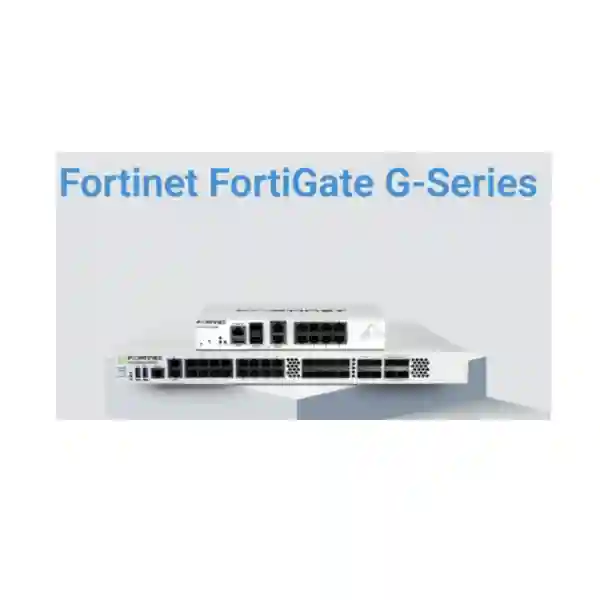
FortiAP G Series
FortiAP G Series is Fortinet’s Wi‑Fi 6E generation of enterprise wireless access points. The family is designed for organizations that want to extend wireless capacity into the 6 GHz band while retaining coordinated security and network management. Fortinet documentation identifies G-Series models including FAP-231G, FAP-233G, FAP-234G, FAP-431G, FAP-432G and FAP-433G. Model capabilities vary, so selection should be based on the exact radio, antenna, mounting, power, uplink and environmental requirements of the site rather than on the series name alone.
Wi‑Fi 6E and 6 GHz
Fortinet’s design guidance describes G Series access points as providing three Wi‑Fi service radios for 2.4 GHz, 5 GHz and 6 GHz coverage. The 6 GHz band can add substantial spectrum capacity for compatible Wi‑Fi 6E clients. It also changes WLAN planning: compatible client radios, appropriate security settings and regulatory availability all need to be considered before a 6 GHz design is finalized.
FortiGate-managed wireless
FortiAP can be centrally managed through the integrated WLAN controller on FortiGate, and Fortinet positions FortiAP as part of its secure LAN edge architecture. For customers already operating FortiGate, this can simplify policy coordination and wireless operations. Firmware and FortiOS compatibility should always be checked for the exact access-point model and target software release before deployment.
Plan the wired edge too
A Wi‑Fi 6E project is not only an access-point purchase. Faster radios can make uplink capacity, PoE design, switching, cabling and WAN architecture important parts of the outcome. A useful quotation therefore starts with floor area, user density, application mix, existing switches, FortiGate platform, cabling constraints and the client devices expected to use 6 GHz.
FortiAP G Series model planning
Fortinet currently lists FAP-231G, FAP-233G, FAP-234G, FAP-431G, FAP-432G and FAP-433G among its Wi‑Fi 6E models. That list is useful for establishing the product family, but it should not be used as a substitute for an exact model datasheet. Internal versus external antenna design, radio configuration, spatial streams, interfaces, environmental rating, mounting options and power requirements can differ. Procurement teams should therefore identify the installation environment first and then validate the selected SKU against Fortinet documentation.
| Planning question | Why it matters |
|---|---|
| Indoor or outdoor? | Determines enclosure, antenna and environmental requirements. |
| How many concurrent clients? | Influences AP density, channel planning and capacity targets. |
| Which clients support 6 GHz? | Wi‑Fi 6E benefits depend on compatible client hardware and software. |
| What FortiGate/FortiOS is installed? | Compatibility should be validated against Fortinet’s current matrix. |
| What switching and PoE are available? | The wired LAN must support the intended AP power and uplink design. |
FortiAP G Series Tanzania
For a FortiAP G Series Tanzania project, the most useful starting point is the wireless requirement rather than a model number. A head office, hotel, school, clinic, warehouse and multi-floor commercial building can all need very different RF designs even when they use the same Fortinet ecosystem. Buyers should document floor plans, construction materials, expected concurrent users, voice and video usage, guest-network needs, security segmentation and existing FortiGate and switching infrastructure. This gives the project team enough information to decide whether the G Series is appropriate and which specific model should be evaluated.
The 6 GHz capability of Wi‑Fi 6E is particularly relevant when an organization is trying to add wireless capacity for modern compatible devices. However, 6 GHz should not be treated as a universal replacement for 2.4 GHz or 5 GHz. Client support, propagation, channel planning and local regulatory conditions matter. A mixed-band design is often necessary because organizations usually have a blend of newer and older laptops, phones, scanners, IoT endpoints and specialist equipment. Security design also deserves early attention because 6 GHz operation is tied to newer security expectations such as WPA3. The practical goal is a WLAN that supports the real device estate, not simply the newest radio band.
Tanzania procurement teams can make quotations more accurate by specifying the number of sites, approximate coverage area, AP mounting locations, current switch models, available PoE budget, cabling category, FortiGate model and software release, and whether centralized or cloud-oriented operations are preferred. FourTeck can use that information to frame a product and deployment discussion without assuming that every site requires the same access-point density. For broader Fortinet planning, see FourTeck Tanzania, and for regional Fortinet security context see FourTeck Africa. These resources can help place wireless access in the wider LAN, firewall and security architecture.
FortiAP G Series Dar es Salaam
A FortiAP G Series Dar es Salaam deployment may serve corporate offices, hospitality environments, professional services, retail operations, education facilities or mixed-use buildings. Dense occupancy and multi-tenant environments make capacity planning especially important. Instead of estimating AP quantity from floor area alone, the design should consider how many users will be active at peak times, which applications they run, how many SSIDs are needed and whether traffic must be segmented between staff, guests, voice, operational devices and managed endpoints.
Wi‑Fi 6E adds the 6 GHz band for compatible clients, which can create additional room for high-capacity wireless design. The advantage is strongest when endpoints can actually use 6 GHz and the wired network behind the APs is sized appropriately. An office refreshing laptops may have a very different adoption curve from a hotel supporting unpredictable guest devices. Site survey work, AP placement and channel planning remain important even with newer wireless standards. Concrete walls, lift cores, glass, metal shelving and neighboring WLANs can all influence the final design.
For quotation preparation in Dar es Salaam, include the building type, number of floors, approximate users per zone, existing FortiGate, switches and cabling, plus any requirement for guest portals, VLANs, branch connectivity or centralized monitoring. Where a FortiGate already forms the security edge, FortiAP management can be considered as part of an integrated secure LAN edge. Compatibility must be checked for the exact FortiAP and FortiOS release. This prevents a purchasing decision based only on a family name and helps align the wireless upgrade with operational and security requirements.
FortiAP G Series Mwanza
For FortiAP G Series Mwanza requirements, businesses should begin with coverage, capacity and operational priorities. A warehouse needs reliable coverage around racks and moving inventory; an office may prioritize collaboration traffic and secure employee access; a hotel may need predictable guest experience across rooms and common areas. Those environments cannot be sized accurately from a single generic AP-per-square-metre rule. The RF environment, construction, device mix and peak concurrency need to be understood.
G Series access points introduce Wi‑Fi 6E capability and the possibility of using 6 GHz with compatible clients. Organizations should inventory their endpoint estate before treating 6 GHz as a primary design band. Legacy and IoT devices may remain on 2.4 or 5 GHz, while newer laptops and phones can make use of newer spectrum. SSID and security design should reflect that mixed environment. The wired network should also be reviewed for appropriate PoE and uplink capacity so that a wireless refresh does not expose avoidable bottlenecks elsewhere.
A Mwanza quotation request is more actionable when it includes a floor plan or site sketch, expected user counts, AP mounting constraints, switch information and the current firewall platform. If there are multiple branches, note how wireless policies are expected to be standardized and who will administer them. Fortinet’s integrated approach can be relevant for organizations already using FortiGate, but the exact software and hardware compatibility should be confirmed before procurement. Planning this way keeps the focus on a supportable network design rather than a stand-alone access-point purchase.
FortiAP G Series Arusha
FortiAP G Series Arusha projects can span hospitality, tourism, offices, schools, healthcare and distributed business sites. Each has a different definition of good Wi‑Fi. Hospitality may prioritize guest onboarding and coverage continuity, while an office may emphasize secure employee access, collaboration and segmentation. Education may have short periods of very high concurrency. A strong design translates those operating patterns into AP placement, band strategy, switching and policy requirements.
Wi‑Fi 6E can provide additional spectrum in 6 GHz for supported devices, but client compatibility should be measured rather than assumed. Organizations with a large installed base of older endpoints will still need effective 2.4 and 5 GHz service. Newer bands also require attention to security configuration and regulatory availability. This is why an RF and device assessment is more valuable than choosing a model only from headline throughput. Fortinet’s G Series includes multiple models, and exact antenna and interface characteristics should be confirmed against the selected model documentation.
For Arusha buyers, a useful bill-of-materials discussion should include AP quantities as an outcome of design, not an arbitrary starting point. Share room layouts, outdoor requirements, ceiling heights, user-density zones, existing PoE switching, FortiGate details and any need for guest networks or separate operational SSIDs. Where a project extends beyond Tanzania, FourTeck Uganda provides a relevant regional reference for neighboring-market requirements. The objective is consistent architecture while respecting site-specific RF and infrastructure conditions.
FortiAP G Series Dodoma
A FortiAP G Series Dodoma deployment should be designed around the applications and users that the WLAN must support. Administrative offices, institutions, meeting facilities and growing commercial environments may need secure staff access, controlled guest connectivity and consistent policy across different parts of a campus. Wi‑Fi 6E provides another spectrum option, but successful deployment still depends on RF planning, compatible endpoints, secure authentication and a wired LAN that can carry the resulting traffic.
For organizations standardizing on Fortinet, FortiAP can be managed with FortiGate and integrated into the Fortinet Security Fabric. That can be useful when wireless policy needs to align with firewall segmentation and broader LAN security. It does not remove the need to verify versions: Fortinet publishes compatibility information for FortiAP and FortiOS, and the selected model should be checked against the intended software baseline. This is particularly important for organizations with formal change-control processes.
Dodoma procurement teams can improve project accuracy by documenting building layouts, concurrent users, device types, switch and PoE capacity, uplink speeds, authentication requirements and future growth. If a project involves several buildings, identify whether fiber or copper backhaul already exists and where network cabinets are located. These details help separate coverage problems from capacity problems and can prevent overbuying or under-sizing. The resulting quotation can then address the access points together with any related switching, firewall, cabling and support considerations needed for a coherent solution.
FortiAP G Series UAE
FortiAP G Series UAE buyers commonly evaluate Wi‑Fi 6E as part of office modernization, hospitality, education, retail and enterprise LAN refresh projects. The 6 GHz band can add capacity for compatible endpoints, but a procurement specification should still describe user density, application requirements, existing switching and security architecture. In dense commercial environments, careful channel planning and AP placement can be as important as the radio generation itself.
Organizations already using FortiGate can consider integrated FortiAP management as part of the secure LAN edge. Exact model and FortiOS compatibility should be validated before finalizing the bill of materials. The G Series contains several models with different physical and radio characteristics, so buyers should not assume that a specification associated with one G-Series model applies to all others. Antenna type, intended environment, power and uplink requirements should be checked on the exact datasheet.
For multi-country projects, UAE teams can use FourTeck UAE as a regional technology reference while coordinating Tanzania requirements through the Tanzania site. A consistent project brief should include site count, floor plans, expected client mix, security requirements, management preference and rollout schedule. This makes it easier to compare like-for-like requirements across locations while still allowing RF design and regulatory settings to be adapted to each country.
FortiAP G Series Uganda
For FortiAP G Series Uganda deployments, Wi‑Fi planning should connect business requirements with the actual LAN edge. Offices, campuses, hospitality sites and branch networks can benefit from newer wireless capacity, but the design must account for endpoint compatibility, building construction, user concentration and switching. Wi‑Fi 6E introduces 6 GHz for compatible devices while retaining the need to support established 2.4 and 5 GHz clients.
A Fortinet-based environment can use FortiGate management for FortiAP and coordinate wireless policy with the broader Security Fabric. Before purchase, confirm the exact FortiAP model, intended firmware and FortiOS version. This compatibility step is especially valuable for organizations standardizing configurations across several sites. It also creates a clearer operational baseline for upgrades and troubleshooting.
Uganda buyers should include floor plans, site types, user counts, device mix, existing FortiGate and switch models, PoE availability and cabling information in the quotation request. For Uganda-specific coordination, FourTeck Uganda is a relevant regional resource. A structured requirement makes it possible to discuss the correct G-Series model and supporting infrastructure without relying on unsupported assumptions about stock, delivery, licensing or site conditions.
FortiAP G Series Kampala
A FortiAP G Series Kampala project may need to serve dense offices, hospitality venues, education sites or multi-tenant commercial buildings. Capacity and roaming expectations should be defined early. Meeting rooms and event spaces can create short high-density peaks, while open offices may generate sustained collaboration traffic. These patterns influence AP density and channel design more than a simple building-area calculation.
Wi‑Fi 6E provides 6 GHz capability for supported endpoints and can reduce pressure on established bands when the client population is ready. The network must still accommodate devices that remain on 2.4 or 5 GHz. Security settings, authentication and SSID strategy should therefore be planned for the actual endpoint mix. Fortinet guidance also highlights the importance of newer security approaches for 6 GHz, making WLAN security design part of migration planning rather than an afterthought.
Kampala procurement teams should identify whether FortiGate will manage the wireless estate, which FortiOS release is targeted and what PoE switching is available. Add floor plans, user-density estimates and any outdoor or special antenna requirements. This creates a better basis for selecting among G-Series models and for deciding whether switching or cabling changes should be included in the same project scope.
FortiAP G Series Arua
FortiAP G Series Arua requirements should be approached as an end-to-end connectivity design. Branch offices, institutions and commercial sites need predictable coverage, secure access and manageable operations, but the right access-point count depends on layout and usage. Walls, room geometry, ceiling height, client density and the placement of network cabinets can materially affect the design.
The G Series adds Wi‑Fi 6E and 6 GHz options for compatible clients. Organizations should assess whether their endpoint fleet can use those capabilities and how long older devices will remain in service. A balanced design can preserve coverage for legacy endpoints while creating capacity for newer equipment. If FortiGate is already deployed, integrated FortiAP management can be evaluated, with compatibility verified against Fortinet’s published matrix.
For a useful Arua quotation, provide the number of buildings, floor plans or sketches, approximate user counts, switch and PoE details, firewall model and any guest-access or VLAN requirements. Where internet connectivity or power constraints influence operations, include those factors in the design brief. The aim is to select a supportable WLAN architecture and exact AP model rather than buying solely on the basis of Wi‑Fi generation.
FortiAP G Series Mbarara
A FortiAP G Series Mbarara deployment can support business offices, education, healthcare, hospitality and other environments where secure wireless is part of daily operations. The design should separate coverage requirements from capacity requirements. A lightly used corridor and a crowded training room may require very different treatment even when they occupy similar floor area.
Wi‑Fi 6E introduces additional 6 GHz spectrum for compatible devices. That can be valuable for modern laptops and phones, but organizations often operate a mixed device estate. A WLAN refresh should therefore define which bands and security modes are needed for each client group. AP placement and wired uplinks also matter because higher wireless capability cannot compensate for insufficient PoE, switching or upstream bandwidth.
Mbarara buyers can prepare a stronger request by documenting peak users, application types, current FortiGate and switch models, floor plans, ceiling types, cabling and future expansion. If multiple branches need common policy, describe the desired management model and change-control process. This information supports a more accurate discussion of FortiAP G Series options and related LAN infrastructure.
FortiAP G Series Gulu
For FortiAP G Series Gulu projects, reliability and manageability should be defined alongside wireless performance. An organization may need secure staff access, guest connectivity, segmented operational devices and consistent policy across several areas. These requirements affect SSID design, VLAN integration, authentication and how the AP estate is administered.
G-Series Wi‑Fi 6E capability allows supported clients to use 6 GHz in addition to established bands. Before relying on 6 GHz, check endpoint support and the regulatory configuration applicable to the deployment. Organizations should also review wired uplink and PoE capacity. A modern AP can expose limitations in an older access switch, so the LAN edge should be assessed as a system.
For Gulu procurement, include building dimensions, user-density zones, device categories, existing FortiGate/FortiOS, switch details and any requirement for outdoor coverage. Fortinet publishes model and software compatibility information, which should be checked during design. This disciplined approach reduces the risk of choosing a model whose physical, radio or power characteristics do not match the site.
FortiAP G Series Kenya
FortiAP G Series Kenya projects can range from a single office refresh to standardized wireless across multiple branches. Wi‑Fi 6E is most useful when it is connected to a clear capacity and client strategy. Organizations should identify which endpoints support 6 GHz, which applications are latency-sensitive and where high-density zones exist. This allows the design to use newer spectrum deliberately rather than treating it as a checkbox.
FortiAP management through FortiGate can be relevant for businesses already invested in the Fortinet Security Fabric. Exact firmware and FortiOS compatibility should be validated, particularly when existing FortiGate appliances will be retained. Switching and PoE should be reviewed at the same time, along with cabling and uplink capacity. The correct G-Series model should be chosen from its exact datasheet and intended environment.
For Kenya-specific project context, FourTeck Kenya provides a regional FourTeck resource. Multi-country organizations can use a common requirement template across Kenya and Tanzania while allowing AP quantities, channels and physical installation to be site-specific. Include floor plans, user counts, device mix, security requirements and existing network inventory in the request for quotation.
FortiAP G Series Kuwait
A FortiAP G Series Kuwait deployment should be specified around indoor coverage, user density, endpoint capability and the existing security architecture. Corporate offices, hospitality and commercial sites may benefit from Wi‑Fi 6E capacity, especially where newer client devices are common. The 6 GHz band should still be planned alongside 5 GHz and 2.4 GHz because real environments contain mixed generations of devices.
Fortinet’s integrated wireless approach can allow FortiGate to manage FortiAP as part of the secure LAN edge. Compatibility between the exact AP model, FortiAP firmware and FortiOS should be confirmed before procurement. The switch layer also deserves attention: PoE budget, port speed, cabling and uplink design should support the intended wireless architecture.
Kuwait buyers should provide floor plans, peak concurrent users, existing Fortinet equipment, switching details, authentication requirements and any guest-network needs. A multi-region procurement team should avoid assuming that radio settings and regulatory conditions are identical between countries. Standardize architecture and operational policy where useful, while validating country-specific wireless requirements and exact product configurations for each site.
FortiAP G Series Ghana
FortiAP G Series Ghana planning should start with the business outcome: better capacity, a secure WLAN refresh, branch standardization or support for a growing modern-device population. Wi‑Fi 6E offers access to 6 GHz for compatible endpoints, but deployment value depends on client readiness and thoughtful RF design. A mixed-band strategy remains important where older laptops, phones, scanners or IoT devices are in service.
For organizations using FortiGate, FortiAP management can align wireless administration with the Fortinet security environment. Version compatibility should be checked for the selected G-Series model. Network teams should also confirm switch PoE and uplink capabilities, because wireless improvements can shift bottlenecks into the wired access layer if that layer is not reviewed.
Ghana quotation requests should include the number and type of sites, floor plans, expected concurrent users, endpoint mix, existing firewall and switches, cabling and security segmentation needs. If the project spans Tanzania and Ghana, use a consistent technical questionnaire so that procurement can compare requirements while keeping RF design local to each building. This produces a clearer bill of materials and avoids unsupported assumptions about quantity or model suitability.
FortiAP G Series Nigeria
FortiAP G Series Nigeria deployments may involve large offices, distributed branches, education, hospitality, retail or other environments with very different user-density profiles. Wi‑Fi 6E can add capacity through 6 GHz, but a successful refresh requires more than replacing older APs one-for-one. Client compatibility, RF propagation, channel planning, PoE and uplink capacity should be assessed as part of the same project.
Organizations already operating FortiGate can evaluate FortiAP as part of an integrated secure LAN edge. The selected G-Series model and FortiOS release should be checked against Fortinet compatibility guidance. Procurement teams should also distinguish between model-family facts and exact-model specifications; antenna arrangement, interfaces and deployment characteristics can differ within a product family.
For a Nigeria quotation, share building layouts, peak users, application mix, device generations, current FortiGate and switching, cabling and any centralized-management requirement. Multi-site rollouts benefit from a standard configuration framework, but AP placement and quantity should remain driven by each location. This helps organizations standardize security and operations without turning the RF design into a generic template.
FortiAP G Series Seychelles
FortiAP G Series Seychelles projects can be relevant to hospitality, offices and other sites where dependable wireless access is central to the customer or employee experience. Hospitality environments in particular can combine guest rooms, public areas, meeting spaces and operational zones, each with different coverage and capacity needs. AP placement should therefore be based on building layout and expected usage rather than a fixed ratio.
Wi‑Fi 6E adds 6 GHz capability for compatible clients, which can create useful capacity for newer devices. A site may still need strong 2.4 and 5 GHz coverage for the broader endpoint population. Security, SSID design and roaming expectations should be defined before installation. If FortiGate is part of the network, FortiAP management can be evaluated with exact software compatibility checked during design.
For Seychelles procurement, include floor plans, room counts where relevant, common-area density, outdoor requirements, existing switching, PoE and firewall information. Also identify any constraints around cabling routes and network cabinets. These details allow the project discussion to address the entire LAN edge and to select a G-Series model based on verified technical requirements rather than marketing labels alone.
Compatibility, security and migration guidance
A Wi‑Fi 6E migration should begin with client and security discovery. Fortinet’s planning documentation notes that 6 GHz introduces substantial additional capacity while requiring newer client radios and modern security. This makes endpoint inventory important. Determine how many laptops, phones and specialist devices can use 6 GHz today, how quickly that percentage will increase and which legacy devices must remain supported. The answer influences SSID design and how aggressively a business can move traffic into the newer band.
Firmware planning is equally important. Fortinet publishes a FortiAP/FortiOS compatibility matrix and recommends matching versions where available. Before a rollout, record the FortiGate model, FortiOS version and proposed FortiAP model, then validate the combination. A controlled baseline makes future upgrades and troubleshooting easier. Organizations with several branches should also decide whether software upgrades are centralized and how maintenance windows will be managed.
Finally, review the wired edge. AP power requirements and Ethernet capabilities differ by model, so verify PoE and port requirements against the exact datasheet. Check switch uplinks and the path to core services and internet connectivity. Wireless capacity is valuable only when the rest of the network can carry the traffic reliably.
FortiAP G Series buying checklist
Buildings, floors, indoor/outdoor areas, construction and mounting constraints.
Peak concurrent users, device types, Wi‑Fi 6E readiness and application mix.
FortiGate, FortiOS, switches, PoE, cabling, VLANs and uplinks.
Management approach, monitoring, upgrades, support process and growth plan.
Frequently asked questions
Is FortiAP G Series Wi‑Fi 6E?
Yes. Fortinet identifies its G Series FortiAP models as Wi‑Fi 6E access points. Exact radio and hardware specifications vary by model, so verify the selected datasheet.
Which FortiAP G Series models are documented by Fortinet?
Current Fortinet compatibility documentation lists FAP-231G, FAP-233G, FAP-234G, FAP-431G, FAP-432G and FAP-433G among Wi‑Fi 6E models. Availability and lifecycle should be verified for the intended purchase date and region.
Can FortiGate manage FortiAP?
Fortinet documents centralized FortiAP management through the integrated WLAN controller on FortiGate. Check the exact FortiAP and FortiOS compatibility matrix before deployment.
Do all devices use 6 GHz?
No. 6 GHz requires compatible client radios. A deployment should inventory endpoint capabilities and maintain appropriate service for devices using established bands.
What information is needed for a FortiAP quotation?
Provide location, building or floor plans, expected users, device types, indoor/outdoor requirements, existing FortiGate and FortiOS, switches, PoE, cabling, security requirements and the desired rollout scope.
Decision recap
Choose FortiAP G Series when Wi‑Fi 6E, 6 GHz capacity and Fortinet-integrated wireless management fit the project requirement. Choose the exact model only after validating the environment, client density, antenna needs, FortiGate/FortiOS compatibility, switching, PoE and cabling. For sites where client devices are not yet 6 GHz capable, plan the migration around a mixed endpoint population rather than assuming immediate use of the new band.
Prepare a FortiAP G Series quotation
Send the site count, floor plans, expected users, existing Fortinet equipment, switch/PoE information and target deployment schedule. FourTeck can use those details to structure a product discussion around the appropriate FortiAP G Series model and related LAN requirements. Product availability, commercial terms and final configuration should be confirmed at quotation stage.


Reviews
There are no reviews yet.