
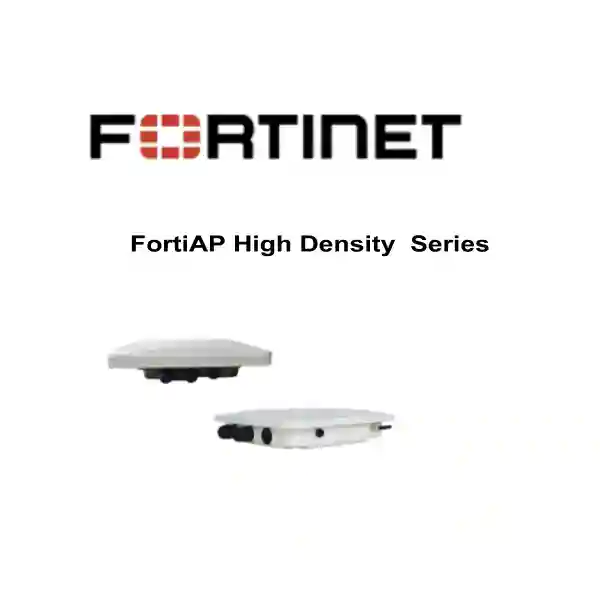
FortiAP-HD Series Tanzania
FortiAP-HD Series is Fortinet’s specialized wireless platform for ultra-high-density environments where thousands of client connections, crowded RF conditions and demanding user expectations require a purpose-built design. It is suited to stadiums, arenas, convention centers, shopping environments, transport hubs, auditoriums, campuses and smart-city style public spaces. Rather than treating high-density Wi-Fi as a simple access-point count exercise, a FortiAP-HD project should be planned around RF behavior, client distribution, venue geometry, backhaul, power, controller capacity, security policy and operational visibility.
What makes FortiAP-HD different?
Fortinet positions FortiAP-HD specifically for high-density wireless. The platform uses advanced RF engineering, intelligent antenna arrays, directional coverage techniques and software-defined coverage to place capacity where users need it. This matters in venues where a conventional omnidirectional AP design can create excessive co-channel contention or waste RF energy in areas with few users. The objective is not simply stronger signal; it is controlled reuse, predictable capacity and a better experience across a large population of concurrently active devices.
High-density RF
Directional and high-gain antenna approaches help focus coverage and improve spatial reuse in crowded environments.
Multi-radio architecture
Current Fortinet listings include Wi-Fi 6E and Wi-Fi 7 FortiAP-HD models with multiple radios and spatial streams for demanding venue designs.
Dedicated management
FortiAP-HD models use the FortiAP-HD WLAN Controller. They are not managed by the FortiGate wireless controller like standard FortiAP models.
FortiAP-HD models and selection
Fortinet’s current high-density family information includes FortiAP-HD-431G with Wi-Fi 6E, three radios and twelve total spatial streams, alongside Wi-Fi 7 models including FortiAP-HD-444KW and FortiAP-HD-444KN with four radios and sixteen total spatial streams, plus FortiAP-HD-224KR and FortiAP-HD-224KL with two radios and four total spatial streams. Model choice should never be based on the Wi-Fi generation alone. Venue geometry, indoor or outdoor placement, antenna pattern, expected client mix, regulatory availability of spectrum, uplink design and mounting constraints all affect the correct bill of materials.
For procurement, provide venue drawings, expected peak attendance, likely concurrent Wi-Fi users, critical applications, target coverage zones, existing switching and fiber infrastructure, mounting heights, available power and any integration requirements. This enables a more defensible design than selecting access points solely from headline throughput figures.
Controller, security and infrastructure planning
A critical design point is management architecture. FortiAP-HD requires the FortiAP-HD WLAN Controller for authorization, configuration and operation. Organizations that already operate FortiGate-managed standard FortiAP access points should not assume the HD family can be adopted into that same wireless-controller workflow. During design, separate the roles of WLAN management, network security, switching, routing, authentication and upstream internet connectivity, then document how each component exchanges traffic and policy.
High-density Wi-Fi also puts pressure on the wired network. Multi-gigabit access switching, PoE capacity, fiber or high-capacity aggregation, resilient uplinks, VLAN design and internet edge capacity may become as important as the access points themselves. A venue can have excellent RF coverage and still deliver a poor experience if switching, DHCP, DNS, authentication, captive portal, WAN bandwidth or application infrastructure becomes the bottleneck.
FortiAP-HD Series Tanzania
For Tanzania organizations, FortiAP-HD is relevant when wireless demand is concentrated into unusually crowded areas rather than evenly distributed office floors. Potential projects include major sports venues, event grounds, university gathering spaces, large conference facilities, transportation environments and public-facing sites where large numbers of users may connect within a short period. The procurement conversation should begin with peak demand, not average daily use. A venue that is quiet for much of the week may become extremely demanding during an event, making peak client density, roaming behavior and application mix central design inputs.
Tanzania deployments should also consider spectrum regulations, the availability of client devices capable of using newer bands, local cabling conditions, power resilience and the practical route for backhaul from AP zones to aggregation. Wi-Fi 6E and Wi-Fi 7 capabilities can be valuable, but the design must respect the regulatory domain and the real client population. For existing facilities, a site survey can reveal structural materials, interference, mounting limitations and cable pathways that drawings alone may not show. For new construction, wireless planning should be coordinated early with electrical, structured cabling and venue design teams.
A quotation request is stronger when it includes floor plans, seating plans, expected peak attendance, estimated simultaneous devices, indoor/outdoor areas, priority applications, guest-access requirements, authentication approach and any existing Fortinet infrastructure. FourTeck can use this information to frame a product and infrastructure discussion without assuming stock, delivery time or a one-size-fits-all AP count. For broader security planning, see FourTeck Tanzania technology solutions, and for regional Fortinet expertise review FourTeck Fortinet solutions.
FortiAP-HD Series Dar es Salaam
Dar es Salaam projects can involve dense commercial, hospitality, education, transport and event environments where wireless capacity needs vary sharply by time and zone. A high-density design should identify where people physically gather: seating blocks, entrances, concourses, halls, food areas, waiting zones and outdoor congregation points. Those user clusters drive RF and capacity planning more effectively than a simple square-meter calculation. FortiAP-HD’s directional coverage concepts are particularly relevant when designers need to concentrate capacity into defined audience areas while limiting unnecessary overlap.
Before procurement, assess the wired path behind every planned radio zone. High-capacity wireless can expose weaknesses in access switching, PoE budgets, aggregation, internet bandwidth and authentication services. Resilience requirements should also be explicit: determine whether events can tolerate a single upstream failure, whether critical operational devices share the WLAN, and whether guest traffic needs isolation from staff or venue systems. A phased design and validation process can reduce the risk of discovering bottlenecks only after a major event begins.
Organizations requesting a Dar es Salaam FortiAP-HD quote should provide expected attendance, client-device assumptions, coverage maps and existing network information. Where the project includes security gateways, segmentation or WAN resilience, the wireless design can be coordinated with Fortinet security architecture while preserving the important distinction that FortiAP-HD itself is managed through its dedicated WLAN Controller.
FortiAP-HD Series Mwanza
In Mwanza, FortiAP-HD may suit high-attendance education, hospitality, event and public facilities where predictable connectivity is required during concentrated usage periods. The first sizing question is not simply how many people enter a building, but how many devices are simultaneously active in each RF zone and what those devices are doing. Messaging, browsing, payment applications, video uploads and live streaming create very different traffic patterns. Designers should therefore model peak concurrency and application demand, then verify whether switching and WAN capacity can support the wireless plan.
Physical conditions matter as well. Ceiling height, walls, seating, open-air areas, metal structures and crowd bodies affect propagation. High-density designs benefit from deliberate antenna placement and controlled coverage rather than indiscriminately increasing transmit power. Mounting accessibility and maintenance should be considered before installation, particularly where APs are placed above seating or in difficult venue locations.
For procurement teams, document whether the site is new-build or retrofit, the expected event schedule, required SSIDs, authentication methods, guest portal needs and network segmentation. This creates a practical basis for deciding whether FortiAP-HD is appropriate or whether a conventional FortiAP campus design would better match the environment.
FortiAP-HD Series Arusha
Arusha organizations evaluating high-density Wi-Fi may include conference, hospitality, education and event environments with seasonal or event-driven peaks. FortiAP-HD is designed for the difficult case where many clients occupy a limited area and consistent performance matters under load. A proper design should distinguish normal office coverage from high-density gathering spaces; the two can require different AP families, mounting strategies and management approaches.
For venues serving visitors, guest onboarding and segmentation are major planning topics. Define whether users require captive portal access, enterprise authentication, sponsor or event SSIDs, staff networks or dedicated operational networks. Map these logical requirements to VLANs, security policy and upstream services before deployment. At the same time, assess radio spectrum availability and the proportion of client devices able to benefit from newer Wi-Fi capabilities.
A useful Arusha quotation package includes drawings, room capacities, outdoor areas, internet circuits, existing switch models and PoE availability. This lets solution planning address the complete path from wireless client to application rather than treating the AP as an isolated purchase.
FortiAP-HD Series Dodoma
Dodoma deployments may include institutional, education, conference and public environments where large meetings or events create concentrated wireless demand. FortiAP-HD can be considered when conventional coverage-oriented Wi-Fi is insufficient for the expected user density. Capacity planning should estimate concurrent devices per zone, application requirements and the proportion of clients using each supported band, while allowing operational headroom rather than designing only for an ideal average.
Infrastructure readiness is equally important. Verify structured cabling, PoE delivery, access and aggregation switching, fiber routes, controller resources and internet capacity. If the facility has critical operational systems, define traffic separation and availability requirements before finalizing the WLAN. Documenting these dependencies also improves budgeting because it reveals whether the project is primarily an AP refresh or a broader access-network upgrade.
Procurement teams should request model selection against documented requirements instead of assuming every FortiAP-HD model is interchangeable. Indoor/outdoor placement, antenna characteristics, radio configuration and regulatory considerations can materially change the correct selection.
FortiAP-HD Series UAE
UAE high-density projects can include large arenas, exhibition venues, hospitality properties, malls, transport hubs and major public spaces. These environments often combine high client counts with demanding expectations for roaming, guest access and event-day performance. FortiAP-HD’s purpose-built high-density approach is relevant when capacity must be placed precisely across seating blocks, halls or congregation zones.
Design teams should validate local regulatory availability for the intended radio bands, especially when considering 6 GHz operation. They should also coordinate AP design with multi-gigabit switching, PoE, resilient aggregation and security architecture. For regional support and solution context, visit FourTeck UAE. A quotation should specify venue type, peak attendance, expected client mix and operational requirements so the bill of materials can be aligned with the actual project rather than generic AP counts.
Where an organization already uses standard FortiAP managed through FortiGate, the HD management difference should be reviewed early. The dedicated FortiAP-HD WLAN Controller is a fundamental architectural requirement and should be incorporated into implementation and operations planning.
FortiAP-HD Series Uganda
Uganda organizations can evaluate FortiAP-HD for large event, education, transport and public venues where client density becomes the dominant wireless challenge. The design process should map expected crowds and application demand to RF zones, then verify that switching, controller and internet infrastructure can sustain the resulting traffic. For regional technology context, FourTeck Uganda provides a relevant FourTeck network resource.
A high-density project benefits from survey and validation rather than assumptions based only on building area. Seating geometry, walls, roof structure, outdoor transitions and interference can influence the final AP layout. Procurement teams should also identify whether guest, staff and operational devices need different policies and authentication workflows.
Because FortiAP-HD uses its dedicated WLAN Controller, operational ownership should be defined before deployment. Teams need procedures for monitoring, configuration changes, event readiness and troubleshooting, with clear integration points to the broader network and security environment.
FortiAP-HD Series Kampala
Kampala’s larger commercial, hospitality, conference, education and event environments may encounter intense short-duration Wi-Fi demand. FortiAP-HD is intended for these high-density scenarios. Planning should identify where users gather and how long they remain in each zone, because a lobby, auditorium, concourse and exhibition hall create different RF and capacity conditions.
For a strong procurement specification, include peak device counts, desired applications, guest access, roaming expectations, security segmentation, available mounting points and existing PoE switching. Where users depend on cloud applications, internet capacity and DNS/DHCP performance should be tested as part of readiness. High-density wireless performance depends on the complete service chain, not the AP alone.
Organizations should also confirm regulatory requirements for the bands intended in the selected model. This is especially relevant to Wi-Fi 6E and Wi-Fi 7 designs using 6 GHz capabilities, whose availability varies by regulatory domain.
FortiAP-HD Series Arua
Arua deployments should begin by confirming whether the requirement is genuinely high density or primarily broad coverage. FortiAP-HD is specialized for crowded environments; a smaller office, branch or ordinary campus area may be better served by standard FortiAP models. Making this distinction early prevents over-engineering and keeps the design aligned with actual user behavior.
Where high density is justified, survey the venue and estimate concurrent devices by zone. Consider cabling routes, mounting access, power, switching and uplinks as part of the same design. Guest networks should be separated appropriately from staff and operational systems, and the authentication experience should be tested under event-like load.
Quotation requests should include site drawings and the existing network inventory. This gives the solution team enough information to discuss controller requirements and related infrastructure without making unsupported assumptions about the environment.
FortiAP-HD Series Mbarara
Mbarara organizations considering venue Wi-Fi can use FortiAP-HD where simultaneous client density, rather than simple coverage, is the main design constraint. Examples may include large educational gatherings, events, conference spaces or public facilities. Capacity should be planned from expected active devices and applications, then checked against wired and WAN infrastructure.
High-density RF design should avoid the common assumption that more APs automatically mean more capacity. Excessive overlap can create contention. Directional coverage, channel planning, mounting geometry and controlled power are therefore important engineering considerations. A site survey and post-install validation can help confirm whether the design performs as intended.
For budgeting, separate access-point hardware from controller, switching, PoE, cabling, optics, installation and support requirements. This provides procurement teams with a clearer view of the complete project scope.
FortiAP-HD Series Gulu
Gulu high-density wireless projects should be evaluated against actual peak-use scenarios. If a venue hosts periodic gatherings, design inputs should reflect the busiest realistic event rather than routine occupancy. Identify expected simultaneous clients, high-bandwidth applications and any operational devices that require predictable connectivity.
Physical planning should cover AP mounting, protection, cabling and maintenance access. Network planning should cover PoE, switching, controller capacity, DHCP, DNS, authentication and internet services. Security planning should define segmentation between guest, staff and operational traffic. Addressing these areas together reduces the chance that a non-wireless bottleneck undermines the WLAN.
FortiAP-HD’s dedicated controller model should be reflected in training and operational procedures. Teams accustomed to FortiGate-managed standard FortiAP should plan the HD environment as a distinct wireless management architecture.
FortiAP-HD Series Kenya
Kenya has a broad range of large commercial, education, hospitality, transport and event environments where high-density wireless may be required. FortiAP-HD is designed for demanding venue scenarios, and model selection should consider indoor/outdoor needs, radio generation, antenna behavior, spectrum regulations and wired backhaul. Regional FourTeck information is available through FourTeck Kenya.
Venue Wi-Fi procurement should include more than AP quantity. Controller architecture, switching, PoE, cabling, aggregation and security segmentation all affect project cost and performance. For large facilities, floor and seating plans can be used to define coverage and capacity zones before detailed RF validation.
A well-prepared quote request identifies peak attendance, client assumptions, applications, authentication requirements and existing infrastructure. This supports a technically meaningful comparison between proposed designs.
FortiAP-HD Series Kuwait
Kuwait venue deployments can require reliable high-density connectivity across event, hospitality, commercial and public environments. FortiAP-HD can be considered when user concentration exceeds the practical design envelope of conventional coverage-oriented WLANs. For FourTeck regional information, see FourTeck Kuwait.
Indoor and outdoor conditions should be assessed separately, including temperature exposure, mounting, antenna requirements and available infrastructure. Regulatory availability of 6 GHz operation must be confirmed for designs relying on Wi-Fi 6E or Wi-Fi 7 spectrum capabilities. Client-device support should also be considered so expected benefits reflect the real endpoint population.
During procurement, request a complete architecture covering APs, FortiAP-HD WLAN Controller, access switching, PoE, uplinks and required integration. This makes the commercial proposal easier to evaluate and reduces hidden infrastructure gaps.
FortiAP-HD Series Ghana
Ghana organizations with stadium, event, conference, education or transport requirements can evaluate FortiAP-HD when many users must connect within constrained RF spaces. High-density planning should start with client distribution and peak concurrency, then build the radio and wired design around those requirements. Regional FourTeck context is available at FourTeck Ghana.
The design should include authentication, guest access, segmentation and operational monitoring. For event venues, test procedures are valuable because load changes quickly when doors open, sessions end or spectators move between zones. Network services such as DHCP and internet gateways should be sized for these bursts.
Procurement teams should ask suppliers to explain assumptions behind AP counts and controller sizing. Transparent assumptions make proposals easier to compare and help identify whether extra survey work is needed.
FortiAP-HD Series Nigeria
Nigeria’s large venues, campuses, hospitality environments and transport facilities can create demanding wireless conditions where high client density and RF congestion are key design constraints. FortiAP-HD is purpose-built for such scenarios. Regional information can be reviewed through FourTeck Nigeria.
A venue design should map user concentrations and applications, then assess AP placement, controller capacity, switching, PoE and WAN requirements. Power resilience and uplink redundancy may be important where wireless service supports business operations in addition to guest access. Define those availability requirements before selecting hardware.
For Wi-Fi 7 projects, confirm client readiness and regulatory spectrum availability. Newer technology can provide useful capacity options, but procurement should remain tied to measurable venue requirements and lifecycle planning rather than generation labels alone.
FortiAP-HD Series Seychelles
Seychelles hospitality, event and public environments may require wireless designs that balance concentrated guest demand with site-specific construction and outdoor transitions. FortiAP-HD can be evaluated for genuinely high-density zones, while standard FortiAP models may remain appropriate elsewhere in the same property. A mixed design can therefore be more sensible than applying one AP family universally.
Site surveys should examine building materials, outdoor areas, mounting constraints and backhaul routes. Guest experience depends on authentication and internet capacity as much as RF coverage, so portal, DNS, DHCP and WAN services should be included in readiness testing. Operational teams should also understand the dedicated FortiAP-HD WLAN Controller requirement.
A quotation should identify venue zones, occupancy, expected devices, application needs and existing network equipment. This enables model selection and infrastructure planning to be based on the actual site.
Buying and quotation checklist
✓ Venue drawings and seating plans
✓ Peak attendance and concurrent devices
✓ Indoor and outdoor zones
✓ Critical applications and expected traffic
✓ Guest, staff and operational SSIDs
✓ Existing switches, PoE and uplinks
✓ Internet circuits and resilience needs
✓ Authentication/captive portal requirements
✓ Regulatory domain and spectrum needs
✓ Installation and support expectations
FortiAP-HD FAQs
Can FortiAP-HD be managed by FortiGate?
No. Fortinet states that FortiAP-HD models are managed through the dedicated FortiAP-HD WLAN Controller rather than the FortiGate wireless controller.
Where is FortiAP-HD typically used?
Fortinet positions the series for ultra-high-density venues including stadiums, arenas, convention centers, shopping environments, transport hubs, auditoriums, campuses and smart-city style deployments.
Does every venue need FortiAP-HD?
No. The family is specialized for high-density environments. Standard FortiAP models may be more appropriate for conventional office, branch or campus coverage. Selection should follow a requirements and RF assessment.
What information is needed for a quote?
Provide venue drawings, peak attendance, estimated concurrent devices, indoor/outdoor areas, applications, authentication requirements and details of existing switching, PoE, uplinks and internet connectivity.
Decision recap and consultation
Choose FortiAP-HD when the core problem is ultra-high client density and demanding RF conditions. Confirm the correct model against venue geometry, radio requirements, regulatory domain, client capabilities and mounting environment. Include the dedicated FortiAP-HD WLAN Controller and validate the wired network, PoE, uplinks, authentication and WAN capacity as part of the same architecture. For a meaningful proposal, send FourTeck your drawings, peak-user assumptions and existing network details so the discussion can focus on a complete, requirement-led solution.




Reviews
There are no reviews yet.