
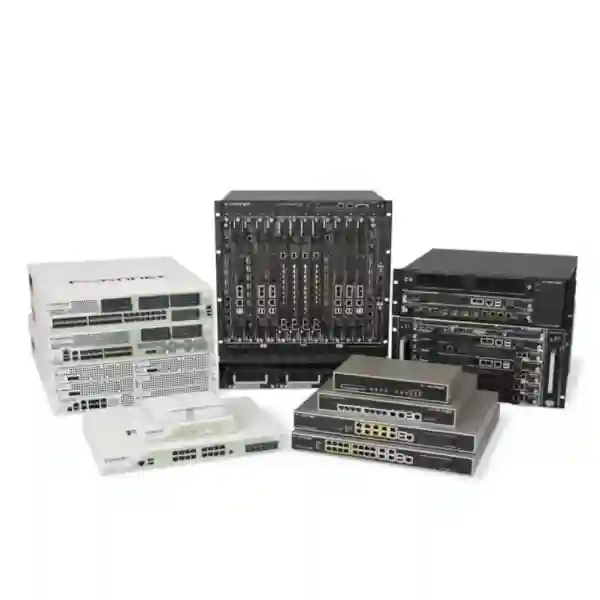
FortiExtender 500G Series Tanzania
FortiExtender 500G Series gives organizations a practical way to add 5G/LTE wireless WAN to branch, retail, office, temporary-site and business-continuity designs. The current family includes FortiExtender 511G and FortiExtender 511G-WiFi indoor 5G gateways. For buyers in Tanzania, the value is not simply cellular speed: the platform can serve as a primary WAN path where fixed connectivity is unsuitable, a secondary path for continuity, or a cellular extension integrated into a broader Fortinet deployment.
What the FortiExtender 500G Series solves
A modern branch can depend on cloud applications, payment systems, voice, collaboration, remote administration and security services at the same time. A single fixed internet circuit can therefore become an operational dependency. FortiExtender addresses this problem by adding cellular WAN connectivity that can be positioned independently of the primary wired service. Fortinet documents FortiExtender as plug-and-play customer-premises equipment for 3G/4G LTE and 5G wireless WAN, with use as either a primary WAN link or a failover link for business continuity.
The 511G generation brings 5G Sub-6 GHz capability into an indoor gateway format. According to Fortinet’s current series data sheet, FortiExtender 511G and 511G-WiFi use an EM9291 5G Sub-6 GHz module. Both provide a 2.5G WAN interface, a 1G SFP/RJ45 combo WAN interface and three 1G LAN interfaces. The Wi-Fi variant adds wireless capability, while both are designed for desktop or wall-mounted indoor deployment. Exact carrier support, radio bands, SIM requirements and local network suitability should always be checked before procurement rather than assumed from the product family name.
Primary 5G WAN
Use cellular connectivity where a business requires rapid WAN deployment, a temporary link, or a location where a suitable fixed circuit is unavailable or operationally inconvenient.
WAN resilience
Add a physically different access method alongside fixed broadband or fiber so a branch connectivity plan is not dependent on one access technology.
Fortinet integration
FortiExtender can operate standalone, be centrally managed through supported Fortinet management options, or work with FortiGate as part of an integrated Fortinet deployment.
FortiExtender 511G and 511G-WiFi verified highlights
| Area | 511G | 511G-WiFi |
|---|---|---|
| Cellular module | 5G Sub-6 GHz EM9291 | 5G Sub-6 GHz EM9291 |
| Antennas | 4 × 5G/LTE/GNSS | 4 × 5G/LTE/GNSS plus 2 × Wi-Fi |
| WAN/LAN | 2.5G WAN, SFP/RJ45 combo WAN, 3 × 1G LAN | 2.5G WAN, SFP/RJ45 combo WAN, 3 × 1G LAN |
| Deployment | Indoor, desktop/wall-mounted | Indoor, desktop/wall-mounted |
These specifications are useful for initial selection, but they should not replace a deployment review. Cellular performance depends on network availability, supported bands, signal conditions, antenna placement, carrier policy, data plan and site construction. Buyers should validate the intended mobile operator and site before standardizing a model across many branches.
Management, SIM and operational planning
Fortinet documents FortiExtender deployment in standalone mode and in FortiGate-managed environments, with centralized management options available within the Fortinet ecosystem. Current FortiExtender software documentation also covers cellular capabilities, carrier handling, SIM mapping, APN configuration, SIM switching, modem status, roaming-related functions and out-of-band management scenarios. This makes procurement a combination of hardware selection and operational design. The right question is not only which gateway to buy, but also who will manage it, how cellular data plans will be governed, how failover behavior will be tested, and how administrators will monitor connectivity.
For a branch rollout, document the primary carrier, secondary connectivity path, expected application load, acceptable outage window and escalation process. If the gateway is being introduced alongside a FortiGate, define whether the cellular path is intended for emergency failover, active traffic use or a specialized management path. This avoids buying cellular capacity without a clear routing and continuity policy.
FortiExtender 500G Series Tanzania
Organizations researching FortiExtender 500G Series Tanzania commonly need a dependable alternative or complement to fixed internet connectivity. Tanzania deployments can range from a single office requiring backup WAN to distributed retail, financial, logistics, hospitality, education and service locations where centralized IT teams need a repeatable connectivity architecture. A cellular gateway is especially relevant when the business wants to separate its continuity path from the same physical access medium used by the primary circuit.
The procurement process should begin with site and carrier validation. Confirm that the intended operator provides suitable service at each location, then validate supported radio requirements against the exact FortiExtender model. Indoor placement matters: reinforced walls, equipment rooms and low-level cabinets can weaken radio conditions. A good design considers where the unit can be securely installed while still achieving useful cellular reception. It should also consider power, Ethernet handoff, FortiGate integration where applicable, and whether the 511G-WiFi variant provides a meaningful requirement for the project.
For multi-branch Tanzanian organizations, standardization can simplify support, but standardization should follow testing rather than precede it. Pilot the intended configuration at representative sites, verify failover and recovery behavior, measure application experience during cellular operation, and document SIM/APN configuration. Data-plan limits deserve attention because a backup link can suddenly carry business-wide traffic during an outage. Policies for large updates, cloud backups and other bandwidth-intensive processes may need adjustment when a site is running over cellular WAN.
FourTeck can be approached for product-selection and quotation discussions around FortiExtender and adjacent Fortinet requirements. Buyers can also review FourTeck Tanzania technology solutions when planning the wider branch environment. For broader regional Fortinet requirements, FourTeck’s Fortinet-focused UAE resource provides another relevant network reference.
FortiExtender 500G Series Dar es Salaam
For businesses in Dar es Salaam, FortiExtender 500G Series planning often centers on continuity for busy commercial sites, headquarters, retail locations, customer-facing branches and technology environments that cannot treat internet access as a convenience. A cellular WAN gateway can provide an independent access path for selected services or for broader failover when a fixed circuit becomes unavailable. The objective should be defined before installation: emergency continuity, rapid branch activation, temporary connectivity, or an additional WAN path for a Fortinet-based network.
Dense urban environments create their own design considerations. Strong advertised mobile coverage does not guarantee identical indoor performance on every floor or in every equipment room. Building materials, neighboring structures, antenna orientation and local network load can influence real results. A Dar es Salaam deployment should therefore include an on-site signal and throughput assessment using the intended operator and installation position. Where a FortiGate is part of the design, routing, health checks and failover policies should be tested with actual business applications rather than only confirming that an interface becomes reachable.
Procurement teams should provide the number of sites, intended use of cellular connectivity, preferred operator or SIM strategy, existing firewall model, available power method and target management approach. This allows a quotation to be aligned with the actual architecture. If the organization has many branches, define a template for naming, SIM records, APNs, firmware governance and monitoring so each deployment does not become an isolated configuration.
The 511G family is an indoor platform, so buyers requiring outdoor or vehicle-specific installation should not assume the same model is appropriate. Fortinet has separate FortiExtender categories for those environments. Selecting by deployment conditions protects the project from avoidable enclosure, temperature, antenna and mounting issues.
FortiExtender 500G Series Mwanza
FortiExtender 500G Series Mwanza buyers may be evaluating cellular WAN for offices, distributed service points, hospitality, retail, logistics or organizations that need a practical second connectivity path. The key benefit of a wireless WAN design is access diversity: the secondary path can use cellular infrastructure instead of depending on the same last-mile medium as a wired service. This can strengthen a continuity plan when configured and tested correctly.
Start with coverage validation at the exact Mwanza premises. Cellular service can vary between neighborhoods and inside individual buildings. The installation location should balance physical security, access to Ethernet and power, and radio conditions. For an indoor 511G or 511G-WiFi deployment, avoid assuming that the network rack is automatically the best radio location. The available interfaces give designers flexibility, but cable routes and placement should be planned before final installation.
If the link will be used only during outages, test what happens when the primary service fails and when it returns. Applications with persistent sessions, VPNs, voice or cloud connections may react differently during path changes. A successful test should include user-facing services, not merely a ping test. The team should also determine how much traffic is allowed over the cellular plan and whether bandwidth-heavy tasks should be limited during failover.
For procurement, provide expected branch count, existing Fortinet equipment, required deployment mode and cellular provider information. This helps distinguish a simple gateway purchase from a broader resilience project. A well-defined bill of requirements also reduces the risk of ordering a Wi-Fi variant where it is unnecessary or overlooking an operational requirement that affects the deployment.
FortiExtender 500G Series Arusha
In Arusha, FortiExtender 500G Series can be considered by hospitality, travel, professional services, education, retail and other organizations that depend on cloud and internet services for daily operations. A 5G/LTE WAN gateway can support a continuity strategy by providing a cellular path that is logically and physically distinct from a fixed connection. It can also support sites where a wireless primary WAN is appropriate after coverage and capacity validation.
Hospitality and customer-facing environments should pay particular attention to traffic priorities. During a fixed-line outage, the cellular path may need to preserve payment, reservations, staff systems, voice or management access before guest or nonessential traffic. The network policy should reflect these priorities. If FortiExtender is integrated with FortiGate, the broader Fortinet architecture can be planned around controlled failover rather than treating the cellular gateway as an unmanaged emergency modem.
Site assessment remains essential. Signal strength at an exterior wall does not guarantee equivalent performance in a communications room. Before a larger Arusha rollout, test the actual gateway position, intended SIM, APN, routing behavior and representative workloads. Record the baseline so later support teams can distinguish a carrier issue from a configuration or local radio problem.
Buyers should also plan lifecycle operations: who owns the SIM contract, who can change APN settings, how data usage is monitored, and how failover is periodically tested. Continuity equipment that is never exercised can create false confidence. Scheduled testing and clear documentation make the cellular investment operationally useful rather than merely installed.
FortiExtender 500G Series Dodoma
FortiExtender 500G Series Dodoma deployments can serve organizations seeking wireless WAN for offices, administrative sites, service locations and distributed branches. The platform is relevant when internet continuity is important and a cellular path offers useful diversity from a primary wired service. It can also be evaluated for rapid connectivity where waiting for a fixed circuit would delay site activation, subject to local carrier performance and organizational policy.
A project should define the applications that must remain available during an outage. Email and basic browsing impose different requirements from video collaboration, large cloud transfers or site-to-site services. This application inventory helps determine whether the cellular plan and observed network performance are appropriate. It also informs traffic-control policies during failover. Where the 511G family is used with FortiGate, administrators should document the desired path preference and recovery behavior.
Dodoma procurement teams should verify the exact model rather than buying on the broad 500G Series label alone. The current 511G and 511G-WiFi variants share core 5G gateway characteristics, while the Wi-Fi model adds wireless capability. If Wi-Fi is already supplied by a managed access-point infrastructure, that addition may not be required. Conversely, a specific deployment may value it. Selection should follow architecture rather than feature count.
For quotation preparation, include site count, expected installation environment, current firewall or router, carrier details, management preference and any mounting or power constraints. A precise request produces a more useful procurement conversation and helps identify related components early.
FortiExtender 500G Series UAE
Organizations sourcing FortiExtender 500G Series for the UAE may use the platform in branch resilience, retail, temporary-site, enterprise continuity and managed Fortinet architectures. The same design principle applies across markets: cellular WAN should be selected after validating the intended operator, supported radio requirements, indoor signal conditions and data-plan terms. A high-performance 5G gateway cannot compensate for unsuitable coverage or an incorrectly planned installation.
UAE businesses with multiple branches should define a repeatable deployment template covering SIM ownership, APN settings, device management, firmware policy, alerting, failover testing and acceptable cellular data consumption. Standardization is especially useful for retail and distributed enterprises, but each site still needs local radio validation. High-rise construction, internal equipment rooms and dense commercial environments can influence cellular reception.
The 511G family provides multi-gigabit-capable WAN connectivity on its 2.5G interface along with an additional SFP/RJ45 combo WAN and LAN interfaces, creating flexibility for branch designs. Actual cellular throughput is dependent on network conditions and should never be inferred solely from port speed. Buyers should treat Ethernet interface capacity and mobile-network performance as separate planning dimensions.
For regional Fortinet sourcing and solution context, buyers can review FourTeck UAE and the specialist Fortinet UAE resource. These network links are relevant when a project spans Tanzania and UAE operations and requires consistent technology planning across sites.
FortiExtender 500G Series Uganda
FortiExtender 500G Series Uganda projects can support branch connectivity and continuity where organizations want cellular WAN as a primary or secondary access method. Financial services, retail, logistics, NGOs, professional services and distributed enterprises may all have sites where maintaining access to cloud applications and centralized systems is operationally important. A cellular gateway can provide another connectivity path, but the design should be based on site-specific evidence.
Before procurement, validate carrier availability at representative sites and check the exact FortiExtender model against the intended network requirements. Indoor radio conditions can vary significantly, so a pilot should include realistic device placement. For backup-WAN use, simulate a primary-circuit failure and observe business applications. Then restore the primary path and verify recovery. This tests the whole operational workflow instead of only the hardware.
For organizations spanning Uganda and Tanzania, configuration governance becomes important. Maintain consistent naming, monitoring, SIM records, support contacts and change procedures while allowing carrier settings to differ by country. This balances standardization with local network realities. Fortinet’s management options can support centralized operational approaches, depending on the selected architecture and subscriptions.
Regional buyers can consult FourTeck Uganda for Uganda-focused technology requirements while using the Tanzania site for Tanzania procurement discussions. Cross-border projects should identify each site’s carrier and regulatory requirements separately rather than assuming one SIM or radio plan fits every market.
FortiExtender 500G Series Kampala
Kampala organizations evaluating FortiExtender 500G Series may be focused on branch uptime, rapid site activation or adding cellular diversity to existing fixed connectivity. In a busy urban network environment, coverage maps are a starting point rather than a deployment guarantee. Test the intended operator from the actual installation location and during representative operating periods where possible.
A branch-continuity design should classify applications. Payment, ERP, authentication, VPN, voice and customer-service systems may deserve higher priority than software downloads or general browsing during failover. This classification informs routing and bandwidth policy. When the cellular link is integrated into a Fortinet environment, the project team should document how traffic moves to the backup path and what conditions return it to the preferred connection.
The 511G and 511G-WiFi are indoor devices. Installation planning should therefore address secure mounting, ventilation, power and antenna position. Do not hide the unit deep inside a rack merely for visual neatness if that produces poor radio performance. The design can use structured cabling to place the gateway where cellular reception is more favorable while maintaining a clean network handoff.
A Kampala quotation request is more actionable when it specifies site quantity, target carrier, existing FortiGate model if present, whether Wi-Fi is required, desired management mode and intended primary-versus-backup role. This information helps align the product choice with the real branch architecture.
FortiExtender 500G Series Arua
For Arua, a FortiExtender 500G Series deployment should be approached as a connectivity-engineering project rather than a generic router purchase. Organizations may be interested in cellular WAN because it can accelerate site connectivity or create an alternate path when fixed services are interrupted. The suitability of 5G or LTE at a particular site, however, depends on the local mobile network and the radio bands and services available there.
Start with a survey using the intended carrier. Record signal behavior in the proposed equipment area and consider whether a different indoor position provides a more stable result. Validate the applications that must run across the link and estimate their data consumption. A backup path that works technically can still become costly or constrained if the data plan is not matched to the expected outage workload.
For distributed organizations, remote manageability can be as important as connectivity. A branch may be far from the main IT team, so configuration consistency, monitoring and documented recovery procedures matter. FortiExtender’s supported Fortinet management approaches can be evaluated as part of this operating model. Where FortiGate is already deployed, integration can reduce the number of disconnected networking workflows.
Procurement should confirm the exact hardware variant and required accessories. Do not assume that an indoor 511G is suitable for exposed outdoor conditions or vehicle installations; Fortinet maintains separate categories for those use cases. Matching the form factor to the environment is fundamental to a reliable deployment.
FortiExtender 500G Series Mbarara
FortiExtender 500G Series Mbarara buyers may be planning connectivity for branch offices, retail operations, service locations, hospitality or other sites that rely on centralized systems. Cellular WAN can add a useful layer of resilience when the organization has a clear policy for when the link is used, which traffic it carries and how the site returns to its normal path after an outage.
A practical pilot should test more than headline speed. Measure stability, latency and application behavior at the proposed gateway location. Confirm that the intended SIM and APN work correctly. If the cellular link is a backup, disconnect the primary service under controlled conditions and observe routing, VPN behavior and cloud applications. Repeat the test after configuration changes so the documented result reflects the final design.
The 511G platform’s Ethernet options make it suitable for integration into a structured branch network, but port capacity should not be confused with guaranteed mobile throughput. Cellular performance varies with coverage, spectrum, congestion and operator configuration. Procurement documents should avoid promising a fixed 5G speed unless it is supported by the service provider and validated for the specific site.
For multi-site Mbarara deployments, create a standard installation record including device identity, SIM information, carrier, APN, mounting location, signal baseline, connected firewall/router and test date. This simple operational discipline can substantially improve future troubleshooting and support.
FortiExtender 500G Series Gulu
FortiExtender 500G Series Gulu can be evaluated for organizations that need wireless WAN connectivity for a branch, remote office, temporary project location or continuity path. Cellular access can reduce dependence on one fixed last-mile connection, but resilience depends on true diversity. If both primary and backup services ultimately rely on the same upstream failure point, the expected protection may be lower than assumed. Network design should therefore examine the whole service path where information is available.
For Gulu sites, validate the intended operator before committing to a large quantity of gateways. Test indoors at the planned installation point and verify performance at times that represent normal business use. If the project uses cellular as a temporary primary connection, estimate data volumes and confirm that the service plan is suitable for normal operations, not just emergency traffic.
Organizations using FortiGate can evaluate FortiExtender as part of a coordinated Fortinet deployment. The benefit is operational coherence: administrators can design the cellular path within the wider security and WAN architecture rather than maintaining an unrelated consumer modem. Exact management features and software compatibility should be checked against the deployed versions during implementation planning.
A quotation request should state whether the requirement is one site or a rollout, whether Wi-Fi capability is needed, what existing network equipment is present, and whether the gateway is intended for primary or failover use. These details help keep the purchase aligned with the actual network objective.
FortiExtender 500G Series Kenya
Kenya-based organizations can consider FortiExtender 500G Series for cellular branch WAN, business continuity, temporary connectivity and Fortinet-integrated network designs. The 511G family is particularly relevant where 5G Sub-6 GHz capability is required in an indoor gateway. Before selection, confirm local carrier support and the exact radio requirements for each intended site.
Multi-site organizations should separate hardware standardization from carrier standardization. The same gateway model may be appropriate across many branches while the best mobile operator differs by location. Testing representative urban, suburban and other operating environments can reveal whether a single carrier strategy is realistic. Where resilience is the goal, consider whether the backup service offers meaningful infrastructure diversity from the primary service.
Operational controls are equally important. Define who can change SIM or APN settings, how data consumption is monitored, what traffic is restricted during cellular operation, and how often failover is tested. If FortiExtender is managed within a Fortinet architecture, incorporate it into the same change-management and monitoring processes used for other branch infrastructure.
For Kenya-focused sourcing and related technology context, visit FourTeck Kenya. Organizations operating in both Kenya and Tanzania can use consistent technical standards while validating carrier, SIM and deployment conditions independently in each country.
FortiExtender 500G Series Kuwait
FortiExtender 500G Series Kuwait deployments can support enterprise branches, retail sites, temporary locations and continuity architectures where cellular WAN is a suitable primary or secondary access method. The 511G platform offers 5G Sub-6 GHz connectivity in an indoor form factor with multiple Ethernet options, making it adaptable to structured business networks.
The procurement team should confirm compatibility with the intended Kuwaiti mobile service before ordering. Radio support, SIM provisioning, APN settings and service-plan policies are practical prerequisites. Indoor signal should also be tested because building construction and equipment-room placement can affect radio performance even where outdoor service is strong.
For backup use, design application priorities in advance. During an outage, an organization may choose to preserve critical business systems while limiting large downloads, updates or other discretionary traffic. This makes the cellular link more predictable and aligns data consumption with the continuity objective. If FortiGate is already used, the failover path can be designed within the wider branch security and routing policy.
Kuwait buyers can review FourTeck Kuwait for regional technology requirements. For a cross-border organization, keep a common deployment template but document local carrier settings separately for each market.
FortiExtender 500G Series Ghana
FortiExtender 500G Series Ghana can be evaluated for branch continuity, cellular primary WAN and rapid-deployment connectivity. Businesses with distributed sites often value the ability to introduce an access path that does not require the same physical last mile as a fixed connection. The technology is most useful when combined with disciplined carrier validation, routing design and ongoing testing.
A Ghana deployment should begin with the intended mobile operator and exact site. Confirm service availability, supported network requirements and practical indoor performance. If the project spans multiple cities, do not extrapolate one successful test to every branch. Radio conditions and network capacity can differ. Pilot enough representative sites to create a realistic standard.
When used as failover, document what applications should remain active and what data volume an extended outage could generate. Cloud backup, operating-system updates and video traffic can consume substantial capacity. A continuity policy may temporarily prioritize transaction, communications and management traffic. Test the policy before relying on it.
For Ghana-specific sourcing context, buyers can visit FourTeck Ghana. Organizations with operations across Ghana and Tanzania should standardize documentation and management while keeping carrier selection and local installation decisions site-specific.
FortiExtender 500G Series Nigeria
FortiExtender 500G Series Nigeria is relevant to enterprises that need an additional WAN path for branches, retail, financial operations, service sites and other internet-dependent locations. Cellular connectivity can serve as a primary access method where appropriate or as a failover path designed to maintain critical services during a fixed-line disruption.
Nigeria’s scale makes site-by-site validation particularly important. A carrier that performs well at one location may not provide the same experience elsewhere. Procurement teams should combine a standardized hardware strategy with local coverage testing. Record the chosen operator, SIM, APN, signal baseline and expected data usage for each branch. This information supports both deployment and later troubleshooting.
The 511G family can integrate into a Fortinet-oriented branch architecture, but the operational design determines the value. Define health checks, failover conditions, traffic priorities and recovery behavior. Test user-facing applications and VPN dependencies under failover. A continuity plan is stronger when it is measured and documented rather than assumed.
For Nigeria-focused requirements, visit FourTeck Nigeria. Cross-regional organizations can coordinate product standards through the FourTeck network while treating local mobile-service selection as an independent technical decision.
FortiExtender 500G Series Seychelles
FortiExtender 500G Series Seychelles can be considered for hospitality, professional services, distributed business operations and other sites where cellular connectivity can contribute to WAN resilience. Island environments make continuity planning especially valuable for organizations whose operations depend on cloud systems, bookings, payments, communications or remote administration.
The first step is to validate the exact mobile service available at the property or office. Confirm radio compatibility, SIM provisioning and practical indoor signal. In hospitality environments, equipment may be installed in back-of-house rooms that are convenient for cabling but poor for cellular reception. The gateway position should therefore be selected through testing rather than convenience alone.
If cellular is used as backup, decide which services receive priority during an outage. Business systems may need to take precedence over high-volume guest or nonessential traffic. Where FortiGate forms part of the network, the failover design can be integrated into the wider security and routing architecture. Test both transition to cellular and return to the primary service.
For procurement, document the number of properties or sites, expected application load, existing firewall environment, preferred operator and whether Wi-Fi capability is required on the FortiExtender itself. This provides a sound basis for model selection and quotation.
Selection and sizing guidance
Choose between 511G and 511G-WiFi based on the required branch architecture, not simply the presence of an extra feature. Confirm the deployment is indoor, validate the cellular network, determine whether integrated Wi-Fi is needed, review Ethernet handoff requirements and decide how the device will be managed. If the project requires outdoor, rugged or vehicle deployment, review the corresponding FortiExtender product category rather than attempting to adapt an indoor model to an unsuitable environment.
For a backup-WAN project, estimate the bandwidth and data volume of critical applications. For a primary-WAN project, evaluate normal and peak demand over a meaningful test period. Cellular throughput is variable, so capacity planning should use measured service rather than theoretical radio maximums. Include expected growth and the effect of software updates, cloud synchronization and collaboration traffic.
Related FourTeck technology resources
FortiExtender is usually one component of a complete branch design. Explore FourTeck Tanzania for the local technology portfolio and consultation route. For projects involving broader African operations, FourTeck Africa provides a regional reference. Cross-border teams can also use FourTeck Uganda, FourTeck Kenya, FourTeck Ghana, FourTeck Nigeria and FourTeck Kuwait when coordinating regional requirements.
For Fortinet-specific UAE context, the Fortinet UAE FourTeck resource is relevant to organizations building standardized Fortinet environments across countries. Each regional deployment should still be validated against local carrier, regulatory and infrastructure conditions.
FortiExtender 500G Series FAQ
What models are in the current FortiExtender 500G family?
Fortinet’s current FortiExtender series data sheet lists FortiExtender 511G and FortiExtender 511G-WiFi as 5G gateway models in this generation. Confirm ordering information and regional availability when requesting a quotation.
Can FortiExtender be used as backup internet?
Yes. Fortinet documents FortiExtender for failover WAN use as well as primary WAN use. The actual failover policy, routing and application behavior should be configured and tested for the customer’s network.
Does FortiExtender work with FortiGate?
Fortinet supports FortiExtender deployment managed by FortiGate as part of integrated Fortinet solutions, as well as standalone and other supported management approaches. Compatibility should be checked against the intended software and hardware environment.
Is 5G speed guaranteed?
No. Actual performance depends on carrier service, spectrum, signal, congestion, site conditions, configuration and the subscribed data service. Port specifications do not represent a guaranteed cellular throughput figure.
What information should I provide for a quotation?
Provide country and city, site quantity, intended primary or backup role, preferred carrier if known, existing FortiGate or router details, management preference, whether Wi-Fi is required, and any mounting or power constraints. This helps align the requested hardware with the actual deployment.
Quotation checklist
Prepare the site list, mobile operator preference, SIM/APN information, existing firewall details, desired deployment mode, required model quantity, Wi-Fi requirement, mounting environment, power method and target project timeline. For multi-site rollouts, identify representative pilot locations before full deployment.
Decision recap
FortiExtender 500G Series is best evaluated as part of a WAN architecture. Select the exact model, verify local cellular compatibility, test the installation location, define primary or failover behavior, plan data usage, and decide how the gateway will be managed. This process turns a cellular device into a controlled business-continuity component.
Consult FourTeck about FortiExtender 500G Series
Share your branch count, locations, current network design and intended cellular-WAN role. FourTeck can use those requirements to structure a product and quotation discussion without assuming unsupported stock, delivery, carrier performance or site conditions.



Reviews
There are no reviews yet.