
Grandstream GRP2612P Tanzania
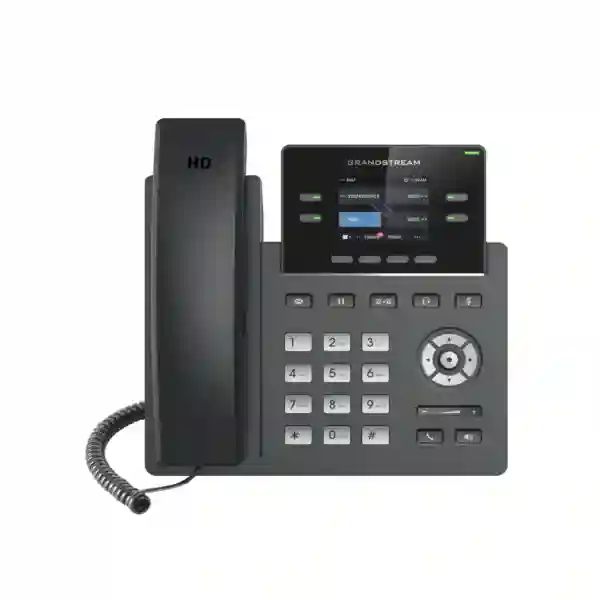
The Grandstream GRP2612P is a professional PoE IP phone designed for organisations that want a manageable, secure and consistent desk-telephony platform rather than a collection of independently configured handsets. For businesses in Tanzania, it is particularly relevant when a voice project needs a compact colour-screen endpoint, Ethernet connectivity, central provisioning, HD voice features and a deployment model that can scale from a small office to multiple departments or branches. Grandstream positions the GRP2612 family for mass deployment and easy management, while the GRP2612P specifically adds integrated Power over Ethernet to its dual 10/100 Mbps Ethernet interfaces. This means a compatible PoE switch can provide both network connectivity and power through the Ethernet infrastructure, reducing the need for a separate power outlet at every desk.
What is the Grandstream GRP2612P?
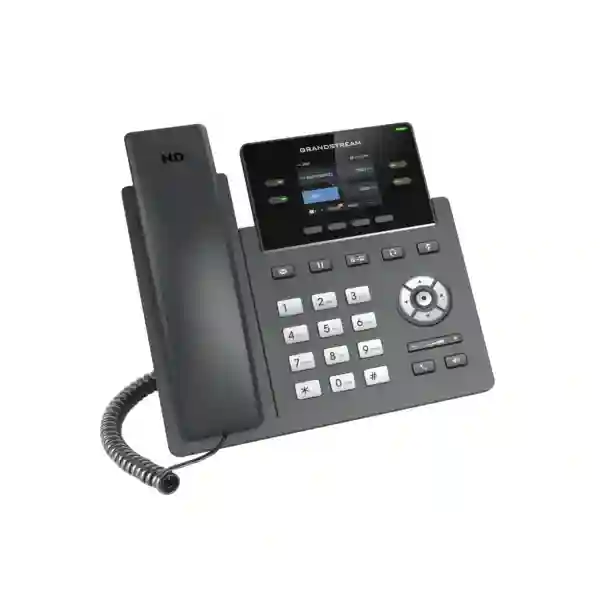
The GRP2612P is the Power over Ethernet version of Grandstream’s GRP2612 professional IP-phone family. Current Grandstream product information describes the family as a four-line professional IP phone intended for large-scale deployment and straightforward administration. The current official product page lists four SIP accounts, four multipurpose line keys, up to sixteen digital BLF keys, HD audio with wideband codecs including G.722 and Opus, a swappable faceplate, enterprise-oriented security features and support for Grandstream Device Management System, commonly known as GDMS. The GRP2612P uses dual switched auto-sensing 10/100 Mbps Ethernet ports with integrated PoE. Buyers should still confirm hardware revision and firmware requirements when adding units to an older installed base because Grandstream publishes separate firmware guidance for legacy hardware revisions.
In practical terms, the GRP2612P is aimed at everyday business users who need reliable SIP calling, a readable colour screen and enough programmable flexibility for features such as line appearances, monitored extensions, speed dials or other administrator-defined functions. It is not the Wi-Fi variant; that role belongs to the GRP2612W. It is also not the Gigabit-Ethernet variant; that role belongs to the GRP2612G. Choosing the exact suffix matters because PoE, wireless capability and Ethernet speed differ across the family. A quotation should therefore state GRP2612P explicitly and should also identify the planned PBX or SIP service, PoE-switch environment, extension count and headset requirements so the endpoint is evaluated as part of a complete voice solution.
Power over Ethernet
Integrated IEEE 802.3af PoE allows a suitable PoE switch to power the GRP2612P over its Ethernet connection, helping reduce desk-level power adapters and simplifying structured office deployments.
HD voice
Grandstream lists support for major voice codecs including wideband G.722 and Opus. Actual call quality still depends on PBX configuration, codec negotiation, LAN quality, WAN stability and the far-end service.
Central management
GDMS support is useful for administrators that need a central interface to configure, provision, manage and monitor compatible Grandstream endpoints across one or many locations.
Security functions
Grandstream highlights secure boot, dual firmware images and encrypted data storage in the GRP family. Deployment should still include strong credentials, current firmware and properly designed SIP and network security.
Verified GRP2612P technical profile
| Display | 2.4-inch 320 x 240 colour TFT LCD |
|---|---|
| Current official account/line positioning | Current Grandstream product page lists 4 SIP accounts and 4 multipurpose line keys; confirm firmware and hardware revision for legacy installed estates. |
| Programmable functions | Up to 16 digital BLF keys plus programmable context-sensitive softkeys. |
| Network | Dual switched auto-sensing 10/100 Mbps Ethernet ports with integrated PoE on GRP2612P. |
| Voice | HD audio support with major codecs including G.722 and Opus. |
| Management | GDMS, plus documented provisioning methods including TR-069 and encrypted XML configuration workflows. |
| Security | Secure boot, dual firmware images and encrypted data storage, with protocols such as TLS and SRTP available in the platform. |
| Headset interface | RJ9 headset jack; confirm exact headset/EHS accessory compatibility before procurement. |
Specifications are presented conservatively around current official Grandstream material. When a project involves an older GRP2612P hardware revision, verify the device label, current firmware branch and PBX interoperability before standardising a large quantity.
Why organisations choose a centrally managed PoE IP phone
The value of a business desk phone is not limited to the handset itself. In an organised voice environment, the endpoint participates in the PBX dial plan, extension numbering, quality-of-service policy, voice VLAN, directory, firmware process, security rules and user-support workflow. The GRP2612P is useful when a company wants to standardise those layers. PoE can make desk installation cleaner, while GDMS can reduce the effort required to administer compatible devices across multiple offices. Programmable keys can help users reach colleagues or functions quickly, and the colour screen gives staff a familiar interface for call information and menus.
A strong deployment starts before the phones are connected. Confirm which PBX or hosted SIP platform will register the extensions, how the SIP service traverses the firewall, whether LLDP or DHCP options will help assign voice-network settings, how the switch will prioritise voice traffic, and whether the PoE budget is adequate for the total quantity. If the organisation depends on calling during short utility interruptions, the phone alone is not enough; the switch, firewall, PBX appliance where applicable, internet equipment and other voice-path components also need appropriate backup power. This system-level approach is more valuable than evaluating the handset only by a list of features.
GRP2612P deployment and integration planning
For a new office deployment, begin with the number of users and the calling roles. Standard desk users may only need an extension, voicemail and common call-transfer functions. Reception, dispatch or supervisory teams may need monitored extensions and more programmable shortcuts. Decide whether the GRP2612P’s digital BLF capability is sufficient for those roles or whether a higher-end model with a larger display, more physical keys or expansion-module compatibility is more suitable. Standardisation does not mean forcing every user into the same endpoint; it means using a controlled selection of models that match real job profiles.
Next, validate the network. The GRP2612P has 10/100 Mbps Ethernet, which is typically sufficient for voice traffic but may matter when the phone’s switched PC port is used in a desk topology where a computer shares the same cable path. If the connected workstation or local application needs Gigabit throughput through the phone, consider whether the GRP2612G or a different endpoint design is more appropriate. PoE should be checked against the access switch’s per-port capability and total power budget. Voice VLAN design, Quality of Service, DHCP, DNS, NTP and secure access to provisioning systems should all be part of the rollout plan.
Finally, prepare the management lifecycle. Record each device, extension, user assignment and MAC address where required by the chosen provisioning system. Define a firmware policy instead of allowing random versions across the fleet. Back up PBX configuration, document emergency routes and test inbound, outbound, internal transfer, hold, voicemail, conference and failover behaviours that matter to the organisation. A repeatable acceptance checklist is especially useful when dozens or hundreds of phones are being commissioned.
GRP2612P, GRP2612, GRP2612W or GRP2612G?
The model suffix should be treated as part of the specification, not as a minor naming detail. GRP2612 is the base 10/100 Ethernet version. GRP2612P adds integrated PoE. GRP2612W adds PoE and wireless capability, while the current product family page identifies the GRP2612G as the model with dual Gigabit Ethernet and PoE. If your office already has a managed PoE switch and fixed Ethernet at each desk, the GRP2612P is often the most direct fit because it can receive power and network connectivity from the same cable run. If the deployment genuinely requires wireless desk connectivity, evaluate the W variant instead of assuming the P model contains Wi-Fi.
If workstations will be connected through the phone and Gigabit desktop networking is a requirement, the 10/100 Mbps interface of the GRP2612P deserves special attention during design. It may still be perfectly suitable when the PC has a separate Gigabit wall port or when the desk workload does not depend on Gigabit throughput, but procurement should make that decision deliberately. Likewise, buyers should not assume that a higher model number is automatically better; the correct endpoint is the one whose network, wireless, key-count, display and management features match the user role and infrastructure.
Related FourTeck resources for a complete voice deployment
A GRP2612P project usually touches more than the phone. Review the FourTeck Tanzania technology solutions overview when the voice system must be coordinated with networking, cybersecurity, conferencing or structured infrastructure. The FourTeck Tanzania business technology shop is useful for procurement planning across IP phones, IP PBX, switches, firewalls and supporting hardware. For multi-site or lifecycle projects, consult the FourTeck Tanzania services page to understand the broader installation, configuration and support context.
Regional organisations can also review FourTeck Uganda and FourTeck Kenya when a single telephony standard must be considered across East African operations. These links are provided for related regional solution context; model availability, commercial terms and local delivery scope should always be confirmed for each project.
Grandstream GRP2612P Tanzania
For organisations procuring the Grandstream GRP2612P in Tanzania, the strongest buying approach is to define the telephone-system requirement and network environment before fixing the quantity. A Tanzania deployment might serve a single professional office, a customer-service team, a hospitality property, a school, a healthcare facility, a branch network or a distributed enterprise. Those environments differ in call volume, user roles, internet design and support expectations, but they share a need for predictable registration, clear audio and manageable configuration. The GRP2612P’s PoE support can work well where the LAN already uses managed PoE switching, because the endpoint can be powered from the communications rack instead of relying on a separate adapter at each user position.
Before requesting a quotation in Tanzania, provide the number of handsets, existing or planned PBX platform, SIP-trunk details if known, office locations, PoE-switch information and whether staff computers share the phone’s Ethernet path. The 10/100 Mbps interfaces are an important design point when the phone sits between a wall port and a workstation. Confirm whether that topology is acceptable for the desktop data requirement or whether the data network should remain on a separate Gigabit outlet. Voice VLAN and QoS planning can help keep call traffic organised when phones share network infrastructure with computers, cameras, Wi-Fi access points and other business systems.
Tanzania buyers should also plan for lifecycle administration. Centralised provisioning can make it easier to replicate extension templates, security settings and firmware policy across several sites. Backup power should cover the switching and network equipment that the phone depends on, not only the PBX. When preparing the purchase, ask for the exact GRP2612P model, quantity, PBX compatibility confirmation, required accessories, headset needs, installation scope and post-deployment support expectations. This produces a more useful quotation than asking for a handset price alone and reduces the chance of discovering missing infrastructure after equipment has arrived.
Grandstream GRP2612P Dar es Salaam
Dar es Salaam organisations often evaluate business telephony alongside broader office network upgrades, because the same access switching and cabling may carry computers, access points, cameras and IP phones. In that environment the GRP2612P can be a practical standard desk endpoint when the design includes PoE and centralised SIP management. Its colour screen, programmable functions and HD-audio capabilities support common office calling tasks, while GDMS can help administrators manage compatible Grandstream endpoints without treating every handset as an isolated device. The product should still be matched to the specific PBX or hosted SIP platform being used.
A Dar es Salaam office with several departments should map users by role. General employees may need basic extension calling, transfer and voicemail, while reception or operations staff may depend more heavily on monitored extensions and speed dials. The GRP2612P offers digital BLF functions, but teams with very dense attendant requirements may benefit from another model with a larger programmable-key environment. This role-based approach controls cost while avoiding a situation where an endpoint is either over-specified or too limited for the person using it.
Infrastructure planning is just as important. Where network closets use PoE switches, a GRP2612P rollout can simplify desk power and allow the voice system to benefit from a centrally protected UPS strategy. Check switch power budgets, VLAN configuration, QoS, DHCP and firewall rules before mass deployment. If a workstation is daisy-chained through the phone, remember the handset uses 10/100 Mbps Ethernet. For businesses using large cloud files, video workflows or other bandwidth-heavy applications, that topology may not be ideal. A quotation for Dar es Salaam should therefore include enough technical context to validate the endpoint, switching and PBX design together rather than presenting the phone as a stand-alone purchase.
Grandstream GRP2612P Mwanza
For Mwanza businesses, the GRP2612P can suit offices that want structured IP telephony with manageable endpoints and PoE. The phone is especially relevant where an organisation is replacing legacy desk phones while also cleaning up switching, cabling and extension administration. A migration should begin with existing telephone numbers, inbound routes, departments, ring groups, voicemail requirements and any branch-to-branch calling. Once those requirements are understood, endpoints such as the GRP2612P can be assigned to user profiles and provisioned consistently.
Mwanza deployments may include professional offices, education, hospitality, retail administration, healthcare or regional branches. Each setting can use SIP phones differently. A front desk may need rapid transfers and busy-lamp monitoring, while a back-office employee may only need a reliable extension and headset. The GRP2612P’s programmable functions can support a useful mix of these tasks, but the number of monitored users should be reviewed before purchase. When a larger key field is needed, choose a more appropriate model rather than trying to force a standard desk phone into an attendant-console role.
Network and power resilience deserve attention. A PoE phone remains dependent on the PoE switch, PBX or cloud connection and router/firewall path. If voice continuity is important during short power interruptions, protect those shared infrastructure components with correctly sized UPS equipment. For remote or branch operations, document how phones will be provisioned, what happens if the primary PBX or internet connection fails, and who is responsible for firmware and extension changes. These practical questions often determine the long-term quality of the telephony system more than the handset specification itself.
Grandstream GRP2612P Arusha
Arusha organisations considering the Grandstream GRP2612P may be planning telephony for offices, hospitality operations, travel-related businesses, education, professional services or multi-building sites. These users can have very different call patterns, so the first step is to identify what the extension needs to accomplish. A standard desk user may need direct inward dialling, voicemail and call transfer, while reception or reservations teams may use monitored extensions, ring groups and headsets throughout the day. The GRP2612P is best evaluated as one endpoint option within that broader call-flow design.
PoE can be particularly convenient where the network is professionally cabled and phones are connected back to managed switching. Centralised power can reduce desk clutter and can also make UPS planning more coherent because the access switch can be protected in the communications rack. However, do not assume every switch port provides PoE or that the switch has unlimited power capacity. Count the phones and all other PoE devices, such as access points and cameras, then confirm the switch’s total power budget. VLANs can separate voice logically, and QoS can help maintain predictable call performance when data traffic is busy.
For organisations with more than one Arusha site, central provisioning through GDMS can be valuable for repeatable templates and device visibility. Establish naming conventions, extension ranges and firmware policies before rollout. If the organisation already owns Grandstream phones, note the hardware revisions and firmware branches so new devices can be introduced carefully. A well-prepared request for quotation should include quantity, current PBX, required SIP accounts or line appearances, headset use, PoE availability and whether installation, provisioning or training is required.
Grandstream GRP2612P Dodoma
In Dodoma, the GRP2612P can be considered for administrative offices, institutions, service organisations and businesses moving toward SIP-based communications. The device’s value is strongest when the deployment has defined standards for extension provisioning, network addressing, user roles and ongoing administration. Rather than configuring each handset manually at a desk, organisations can prepare templates and repeatable settings that reduce variation across a fleet. GDMS support can contribute to this central-management model for compatible Grandstream deployments.
Procurement teams should separate handset features from system dependencies. The GRP2612P provides PoE capability, but the switch must support PoE and have adequate budget. It provides HD-audio codec support, but call quality still relies on LAN design, SIP configuration, WAN performance and the far-end carrier or PBX. It offers secure-boot and encrypted-storage capabilities, but administrators still need strong credentials, appropriate firewall policies and maintained firmware. Thinking in these layers avoids the common mistake of expecting the endpoint alone to solve network or PBX problems.
Before deploying in Dodoma, test a small set of phones against the intended call flows. Verify inbound and outbound calling, transfers, hold, voicemail, busy-lamp functions, time settings, directory behaviour, emergency or priority routing where applicable, and any failover process. Confirm that the chosen headset works as expected and that users understand the key functions. Once that pilot is stable, the same template can be extended to more desks with much lower risk. For a quotation, include the installation scale and whether the requirement is hardware supply only or a complete configured voice deployment.
Grandstream GRP2612P UAE
For UAE businesses comparing the GRP2612P for corporate offices or branch standardisation, the same core design questions apply: PBX interoperability, PoE switching, Ethernet topology, central provisioning and user-role fit. The model can serve general desk users who need a professional SIP endpoint with colour display, programmable functions and centrally manageable configuration. Where a business already uses Grandstream UCM or another SIP platform, confirm the current interoperability path and required provisioning method rather than assuming every feature will be available automatically.
UAE offices often have structured cabling and managed switches, making PoE deployment straightforward when the network was designed for it. However, the 10/100 Mbps Ethernet interface remains relevant if a PC is connected through the phone. For high-performance desktops, design a separate Gigabit data connection or evaluate a model with Gigabit pass-through. Centralised IT teams should also define firmware, credentials, certificates and remote management processes so branch phones remain controlled over time.
When comparing quotations, do not compare handset price only. Check the exact model suffix, taxes and delivery scope, included accessories, whether a separate power adapter is needed in the chosen topology, headset compatibility, provisioning services, PBX licences where applicable and the responsibilities for installation and support. A clear bill of materials and acceptance plan makes multi-office deployments easier to audit and reduces variation between sites.
Grandstream GRP2612P Uganda
Uganda organisations can use the GRP2612P as part of an IP-PBX or SIP-based office communication platform where Ethernet and PoE are already available or being introduced. A national business with several branches can benefit from endpoint standardisation because extension templates, firmware rules and user training become easier to repeat. The phone’s GDMS support provides a route for centralised administration of compatible Grandstream endpoints, while its programmable keys can support common office call-handling patterns.
The procurement process should include the network path as well as the phone. Confirm PoE capacity at each site, internet quality for cloud or inter-branch SIP, firewall and NAT requirements, and whether QoS is configured end to end where necessary. If local PCs are connected through the phone, the GRP2612P’s 10/100 Ethernet should be considered against the workstation workload. It can be perfectly adequate for some desks, but bandwidth-heavy users may need a different topology.
For a multi-location Uganda rollout, pilot the design at one representative site, document the configuration and then replicate it. Keep an inventory of device assignments and extension numbers, and establish a clear method for remote resets, firmware updates and replacement. This operational discipline is particularly important when branches are geographically separated and on-site troubleshooting is not immediate. Request quotations with exact quantities per site, PBX details, PoE assumptions and installation scope so suppliers can respond against the same technical basis.
Grandstream GRP2612P Kampala
Kampala offices evaluating the GRP2612P commonly need a dependable desk phone for general staff, operations, customer care or branch administration. The model is attractive where the organisation wants PoE and central provisioning without moving to a much larger executive endpoint. Its 2.4-inch colour screen provides clear call and menu information, while HD audio and programmable functions support everyday calling. The final experience, however, depends heavily on the PBX and network configuration.
A Kampala deployment should start with call-flow design. Determine how incoming calls reach departments, what happens when staff are busy, how calls are transferred after hours and whether users need voicemail, call recording, queues or other PBX features. Then assign endpoint types by user role. Reception teams with a very large number of monitored extensions may need more capacity than the GRP2612P offers, whereas most office users may find it appropriately sized.
PoE switching, UPS protection and voice VLAN design can make the deployment more orderly. Test QoS under busy network conditions rather than only when the LAN is quiet. If the phone shares a cable path with a workstation, evaluate whether 10/100 Ethernet meets that user’s data needs. Document the final provisioning template and keep firmware controlled. When asking for a Kampala quotation, include handset quantity, PBX platform, switch model, headset expectations and whether configuration is required, which allows a more accurate and useful proposal.
Grandstream GRP2612P Arua
For Arua businesses and institutional sites, a SIP phone deployment should be planned around the reliability of the complete communications path. The GRP2612P can provide a consistent PoE endpoint at user desks, but the phone still relies on switching, routing, PBX registration and connectivity between sites or service providers. In locations where support visits may take time, standardised configuration and remote management become particularly valuable because many routine changes can be handled centrally.
A useful rollout plan identifies critical extensions, normal office extensions and common-area phones. Critical users may require additional redundancy in the underlying network, while common areas may need simpler calling permissions. The GRP2612P’s programmable functions can support individual office users well, but procurement should confirm how many line appearances and monitored extensions each role needs. Headset use should also be included because front-desk or service staff can have different ergonomic requirements from occasional callers.
Power planning is important in a PoE environment. Backing up the access switch, firewall and PBX equipment can preserve phone operation during short interruptions more effectively than placing small adapters at each desk. The design should also account for internet failover if voice depends on an external SIP or cloud platform. When requesting GRP2612P pricing for Arua, specify whether the requirement includes only endpoints or also PoE switching, PBX configuration, structured cabling and testing. Clear scope reduces procurement ambiguity and makes system ownership easier after handover.
Grandstream GRP2612P Mbarara
Mbarara organisations looking for a manageable business desk phone can evaluate the GRP2612P where their environment supports SIP and PoE. The handset is particularly suitable when IT wants to deploy a repeatable endpoint profile across desks instead of manually maintaining different phone configurations. Grandstream’s GDMS support can help centralise compatible device administration, and the phone’s secure-boot and encrypted-storage features form part of a broader security posture when combined with well-maintained firmware and network controls.
The local network should be prepared before phones are commissioned. Count PoE devices, confirm switch budgets, identify voice VLAN requirements and decide how DHCP and NTP will be handled. Check whether the PBX is on-site or hosted because that affects firewall rules and WAN dependency. When internet-based voice is business-critical, consider resilience at the router and service-provider layer. A high-quality phone cannot compensate for an unstable WAN path.
User adoption also matters. Train staff on transfer, hold, voicemail, speakerphone and any programmed BLF or speed-dial keys that are part of the final template. Label or document important functions rather than expecting every user to discover them. For a Mbarara rollout spanning multiple branches, use the same naming and provisioning conventions at each location. A procurement brief should list quantities, user types, PBX platform, switch environment and required installation services so the GRP2612P can be assessed against the complete business communication requirement.
Grandstream GRP2612P Gulu
Gulu businesses can consider the GRP2612P for offices that need SIP desk telephony with central management and PoE. The device’s compact professional format suits many general office roles, while programmable keys and HD-audio support can improve usability for staff who handle regular business calls. As with any IP phone, the endpoint works best when extension design, network configuration and call routing have been planned systematically.
For sites with limited local IT staffing, remote provisioning and a documented configuration template can reduce support effort. Decide in advance how phones will obtain addresses, voice-VLAN settings and provisioning data, and who is authorised to change extension or security settings. If replacement devices are needed later, a strong provisioning process can make recovery faster than rebuilding configurations by hand. Keep a record of hardware revisions and firmware versions so updates are applied intentionally.
When the phone is powered through PoE, the switching layer becomes part of the voice power system. Review UPS capacity in the rack, switch redundancy where justified, and what happens to calling if the primary internet link is unavailable. If users connect PCs through the GRP2612P, account for its 10/100 Ethernet capability. These checks are simple but important. A Gulu quotation request should communicate the expected call environment and network design so the final recommendation includes all dependencies rather than only the handset quantity.
Grandstream GRP2612P Kenya
Kenya organisations standardising SIP telephony across offices can evaluate the GRP2612P as a general-purpose PoE desk endpoint. It fits particularly well when IT teams already use centralised switching and structured cabling and want predictable provisioning across user groups. The combination of colour display, programmable functions, HD audio and GDMS support gives administrators a practical basis for repeatable deployments while keeping the endpoint focused on everyday voice use.
Before procurement, define whether the phone will register to an on-premises PBX, a hosted platform or another SIP system. Confirm required features such as voicemail, queues, BLF behaviour, call recording and directory access at the PBX level. Test the exact firmware and platform combination rather than relying on generic SIP compatibility alone. For branch rollouts, standardise extension ranges, configuration templates and security settings so support does not become site-specific.
Network design should include PoE budget, voice VLAN, QoS and WAN performance. The phone’s 10/100 Ethernet interface matters when a workstation is connected through the phone, so data-throughput requirements should be reviewed. For users who need Gigabit pass-through, consider a Gigabit-capable endpoint or a separate data port. Kenya procurement teams comparing offers should ask each supplier to state exact model, accessories, configuration scope, delivery assumptions and support responsibilities so competing quotations can be compared on equal terms.
Grandstream GRP2612P Kuwait
Kuwait businesses considering the GRP2612P can use it as part of a structured SIP-telephony deployment where PoE and central administration are priorities. Its feature set is suitable for many standard office users, while programmable line and BLF functions can assist departments that need faster access to extensions or call handling. The most important procurement decision is not simply whether the phone has enough features, but whether those features align with the PBX platform and the roles of the users receiving the device.
In a modern office, phones often share network infrastructure with laptops, access points, cameras and other devices. Use VLANs and QoS where appropriate, and confirm that the switch has enough PoE capacity for all powered endpoints. If the workstation is connected through the handset, remember that the GRP2612P has 10/100 Mbps Ethernet. High-throughput users may need separate cabling or a Gigabit-capable phone. For large deployments, create a staged rollout with a pilot group, user acceptance and repeatable provisioning before expanding to every desk.
Commercial comparison should include model suffix, quantity, included accessories, applicable taxes, provisioning, installation, PBX licences or subscriptions where relevant, and post-installation support. Avoid assuming stock, warranty or delivery terms without written confirmation because these conditions are supplier-specific and can change. A clear project scope gives procurement teams a stronger basis for technical and commercial evaluation.
Grandstream GRP2612P Ghana
Ghana businesses adopting or expanding VoIP can consider the GRP2612P for standard office desks where PoE is available. It offers a compact colour display, programmable calling functions, HD-audio codec support and central management through GDMS. Those features are most useful when they are backed by consistent PBX templates and network policy, allowing new phones or branches to be introduced without rebuilding configuration from the beginning.
A deployment plan should identify the number of users, branch locations, call groups and reception requirements. Standard desk users can often use a simpler configuration, while supervisors may need more monitored extensions. Verify that the GRP2612P’s key capacity matches the required call-handling workflow. Headset users should test approved accessories and comfort before a large purchase, particularly where staff spend many hours on calls.
From an infrastructure perspective, calculate PoE demand across phones and other powered devices, protect critical network equipment with suitable UPS systems and confirm WAN performance if the PBX or SIP carrier is off-site. Voice quality should be tested under realistic network load. When asking for Ghana pricing, request an itemised scope covering exact model, endpoint quantity, PBX configuration, accessories, deployment services and support. That makes it easier to see whether a quotation includes a complete working solution or only the phone hardware.
Grandstream GRP2612P Nigeria
Nigeria organisations with multiple departments or branches can benefit from standardised IP-phone deployment, and the GRP2612P is one model worth evaluating for regular desk users. Its PoE capability can simplify installation in offices with managed switching, while GDMS support can help central IT teams maintain common configuration across compatible Grandstream endpoints. Enterprise security features such as secure boot, dual firmware images and encrypted data storage strengthen the device platform, but they should be combined with good operational security rather than treated as a substitute for it.
For branch environments, resilience should be designed deliberately. Determine whether calls depend on a central PBX, hosted service or local gateway, and document what happens during internet or power interruption. If the phones are expected to remain operational during short outages, protect the switching, firewall and PBX path with UPS and consider connectivity redundancy where justified. Central provisioning can also reduce the need for manual on-site changes when extensions are added or moved.
Procurement should evaluate both the endpoint and its surrounding architecture. Check PoE budgets, VLANs, QoS, headset compatibility and the impact of the phone’s 10/100 Mbps Ethernet if PCs use the pass-through port. For large organisations, divide users into profiles and avoid assigning the same model to every role automatically. A Nigeria quotation should clearly state the exact GRP2612P quantity, PBX platform, installation sites, provisioning scope and support expectations before price comparisons are made.
Grandstream GRP2612P Seychelles
Seychelles businesses in hospitality, professional services, administration and other sectors can evaluate the GRP2612P when they need a centrally manageable PoE SIP phone at standard workstations. The endpoint can form part of a broader IP-telephony platform that includes reception, office extensions, back-office teams and branch or property communications. Its programmable functions and colour display support daily use, while central management can reduce configuration variation across phones.
For island or distributed property environments, the network architecture deserves careful attention. Voice may traverse site-to-site links, hosted platforms or internet connections, so latency, packet loss and failover should be assessed. PoE simplifies endpoint power, but the central switch and upstream network still need reliable electricity. UPS design should therefore protect the full voice path where business continuity is important. If multiple sites are involved, use consistent extension plans and documented provisioning templates.
Procurement teams should also consider logistics and support before finalising model quantities. Confirm the exact hardware version, accessories, headset needs, PBX compatibility and installation responsibilities in writing. Do not assume local stock or a particular delivery time without supplier confirmation. A staged rollout can be useful: test a small number of GRP2612P units with real users, confirm audio, call flows and administration, then expand the approved configuration across the remaining desks.
Buying checklist for Grandstream GRP2612P
1. Confirm exact model
Specify GRP2612P, not only GRP2612 series. Confirm whether PoE, Wi-Fi or Gigabit Ethernet is required.
2. Confirm PBX
State the PBX or hosted SIP platform, firmware where known, extension requirements and any feature dependencies.
3. Check PoE
Confirm access-switch PoE capability, power budget, UPS protection and available Ethernet ports.
4. Review LAN speed
The GRP2612P uses 10/100 Mbps Ethernet. Check workstation pass-through requirements before final design.
5. Plan management
Decide how GDMS, provisioning templates, credentials, firmware and inventory will be managed across the lifecycle.
6. Define scope
Separate hardware supply, configuration, PBX work, cabling, switching, training and support in the quotation.
Frequently asked questions
Does the Grandstream GRP2612P support PoE?
Yes. Grandstream’s current specification identifies dual switched auto-sensing 10/100 Mbps Ethernet ports with integrated Power over Ethernet on the GRP2612P.
Does the GRP2612P have Wi-Fi?
The Wi-Fi variant is GRP2612W. Do not order GRP2612P expecting built-in wireless connectivity unless a current official revision explicitly states otherwise.
Is the GRP2612P Gigabit?
No. The current Grandstream family specification lists the GRP2612P with dual 10/100 Mbps Ethernet. The GRP2612G is the family variant listed with Gigabit Ethernet and PoE.
Can the GRP2612P be managed centrally?
Yes. Grandstream states that the GRP2612 family is supported by GDMS, which provides a central interface for compatible endpoint configuration, provisioning, management and monitoring.
How many SIP accounts does the GRP2612P support?
Grandstream’s current product page lists four SIP accounts for the GRP2612 family. Older third-party and legacy documentation can show different counts, so organisations with older hardware revisions should verify the specific device label and applicable firmware documentation.
Does GRP2612P work with every IP PBX?
It is a SIP-based IP phone, but feature behaviour can vary by platform, firmware and provisioning method. Confirm interoperability with the intended PBX and test the required call features before a large rollout.
What should I provide when requesting a quote?
Provide quantity, location, PBX or SIP platform, PoE-switch details, user roles, headset requirements, network topology and whether configuration, installation, cabling or support is included in the requirement.
Decision recap
Choose the Grandstream GRP2612P when the requirement calls for a professional SIP desk phone with integrated PoE, a 2.4-inch colour display, HD-audio support, programmable calling functions and central management through GDMS, and when dual 10/100 Ethernet fits the desk topology. Consider another family variant when Wi-Fi or Gigabit Ethernet is a firm requirement. For large installations, verify hardware revision, firmware branch, PBX interoperability and network design before standardising the quantity.
A successful purchase is therefore a solution decision rather than a handset-only decision. Match the endpoint to user roles, validate PoE and switch capacity, plan the voice VLAN and QoS, define provisioning, secure the SIP environment, test real call flows and document the accepted configuration. This approach gives the organisation a repeatable telephony standard that is easier to deploy, support and expand.
Request a GRP2612P quotation
For a useful quotation, share the number of GRP2612P handsets required, the deployment location or locations, the current or planned PBX platform, whether PoE switching is already available, and any headset, provisioning or installation requirements. If the project includes multiple branches, include a per-site quantity and a short description of the network at each site. This helps separate simple endpoint supply from a complete IP-telephony deployment and allows compatibility risks to be identified before ordering.
Availability, pricing, warranty terms, lead time and implementation scope can vary and should be confirmed at the time of quotation. No stock, delivery or authorisation claim is implied on this page.




Reviews
There are no reviews yet.