
Grandstream GRP2612G Tanzania
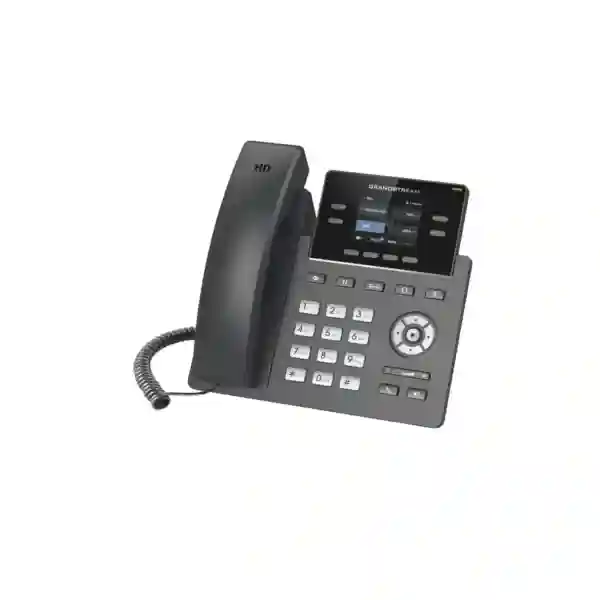
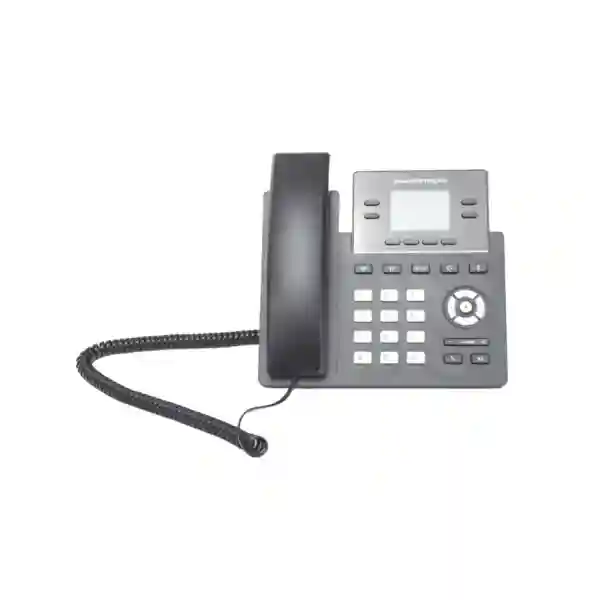
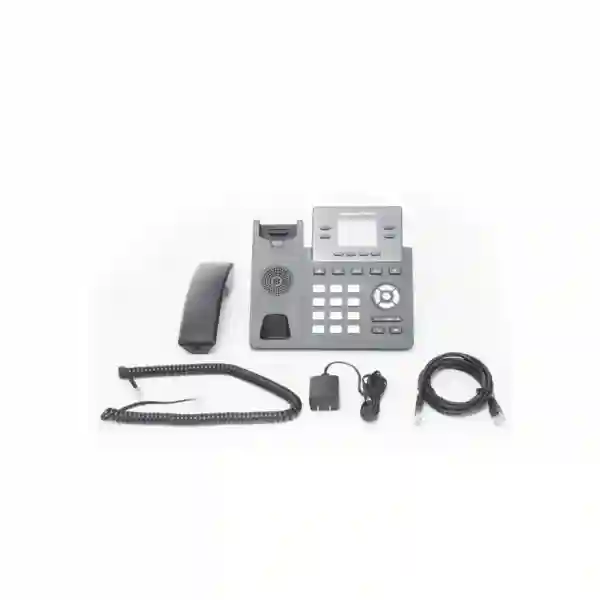
The Grandstream GRP2612G is a professional carrier-grade SIP desk phone designed for organizations that want consistent voice quality, Gigabit desktop networking, Power over Ethernet and centralized endpoint administration. For businesses evaluating the Grandstream GRP2612G in Tanzania, the model is particularly relevant where voice devices must fit cleanly into structured LAN environments, support multiple SIP identities and remain easy to provision at scale. Its four SIP accounts, four multi-purpose line keys, 2.4-inch colour display, HD handset and speakerphone audio, up to 16 digital BLF keys and dual 10/100/1000 Mbps Ethernet ports with integrated PoE make it a practical choice for office users who need more than a basic entry phone without moving into a large executive endpoint.
4 SIP accounts
Support for four SIP accounts and four multi-purpose line keys helps staff separate extensions, departments or service identities while keeping everyday call handling straightforward.
Gigabit + PoE
The GRP2612G provides dual switched auto-sensing 10/100/1000 Mbps Gigabit Ethernet ports with integrated 802.3af PoE for cleaner desk deployment and efficient pass-through networking.
HD audio
HD audio on handset and speakerphone is supported alongside major voice codecs, including wideband G.722 and Opus, for clearer business conversations when the connected SIP platform supports them.
GDMS management
Grandstream Device Management System support enables centralized provisioning, configuration, management and monitoring, which is valuable for multi-phone and multi-site rollouts.
Why businesses choose the Grandstream GRP2612G
A business desk phone should fit the communication platform, network architecture, power design and operational model of the organization. The GRP2612G is positioned for professional deployments that need a manageable SIP endpoint with Gigabit networking. That matters when a workstation computer shares the same physical desk connection through the phone, because the phone can sit between the Ethernet outlet and the attached PC without limiting that link to Fast Ethernet. Integrated PoE can also reduce the number of power adapters required at desks when compatible switching infrastructure is available.
The model is also designed around centralized provisioning. Grandstream lists support for GDMS, TR-069 and encrypted XML configuration methods, which gives administrators multiple ways to standardize settings. For organizations onboarding many users, repeatable configuration is often more important than manually programming individual phones. The ability to apply SIP credentials, dial plans, button behavior, security parameters and firmware policies from a managed approach can reduce deployment inconsistency and simplify later changes.
From the user perspective, the 2.4-inch 320×240 TFT colour LCD, programmable soft keys, navigation keys, dedicated call-control buttons and digital BLF capability provide a familiar office-phone experience. Core telephony features include hold, transfer, forwarding, call pickup, call waiting, call park, hot-desking, server redundancy and failover, plus 5-way conferencing. Buyers should still validate which features are enabled by their PBX or hosted SIP service, because an endpoint may support a feature while the upstream platform determines how it is presented or licensed.
Verified Grandstream GRP2612G specifications
| Lines / SIP accounts | 4 line keys with support for up to 4 SIP accounts |
| Display | 2.4-inch 320×240 TFT colour LCD |
| Network | Dual switched auto-sensing 10/100/1000 Mbps Gigabit Ethernet ports |
| Power | Integrated IEEE 802.3af Power over Ethernet; power adapter support is also documented for the GRP2612G |
| Audio | HD handset and speakerphone; wideband G.722 and Opus among supported codecs |
| BLF / programmable keys | Up to 16 digital BLF keys |
| Management | GDMS, TR-069 and encrypted XML provisioning options |
| Security | Secure boot, dual firmware images, encrypted data storage, TLS, SRTP, 802.1X and encrypted configuration support |
| Conference | 5-way audio conferencing |
GRP2612G deployment and compatibility guidance
The GRP2612G is a SIP endpoint, so procurement should begin with the voice platform rather than the handset alone. Confirm SIP registration requirements, codec policy, VLAN design, DHCP behavior, DNS availability, NTP access, firewall rules, quality-of-service strategy and whether your environment uses 802.1X authentication. Where PoE is planned, confirm that switch port capacity and overall PoE budget are sufficient for the number of phones to be connected.
For larger fleets, define a provisioning standard before devices are placed on desks. A useful baseline includes firmware version control, administrator credential policy, TLS and SRTP settings where supported by the PBX, directory synchronization, dial-plan templates, BLF assignments, time zone and language settings, emergency-call routing considerations, call-forward rules and a tested fallback process for SIP server redundancy. This approach turns the phone into a predictable managed endpoint rather than an individually configured device.
Grandstream GRP2612G Tanzania
For organizations sourcing the Grandstream GRP2612G in Tanzania, the strongest buying case is usually a structured office voice rollout that needs centralized control and reliable desk connectivity. Corporate offices, schools, healthcare administration teams, professional-service firms, call-handling departments, hotels, logistics businesses and distributed branch operations can all benefit from standardized SIP endpoints, but the design should be based on the number of users, expected call load, existing PBX, switch capacity and network topology. The GRP2612G fits particularly well where Gigabit pass-through is desirable because a workstation shares the same physical Ethernet point as the phone.
A Tanzania quotation should therefore consider more than the handset quantity. Buyers may need PoE switches, VLAN configuration, SIP server or IP PBX resources, internet resilience for cloud-hosted voice, headsets, patching, UPS capacity and ongoing configuration support. When the phones are deployed across multiple floors or branches, GDMS can help administrators maintain common settings and monitor endpoints from a centralized platform. This is useful for reducing configuration drift and creating repeatable onboarding for new employees or relocated extensions.
Before ordering, document how many SIP identities each user requires, whether BLF monitoring is needed, which codecs the PBX permits, whether TLS and SRTP are enabled, and whether the LAN supports PoE and voice VLANs. FourTeck can use those details to prepare a more relevant solution discussion. For related regional technology coverage, explore FourTeck Tanzania technology solutions and use the verified contact page for a project-specific quotation.
Grandstream GRP2612G Dar es Salaam
Businesses in Dar es Salaam frequently operate in environments where office connectivity, customer communication and multi-department coordination are closely linked. The Grandstream GRP2612G can serve as a standardized desk phone for finance teams, operations staff, customer service desks, logistics offices, travel businesses, education providers and professional firms that already use or plan to use a SIP-based phone system. The Gigabit Ethernet ports are useful in modern office LANs where the phone and a desktop PC share one network point, helping preserve workstation network throughput while the phone handles voice traffic.
When planning a Dar es Salaam deployment, assess LAN switching and power protection together. PoE simplifies desk cabling, but reliable switching, appropriate UPS runtime and a tested voice VLAN policy are important if communication must remain available during brief power or network events. If the organization uses a cloud PBX, internet redundancy may also be a key design consideration. The phone itself supports server redundancy and failover functions, but the complete resilience of the service depends on the PBX, network and WAN architecture.
A practical procurement brief should include user count, extension plan, departments requiring BLF visibility, headset requirements, switch model and PoE budget, PBX platform, SIP provider details and any security requirements such as 802.1X, TLS or SRTP. With this information, an integrator can determine whether the GRP2612G is the right endpoint or whether certain users require a higher-capacity model with more physical keys, a larger display or expansion-module support.
Grandstream GRP2612G Mwanza
For Mwanza organizations, the GRP2612G is relevant where offices need dependable SIP calling, clear audio and manageable endpoint configuration without adding unnecessary complexity. A branch office can use the handset as part of a centralized IP PBX deployment, while a standalone local office can register the phone to a compatible on-premises or hosted SIP platform. Four SIP accounts give users flexibility to handle multiple identities or service lines, and digital BLF keys can help teams monitor frequently used extensions when the PBX supports presence and key-event behavior.
Network readiness matters. A voice VLAN, DHCP options where required, reliable DNS and NTP, appropriate QoS and firewall rules should be validated before a multi-phone rollout. If Gigabit desktop networking is important, the GRP2612G distinguishes itself from Fast Ethernet variants in the GRP2612 family. That can reduce the risk of placing a 100 Mbps device between a Gigabit switch and a user workstation. Integrated PoE can also simplify installation if the access switch supports IEEE 802.3af and has sufficient power budget.
For procurement, buyers should compare the total deployment requirement rather than phone price alone. Include switch ports, PoE capacity, PBX licensing if applicable, SIP trunks, cabling, surge and power protection, configuration, user training and post-deployment administration. A standardized profile in GDMS can make later additions easier because newly deployed phones can be aligned with the organization’s established settings and firmware policy.
Grandstream GRP2612G Arusha
Arusha businesses in tourism, hospitality, professional services, education and administration often need voice communication that can connect front desks, reservations, back offices and management users. The GRP2612G provides a balanced endpoint for staff who need several SIP identities, call transfer and hold functions, conferencing, programmable line behavior and directory access without the footprint of a larger attendant console. Its colour display and dedicated call-control keys keep routine telephony familiar for users moving from traditional desk phones to IP communications.
For hospitality or multi-department deployments, it is important to design extension numbering, ring groups, hunt groups, reception workflows and emergency procedures at the PBX level. The endpoint can participate in those workflows, but the system architecture determines how incoming calls are routed and how features such as voicemail, pickup groups and failover are implemented. Centralized provisioning through GDMS is particularly useful when an organization wants consistent settings across many rooms, offices or buildings.
Arusha buyers should also confirm whether fixed wired Ethernet is available at each desk. The GRP2612G is a wired Gigabit model; Wi-Fi capability belongs to the GRP2612W variant rather than the GRP2612G. Where cabling exists, wired Ethernet can provide predictable connectivity for voice. Where it does not, the network design may require additional cabling or a different phone variant. Matching the phone model to the real access environment prevents avoidable deployment changes later.
Grandstream GRP2612G Dodoma
In Dodoma, the GRP2612G can support offices that require structured, centrally managed voice endpoints for administrative teams, service desks, education, consulting, project offices and distributed organizations. The model’s four SIP accounts allow a user to manage more than one extension identity where the PBX design requires it, while the 5-way audio conferencing capability can support routine internal collaboration without users needing a separate conference device for small discussions.
A well-planned deployment should account for power and network continuity. PoE makes desk installation cleaner, yet the access switch becomes part of the voice power chain. If phone availability is operationally important, UPS protection for PoE switches, routers and PBX equipment should be considered. For hosted voice, WAN continuity and firewall configuration are equally important. QoS policies can help prioritize real-time voice traffic where links are congested, but they should be designed across the relevant LAN and WAN path rather than enabled only on the handset.
Procurement teams should request a solution bill of materials that aligns phone quantity with network requirements, user roles and expected growth. The GRP2612G is appropriate for many general office users, while receptionists, supervisors or heavy-call users may benefit from higher-tier models with more keys, larger screens or expansion support. Segmenting users by actual call workflow is usually a better purchasing method than deploying one model indiscriminately across every role.
Grandstream GRP2612G UAE
Organizations comparing the Grandstream GRP2612G for UAE projects can evaluate it as a Gigabit PoE SIP endpoint for branch offices, multi-site enterprises, service providers and managed voice deployments. The same technical planning principles apply: confirm PBX interoperability, SIP credentials, codec policy, PoE capacity, VLAN design and device-management strategy before rollout. For cross-border organizations with users in Tanzania and the UAE, standardizing on a common endpoint family can simplify user training and configuration templates, although local regulatory and service-provider requirements should always be checked separately.
The model is especially useful for desk workers who need multiple SIP accounts and programmable BLF behavior but do not require built-in Wi-Fi or large expansion modules. Gigabit pass-through supports modern desktop network design, while PoE can reduce adapter clutter. Security features such as secure boot, encrypted storage, TLS and SRTP support provide a stronger baseline than unmanaged consumer endpoints when correctly configured within a compatible SIP environment.
For UAE-focused FourTeck resources, visit FourTeck Grandstream UAE solutions for regional Grandstream coverage and FourTeck UAE for broader enterprise technology requirements. Cross-region customers should specify destination, quantity, PBX platform and deployment scope when requesting a quotation so that compatibility and project requirements can be reviewed accurately.
Grandstream GRP2612G Uganda
The GRP2612G is suitable for Uganda businesses that want a wired professional SIP endpoint with Gigabit networking, PoE and centralized management. The phone can be deployed across corporate offices, NGOs, schools, healthcare administration, logistics businesses, hospitality operations and branch networks where voice endpoints need common configuration and predictable call handling. Four SIP accounts can support multiple identities or lines, while BLF capability can help users observe frequently contacted extensions in PBX environments that support the relevant events.
For a multi-site Uganda deployment, start by standardizing extension ranges, VLAN IDs, QoS marking, DNS and NTP access, firmware policy and security settings. Then create reusable configuration templates through GDMS or another supported provisioning mechanism. This method is preferable to configuring handsets one by one because it reduces inconsistencies and makes later changes easier to control. Site-specific parameters can then be layered onto a common baseline.
Organizations coordinating procurement between Tanzania and Uganda can also review FourTeck Uganda technology solutions. A useful quotation request should state phone quantity, target locations, existing PBX or hosted voice platform, available PoE switching, desired headsets, security requirements and whether configuration or migration assistance is needed.
Grandstream GRP2612G Kampala
For Kampala offices, the GRP2612G can be a strong fit for staff who rely on desk telephony throughout the working day but do not need an executive-class endpoint. Administrative users, customer-service teams, consultants, operations staff and supervisors can use the phone for multi-line call handling, transfer, hold, conferencing, contact access and extension monitoring. The device’s Gigabit Ethernet interface is particularly relevant in office layouts where one wall port serves both the phone and the connected workstation.
Kampala IT teams should evaluate the whole voice path before deployment. Handset quality is only one factor in call experience; switch congestion, WAN latency, jitter, packet loss, codec choice and SIP trunk performance can all affect audio. Implementing sensible QoS and network segmentation can help, but troubleshooting should be based on measurements from the full path rather than assumptions about the endpoint alone.
Central management can reduce support overhead when devices are spread across departments or sites. GDMS support allows administrators to work with device profiles and monitoring from a centralized interface. This is useful when staff move desks, extensions change or security policies need to be updated. Organizations should maintain documented configuration standards and restrict administrative credentials to authorized personnel as part of routine endpoint governance.
Grandstream GRP2612G Arua
In Arua, a GRP2612G deployment can support branch offices and organizations that want the benefits of IP telephony while keeping desk devices straightforward. A branch connected to a central PBX can use SIP registration over an appropriately secured network path, while a local PBX can keep internal calling available even when external connectivity is constrained, depending on the architecture. The correct design depends on whether voice services are hosted remotely, centralized at headquarters or managed locally.
Power planning is also important. If PoE is used, the phone does not require a separate adapter at the desk, but the PoE switch and upstream networking become critical infrastructure. UPS sizing should therefore include switches, routers and any local PBX equipment. If outages or WAN interruptions are a concern, organizations should define which calling functions must remain available and design failover accordingly rather than assuming the phone alone provides resilience.
For procurement, confirm wired Ethernet availability, switch port speeds, PoE support, PBX compatibility, SIP account quantity, desired BLF behavior and headset needs. The GRP2612G is not the Wi-Fi variant, so sites without structured cabling should either add suitable Ethernet connectivity or assess another model that fits the physical environment more closely.
Grandstream GRP2612G Mbarara
Mbarara organizations can use the Grandstream GRP2612G as part of a scalable SIP phone system for offices, educational facilities, clinics, service businesses and distributed operations. The phone’s feature set sits between basic entry-level endpoints and more advanced executive devices, giving general office users a colour screen, multiple SIP identities, HD audio, digital BLF capability and Gigabit connectivity without unnecessary complexity.
When replacing analog or older IP phones, migration planning should include extension mapping, user training, voicemail behavior, ring groups, call forwarding, emergency numbers, directory data and headset compatibility. A staged rollout can help verify these workflows before all users are moved. Administrators should also test firmware and configuration changes on a small group before applying them broadly, especially when the phone system has custom integrations.
The ability to centrally provision endpoints is one of the GRP series’ practical advantages. Standardized templates can define network, SIP, security and user-interface settings. For Mbarara branches linked to a wider organization, this can help keep phone behavior aligned with headquarters while still allowing site-specific extension or routing details. Procurement should account for the ongoing management process, not only initial installation.
Grandstream GRP2612G Gulu
For Gulu offices, the GRP2612G can provide a manageable professional endpoint for SIP deployments that require reliable wired networking and PoE. Staff who handle routine internal and external calls can use dedicated transfer, hold, mute, redial, headset and speakerphone keys, while the colour LCD presents line and menu information clearly. Up to 16 digital BLF keys can support frequently used extension visibility or speed-dial style functions when configured through a compatible PBX.
The deployment environment should determine whether the GRP2612G is the best variant. The model provides Gigabit Ethernet and PoE but not integrated Wi-Fi. If desks have structured cabling and PoE switches, that combination is often convenient. If users work in locations without Ethernet drops, a Wi-Fi-capable alternative may be more appropriate. Selecting the variant based on connectivity is more reliable than adding workarounds after purchase.
Gulu buyers should also consider support processes. Keep an inventory of MAC addresses, extension assignments, firmware versions and user locations, and document how phones are reset, re-provisioned and reassigned. Centralized management can support these workflows, but accurate asset records and controlled administrator access remain essential operational practices.
Grandstream GRP2612G Kenya
Kenya organizations evaluating the GRP2612G can use the phone in offices that require Gigabit networking, PoE, multi-account SIP capability and centralized administration. The model is well aligned to general staff positions, shared operational desks and distributed branch users where a consistent endpoint standard is valuable. Companies with locations in both Kenya and Tanzania can simplify training and support by using common handset families, while still tailoring SIP, network and security settings to each site.
For multi-country deployments, define a global baseline and keep local exceptions documented. Common firmware, button layout, ringtone, directory and security standards can reduce user confusion. Local parameters such as time zones, emergency routing, SIP trunks, outbound caller identity and WAN paths should be handled separately. GDMS support can help manage a fleet centrally, but governance around templates and administrator privileges is equally important.
For Kenya-specific sourcing and deployment discussions, visit FourTeck Kenya. When requesting a quote, provide exact model, quantity, delivery destination, PBX platform, PoE switch information and any requirement for configuration, installation or migration assistance.
Grandstream GRP2612G Kuwait
Kuwait businesses considering the Grandstream GRP2612G can evaluate it as a professional SIP desk endpoint for offices and managed voice deployments. Its Gigabit Ethernet ports help preserve desktop network performance, while integrated PoE can simplify cabling where compliant switches are available. The phone supports modern provisioning and security features that are helpful when administrators need consistent device behavior across departments or sites.
A Kuwait rollout should still be planned around the local telephony platform and network environment. Confirm SIP interoperability, permitted codecs, extension design, QoS, firewall requirements, VLANs and any service-provider conditions before large-scale purchase. Where organizations operate across Tanzania, East Africa and the Gulf, using a common endpoint standard can reduce support complexity, but service regulations and trunking arrangements remain country-specific.
The GRP2612G is best positioned for users who need multiple line identities and professional call features without requiring a very large screen or expansion module. Procurement teams should group users by role, call volume and key requirements, then reserve higher-tier phones for users who genuinely need more buttons or advanced interface features. This role-based approach controls cost while preserving usability.
Grandstream GRP2612G Ghana
For Ghana businesses, the GRP2612G can support standardized IP telephony in commercial offices, service organizations, education, hospitality administration and branch networks. Its combination of four SIP accounts, Gigabit Ethernet and PoE provides a practical foundation for general office users. The phone can be managed centrally and supports a wide range of network and security protocols, making it suitable for organizations that already maintain structured IT policies.
Before deployment, confirm that the PBX platform supports the desired call-control features and that the LAN is prepared for voice. A handset cannot compensate for excessive packet loss, poorly configured WAN links or overloaded switching. Voice readiness should include latency and jitter checks where appropriate, VLAN and QoS planning, PoE capacity review and security configuration. For hosted PBX deployments, internet continuity may also determine call availability.
Procurement teams should ask whether users need wired or wireless connectivity, how many SIP accounts are required, whether BLF monitoring is important and what headset interfaces are needed. These questions help distinguish the GRP2612G from nearby models in the GRP family and reduce the risk of selecting a device that is technically compatible but operationally mismatched.
Grandstream GRP2612G Nigeria
Nigeria deployments can use the GRP2612G where businesses need a professional wired SIP phone with centralized provisioning and Gigabit connectivity. In branch networks, managed service environments and multi-department offices, the phone can give IT teams a consistent endpoint while supporting common user features such as hold, transfer, forwarding, conference calling, phonebook access and BLF monitoring. Its security architecture includes secure boot, encrypted storage and support for encrypted signaling and media technologies when used with a compatible system.
Because voice systems depend on network quality, organizations should evaluate internet reliability, local LAN design and power continuity together. PoE can reduce desk-side adapters, but switch and UPS design becomes more important. Hosted PBX deployments may need secondary WAN links or tested failover if continuous external calling is required. On-premises systems may preserve some internal calling during WAN failures, depending on architecture and trunk configuration.
A good quotation request includes exact phone quantity, number of sites, target extension plan, current PBX or intended SIP platform, switch details, PoE requirements, headset requirements and any need for configuration templates. This allows the endpoint choice to be reviewed as part of the overall communications design rather than as an isolated hardware purchase.
Grandstream GRP2612G Seychelles
Organizations in Seychelles can use the Grandstream GRP2612G as a wired SIP desk phone for offices, hospitality administration, service desks and professional environments that need dependable call handling and manageable configuration. The device’s Gigabit Ethernet interface is beneficial where the phone shares a wall outlet with a connected workstation, and integrated PoE can simplify installations in offices equipped with compliant network switches.
For island and multi-site deployments, remote administration can be particularly useful. GDMS support allows centralized configuration and monitoring, which can reduce the need to make every routine change physically at the desk. Administrators should still maintain secure credentials, controlled access and tested recovery processes. Firmware changes should be staged, and backups of relevant PBX and provisioning templates should form part of the operational plan.
Before purchase, verify the upstream SIP service, available network ports, PoE budget, WAN resilience, headset requirements and user roles. The GRP2612G is well suited to general office staff, while reception or high-call-volume roles may need models with larger key capacity. A mixed handset strategy can often provide a better fit than assigning the same model to every user regardless of workflow.
Selection guidance: GRP2612G versus nearby variants
Choose the GRP2612G when Gigabit Ethernet and PoE are both important. The standard GRP2612 is documented with 10/100 Mbps Ethernet, while the GRP2612P adds PoE to Fast Ethernet. The GRP2612W adds integrated wireless connectivity in addition to PoE but is not the same networking variant as the GRP2612G. This distinction matters because model suffixes change the network interface and connectivity features.
If a workstation connected through the phone regularly transfers large files or uses bandwidth-intensive applications, Gigabit pass-through may be a worthwhile requirement. If the phone is placed in a location with no Ethernet drop, the wireless variant may instead be appropriate. If a user needs significantly more line keys, expansion support or a larger interface, another GRP model may be a better fit. Matching user role, cabling and call workflow is more useful than choosing solely by headline specifications.
FourTeck can also assist with broader enterprise IT planning through FourTeck enterprise technology solutions, allowing phone selection to be considered alongside switching, structured networking and communications infrastructure.
GRP2612G quotation checklist
State the total phone quantity and how devices are distributed by office, floor, branch or country.
Identify the existing PBX, hosted voice service or planned SIP platform so registration and feature requirements can be assessed.
List switch models, port speeds, PoE availability, VLAN design and whether PCs will connect through phone pass-through ports.
Specify SIP accounts per user, BLF needs, headsets, directories, hot-desking, conferencing and any special call workflow.
Note requirements for 802.1X, TLS, SRTP, device certificates, administrator access control and provisioning security.
Clarify whether you need supply only, configuration templates, PBX integration, migration planning or broader network assistance.
Frequently asked questions about Grandstream GRP2612G
Does the GRP2612G support Gigabit Ethernet?
Yes. Grandstream specifies dual switched auto-sensing 10/100/1000 Mbps Gigabit Ethernet ports for the GRP2612G. This is a key difference from some other GRP2612 variants that use 10/100 Mbps interfaces.
Does the GRP2612G support PoE?
Yes. The GRP2612G includes integrated IEEE 802.3af Power over Ethernet. A compatible PoE switch or injector can therefore power the phone through the network cable.
How many SIP accounts does the GRP2612G support?
Grandstream documents support for up to four SIP accounts and four multi-purpose line keys on the current GRP2612 family.
Does the GRP2612G have Wi-Fi?
No. Integrated Wi-Fi is associated with the GRP2612W variant. The GRP2612G is the Gigabit Ethernet model with integrated PoE.
Can the GRP2612G be managed centrally?
Yes. Grandstream supports the GRP2612 series through GDMS for centralized device provisioning, configuration, management and monitoring. TR-069 and encrypted XML provisioning are also documented.
What audio features are available?
The phone supports HD audio on the handset and speakerphone and a range of codecs including G.722 and Opus for wideband voice, subject to PBX and service compatibility.
Is the GRP2612G suitable for bulk deployment?
Yes. The GRP2612 family is designed for mass deployment and easy management. Central provisioning is particularly useful when many phones need consistent settings, firmware and security policies.
Decision recap
The Grandstream GRP2612G is a practical choice for organizations that want four SIP accounts, a colour screen, HD audio, Gigabit Ethernet, integrated PoE, up to 16 digital BLF keys and centralized device management in a professional desk phone. It is especially suitable for general office users whose workstation may share the same network point and for IT teams that want standardized provisioning across many endpoints.
Before purchase, verify the PBX, network, PoE capacity, security requirements and user workflow. A successful IP phone deployment depends on the complete communications environment, so the best quotation includes the network and voice context rather than handset quantity alone.
Plan your GRP2612G deployment with FourTeck
Share your required quantity, city or country, existing PBX or SIP service, PoE switch details, user roles and any configuration requirements. FourTeck can use that information to prepare a focused discussion around the Grandstream GRP2612G and related IP telephony infrastructure without assuming stock, delivery time or licensing conditions that have not been confirmed.



Reviews
There are no reviews yet.