
Grandstream GXV3380 Tanzania
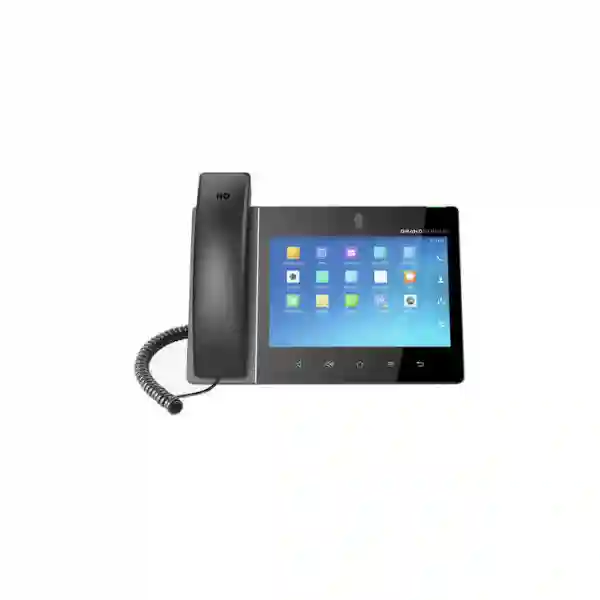
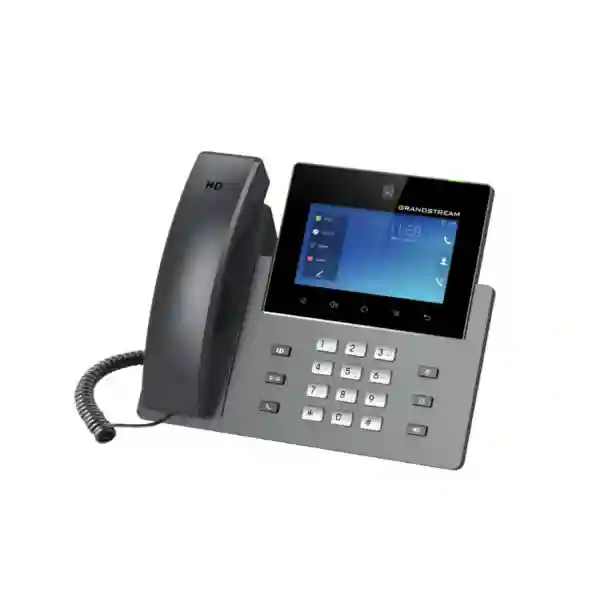
The Grandstream GXV3380 is an Android-based smart IP video phone designed for organizations that want a single desktop endpoint for SIP calling, face-to-face video communication, conferencing and selected business applications. It combines a 16-line IP phone with an 8-inch 1280×800 capacitive touchscreen, a tiltable 2-megapixel camera with privacy shutter, dual microphones, HD audio, dual Gigabit Ethernet ports, PoE/PoE+, dual-band Wi-Fi, Bluetooth and HDMI connectivity. For decision makers in Tanzania, the useful question is not simply whether the GXV3380 has premium features; it is whether those features fit the intended PBX, network, user workflow and lifecycle plan.
Grandstream currently identifies the GXV3380 as an end-of-life model. That matters for procurement. Existing fleets can still require replacement units, expansion handsets, reconfiguration or support, while new projects may be better served by a current GXV34xx model after a feature comparison. FourTeck can help buyers define the requirement, compare deployment choices and prepare a quotation without assuming that legacy stock, firmware support or a specific commercial price is available. The objective is a practical business communication design rather than a model-only purchase.
Supports 16 lines and up to 16 SIP accounts, useful for multi-extension, departmental or hosted-SIP environments.
A 1280×800 IPS touchscreen provides a visual interface for calls, contacts, settings, video and compatible Android applications.
The 2-megapixel camera supports up to 1080p at 30fps and includes a physical privacy shutter.
Dual Gigabit Ethernet, PoE/PoE+, dual-band Wi-Fi, Bluetooth, USB, microSD and HDMI interfaces support varied desk and collaboration setups.
What the Grandstream GXV3380 is designed to solve
Many business users still need a dependable desk endpoint even when their organization also uses softphones and mobile collaboration tools. The GXV3380 addresses that mixed environment by placing voice, video and application functions on a dedicated desk device. An executive can keep a persistent SIP extension, participate in a video call, use a Bluetooth headset and access selected Android tools without depending entirely on a laptop. Reception, operations and management teams can also benefit when a physical handset and speakerphone remain preferable for frequent calling.
The phone is especially relevant when an organization wants standards-based SIP telephony and richer visual interaction. Grandstream lists support for SIP RFC3261, TLS, SRTP, 802.1X, IPv6, LDAP, TR-069 and OpenVPN among its protocols and management capabilities. The endpoint can therefore fit into structured VoIP environments when the PBX, security policies and provisioning method are validated. It should not be assumed that every third-party application, cloud platform or current Android service will remain compatible indefinitely because the hardware runs Android 7.x and the model is EOL.
For new projects, the buying decision should therefore balance features against lifecycle. If an organization already standardizes on GXV3380, a replacement or expansion requirement may justify sourcing the same model where available. If the project is a greenfield rollout, a current-generation Grandstream GXV34xx endpoint may provide a more suitable support horizon. FourTeck can help evaluate extension count, camera requirements, conferencing behavior, PoE availability, headset type, Wi-Fi conditions, PBX compatibility and the number of users before selecting a final model.
Verified GXV3380 feature overview
| Area | Verified capability | Business relevance |
|---|---|---|
| Lines / SIP | 16 lines, up to 16 SIP accounts | Suitable for users who handle multiple extensions, identities or SIP services. |
| Display | 8-inch 1280×800 capacitive IPS touchscreen | Improves call control, contact browsing, video interaction and on-device application use. |
| Camera | Tiltable 2 MP camera, privacy shutter, up to 1080p 30fps | Supports direct visual communication while giving the user a physical privacy control. |
| Conferencing | Up to 7-way HD audio and 3-way video conferencing | Useful for smaller collaborative sessions without relying exclusively on a PC. |
| Network | Dual switched 10/100/1000 Mbps Ethernet with PoE/PoE+ | Allows desk deployment with a structured voice-ready LAN and reduced power-cabling complexity. |
| Wireless | Integrated dual-band Wi-Fi and Bluetooth | Offers wireless network flexibility and headset/mobile-device integration where appropriate. |
| Platform | Android 7.x, 64-bit quad-core processor, 2 GB RAM, 16 GB flash | Provides app-capable smart-phone behavior, subject to application and lifecycle compatibility. |
| Peripheral interfaces | HDMI in/out, USB, microSD, headset and EHS options | Supports content, storage and headset workflows beyond a basic desk phone. |
Lifecycle note for procurement teams
Grandstream’s current compliance information identifies the GXV3380 as EOL. That does not automatically mean every unit has disappeared from distribution, nor does it prove a particular seller has stock. It means buyers should explicitly verify commercial availability, firmware expectations, application compatibility and the support plan before standardizing a new fleet. Existing installations may have strong reasons to maintain model consistency, while new deployments should compare the GXV3380 with current-generation GXV34xx devices. FourTeck does not present stock, delivery date or warranty terms here because those must be confirmed for the actual quotation.
Grandstream GXV3380 Tanzania
Organizations searching for the Grandstream GXV3380 in Tanzania are usually solving one of three problems: replacing a legacy smart video phone, expanding an existing SIP deployment, or evaluating a premium desktop communication device for executive and collaboration users. The GXV3380 remains technically capable for those roles because it combines 16 SIP accounts, an 8-inch touchscreen, integrated 1080p-capable camera, HD speakerphone, PoE, Gigabit Ethernet, Wi-Fi and Bluetooth. The key Tanzania procurement question is now lifecycle fit. Since the model is EOL, purchasing should start with a clear reason for choosing it rather than assuming it is the default current model.
For an existing deployment, compatibility and operational consistency can be persuasive. Keeping the same handset family may reduce user retraining and simplify templates, SIP account settings and help-desk procedures. Before ordering, document the PBX platform, firmware used by working phones, VLAN configuration, PoE switch capacity, headset models, required codecs and any Android applications that are business critical. That information helps prevent a replacement unit from being treated as a simple plug-in device when the environment actually depends on particular settings.
For a new Tanzania rollout, compare the GXV3380 with the newer GXV34xx family and other current SIP endpoints. Consider whether each desk genuinely needs built-in video or whether a combination of standard IP phones and room video systems is more economical. Businesses in Dar es Salaam, Arusha, Mwanza and Dodoma may have different branch connectivity and LAN conditions, so the design should address QoS, WAN stability, PoE, Wi-Fi congestion and secure remote provisioning. The phone can support voice and video, but network planning determines whether those functions feel reliable in daily use.
FourTeck Tanzania can frame the GXV3380 as part of a wider communications design that includes IP telephony, networking and collaboration planning in Tanzania. When preparing a request for quotation, include the number of phones, existing PBX, extension count, PoE switch details, preferred headset type, branch locations, required video behavior and whether legacy-model continuity is mandatory. That produces a more useful commercial response than requesting a model number alone.
Grandstream GXV3380 Dar es Salaam
Dar es Salaam businesses considering the Grandstream GXV3380 often operate in environments where reception, management, customer service and inter-branch communication depend on reliable telephony throughout the workday. A smart SIP video phone can be useful for senior staff who want a dedicated handset but also need visual collaboration. The GXV3380’s 16 SIP accounts can accommodate multiple identities or service registrations, while the large touchscreen provides easier handling of contacts, calls and video than a conventional keypad-only phone.
Deployment in a busy Dar es Salaam office should begin with the wired network. The GXV3380 has dual Gigabit Ethernet ports and PoE/PoE+, allowing a structured cabling design in which the phone receives data and power from a compatible switch. That arrangement can reduce desktop adapters and may allow a connected workstation to share the desk network path where the design permits. Voice VLANs, LLDP-MED, QoS and adequate uplink capacity are important when the same switching infrastructure also carries business data, cameras and wireless access points. A premium handset cannot compensate for a congested or poorly segmented LAN.
Wi-Fi is available, but wired Ethernet is often preferable for fixed executive desks where cabling exists. Wireless can be considered where moves and changes make cabling difficult, provided coverage and interference are measured rather than assumed. For video calling, internet and WAN performance also matter. Packet loss, latency and jitter can affect the user experience, especially when branches or cloud PBX services are involved. If the GXV3380 is being introduced into an existing VoIP system, validate SIP registration, codec policy, firewall behavior, NAT traversal and any TLS/SRTP requirements before mass deployment.
Dar es Salaam procurement teams should also factor the phone’s EOL status into approvals. If the requirement is replacement of an existing GXV3380 estate, sourcing the same model may be operationally justified. If the requirement is a new executive phone standard for the next several years, request a side-by-side recommendation that includes current Grandstream alternatives. The quotation should separate hardware, installation, configuration, PBX work and network remediation where required, so stakeholders understand the full deployment scope rather than comparing handset prices alone.
Grandstream GXV3380 Mwanza
For organizations in Mwanza, the Grandstream GXV3380 can be relevant when a branch or management office requires a feature-rich SIP endpoint with built-in video. The phone is most valuable when staff regularly handle several call identities, need a large touch interface or use direct video communication with colleagues elsewhere. Its 16 SIP accounts, 8-inch screen, HD speakerphone and 2-megapixel camera place it above the requirements of a basic extension, so the business case should identify which users need those capabilities and which users can be served by simpler handsets.
Branch connectivity deserves particular attention. A Mwanza office linked to headquarters over internet VPN, SD-WAN or other WAN services should assess available bandwidth and QoS before enabling frequent video. Voice consumes less bandwidth than high-definition video and is usually more tolerant of capacity limits, but both are sensitive to delay and packet loss. For sites with variable WAN performance, define fallback behavior so normal SIP calling remains practical even when video quality must be reduced. The GXV3380 supports wired Gigabit networking and dual-band Wi-Fi, giving the designer options, but the upstream network still sets the experience ceiling.
Power resilience should also be considered as part of the communications design. PoE can simplify the desk by centralizing power at the switch, but continuity then depends on the switch and its upstream power protection. If voice services are expected to remain available during short outages, the network switch, router, firewall and PBX path need appropriate UPS planning. The handset alone is only one part of the service chain. This is especially important in offices where the IP phone is used for operational coordination rather than occasional calls.
When requesting a GXV3380 quotation for Mwanza, state whether the requirement is for a replacement device, a few executive desks or a broader migration. Include existing PBX make and version, SIP provider if applicable, switch model, PoE budget, VLAN design and expected conferencing use. Because the model is EOL, ask for confirmation of availability and an alternative current model in the same commercial response. That gives procurement a defensible choice between continuity and a newer lifecycle rather than forcing a decision after the quotation is received.
Grandstream GXV3380 Arusha
Arusha organizations in hospitality, tourism, education, professional services and administration may evaluate the Grandstream GXV3380 for desks where face-to-face communication adds value. A hotel management office, tour operator, branch director or training coordinator may benefit from a fixed SIP handset that can also place video calls. The GXV3380 provides a large touchscreen and dedicated camera while preserving a conventional handset, making it suitable for users who want video capabilities without relying entirely on a laptop and USB peripherals.
The best deployment begins with workflow. Identify who the user calls, which SIP platform handles the extension, whether video is actually used, what headset is preferred and whether the desk requires HDMI or external accessories. The phone offers Bluetooth, headset interfaces, USB, microSD and HDMI connectivity, but optional interfaces should solve a real requirement rather than become unused features. If staff mainly need voice, a current voice-focused IP phone may be simpler. If integrated video and a larger application-capable screen are important, the GXV3380 or a newer GXV model can be justified.
Arusha sites with mixed wired and wireless networking should avoid assuming Wi-Fi is automatically easier. A fixed desk phone on Ethernet with PoE can be easier to support because its network path and power source are predictable. Wi-Fi may be valuable in locations where cable routes are constrained, but coverage, roaming behavior and RF congestion should be assessed. When the phone connects to a cloud PBX or distant branch, firewall and NAT policies should be tested along with SIP signaling, media paths and any TLS/SRTP security requirements.
Procurement should also recognize that GXV3380 is not a current-lifecycle model. For an established installation, a like-for-like spare may preserve operational consistency. For a new Arusha project, request a comparison with current Grandstream smart video phones. Evaluate software lifecycle, Wi-Fi generation, security expectations, video requirements and price as a complete decision. A quotation should include only confirmed commercial details; it should not assume stock, same-day delivery or local inventory. FourTeck can help define the technical bill of materials and identify supporting switches, PBX or collaboration components when needed.
Grandstream GXV3380 Dodoma
In Dodoma, the Grandstream GXV3380 may be considered by offices that need a professional SIP endpoint for management, administration, project coordination or inter-site collaboration. The built-in video camera and large touchscreen distinguish it from standard desk phones, while 16 SIP accounts provide flexibility for complex telephony configurations. Buyers should map these capabilities to actual roles. An executive who joins frequent video discussions may use the phone differently from a reception user who needs high call volume but little video.
For institutional and project environments, configuration control is often more important than the feature list. Devices should be provisioned consistently, assigned to the correct VLAN, protected by strong administration credentials and documented by extension, MAC address, location and user. Grandstream’s management ecosystem and standard provisioning mechanisms can support structured deployment, but the exact method should match the organization’s operational model. If an existing PBX already uses templates for Grandstream endpoints, capture those settings before replacing or adding phones.
Security should be part of commissioning. SIP endpoints are network devices and should not be treated as isolated appliances. Review whether TLS and SRTP are used, how web administration is restricted, whether 802.1X is required, which services are enabled and how firmware changes are controlled. If the phone’s Android application capability is used, determine which applications are permitted and whether they remain compatible with Android 7.x. An EOL device may continue to perform its telephony function, but lifecycle limitations can matter when cybersecurity policy requires actively supported operating systems.
For Dodoma procurement, a strong RFQ should specify quantity, required delivery location, existing communication system, deployment objective and acceptance criteria. Ask vendors to state model condition, warranty basis, included accessories and availability rather than inferring these from an old product listing. For a new deployment, ask for a current-model option alongside GXV3380. This makes technical and commercial review easier because the organization can compare legacy continuity against a current support horizon using the same requirements.
Grandstream GXV3380 UAE
The UAE market has a large installed base of SIP telephony, hosted PBX and unified communications solutions, so the Grandstream GXV3380 may still appear in replacement and expansion requests even though it is EOL. Organizations with existing GXV3380 units can value configuration consistency, familiar user behavior and compatibility with established PBX templates. New deployments should compare the device against current Grandstream GXV34xx models and other active-lifecycle endpoints before standardization.
A UAE deployment often needs to integrate with structured enterprise networks. The GXV3380’s dual Gigabit Ethernet, PoE/PoE+, Wi-Fi and Bluetooth provide flexible physical connectivity. For wired desk use, verify switch PoE capacity and voice VLAN policies. For Wi-Fi use, assess RF coverage and authentication requirements. The phone supports common enterprise protocols including SIP, TLS, SRTP, LDAP, 802.1X and IPv6, but interoperability should be tested against the actual PBX, session border controller and security design rather than assumed from standards support alone.
Video capability can be useful for executives and distributed teams, especially when a dedicated desktop endpoint reduces dependence on personal devices. The 2-megapixel camera, 1080p capability, dual microphones and 3-way video conferencing can support smaller collaboration sessions. However, organizations that now standardize on modern room platforms or PC-based collaboration may not need video on every desk. Endpoint selection should follow user personas: executive video users, heavy voice users, reception, contact center, mobile workers and shared spaces may each need a different device class.
FourTeck’s regional ecosystem can support broader comparisons through the Grandstream UAE solution site. For a quotation, provide device count, PBX platform, branch locations, required headset connectivity and lifecycle preference. If GXV3380 is mandatory for compatibility, state that requirement. If not, ask for the closest current replacement. This avoids paying for legacy consistency when a current platform would provide a stronger long-term fit.
Grandstream GXV3380 Uganda
Ugandan organizations evaluating the Grandstream GXV3380 may be replacing an installed handset, extending a SIP system or considering smart video phones for management users. The device supports 16 SIP accounts, HD audio, built-in video, Gigabit Ethernet, PoE and wireless connectivity. Those capabilities can suit multi-site businesses where managers need a persistent desk extension and occasional visual collaboration. Because the model is EOL, the procurement process should explicitly distinguish an existing-environment requirement from a new technology standard.
For branches connected over public internet, VPN or managed WAN, voice quality depends on routing, latency, jitter and packet loss. Video adds higher bandwidth demands. Before deploying multiple GXV3380 units, test real traffic paths between offices and the PBX or SIP service. Where bandwidth is constrained, prioritize voice and essential business applications. A Quality of Service policy can help protect real-time traffic on the LAN, but end-to-end performance also depends on WAN and provider conditions outside the handset.
PoE deployment can simplify rollout by centralizing phone power at network switches. In that case, calculate switch PoE budget for the full set of endpoints and consider UPS protection if telephony continuity is important. Where Wi-Fi is used, confirm signal strength, channel planning and authentication. The phone’s Bluetooth support can help connect suitable headsets, while wired headset interfaces remain useful for fixed desks. Standardizing headset models can reduce support complexity across a fleet.
For organizations operating across Kampala and regional locations, FourTeck’s Uganda technology solutions site provides a regional context for PBX, networking and endpoint requirements. A complete request should identify whether the GXV3380 is mandatory, the expected quantity, existing PBX, installation sites and required configuration services. Buyers should ask for confirmed availability and compare a current-model alternative for new rollouts, especially when lifecycle and security policy are important.
Grandstream GXV3380 Kampala
Kampala offices often combine headquarters functions, customer-facing teams and distributed branch communication, making IP telephony a practical part of business infrastructure. The Grandstream GXV3380 is aimed at users who need more than a basic handset. Its 8-inch touchscreen, integrated camera, multi-account SIP support and conferencing features can suit executives, managers and specialist desks where richer collaboration is used regularly.
The endpoint should be deployed as part of a voice-ready network. Gigabit Ethernet with PoE/PoE+ supports a clean desk installation when compatible switching is available. Network teams should decide whether phones use a dedicated voice VLAN, how DHCP options or provisioning servers are handled, and whether LLDP-MED is used. Firewall rules should allow required SIP and media flows while avoiding unnecessary exposure. If the business uses remote provisioning, credentials and management access should be controlled.
The GXV3380’s Android environment can be useful for selected applications, but application compatibility should be validated carefully because the phone uses Android 7.x. Modern collaboration apps can change minimum OS requirements over time. If a particular third-party app is central to the purchasing decision, test it on the intended firmware before committing to multiple units. For many businesses, standards-based SIP calling and built-in video may be the enduring functions, while app behavior is more variable.
Kampala procurement teams should ask whether a legacy GXV3380 or a newer GXV34xx device best matches the planned service life. Replacement of an existing failed unit may favor like-for-like sourcing. A new office rollout usually favors an active model unless there is a strong compatibility reason otherwise. Include PBX details, quantity, PoE switching, headset requirements, delivery destination and installation scope in the RFQ. A clear specification reduces ambiguity around accessories, configuration and lifecycle support.
Grandstream GXV3380 Arua
Arua businesses and organizations with branch communication requirements may consider the Grandstream GXV3380 when they need a fixed SIP endpoint with integrated video. The handset can provide familiar telephony while supporting richer interactions through its touchscreen and camera. For branch environments, however, the most important design question is often not the handset specification but the reliability of the path between the phone and the PBX or SIP service.
If the PBX is hosted remotely, measure the quality of the internet connection used for voice. Stable latency and low packet loss are more important than headline bandwidth alone. Video calls place greater demand on the connection, so organizations should decide whether video is required at all times or only for selected users. Where bandwidth must be conserved, voice can remain the primary service and video can be used selectively. The GXV3380 gives flexibility, but network policy should match the site’s operating conditions.
Power and equipment resilience can also shape the user experience. A PoE switch can power the GXV3380 centrally, allowing network and phone equipment to share an appropriately sized UPS. That can be more manageable than separate adapters on every desk. Document switch port assignments, voice VLANs, extension numbers and device locations so support teams can troubleshoot quickly. For remote branches, clear documentation is valuable because not every fault can be investigated physically on short notice.
Because the GXV3380 has reached EOL, an Arua buyer should not build a new long-term standard around it without comparing newer models. Existing installations may still require identical replacement units. In either case, ask the supplier to confirm actual availability, condition, warranty and included accessories. If the project includes several locations, request a single design standard covering PBX registration, firmware, provisioning, QoS and security. This makes future support more consistent even if different endpoint models are used over time.
Grandstream GXV3380 Mbarara
Mbarara organizations may use smart IP phones in management offices, healthcare administration, education, hospitality or multi-branch businesses where staff benefit from direct voice and occasional video collaboration. The GXV3380 can serve those users with a large touch display, 16 SIP accounts, HD speakerphone and integrated camera. Its feature density means it should be assigned to roles that will use the capabilities rather than purchased uniformly for every extension.
A practical endpoint plan classifies users. Basic office staff may need only dependable calling, transfer, hold and voicemail. Managers may require Bluetooth headsets and multiple SIP identities. Executives may value the camera, video conferencing and larger display. Reception areas may prioritize line handling and call visibility over video. Mapping these needs can reduce cost and support complexity, especially when a business is refreshing an entire telephony estate.
For technical deployment, validate PoE capacity and network segmentation. The phone can use Gigabit Ethernet and PoE/PoE+, so it works naturally with managed switching where voice VLANs and QoS are configured. Wi-Fi should be treated as an alternative path, not a substitute for network planning. If the phone is used over wireless, ensure the access point design covers the desk reliably at both signal and capacity levels. Bluetooth headset deployment should also consider office density and device management practices.
Mbarara procurement should include lifecycle review because the GXV3380 is EOL. If a matching replacement is needed for an existing environment, document the exact reason and firmware expectations. If the project is new, compare a current Grandstream smart video endpoint before purchase. Ask for itemized pricing for hardware, provisioning, installation and any PBX changes. That makes it easier to compare proposals fairly and prevents a low handset price from hiding network or configuration work that is still required for successful commissioning.
Grandstream GXV3380 Gulu
In Gulu, the Grandstream GXV3380 can fit branch or institutional environments where a dedicated SIP phone is preferred but managers also need video communication. The 8-inch display and camera create a more visual user experience than a traditional desk handset. Sixteen SIP accounts can also be useful where a single user handles more than one number, department or service registration. These features should be validated against the actual PBX and user workflow before procurement.
Site readiness matters. Confirm structured cabling quality, switch speed, PoE availability and the route to the PBX. If calls traverse a VPN or public internet link, test latency and packet loss during busy periods rather than relying on an off-peak speed test. Voice and video traffic can be prioritized on managed networks, but a poorly performing WAN can still affect quality. When remote sites have limited bandwidth, consider whether desktop video should be restricted to selected users or scheduled use.
Security and support procedures should be documented from the start. Change default administrative credentials, limit management interfaces, use secure signaling where supported by the PBX, and maintain an inventory of device firmware and configuration. The Android platform provides extra functionality but also introduces application lifecycle questions, particularly on an EOL product. Organizations with strict cybersecurity standards may prefer a current-generation phone for new deployments even when the older GXV3380 meets functional needs.
For a Gulu quotation, include quantity, destination, current PBX, SIP account needs, headset requirements, network details and whether installation is requested. If the model is being specified because an existing system already uses GXV3380, state that constraint. Otherwise request a current alternative so the technical team can compare support horizon, operating system, wireless capabilities and cost. The goal is a phone deployment that remains manageable after the initial installation, not simply a one-time hardware purchase.
Grandstream GXV3380 Kenya
Kenyan buyers searching for the Grandstream GXV3380 often encounter both legacy listings and newer GXV models. The GXV3380’s combination of SIP telephony, Android, touchscreen control, HD video and broad connectivity remains attractive for existing deployments and certain executive-desk requirements. However, current projects should interpret the model in context: Grandstream marks it EOL, so procurement needs to confirm supply and compare supported replacements instead of assuming it is still the preferred flagship choice.
For Nairobi and multi-branch businesses, PBX integration should be defined before hardware selection. Record whether the environment uses Grandstream UCM, another on-premises IP PBX or a hosted SIP platform. Confirm extension count, codec policy, encryption requirements, provisioning method and remote-branch design. The GXV3380 supports common SIP and network standards, but compatibility is best proven against the production platform. A pilot device can validate registration, call transfer, voicemail indicators, directory integration, conferencing and video behavior before a larger rollout.
Network readiness includes PoE budget, VLANs, QoS and WAN capacity. Video calls can expose weak uplinks or unstable internet that ordinary web browsing does not reveal. If endpoints are placed across multiple offices, test the busiest sites and use consistent switch configurations. For wireless deployment, ensure dual-band coverage is engineered for the desk area. Bluetooth headsets can improve mobility within the workspace, but standardizing on tested accessories simplifies support.
FourTeck’s Kenya IT and telephony solutions site can support regional planning alongside Tanzania deployments. A good Kenyan RFQ for GXV3380 should request confirmed availability and a current-model alternative, especially for fleet purchases. Include hardware quantity, expected delivery locations, configuration scope and acceptance tests. This enables the buyer to compare a like-for-like legacy replacement with a newer platform using the same functional requirements.
Grandstream GXV3380 Kuwait
Kuwait organizations with mature IP telephony environments may encounter the GXV3380 as part of an installed Grandstream estate, a replacement request or a specification copied from an earlier project. The phone remains a capable SIP video endpoint with 16 accounts, an 8-inch touch display, 1080p-capable camera, PoE and Gigabit networking. Yet a new procurement should confirm whether the requirement is really tied to this model or simply to the feature set it represents.
In enterprise offices, compatibility with call control is fundamental. The technical team should validate SIP registration, dial plan, transfer behavior, presence or directory integration, voicemail indicators and security settings. If the device connects through an SBC or hosted service, test NAT traversal and media routing. Features such as TLS and SRTP can support secure signaling and media where the broader platform is configured accordingly. Documentation should identify who owns PBX changes and who owns endpoint provisioning.
A wired PoE deployment is often the easiest configuration to manage at scale. Centralized switching lets administrators control VLANs, port security and QoS while reducing separate desk power adapters. Wi-Fi remains useful for specific locations, but fixed executive desks generally benefit from deterministic wired connectivity when cabling is available. Video use should also be matched to WAN and internet capacity, particularly for branches connecting to centralized call control.
Because GXV3380 is EOL, Kuwait procurement teams should request lifecycle transparency from suppliers. Confirm whether offered units are new, refurbished or old stock, what warranty applies and what accessories are included. For a new deployment, compare newer Grandstream GXV34xx models with similar screen and video requirements. If the business operates across Gulf and African offices, establish a common SIP, security and provisioning standard even when endpoint generations differ. A consistent architecture reduces support burden across regions.
Grandstream GXV3380 Ghana
Ghanaian businesses looking at the Grandstream GXV3380 may be considering premium SIP endpoints for managers, shared collaboration areas or replacement of existing smart video phones. The hardware provides a strong combination of desk telephony and visual communication. Its 16 SIP accounts can support complex calling identities, while the built-in camera and touchscreen can make direct video interaction more convenient than launching a separate computer meeting for every discussion.
Deployment quality depends on the network. The phone’s Gigabit Ethernet and PoE/PoE+ make it suitable for managed business LANs. Calculate switch power budget for the number of endpoints, define voice VLANs and apply QoS policies that protect real-time media from large data transfers. If the PBX or SIP service is cloud hosted, monitor internet performance during working hours. A branch with enough nominal bandwidth can still experience poor calls if packet loss or latency is unstable.
Security is another procurement consideration. The GXV3380 supports secure communication protocols and enterprise network controls, but these features need configuration. Determine whether the organization requires TLS/SRTP, 802.1X, VPN connectivity or restricted web management. If the phone’s Android capability will be used for third-party applications, test application compatibility and consider the implications of using an older Android version on an EOL model.
For new Ghana deployments, current models should be assessed alongside GXV3380. Legacy continuity may justify the older device when replacing units in an established fleet, but a greenfield rollout should prioritize lifecycle and supportability. The RFQ should state the business role, required SIP platform, number of endpoints, headset preferences, video expectations and installation sites. Avoid selecting solely by advertised handset price; configuration, switching, PBX licensing and support can be material parts of the total project cost.
Grandstream GXV3380 Nigeria
Nigerian enterprises and distributed organizations may evaluate the Grandstream GXV3380 for senior users and branch offices that need a dedicated video-capable SIP device. The large display, physical handset, HD audio and camera can provide a familiar desk-phone experience while adding visual collaboration. For large deployments, the 16-account capacity is less important than operational standardization: provisioning, security, firmware, PBX templates and support procedures should be consistent across all sites.
Power continuity deserves explicit planning. PoE simplifies the endpoint but moves dependency to the network switch. If business telephony must stay available during short utility interruptions, protect the relevant PoE switches, routers, firewalls and PBX components with appropriately sized UPS systems. For geographically distributed branches, central monitoring and configuration can reduce the need for local intervention, but device inventory and documentation must remain accurate.
WAN quality is equally important when branches connect to a centralized PBX or cloud service. Voice and video should be tested under normal production load. QoS can prioritize real-time packets inside the controlled network, but public internet conditions can still vary. Users who do not need video may be better served by simpler voice endpoints, allowing premium devices to be reserved for roles that can justify them. This mixed-endpoint approach can reduce both cost and troubleshooting complexity.
Since Grandstream marks the GXV3380 EOL, Nigeria procurement teams should not assume long-term availability. For replacement requirements, ask suppliers to confirm exact condition and warranty. For new installations, request a current GXV34xx alternative and compare operating system, wireless features, support horizon and commercial terms. A complete quotation should also identify installation, provisioning and PBX work separately. That clarity helps procurement compare competing proposals on equivalent scope rather than on an incomplete unit price.
Grandstream GXV3380 Seychelles
Seychelles organizations may consider the Grandstream GXV3380 in hospitality, professional services, administration or multi-site operations where a video-capable desk endpoint can reduce friction between properties, offices or remote teams. The integrated handset, touchscreen and camera provide a self-contained communication station. Sixteen SIP accounts also allow flexible registration, though most users will not need the maximum number. Device selection should start from workflow, not from the largest feature count.
For island and multi-property environments, WAN reliability and remote support processes can be more significant than endpoint specifications. Standardize network settings, extension naming, firmware, time zone, directory configuration and provisioning. If sites use PoE switches, maintain adequate power budget and backup. If Wi-Fi is selected for some locations, validate coverage at the actual desk and avoid placing critical phones on congested guest wireless networks. Business voice should use an appropriately controlled network segment.
Video traffic should be planned according to available internet capacity, especially when calls leave the local network. The GXV3380 supports high-definition video, but there is no benefit in enabling maximum quality where the WAN cannot sustain it. Pilot calls between intended locations help determine practical settings. Headset and speakerphone behavior should also be tested in the actual acoustic environment, since open offices and front desks can have very different requirements from private executive rooms.
Because the GXV3380 is EOL, Seychelles buyers should decide whether they are maintaining an established fleet or building a new standard. Like-for-like replacement can be reasonable when configuration consistency is critical. New projects should compare current Grandstream alternatives and confirm support horizon. Include logistics, quantity, PBX details, deployment sites and configuration scope in the request for quotation. Avoid assumptions about local stock or delivery timing; those are commercial details that must be confirmed for the specific order.
Compatibility, PBX integration and deployment guidance
The GXV3380 is a standards-based SIP endpoint, but successful integration still depends on the actual call platform. Before deployment, verify the PBX vendor and software version, SIP transport, authentication method, dial plan, voicemail, BLF or presence requirements, directory source and conferencing behavior. If encryption is required, confirm that the PBX and phone are configured consistently for TLS and SRTP. If an SBC is present, test registration timers, NAT handling and media paths. A controlled pilot can reveal differences that are not visible from a specification sheet.
Grandstream’s GDMS platform can provide centralized device management for supported Grandstream products, including provisioning, monitoring, configuration and firmware management. Organizations should determine whether their existing management process already uses GDMS, PBX-based provisioning or another method. Avoid mixing ad-hoc manual configuration with centralized templates unless there is a documented reason. Standardization is particularly important across many branches because small configuration differences can create large support workloads.
The network should be designed for real-time traffic. Managed switching, appropriate VLAN separation, PoE capacity and QoS are common requirements. FourTeck’s regional planning also connects telephony with switching and wireless infrastructure; buyers can review broader services through FourTeck’s regional IT solutions network. For East African multi-country organizations, a consistent architecture can be maintained while procurement and site conditions differ by market.
Who should still consider the GXV3380?
Existing GXV3380 fleets
Organizations that already use GXV3380 units may want like-for-like replacements to maintain user familiarity and configuration consistency. Confirm firmware, accessories, device condition and warranty before purchase.
Specific compatibility requirements
A legacy integration or validated PBX template may make the GXV3380 operationally preferable to changing models. The reason should be documented and compared with lifecycle risk.
Short-term expansion
A small number of additional phones may be justified when an existing environment is stable and a broader refresh is planned later. Availability should be confirmed before finalizing the project schedule.
Related FourTeck planning resources
A video phone is only one component of a business communication environment. Tanzania projects may also require IP PBX design, PoE switching, Wi-Fi, firewall policy, structured cabling and conferencing systems. Regional deployments can use FourTeck’s Tanzania IT and telecom planning, Kenya business technology services, Uganda PBX and networking services, Grandstream UAE solutions and FourTeck regional technology solutions as context for multi-site requirements. Each project should still be quoted according to the actual site, quantity and technical scope.
Grandstream GXV3380 quotation checklist
To receive a technically meaningful quotation, prepare the information below. It helps determine whether GXV3380 is still the right model and what supporting work is required.
- Required quantity and installation locations.
- Whether the request is replacement, expansion or a new deployment.
- Existing PBX or hosted SIP platform and software version if known.
- Number of SIP accounts per user and any special call-flow requirements.
- PoE switch models, available power budget and voice VLAN design.
- Need for Wi-Fi, Bluetooth or specific wired/Bluetooth headsets.
- Video calling and conferencing requirements.
- Any required Android applications and their minimum OS versions.
- Security requirements such as TLS, SRTP, 802.1X or VPN.
- Whether configuration, installation, testing, training or documentation is required.
- Preference for like-for-like GXV3380 versus a current-generation alternative.
Frequently asked questions
How many SIP accounts does the Grandstream GXV3380 support?
The GXV3380 supports 16 lines and up to 16 SIP accounts. The exact number used in a deployment depends on the PBX design and the user’s role.
Does the GXV3380 support video calling?
Yes. It includes a tiltable 2-megapixel camera with a privacy shutter and supports video up to 1080p at 30fps, subject to the remote platform, network and configured call mode.
Does the GXV3380 support PoE?
Yes. The device includes dual Gigabit Ethernet ports with integrated PoE/PoE+. The switch must have suitable PoE capability and enough power budget for the planned number of phones.
Can the GXV3380 use Wi-Fi and Bluetooth?
Yes. Grandstream specifies integrated dual-band Wi-Fi and Bluetooth. Wired Ethernet is still often preferred for fixed desks when reliable structured cabling is available.
Is the Grandstream GXV3380 discontinued?
Grandstream’s current compliance information marks the GXV3380 as EOL. Buyers should confirm actual availability and consider current GXV34xx alternatives for new deployments.
Can the GXV3380 work with any SIP PBX?
The device is standards-based and supports SIP, but production interoperability should be validated with the specific PBX, SBC, SIP service, provisioning method and security policy. Do not assume every platform feature behaves identically.
What should I compare before replacing GXV3380 with a newer model?
Compare SIP account capacity, screen size, camera and conferencing capability, operating system, Wi-Fi generation, Bluetooth, ports, headset support, provisioning, security requirements, support lifecycle and total commercial cost.
Decision recap
Choose the GXV3380 when you have a defined reason to retain this exact model, such as replacing an existing unit, maintaining a validated configuration or completing a short-term expansion. Its verified feature set remains strong: 16 SIP accounts, an 8-inch touchscreen, 2 MP camera, HD conferencing, Gigabit PoE, Wi-Fi, Bluetooth and broad peripheral connectivity.
For a greenfield deployment, treat the GXV3380 as a comparison point rather than an automatic choice because Grandstream marks it EOL. Ask for a current GXV34xx alternative and compare lifecycle, security, application compatibility and total deployment cost. The right endpoint is the one that fits the PBX, user role and support plan for the intended service life.
Consult FourTeck about GXV3380 and current alternatives
Share your quantity, location, PBX platform, existing Grandstream models and whether you need a like-for-like replacement or a new smart video phone standard. FourTeck can use those details to prepare a relevant quotation and identify supporting network, PoE, PBX or configuration requirements. Commercial availability, warranty and delivery terms should be confirmed in the quotation rather than assumed from a product page.



Reviews
There are no reviews yet.