
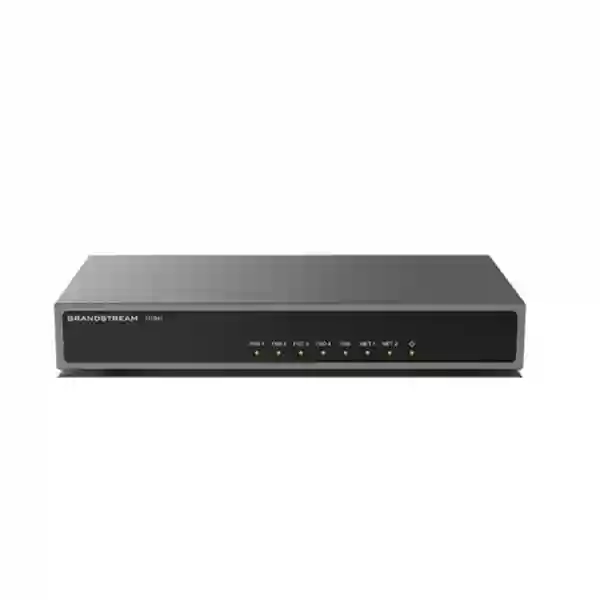
Grandstream HT841 Tanzania
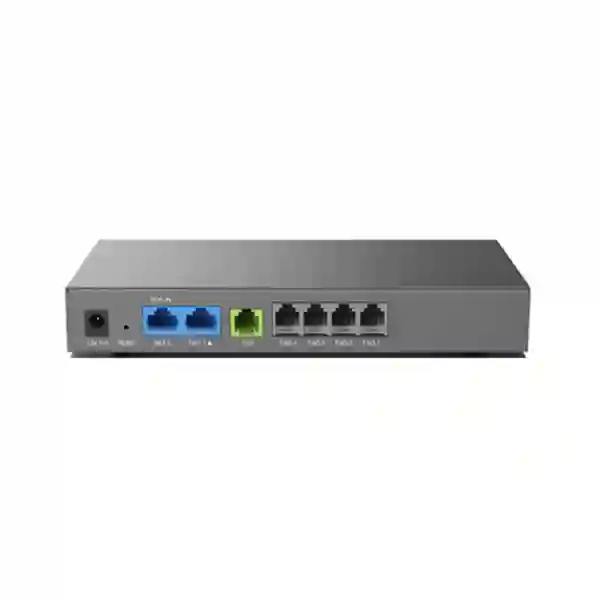
The Grandstream HT841 is a four-port FXO VoIP gateway for organisations that need to connect conventional PSTN telephone lines to modern SIP and IP PBX systems without discarding useful analogue infrastructure. It combines four FXO interfaces for public telephone network lines with one FXS port, secure SIP signalling and media options, T.38 fax support, automated provisioning, network routing functions and a lifeline mechanism that can hard-relay the FXS port to an FXO port during a power outage. For Tanzanian businesses moving from legacy PBX environments to IP telephony, the HT841 can provide a practical bridge between existing carrier lines and a modern unified communications architecture.
Best suited to: businesses that need up to four analogue PSTN lines presented to a SIP/IP PBX environment.
Confirm before ordering: required FXO line count, PBX/SIP compatibility, PSTN signalling, caller-ID method, network addressing, failover needs and installation accessories.
Connect up to four conventional PSTN lines to the gateway for routing into a SIP-based communications environment.
The FXS interface supports an analogue endpoint and can be hard-relayed to an FXO line in a power-loss scenario.
Supports SIP with secure options including TLS/SIPS and SRTP for compatible deployments.
Designed for fax-over-IP workflows using T.38 Group 3 fax relay with G.711 pass-through support.
What the Grandstream HT841 does
The HT841 is not simply an analogue telephone adapter with extra ports. Its main role is to act as an FXO gateway between the public switched telephone network and an IP communications platform. An FXO port is designed to connect to a line that would normally terminate on an analogue phone or PBX trunk interface. By placing those lines on the HT841, a business can make them available to a SIP server, IP PBX or related VoIP system according to the selected call-routing design. This is useful during phased migrations where organisations want the capabilities of an IP PBX but still depend on analogue carrier lines for incoming or outgoing calls.
Grandstream positions the HT841 together with the HT881 as an analog FXO gateway family. The HT841 provides four FXO PSTN ports while the HT881 provides eight. Both models include an FXS interface, and both are designed for interoperability with SIP-based environments. The HT841 therefore fits organisations whose analogue line requirement does not exceed four lines but who still need enterprise-oriented provisioning, security and telephony controls. It can be particularly relevant for branch offices, small and medium businesses, migration projects, reception environments, distributed sites and backup-line scenarios where an existing PSTN service should remain accessible from the IP phone system.
A successful deployment begins with call-flow planning. The installer should document which PSTN numbers arrive on which FXO ports, which PBX routes should receive those calls, whether outgoing calls are permitted through all lines or selected lines, how caller ID is delivered by the carrier, and what should happen if the SIP server or WAN connection becomes unavailable. These decisions matter more than the hardware alone. Fourteck Tanzania can help customers align the gateway with a wider Tanzania business technology architecture covering telephony, networking, power and security.
Verified HT841 capabilities and technical fit
| Area | Grandstream HT841 capability | Buying significance |
|---|---|---|
| Telephony ports | 4 RJ11 FXO ports and 1 RJ11 FXS port | Suitable where up to four PSTN lines must be integrated into SIP/IP telephony. |
| Network | Dual Ethernet interfaces with PoE input support on the supported network port according to current Grandstream documentation | Allows flexible placement and network integration; verify switch PoE compatibility and firmware documentation for the supplied unit. |
| SIP | SIP support with multiple profiles and failover server capability | Supports multi-server and resilience-oriented call-routing designs. |
| Voice | G.711, G.723.1, G.729, G.726, iLBC, Opus and associated voice-processing functions | Provides codec flexibility when interoperating with IP PBXs and SIP platforms. |
| Fax | T.38 Group 3 fax relay and G.711 fax pass-through | Useful where an organisation retains fax workflows while moving voice to IP. |
| Security | SRTP media, TLS/SIPS/HTTPS controls and AES-based provisioning options | Supports more secure signalling, media and provisioning when configured with compatible systems. |
| Provisioning | HTTP/HTTPS/TFTP, TR-069 and related remote-management methods | Helpful for repeatable deployment and remote administration. |
| Lifeline | FXS port can hard-relay to an FXO port in a power outage | Can preserve basic analogue calling behavior in a correctly planned installation. |
Integration with IP PBX, SIP trunks and business networks
The HT841 can sit at the boundary between analogue carrier services and the IP voice network. In a typical design, each FXO port connects to a PSTN line, while the Ethernet side connects to the LAN on which the IP PBX or SIP routing system is reachable. Inbound calls can be directed from the PSTN into the PBX, where they may then follow IVR menus, ring groups, queues or extension routes. Outbound calls can travel from IP phones through the PBX and then across a selected FXO port to the analogue carrier line. The exact configuration depends on the PBX, dial plan, SIP profile and PSTN behaviour.
Customers planning an HT841 deployment should therefore review the broader Fourteck Tanzania services scope rather than treating the gateway as an isolated box. Voice quality and call reliability can be influenced by switch configuration, VLANs, Quality of Service, DNS, firewall rules, IP addressing and power stability. If IP phones and the gateway share the same network, the LAN should be documented so that technicians understand which VLAN carries voice, where the PBX resides, how the gateway obtains an address and which ports or protocols are permitted through security controls.
For broader procurement, the Fourteck Tanzania technology shop outlines related IP phones, IP PBX hardware, switches, firewalls, cabling and infrastructure categories. A complete quotation can therefore include the gateway together with the devices needed to make it operational rather than leaving power, patch leads, switching or endpoint requirements until installation day.
Who should choose the HT841?
Choose the HT841 when the business requirement is specifically to integrate up to four analogue PSTN lines with a SIP-based phone system. It is a logical fit for organisations moving from a conventional PBX to IP telephony while retaining existing carrier lines, branch offices that need local PSTN breakout, sites that require analogue line access for continuity planning, or businesses that need to present legacy lines to a centralised communications platform. It can also be useful where a customer wants to consolidate call control in an IP PBX while avoiding an immediate change to every external telephone circuit.
Do not select it merely because the model number is familiar. If the requirement is to connect analogue phones as extensions rather than connect PSTN lines, an FXS-focused gateway may be more appropriate. If more than four PSTN lines are required, the eight-FXO HT881 or another gateway architecture should be considered. If the site uses digital PRI/E1/T1 services rather than analogue PSTN, an FXO gateway is not the correct interface. Accurate interface identification is one of the most important purchasing checks.
Regional buyers can also use Fourteck specialist sites such as Fourteck IP PBX solutions, Fourteck IP phone solutions, Fourteck Uganda, Fourteck Kenya and Fourteck UAE when coordinating multi-country telephony standards.
Grandstream HT841 Tanzania
For organisations in Tanzania, the Grandstream HT841 is particularly relevant where an IP PBX project must coexist with analogue PSTN services. Many telephony migrations are not clean replacements. A business may already have a stable public telephone number, an analogue line used for inbound customer calls, a legacy carrier service, a fax workflow or a requirement for local breakout even while the internal extensions are being modernised. The HT841 can bridge that gap by bringing four FXO channels into a SIP environment. Procurement teams should begin by listing the exact PSTN circuits that must be retained and determining whether all four FXO interfaces are required immediately or whether some are reserved for growth.
The Tanzania deployment discussion should include the PBX platform, extension count, inbound call routes, outgoing-call policies and fallback behaviour. A head office may want incoming calls to enter an IVR, while a smaller site may route each line directly to a receptionist or ring group. Branches may use the gateway to retain local analogue lines while connecting to a central SIP system over a WAN or VPN. The network must be stable enough for SIP signalling and RTP media, and voice traffic should be protected from unnecessary congestion. Where the gateway is part of a larger office refresh, switch capacity, UPS protection, rack placement and cabling should be included in the bill of materials.
Tanzania buyers should also confirm carrier-specific caller ID and disconnect signalling behaviour during commissioning. Analog line characteristics can differ, and the gateway offers multiple methods for caller ID and disconnection detection. A controlled test plan should cover inbound calling, outbound calling, caller ID, busy conditions, answer supervision, call transfer, PBX failover and power-loss behaviour. Fax users should verify end-to-end results with the actual receiving destinations rather than assuming every carrier path will behave identically.
For quotations in Tanzania, provide the number of PSTN lines, PBX brand and model, network topology, required phones, whether PoE is available, and whether installation or configuration is required. This allows the solution to be scoped around the full environment instead of quoting only the gateway.
Grandstream HT841 Dar es Salaam
Dar es Salaam businesses frequently operate multi-department offices, trading companies, hospitality sites, logistics operations, professional services firms and customer-facing organisations where existing telephone numbers remain important even during a transition to IP communications. In this environment, the HT841 can be used to keep up to four analogue PSTN circuits in service while presenting those lines to a SIP-based PBX. The practical value is flexibility: reception, sales, support and management teams can use IP phones and modern PBX features while inbound and outbound calls still traverse familiar analogue carrier connections.
A Dar es Salaam installation should be planned around the building network. If the gateway is in a rack or communications room, the analogue lines should be clearly labelled and protected from accidental repatching. Ethernet connectivity should be placed on the correct VLAN, and the device should be given a documented address or DHCP reservation so administrators can locate it reliably. If the PBX is hosted remotely, WAN stability and firewall policies become more important. If the PBX is on premises, the installer should still plan DNS, NTP, management access and backup configuration.
Power resilience is also worth considering. The HT841 includes a lifeline mechanism for the FXS-to-FXO path, but the broader IP telephony system still depends on the PBX, network switch and IP phones. A UPS strategy for the switching and PBX layers can help maintain normal call operation through short interruptions, while the lifeline function provides an additional analogue path under the conditions supported by the gateway. Customers should define which desk or location uses the FXS lifeline and test the expected behaviour as part of handover.
When requesting an HT841 quote for Dar es Salaam, include any related IP phones, PBX licences or appliances, PoE switching, rack accessories and configuration services. A complete project scope reduces installation delays and ensures the gateway is deployed as part of a coherent voice solution.
Grandstream HT841 Mwanza
For businesses in Mwanza, the HT841 can support a practical transition from analogue telephone services to IP-based communications without forcing every external line to change on the same day. A company may want modern extensions, IVR, call groups or branch connectivity while still retaining PSTN circuits that customers already know. The gateway provides the interface between those lines and the SIP environment, making it relevant for offices, education organisations, healthcare facilities, hospitality operators and commercial sites that have mixed old and new telephony infrastructure.
The first planning task is to identify how each line is used. One PSTN circuit may be the published reception number, another may handle outbound calls, a third may serve a fax process and a fourth may be reserved for another department. Mapping lines to functions makes PBX routing easier to understand and troubleshoot. Administrators should document FXO port numbers, carrier numbers, PBX destinations and any special schedules such as after-hours routing. If the gateway is later moved or replaced, this record reduces configuration guesswork.
Network readiness should also be checked before installation. The HT841 should have reliable Ethernet connectivity to the PBX or SIP server, and voice traffic should not be disrupted by saturated uplinks or poorly designed switching. Where the site has multiple buildings or branches, the engineer should decide whether the gateway connects to a local PBX, a central PBX over a routed network, or another SIP platform. Security settings such as TLS and SRTP should be enabled only in ways that match the connected platform and certificate design.
Mwanza buyers preparing a quotation should supply the current PBX model, number of analogue lines, required endpoint count and any branch-to-branch calling needs. This helps determine whether the HT841 is sufficient by itself or should be paired with additional IP phones, switches, UPS protection or gateway capacity.
Grandstream HT841 Arusha
Arusha organisations in tourism, hospitality, professional services, education, non-governmental operations and multi-site administration may need a telephone platform that supports modern internal communications while preserving existing public telephone lines. The Grandstream HT841 addresses that specific integration point. Its four FXO ports can bring PSTN circuits into a SIP system, enabling a business to use IP phones and PBX routing features without immediately replacing every analogue carrier connection.
For hotels, travel operators and reception-heavy businesses, call-flow design is especially important. Incoming lines can be associated with reception groups, reservations teams or departmental destinations in the PBX. Outgoing calls can be routed according to permissions or least-cost policies defined in the communications system. The gateway itself provides the PSTN interface, while the PBX governs the user experience. For this reason, the purchase decision should include both gateway capacity and PBX design rather than focusing only on the number of ports.
Arusha sites should also consider remote administration. If IT support is centralised, secure access to the gateway and PBX can reduce unnecessary site visits for configuration changes. Grandstream supports provisioning and management methods that can fit into structured deployment workflows, but remote access must be protected with strong credentials, restricted management paths and appropriate firewall rules. Exposing management interfaces directly to the public internet is not a recommended substitute for a secure administration design.
Before ordering an HT841 for Arusha, verify whether the existing outside lines are truly analogue FXO-compatible circuits. Digital trunks, SIP trunks or other carrier interfaces require different equipment. Once the interface is confirmed, document caller-ID behaviour, line voltage expectations, PBX compatibility, network requirements and power strategy. That preparation produces a more predictable installation and a clearer quotation.
Grandstream HT841 Dodoma
In Dodoma, the HT841 can serve organisations that are modernising office communications while retaining analogue telephone services for continuity, customer access or gradual migration. Government-related offices, professional firms, educational institutions, associations and growing businesses may have a mixture of legacy lines and newer SIP-based systems. A four-port FXO gateway provides a controlled way to join these two environments without requiring staff to change how every external call reaches the organisation.
A well-planned Dodoma deployment should start with an inventory of telephone numbers and call destinations. For each PSTN line, identify whether it receives inbound calls, permits outbound calls, has caller ID enabled and needs special after-hours handling. The PBX dial plan can then be created around those facts. When users dial an external number, the PBX may select a particular FXO channel or group. When an external caller rings a PSTN number, the gateway sends the call into the PBX, which can then route it to an extension, ring group or IVR.
Operational resilience should be part of the design. The HT841 supports a lifeline path through the FXS interface, but the normal VoIP system remains dependent on network and PBX availability. Critical offices may therefore choose UPS-backed switching, PBX power protection and configuration backups. Administrators should also export and safely retain device configuration after commissioning so recovery is faster if hardware is replaced or reset.
For Dodoma procurement, share the number of lines, office size, PBX platform and expected calling patterns. If the project includes a new IP PBX, specify extension count, receptionist functions, IVR requirements, recording needs and remote users. This allows the HT841 to be integrated into the overall communications bill of materials rather than supplied without the supporting architecture.
Grandstream HT841 UAE
For organisations with operations in the UAE and Tanzania, the HT841 can form part of a standardised branch telephony design where some locations still use analogue PSTN access. Standardisation can simplify documentation, dial-plan templates, administrator training and spares planning, but each country and carrier environment still needs to be validated independently. The gateway should be selected because the local service presents compatible analogue lines, not simply because the same model is installed elsewhere.
UAE deployments often sit within more highly centralised IT environments, which makes management and security controls important. The HT841 supports secure signalling and media options, automated provisioning and remote administration methods that can be aligned with a broader network policy. Administrators should decide whether the gateway registers to an on-premises PBX, a central data-centre PBX or a hosted SIP platform. The network path between the gateway and the SIP server should then be checked for latency, firewall traversal and Quality of Service requirements.
For multi-country customers, a useful approach is to create a repeatable deployment worksheet covering FXO line mapping, IP address, VLAN, PBX profile, firmware, caller-ID mode, disconnect detection, emergency or lifeline routing and configuration backup. The worksheet can be reused across branches while still allowing each site to record carrier-specific settings. This reduces the risk that a later support engineer must reverse-engineer the deployment.
Businesses coordinating Tanzania and UAE projects can use Fourteck’s regional network to align the telephony discussion. The goal should be a common architecture with locally validated interfaces, not a forced one-size-fits-all configuration. Procurement teams should request exact scope, compatibility validation and any required installation services before confirming quantities.
Grandstream HT841 Uganda
In Uganda, the Grandstream HT841 is suitable for organisations that need to bridge analogue public telephone lines into an IP PBX or SIP-based communications platform. Its four FXO ports make it useful for smaller sites and branches where the external line count is modest but the business still wants features such as centralised call routing, extensions, ring groups and SIP-based connectivity. It is especially relevant when a phased migration is preferred over an immediate replacement of all analogue services.
Ugandan customers should verify the behaviour of their carrier lines during commissioning. Caller ID, ring cadence, disconnect supervision and dial tone characteristics can affect gateway configuration. The HT841 provides multiple related controls, but the correct values should be determined through testing rather than copied blindly from another region. The engineer should test inbound calls, outbound calls, hang-up detection, caller ID and any fax use case with the actual carrier circuit.
For branch environments connected to a central PBX, WAN design also matters. Voice packets should have stable connectivity to the SIP server, and security rules should permit only the necessary protocols and destinations. If a VPN is used between sites, its throughput and stability should be considered alongside other business traffic. If a local PBX is deployed, the gateway can remain entirely within the branch LAN and follow local call-routing rules.
Uganda buyers can coordinate related requirements through Fourteck Uganda while using a consistent architecture with Tanzania. Provide the number of PSTN lines, PBX details, IP phone quantities and desired routing behaviour when requesting a quotation. This helps determine whether one HT841 is sufficient or whether a larger gateway or multiple units would better fit the line count and resilience requirements.
Grandstream HT841 Kampala
Kampala offices often combine legacy telephony with modern IP networks, especially when businesses grow across departments or multiple locations. The HT841 can provide the bridge between up to four analogue PSTN lines and a SIP communications platform, allowing organisations to centralise call control while preserving existing external circuits. This can be useful for reception lines, customer service numbers, backup lines or migration projects where an analogue service must remain active.
A Kampala project should define how incoming and outgoing calls are expected to behave before configuration begins. Incoming PSTN calls may need to reach an IVR, a receptionist, a queue or a specific extension. Outgoing calls may need access restrictions by department or user. These rules belong primarily in the PBX, while the gateway carries the analogue trunk. Documenting the relationship between each FXO port and each phone number prevents confusion when troubleshooting or expanding the system.
The network layer should support reliable voice traffic. If the PBX is in another site or cloud environment, the WAN connection and firewall path must be stable. If the PBX is local, switching and VLAN design should still keep the voice environment organised. Remote management should be restricted, and firmware plus configuration backups should be maintained as part of normal operational practice. Where PoE is used for the gateway, confirm switch compatibility and available power budget.
Kampala customers should include supporting components in the quotation: IP phones, switch ports, patching, UPS requirements, PBX capacity and installation effort. The HT841 is most valuable when deployed as part of a complete call-flow design rather than treated as a standalone converter.
Grandstream HT841 Arua
For organisations in Arua, a four-port FXO gateway can be useful where analogue telephone circuits remain part of daily operations but the internal phone system is moving toward SIP. The HT841 allows those existing PSTN lines to be incorporated into a modern call-routing environment. This can help branch offices, educational organisations, healthcare sites, NGOs and commercial businesses adopt IP extensions without disconnecting established external numbers during the migration period.
Arua sites may place a stronger emphasis on resilience and straightforward administration. The gateway configuration should therefore be documented in a way that local or remote support teams can understand quickly. Record the IP address, FXO line mapping, SIP server details, firmware version and PBX routes. Label both the analogue lines and Ethernet cabling. Keep a configuration backup after successful commissioning. These practices cost little but can substantially reduce troubleshooting time.
The lifeline feature should also be understood correctly. The HT841 can hard-relay the FXS port to an FXO port during a power outage, allowing an analogue handset on the FXS side to use that line under the supported design. This does not mean the full IP phone system continues to operate without power. If normal IP calling must remain available, the switch, PBX, router and phones need appropriate power protection as well.
When requesting an HT841 quotation for Arua, specify whether the gateway will connect to a local or remote PBX and whether installation support is needed. If the site has more than four PSTN lines, discuss HT881 or alternative gateway capacity before ordering. Correct sizing at the start avoids adding unmanaged complexity later.
Grandstream HT841 Mbarara
Mbarara businesses that are upgrading telephone systems can use the HT841 where analogue lines must coexist with SIP-based communications. The four FXO ports make the model a sensible fit for smaller trunk groups, while the FXS interface provides an analogue endpoint path and lifeline function. The gateway can therefore support a staged transition: keep the external PSTN circuits, move internal users to IP phones, and centralise call handling in the PBX.
Staged migration works best when the business decides which functions should improve first. Reception may gain ring groups and transfer features; management may gain extension mobility; branches may gain internal SIP calling; customer service may gain queueing. The HT841 does not create these PBX functions by itself, but it enables analogue trunks to participate in the new system. Buyers should therefore evaluate the gateway together with the PBX and endpoint requirements.
Line testing is an essential commissioning step. Each FXO port should be tested for incoming ring detection, outbound seizure, caller ID where available, hang-up supervision and audio levels. If a fax device is part of the design, test the actual fax workflow across the target destinations. Administrators should also verify that failover SIP server settings, if used, behave as expected rather than assuming a configured secondary server automatically solves every outage scenario.
Mbarara quotations should include exact line count, required gateway quantity, PBX details and any network upgrades. If voice runs across an existing data LAN, confirm VLAN and QoS capabilities and make sure there are enough switch ports. This creates a deployment that is supportable rather than simply functional on installation day.
Grandstream HT841 Gulu
In Gulu, the HT841 can be considered by organisations that want to introduce IP PBX features while preserving existing analogue PSTN access. The gateway connects up to four external analogue lines to the SIP environment, allowing staff to use IP extensions while calls continue to enter and leave through established telephone circuits. This can reduce disruption during migration and provide flexibility for branches or sites that are not yet ready for an all-SIP carrier architecture.
The most reliable design begins with a simple call-flow document. List every PSTN number, identify the corresponding FXO port, describe the destination for inbound calls and specify which users are allowed to place outbound calls through each route. Include after-hours behaviour and any emergency fallback process. This document becomes the basis for PBX programming and later support.
Gulu deployments should also account for the physical environment. Place the gateway in a protected, ventilated location with orderly cabling and power. If the network equipment is UPS-backed, include the gateway and PBX in the power plan according to operational needs. If remote support is expected, ensure the management method does not expose the gateway unnecessarily. Secure administration should be deliberate, with strong credentials and restricted network access.
Before purchase, confirm that four FXO ports provide enough current and future capacity. If the organisation expects additional PSTN lines, it may be more efficient to select higher port capacity from the start. Gulu buyers should provide PBX model, line count, extension count and installation requirements when requesting a quote so the solution can be properly scoped.
Grandstream HT841 Kenya
Kenyan organisations with analogue PSTN circuits and SIP-based phone systems can use the HT841 as the gateway between these two technologies. For companies with offices in both Kenya and Tanzania, the model can also support a consistent telephony architecture across branches, provided the local carrier interfaces and PBX settings are validated separately. Standard hardware can simplify administration, but local line behaviour must still be tested.
The HT841 supports up to four FXO lines, which makes capacity planning straightforward. Count the current analogue circuits and expected near-term growth. If the requirement is exactly four or fewer, the model can fit. If the business already uses more lines or expects rapid expansion, consider the HT881 or another architecture before deployment. Avoid creating a fragmented design with multiple small gateways unless there is a clear resilience or site-separation reason.
For cross-border businesses, PBX dial plans can be designed so users call internal extensions between sites while local external calls exit through a local gateway. This may improve operational consistency, but it requires careful routing, WAN design and policy control. Each site should have documented routes, numbering and fallback behaviour. Network security must also control SIP and management traffic between branches.
Kenya customers can coordinate regional requirements through Fourteck Kenya while aligning with the Tanzania project. A useful quotation request includes the number of branches, PSTN line count per branch, PBX location, extension count and whether inter-branch calling is required. That information helps determine gateway quantities and whether centralised or local call control is more appropriate.
Grandstream HT841 Kuwait
In Kuwait, the HT841 can be used where a business needs to bring up to four analogue PSTN lines into a SIP communications platform. This can occur during migration from legacy PBX equipment, in branches that retain local analogue services, or in continuity designs where a conventional line remains useful alongside IP telephony. The gateway should be evaluated by interface requirement first: it is intended for analogue FXO connectivity, not digital PRI or pure SIP trunk services.
Enterprises operating in Kuwait and East Africa may value common configuration standards. Administrators can create templates covering SIP profiles, network settings, security controls and documentation format while leaving carrier-specific parameters to each site. This balances consistency with local validation. Firmware version should also be tracked so behaviour remains predictable across the installed base.
The HT841 supports provisioning mechanisms that can make repeat deployments easier, but automated provisioning must be protected. Configuration files can contain sensitive credentials and routing information. Use secure transport where supported, restrict access to provisioning servers and change default passwords. Management interfaces should not be left openly reachable from untrusted networks.
Kuwait procurement teams should include installation accessories and supporting infrastructure in the bill of materials. Confirm whether the gateway will use PoE input or a compatible power supply arrangement, verify the current package contents with the supplier and identify the required Ethernet patching. If the site also needs new IP phones, PBX capacity or switching, quote those components together so the deployment is complete.
Grandstream HT841 Ghana
Ghanaian businesses modernising telephony can use the HT841 to retain analogue external lines while migrating users and call control to SIP. Its four FXO ports are suited to modest line counts, while the FXS interface and lifeline function add flexibility for an analogue endpoint. The model can serve offices, hospitality properties, education facilities, clinics and branch environments where conventional carrier lines remain part of operations.
A Ghana deployment should include a compatibility check with both the carrier line and PBX. The fact that a line uses an RJ11 connector does not by itself prove every setting is correct. Caller-ID format, hang-up detection and ring parameters should be tested. On the PBX side, SIP registration or peering, dial plans and codec selection should be configured to match the intended call flow.
Where the gateway connects to a central PBX over a wide-area network, administrators should monitor latency, jitter and packet loss. Voice problems are often blamed on the gateway when the real cause is congestion or unstable connectivity. Separating voice traffic with appropriate VLAN and QoS policy can help, but network design should be based on actual topology and traffic patterns.
Ghana buyers should request an exact quotation based on line count and deployment scope rather than assuming a generic package. Include whether configuration, IP phones, PBX hardware, switching, rack work or UPS protection is required. A complete project definition makes it easier to compare offers and prevents accessories or engineering effort from being omitted.
Grandstream HT841 Nigeria
For Nigerian offices and branch sites, the HT841 offers a structured way to integrate four analogue PSTN lines with an IP PBX. Organisations can preserve established telephone numbers and carrier services while moving internal users to SIP endpoints and more flexible call routing. This is useful when the business wants to modernise in phases, especially where replacing external services involves separate commercial or operational decisions.
Power and network resilience may receive extra attention in some Nigerian deployments. The HT841 provides a lifeline path through the FXS interface, but normal IP telephony depends on the wider network stack. If continuous operation is important, include the PBX, switches, router and gateway in a suitable UPS or backup-power design. Also back up configuration files and document the hardware so recovery does not depend on one technician’s memory.
Call routing should reflect business priorities. A reception number may always ring a main group, while other PSTN lines could be allocated to departments or outbound use. The PBX can apply time conditions, caller-ID rules and extension permissions. The gateway provides the PSTN access channels, but the value comes from combining those channels with a deliberate PBX policy.
Nigeria buyers should confirm the exact number of analogue circuits and identify whether future expansion is likely. If the line count will exceed four, evaluate an eight-port model or larger gateway solution at the planning stage. For multi-country companies, align naming, VLANs, configuration backup and support procedures across branches while preserving site-specific carrier settings.
Grandstream HT841 Seychelles
In Seychelles, the Grandstream HT841 can be relevant for hotels, resorts, offices, service businesses and other organisations that use analogue carrier lines but want the management benefits of a SIP-based PBX. The gateway provides four FXO ports for PSTN access and an FXS port with lifeline behaviour. This makes it a useful migration component where existing external lines must remain active while the internal communications system is upgraded.
Hospitality environments should pay particular attention to call routing. Guest services, reservations, reception and administration may have different call-handling requirements, and some locations may already have a property-management or legacy PBX integration. Before selecting the HT841, map the current telephone architecture and identify exactly which analogue lines are being converted to SIP. Do not assume the gateway replaces every function of an older PBX; it specifically provides analogue trunk and endpoint interfaces to the IP environment.
For island or remote-site operations, documentation and spare planning can be valuable. Keep an exported configuration, note the firmware version and record all line mappings. If downtime would significantly affect operations, procurement teams may consider whether holding a spare unit or selecting a higher-capacity design is justified by business continuity needs. These decisions depend on the site’s risk tolerance rather than a universal rule.
Seychelles customers requesting a quotation should include PBX details, line count, extension count, remote-management needs and installation scope. If the phone system is being redesigned at the same time, share the full call-flow requirement so the HT841 is integrated into a complete architecture with appropriate IP phones, switching and power protection.
Installation and configuration checklist
1. Verify the line type. Confirm the external services are analogue PSTN circuits compatible with FXO interfaces. Do not use the HT841 as a substitute for digital or SIP carrier interfaces.
2. Map every line. Record the public number, carrier, FXO port, inbound PBX destination and outbound permissions.
3. Confirm the PBX. Check SIP interoperability, IP addressing, dial plans, codec preference, registration or peering method and failover policy.
4. Prepare the LAN. Reserve a switch port, VLAN, IP address and management path. Check PoE compatibility if PoE is planned.
5. Configure security. Use strong credentials, restrict administration, and enable secure signalling/media when compatible with the PBX.
6. Test line behaviour. Validate caller ID, ringing, outgoing seizure, hang-up detection, transfer, fax use cases and audio quality.
7. Back up and document. Save the working configuration and a clear port/routing diagram for future support.
Frequently asked questions
What is the Grandstream HT841?
The HT841 is a Grandstream analogue FXO VoIP gateway that connects four PSTN lines to SIP-based communications systems. It also includes one FXS port, network connectivity, secure provisioning options, fax support and a lifeline mechanism.
How many FXO ports does the HT841 have?
The HT841 provides four FXO RJ11 ports for analogue PSTN lines. If eight FXO ports are needed, Grandstream’s HT881 is the larger model in the same family.
Can the HT841 connect to an IP PBX?
Yes. The device is designed for SIP-based environments and can integrate analogue PSTN lines with compatible IP PBXs, softswitches and SIP servers. Exact settings depend on the PBX and call-flow design.
Does the HT841 support fax?
It supports T.38 Group 3 fax relay and G.711 fax pass-through. End-to-end fax reliability still depends on the connected systems and network path, so testing is recommended.
What does lifeline support mean?
The FXS port can be hard-relayed to an FXO port during a power outage, allowing a connected analogue handset to use the corresponding PSTN line under the supported configuration. It does not power the rest of the IP telephony system.
What information should I provide for an HT841 quotation?
Provide the number of analogue PSTN lines, PBX brand/model, extension count, required IP phones, site location, network details, PoE availability, fax requirements, desired call routes and whether installation/configuration is required.
Quotation checklist for Grandstream HT841
Decision recap
The Grandstream HT841 is the correct type of gateway when an organisation needs to connect up to four analogue PSTN lines to a SIP/IP PBX environment. Its value is strongest in migration, branch and mixed-technology projects where external analogue services remain useful but internal communications are moving to IP. Before buying, confirm the line interface, PBX compatibility, caller-ID and disconnect behaviour, network design, power strategy and required accessories. If the requirement exceeds four FXO lines, compare the HT881 or another higher-capacity gateway rather than undersizing the project.
Plan the HT841 as part of the complete voice system
For a reliable deployment, treat the HT841 as one component of the communications stack. Confirm the PSTN circuits, PBX, IP phones, switching, VLANs, firewall policy, UPS requirements and documentation together. Fourteck Tanzania can use those inputs to prepare a more complete quotation and deployment scope without making assumptions about stock, delivery, licensing or site conditions.



Reviews
There are no reviews yet.