
Grandstream GXW4216 V2 Tanzania
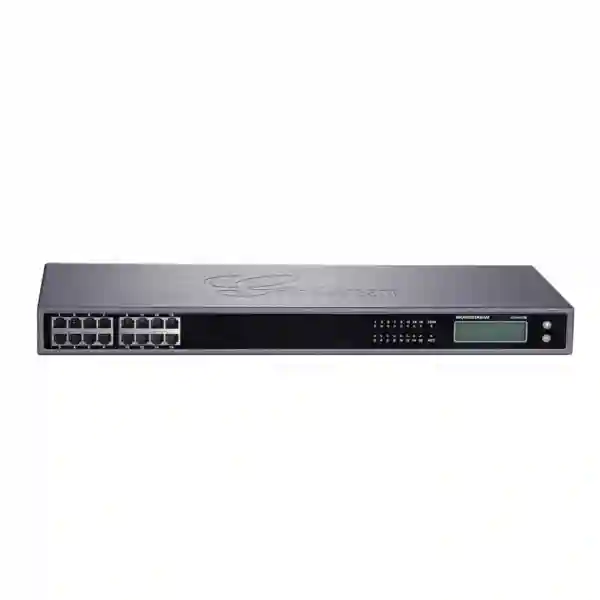
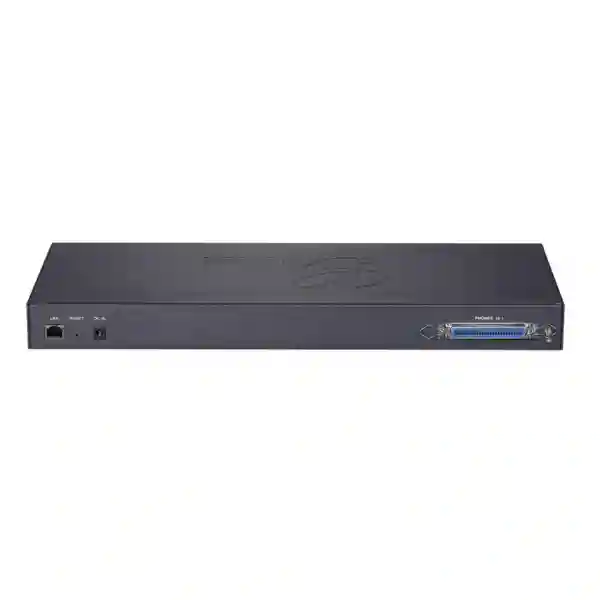
The Grandstream GXW4216 V2 is a high-density analog gateway for organizations that want to connect existing analog telephones, fax endpoints and legacy analog extensions to a modern SIP environment without replacing every endpoint at once. It provides sixteen FXS ports, an RJ21 telco connector, Gigabit Ethernet and a compact management interface, giving IT teams a practical bridge between traditional analog equipment and IP telephony.
What the GXW4216 V2 is designed to do
Many businesses move to SIP gradually. A company may already have a modern IP PBX or hosted voice service but still rely on analog desk phones, hotel room phones, lift phones, paging interfaces, fax devices or legacy building systems. Replacing all of those endpoints immediately can be disruptive and expensive. The GXW4216 V2 gives the network team a structured migration path: each analog endpoint is connected to an FXS port, and the gateway registers the required SIP accounts or profiles toward the IP telephony platform. This approach lets the organization preserve useful analog equipment while consolidating call routing, extensions and management on an IP network.
Grandstream positions the GXW42xx family as high-density FXS gateways. The GXW4216 V2 specifically provides sixteen analog ports through individual RJ11 interfaces and one 50-pin RJ21 connector. Each FXS port can serve one active call, so a fully populated GXW4216 can support up to sixteen simultaneous calls under normal conditions, while encrypted media or particular deployment choices can affect practical capacity. The V2 hardware generation is also important operationally because Grandstream uses different firmware for V1 and V2 hardware. Administrators should identify the device label before planning upgrades, backups or maintenance.
16 Analog FXS Ports
Connect up to sixteen compatible analog telephone endpoints and map each port to the required SIP account or call-routing plan.
Gigabit Network Uplink
A 10/100/1000BASE-T RJ45 network interface provides the IP connection between the gateway and the surrounding voice network.
RJ21 for Structured Voice Cabling
The 50-pin telco connector is useful where multiple analog pairs are already distributed through patch panels, blocks or building cabling.
128×32 LCD
The front-panel display provides basic device information and assists administrators during installation and local checks.
Verified technical specifications
| Item | GXW4216 V2 |
|---|---|
| Analog interfaces | 16 RJ11 FXS ports plus 1 RJ21 50-pin connector |
| Network interface | Single 10/100/1000BASE-TX RJ45 |
| Display | 128×32 pixel LCD |
| Power | 100–240VAC input to supplied adapter; 12V DC, 5A output specification for GXW4216 class |
| Mounting | Desktop and rack mount |
| Operating temperature | 0°C to 45°C for V2 hardware |
| Signaling | FXS loop-start |
| Security and provisioning | Supports secure management and voice options including HTTPS, TLS/SRTP capabilities and automated provisioning features; deployment should follow the selected firmware and PBX requirements. |
V2 firmware identification matters
GXW4216 V2 and older GXW4216 hardware are not interchangeable from a firmware-management perspective. Grandstream states that V2 devices use a different firmware file, and the physical label identifies the V2 model. Administrators planning a migration should record the exact hardware version, current firmware, MAC address, configuration backups, SIP credentials and rollback constraints before making changes. This is especially important when a gateway is carrying many active analog extensions because a failed or incompatible upgrade can affect multiple users at once.
Where a 16-port FXS gateway makes sense
The GXW4216 V2 is particularly attractive where an organization has a concentrated group of analog devices but wants SIP-based call control. A hotel may connect room telephones while operating an IP PBX at reception. A hospital may preserve analog phones in wards or service areas while modernizing administration. A school can retain classroom or common-area analog phones while introducing centralized IP communications. A factory may connect legacy voice handsets positioned in operational areas where replacing wiring is not practical. Multi-tenant buildings can use an FXS gateway to bring traditional analog extensions into a centrally managed SIP environment.
The correct solution is not determined by port count alone. Before ordering, count active analog devices, spare capacity, expected concurrent calls, fax requirements, caller-ID behavior, existing cabling, PBX or SIP-provider compatibility and network readiness. If the project needs more than sixteen analog ports, the wider GXW42xx family includes higher-density models. If the requirement is only a small number of ports, a lower-density analog telephone adapter may be more economical and easier to place. Capacity planning should therefore start with the actual analog endpoint inventory rather than simply selecting the largest model.
Deployment planning and integration
A successful analog-to-SIP project has three layers: analog wiring, IP networking and voice-platform configuration. On the analog side, technicians need to confirm each pair, endpoint type, REN loading where relevant, distance and condition of the cable. On the network side, the gateway should receive stable addressing, reliable switching, suitable VLAN and Quality-of-Service policies, controlled firewall access and protected power. On the SIP side, the administrator must define profiles, accounts, dial plans, caller-ID behavior, codecs, DTMF method, fax handling, registration timers and failover behavior according to the PBX or provider.
For organizations building a broader communications environment, FourTeck Tanzania’s business technology solutions overview provides context for combining telephony with networking, security and infrastructure planning. Customers can also review the Tanzania technology shop when comparing related devices and the FourTeck Tanzania services page when the requirement includes installation, configuration, troubleshooting or lifecycle support.
Grandstream GXW4216 V2 Tanzania
For buyers in Tanzania, the Grandstream GXW4216 V2 is best understood as an infrastructure component rather than a simple telephone accessory. Its value appears when a business wants to modernize call control while continuing to use a substantial installed base of analog phones or other compatible analog endpoints. A sixteen-port density can fit branch offices, hotels, clinics, colleges, government facilities, logistics operations and commercial buildings where traditional copper extension wiring is already present. Instead of rewiring every user for an IP handset on day one, the gateway can provide a controlled transition to SIP while allowing the business to schedule endpoint replacement according to budget, room renovation or operational priorities.
Tanzania deployments should begin with an endpoint survey. Record how many analog lines are currently in use, which endpoints are essential, whether fax traffic is involved, whether any lines feed alarm, lift, paging or specialty equipment, and which extensions must remain available during migration. The network design also matters. Voice traffic should run across stable switching, consistent IP addressing and suitable Quality of Service. If the gateway is placed in a rack, provide reliable power and sensible cable management so that the sixteen analog pairs can be identified quickly during faults or changes. Where the existing building uses multi-pair telco cabling, the RJ21 interface can simplify connection to a distribution block compared with sixteen loose patch leads.
Procurement teams in Tanzania should ask for the exact V2 hardware, not simply “GXW4216,” because firmware compatibility differs by generation. The quotation should also define the intended PBX or hosted SIP platform, the number of active ports, whether the customer needs rack installation, configuration, testing and documentation, and whether migration must be performed outside business hours. A well-prepared quote can include gateway hardware, patching, network adjustments, UPS protection, SIP configuration, analog line testing and handover records. This reduces the risk of purchasing a gateway without the practical work required to make sixteen legacy extensions operate reliably on the new voice environment.
Grandstream GXW4216 V2 Dar es Salaam
Organizations in Dar es Salaam often operate dense office, hospitality, healthcare, education and commercial sites where analog telephony may still be deeply integrated into day-to-day operations. The GXW4216 V2 can be particularly useful during PBX replacement projects because it allows a modern SIP platform to coexist with existing analog handsets. A hotel, for example, can modernize the reception and administrative phones first while keeping guest-room analog devices connected through one or more high-density FXS gateways. A multi-floor office can preserve analog phones in stores, security posts, loading areas and utility spaces while moving primary users to IP endpoints.
Dar es Salaam projects should pay close attention to rack placement, heat management, power continuity and structured cabling. The V2 unit is specified for operation up to 45°C, but that does not remove the need for a properly ventilated rack or equipment room. Where power interruptions are a concern, the gateway, switching infrastructure and PBX should be considered as one service chain and protected accordingly. Keeping only the gateway on backup power is not enough if the network switch or PBX goes offline. For installations with many analog pairs, label both the gateway port and destination clearly so technicians can trace room or extension assignments without guessing.
When requesting a GXW4216 V2 quotation in Dar es Salaam, provide the existing PBX brand or SIP platform, current analog extension count, expected final extension plan and whether the gateway will connect to existing telco blocks. This information helps determine whether one 16-port gateway is adequate or whether the design should use a larger model or multiple devices. Buyers should also identify fax requirements and any non-voice analog equipment because those endpoints may need specific configuration or validation. A planned implementation with test calls, inbound and outbound routing checks, DTMF verification, caller-ID tests and a documented rollback plan provides a stronger result than treating the gateway as plug-and-play hardware.
Grandstream GXW4216 V2 Mwanza
In Mwanza, businesses evaluating the Grandstream GXW4216 V2 are often trying to solve a practical migration problem: how to gain the flexibility of SIP communications without discarding analog phones and established copper wiring that still serve useful operational roles. The gateway provides sixteen FXS interfaces in one device, allowing a branch, hotel, hospital, educational site, warehouse or institutional facility to consolidate multiple analog endpoints rather than deploying many separate two-port or four-port adapters. That higher density simplifies device inventory and can make rack-based support more organized.
A Mwanza installation should start by confirming the quality and topology of the analog cabling. Long or poorly documented extension runs can create troubleshooting challenges even when the gateway itself is functioning correctly. Technicians should identify the room or department served by each pair, check for damaged joints, remove abandoned cross-connections and ensure that wiring is not accidentally shared with unrelated services. The gateway’s RJ21 connector can be valuable when the site already uses structured multi-pair voice distribution, while the individual RJ11 ports remain convenient for smaller direct connections or test work.
On the IP side, the gateway needs a stable LAN connection and predictable communication with the SIP server. Network administrators should decide whether voice devices belong on a dedicated VLAN, how the gateway will obtain its IP address, which management interfaces are permitted, and how configuration backups will be maintained. The PBX design should define extension numbers, outbound permissions, emergency or priority calling policies and how unanswered calls are handled. For procurement, include spare-port requirements in the initial count. A site with fourteen active analog devices may technically fit the GXW4216 V2, but a growth plan should consider whether the remaining two ports provide enough headroom or whether a higher-density gateway would reduce future disruption.
Grandstream GXW4216 V2 Arusha
Arusha organizations in hospitality, tourism, education, professional services and institutional sectors may have a strong reason to preserve analog telephones while upgrading the core communications platform. Guest-room phones, back-office devices, security desks and service-area extensions can continue to operate through the GXW4216 V2 while reception, reservations, management or call-handling users move to modern IP handsets. This hybrid model can reduce immediate replacement work and allows the organization to modernize in stages without making every endpoint dependent on a single renovation window.
The sixteen-port form factor is especially relevant where analog lines are clustered. One correctly planned gateway can be easier to maintain than a collection of small adapters with separate power supplies, cabling and management credentials. Rack mounting also supports cleaner installation in a communications cabinet. For a hospitality site, planners should map each FXS port to a room, floor or functional extension and retain that information in the PBX documentation. This becomes important when front-desk teams report a problem: technicians can immediately identify the physical port and logical SIP account rather than tracing the entire system from scratch.
Arusha buyers should include integration tests in the project scope. Confirm internal extension dialing, incoming and outgoing calls, transfer behavior, DTMF response to IVR menus, message waiting where used and any fax or modem-like requirements that remain necessary. If the deployment uses encrypted signaling or media, confirm support and performance expectations across the PBX and gateway. Firmware should be planned specifically for V2 hardware, with configuration backups and maintenance windows. A quotation request is more effective when it states the number of analog ports required, the destination PBX, the current cabling arrangement and whether installation, rack work, configuration, testing and support are included.
Grandstream GXW4216 V2 Dodoma
For organizations in Dodoma, the GXW4216 V2 can support structured telephony modernization across administrative offices, education facilities, healthcare environments, government-related workplaces and expanding commercial sites. Many such buildings contain analog telephone cabling that remains serviceable even when the PBX is approaching replacement. A high-density FXS gateway allows those copper extensions to connect to a SIP-based voice platform, creating a bridge between existing endpoint investment and newer IP communications architecture.
Planning should focus on service continuity. If sixteen analog extensions are migrated at once, the project team should maintain a clear port map, extension list and testing checklist. Before cutover, record the current behavior of critical extensions: which numbers they dial, which incoming calls they receive, whether they need caller ID, whether they participate in ring groups and whether they have special restrictions. After cutover, test the same functions through the new PBX and gateway. This method is more dependable than relying only on a dial-tone check, because an extension can have dial tone while still being misrouted or missing important call features.
Dodoma procurement teams should distinguish between hardware supply and a complete migration. Hardware-only purchasing may suit an experienced internal IT team, while other organizations may require design, SIP configuration, network preparation, analog cabling work, documentation and user handover. The exact V2 model should be specified in purchasing documents. Because V2 firmware is separate from earlier hardware, inventory records should include model generation and current firmware. If future expansion is expected, compare the sixteen-port requirement with larger GXW42xx models so the design provides enough capacity without unnecessary devices.
Grandstream GXW4216 V2 UAE
In the UAE, the GXW4216 V2 is relevant to hotels, serviced apartments, clinics, warehouses, schools, corporate offices and multi-site businesses that are migrating from legacy PBX systems toward SIP. Dense analog extension environments can remain operational while the call-control layer moves to an IP PBX or hosted SIP service. This is often useful where the physical building already has well-maintained multi-pair telephone cabling and replacing every endpoint would add cost without creating an immediate operational benefit.
A UAE deployment should be designed around the SIP platform and telecom environment rather than assuming universal interoperability. Confirm the PBX, trunking arrangement, required codecs, fax behavior, DTMF method and any security policies before final configuration. Where analog endpoints are spread throughout a hotel or large facility, using the RJ21 connector with a suitable distribution frame can help organize the sixteen lines. Rack placement, UPS protection and documented patching also improve serviceability. The goal is not only to make the gateway register but to create a configuration that support teams can understand months later.
Organizations that operate between Tanzania and the Gulf may also coordinate their communications standards across sites. FourTeck’s broader regional network can support conversations around common equipment policies, while the Tanzania project should still be validated against local operational needs. Buyers should request the exact GXW4216 V2 model, define whether installation and configuration are included and provide an analog extension schedule. For large rollouts, a pilot migration of a small group of non-critical extensions can validate SIP behavior and cabling assumptions before moving all sixteen ports.
Grandstream GXW4216 V2 Uganda
The Grandstream GXW4216 V2 can support Ugandan organizations that need a practical bridge from analog telephony to SIP. Branch offices, hotels, hospitals, schools, NGOs and commercial sites may have functioning analog handsets and cabling that remain useful even though the organization wants centralized call routing, extension management or new IP PBX capabilities. Sixteen FXS ports allow multiple analog endpoints to be consolidated in one gateway, which can be easier to manage than a scattered collection of small adapters.
Uganda projects should begin with a compatibility and inventory review. Confirm what each analog port will connect to, whether any fax devices are required, and which extensions are business critical. Document the target SIP server, registration requirements and calling permissions. Network design is equally important: the gateway should have stable Ethernet connectivity, protected power, sensible VLAN placement and restricted management access. Configuration backups should be stored securely so the gateway can be restored more quickly after replacement or maintenance.
For buyers managing projects across Uganda and Tanzania, standardized port naming and documentation can simplify support. Each gateway can use a consistent naming convention, with port-to-extension maps and PBX records stored centrally. Regional customers can also reference FourTeck Uganda for Uganda-specific technology discussions while coordinating the Tanzania procurement separately. When requesting a quote, include the number of analog devices, target PBX, cabling method, installation location and whether commissioning, testing and support are required.
Grandstream GXW4216 V2 Kampala
Kampala has many office, hospitality, healthcare and education environments where telephony modernization must happen without interrupting busy daily operations. The GXW4216 V2 can be useful when an organization is replacing an older PBX but wants to keep selected analog phones. Sixteen FXS interfaces provide enough density for a department, floor, branch or service area, while the SIP connection allows the phones to participate in a modern extension plan.
The deployment team should avoid treating all sixteen ports as identical. Different endpoints may require different dialing permissions, caller-ID settings, ring behavior or fax handling. Reception or service phones may need broader outbound permissions than room or public-area extensions. A healthcare facility may have analog phones in clinical support spaces that require highly predictable extension dialing. A hotel may need room phones that map accurately to room numbers. Those differences should be captured in the configuration plan before cutover.
For Kampala installations, maintenance access is another practical consideration. Place the gateway where technicians can reach the rack safely, identify cables and read the LCD without disturbing unrelated equipment. Label the RJ21 or RJ11 connections and keep an updated spreadsheet or port map. Protect the gateway and network switch with suitable power backup if continuity during short outages is important. During commissioning, test representative call types from every group of extensions instead of testing only one port. A well-documented sixteen-port gateway can become a stable part of the voice infrastructure; an undocumented one can create avoidable troubleshooting time whenever a room or extension changes.
Grandstream GXW4216 V2 Arua
For businesses and institutions in Arua, the GXW4216 V2 offers a way to modernize telephony without requiring the immediate replacement of all analog endpoints. This can be important for facilities where analog phones are installed across offices, reception areas, stores, service desks or accommodation spaces and where existing copper cabling remains in good condition. By concentrating sixteen FXS ports in one gateway, the organization can connect those endpoints to a SIP PBX while keeping the physical handset environment largely unchanged.
Arua deployments may benefit from careful pre-staging. The gateway can be configured in advance with IP settings, SIP profiles and extension accounts, then installed on site after the network and cabling are prepared. Pre-staging reduces the amount of configuration work required during a cutover window and gives the project team time to verify firmware and backups. The exact V2 generation should be recorded because Grandstream’s V2 firmware path differs from older GXW4216 hardware.
The analog side should also be validated. A successful SIP registration does not guarantee that every telephone pair is correctly connected. Each extension should be traced, labelled and tested for dialing, ringing and audio. If fax equipment is part of the requirement, verify the complete fax path rather than assuming voice settings will be sufficient. Procurement requests should describe the PBX or SIP provider, required port count, installation environment and support scope. This helps separate the gateway purchase from the broader work of making the legacy endpoints function correctly on the new communications platform.
Grandstream GXW4216 V2 Mbarara
Mbarara organizations considering the GXW4216 V2 may be looking for a cost-controlled route from analog extensions to centralized SIP communications. The gateway is suitable when a building or campus has a group of traditional phones that still meet user needs but the existing PBX lacks modern management, routing or integration capabilities. Instead of replacing the phones and cable plant at the same time as the PBX, the gateway allows the project to focus first on call control and network integration.
Capacity planning should be deliberate. Sixteen physical FXS ports can support up to sixteen connected analog endpoints, but spare capacity is useful for future additions and testing. If the site already has sixteen active phones and expects growth, a larger gateway or additional unit may be more appropriate. The project team should also estimate simultaneous call demand. In many offices not every phone is active at once, but certain environments such as hospitality or service centers may have higher concurrent usage.
Mbarara buyers should include operational documentation in the deployment scope. Keep the gateway IP address, administrator access procedure, firmware version, SIP profile information, extension mapping and backup file in a controlled record. Avoid writing passwords on the rack or leaving default credentials unchanged. Where remote management is required, use secure methods and firewall restrictions rather than exposing the management interface broadly to the internet. A properly commissioned gateway is not only a hardware bridge; it becomes part of the organization’s voice service and should be managed with the same discipline as the PBX, switch and firewall.
Grandstream GXW4216 V2 Gulu
In Gulu, the Grandstream GXW4216 V2 can serve businesses, education sites, NGOs, healthcare facilities and hospitality properties that want to introduce SIP while retaining working analog endpoints. High-density FXS gateways are often useful in environments where extension wiring is already distributed through a building and replacing it would add work without improving the immediate user experience. The gateway connects that analog layer to the IP communications system so modernization can proceed in manageable phases.
The physical installation should prioritize reliability. Use a protected equipment location, stable Ethernet switching and a clearly labelled analog distribution method. If the gateway is rack mounted, leave enough room for cable routing and ventilation. If a UPS is used, consider the entire voice path: gateway, switch, PBX and any required router or firewall. During testing, confirm that every extension rings the correct destination and that outbound calling permissions match the organization’s policy. Mislabelled analog pairs can cause confusing issues, especially when room or department numbers are similar.
For Gulu procurement, provide a simple project sheet with endpoint count, extension numbers, target PBX, cabling details, network location, expected completion requirements and whether user or administrator handover is needed. This makes it easier to prepare a meaningful quotation rather than pricing only the gateway. Organizations should also plan firmware lifecycle management. Because the V2 platform has its own firmware line, administrators should verify compatibility before upgrades and retain configuration backups. These basic controls reduce avoidable downtime and make the gateway easier to support over its operational life.
Grandstream GXW4216 V2 Kenya
Kenyan organizations with legacy analog extensions can use the GXW4216 V2 as part of a phased SIP migration strategy. Hotels, schools, clinics, factories and offices frequently have analog telephones in rooms or operational areas where replacement is not immediately necessary. A sixteen-port gateway allows those endpoints to connect to a SIP-based PBX while new users or renovated areas can move directly to IP phones. This mixed architecture can support gradual modernization without forcing every department into the same replacement schedule.
Before selecting the gateway, confirm whether sixteen ports provide the right density. Count active analog endpoints and add realistic growth capacity. If the project involves several floors or buildings, decide whether it is better to centralize gateways in a main rack or distribute them closer to analog wiring termination points. Centralization simplifies management, while distributed placement may reduce analog cable complexity. The best answer depends on the site’s cabling and network architecture.
Kenya-based teams working with Tanzania sites can align documentation, naming and SIP policies to reduce support complexity. For Kenya-specific projects, customers can review FourTeck Kenya while using FourTeck Tanzania for Tanzania requirements. Regardless of location, specify GXW4216 V2 explicitly in the bill of materials, verify firmware generation, protect management access and test representative call flows before full cutover. If fax or specialty analog devices are involved, add them to the test plan rather than assuming ordinary voice behavior confirms compatibility.
Grandstream GXW4216 V2 Kuwait
In Kuwait, the GXW4216 V2 can be relevant for hospitality, property management, healthcare, education and enterprise environments that maintain analog extensions while adopting SIP. Large buildings often have substantial legacy voice cabling, and replacing every endpoint at the same time as the PBX may be unnecessary. The gateway offers a concentrated point where sixteen analog lines can enter the IP voice system, allowing administrators to centralize extension control and call routing while preserving familiar endpoints.
Environmental and rack planning should receive attention. Although the V2 hardware is specified for elevated operating temperatures compared with the older generation, communications equipment still performs best in a controlled, ventilated environment. The equipment rack should also have adequate power backup and clear cable organization. For multi-pair installations, the RJ21 connector can simplify structured termination when supported by the site’s voice cabling design.
A Kuwait project should document SIP security expectations, allowed management access, firmware policy and backup procedures. If TLS or SRTP is required, verify end-to-end compatibility with the PBX or provider and test call quality under the selected configuration. Procurement teams should not assume that all features are enabled automatically; the final system behavior depends on configuration. A useful quotation request should therefore include hardware, commissioning, extension mapping, call-flow testing and documentation. This ensures the commercial scope reflects the actual migration work rather than only the cost of the gateway chassis.
Grandstream GXW4216 V2 Ghana
Ghanaian businesses can use the GXW4216 V2 to extend the life of analog telephone assets while moving to an IP-based communications platform. The model is useful where analog endpoints are concentrated in a single facility and a sixteen-port density matches the extension plan. Hotels, schools, medical facilities, offices and operational sites can preserve existing telephone cabling and connect it to a SIP PBX, allowing modernization without an all-at-once handset replacement program.
The design process should classify endpoints by importance and behavior. Basic office phones may need simple calling, while reception lines may participate in ring groups, hunt groups or transfers. Fax devices may need additional configuration and testing. Service or security phones may require special outbound permissions. Creating this endpoint profile before programming the gateway prevents a common problem: all ports being configured identically even though users have different requirements.
Network readiness also matters. The gateway’s Gigabit Ethernet connection should reach a stable switching environment with suitable addressing, voice VLAN policies where applicable and restricted management access. Backup power should cover the supporting network devices as well as the gateway. During commissioning, test inbound, outbound and internal calls, DTMF behavior and failure recovery. For procurement, state the exact V2 model and the target SIP system. This improves accuracy and helps ensure that the project includes the configuration and documentation required for long-term support.
Grandstream GXW4216 V2 Nigeria
Nigeria has many high-density commercial, hospitality, education, healthcare and industrial sites where analog telephony remains useful even as organizations adopt SIP and unified communications. The GXW4216 V2 can bridge sixteen analog endpoints into a modern IP environment, allowing a business to preserve functioning handsets or specialty devices while upgrading the PBX. This approach can reduce immediate disruption and lets modernization follow operational priorities instead of hardware age alone.
Because the gateway can serve many users, resilience should be considered carefully. A single device may represent sixteen extensions, so power protection, spare strategy and configuration backups have greater value than they would for a one-port adapter. Organizations with critical communications can consider keeping a prepared spare or a documented replacement process. The network should provide stable connectivity and the PBX should have defined routing behavior if registration fails.
Nigeria-based procurement teams should request model generation, hardware quantity, installation scope and support requirements clearly. GXW4216 V2 firmware should not be mixed with older hardware. During a project, label analog pairs and keep extension mapping current so moves and changes do not create confusion. If a deployment will grow beyond sixteen endpoints, compare higher-density gateways before purchase. The objective is to build a clean migration platform, not to create a temporary workaround that must be redesigned shortly after installation.
Grandstream GXW4216 V2 Seychelles
In Seychelles, hospitality properties, resorts, offices and institutional facilities may have a particularly strong reason to keep existing analog room or service phones while modernizing core communications. The GXW4216 V2 can connect sixteen analog endpoints to a SIP platform, making it suitable for phased upgrades where endpoint replacement is coordinated with room renovation, property refurbishment or broader network projects. A gateway-based approach also allows centralized management of extensions without requiring every analog handset to become an IP device.
For island and remote-site environments, documentation and spare planning deserve extra attention. Technicians should retain configuration backups, port maps, firmware information and clear replacement procedures. If the gateway supports business-critical rooms or services, the organization should understand how quickly a failed unit can be replaced and whether a spare device should be held. Protecting the gateway, switch and PBX with appropriate UPS capacity can also help maintain service through short power events.
A Seychelles quotation request should include the number of analog endpoints, distribution method, rack location, PBX platform and any requirement for remote support. Where guest-room telephony is involved, integrate the extension plan with property workflows and test room-to-room, reception and external call patterns carefully. The GXW4216 V2 is most effective when treated as part of a complete communications design that includes the network, PBX, cabling, power and support processes rather than as an isolated gateway purchase.
Selection and sizing guidance
Choose GXW4216 V2 when
You have a concentrated group of analog endpoints, need up to sixteen FXS ports, want to connect those endpoints to a SIP platform and prefer a rack-friendly high-density design.
Consider a larger model when
Your analog inventory is already close to sixteen ports, future growth is expected or a single site would be easier to operate with 24, 32 or 48-port density.
Consider a smaller ATA when
Only one or two analog endpoints are required and there is no operational reason to install a high-density rack gateway.
Quotation checklist
To receive a more accurate GXW4216 V2 proposal, prepare the following information before contacting sales. This checklist helps determine whether the gateway fits the project and what implementation work should be included.
Frequently asked questions
How many analog phones can the GXW4216 V2 connect?
The GXW4216 V2 provides sixteen FXS ports through sixteen RJ11 interfaces, together with a 50-pin RJ21 connector for structured multi-pair connection. The practical endpoint count should still be checked against the cabling method and the type of analog devices being connected.
Is GXW4216 V2 the same as the older GXW4216?
No. Grandstream identifies V2 on the device label and publishes separate firmware for V2 hardware. Administrators should verify the exact generation before firmware upgrades or configuration recovery.
Can it be used with a SIP PBX?
Yes, the GXW42xx family is designed to connect analog FXS endpoints to SIP-based voice systems. Compatibility and configuration should be verified for the specific PBX, SIP provider, codecs, DTMF method, security settings and fax requirements used in the project.
Does the GXW4216 V2 support rack mounting?
Yes. Grandstream lists desktop and rack mounting for the GXW4216 class, making it suitable for structured communications cabinets where analog lines terminate centrally.
Why does the RJ21 connector matter?
RJ21 is useful for carrying multiple analog pairs through a single telco connector. In sites with structured multi-pair voice cabling, it can create a cleaner connection to distribution blocks than using many individual patch leads.
Can the gateway handle fax?
The GXW42xx platform includes fax-over-IP capabilities, but successful fax operation depends on the complete path, including PBX, SIP provider, codec or T.38 configuration, network quality and the fax device itself. Fax should be tested as part of commissioning.
How should a buyer choose between 16, 24, 32 and 48-port models?
Start with the active analog endpoint count, add realistic growth capacity, review rack and cabling design and consider whether a single larger gateway or several smaller units offers better resilience and maintenance. The correct density depends on the site rather than on maximum port count alone.
Decision recap
Choose the Grandstream GXW4216 V2 when the project requires a high-density bridge between sixteen analog endpoints and a SIP communications platform. Its combination of 16 RJ11 FXS ports, one RJ21 connector, Gigabit Ethernet, front-panel LCD and rack-friendly design makes it appropriate for structured migrations in hotels, offices, campuses, healthcare sites and other environments with existing analog cabling. The most important purchasing step is to specify the V2 generation clearly and confirm compatibility with the target PBX before deployment.
A complete implementation should include endpoint inventory, analog cabling validation, SIP account planning, network readiness, power protection, configuration backups, firmware control, call-flow testing and handover documentation. These details determine whether the project becomes a dependable long-term voice platform rather than a temporary adapter installation.
Plan your GXW4216 V2 deployment with FourTeck Tanzania
Share your analog extension count, PBX or SIP platform, cabling layout and installation requirements. FourTeck can help frame the gateway requirement alongside switching, IP PBX, power protection, rack organization and migration testing so the quotation reflects the complete deployment rather than only the hardware.


Reviews
There are no reviews yet.