
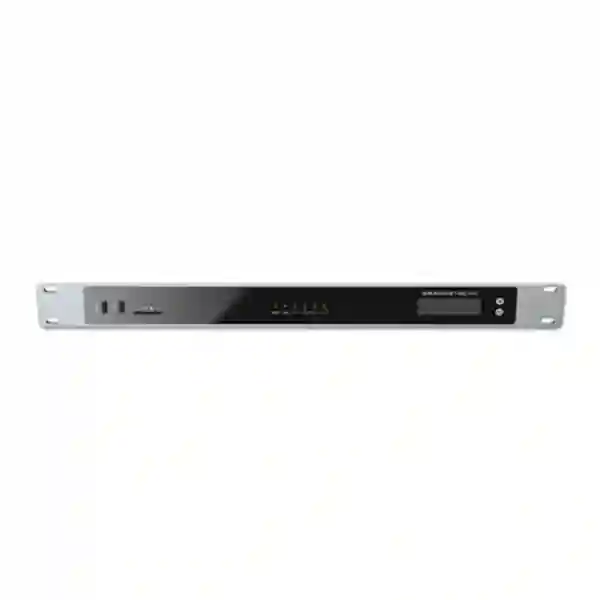
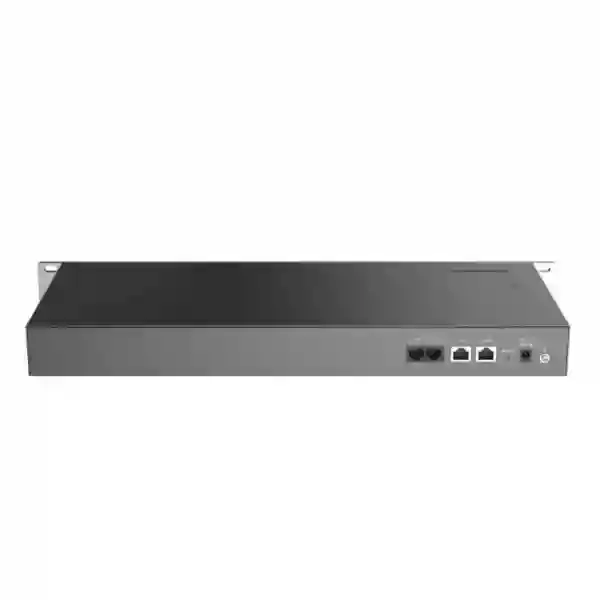
Grandstream GXW4504 Tanzania
The Grandstream GXW4504 is a four-port E1/T1/J1 digital VoIP gateway built to connect traditional digital PSTN or ISDN trunks with SIP-based IP telephony environments. In the GXW4500 family, the GXW4504 is the highest-port-count model, providing four software-configurable digital interfaces and supporting up to 120 simultaneous VoIP calls. For Tanzanian organizations moving from legacy PBX or carrier circuits toward IP-based communications, the device can act as a controlled bridge between established telecom infrastructure and newer SIP platforms.
The platform supports PRI, SS7 and MFC R2 signaling, dual Gigabit Ethernet ports, T.38 fax, secure SIP through TLS and media protection through SRTP, advanced echo cancellation, QoS controls and multiple management methods. Grandstream currently places the GXW4500 series in its product archive, so procurement should include an availability and lifecycle check rather than assuming the model is part of the newest active portfolio. FourTeck can help buyers evaluate whether GXW4504 remains appropriate for an installed base, expansion, replacement or migration project.
Four digital trunk interfaces designed for telecom and PBX integration.
The four-port model supports up to 120 simultaneous VoIP calls.
Flexible digital signaling for carrier, enterprise and legacy telephony environments.
TLS, SRTP, HTTPS, SSH and 802.1X support help protect management and call traffic.
What the Grandstream GXW4504 is designed to solve
Many businesses still operate valuable digital telephony infrastructure even while adopting SIP trunks, IP PBX platforms, hosted voice services and unified communications. Replacing every component at once may be unnecessary, disruptive or technically difficult. The GXW4504 is designed for the transition point: it converts and routes between E1/T1/J1 digital interfaces and IP-based voice, allowing an existing PBX, digital carrier service or branch voice system to remain part of a modern IP network.
Typical use cases include connecting a legacy PBX to a SIP platform, presenting E1/PRI services to an IP PBX, linking digital trunks across an IP network, preserving an established number range during a migration, consolidating multiple digital circuits, or enabling organizations to phase a telephony upgrade instead of replacing everything at one time. A gateway is especially useful where the operational requirement is continuity: the business may need new SIP features while still relying on digital carrier interfaces or an existing call-control platform.
Selection should begin with signaling, port count, channel requirements, existing PBX interfaces, carrier configuration and desired call flow. The GXW4504 is not a universal replacement for every gateway. A project should validate whether the existing circuit uses E1, T1 or J1, how signaling is implemented, what PBX or softswitch is on each side, which codecs are expected and whether the deployment needs failover, number translation, fax relay or specific regional signaling behaviour.
Verified GXW4504 technical capabilities
| Area | GXW4504 capability |
|---|---|
| Digital interfaces | Four RJ45 E1/T1/J1 ports; software configurable |
| Call capacity | Up to 120 simultaneous VoIP calls on the four-port model |
| Network | Dual self-adaptive Gigabit Ethernet ports, switched or routed |
| Signaling | SIP over UDP/TCP/TLS, PRI, SS7 and MFC R2; Q.SIG among supported PRI switch types |
| Voice codecs | Includes G.711 A-law/U-law, G.722, G.723.1, G.726, G.729A/B and iLBC |
| Fax | T.38 Group 3 fax relay plus G.711 fax pass-through behaviour |
| Quality controls | Carrier-grade echo cancellation, dynamic jitter buffering, VAD/CNG and packet loss concealment |
| QoS | 802.1Q/802.1p plus ToS, DiffServ and MPLS-related Layer 3 QoS support |
| Security | SRTP, TLS, HTTPS, SSH, 802.1X, Fail2ban, whitelist/blacklist and access controls |
| Management | Web browser, HTTPS, Syslog, backup/restore, packet capture and firmware upgrade by TFTP/HTTP/HTTPS or local upload |
| Physical format | Rack-mount and desktop; 485 × 191 × 46.2 mm; GXW4504 unit weight about 2380 g |
| Power | 100–240 VAC input via 12 VDC / 2 A adapter; Grandstream technical bulletin lists 15.81 W normal work-state consumption for GXW4504 and 21.78 W power-not-to-exceed |
Lifecycle and firmware planning
Grandstream lists the GXW4500 family in its product archive. That does not automatically mean an installed GXW4504 is unsuitable; it means procurement teams should treat lifecycle as a formal part of the decision. For an existing system, document the installed firmware, configuration backup, signaling profile, DIDs/DDIs, routing rules, PBX-side settings and carrier-side parameters before replacement or change work.
Grandstream’s firmware page currently lists GXW4501/GXW4502/GXW4504 firmware 1.0.1.13. Organizations maintaining an installed gateway should review official firmware notes, change-management requirements and security guidance before any upgrade. A telephony gateway can be business-critical, so maintenance should include rollback planning and a test window rather than an unplanned update during production hours.
Compatibility, deployment and buying guidance
A successful GXW4504 deployment depends more on correct interconnection than on headline specifications. Before ordering or reusing a unit, identify the telecom handoff type, framing and line coding, signaling protocol, channel count, numbering plan, inbound and outbound call flow, codec requirements and the SIP platform on the IP side. If MFC R2 is involved, regional variant support and carrier expectations need to be checked carefully. If PRI is used, the switch type and clocking arrangement must be correct. Q.SIG or SS7 environments need similarly disciplined configuration.
The network should also be prepared for voice. The gateway provides dual Gigabit Ethernet and supports QoS marking, but the surrounding LAN still needs appropriate VLAN design, reliable switching, routing and firewall policy. Voice quality problems can be caused by delay, jitter, packet loss, duplex mismatch or congestion elsewhere in the network. For larger sites, monitoring and packet capture may be useful during commissioning to prove that call quality is stable under normal traffic.
Power continuity matters because loss of the gateway can interrupt every call passing through its four digital spans. For a business that depends on the GXW4504, place it in a suitable rack or protected equipment room, provide UPS-backed power where required, maintain airflow within the supported operating range and document the power adapter. Because a single four-port gateway can carry a large number of calls, organizations should decide whether redundancy or a spare replacement strategy is justified.
For broader telephony planning, FourTeck Tanzania provides contextual information on integrated IT and telecom solutions, a business technology shop, deployment and lifecycle services, company and solution background and a quotation and consultation channel. These pages help buyers connect the gateway decision with PBX, network, rack, UPS and support requirements rather than evaluating the device in isolation.
Grandstream GXW4504 Tanzania
For organizations evaluating the Grandstream GXW4504 in Tanzania, the first step is to define whether the requirement is a new digital gateway, an expansion of an existing installed base, a replacement for a failed unit or part of a broader migration from E1/PRI toward SIP. That distinction affects procurement risk. A new design may have more modern alternatives, while an installed environment may value configuration continuity and proven interoperability with an existing PBX or carrier service. Because Grandstream now places the GXW4500 series in its archive, Tanzanian buyers should verify supply and support expectations before committing to the model for a greenfield project.
The GXW4504 can be relevant to hotels, financial operations, contact centres, government environments, hospitals, universities, corporate headquarters and multi-site businesses that still use digital trunks or digital PBX interfaces. Its four E1/T1/J1 ports make it appropriate where a single-span gateway would not provide enough capacity. On E1 deployments, a four-port design can aggregate a substantial number of channels, while the IP side connects to SIP systems over Gigabit Ethernet. Planning should include the exact number range, inbound routing, outbound access codes, emergency-call policy where applicable, fax behaviour and any special signaling required by the telecom provider.
Tanzania deployments should also consider power quality, rack conditions, cabling and support access. A voice gateway often sits in a communications rack alongside the PBX, switches, firewall and UPS. If it carries business-critical trunks, the UPS design should support the gateway as well as the network components needed for calls to reach phones and SIP services. Configuration backups, administrator ownership and a documented change log are useful because gateway settings can become complex over time. For remote branches, a consistent configuration standard can make fault isolation much easier.
When requesting a quotation in Tanzania, share the number of E1/T1/J1 spans, signaling type, current PBX or SIP platform, carrier details, expected concurrent calls and whether the system must reuse existing number ranges. Also indicate whether installation, configuration, testing and migration support are required. FourTeck can then assess the GXW4504 against the actual telephony architecture instead of treating it as a generic four-port appliance.
Grandstream GXW4504 Dar es Salaam
In Dar es Salaam, businesses often operate larger headquarters, hotels, logistics facilities, financial offices, call-handling teams and multi-branch networks where telephony continuity matters. The Grandstream GXW4504 can fit environments that retain E1 or PRI circuits while moving internal communications toward SIP. A common design objective is to avoid disrupting a working PSTN connection or legacy PBX while introducing a new IP PBX, branch SIP architecture or centralized call-control platform.
For a Dar es Salaam deployment, the gateway should be treated as part of the complete voice path. The project team should document the carrier handoff, PBX role, SIP addressing, firewall rules, VLAN configuration, dial plan and failover expectation. If users depend on voice for reservations, customer care, dispatch or sales, test scenarios should include inbound calls, outbound calls, caller ID, DTMF, call transfer, fax if used, busy conditions and service restoration after a restart. These tests are more valuable than confirming only that a single call connects.
Large Dar es Salaam sites may also benefit from separating voice traffic from general user traffic. The GXW4504 supports Layer 2 and Layer 3 QoS features, but those markings must be respected across the switch and routed network to have practical value. Where internet-based SIP is involved, the firewall and WAN edge must be sized and configured for the traffic. Power backup should cover not just the gateway but the switching, PBX and any SIP edge devices required for end-to-end calling.
Procurement teams should ask whether the project is preserving a known working GXW4504 design or selecting the gateway for a new installation. For an established system, matching the current model may minimize change. For a new system, lifecycle and alternative gateway choices should be compared. FourTeck can support a structured review so the selected approach fits the actual Dar es Salaam site, carrier service and migration objective.
Grandstream GXW4504 Mwanza
Businesses in Mwanza considering the Grandstream GXW4504 may include regional offices, hospitality operators, healthcare organizations, education campuses, wholesalers and enterprises that connect local operations with headquarters elsewhere in Tanzania. In these environments, the value of a digital VoIP gateway is often its ability to preserve an existing digital telephony investment while enabling SIP connectivity and centralized management.
A Mwanza project should verify whether four E1/T1/J1 interfaces are actually required. If the site has fewer spans, a smaller gateway may be more economical and simpler to manage. If the site aggregates several trunks or supports a high call volume, the GXW4504’s 120-call capability can provide useful capacity. The call requirement should be measured from realistic busy-hour usage rather than user count alone. Some organizations have many extensions but relatively few external calls; others, such as contact-oriented operations, can use a much higher percentage of channels at once.
Because branch connectivity can be a factor outside the primary headquarters, the network path between Mwanza and a centralized SIP platform needs careful consideration. Latency, jitter and packet loss affect call quality, and WAN instability can make the telephony experience unreliable even when the gateway itself is operating correctly. If calls are routed across a private WAN, SD-WAN or VPN, the architecture should prioritize voice appropriately and include a recovery plan for WAN interruption.
For procurement, provide FourTeck with the current PBX model, existing trunk type, carrier interface information, number of channels, expected call routing and whether the site needs a phased migration. That information makes it possible to determine whether GXW4504 is the right fit for Mwanza, whether another model is more suitable, and what switching, UPS, rack and configuration services should be included in the project scope.
Grandstream GXW4504 Arusha
Arusha has a diverse mix of hospitality, tourism, corporate, education and institutional environments where reliable voice remains important. The Grandstream GXW4504 can support organizations that operate digital carrier trunks or legacy PBX systems but want to integrate them with SIP-based communications. In a hotel, for example, a migration may need to preserve room-extension workflows while modernizing the external trunk side. In an office, the goal may be to connect an established PRI service to a new IP PBX.
The technical design should begin with interfaces and call flows. Document which side of the GXW4504 connects to the carrier or PBX, which signaling method is used, how inbound numbers are mapped and how outbound calls are selected. If the site has multiple spans, determine whether all four ports are active, reserved or used for resilience. For organizations with seasonal demand, such as hospitality or travel-related businesses, consider peak calling periods when calculating channel requirements.
Arusha sites should also plan for environmental and power conditions. The gateway is rack-mountable and should be installed where temperature, dust exposure, cable organization and power protection are controlled. A UPS should be sized around the complete voice chain. Keeping the gateway running while the PBX, switch or router loses power does not maintain service, so continuity planning must be end-to-end.
Because the GXW4500 family is archived by Grandstream, an Arusha buyer planning a new project should ask how long the gateway is expected to remain in service and what replacement strategy will apply. Existing installations may justify a like-for-like unit where compatibility is proven. New deployments should compare lifecycle, supportability and available alternatives. FourTeck can help document these trade-offs before quotation and deployment.
Grandstream GXW4504 Dodoma
In Dodoma, government, institutional, education and enterprise buyers may require structured procurement, documented compatibility and clear migration planning. The Grandstream GXW4504 can be relevant where existing E1/PRI infrastructure must communicate with SIP networks or where digital telephony needs to remain operational during a staged transition. Its four interfaces make it more appropriate for larger deployments than single-span gateways.
A Dodoma procurement specification should go beyond the model number. It should define port requirements, signaling type, concurrent-call expectation, rack mounting, power source, network interfaces, SIP security, fax requirements, management access and acceptance tests. This helps vendors quote on a consistent scope and reduces the risk of receiving hardware that cannot be commissioned against the actual telecom service. If the customer uses a specific PBX or softswitch, that platform and its software version should be documented.
For controlled environments, management security is important. The GXW4504 supports HTTPS, SSH, TLS, SRTP and access-control features, but they need to be configured appropriately. Administrator accounts should have clear ownership, default credentials must not remain in use and configuration backups should be stored securely. Network access to the management interface can be restricted through VLANs and firewall policy so only approved administrators can reach it.
If the project is a replacement, capture the working configuration before disconnecting the old system. If it is a migration, define a cutover sequence with rollback criteria. For a new Dodoma procurement, lifecycle status should be part of the approval process because Grandstream now lists GXW4500 in its archive. FourTeck can assist with technical evaluation, integration planning and quotation preparation based on the customer’s actual digital trunk and SIP environment.
Grandstream GXW4504 UAE
For UAE businesses with regional operations, the GXW4504 may appear in installed telephony estates that span offices, hotels, contact centres and branch networks. The gateway’s ability to bridge E1/T1/J1 digital interfaces with SIP can be valuable when a company wants to standardize call control without immediately replacing every legacy PBX or carrier handoff. Regional organizations may also use a digital gateway during mergers, office moves or phased communications upgrades.
The UAE design process should validate local carrier signaling, PRI parameters, number presentation and dial-plan behaviour before commissioning. A four-port gateway can carry a significant volume of calls, so the network and power design should reflect the business impact of failure. High-volume environments should consider whether a single gateway represents an acceptable single point of failure and whether a spare or alternative routing method is needed.
Organizations operating both Tanzania and the UAE can benefit from consistent documentation. Even where carrier interfaces differ, the company can standardize naming, SIP security, management access, configuration backups and test procedures. FourTeck’s wider network includes FourTeck UAE, Grandstream UAE communication solutions and IP PBX Dubai resources for related regional planning.
Because the GXW4500 family is archived, UAE procurement should distinguish between maintaining an installed unit and choosing hardware for a new system. A like-for-like replacement can be logical where configuration compatibility is essential, while a new deployment should evaluate current alternatives, support horizon and required telecom interfaces. The right decision is the one that protects operational continuity and creates a manageable path for future migration.
Grandstream GXW4504 Uganda
Ugandan enterprises that still rely on digital trunks or legacy PBX infrastructure may use the Grandstream GXW4504 as an interworking point between traditional telephony and SIP. The device is particularly relevant when several E1/T1/J1 interfaces must be consolidated into one gateway or when a business is moving toward centralized IP telephony while retaining established carrier connections.
The project should verify interface and signaling requirements before hardware selection. PRI, SS7 and MFC R2 are supported, but the exact carrier implementation, clocking, numbering and line configuration need to match the gateway. The SIP side should also be tested for codecs, DTMF, caller ID and session behaviour. Fax remains important in some sectors, and the GXW4504 supports T.38, but end-to-end fax success also depends on the connected SIP service and destination path.
For multi-branch organizations operating between Tanzania and Uganda, use common documentation and change-control methods. Keep diagrams of digital spans, SIP trunks, route patterns, IP addresses and emergency contacts. This makes remote troubleshooting more practical and reduces the risk of inconsistent branch configurations. The regional FourTeck network includes FourTeck Uganda for Uganda-focused technology requirements.
New procurement should consider the archive status of the GXW4500 family. Existing installations may still have a strong operational reason to retain the GXW4504, but a new platform should be evaluated against current gateway options and the expected service life of the telephony environment. FourTeck can help define the scope, gather technical inputs and compare a like-for-like replacement with a broader migration approach.
Grandstream GXW4504 Kampala
Kampala businesses often concentrate a large share of their communications infrastructure at headquarters or major operational sites. A GXW4504 can be useful where four digital spans need to connect to an IP PBX, softswitch or centralized SIP environment. Corporate offices, hospitality groups, financial organizations and service operations can use the gateway to preserve existing trunk investments while modernizing the call-control layer.
Busy-hour call demand should guide capacity planning. The gateway’s maximum 120-call capability provides a clear technical ceiling, but the actual design should include normal concurrency, peak events, inbound campaigns, customer-service traffic and internal policy. If the system approaches the maximum during normal operation, there may be little resilience for unusual demand. It may be better to distribute load or design more capacity than to rely on a permanently saturated gateway.
Kampala projects should include structured acceptance testing. Test each digital port, incoming and outgoing routes, number presentation, DTMF through IVR systems, call transfer, hold, conferencing where relevant, fax if used and recovery after network or power interruption. If SIP traffic traverses a firewall, verify that the security policy supports the required flows without unnecessary exposure. Management access should remain restricted to authorized IT staff.
Where a customer already owns GXW4504 units, standardized configuration templates and backups can simplify support. For new procurement, archive status and supply continuity should be reviewed. FourTeck can help Kampala customers and regional IT teams document the installed environment, identify dependencies and build a quotation that includes the gateway, rack, UPS, switching and configuration elements actually required.
Grandstream GXW4504 Arua
For organizations in Arua, the need for a digital VoIP gateway may be driven by branch telephony, institutional communications, NGO operations, healthcare, education or businesses connecting to centralized voice services. The GXW4504 can provide a bridge when the local telephony side uses E1/T1/J1 and the organization wants to route calls over SIP or integrate with an IP-based PBX.
Remote-site planning should consider what happens when WAN connectivity is interrupted. A gateway can successfully convert digital voice to SIP, but if the SIP server is located in another city or country, the branch’s external calling may depend on the WAN path. Organizations should decide whether local survivability is required, whether calls can fall back to another route and who is responsible for troubleshooting between the carrier, WAN and PBX.
Power and physical protection can also be especially important at branch sites. The GXW4504 should be installed in an organized rack with reliable grounding, ventilation and UPS-backed power where service continuity is required. Cabling between the digital handoff and gateway should be labelled clearly, and spare patch leads or tested replacement paths can reduce downtime when troubleshooting a physical fault.
Arua buyers should provide the existing telephony diagram, number of active spans, signaling information and location of the SIP server when asking for a solution. FourTeck can then determine whether the GXW4504 is technically suitable and whether additional router, firewall, switch, UPS or remote-management elements belong in the project. For a greenfield installation, lifecycle considerations should be reviewed because the family is no longer positioned as a current active product line.
Grandstream GXW4504 Mbarara
Mbarara organizations considering GXW4504 are likely to be solving an integration problem rather than simply buying a telephone accessory. Digital gateways sit between systems, so the project must describe both sides of the connection. On the TDM side, identify E1/T1/J1, signaling and channel use. On the IP side, identify the SIP platform, network addressing, security requirements and codec policy. A clear integration specification prevents many of the problems that appear after installation.
The four-port GXW4504 can be appropriate for larger branch or campus environments, but it should not be selected only because more ports appear to provide more value. If the site has one digital span and no growth plan, excess capacity may not justify added cost or complexity. If the site has several circuits or expects consolidation, the four-port model can reduce the number of gateway appliances and create a single management point.
Operational ownership should be defined before go-live. Decide who keeps the administrator credentials, who can change routes, how configuration backups are stored, how firmware changes are approved and what information should be provided to the carrier or PBX vendor during a fault. These controls are especially important when several support teams share responsibility for the voice path.
For Mbarara procurement, include call capacity, physical rack conditions and power continuity alongside the telephony specification. A gateway serving many users should not be placed on unprotected power or undocumented cabling. FourTeck can assist with requirements review and regional coordination, including Uganda-focused support through the broader FourTeck network where appropriate.
Grandstream GXW4504 Gulu
In Gulu, institutions, healthcare facilities, education campuses, NGOs and businesses may operate telephony environments that evolved over many years. A digital gateway such as GXW4504 can help connect an existing PBX or digital trunk to a SIP-based system without requiring a complete replacement on day one. This phased approach is useful where continuity and controlled change are more important than immediate modernization of every endpoint.
Migration planning should identify which calls remain on the legacy system and which move to SIP. During a staged project, route tables can become complicated because some extensions or numbers may terminate on different platforms. Documenting the number plan and call path is therefore essential. Temporary routes should have a clear purpose and removal date so the final system does not remain dependent on transitional configuration indefinitely.
Network quality must be measured between the gateway and SIP server. The gateway provides jitter-management and QoS capabilities, but it cannot compensate for severe WAN loss or unstable connectivity. If the Gulu site connects to a remote data centre, it can be useful to test voice quality during peak business traffic, not only during a quiet commissioning period. Monitoring logs and packet capture can help separate telecom-side and network-side faults.
For long-term support, consider whether spare hardware or a replacement plan is justified. Grandstream’s archive listing means buyers should not assume indefinite availability. Existing GXW4504 systems can remain valuable where they are stable and documented, but new deployment decisions should account for future support and replacement. FourTeck can help customers turn these lifecycle concerns into practical procurement and migration requirements.
Grandstream GXW4504 Kenya
Kenyan organizations may encounter GXW4504 in enterprise PBX migrations, hotel systems, service-provider interconnections and multi-site telephony. The four-port design supports up to 120 simultaneous calls and can connect several digital spans to a SIP environment. For a business operating across East Africa, the gateway can be part of a standardized voice architecture where legacy trunks remain in service at selected sites.
A Kenya deployment should validate the carrier-specific parameters before quotation and cutover. Digital telephony often depends on exact framing, signaling, clocking and number presentation settings. If the gateway replaces another brand, the existing configuration may provide useful clues, but it should not simply be copied without understanding what each parameter does. The SIP side also needs deliberate routing, codec selection, DTMF method and security policy.
For organizations with both Kenya and Tanzania branches, shared documentation can reduce support effort. A common template can capture gateway IP address, digital-port role, carrier circuit ID, SIP peer, route patterns, firmware, backup location and escalation contacts. The FourTeck network includes FourTeck Kenya, which can be used for Kenya-focused project enquiries while Tanzania requirements are coordinated through the Tanzania site.
The archive status of the GXW4500 family should be part of any greenfield decision. A replacement for a proven installed unit may have a different business case from a brand-new deployment. FourTeck can help compare continuity, configuration compatibility, current alternatives and migration effort so the procurement decision reflects both technical requirements and lifecycle risk.
Grandstream GXW4504 Kuwait
Kuwait enterprises with legacy digital telephony can use a gateway such as GXW4504 to bridge established E1/PRI connectivity into a SIP environment. The model is particularly suited to projects with several digital spans, where consolidating four interfaces into one gateway can simplify rack space and administration compared with multiple smaller devices. The technical benefit is strongest when the integration requirements are known and stable.
Project engineers should confirm carrier expectations for signaling, number presentation and timing. Where PBX modernization is the goal, a staged plan can reduce risk: first install and test the gateway, then establish SIP connectivity, then migrate selected call routes before completing the cutover. Each stage should have measurable acceptance criteria and rollback steps. This is preferable to changing trunk, PBX and network elements simultaneously without a clear fault-isolation path.
Regional customers can use FourTeck Kuwait for Kuwait-focused technology coordination. Organizations with operations in both Tanzania and Kuwait can maintain a common documentation standard even if telecom parameters differ. Consistent backups, naming, security baselines and test scripts simplify handover to central IT teams.
Because the GXW4500 family is archived, Kuwait buyers should confirm the business reason for selecting GXW4504 today. Maintaining or expanding an installed platform can justify the choice, while new telephony architecture may benefit from evaluating more current gateway options. The decision should balance interface compatibility, migration cost, support horizon and the operational importance of the existing digital circuits.
Grandstream GXW4504 Ghana
Ghanaian enterprises that operate digital trunks, legacy PBXs or multi-branch voice networks can use GXW4504 as an interworking gateway to SIP. Its four digital interfaces are relevant where a site has several E1-class connections or requires greater call capacity than a single-port design. The gateway can support a phased modernization program by keeping older telecom equipment connected while introducing new IP-based call control.
Planning should begin with a diagram showing the carrier, gateway, SIP platform, LAN and endpoints. This makes dependencies visible. If a call cannot connect, the support team can work methodically through the path instead of guessing between the carrier, gateway, PBX and network. Logs, call history and packet capture can be useful when troubleshooting signaling or audio issues, but they are most effective when administrators already understand the intended route.
Where a Ghana branch is managed from another country, secure remote access should be designed carefully. The gateway management interface should not be exposed directly to the public internet. Use controlled remote-access methods, strong credentials and restricted administrative networks. Backups should be taken after approved changes so a replacement device can be rebuilt more quickly if needed.
The FourTeck regional network includes Ghana-focused channels, while the Tanzania site can support projects tied to Tanzanian operations. For organizations comparing GXW4504 with a current gateway, evaluate not only port count but signaling support, configuration migration, support horizon and availability. The archive status is a lifecycle signal that should be considered openly during procurement.
Grandstream GXW4504 Nigeria
Nigeria has large enterprise, hospitality, finance, education and service environments where digital telephony can still coexist with SIP. The GXW4504 can be used to connect four E1/T1/J1 interfaces into a VoIP network, making it relevant to high-capacity migrations or sites that need several digital spans. In these environments, configuration discipline is critical because the gateway may carry a large share of the organization’s external voice traffic.
Before deployment, verify the number of active channels, signaling protocol, carrier handoff, clock source and PBX-side expectations. On the SIP side, test codecs, DTMF, caller ID, inbound DID mapping and outbound presentation. Voice quality should be tested during normal network load. A successful laboratory test does not guarantee production quality if the live WAN becomes congested during business hours.
For critical sites, consider failure domains. If one GXW4504 carries all four spans, a single hardware fault can affect a large call volume. Depending on business impact, the design may justify spare hardware, alternate routing or a phased transition toward a different architecture. Power continuity, cooling and rack organization should be treated as availability controls, not installation cosmetics.
Organizations with Nigeria and Tanzania operations can keep common procurement and handover templates while adapting carrier-specific parameters locally. FourTeck can help structure the requirements, verify the intended integration and identify migration dependencies. Since the GXW4500 line is archived, procurement should explicitly document whether the objective is continuity with an installed platform or a new long-term deployment.
Grandstream GXW4504 Seychelles
Seychelles businesses, resorts and institutions may have a strong reason to preserve existing telephony infrastructure because replacements and specialist support can require more planning than in larger mainland markets. A GXW4504 can provide an integration layer between digital telecom interfaces and a SIP environment, allowing an organization to modernize parts of the voice system while retaining established PBX or carrier equipment.
For hospitality and distributed properties, the migration should be designed around guest and operational continuity. Reception, reservations, back-office teams and service departments may rely on stable calling even if the underlying technology is changing. A gateway project should therefore include a clear cutover window, testing of critical numbers, emergency contact procedures and rollback options. If the legacy PBX supports room extensions, integration should be tested against the exact operational workflow.
Spares and lifecycle planning can carry extra importance when replacement lead times are uncertain. Because the GXW4500 family is archived, an organization that depends on GXW4504 should decide how long it intends to retain the platform and how a failed unit would be replaced. Keeping configuration backups, firmware records and labeled cabling reduces recovery time. If a current-generation replacement is selected, migration should be tested before the archived gateway is removed.
FourTeck can support a requirements-driven review for Seychelles projects connected with regional operations. Share the number of digital spans, PBX platform, signaling, user count, expected call volume and project objective. The recommendation can then balance continuity, lifecycle, supportability and the cost of changing the surrounding telephony environment.
Related Tanzania FourTeck resources
The FourTeck Tanzania solution overview explains how IP PBX, SIP, voice VLANs, switching and firewall requirements fit into a broader business network.
Use the FourTeck Tanzania shop to review broader categories that may accompany a gateway deployment, including network switches, firewalls, IP phones and PBX systems.
The services page describes project activities such as requirement discovery, design, installation, configuration, testing, documentation and lifecycle support.
Review About FourTeck Tanzania for the regional technology-solution context behind product and project enquiries.
The Tanzania contact page is the appropriate route for sharing span counts, PBX details, signaling information and quotation requirements.
The Tanzania site’s solution architecture guidance helps connect voice requirements with switching, firewall, UPS and network documentation.
The buyer education section highlights compatibility, capacity, power, support and lifecycle checks that are directly relevant to digital gateway procurement.
GXW4504 quotation checklist
For a more accurate quotation, provide as many of these details as possible:
✓ Number of E1/T1/J1 spans and active channels
✓ Existing PBX, IP PBX or softswitch make/model and software version
✓ Carrier/service-provider details and known signaling type
✓ PRI, SS7, MFC R2 or other signaling requirements
✓ Number range, DIDs/DDIs and inbound/outbound call-flow expectations
✓ Expected concurrent-call demand and busy-hour traffic
✓ Fax requirements and whether T.38 must be supported end-to-end
✓ Current network topology, VLAN and IP addressing
✓ Rack location, UPS availability and environmental conditions
✓ Requirement for installation, configuration, migration, testing or documentation
✓ Whether the project is a new deployment, expansion or replacement of an installed GXW4504
✓ Target cutover date and acceptable maintenance window
Frequently asked questions
How many calls does the Grandstream GXW4504 support?
Grandstream specifies up to 120 simultaneous VoIP calls for the four-port GXW4504. Actual deployment design should still consider busy-hour traffic, signaling, PBX capacity and carrier-channel availability.
How many E1/T1/J1 ports are on GXW4504?
The GXW4504 has four RJ45 digital interfaces that can be software configured for E1, T1 or J1 operation, depending on the required environment.
Does GXW4504 support PRI and SS7?
Yes. Grandstream lists PRI, SS7 and MFC R2 support for the GXW4500 series. The exact carrier implementation and regional signaling parameters still need verification before deployment.
Can the GXW4504 connect a legacy PBX to SIP?
That is a common use case when the legacy PBX presents a compatible digital interface. The project must validate the PBX signaling, channel configuration, dial plan and SIP platform on the IP side.
Does GXW4504 support fax?
Grandstream specifies T.38 Group 3 fax relay and G.711 fax pass-through behaviour. Successful fax operation depends on the complete call path, including the connected SIP service and remote endpoint.
Is GXW4504 still a current Grandstream product?
Grandstream currently lists the GXW4500 family in its product archive. Buyers should therefore verify supply, firmware, support expectations and whether a current alternative is more suitable for a new deployment.
What should I check before replacing an existing GXW4504?
Back up the configuration, record firmware, document each digital span, capture signaling and clock settings, export route and number mappings, identify SIP peers and confirm a rollback plan. A like-for-like swap is much safer when the working configuration is understood before the old device is disconnected.
Decision recap
Choose the GXW4504 when the requirement genuinely needs four E1/T1/J1 digital interfaces, up to 120 simultaneous calls and support for signaling such as PRI, SS7 or MFC R2, especially when preserving or integrating an established telephony environment. Do not select it only from the model number or port count.
For a new project, treat Grandstream’s archive status as an important lifecycle factor. For an existing installation, the GXW4504 can still have practical value where compatibility, configuration continuity and migration risk matter. The procurement decision should balance current availability, support horizon, telecom requirements and the cost of changing the surrounding PBX or carrier architecture.
Talk to FourTeck about GXW4504 integration
Share your existing PBX model, number of digital spans, signaling type, carrier details, current call flow and target migration objective. FourTeck can use that information to review compatibility, identify supporting network and power requirements, and prepare a more useful quotation. For broader regional projects, FourTeck also maintains technology channels across East Africa, the UAE and other MEA markets.



Reviews
There are no reviews yet.