
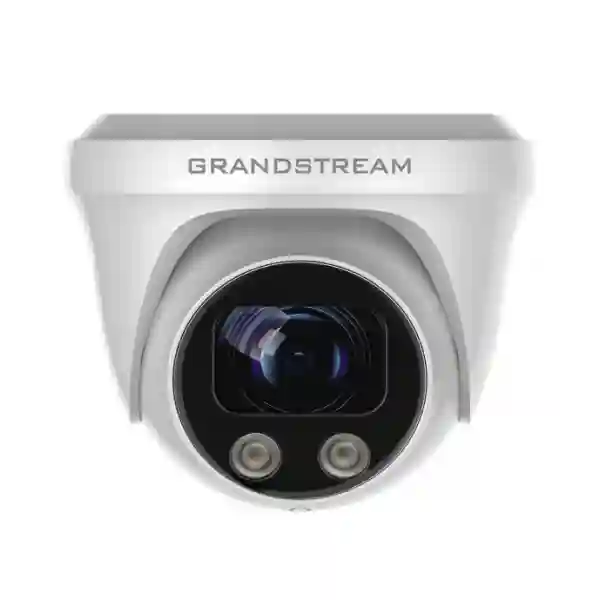
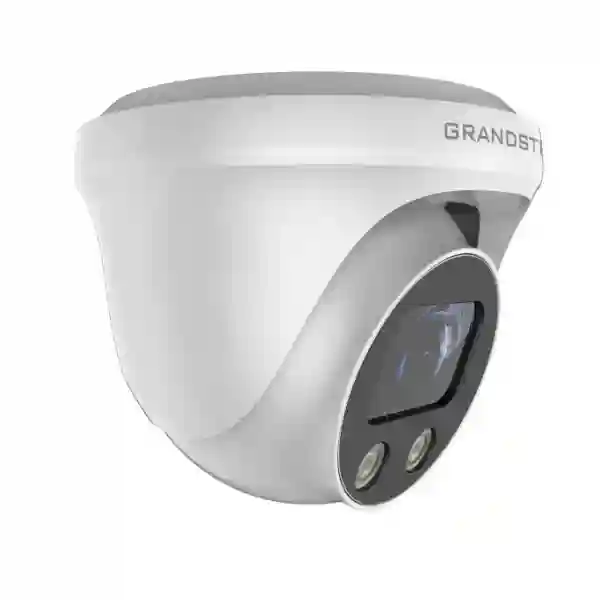
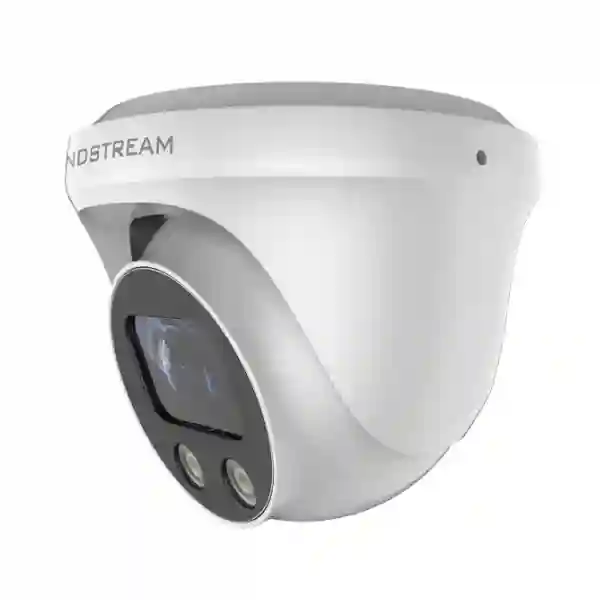
Grandstream GSC3620 Tanzania
The Grandstream GSC3620 is a weather-resistant Full HD IP dome camera designed for projects that need an adjustable field of view rather than a fixed lens. Its 2.8–12mm varifocal lens and electronic auto-focus let an installer tune the scene for a broader nearby area or a tighter view of a more distant subject, making the camera useful for entrances, corridors, retail floors, offices, warehouses, compounds and selected perimeter positions. For business customers in Tanzania, the strongest use case is not simply “a 2MP camera”; it is a camera that can be positioned and focused around the actual surveillance objective while still integrating with IP networks, PoE switching and standards-based video management.
Grandstream lists the GSC3620 in its product archive. That lifecycle point matters for procurement: organizations considering a new deployment should confirm current availability, firmware expectations, compatibility and possible successor options before making a final purchase decision. FourTeck can help structure that comparison around the site, coverage target and wider CCTV environment rather than assuming an archived model is automatically the best fit for every new project.
What the GSC3620 is designed to solve
A fixed-lens camera can be excellent when the required scene is known and the installation point is fixed, but some locations need more flexibility. A loading area may require a narrower view than a reception entrance. A warehouse aisle may need tighter framing than an office lobby. The GSC3620 addresses this by combining a 2.8–12mm varifocal lens with electronic auto-focus, allowing the field of view to be adjusted for the target scene without relying on a single fixed focal length. That flexibility can reduce trial-and-error during positioning and can be valuable when the final camera angle is influenced by ceiling height, mounting distance or the physical layout of the site.
The camera also supports smart infrared operation for dark or low-light areas, motion detection, dual video streams, alert notifications and SIP/VoIP integration. The primary stream supports Full HD resolution, while a secondary stream can be configured for lower-bandwidth viewing or endpoint use. This is useful in designs where local recording and remote monitoring have different bandwidth needs. The camera can work with Grandstream’s GSURF Pro software and with ONVIF-compliant video management systems, so it is not restricted to a single monitoring path.
For buyers, the practical question is whether these capabilities match the project. Lens range, night-viewing distance, storage retention, PoE budget, switch capacity, recording platform and remote-access design all need to be considered together. A camera specification may look sufficient in isolation but perform poorly if the network, mounting height or recording settings are not planned around the scene. FourTeck’s Tanzania technology overview at FourTeck Tanzania explains the wider approach of combining cameras with switching, storage, structured cabling, security and support rather than treating each device as a separate purchase.
Verified GSC3620 technical highlights
| Specification | Verified detail |
|---|---|
| Image sensor / resolution | 2MP CMOS sensor; up to 1920 × 1080 primary-stream video. |
| Lens | 2.8–12mm varifocal lens with electronic auto-focus. |
| Infrared | Smart IR with automatic control; published documentation specifies IR reach up to 25 metres. |
| Video compression | Current Grandstream datasheet materials list H.264, H.265, JPEG and MJPEG. Firmware and VMS interoperability should be checked for the intended deployment. |
| Network | One 10/100Base-T RJ-45 port with IEEE 802.3af PoE support. |
| Interoperability | ONVIF Profile S; SIP/VoIP support for video and audio streaming to endpoints, with an external microphone required for audio capture. |
| Weather protection | Grandstream’s current product page and newer datasheet describe IP67-level weatherproof capability. |
| Power | IEEE 802.3af PoE or 12V DC input; power adapter is not included according to published documentation. |
| Operating environment | Published range: -20°C to 60°C, up to 95% relative humidity. |
Note: older Grandstream sales materials contain some inconsistent legacy references, including IP66 wording, while the current product page and newer datasheet identify IP67-level protection. For procurement, use the current official documentation applicable to the hardware and firmware being supplied.
Integration, network design and recording considerations
Because the GSC3620 is an IP camera, installation quality depends on the network as much as on the camera itself. A PoE switch must have enough total power budget for all connected devices, not merely an unused Ethernet port. Camera VLANs can help separate surveillance traffic from general user traffic, while documented IP addressing makes maintenance easier. Uplink capacity matters when many cameras send continuous streams toward a recorder or VMS server. For sites with several cameras, the recording path should be mapped so video traffic does not repeatedly cross slow or overloaded links.
The dual-stream design is useful for balancing quality and bandwidth. A higher-resolution stream can be dedicated to recording while a lower-resolution secondary stream can serve remote viewing or compatible SIP endpoints. Actual bandwidth depends on codec, frame rate, scene complexity, bitrate settings and recording policy. Storage planning should therefore be based on the intended retention period and configured stream settings rather than a generic “days per terabyte” assumption.
ONVIF Profile S support can simplify integration with standards-based video management platforms, but “ONVIF compatible” should still be tested against the chosen VMS for the functions that matter in the project. Live view is only one part of interoperability; motion events, stream profiles, recording behavior, user permissions and firmware compatibility can also affect the final experience. If the camera is integrated with SIP endpoints or Grandstream facility-control devices, the call and alert logic should be tested so notifications reach the intended operator without creating unnecessary alarm noise.
For projects that extend beyond Tanzania, FourTeck’s regional sites can help procurement teams keep common design principles across branches. See the Uganda IT and CCTV solutions site, the Kenya IT solutions site and the FourTeck UAE security and IT solutions site when comparing related regional requirements.
Grandstream GSC3620 Tanzania
For organizations evaluating the Grandstream GSC3620 in Tanzania, the model is most relevant where an adjustable lens can solve a real coverage problem. A business entrance, retail space, warehouse, reception zone, loading area or office perimeter may not fit a single fixed field of view. The 2.8–12mm varifocal range gives the installer room to tune the image around the scene, while electronic auto-focus helps establish a clear view after the focal length is adjusted. This can be useful when the camera position is constrained by ceiling structures, wall edges, cable routes or available mounting points. Rather than selecting a camera only by megapixel count, procurement teams should define the observation goal first: general overview, movement monitoring, approach visibility or a tighter scene around a specific zone.
Tanzania deployments also benefit from planning power and network resilience. A PoE camera depends on the switch, uplink, recorder and power source remaining healthy. If surveillance is operationally important, the design should consider UPS-backed switching, protected network cabinets, sensible cable routes and surge risk at exposed outdoor points. For multi-camera environments, separate camera VLANs and clear naming can make maintenance faster. A device such as “Warehouse-East-Gate-01” is easier to troubleshoot than an unlabeled IP address. Network documentation should identify switch port, VLAN, recorder channel, camera location and credentials ownership without storing passwords insecurely.
The GSC3620’s smart infrared capability can support low-light monitoring, but IR reach should not be treated as a guarantee of identification at the maximum published distance. Wall color, reflective surfaces, dust, rain, insects, vehicle headlights and mounting angle can change the scene. A site survey should consider whether the camera is viewing across an open yard, down a corridor or toward a reflective doorway. Supplemental lighting may improve useful evidence in some locations. Privacy masking can also be relevant when a camera overlooks areas that should not be recorded; the model supports four rectangular privacy-mask zones.
Because Grandstream currently lists the GSC3620 in its product archive, Tanzania buyers should verify availability and lifecycle suitability before standardizing it for a new multi-site rollout. If the requirement is an expansion of an existing GSC3620 estate, continuity may be important. If the requirement is a completely new project, a comparison with current alternatives may be more appropriate. A quotation request should therefore include camera quantity, mounting environment, expected viewing distance, existing recorder or VMS, PoE switch details, retention requirement and whether SIP alert integration is needed.
Grandstream GSC3620 Dar es Salaam
In Dar es Salaam, the GSC3620 can suit commercial buildings, offices, retail premises, warehouses and compounds where camera placement must balance near-field and longer views. Dense business environments often contain mixed surveillance zones: a reception area needs broad situational awareness, while a loading bay or gated approach may need a narrower image. A varifocal dome lets a project team tune the scene after the physical mounting position is established, which can be preferable to guessing the perfect fixed lens before installation. The dome format can also work well where a lower-profile ceiling-mounted device is preferred over a long bullet-camera body.
The local project should start with the camera objective rather than the model name. If the requirement is to observe activity across a lobby, the lens may be set wider. If the requirement is to watch a gate lane from farther away, a tighter focal setting may be appropriate. The camera’s electronic auto-focus supports this tuning. Motion detection can trigger actions, but motion analytics should be configured carefully in areas with trees, moving shadows, traffic or heavy pedestrian flow because a poorly defined detection zone can generate unnecessary events. The useful alert is the one that an operator can act on, not the one that triggers continuously.
Dar es Salaam sites should also consider the environmental side of outdoor camera design. Weatherproofing is important, but the cable entry, junction points, connectors and mounting hardware must also be protected. A weatherproof camera connected through an exposed, poorly sealed Ethernet joint can still become unreliable. Cable routing should reduce water ingress and physical damage, while outdoor runs may need proper conduit and suitable protection. For critical locations, a UPS-backed PoE switch and recorder can improve continuity through short power interruptions, although final resilience depends on the full electrical design.
For procurement, include the existing network layout, desired recording period, number of cameras and whether video must be viewed from a security desk, mobile device or SIP endpoint. If the GSC3620 will be added to a third-party VMS, confirm ONVIF behavior with the exact software version. Since the product is archived by Grandstream, avoid assuming immediate supply. Ask for availability confirmation and, where necessary, a current alternative that preserves the required lens range, weather rating, PoE method and integration path.
Grandstream GSC3620 Mwanza
For Mwanza businesses, the Grandstream GSC3620 may be relevant in warehouses, retail premises, offices, hospitality environments, storage areas and managed compounds that need flexible surveillance framing. The value of the 2.8–12mm varifocal lens becomes clearer in sites where camera-to-target distance differs from one location to another. One camera might watch a broad internal entrance; another might need a tighter view across a yard or down a storage aisle. Using the same varifocal model in both positions can simplify the equipment list while still allowing each scene to be adjusted individually.
A Mwanza deployment should consider how footage will be recorded and reviewed. The GSC3620 provides primary and secondary streams, so a project can separate higher-quality recording from lighter remote viewing if the VMS supports that design. Storage calculations should use the chosen codec, bitrate, frame rate and retention period. A site that records continuously for several weeks will need different capacity from one that records motion events or keeps footage for a shorter period. For evidence-focused areas, image usefulness matters more than simply maximizing frame rate. The scene should be configured so the important subject occupies enough of the image to be useful during review.
PoE can reduce local power-adapter clutter by carrying power and data over a single Ethernet run, but it moves the power dependency to the network cabinet. Check the PoE budget of the switch and the total number of powered endpoints, including access points and IP phones that may share the same switch. Where surveillance is critical, keep the switch, recorder and upstream network on appropriate power protection. Camera traffic should be documented and, where practical, separated through VLANs and controlled firewall policies rather than sharing an unmanaged flat network with every user device.
If a Mwanza customer already operates Grandstream SIP infrastructure, the GSC3620’s SIP capability may offer useful alerting or endpoint viewing options. However, that integration should be tested against the actual PBX, video phone and firmware versions in use. For a new standalone CCTV system, SIP may be secondary to ONVIF and VMS compatibility. Because the GSC3620 is an archived product, the procurement decision should compare continuity benefits against the long-term advantages of a current-generation camera platform.
Grandstream GSC3620 Arusha
In Arusha, the GSC3620 can be considered for offices, hospitality properties, reception areas, stores, warehouses and controlled compounds where indoor and outdoor cameras need adaptable viewing angles. Hospitality and guest-facing sites often need surveillance that is effective without making public areas feel visually cluttered. A dome camera can offer a more compact appearance than some bullet designs, while the varifocal lens provides flexibility for entrances, corridors and selected outdoor approaches. The final camera position should respect both security objectives and privacy expectations, particularly in guest or staff areas.
For hotels and hospitality sites, the operational question is often not “how many cameras?” but “which areas need what level of coverage?” A lobby overview, service entrance, storeroom corridor and vehicle gate each have different scene requirements. The GSC3620’s adjustable focal length can help tune these views, but mounting height and angle still determine whether faces, vehicles or events are captured usefully. Smart infrared supports dark areas, yet night performance should be tested at the real site because reflective walls, glass, landscaping and uneven lighting can affect IR exposure.
Network design is especially important where CCTV shares infrastructure with guest Wi-Fi, staff systems, IP phones or point-of-sale devices. Camera traffic can be placed on a dedicated VLAN, and access between surveillance systems and other networks can be restricted according to operational need. A PoE switch may simplify field wiring, but it must be sized for port count, uplink capacity and total PoE consumption. Recording equipment should be located in a controlled area, and user permissions should separate routine monitoring from administrative configuration.
Arusha procurement teams should request the camera together with a design check: lens suitability, mounting accessories, switch capacity, VMS compatibility and expected storage. If replacing an existing GSC3620, confirm the exact hardware and firmware context before assuming configuration settings transfer unchanged. If building a new system, compare current camera options as well because Grandstream lists this model in its archive. The objective is a maintainable surveillance platform, not merely matching an old part number.
Grandstream GSC3620 Dodoma
For Dodoma organizations, the GSC3620 can fit administrative offices, commercial premises, institutions, warehouses and secured compounds where an adjustable dome camera supports a defined surveillance plan. A varifocal lens is useful when the project cannot standardize every camera position around the same viewing distance. Some cameras may need a broad interior scene while others need a narrower view of a gate, corridor end or storage zone. Electronic auto-focus helps tune the lens without relying on repeated manual focus adjustments at the camera head.
A structured deployment should define recording ownership and review procedures before installation. Security teams need to know who can view live video, who can export recordings, how long footage is kept and how incidents are documented. The camera itself supports features such as motion detection, privacy masking, dual streams and network-based management, but operational policies determine whether those features improve security. Privacy masks can help exclude areas that should not be recorded, while motion zones can reduce irrelevant events if they are drawn around the actual area of interest.
For network reliability, each GSC3620 uses a 10/100 Ethernet connection and supports IEEE 802.3af PoE. A managed PoE switch can make it easier to monitor ports, apply VLANs and troubleshoot cameras remotely. The recorder or VMS server should be sized from camera count and stream settings, while uplinks between floors or buildings should accommodate aggregate video traffic. If remote access is required, it should be implemented through controlled, secure methods rather than exposing device management interfaces directly to the public internet.
Dodoma buyers should also account for lifecycle. Grandstream’s archive status means new-project availability cannot be assumed. For expansion projects, matching the GSC3620 may reduce retraining or preserve an established integration, but a current alternative may provide a clearer long-term roadmap. When requesting a quotation, provide the number of cameras, target viewing areas, indoor/outdoor split, existing recorder or VMS, PoE switch model, retention requirement and whether Grandstream SIP endpoints are part of the intended workflow.
Grandstream GSC3620 UAE
For UAE projects, the Grandstream GSC3620 is most relevant where an existing Grandstream surveillance or SIP environment already uses the model, or where the 2.8–12mm varifocal dome form matches a specific design requirement. Offices, retail premises, warehouses, service areas and building entrances can all present different viewing distances, so the ability to adjust focal length can help a project team tune coverage without choosing a different fixed lens for each point. However, the model’s archived lifecycle status should be factored into any new standardization decision.
UAE environments can place significant thermal stress on outdoor technology, making mounting location and environmental exposure important even when a camera has a published operating range and weatherproof enclosure. Direct sun, enclosed housings and heat-reflective surfaces can raise local temperatures. The camera should be installed within vendor limits, with connectors and cable terminations protected appropriately. For outdoor Ethernet, the design should consider surge exposure, earthing practices and safe separation from power systems according to the site’s engineering requirements.
The camera’s PoE support can simplify power distribution, particularly in structured cabling environments with centralized network rooms. Managed PoE switching also allows camera VLANs, port monitoring and more organized troubleshooting. Where multiple cameras stream to a central recorder, the aggregation links and storage platform should be sized from actual bitrate assumptions. ONVIF Profile S can aid interoperability, but procurement teams should test the selected VMS and firmware pair if advanced event handling is important.
For organizations with operations in both Tanzania and the UAE, a common surveillance design can simplify support, but a common design does not require identical legacy hardware in every market. Standardize principles such as VLAN structure, naming, retention, user roles, mounting documentation and secure remote access. Then select currently supportable camera models that meet those principles. If a GSC3620 is required for compatibility, request availability confirmation and a migration option alongside the quote.
Grandstream GSC3620 Uganda
In Uganda, the Grandstream GSC3620 can be relevant for branch offices, retail, hospitality, warehouses and perimeter-monitoring projects where an adjustable lens reduces uncertainty around camera framing. A single 2MP camera is not automatically sufficient for every security objective, but a 2.8–12mm varifocal lens gives an installer more room to optimize the image for the selected point. For a doorway, a wider setting may be appropriate; for a gate or distant aisle, a narrower setting can dedicate more of the frame to the target zone.
The model supports smart infrared for low-light conditions, motion detection, dual streams and alert notifications. When planning night coverage, treat the published IR distance as a design reference rather than a guarantee that every subject at that distance will be identifiable. Site lighting, weather, reflective surfaces and camera angle matter. It is often useful to test the final night scene and adjust exposure, focal length and mounting direction after installation rather than accepting default settings.
Uganda deployments should also plan network and power dependencies carefully. PoE simplifies field installation but centralizes risk at the switch. If that switch loses power, several cameras may go offline simultaneously. UPS-backed network cabinets, documented port allocation and spare PoE capacity can make the system easier to operate. Camera VLANs can limit unnecessary access from user networks, while controlled remote-access methods can provide monitoring without exposing camera management pages publicly.
For customers operating in Kampala, Arua, Mbarara, Gulu or other locations, procurement should distinguish between adding to an installed GSC3620 estate and creating a new standard. Grandstream lists the model in its product archive, so a new project should consider current alternatives. If existing system compatibility makes the GSC3620 preferable, confirm stock, firmware and VMS support before ordering. Include desired retention, camera quantity, mounting environment and integration requirements in the quote request so the full solution can be sized rather than pricing the camera alone.
Grandstream GSC3620 Kampala
Kampala businesses evaluating the GSC3620 may be looking for a dome camera that can serve mixed commercial spaces: reception areas, office corridors, retail floors, building entrances, stores and compact warehouse zones. In such environments, the varifocal lens is useful because camera placement is often dictated by the building rather than by an ideal engineering drawing. Ceiling height, beams, lighting, display fixtures and cable paths may force the installer to mount farther from the target than expected. The 2.8–12mm adjustment range can compensate for some of that variation by tightening or widening the scene.
For security control rooms, live viewing should be designed around operator workflow. A camera that records excellent video but is difficult to find in the VMS during an incident is less useful. Use clear names, map cameras to physical areas and group them by floor or zone. The GSC3620’s primary and secondary streams can support different viewing needs, but the VMS configuration should avoid unnecessary bandwidth. Wall displays may use lower-resolution streams for multi-camera views while recording keeps the higher-quality stream.
Kampala sites should also assess cybersecurity. IP cameras are network devices and should receive the same basic discipline as other managed endpoints: strong administrator credentials, controlled management access, firmware review, VLAN segmentation and documented ownership. Remote access should be limited to approved users and preferably pass through a secure architecture rather than direct internet exposure. If SIP integration is enabled, PBX credentials and call routes should be configured specifically for the camera’s required functions instead of granting broad permissions.
Because the GSC3620 is archived, a Kampala buyer should ask two questions before purchase: is this model available in the required quantity, and is it the best lifecycle choice for the intended project? For a replacement unit, matching the model can be practical. For a new site with a five-year planning horizon, current-generation alternatives may offer a cleaner support path. The quotation should make that distinction clear.
Grandstream GSC3620 Arua
For Arua installations, the GSC3620 may suit offices, stores, compounds, education facilities and operational sites that need a weather-resistant camera with flexible framing. Projects outside major metropolitan centers often benefit from equipment that can be configured correctly on the first visit, because repeat site work can add cost and delay. The varifocal lens and electronic auto-focus can help an installer adapt the field of view to the actual mounting distance after the camera is in place, reducing dependence on selecting the perfect fixed focal length in advance.
That flexibility does not replace a site survey. Camera height, direction, likely obstruction, night lighting and network cable route should still be checked. In outdoor areas, verify that the mounting surface is stable and that the cable entry remains protected from moisture. The camera enclosure may be weatherproof, but connectors and joints are part of the total installation. Where cables run between buildings or exposed structures, appropriate electrical and surge-protection practices should be included by the installer.
Arua projects should also plan how faults will be diagnosed. Managed PoE switching can show whether a camera port is active and can simplify remote checks. Clear IP-address documentation, a camera schedule and labeled patch-panel ports reduce troubleshooting time. If local internet connectivity is intermittent, recording should not depend entirely on continuous access to a remote service. A local NVR or VMS can continue capturing video on the LAN, while remote viewing is restored when connectivity returns, depending on the selected system architecture.
For procurement, do not assume archived GSC3620 stock is permanently available. Request confirmed availability, warranty terms applicable to the supplied unit and a current alternative if the model cannot be sourced. If the camera is being chosen because an existing VMS already supports it, provide the VMS version and any required event functions. A compatibility-driven purchase should be validated technically, not based only on the presence of the ONVIF logo.
Grandstream GSC3620 Mbarara
Mbarara businesses can consider the GSC3620 for commercial security, warehouse monitoring, offices, retail and selected outdoor spaces where adjustable lens coverage is valuable. The camera’s 2MP sensor and Full HD primary stream suit general surveillance when the scene is designed properly. The key is pixel placement: a broad scene spreads available resolution across a larger area, while a tighter varifocal setting dedicates more image detail to a smaller target zone. This is why lens choice and mounting distance should be considered alongside resolution.
Warehouses and stores may contain long aisles, shelving and uneven lighting. A camera placed too close to a bright doorway can produce different results from one aimed into a consistently lit interior. The GSC3620 provides settings for brightness, contrast, sharpness and related image parameters, but they should be tuned conservatively. Excessive digital sharpening can make an image appear more detailed without creating real information. Night testing is equally important, particularly where IR light can reflect from walls, glossy surfaces or dust near the lens.
From a network perspective, PoE can simplify ceiling installation by removing the need for a separate local power supply. The switch should provide sufficient 802.3af power and should be backed by a suitable UPS if surveillance continuity is important. VLAN separation can keep camera traffic organized, and the recorder should have adequate storage for the planned retention period. For a multi-building site, uplinks between network areas should be evaluated because several simultaneous camera streams can consume meaningful bandwidth.
Mbarara procurement should be based on an equipment and lifecycle checklist. Confirm whether the requirement is replacement, expansion or a new build. For replacement, the GSC3620 may preserve an established mounting and software configuration. For new builds, archived status suggests comparing supported alternatives. Ask for a quote that identifies camera quantity, mounting accessories, PoE switch needs, recording capacity and integration work so the project budget reflects the complete system rather than only the camera unit.
Grandstream GSC3620 Gulu
In Gulu, the Grandstream GSC3620 can be evaluated for business premises, institutional sites, hospitality spaces, stores and compounds where a dome camera needs to cover different scene depths. The 2.8–12mm varifocal lens gives the installer freedom to move between wider and narrower views. This can help when the project has only limited mounting points or when an outdoor position must look past a nearby obstruction toward a more important target area. Electronic auto-focus then supports final image setup after the focal length is selected.
For practical security, the camera should be positioned according to the event the operator expects to review. If the purpose is to monitor access through a doorway, the frame should not waste most of its pixels on ceiling or floor. If the purpose is to monitor movement across a compound, a broader overview may be appropriate, with additional cameras for detail at entrances. One camera rarely performs both overview and identification roles equally well from the same position. Varifocal adjustment helps, but it does not eliminate the basic relationship between field of view and detail.
Gulu sites may also prioritize maintainability. A camera installation is easier to support when the patch panel, switch port, IP address, device name and physical location are documented. PoE switching lets technicians test power and link status from the network cabinet, while secure remote management can reduce unnecessary travel for simple configuration checks. Firmware should be reviewed against the device’s hardware version and the VMS environment before upgrades are applied across multiple cameras.
The GSC3620’s archived status is a procurement consideration rather than a reason to reject an existing working unit. For a site that already uses the model successfully, compatible replacements may still have value where available. For a fresh design, the buyer should compare current alternatives and support timelines. Request both the camera price and the full project requirement, including PoE, cabling, storage, configuration and testing, so the final system is usable from day one.
Grandstream GSC3620 Kenya
Kenya-based procurement teams may encounter the GSC3620 when replacing existing Grandstream cameras, extending a compatible surveillance environment or comparing varifocal dome options for regional standardization. The model’s main differentiator is its 2.8–12mm adjustable lens with electronic auto-focus. That range can serve different camera distances without changing to separate fixed-lens variants, which is useful for organizations trying to standardize installation methods across offices, retail outlets, warehouses and branches.
A regional standard should include more than the model number. Define how cameras are named, what VLAN they use, how administrator access is controlled, how long footage is retained and which roles can export recordings. Standard mounting drawings and cable-labeling conventions can make branch deployment more consistent. If some sites use different VMS platforms, ONVIF support can help, but each platform should be validated for the expected feature set. Live video interoperability alone does not prove every event or configuration function will behave identically.
The GSC3620 supports smart infrared, making it suitable for low-light areas when the scene is within the device’s practical IR capability. Outdoor installations should be checked at night after final focus and framing. Headlights, reflective walls, security lighting and nearby objects can influence exposure. Where image evidence is important, designers may combine camera IR with controlled white lighting or select a camera better suited to the scene rather than relying only on the maximum published IR distance.
For Kenya procurement, lifecycle is central. Grandstream lists the GSC3620 in its archive, so new-project quantities and long-term replacement plans should be confirmed. For multi-country businesses operating between Kenya and Tanzania, align technical standards even if the final camera models differ by generation. A quote should include current availability, recommended alternative, VMS compatibility, PoE design and storage assumptions. That makes the buying decision comparable across branches instead of focusing only on unit price.
Grandstream GSC3620 Kuwait
For Kuwait projects, the GSC3620 can remain relevant in installed Grandstream environments and targeted replacement scenarios. Its varifocal 2.8–12mm lens, Full HD resolution, PoE and ONVIF Profile S support provide a familiar combination for commercial CCTV. Where the camera is considered for an outdoor location, environmental exposure deserves particular attention. Published operating temperatures and weatherproof ratings describe the device limits, but direct sunlight and heat around enclosed mounting surfaces can create conditions different from ambient weather reports.
Lens setup should be driven by the monitoring goal. Wide-angle coverage is useful for nearby entrances, offices and corridors, while a narrower setting can focus on more distant areas such as a gate lane or warehouse end. Electronic auto-focus helps after focal adjustment, but the installer should still verify sharpness across the actual scene and during both day and night. Smart IR can support low-light monitoring, yet reflective surfaces, glass and dust may affect night images. Outdoor lenses also need periodic cleaning where airborne dust builds up.
PoE makes centralized power practical, particularly in managed buildings with rack-based network infrastructure. For business security systems, the switch and recorder should be protected by appropriate UPS capacity, and camera network access should be segmented from general office traffic. If remote viewing is required, use secure controlled access rather than direct exposure of device management interfaces. The camera supports secure protocols, but the security of the whole system depends on network architecture, credentials and maintenance procedures.
Kuwait procurement teams should verify supply before specifying GSC3620 across a new site because it appears in Grandstream’s product archive. A replacement requirement may justify sourcing the same model, especially when an existing VMS profile and mounting arrangement are proven. A new project should compare current products with similar lens range, weather protection and interoperability. The quote should separate equipment availability from installation and support scope so lifecycle risk is visible before commitment.
Grandstream GSC3620 Ghana
For Ghana projects, the GSC3620 may be considered for offices, retail, hospitality, storage sites and perimeter points where the installer needs to fine-tune the field of view. In mixed commercial environments, camera distances can vary greatly even within one building. A varifocal dome can simplify the bill of materials because the same model can be set wider in one location and narrower in another. The 2MP Full HD sensor then provides the image within that chosen field of view.
Surveillance planning should separate overview requirements from identification requirements. A broad camera can show that an event occurred, while a tighter camera position may be needed to see useful detail at a doorway or transaction point. Adjusting the lens can help target the priority zone, but one camera cannot create unlimited detail across an extremely wide scene. If the site has several critical points, multiple properly positioned cameras may provide better evidence than one camera attempting to cover everything.
Ghana deployments should plan the network layer with the same care as the physical mounting. IEEE 802.3af PoE support can simplify installation, but switch capacity and UPS design determine resilience. The camera can be managed through compatible video software and ONVIF-based systems. For remote operations, use strong credentials, limit management access and record configuration changes. Where cameras are spread across branches, a consistent IP plan and naming convention can reduce support time considerably.
For procurement, the model’s archive status should be stated clearly. If a customer needs a direct replacement, confirm that the supplied unit and firmware match the required environment. If the project is new, ask for an alternative comparison rather than forcing an archived device into the design. A useful quotation request includes quantity, indoor/outdoor locations, target viewing distance, recording duration, VMS or NVR information, PoE infrastructure and whether SIP alert functions are required. That information makes the recommendation more accurate than a simple “best price” request.
Grandstream GSC3620 Nigeria
Nigeria buyers searching for the Grandstream GSC3620 may be comparing a 2MP varifocal dome for office security, retail, warehouses, estates, hospitality sites or branch operations. The camera’s 2.8–12mm lens range is the central design feature because it lets the field of view be adapted to the actual location. Wide coverage can be used for nearby spaces, while narrower framing can concentrate on more distant targets. Electronic auto-focus reduces manual focusing effort after the focal length is set.
For sites with unstable power, remember that PoE does not remove the need for power planning; it moves power to the network switch. A UPS for the switch and recorder can help maintain surveillance through short outages, while longer resilience may require broader facility power planning. It is also useful to separate camera traffic from general office devices so local congestion, user changes or malware on unrelated endpoints do not unnecessarily affect surveillance operations.
The GSC3620’s smart infrared and motion detection can support night monitoring and event workflows, but both should be tuned to the site. Insects near IR sources, moving vegetation, rain and vehicle lights can trigger or alter night scenes. Motion zones should focus on meaningful areas, and operators should verify that notifications are not so frequent that they become ignored. Where the camera sends alerts through SIP or email workflows, test the full path from event to operator response.
Nigeria procurement teams should verify current supply because Grandstream lists the GSC3620 in its archive. Some resellers may still advertise it, but public listings do not prove stock, warranty or long-term availability. For an existing installation, a confirmed replacement unit may be useful. For a new project, compare current alternatives with similar varifocal range, PoE, ONVIF support and environmental rating. The final quote should include system components such as PoE switching, cabling, storage and configuration where required, not only the camera.
Grandstream GSC3620 Seychelles
For Seychelles projects, the GSC3620 can be considered for hospitality, offices, retail spaces, service areas and selected outdoor monitoring where a compact dome and adjustable focal length are useful. Coastal and humid environments require careful installation practice. Although the current Grandstream materials describe IP67-level weather protection and high-humidity operation, long-term reliability still depends on mounting, protected cable entries and appropriate hardware. Salt-laden air and exposed connectors can be demanding on any outdoor electronics installation.
Hospitality environments may require cameras to provide security while remaining visually unobtrusive. A ceiling-mounted dome can suit entrances, corridors and service areas, but placement should respect guest privacy and applicable policies. The varifocal lens lets the scene be narrowed or widened according to the area, while privacy masks can block selected parts of the image where needed. The camera supports four rectangular privacy-mask zones, which can help tailor the recorded view without changing the physical position.
Network and recording design should account for island-site connectivity. If internet access is interrupted, local recording should continue where the architecture supports it. A LAN-based recorder or VMS can keep receiving streams independently of remote connectivity, while administrators regain remote access later. PoE switching centralizes both data and power, so the network cabinet and UPS become important parts of the surveillance system. For resort or multi-building environments, fiber or structured uplinks may be more appropriate than long copper runs between distant buildings.
Because the GSC3620 is an archived model, Seychelles buyers should confirm current availability and evaluate whether a current camera provides a better lifecycle path. A replacement project may prioritize compatibility with existing VMS configurations, while a new resort or commercial site may prioritize future support and expansion. Include environmental exposure, target distance, night-light conditions, recording retention and remote-viewing requirements in the quotation request so the recommendation reflects the real site.
Buying and sizing guidance
Start with the scene, not the camera count. Define the areas that need overview coverage and the points that need more detailed observation. Measure approximate camera-to-target distance and identify mounting height. Decide whether each camera is indoors, semi-exposed or fully outdoors. Confirm whether night coverage depends on built-in IR, external lighting or both. Then check the network: available PoE ports, switch power budget, uplink capacity, VLAN design and the location of the recorder or VMS.
Next, define retention. Recording one camera for seven days is a very different storage problem from recording dozens of cameras for 30 or 60 days. Bitrate, codec, frame rate and motion policy all affect capacity. Avoid sizing storage solely from resolution. If remote monitoring is important, define how many concurrent viewers are expected and from which sites. The secondary stream can help reduce bandwidth for multi-camera live views when the platform is configured appropriately.
Finally, factor lifecycle into the decision. Because Grandstream places the GSC3620 in its product archive, ask for a confirmed supply position and a recommended migration model. This is particularly important for multi-year rollouts where identical replacements may become difficult to source later.
Quotation checklist for GSC3620 projects
Grandstream GSC3620 FAQ
Is the GSC3620 a 2MP camera?
Yes. Grandstream documentation specifies a 2-megapixel sensor and a primary video stream up to 1920 × 1080.
Does the GSC3620 support PoE?
Yes. It supports IEEE 802.3af PoE through its 10/100 Ethernet port. A 12V DC input is also documented, but the power adapter is not included.
What lens does the GSC3620 use?
It uses a 2.8–12mm varifocal lens with electronic auto-focus, allowing the scene to be adjusted from wider nearby coverage to a tighter field of view.
Can the GSC3620 work with third-party video management software?
Grandstream lists ONVIF Profile S support and states that the camera can work with ONVIF-compliant video management systems. For a production project, verify the required functions with the exact VMS and firmware versions.
Is the GSC3620 suitable outdoors?
Current Grandstream product materials describe IP67-level weatherproof capability and an operating range of -20°C to 60°C. Outdoor installation still requires correct mounting, protected connectors and suitable cabling practices.
Does the camera support night monitoring?
Yes. It includes smart infrared technology, with current documentation listing IR reach up to 25 metres. Actual useful night detail depends on the scene and installation conditions.
Is the GSC3620 still a current Grandstream product?
Grandstream currently lists GSC3620 in its product archive. Buyers should confirm current availability and consider present-generation alternatives for new long-term deployments.
Decision recap
Choose the GSC3620 when you specifically need its combination of 2MP Full HD video, 2.8–12mm varifocal lens, electronic auto-focus, smart IR, PoE, ONVIF Profile S and Grandstream SIP integration, and when lifecycle or compatibility checks confirm that it fits the project. For a new surveillance standard, compare current products as well because the GSC3620 is archived. For an existing installation, the same model may still be useful when compatibility and continuity are more important than moving immediately to a different platform.
The most effective quote is based on the site rather than only the model. Share camera count, target areas, mounting distances, VMS or NVR information, network switching, retention period and regional deployment needs. FourTeck can then frame the camera as part of the full surveillance path: capture, network, power, recording, monitoring and support.
Consultation panel
Need to replace an existing Grandstream GSC3620 or decide whether it is still the right choice for a new Tanzania CCTV project? Prepare the site details from the quotation checklist and request a technical review. The goal is to verify availability, lifecycle, camera coverage, PoE requirements, VMS compatibility and storage before equipment is ordered.



Reviews
There are no reviews yet.