
Grandstream business collaboration for Tanzania
Grandstream GVC3220 Tanzania
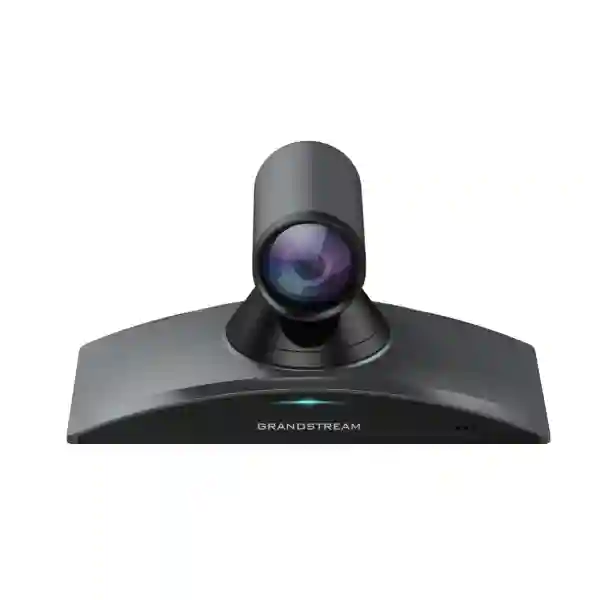
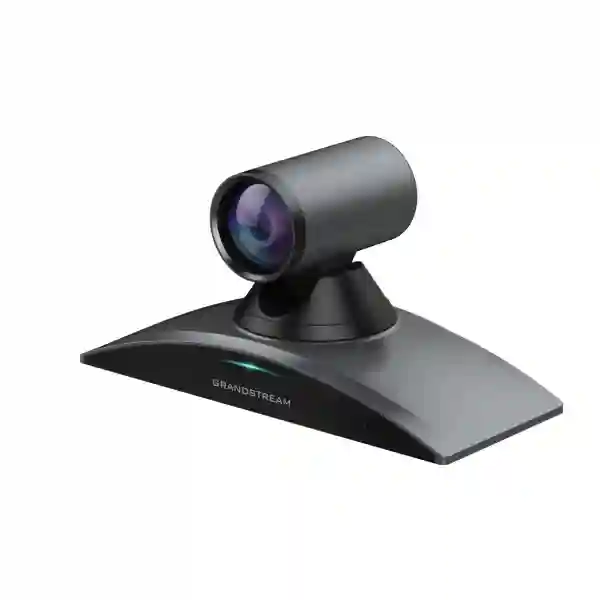
The Grandstream GVC3220 is a room-based video conferencing system designed for boardrooms, large conference rooms, classrooms, training spaces and auditoriums that need a dedicated camera, flexible standards-based calling and professional display connectivity. Its platform combines SIP and H.323 interoperability, up to 4K video output, an 8-megapixel PTZ camera with 12x optical zoom, dual HDMI outputs, HDMI content input, Gigabit Ethernet, dual-band Wi-Fi, Bluetooth and embedded multi-party conferencing.
What is the Grandstream GVC3220?
The GVC3220 is an Ultra HD multimedia conferencing endpoint built for organizations that want a permanent meeting-room system instead of relying on a laptop webcam for every call. It uses Android 9.0 and supports standards-based SIP and H.323 calling, making it suitable for environments where interoperability with an IP PBX, video platform, gatekeeper or another standards-based conferencing endpoint matters. Grandstream also documents IPVideoTalk integration for the GVC series, while the device can participate in supported third-party conferencing workflows according to the application and deployment method selected by the administrator.
The central strength of the GVC3220 is that it combines camera, conferencing processor, network interfaces and room-control functions in one dedicated appliance. The camera uses a 1/2.5-inch 8-megapixel CMOS sensor with motorized pan, tilt and 12x optical zoom. Official documentation specifies up to 4K 30fps camera output or 1080p 60fps output capability, with pan movement of approximately plus or minus 170 degrees and tilt movement of approximately plus or minus 30 degrees. This makes it much better suited to larger rooms than a fixed-angle USB camera when participants may be distributed across a long table or presentation area.
For Tanzania buyers, the right purchasing question is not only whether the GVC3220 has a particular resolution. Room dimensions, seating distance, display size, microphone placement, internet quality, LAN capacity, SIP configuration and acoustic conditions determine whether the system will perform well after installation. FourTeck therefore recommends treating the GVC3220 as part of a meeting-room design rather than as an isolated camera purchase.
Verified Grandstream GVC3220 features
Professional PTZ camera
An 8MP CMOS camera with 12x optical zoom, motorized pan and tilt allows administrators to frame a speaker, whiteboard, podium or group more precisely than a fixed webcam.
Dual display architecture
The system provides one HDMI 2.0 output supporting up to 4K and a second HDMI 1.4 output supporting up to 1080p, useful for room layouts where participants and shared content need separate screens.
Content input
One HDMI input supports content from a laptop or other presentation source at up to 1080p, providing a practical wired sharing path when wireless projection is not preferred.
Embedded MCU
Grandstream specifies local conferencing for up to five participants at 1080p 30fps or up to nine participants at 720p 30fps, depending on the calling scenario and configured environment.
Standards-based interoperability
Support for SIP RFC3261, H.323, BFCP, TIP, RTP/RTCP, TLS, SRTP, 802.1x, IPv6, OpenVPN and related networking standards makes the GVC3220 suitable for managed enterprise communication environments.
Flexible network connectivity
A 10/100/1000 Mbps Ethernet interface, integrated dual-band 802.11a/b/g/n/ac Wi-Fi and Bluetooth 5.0 + EDR offer practical choices for room integration. Wired Ethernet is generally preferred for mission-critical meetings where available.
Technical specifications that matter during design
| Area | Grandstream GVC3220 specification | Planning implication |
|---|---|---|
| Camera | 1/2.5-inch, 8MP CMOS; up to 4K 30fps or 1080p 60fps output | Check room depth, mounting height and sight lines before final camera position. |
| Lens | 12x optical zoom, PTZ, wide-to-tele field of view | Useful for boardrooms, training spaces and podium views where framing varies. |
| MCU | Up to 5-way 1080p@30fps or 9-way 720p@30fps | Clarify whether local multipoint calling or a cloud/server conference bridge will be used. |
| Network | Gigabit Ethernet, dual-band 802.11ac Wi-Fi, Bluetooth 5.0 + EDR | Use stable wired connectivity where possible and assess QoS, VLAN and firewall policies. |
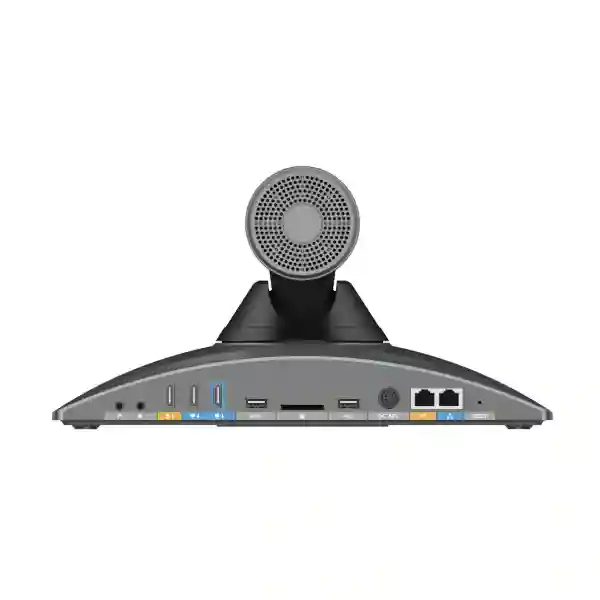
| Video connections | 2 HDMI outputs, 1 HDMI input | Plan display count, cable lengths, mounting and presentation-source routing. |
| USB / media | USB 3.0, USB 2.0, SD slot | Useful for supported peripherals, updates and media workflows. |
| Power | External 48V/1.35A power adapter; PoE is not supported | Provide a suitable AC outlet and consider UPS protection for conference-room continuity. |
Room planning, audio and deployment guidance
The GVC3220 should be positioned so that the camera is close to eye level for the majority of seated participants. A high ceiling mount may produce an unnatural downward view, while a low tabletop position can create poor eye contact. In a long boardroom, the 12x optical zoom is valuable because it can frame the far end of the table without relying entirely on digital enlargement. Administrators should create practical presets for the full table, the chairperson, the presentation wall and any podium position that is used regularly.
Audio requires equally careful planning. Grandstream pairs the GVC3220 with the GMD1208 wireless microphone, which provides an advertised pickup range of up to five metres. The device can support up to two GMD1208 units when using the proprietary 2.4 GHz wireless mode, while Bluetooth mode supports one at a time. Room acoustics can still influence intelligibility: glass walls, hard floors, exposed ceilings and loud air conditioning may create reflections or background noise that a microphone cannot fully eliminate. Where necessary, room treatment, careful microphone placement and external audio design should be considered.
Bandwidth must be evaluated according to call quality, participant count and the wider internet environment. Grandstream’s FAQ states minimum bandwidth guidance of 1 Mbps for 1080p and 4K calls and 512 Kbps for 720p, but real deployments should leave margin for protocol overhead, simultaneous users and other business traffic. A meeting can still fail on a high-speed internet link if the LAN suffers congestion, packet loss, Wi-Fi interference or inconsistent latency. Managed switching, QoS and stable DNS/firewall rules are often as important as the raw broadband speed.
For customers building a complete collaboration room, review FourTeck Tanzania’s integrated meeting-room, networking and IP telephony solutions. The value of that broader approach is that display, network, firewall, PBX, structured cabling and room audio decisions can be checked together instead of being purchased as disconnected components.
Grandstream GVC3220 Tanzania
Organizations searching for the Grandstream GVC3220 in Tanzania typically need more than a product code. A procurement team may be replacing an older room system, standardizing conferencing across several branches, integrating a boardroom with an existing SIP environment or equipping a training room for hybrid sessions. For these projects, the GVC3220 is relevant because it combines a dedicated PTZ camera, standards-based video calling and room-oriented HDMI connectivity in one platform. The system can connect to an IP network using Gigabit Ethernet or dual-band Wi-Fi, although wired Ethernet is preferable when stable conferencing is a priority.
Tanzania deployments should begin with a practical room survey. Check the distance from camera to the furthest participant, the number and size of displays, available wall or furniture mounting options, lighting direction, microphone placement and cable routes. For a boardroom, dual displays can separate remote participants from presentation content. For a classroom or training room, the PTZ capability can be used to frame an instructor, presentation area or audience. For an auditorium, the same camera flexibility can be valuable, but audio may need a separate installed system rather than relying only on a tabletop microphone.
Network readiness is particularly important when sites share bandwidth with cloud applications, backups, CCTV and guest Wi-Fi. Before ordering, identify the conferencing platform, expected resolution, number of simultaneous remote parties and whether calls will use SIP, H.323, IPVideoTalk or another supported workflow. Confirm the firewall policy, VLAN design and Quality of Service where required. The GVC3220 does not support PoE, so a suitable power socket and preferably UPS protection should be available at the installation point.
When requesting a Tanzania quotation, provide the room dimensions, preferred display count, existing conferencing platform, SIP/PBX details if applicable, number of regular in-room participants and any requirement for installation or configuration. This information helps avoid a quotation that covers only the endpoint while missing displays, mounts, cabling, microphones, switching or other infrastructure needed for a complete room.
Grandstream GVC3220 Dar es Salaam
In Dar es Salaam, the Grandstream GVC3220 is a strong fit for headquarters, financial and professional-services offices, logistics companies, educational institutions, hospitality groups and organizations coordinating with regional or international teams. Many offices already have a mixture of meeting platforms, SIP voice services and corporate networks. A standards-based endpoint can be attractive in this environment because the GVC3220 supports SIP and H.323 while also providing an Android-based platform for compatible meeting workflows.
The physical room should determine the design. In a long boardroom, the 12x optical zoom allows tighter framing of participants seated far from the display. A dual-screen layout can improve usability where one display shows remote participants and the other presents shared content. If the room is frequently used by visiting teams, keep operation simple: label inputs, define camera presets and document how users join the organization’s preferred meeting service. The goal is to avoid a room that only the IT department knows how to operate.
Dar es Salaam businesses should also verify network performance at the room itself rather than assuming the building’s internet package is sufficient. Congested Wi-Fi, overloaded switching or traffic from large backups can affect real-time media. A wired Gigabit connection, sensible VLAN policy, QoS where appropriate and stable DNS/firewall settings can improve meeting consistency. If the office has redundant internet links, confirm how conferencing sessions behave during failover so that a link change does not unexpectedly terminate important calls.
For procurement, include the endpoint, displays, HDMI cable lengths, mounting, microphone coverage, power protection and configuration effort in the bill of materials. Businesses with regional branches can also review FourTeck’s Uganda technology solutions and Kenya technology solutions when trying to keep collaboration-room standards consistent across East African offices.
Grandstream GVC3220 Mwanza
Mwanza organizations may use the GVC3220 for executive communication, remote project meetings, training, healthcare administration, education, distribution management or coordination with suppliers and branch teams. The product is particularly relevant where the business wants a fixed room appliance rather than moving laptops and USB cameras in and out of the same meeting space. A fixed installation makes it easier to standardize camera position, display layout, room cabling and user instructions.
For sites where internet quality varies, conferencing design should focus on stability rather than headline resolution alone. Grandstream provides bandwidth guidance for 720p, 1080p and 4K, but the available link must also carry normal office traffic. Administrators should assess packet loss, latency and contention during working hours. If the room relies on Wi-Fi, test signal strength and interference at the actual GVC3220 position. Where possible, use the built-in Gigabit Ethernet connection to reduce reliance on shared wireless airtime.
The system’s HDMI input can simplify presentation sharing from a laptop. Its dual HDMI outputs can support a two-screen room, subject to the display plan and cable requirements. For training environments, camera presets can save time by switching between an instructor, a whiteboard or a wider classroom view. In larger rooms, microphone coverage needs separate attention. One GMD1208 may be adequate for a focused seating area, while a longer table may require a second compatible microphone in supported 2.4 GHz mode or a broader audio strategy.
Before a Mwanza quotation is finalized, share whether installation is for a new room or an upgrade, whether the current displays will be reused, the room dimensions and existing network/PBX environment. This helps determine what can be retained and what needs to be added, reducing unnecessary equipment while avoiding missing accessories during deployment.
Grandstream GVC3220 Arusha
In Arusha, the Grandstream GVC3220 can support conference rooms used by tourism organizations, NGOs, education providers, regional offices, professional services, project teams and businesses coordinating with partners outside Tanzania. These meeting environments often need dependable communication between local staff and remote stakeholders without requiring users to assemble a temporary camera and microphone setup before every session.
The 8MP PTZ camera and 12x optical zoom are useful when a room is deeper than a typical huddle space. The camera can be positioned to capture a wide table view and then moved to a presenter or specific seating area. A good installation stores camera presets and keeps cables hidden and strain-free. Display height should allow participants to look toward the camera naturally, while room lighting should avoid strong backlighting from windows behind the participants.
Arusha projects should also consider how users join meetings. If the organization already relies on SIP infrastructure, the GVC3220 can register to a compatible SIP server or IP PBX. H.323 environments can use gatekeeper-based workflows. For cloud conferencing, administrators should confirm the selected service and supported application method before standardizing the room. This avoids assuming that every consumer meeting application behaves identically on a dedicated room endpoint.
Procurement should include connectivity and power continuity. Because the GVC3220 is not PoE powered, it requires its dedicated power supply. A UPS-backed outlet can help protect the room system from brief interruptions, particularly if the switch, firewall and internet equipment are also UPS protected. Include network patching, HDMI cable lengths, display mounts and microphone placement in the installation plan so the endpoint arrives as part of a finished collaboration room rather than as a box waiting for missing infrastructure.
Grandstream GVC3220 Dodoma
Dodoma organizations looking for a structured meeting-room system can use the Grandstream GVC3220 for executive conferences, inter-office meetings, training, institutional communication and hybrid sessions. Government-facing organizations, education teams, corporate branches and project offices often need a room that can be operated consistently by different users. A dedicated endpoint can reduce the variation created when every meeting depends on a different laptop, webcam and audio device.
For formal meeting rooms, dual-display support can be particularly useful. One screen can be dedicated to remote participants while the second shows presentations or other meeting content. The exact behavior depends on the conferencing workflow, but planning the displays and HDMI cable routes in advance makes the room easier to use. Camera mounting should be aligned with the main display so remote participants feel that people in the room are looking toward them rather than away from the screen.
Network design should be documented. The GVC3220 can connect through Gigabit Ethernet, which is the preferred option when cabling is available. The device also includes dual-band Wi-Fi for environments where wired access is impractical. If the room uses SIP, the firewall and PBX should be checked for signaling, media handling and security settings. If the organization has multiple branches, use consistent VLAN, naming, addressing and firmware-management policies so support teams can troubleshoot each room in a predictable way.
A Dodoma request for quotation should specify the room size, number of seats, conferencing platform, number of displays and whether the site requires installation, configuration or user orientation. This allows the bill of materials to include the practical items that determine usability, such as mounts, cabling, microphone coverage and power protection, rather than focusing only on the endpoint price.
Grandstream GVC3220 UAE
For UAE offices connected to Tanzania operations, the Grandstream GVC3220 offers a consistent room endpoint for cross-border management meetings, project reviews, sales calls and technical collaboration. A regional organization can benefit from standardizing camera presets, display layouts, SIP settings and user guidance across offices, even when internet providers and local network designs differ.
The GVC3220 is suited to boardrooms and larger spaces because its 12x optical zoom can frame people across greater distances than a fixed webcam. Dual HDMI outputs can support two-screen layouts, while the HDMI input provides a straightforward wired presentation path. These features are valuable for rooms that need a professional, repeatable workflow rather than a meeting setup assembled temporarily on each call.
UAE branches should confirm whether the room will use SIP, H.323, IPVideoTalk or another supported conferencing workflow and ensure that the relevant network policies are in place. TLS and SRTP capabilities can be part of a secure SIP design when the surrounding platform supports them. Business firewalls may require specific policies for signaling and media, while enterprise Wi-Fi should be designed so collaboration traffic does not compete unnecessarily with guest or high-volume data traffic.
Organizations operating in both Tanzania and the Gulf can review FourTeck’s regional technology portfolio at FourTeck and its specialist Grandstream UAE solutions. For procurement consistency, use the same room-design checklist in every country: room dimensions, display count, camera mounting, microphone coverage, network readiness, SIP or cloud platform, power protection and support responsibilities.
Grandstream GVC3220 Uganda
Uganda businesses with regional links to Tanzania can use the GVC3220 to standardize executive and operational meeting spaces across offices. Standards-based SIP and H.323 support is useful when the organization already has a structured communications platform, while the room-oriented camera and HDMI interfaces allow a more permanent installation than a portable laptop-based setup.
For Kampala headquarters or distributed branch networks, start by defining the primary collaboration workflow. If most meetings are internal SIP video calls, PBX registration and dial plan behavior should be tested. If meetings frequently include external participants, confirm the supported conferencing service and guest-join process. Create a simple user guide for meeting start, camera preset selection, microphone mute and content sharing. A technically capable room can still fail operationally if staff are unsure how to join calls.
The device’s embedded MCU can host up to five-way 1080p or nine-way 720p conferences, which can be useful for direct multi-site sessions depending on topology and bandwidth. For larger meetings, a dedicated bridge or cloud service may be more appropriate. Each deployment should account for upstream and downstream bandwidth, not only the nominal ISP package. Real-time video benefits from low packet loss, stable latency and controlled congestion.
If the Uganda site is part of a multi-country project, coordinate firmware, configuration templates, VLANs and room-documentation standards with the Tanzania deployment. This reduces support variation and makes it easier for one technical team to understand every room. FourTeck’s Uganda site can support regional planning alongside the Tanzania deployment where requirements span both markets.
Grandstream GVC3220 Kampala
Kampala organizations often need conference rooms that connect management, customers, suppliers and project teams across East Africa. The GVC3220 can serve as a dedicated video endpoint for such rooms, with an 8MP PTZ camera, optical zoom, dual display outputs and standards-based calling. It is particularly suitable when room users want a fixed appliance that is always connected to the display and network.
A Kampala boardroom deployment should confirm camera distance and microphone pickup before equipment is mounted. Long rooms may benefit from camera presets for the entire table, the head of the table and a presentation position. The GMD1208 microphone offers up to a five-metre pickup range, and two can be used in supported 2.4 GHz wireless mode. However, long or acoustically challenging rooms may need a wider audio design, so microphone quantity should not be decided from table length alone.
For IT teams, network controls are important. Connect the endpoint to a managed switch where possible, assign the appropriate VLAN, document its IP addressing and check firewall behavior before the room is handed over. If Wi-Fi is necessary, use the 5 GHz band where conditions allow and verify coverage at the installed location. A test call should include external audio/video, content sharing and any SIP or cloud workflow that the business will use in production.
When sourcing for Kampala, ask for a complete quotation that identifies the GVC3220, compatible microphone requirement, display and mount assumptions, HDMI cabling, network prerequisites and configuration scope. This avoids comparing quotations that include different levels of integration under the same product name.
Grandstream GVC3220 Arua
For organizations in Arua that coordinate with national headquarters, field offices, development partners or cross-border teams, a permanent video conferencing room can reduce travel for routine reviews and training. The GVC3220 provides a standards-based room endpoint with a camera designed for more than close-range desktop use, making it suitable for structured meeting areas where multiple people need to appear on screen.
Connectivity deserves careful attention at sites where bandwidth may be shared among many operational users. Grandstream documents minimum bandwidth guidance, but a successful deployment should measure real performance at busy times. Configure the room to use an appropriate resolution rather than forcing the maximum setting on a constrained link. When possible, reserve wired Ethernet for the conferencing endpoint and apply sensible traffic policies so large file transfers do not dominate the connection during scheduled meetings.
Power continuity is another practical concern. The GVC3220 requires its external adapter and does not accept PoE. If the switch, firewall and router are protected by a UPS but the room endpoint and displays are not, a short power event can still end the meeting. Include room equipment in the power-protection review and ensure that the selected UPS is correctly sized for the expected load and runtime.
For Arua procurement, clearly state whether the room is for four people, ten people or a larger training group. The same endpoint may be used in different room types, but display size, microphone coverage, loudspeaker strategy and camera mounting will change. A useful quotation reflects those room differences rather than treating every deployment as identical.
Grandstream GVC3220 Mbarara
The Grandstream GVC3220 can support businesses, universities, healthcare administrators, NGOs and branch offices in Mbarara that need reliable video collaboration with teams outside the city. Its dedicated camera and room-oriented interfaces are useful where meetings are frequent enough that repeatedly connecting temporary USB devices becomes inefficient.
A good Mbarara deployment should begin with the use case. Executive meetings benefit from clean dual-display layouts and tight speaker framing. Training rooms may need broader camera presets and easy laptop content sharing. Administrative meetings may prioritize SIP interoperability with an existing Grandstream UCM or other compatible PBX. These priorities determine which accessories, display arrangements and configuration steps belong in the project.
The GVC3220 supports secure communication technologies including TLS and SRTP within compatible SIP environments, but security depends on the complete system. Use strong credentials, keep firmware current, restrict management access, avoid exposing device interfaces directly to the public internet and document the network policies that are required for conferencing. If remote management is needed, use controlled methods that align with organizational security policy.
Room testing should include more than a short internal call. Test an external meeting, far-end audio, microphone mute, content sharing, camera presets and recovery after a network interruption. Verify that users can operate the room without administrator assistance. The practical goal is not simply to confirm that the endpoint powers on; it is to confirm that the entire room supports the meetings the organization actually runs.
Grandstream GVC3220 Gulu
In Gulu, the GVC3220 may be selected for regional offices, education, healthcare administration, development organizations and businesses that need scheduled communication with Kampala, Tanzania or international partners. A permanent endpoint can make recurring meetings faster to start because camera, network and display configuration remains in place between sessions.
The PTZ camera is particularly valuable when the meeting room serves multiple purposes. One preset can show a boardroom table, another can frame a presenter at the front of the room and a third can show a wider training arrangement. Optical zoom preserves detail better than relying only on digital enlargement. Camera mounting should still be chosen carefully so that users maintain natural eye contact with remote participants.
Gulu deployments should consider resilience of both power and connectivity. If the site has multiple internet links, document the behavior of SIP and cloud meeting sessions during failover. A backup link does not automatically guarantee seamless conferencing because public IP changes, NAT behavior and session state can affect active calls. Test failover rather than assuming it will preserve every session. Protect the endpoint, network switch, firewall and relevant display equipment with appropriate power conditioning or UPS support where continuity is required.
A procurement checklist should include room dimensions, typical participant count, preferred conferencing platform, number of displays, microphone coverage, network connection method and installation expectations. With those details, the GVC3220 can be evaluated as part of a usable collaboration environment rather than as a standalone device purchased without reference to the room.
Grandstream GVC3220 Kenya
Kenya-based offices connected to Tanzania operations can use the GVC3220 as part of a standardized regional meeting-room design. This is useful for organizations with management, sales, logistics or support teams distributed between Nairobi, Dar es Salaam and other East African cities. A consistent room platform reduces the number of different user interfaces, camera behaviors and support procedures that IT teams must manage.
The endpoint supports SIP and H.323, which makes it relevant for organizations that already operate standards-based communications infrastructure. It also offers HDMI content input, dual HDMI display output and network options that support flexible room integration. When standardizing across countries, the technical template should specify not only the endpoint but also display size, camera placement, microphone arrangement, VLAN requirements, firmware baseline and user documentation.
For Kenya deployments, compare room needs rather than assuming every branch should be identical. A Nairobi boardroom may require two large commercial displays and extended microphone coverage, while a smaller branch may use one display and a simpler audio layout. Standardization should mean common design principles, not unnecessary duplication. A room with fewer participants can still use the same conferencing workflow while being sized appropriately.
Cross-border procurement teams should maintain an asset register for endpoints, displays and microphones, including serial details, firmware versions and configuration ownership. This makes support easier when equipment is distributed across multiple countries. FourTeck’s Kenya and Tanzania technology sites can be used together when planning a regional collaboration standard with local deployment details documented for each office.
Grandstream GVC3220 Kuwait
For Kuwait organizations with Tanzania or East Africa operations, the GVC3220 can provide a room endpoint for management communication, supplier meetings and distributed project reviews. Its standards-based signaling, PTZ camera, HDMI interfaces and embedded multipoint capability are useful in environments where dedicated room equipment is preferred over ad-hoc laptop conferencing.
A Kuwait boardroom installation should coordinate conferencing with the wider corporate network and security architecture. If the company uses centralized firewalls or SD-WAN, document how real-time media is routed and prioritized. If SIP is carried between branches, confirm NAT traversal, codec policy and encryption configuration. The GVC3220 supports common enterprise networking and security standards, but deployment details must match the surrounding infrastructure.
Room comfort and visibility also matter. Displays should be large enough for the seating distance, camera framing should include all regular participants without excessive empty space and lighting should illuminate faces from the front rather than from bright windows behind them. In premium boardrooms, acoustic design can be as important as camera resolution. Hard surfaces may require treatment or an upgraded audio strategy to maintain intelligibility during long calls.
When comparing offers in Kuwait, check what is actually included. One quotation may cover only the GVC3220 appliance, while another includes installation, cabling, display mounts, microphone accessories, network configuration and testing. A like-for-like comparison should separate product price from integration scope so procurement can identify the real total cost of creating a functional room.
Grandstream GVC3220 Ghana
Ghanaian businesses that coordinate with Tanzania or broader African operations can use the GVC3220 to create a repeatable room conferencing experience. The unit is suitable for formal meeting spaces where a dedicated PTZ camera and permanent display connection provide a more polished environment than a portable webcam.
For Accra or branch-office deployments, define the meeting pattern first. If most calls are point-to-point SIP video, PBX integration should be tested before rollout. If meetings are multiparty, decide whether to use the device’s local MCU or an external conferencing service. If users regularly present documents, ensure that the HDMI content input and any wireless sharing workflow are demonstrated during handover.
Bandwidth planning should account for simultaneous business traffic. Video quality may be reduced by congestion even when speed-test results look adequate outside working hours. Use a wired connection where possible, configure QoS according to the network design and monitor packet loss if users report intermittent quality. For sites with backup internet, test failover conditions and document which meeting services remain stable during a link change.
Procurement should also check lifecycle support, firmware availability and compatibility with the organization’s current conferencing platform. Grandstream continues to publish firmware and documentation for the GVC3220, but buyers should still verify current availability and project suitability at the time of quotation. A careful evaluation prevents purchases based solely on an older specification sheet or a reseller page that may contain inconsistent details.
Grandstream GVC3220 Nigeria
Nigeria-based organizations with offices, customers or suppliers across Africa can use the GVC3220 as part of an enterprise collaboration standard. Its SIP and H.323 support is useful when the business needs interoperability beyond a single cloud application, while the Android-based system and room hardware provide flexibility for compatible conferencing workflows.
For large offices in Lagos, Abuja or other cities, evaluate room acoustics and table geometry before choosing microphone quantity. The supplied GMD1208 wireless microphone has a specified five-metre pickup range, and the GVC3220 can support two units in 2.4 GHz mode. However, a long executive table, high ambient noise or reflective room may need additional audio engineering. A microphone coverage drawing can be more useful than simply ordering extra units without testing.
Power protection is especially important in rooms used for high-value meetings. The endpoint requires mains power through its adapter, and the displays, switch, firewall and internet equipment must also remain powered for the room to function. UPS design should therefore consider the complete communication chain. Network failover should be tested with the conferencing platform because session persistence can vary when public addressing or NAT changes.
Nigeria procurement teams should request clear line items for the endpoint, microphones, mounting, cabling, displays, installation, configuration and testing. They should also verify the firmware baseline and whether the planned SIP, H.323 or cloud workflow has been tested with the organization’s actual network. This approach makes quotations easier to compare and reduces surprises during commissioning.
Grandstream GVC3220 Seychelles
In Seychelles, the Grandstream GVC3220 can support hospitality management, government and institutional communication, professional services, education and businesses that depend on regular contact with overseas teams. A dedicated room endpoint is useful when meetings are important enough that users should not spend the first ten minutes looking for adapters, moving webcams or troubleshooting a different laptop each time.
Island connectivity makes efficient bandwidth use and network stability important. The GVC3220 can operate across different video resolutions, so administrators should choose settings that reflect the available link rather than automatically selecting the maximum. Monitor packet loss and latency during busy periods and prefer wired Ethernet where cabling allows. If the site uses two internet providers, test failover behavior with the conferencing service before relying on redundancy for important meetings.
Meeting-room design can be compact but still professional. A single appropriately sized display may be sufficient for smaller rooms, while larger executive spaces can use the device’s dual HDMI outputs. The PTZ camera should be mounted close to the primary screen to support eye contact, and presets should be created for common seating arrangements. Microphone placement should avoid strong air-conditioning airflow and reflective surfaces where practical.
For Seychelles procurement, provide room photos or dimensions, expected participant count, display preference, network method and conferencing platform with the request. This gives the supplier enough context to identify whether the GVC3220 alone is sufficient or whether mounts, longer HDMI cables, additional microphone coverage, UPS protection or network work should be included in the project scope.
Compatibility, integration and management considerations
The GVC3220 supports a broad standards set including SIP RFC3261, H.323, BFCP, TIP, RTP/RTCP, HTTP/HTTPS, DHCP, DNS, LDAP, TR-069, 802.1x, TLS, SRTP, IPv6 and OpenVPN. This makes it suitable for managed networks, but the presence of a protocol on the specification sheet does not guarantee automatic interoperability with every third-party platform. Before rollout, test the exact PBX, SIP trunking environment, gatekeeper, firewall and conferencing service used by the organization.
The system can be provisioned using Grandstream-supported methods including HTTP/HTTPS/TFTP and encrypted XML configuration workflows. Centralized configuration is useful when several rooms are deployed because administrators can keep settings such as accounts, network parameters and device behavior consistent. Firmware management should be included in the lifecycle plan. Record the installed firmware version at handover and define who is responsible for reviewing later updates.
For SIP deployments, use unique credentials, restrict management access, apply network segmentation where appropriate and enable encryption options when the surrounding platform supports them. Avoid exposing the device’s administrative interface directly to the internet. When remote support is required, use a secure method controlled by the organization’s network policy.
Who should consider the GVC3220?
Boardrooms
Organizations that need optical zoom, dual displays, camera presets and a permanently installed conferencing endpoint.
Training rooms
Teams that want to frame an instructor, presentation area or audience and share wired content from a laptop.
Multi-site enterprises
Businesses that want SIP/H.323 interoperability and a repeatable room standard across offices.
Education and institutions
Classrooms and institutional meeting spaces that need a dedicated PTZ camera and structured conferencing workflow.
Quotation checklist for Grandstream GVC3220 Tanzania
Provide as much of the following information as possible when requesting a quotation. It helps the supplier distinguish between an endpoint-only requirement and a full room deployment.
- Room dimensions and seating capacity.
- Number and size of displays already installed or required.
- Primary conferencing platform or SIP/H.323 environment.
- Existing IP PBX model if SIP registration is required.
- Whether a single or dual-screen layout is preferred.
- Typical number of in-room and remote participants.
- Requirement for one or more GMD1208 microphones.
- Availability of Gigabit Ethernet at the camera location.
- Internet bandwidth and any redundant WAN links.
- Need for wall mounting, HDMI cabling, structured cabling or UPS protection.
- Requirement for installation, configuration, testing or user orientation.
Grandstream GVC3220 FAQ
Does the Grandstream GVC3220 support 4K?
Yes. Grandstream specifies camera output up to 4K at 30fps and provides an HDMI 2.0 output capable of up to 4K. Actual meeting resolution depends on the conferencing workflow, remote endpoint, bandwidth and negotiated media settings.
How many participants can the GVC3220 conference locally?
Its embedded MCU supports up to five-way 1080p 30fps conferencing or up to nine-way 720p 30fps conferencing. Larger meetings may use an external conferencing bridge or cloud platform.
Does the GVC3220 support SIP and H.323?
Yes. It supports SIP RFC3261 and H.323, allowing integration with compatible SIP servers, IP PBXs, gatekeepers and standards-based conferencing systems.
Does it support PoE?
No. Grandstream’s FAQ states that the GVC3220 does not support PoE. It uses an external power adapter, so room design should include a suitable AC outlet and power protection where required.
What network connection does it use?
The system includes one Gigabit Ethernet port and integrated dual-band 802.11a/b/g/n/ac Wi-Fi. Wired Ethernet is normally preferred for critical meeting rooms because it avoids wireless contention.
How much bandwidth is required?
Grandstream’s published guidance states a minimum of 1 Mbps for 1080p and 4K video calls and 512 Kbps for 720p. Real business deployments should leave additional margin for overhead, packet loss and other network traffic.
Can it use two displays?
Yes. It includes one HDMI 2.0 output up to 4K and one HDMI 1.4 output up to 1080p. Dual screens can be useful for separating remote participants from shared content.
How many GMD1208 microphones can be connected?
Grandstream documents support for up to two GMD1208 units when using the 2.4 GHz wireless connection mode. In Bluetooth mode, one GMD1208 is supported at a time.
Is the GVC3220 suitable for large rooms?
It is designed for environments such as boardrooms, large conference rooms, classrooms and auditoriums. Suitability for a specific room still depends on camera distance, display size, microphone coverage, acoustics and network capacity.
Can FourTeck help plan a complete room?
FourTeck Tanzania can assess requirements around displays, switching, Wi-Fi, cabling, IP telephony, room audio, firewall configuration and power protection so the GVC3220 is evaluated as part of the full collaboration environment.
Decision recap
Choose the Grandstream GVC3220 when the requirement is a dedicated business video conferencing endpoint with a motorized 12x optical zoom camera, SIP/H.323 interoperability, dual displays, HDMI content input, Gigabit Ethernet, Wi-Fi and local multi-party capability. It is most compelling for structured meeting rooms where a fixed appliance, predictable camera positioning and integration with business communications infrastructure are more important than the portability of a laptop webcam.
Before buying, confirm current availability, room dimensions, microphone coverage, display requirements, conferencing platform, network capacity, SIP or H.323 compatibility, mounting, cabling and power protection. These checks determine whether the final installation delivers the experience expected from the hardware.
Consult FourTeck Tanzania about the GVC3220
If you are planning a new boardroom, upgrading an existing meeting space or standardizing collaboration rooms across multiple branches, send FourTeck the room dimensions, participant count, display plan and conferencing platform. The technical team can use those details to help define the endpoint, network and room-integration requirements for a clearer quotation.
The best result comes from treating the GVC3220 as one part of the room: camera, microphones, displays, network, firewall, cabling, power and user workflow all need to work together.




Reviews
There are no reviews yet.