
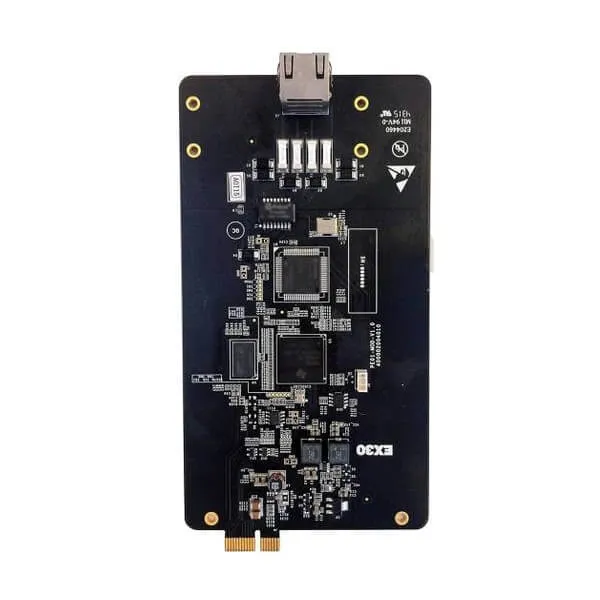
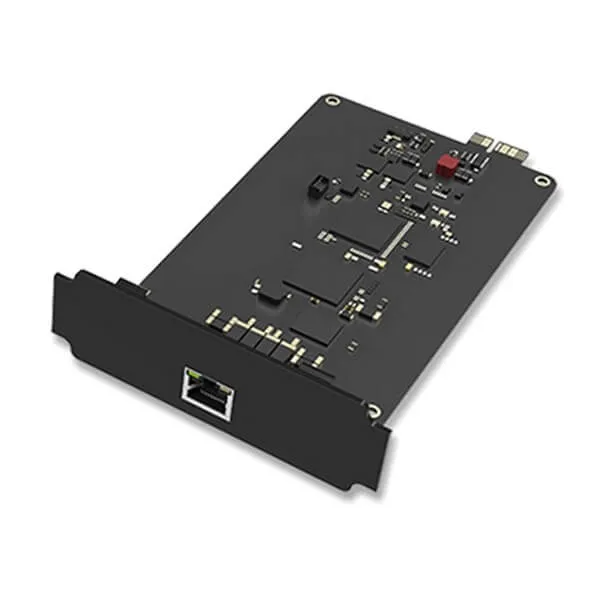
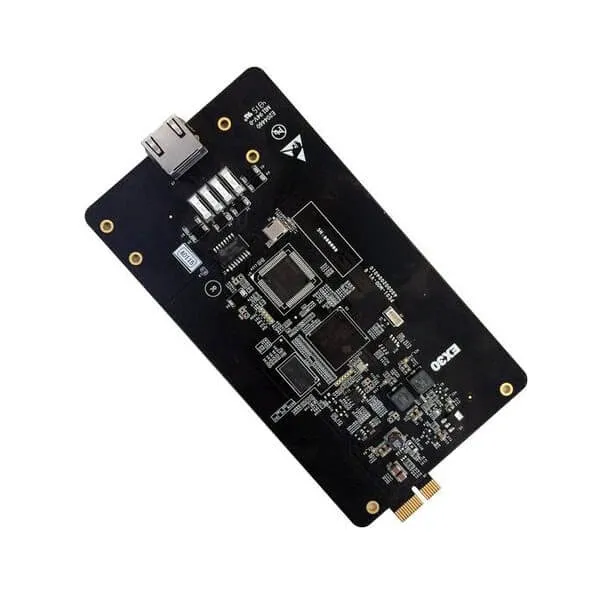
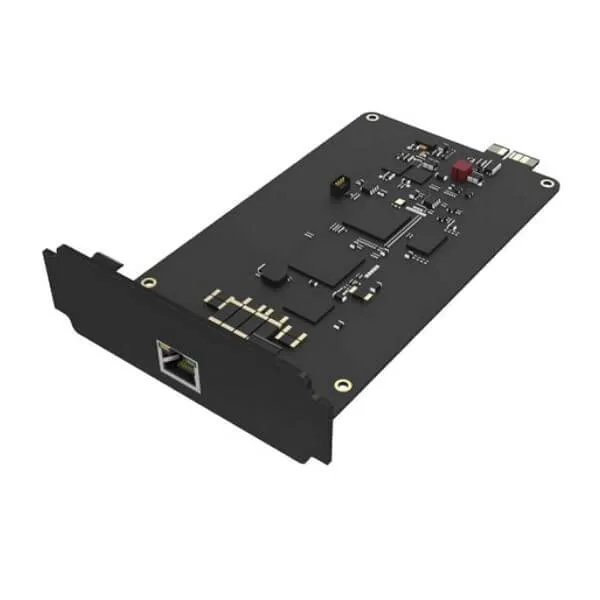
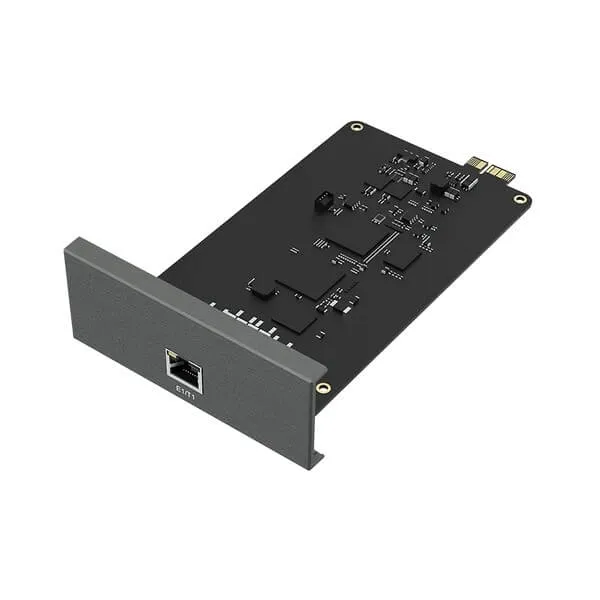
Yeastar EX30 Expansion Board
The Yeastar EX30 Expansion Board is a purpose-built digital trunk expansion option for compatible Yeastar PBX appliances. Official Yeastar documentation identifies the EX30 as providing one E1/T1/J1 interface on supported P-Series appliances, including the P560 and P570. Yeastar’s S-Series installation documentation also identifies EX30 support for S100 and S300 systems, with hardware-generation notes applying to certain S300 versions. For buyers in Tanzania, the practical value of the EX30 is straightforward: it provides a clean path for integrating a supported Yeastar phone system with a digital carrier circuit when the project requires E1, T1, J1 or PRI-style connectivity rather than only SIP trunks or analog lines.
One digital E1/T1/J1 trunk interface on supported P-Series platforms, with official S-Series documentation also covering EX30 use on selected S100/S300 deployments.
The EX30 is an internal expansion board rather than a standalone gateway, so the host PBX model and hardware revision should be confirmed before procurement.
A correct quotation should consider the PBX model, carrier handoff, digital trunk type, signaling expectations, installation plan and any existing telephony migration requirements.
What the Yeastar EX30 Expansion Board does
The EX30 gives a compatible Yeastar PBX a digital trunk connection. This matters when a business uses or plans to use a carrier-delivered E1/T1/J1 service, a PRI environment or another supported digital telephony handoff that cannot be terminated directly on a standard Ethernet port. Instead of replacing the PBX with a different chassis purely to gain a digital interface, an organization can use the expansion architecture offered by the relevant Yeastar appliance.
For P-Series Appliance Edition, Yeastar documents the P560 as supporting one expansion board, either EX08 or EX30, plus one D30 module, while the P570 supports two expansion boards and two D30 modules. The EX30 itself provides a single E1/T1/J1 port. These details help solution planners distinguish between interface expansion and capacity expansion: EX30 adds the digital trunk interface, whereas a D30 is used for additional system capacity on supported appliances. Buyers should therefore avoid assuming that ordering an EX30 automatically changes extension or concurrent-call licensing; the board solves a different requirement.
For legacy or existing Yeastar S-Series environments, official Yeastar installation documentation lists EX30 support for S100 and S300 appliances. The same documentation notes that some S300 hardware revisions have different expansion-board counts. This is why a model name alone is not always enough for a confident order. A good pre-sales check records the exact PBX model, hardware revision where applicable, currently installed boards, available expansion slots and the telecom service that will terminate on the EX30.
Who should consider the EX30
The EX30 is most relevant to organizations running a compatible Yeastar PBX that need a traditional digital telecom circuit alongside modern IP telephony features. Typical projects include offices migrating from an older PBX while retaining an existing PRI circuit, companies integrating a carrier-provided E1 into a new Yeastar deployment, hotels or institutions with established digital trunks, and multi-site organizations that need a controlled transition between legacy telephony and SIP-based communications.
It is not the right component for every Yeastar deployment. A business using only SIP trunks may not need the board at all. A site requiring analog FXO/FXS ports may instead need a different expansion arrangement. Likewise, a project that needs digital trunk connectivity but uses a PBX model without EX30 support may require a separate gateway or a different architecture. FourTeck’s role in quotation preparation is therefore to align the interface with the actual requirement rather than treating the board as a generic add-on.
Buying and compatibility checklist
Record whether the system is P560, P570, S100 or S300, and note hardware revision or existing expansion hardware where relevant.
Ask the telecom provider whether the delivered service is E1, T1, J1 or a PRI-style service and obtain the trunk configuration details needed for deployment.
Verify that the host PBX has the necessary expansion position available and that another board does not already occupy the required slot.
Document existing numbers, inbound routing, outbound permissions, failover requirements and test procedures before moving production calls.
Related FourTeck resources
Customers planning an EX30 project can review the broader FourTeck Tanzania technology portfolio to understand how IP telephony, networking and business infrastructure can be coordinated around the PBX. For equipment browsing and related procurement, the FourTeck Tanzania shop is a useful starting point. Organizations that need installation, configuration or integration planning can also review FourTeck Tanzania services.
For projects extending beyond Tanzania, customers can reference FourTeck Uganda for Uganda-focused requirements and FourTeck Kenya for Kenya-focused procurement and integration discussions. These regional resources are useful when one organization is standardizing telephony across more than one East African country.
Yeastar EX30 Expansion Board Tanzania
In Tanzania, the Yeastar EX30 Expansion Board is primarily relevant to businesses that already use a compatible Yeastar PBX or are designing a new P560/P570 deployment that must interface with a digital telecom service. The first procurement question should not simply be whether the EX30 is available. It should be whether the existing or planned carrier circuit actually requires an E1/T1/J1 interface and whether the selected PBX has an appropriate expansion position. This avoids buying hardware that is technically valid but unnecessary for a SIP-only environment.
A Tanzanian organization upgrading from an older telephone system may still have an operational PRI or E1 service that carries published business numbers. In that case, retaining the digital trunk during a phased migration can reduce disruption while users move to modern SIP phones, softphones, IVR, queues and other PBX capabilities. The EX30 can be part of that migration architecture when the Yeastar platform and carrier handoff are compatible. The installation plan should include trunk parameters from the telecom provider, number mapping, incoming route design, outbound dialing policy, emergency and service-number handling where applicable, and a clearly scheduled cutover test.
For Tanzania-wide projects, procurement teams should also consider practical infrastructure around the PBX. Stable power, surge protection, UPS runtime, rack organization, network segmentation, secure remote administration and documented cabling all affect the reliability of a voice platform. The EX30 itself is only one element in the call path. A digital carrier circuit, PBX configuration, LAN quality and endpoint provisioning must work together. When requesting a quotation, provide the PBX model, quantity of EX30 boards required, current expansion configuration, service provider details and whether the project is a new deployment, replacement, upgrade or migration.
FourTeck can help structure the requirement before pricing by checking the intended architecture against published Yeastar compatibility. That is especially useful when a project has mixed legacy and IP telephony. The objective is to avoid assumptions about signaling, capacity or available slots and to produce a quote that reflects the actual deployment. Businesses comparing a Yeastar EX30 supplier in Tanzania should therefore evaluate not only product sourcing but also the quality of pre-sales compatibility checks, installation planning, test procedures and documentation that accompany the hardware.
Yeastar EX30 Expansion Board Dar es Salaam
Dar es Salaam has a high concentration of corporate offices, hotels, logistics businesses, professional services firms, retailers, institutions and multi-branch operations that often maintain established telephone numbers and telecom services. For an organization in Dar es Salaam using a supported Yeastar PBX, the EX30 becomes relevant when a carrier presents a digital E1/T1/J1 or PRI-style circuit that must terminate directly on the PBX. This is common in migration projects where the customer wants newer IP telephony features without immediately replacing every part of the existing external telephone service.
A well-planned Dar es Salaam deployment should begin by documenting the current call environment. How many external numbers are delivered over the digital trunk? Which departments receive those numbers? Are there reception, sales, support or reservation queues? Is there an after-hours route? Does the business have branch offices that will connect through SIP while the head office keeps a digital carrier line? These questions shape PBX configuration and cutover planning far more than the expansion board alone.
The EX30 should also be evaluated together with the host appliance’s available expansion positions. P560 and P570 have different expansion capacities, while S100 and S300 documentation follows its own hardware rules. Businesses replacing or upgrading an existing Yeastar system should therefore provide photos or inventory details of installed modules and boards when possible. This prevents an order from overlooking an occupied expansion slot or a hardware revision that needs special attention.
For Dar es Salaam procurement, a quotation request is strongest when it includes the exact Yeastar model, the current firmware or hardware information available from the appliance, the telecom provider’s trunk specification, the number of sites involved, and whether installation and configuration are required. If the deployment is business-critical, plan a controlled test window with inbound and outbound call verification, caller ID checks, department routing, failover procedures and rollback steps. This project discipline is more valuable than treating EX30 as a plug-and-play accessory without checking the surrounding telephony environment.
Yeastar EX30 Expansion Board Mwanza
Organizations in Mwanza that operate hotels, healthcare facilities, education campuses, distribution businesses, financial offices or regional branches may have long-lived telephone infrastructure that cannot be replaced in one step. The Yeastar EX30 Expansion Board can be useful where a compatible Yeastar PBX must connect to a digital telecom circuit while the internal user environment transitions to IP phones and modern PBX features. In this kind of project, the board acts as a bridge between the carrier handoff and the PBX, not as a substitute for correct system design.
Mwanza buyers should first verify the actual carrier service. Terms such as PRI, E1 and digital trunk are sometimes used loosely in commercial discussions, so the telecom provider’s technical parameters are important. The installer or PBX administrator needs accurate information about the circuit and its signaling before configuration. If the project is still at quotation stage, obtain the provider’s service description and confirm whether the line will remain in place after migration or is intended as a temporary transition path before SIP trunking.
The second check is the Yeastar appliance itself. Official documentation identifies EX30 support on P560 and P570 and also documents it for selected S100/S300 deployments. Because expansion capacity differs by model and hardware revision, the quotation should identify the host system precisely. For an existing PBX, note all installed expansion boards and modules. For a new deployment, decide whether future analog, digital or capacity expansion may be needed so the chassis selection leaves sensible room for growth.
Businesses in Mwanza should also include power and network readiness in the project scope. A reliable PBX depends on UPS protection, stable networking, correct VLAN or QoS design where used, and secure administration. If the EX30 is supporting a critical inbound number used for reservations, healthcare, customer service or logistics, testing must include calls from multiple networks and destinations, not only a single test handset. The resulting documentation should record trunk settings, inbound routes, outbound rules and support contacts so future troubleshooting is faster.
Yeastar EX30 Expansion Board Arusha
Arusha’s mix of tourism, hospitality, NGOs, professional firms, education, healthcare and regional business operations creates a practical need for dependable voice systems that can preserve established telephone numbers while modernizing internal communications. For a compatible Yeastar PBX, the EX30 Expansion Board is relevant when the organization receives a digital E1/T1/J1 or PRI-style service and wants that service integrated directly with the PBX. The board is most valuable when it is selected as part of a verified architecture rather than purchased simply because the existing system is described as digital.
An Arusha hotel, tour operator or institution may have incoming numbers that are widely published and operationally important. During a PBX upgrade, preserving those numbers and call flows is usually more important than changing the technology for its own sake. A phased migration can keep the external digital trunk while replacing extensions, reception workflows, call groups and voicemail with a newer Yeastar configuration. The EX30 can support that approach on compatible models, but successful deployment depends on matching carrier settings and planning call routes carefully.
Procurement teams should document whether the host system is P560, P570, S100 or S300, and should include any hardware revision details available. They should also state whether the requirement is one digital circuit or part of a larger multi-site design. If there are branches in other cities, the architecture may combine the EX30-connected trunk at one site with SIP-based interoffice connectivity. That can be efficient, but routing and failover rules should be documented so users know which path is used for incoming and outgoing calls.
For quotation accuracy in Arusha, provide the carrier’s circuit details, number ranges, PBX model, desired installation date, cutover constraints and whether the project needs configuration assistance. This information allows the supplier and installer to distinguish hardware sourcing from engineering work. It also helps identify related requirements such as rack mounting, UPS capacity, network switching, IP phones and cabling. The EX30 is a small board physically, but it may sit at the center of a business-critical voice service, so implementation should be treated accordingly.
Yeastar EX30 Expansion Board Dodoma
In Dodoma, government-related organizations, institutions, professional offices, education facilities, healthcare providers and growing private businesses may need to modernize telephony while continuing to use existing carrier services. The Yeastar EX30 Expansion Board is relevant for supported Yeastar systems when the telecom handoff is a digital E1/T1/J1 or PRI-style connection. Its role is specific: it adds the digital trunk interface to the compatible PBX. It does not by itself determine user capacity, extension licensing, network quality or call-flow design.
A Dodoma project should start by establishing whether the digital circuit is still the best external connectivity choice for the organization. If the service is already installed and carries important public numbers, retaining it may reduce migration risk. If the project is new, compare the operational and commercial requirements of the available carrier options before finalizing hardware. The correct choice depends on service availability, resilience, numbering, contract conditions and the organization’s technical strategy, not simply on whether the PBX can accept an EX30.
Where EX30 is appropriate, verify the appliance model and expansion status. Official Yeastar information supports EX30 on P560 and P570, and S-Series installation material covers S100/S300 with hardware-specific limits. Existing systems should be inventoried before purchase, particularly if they already contain analog expansion boards or capacity modules. A structured inventory prevents conflicts and also helps plan future growth.
For public-facing or high-availability environments in Dodoma, acceptance testing should go beyond a basic dial tone. Test each major inbound route, outbound destination type, caller ID behavior, extension transfer, reception workflow, after-hours treatment and any critical emergency procedures defined by the customer. Record the configuration and the carrier escalation details. When requesting pricing, include whether supply only, installation, configuration, migration assistance or ongoing support is expected. That distinction makes the quotation clearer and avoids assumptions about what is included with the hardware.
Yeastar EX30 Expansion Board UAE
For UAE organizations operating Yeastar telephony, the EX30 can be relevant where a compatible PBX must interface with a digital trunk that the telecom environment presents as E1/T1/J1 or PRI. The UAE has a mature business communications market with many organizations moving toward SIP and cloud-connected services, yet existing buildings, hotels, industrial facilities and long-running enterprises may still have digital carrier circuits integrated into operational workflows. In those situations, an EX30-based design can support continuity while internal telephony is upgraded.
The technical assessment should establish the exact Yeastar model and its expansion capability. P560 and P570 support EX30 according to Yeastar P-Series hardware guidance. S100 and S300 are covered by S-Series documentation with model and revision limits. The circuit itself must also be verified with the service provider so configuration is based on actual signaling and numbering information rather than assumptions. Businesses using the UAE deployment as a regional headquarters should additionally consider whether branch sites will connect through SIP, VPN or other IP mechanisms while the digital trunk remains concentrated at the main site.
Procurement decisions in the UAE frequently involve standardized equipment lists across several offices. In that case, document which sites genuinely need EX30 and which sites can remain SIP-only. Standardizing unnecessarily on a digital expansion board adds cost and inventory without operational benefit. A better standard defines the PBX platform, supported expansion options and site-specific trunk requirements, then selects the board only where a digital interface is required.
For a quotation, provide the PBX model, site location, existing carrier handoff, number ranges, current modules and intended migration approach. If the board is for a replacement or spare strategy, specify whether the organization needs a like-for-like hardware contingency or a planned installation. This allows sourcing and engineering teams to separate immediate operational risk from future expansion and produce a more useful proposal.
Yeastar EX30 Expansion Board Uganda
Ugandan businesses considering the Yeastar EX30 should evaluate it as part of the full trunk architecture. The board is designed to provide a digital interface on supported Yeastar PBX appliances, which makes it relevant when an organization has an E1/T1/J1 or PRI-type telecom requirement. This can occur in established offices, hotels, institutions, hospitals, financial operations or multi-site businesses where an existing digital circuit carries important incoming numbers and is not being removed during the PBX upgrade.
Compatibility comes first. Official Yeastar documentation lists EX30 for P560/P570 and also covers S100/S300 in S-Series materials. Because these platforms have different expansion capacities, an installer should record the exact system model and any existing boards before procurement. It is also sensible to note whether additional user or concurrent-call capacity is needed, because that requirement is separate from the EX30 interface itself and may involve other system planning.
For a country-wide Uganda deployment, organizations with branches should decide where the digital carrier circuit will terminate and how remote offices will reach the central PBX. A head-office trunk can coexist with SIP-based branch connectivity, but call routing, failover and bandwidth should be designed deliberately. If each branch has independent carrier services, every site needs its own compatibility review rather than assuming one architecture fits all.
A useful Uganda quotation request includes the host PBX, required quantity, provider and circuit type, number ranges, existing expansion hardware, installation scope and expected cutover date. This information lets the project team identify any related switching, UPS, rack or endpoint requirements. Buyers should avoid purchasing based solely on the EX30 product name; the value comes from ensuring the board matches the telecom service and the Yeastar platform in the actual site design.
Yeastar EX30 Expansion Board Kampala
Kampala organizations often operate as national headquarters or coordination centers for branch networks, making PBX trunk design particularly important. The Yeastar EX30 can support a digital E1/T1/J1 or PRI-style interface on compatible Yeastar systems when the business needs to preserve or introduce that type of carrier connection. In a headquarters scenario, the digital trunk may carry the company’s main published numbers while remote branches reach the PBX through IP connectivity.
Before ordering the board, record the exact appliance model, installed expansion cards and trunk details. P560 and P570 support EX30 according to Yeastar P-Series documentation, while S100 and S300 support is described in S-Series documentation with model-specific expansion limits. This means a Kampala company upgrading an older S-Series PBX should not assume the physical slot configuration is identical to a new P-Series installation.
The project plan should also reflect business continuity. If the digital trunk is the main inbound route for customers, a migration should include a clear testing and rollback process. Test calls should cover direct numbers, IVR options, queues, extension transfers, outbound dialing classes and after-hours treatment. If a SIP trunk or alternate line is available as backup, define when and how it is used instead of leaving failover behavior undocumented.
Kampala procurement teams comparing suppliers should ask for compatibility validation and scope clarity. Is the quote for hardware only? Does it include installation? Is carrier coordination included? Who is responsible for PBX configuration, numbering and acceptance tests? Answering these questions before purchase makes the project more predictable. For a multi-country organization, it is also useful to standardize documentation so every site records its trunk type, PBX model and expansion configuration in the same format.
Yeastar EX30 Expansion Board Arua
For businesses and institutions in Arua, telephony projects may need to balance modern IP communications with existing telecom infrastructure. The Yeastar EX30 Expansion Board is suitable only where the host PBX is compatible and the external service actually requires a digital E1/T1/J1 or PRI-style interface. That distinction is important because many smaller or newer deployments can operate entirely with SIP trunks and do not benefit from adding a digital board.
Where an established digital line already serves the organization, retaining it during a PBX modernization can simplify migration. The EX30 can allow the supported Yeastar system to connect that circuit while users move to IP phones, voicemail, call routing and other PBX functions. The planning team should obtain the carrier’s technical service details early, especially if the line has been in service for years and documentation is incomplete.
Arua buyers should also check logistics and support needs at quotation stage. If the site is remote from the project integrator, accurate pre-installation information becomes more valuable because it reduces avoidable site visits. Share the PBX model, hardware revision where relevant, installed boards, rack photos if appropriate, cable handoff details and the carrier service description. This allows technicians to prepare the correct installation approach and identify any additional cabling or rack work before arrival.
The final design should consider resilience in practical terms. UPS protection, stable LAN infrastructure, documented administration credentials and a clear escalation path for the carrier and PBX support teams can make a greater difference to uptime than the board alone. If the EX30 carries the organization’s main public number, maintain a configuration backup and written call-flow summary. These measures support faster recovery if a future hardware, carrier or configuration issue occurs.
Yeastar EX30 Expansion Board Mbarara
In Mbarara, the Yeastar EX30 can be part of a telephony modernization project for hotels, universities, healthcare organizations, commercial offices and regional businesses that continue to rely on a digital carrier trunk. The board provides the physical digital interface on supported Yeastar PBX platforms, allowing the organization to preserve that external connection while updating internal call management and endpoint technology.
The correct order starts with verification. Confirm the exact Yeastar appliance model and the expansion positions already in use. Then confirm the telecom handoff with the provider. Do not assume that a service described informally as a PRI or E1 matches the intended configuration without the technical details. If the provider is changing the line at the same time as the PBX upgrade, coordinate both workstreams so the board installation, trunk activation and call routing can be tested together.
Mbarara organizations with growing branches should also decide whether the digital line is a long-term part of the architecture or a transition step. If the plan is to move to SIP later, the EX30 may still be justified because it protects continuity during migration. If the new design is SIP-only from day one, spending on a digital interface may be unnecessary. A quotation should therefore capture the expected service lifecycle, not only the current connection.
Implementation planning should include UPS protection, switch capacity, VLAN and QoS settings where appropriate, secure remote access and an acceptance test. Test inbound calls to published numbers, outbound dialing, transfer behavior, receptionist functions and after-hours routing. Record the final settings and service contacts. That documentation helps local staff and remote support teams diagnose future issues without repeating the original discovery work.
Yeastar EX30 Expansion Board Gulu
Gulu businesses, institutions and organizations planning a Yeastar PBX should consider the EX30 when a digital trunk must be terminated directly on a compatible appliance. The board is not a universal accessory; its value depends on the external telecom service and the specific Yeastar model. Official documentation places EX30 within the expansion options for P560/P570 and within documented S100/S300 configurations, so the host system must be identified before purchase.
For an existing site, start with an inventory of the current telephone system. Record the public numbers, the type of carrier line, departments using each route, existing PBX model, installed expansion cards and any recurring call-quality or reliability issues. This creates a baseline for the upgrade and helps distinguish problems caused by the old PBX from problems in the carrier circuit or internal network.
If the organization in Gulu depends heavily on voice communication with customers, suppliers or field teams, the cutover should be planned during a controlled window. Install the board, configure the digital trunk using verified provider parameters, map inbound routes, set outbound dialing rules and perform test calls before declaring the migration complete. Where possible, maintain a fallback route or documented rollback plan until the new configuration is stable.
A detailed quotation request helps reduce uncertainty for both buyer and supplier. Include the Yeastar model, quantity of boards, telecom provider, trunk type, desired installation scope, site readiness and whether IP phones or network upgrades are part of the same project. Even when the EX30 itself is the only hardware item required, this information ensures that procurement aligns with the operating environment and prevents a simple component purchase from becoming an unexpected integration problem.
Yeastar EX30 Expansion Board Kenya
Kenyan organizations using Yeastar may require an EX30 when a compatible PBX must connect to a digital carrier trunk. This is particularly relevant in migration projects where established business numbers and PRI-style services are retained while internal telephony moves toward SIP endpoints and unified communications features. The board provides the necessary digital interface on supported hardware, but selection should be based on the exact carrier handoff and PBX model rather than on a generic request for a PRI card.
P560 and P570 are officially documented with EX30 support. Yeastar also documents EX30 use in S100/S300 systems, with expansion-board limits that vary by model and some hardware generations. A Kenyan business replacing an older S-Series deployment should therefore inventory the existing system before ordering. If the organization is moving to P-Series, the project can also be used to review whether the digital trunk remains strategically necessary or whether a SIP service is planned for the longer term.
Multi-branch Kenyan businesses should treat trunk placement as an architecture decision. A digital circuit may terminate at the main office while branches connect over IP, or separate sites may maintain independent carrier services. Each approach has implications for resilience, routing and support. Centralization can simplify administration, but it increases dependence on inter-site connectivity. Distributed trunks may improve site independence but increase management overhead. The EX30 requirement should reflect the chosen design.
When requesting a quote in Kenya, provide the host PBX, current modules, trunk details, number ranges, migration timeline and required service scope. If the project also includes switches, IP phones, UPS systems or structured cabling, list those requirements separately so the quotation clearly identifies the EX30 as one component in the larger voice solution. A structured proposal makes future support easier because hardware, configuration and installation responsibilities are documented from the beginning.
Yeastar EX30 Expansion Board Kuwait
In Kuwait, established enterprises, hospitality businesses, trading companies and institutions may still operate digital telecom circuits even as internal communications become increasingly IP based. The Yeastar EX30 Expansion Board is relevant when a compatible Yeastar PBX must directly accept an E1/T1/J1 or PRI-style connection. This can support a controlled migration that preserves existing public numbers and carrier contracts while allowing the organization to modernize extensions and call handling.
The technical review should confirm whether the host is P560, P570, S100 or S300 and whether the expansion position is available. The carrier circuit must then be documented with the service provider. Digital trunks are sensitive to configuration mismatches, so parameters should be based on official carrier information rather than trial and error. If the EX30 is replacing a failed board in an existing system, preserve a backup of the PBX configuration and record the old trunk settings before hardware replacement.
Kuwait buyers may also be planning regional standardization across multiple Gulf or African offices. In such cases, the EX30 should be treated as a site-specific option within the standard rather than a mandatory component for every PBX. Locations using SIP trunks may not need it, while sites retaining PRI services do. This distinction keeps the equipment list efficient and avoids unnecessary spare inventory.
A complete quotation request should identify the PBX model, required quantity, telecom service, rack and power environment, installation requirement and cutover constraints. For critical operations, include acceptance criteria such as successful inbound DID calls, outbound dialing, caller ID behavior, IVR routing and failover testing. The EX30 is only successful when the complete call path works as intended after installation.
Yeastar EX30 Expansion Board Ghana
Ghanaian organizations evaluating the Yeastar EX30 should first determine whether their telecom service requires a digital E1/T1/J1 or PRI interface. If so, and if the Yeastar PBX is a supported model, the EX30 can provide the necessary connection. This is particularly useful for businesses modernizing internal telephony while keeping an existing digital carrier line that carries important customer-facing numbers.
Compatibility should be documented rather than assumed. Yeastar P-Series information identifies the EX30 for P560/P570, while S-Series guidance includes S100/S300 with specific expansion limits. The procurement team should note any boards already installed, especially in older systems where analog or other expansion hardware may occupy available positions. If the project is a new PBX deployment, future expansion plans should influence chassis selection so the system has room for growth.
For businesses with multiple Ghana locations, the digital trunk may be centralized or deployed at selected sites. A centralized design can simplify public-number management but increases reliance on WAN connectivity for remote offices. A distributed design can provide more local independence but may require multiple carrier relationships and more complex administration. The EX30 quantity should therefore follow the topology rather than the number of branches alone.
When seeking a Ghana quotation, provide the PBX model, telecom provider, digital service type, number ranges, expected call flows, installation location and desired support scope. If the organization is moving from an older PBX, include details of legacy extensions and any critical analog devices so the migration plan can address them separately. This prevents the EX30 requirement from being confused with unrelated endpoint or analog interface needs.
Yeastar EX30 Expansion Board Nigeria
Nigeria’s large enterprise and institutional communications market includes organizations with mixed generations of telephony infrastructure. The Yeastar EX30 Expansion Board is useful where a supported Yeastar PBX must terminate a digital E1/T1/J1 or PRI-style telecom service. In a migration project, this can help a business retain existing inbound numbers and external trunking while replacing internal desk phones, call routing and administration with a newer Yeastar platform.
The board should be selected only after two checks. First, confirm the PBX model and expansion availability. Official Yeastar documentation supports EX30 on P560/P570 and documents it for S100/S300 environments. Second, confirm the carrier service and its technical parameters. The phrase “E1” may describe the physical circuit, while routing and signaling details determine how the PBX must be configured. These settings should come from the service provider or existing documented configuration.
Large Nigerian organizations may also use multiple trunks across head office, branches and disaster-recovery locations. In that case, consider whether every site needs physical digital connectivity or whether SIP trunking and IP interconnection can reduce hardware duplication. The EX30 should be deployed where it has a clear operational purpose. If it is part of a resilience plan, define how calls move during carrier, PBX or WAN outages and test that behavior rather than relying on assumptions.
A strong procurement request lists each site, host PBX, board quantity, carrier, circuit type, number ranges, installation scope and acceptance criteria. It should also identify responsibility for configuration and carrier coordination. This level of detail is important in enterprise projects because delays often come from unclear interfaces between the hardware supplier, PBX engineer, network team and telecom provider. Clarifying those roles before purchase makes the EX30 deployment easier to execute and support.
Yeastar EX30 Expansion Board Seychelles
In Seychelles, hotels, resorts, financial organizations, government-related entities and established businesses may operate telephony systems where continuity of public numbers is essential. If a compatible Yeastar PBX must connect directly to a digital carrier circuit, the EX30 Expansion Board can provide the required E1/T1/J1 interface. The deployment should be approached as a telecom integration project rather than a simple accessory installation because the carrier line, PBX configuration and business call flows all need to align.
For hospitality in particular, inbound calling may be linked to reservations, reception, guest services and administrative departments. A migration should therefore map existing routes before replacing the PBX or adding the EX30. Test plans should include main numbers, direct department numbers, operator transfers, after-hours behavior and any critical service extensions defined by the organization. If the digital trunk is being retained only temporarily, document the later transition to SIP so the current hardware choice fits the broader roadmap.
Because island logistics can make replacement hardware planning important, Seychelles buyers may also consider whether a spare strategy is justified for business-critical systems. That decision should be based on risk and support arrangements rather than an assumption that every site requires duplicate hardware. Accurate inventory records, configuration backups and remote support access can sometimes reduce recovery time more effectively than unplanned spare purchases.
For quotation, provide the exact Yeastar model, existing expansion configuration, carrier details, number ranges, installation site and project schedule. If remote commissioning or local installation coordination is expected, state that clearly. The more complete the technical information, the easier it is to confirm that the EX30 is the right interface and that the project includes every related requirement needed for a successful cutover.
Frequently asked questions
What interface does the Yeastar EX30 provide?
Official Yeastar P-Series documentation identifies the EX30 as providing one E1/T1/J1 port. S-Series documentation describes the EX30 as supporting one E1/T1 port. For an actual project, confirm the host PBX series, hardware and the carrier service before configuration.
Which Yeastar PBX models support EX30?
Yeastar documents EX30 expansion on P560 and P570 in P-Series Appliance Edition. Yeastar S-Series installation guidance also documents EX30 support for S100 and S300, with hardware-version limits applying to some S300 configurations.
Does EX30 increase the number of users or concurrent calls?
The EX30’s purpose is digital trunk interface expansion. Yeastar documents D30 separately as the module used to expand supported PBX user and concurrent-call capacity. Capacity requirements should therefore be assessed separately from the need for an EX30.
Do I need EX30 for a SIP trunk?
Usually not for a purely IP-based SIP trunk because SIP connectivity uses the network interface rather than an E1/T1/J1 expansion port. EX30 is relevant when the project includes a supported digital carrier handoff. Confirm the provider’s service before purchase.
What information should I send for a quotation?
Send the Yeastar PBX model, hardware details if available, current installed boards or modules, carrier name, trunk type, quantity required, project location and whether you need supply only or installation and configuration support.
Quotation checklist
For the most accurate Yeastar EX30 Expansion Board quotation, include the following information:
- Exact Yeastar PBX model and hardware revision where known.
- Existing expansion boards and modules installed.
- Required EX30 quantity.
- Carrier or telecom provider and service type.
- Whether the circuit is E1, T1, J1 or PRI-style digital trunking.
- Number ranges or DID information relevant to migration.
- Whether the project is new installation, upgrade, replacement or migration.
- Whether installation, configuration, testing and documentation are required.
- Target site and preferred deployment window.
Decision recap
Choose the Yeastar EX30 when a supported Yeastar PBX needs a digital E1/T1/J1-style trunk interface and the host appliance has suitable expansion capacity. Do not choose it merely because the project involves telephony. If the service is SIP-only, analog-only or hosted entirely in the cloud, a different architecture may be more appropriate. The most reliable buying process confirms the PBX model, expansion slot, carrier handoff and deployment scope before the order is placed.
Plan your Yeastar EX30 deployment with FourTeck
Share your Yeastar PBX model, existing expansion configuration and telecom circuit details. FourTeck can help organize the compatibility check and quotation so the EX30 is specified for the right system and the right digital trunk requirement.


Reviews
There are no reviews yet.