
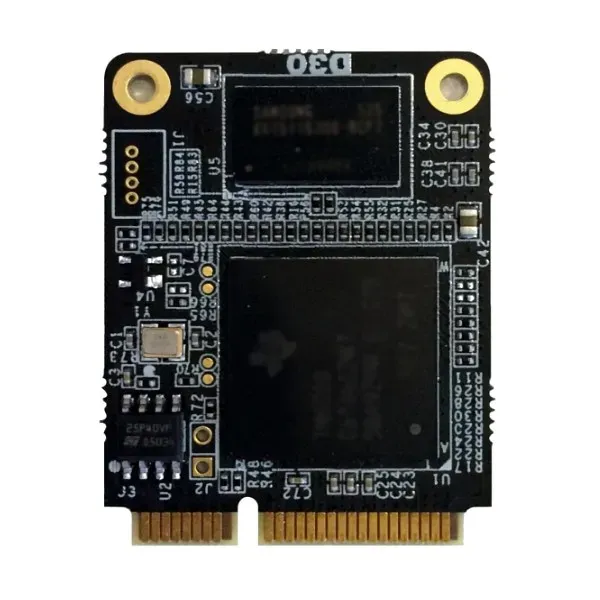
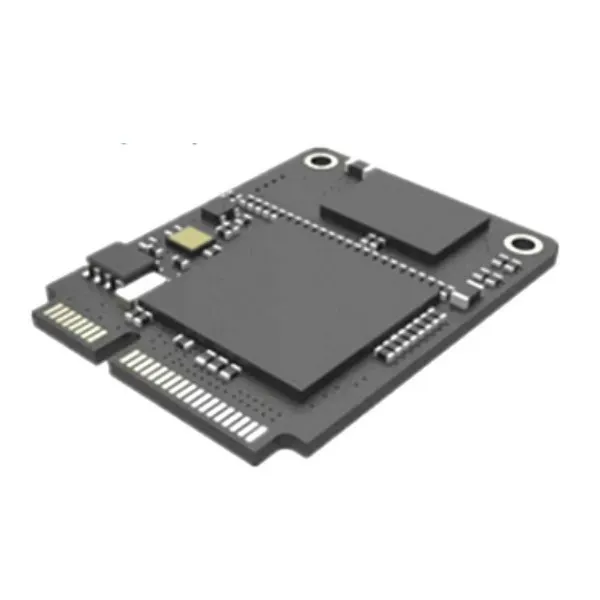
Yeastar DSP Module
The Yeastar DSP Module is the D30 digital signal processing expansion module used to increase the capacity of compatible Yeastar IP PBX appliances. Official Yeastar documentation states that each D30 adds 100 VoIP users and 30 concurrent calls. It is a practical upgrade for organizations whose extension count, simultaneous call volume, branch growth or contact-center activity is approaching the limits of an existing supported PBX.
VoIP users per D30 module
Concurrent calls per D30 module
What the Yeastar DSP Module does
The Yeastar D30 is not an analog trunk card, GSM module or line-interface expansion board. Its purpose is capacity expansion. The module increases the number of users and simultaneous calls that a compatible PBX can support, making it relevant when an organization is growing beyond the base capacity of its current appliance. Yeastar documents D30 support for P560 and P570 appliances in the P-Series Appliance Edition and for S100 and S300 systems in the S-Series. Compatibility must always be checked against the exact PBX model, hardware revision and current Yeastar documentation before purchase.
For the P-Series, Yeastar states that the P560 supports one D30 module and the P570 supports up to two. For the S-Series, Yeastar states that the S100 supports one D30 and the S300 supports up to two, subject to the documented hardware version details. A single D30 therefore adds 100 users and 30 concurrent calls; on a platform that officially supports two D30 modules, two installed modules add 200 users and 60 concurrent calls to the base system capacity.
Capacity growth
Add PBX processing capacity when user counts or simultaneous call requirements grow beyond the existing platform baseline.
Supported platforms
Official Yeastar documentation identifies P560, P570, S100 and S300 as compatible models for the D30 capacity module.
Internal installation
The D30 installs internally in the designated D-Slot. Installation should follow the model-specific Yeastar hardware instructions and handling precautions.
Procurement clarity
A correct quotation should confirm the PBX model, existing capacity, present D30 count, expected users and peak concurrent-call requirement.
Compatibility, sizing and buying guidance
The right way to size a Yeastar DSP Module requirement is to start with real operational demand. Count active extensions and expected growth, but also measure or estimate peak concurrent calls. A company can have many registered users while only a small proportion make or receive calls simultaneously; another organization with a reception team, sales floor, service desk or call queue may need significantly more concurrent-call capacity. The D30 should therefore be selected from both user and call-concurrency requirements rather than extension count alone.
Before ordering, identify the exact PBX model and confirm whether the D30 slot is already occupied. P560 and S100 systems have a documented maximum of one D30. P570 and supported S300 configurations can accept up to two. Do not assume that a D30 can be installed in every Yeastar appliance or that multiple modules are supported without checking the system-specific installation guide. Firmware and lifecycle considerations should also be reviewed, particularly for older S-Series installations.
For broader voice-system planning, the FourTeck Tanzania technology shop provides buying guidance across IP phones, IP PBX hardware, networking and supporting infrastructure. Organizations that need configuration, network readiness, VLAN planning, call-flow design or system integration can also review FourTeck Tanzania services. These are relevant because PBX capacity is only one part of a reliable voice deployment; LAN quality, PoE, SIP connectivity, firewall rules and endpoint design can materially affect the finished system.
Important distinction: capacity module versus telephony interface module
The D30 expands processing capacity. It does not add FXS, FXO, BRI, GSM/4G or E1/T1/PRI interfaces by itself. Yeastar uses separate telephony modules and expansion boards for those interfaces. If the project requirement is to connect more analog phones, PSTN lines, cellular channels or digital trunks, the quotation may need a different module or expansion board in addition to, or instead of, a D30.
Yeastar DSP Module Tanzania
Organizations searching for the Yeastar DSP Module Tanzania typically have one of two needs: an existing Yeastar PBX is approaching its licensed or hardware capacity, or a new deployment is being designed with enough room for future growth. In either case, the D30 is most useful when the current or planned system is a compatible P560, P570, S100 or S300 appliance and the business expects more users or more simultaneous calls than the base platform can handle. The planning conversation should start with the exact appliance model, present number of users, peak call concurrency and growth forecast rather than simply adding a module as a precaution.
For a Tanzania deployment, procurement teams should document whether the PBX is serving one office, several branches or a mixed on-site and remote workforce. A national business may have users in Dar es Salaam, Mwanza, Arusha and Dodoma while centralizing call routing in one system. That architecture can increase the importance of concurrent call sizing, SIP trunk design and dependable WAN connectivity. The D30 addresses PBX processing capacity, but the wider solution still needs network quality, firewall policy, Quality of Service and resilience planning. A voice system that has enough DSP capacity can still deliver poor call quality if the underlying network is congested or unstable.
Tanzania buyers should also confirm whether expansion is intended to support standard extensions, customer-service queues, branch users, mobile clients or a combination. Peak concurrency can rise sharply during campaign periods, reception peaks, support hours or outbound calling windows. Reviewing call records or PBX reports, when available, is better than estimating from headcount alone. The procurement brief should include the exact PBX model, current modules, intended number of users after expansion, expected simultaneous calls, installation responsibility and any related endpoint or network upgrades.
FourTeck Tanzania can help frame the requirement before quotation so the capacity upgrade is matched to the real environment. The objective is not simply to purchase a D30, but to verify that it is the correct expansion method for the installed Yeastar system and that the surrounding voice network can support the additional load. Buyers can use the FourTeck Tanzania contact page to share their PBX model, current user count and growth target for a capacity-focused quotation.
Yeastar DSP Module Dar es Salaam
Businesses looking for a Yeastar DSP Module in Dar es Salaam are often scaling central offices, customer-service teams, hospitality operations, professional-services firms, logistics operations or multi-branch communication environments. In these settings, the strongest reason to add a D30 is not merely that more employees have joined the organization, but that the PBX is expected to register more users and sustain higher simultaneous call traffic. A growing reception function, sales desk or support queue can consume concurrency faster than a conventional office where most extensions are idle for much of the day.
A Dar es Salaam project should therefore separate three numbers: total employees, total PBX users and peak concurrent calls. They are not the same. Some staff may use mobile or shared endpoints; some may rarely place calls; others may participate in queues that generate concentrated traffic. The D30 adds 100 users and 30 concurrent calls to a compatible Yeastar PBX, which makes it a precise hardware expansion option when the demand profile fits. P560 and S100 platforms support one D30, while P570 and supported S300 configurations can support up to two according to Yeastar documentation.
Network readiness matters just as much as PBX processing capacity. Dar es Salaam offices may connect SIP trunks, branch VPNs, remote extensions, IP phones and cloud applications over the same infrastructure. Expansion should include a check of LAN switching, PoE capacity, VLAN design, QoS, internet stability and firewall behavior. Where remote branches depend on the central PBX, WAN path quality and failover planning become especially important. Adding users without validating these supporting layers can shift the bottleneck from the PBX to the network.
For procurement, provide the exact PBX model and current hardware configuration before requesting the module. If the appliance is already at its supported D30 limit, a different upgrade strategy may be needed. If the requirement is actually more analog or cellular interfaces, the project may need Yeastar telephony modules or expansion boards rather than extra DSP capacity. A well-prepared Dar es Salaam quotation should therefore define the business objective, existing Yeastar platform, user target, concurrency target, installation scope and any related IP phones or network changes.
Yeastar DSP Module Mwanza
For organizations in Mwanza, the Yeastar DSP Module can be a targeted way to extend the useful capacity of a compatible PBX as operations expand. A business adding departments, branch connectivity, customer-service lines or remote users may reach the point where the original PBX capacity no longer aligns with real call demand. The D30 gives planners a clear increment: 100 additional VoIP users and 30 additional concurrent calls per module. That makes capacity planning easier than replacing the entire communications platform when the existing Yeastar appliance remains suitable and supports the module.
Mwanza buyers should calculate the expansion requirement from actual call behavior. Retail, distribution, healthcare, education and service organizations can have very different call profiles even with similar employee counts. A company with 150 staff may have modest concurrency if most users communicate internally or through messaging, while a smaller customer-facing team can generate heavy inbound and outbound traffic at predictable peak periods. The D30 is most effective when its additional processing capacity directly addresses the identified bottleneck.
Compatibility checks are essential. Yeastar officially documents the D30 for P560, P570, S100 and S300 systems, but the number of modules supported differs by platform. The P560 and S100 support one D30; the P570 and supported S300 configurations can support two. An order should not be placed based only on the brand name or a visual match. Confirm the appliance model, hardware version where relevant, existing module count and installation instructions. The module installs internally, so change control and a maintenance window should be considered if the PBX is already in production.
Mwanza deployments should also evaluate network and power conditions around the PBX. The added capacity may encourage more IP phones, remote users or SIP channels, which in turn increases dependence on switching, PoE, internet connectivity and UPS protection. Procurement teams can reduce rework by treating the D30 as part of a voice-system expansion plan rather than an isolated spare part. A useful quotation request includes current users, expected users after expansion, peak call estimate, SIP trunk details, remote-site requirements and whether configuration assistance is needed.
Yeastar DSP Module Arusha
The Yeastar DSP Module is relevant in Arusha for hotels, tour operators, professional offices, education providers, NGOs, service organizations and multi-department businesses that need to scale a compatible Yeastar PBX without immediately replacing the appliance. The D30 is a capacity component: each module adds 100 VoIP users and 30 concurrent calls. That distinction matters because an organization may need additional call-handling capacity even when it does not need more analog trunks or physical telephone ports.
Hospitality and travel-related operations can experience seasonal or time-of-day call peaks, so Arusha buyers should avoid sizing the system only from average traffic. Reservation periods, guest-service calls, supplier coordination and sales activity can create concentrated concurrency. The safest approach is to review current PBX statistics where possible and identify the highest realistic simultaneous-call period. If the system is already close to the base platform limit, the D30 can provide a defined expansion step on supported Yeastar models.
The installation decision should also account for the appliance platform. Official Yeastar material lists P560, P570, S100 and S300 as compatible. P560 and S100 accept one D30, while P570 and supported S300 configurations can use up to two. If the PBX is an unsupported model, the correct solution may be a platform upgrade rather than a D30 purchase. If the requirement is additional FXS, FXO, BRI, cellular or E1/T1/PRI connectivity, different Yeastar modules or expansion boards are required because D30 does not provide those interfaces.
Arusha deployments that connect multiple buildings, branches or remote users should include network quality in the expansion plan. Voice traffic benefits from predictable latency, low packet loss, adequate bandwidth and sensible QoS. The firewall and SIP topology should be reviewed before scaling call volume. For organizations with an existing Yeastar environment, the most efficient procurement process is to provide the PBX model, current firmware, present user and call figures, desired growth, and a summary of SIP and branch connectivity so the module requirement can be validated before purchase.
Yeastar DSP Module Dodoma
Organizations procuring a Yeastar DSP Module in Dodoma may be expanding administrative teams, professional offices, education environments, service desks or branch communications. The D30 provides a predictable capacity increase for compatible Yeastar PBX appliances: 100 more VoIP users and 30 more concurrent calls per module. This makes it useful where the installed PBX remains operationally appropriate but requires additional processing headroom to support organizational growth.
The first planning step is to distinguish registered users from active call concurrency. An institution may need hundreds of extension identities for departments and individual staff while only a smaller portion are on calls at the same time. Conversely, a centralized service desk can create high concurrency with far fewer total users. A D30 purchase should therefore be justified by both metrics. Where available, historical PBX reports can show peak simultaneous calls and help determine whether expansion is needed now or can be scheduled as part of a future phase.
Dodoma procurement teams should verify the exact Yeastar appliance. The D30 is documented for the P560, P570, S100 and S300. P560 and S100 support one module; P570 and supported S300 configurations support up to two. Because the module is installed internally, the implementation plan should include safe shutdown or maintenance procedures according to the model-specific installation guide, configuration validation after installation and a simple rollback plan if the system is business critical.
The wider deployment should consider SIP trunk capacity, IP phone growth, PoE switching and branch connectivity. Adding PBX users can require more endpoints and more network ports, while increased concurrent calling can change SIP channel requirements. A quote should therefore capture the full operational requirement rather than only the module quantity. FourTeck can help structure this information so buyers can compare capacity, compatibility and implementation scope clearly before approving the purchase.
Yeastar DSP Module UAE
For UAE organizations, a Yeastar DSP Module requirement commonly appears when a growing office, multi-site business, service desk or contact-heavy operation needs more capacity from a compatible Yeastar appliance. The D30 increases the supported PBX capacity by 100 VoIP users and 30 concurrent calls per module. It is particularly useful when the installed platform still meets the organization’s feature and lifecycle needs but the base user or call limit is becoming restrictive.
UAE buyers should confirm whether the voice environment is centralized across multiple emirates, connected to remote workers or integrated with SIP trunks and branch VPNs. These designs can produce traffic patterns that are different from the headcount at a single office. Peak concurrent calling should be measured or estimated from business processes such as reception, sales campaigns, helpdesk queues and customer service. The D30 expands the PBX processing ceiling, but SIP channel counts, firewall policies, internet links and endpoint infrastructure should be sized at the same time.
Compatibility remains the decisive technical check. Yeastar documents D30 support for P560, P570, S100 and S300 appliances. One D30 is supported on P560 and S100; up to two are documented for P570 and supported S300 configurations. Buyers should record the current module count and confirm the appliance revision before ordering. If the need is for additional analog, BRI, cellular or digital trunk interfaces, the D30 is not the correct interface card and other Yeastar expansion hardware should be considered.
For organizations coordinating procurement between Tanzania and the Gulf, FourTeck’s regional network can also provide broader context through FourTeck UAE. The most useful request includes the PBX model, current extension count, target extension count, measured peak calls, target concurrency, SIP trunk arrangement and expected installation scope. That information makes the quotation more accurate and helps avoid buying capacity that cannot be used because of another system limitation.
Yeastar DSP Module Uganda
The Yeastar DSP Module is a practical capacity upgrade for Uganda organizations running a compatible Yeastar PBX and planning growth in users or simultaneous calls. Each D30 module adds 100 VoIP users and 30 concurrent calls, which can extend the life of an existing platform when the main limitation is processing capacity rather than feature availability. Businesses with several departments or branch locations can use this incremental expansion approach to align PBX investment with actual demand.
Uganda deployments should be designed around communication patterns rather than employee totals alone. A distributed organization may have many registered extensions but relatively moderate call concurrency, while a centralized sales or service function may generate high simultaneous call volumes. Before procurement, review current extension usage, queue activity, remote-user counts and the maximum number of calls observed during busy periods. This will show whether one D30 provides the appropriate capacity increase and whether the platform has room for the module.
Yeastar’s published compatibility identifies P560, P570, S100 and S300 systems. P560 and S100 support one D30; P570 and supported S300 configurations can accept up to two. The installed PBX should be physically and logically verified before ordering, especially for older S-Series environments where hardware revision details may affect expansion-board limits. A qualified installation process should follow Yeastar’s model-specific instructions for opening the chassis, seating the module in the D-Slot and securing it correctly.
Regional procurement can also involve branch networking, SIP trunking and endpoint expansion. Additional users may require more IP phones, switch ports and PoE budget, while additional concurrent calls can require more SIP channels and stronger WAN planning. For regional coordination, buyers can review FourTeck Uganda alongside the Tanzania operation. A well-scoped request should include the PBX model, site count, branch connectivity, current user count, target user count, current concurrency and expected busy-hour traffic.
Yeastar DSP Module Kampala
Kampala businesses planning PBX growth can use the Yeastar D30 DSP Module to add defined system capacity to a compatible appliance. Each module adds 100 VoIP users and 30 concurrent calls, making it useful for expanding offices, service organizations, customer-support operations, education environments and multi-site businesses that have outgrown the base capacity of a P560, P570, S100 or S300 without needing an immediate full PBX replacement.
The key sizing question is how many calls the organization expects to handle at the same time. An office with two hundred users may rarely exceed twenty concurrent calls, while a fifty-agent call-handling team can place far greater pressure on concurrency. Kampala buyers should therefore gather peak-call data from the current system if available, review queue and ring-group behavior, and estimate growth over the next planning period. The D30 gives a fixed capacity increment, so a clear demand profile makes it easy to determine whether the module is justified.
Before purchase, confirm how many D30 modules the existing PBX supports. Yeastar states that P560 and S100 support one, while P570 and supported S300 systems can use up to two. If a system already contains the maximum D30 count, future growth may require a different appliance strategy. The installation itself is internal, so organizations should plan an appropriate maintenance window, follow the official hardware instructions and verify system operation after the module is installed.
Kampala deployments frequently connect branch offices, remote users or SIP services across shared data networks. Capacity expansion should therefore trigger a quick review of WAN quality, firewall configuration, QoS, VLAN separation, PoE and endpoint provisioning. A quotation that captures these dependencies is more useful than a module-only price because it clarifies what additional work, if any, is needed for the new users to operate reliably. Buyers should include the exact PBX model, existing module inventory, user target, concurrency target and branch design in the request.
Yeastar DSP Module Arua
Arua organizations considering the Yeastar DSP Module may be expanding a regional office, institutional communication system, service organization or branch network that relies on a compatible Yeastar appliance. The D30 adds 100 VoIP users and 30 concurrent calls, giving IT teams a defined step between the current system capacity and a full PBX replacement. That can be valuable when the existing platform continues to meet feature requirements but user registration or simultaneous calling is approaching the hardware limit.
The decision should be based on capacity evidence. Count active extensions, planned additions and peak concurrent calls. Also consider whether future branches or mobile clients will register to the same PBX. A distributed organization can add users quickly as locations are brought online, even if each branch has only a small team. The D30 can provide additional headroom, but WAN and SIP trunk design must be able to carry the resulting traffic. The module itself does not solve bandwidth, latency or firewall problems.
Compatibility must be confirmed against the exact appliance. Yeastar documents P560, P570, S100 and S300 for D30 use. P560 and S100 support one module; P570 and supported S300 configurations can support up to two. Because installation requires access to the PBX chassis and the designated D-Slot, organizations should use the official model installation instructions and avoid treating the module as an external plug-in accessory. Change control is especially important where the PBX is the primary business telephone system.
For procurement in Arua, a clear scope can prevent delays. State whether the module is being added to an existing production PBX or included with a new appliance, whether installation is required, how many new users are expected and what simultaneous-call target is being designed for. If the requirement includes additional analog phones, PSTN trunks, cellular channels or digital circuits, mention those separately because they may require other Yeastar telephony modules or expansion boards in addition to the D30 capacity upgrade.
Yeastar DSP Module Mbarara
For businesses and institutions in Mbarara, the Yeastar D30 DSP Module can support structured growth of a compatible PBX system. Its function is straightforward: each D30 increases the system by 100 VoIP users and 30 concurrent calls. This can be useful when an organization is opening additional departments, adding remote staff, connecting branches or increasing customer-facing call activity and wants to retain the existing Yeastar appliance rather than replacing it prematurely.
Capacity planning should separate user registration from real-time call demand. A university, healthcare organization, distributor or multi-department company can have a large extension directory while only a fraction of users are on calls at once. A service desk or sales operation may show the opposite pattern, with fewer users but consistently high concurrency. The right D30 decision therefore comes from reviewing both the extension target and busy-hour call activity. Where reporting data is available, use measured peaks and add sensible growth allowance rather than relying on guesswork.
The PBX model determines whether the module can be used and how many can be installed. Official Yeastar documentation supports D30 on P560, P570, S100 and S300. P560 and S100 accept one D30; P570 and supported S300 configurations can use up to two. The module is installed in the internal D-Slot, so implementation should follow Yeastar’s hardware handling procedure. If the system is already at the supported D30 limit, additional growth may need a PBX migration or architectural change.
Mbarara projects should include the network in the capacity review. Additional extensions may increase PoE requirements, switch-port use and voice VLAN membership. Higher concurrency can increase SIP trunk and WAN demand. Organizations with centralized call routing across remote sites should also assess link resilience. A procurement request that describes the exact PBX, current modules, present users, planned users, peak calls, desired concurrency and site topology gives the supplier enough information to validate the hardware requirement and identify related dependencies early.
Yeastar DSP Module Gulu
Gulu buyers searching for a Yeastar DSP Module are usually trying to increase the capacity of an existing compatible PBX while keeping the current communication platform in service. The D30 is designed for that role. Each installed module adds 100 VoIP users and 30 concurrent calls. This defined capacity increase makes the module suitable for phased growth where the organization can forecast new users or call traffic and wants to expand only when the existing system approaches its limit.
A useful assessment begins with the present PBX statistics. Record registered users, active extensions, busiest-hour calls and the expected number of new users over the next phase. Consider whether those users will be at the same site, remote or in branches connected over WAN links. A branch expansion can increase both registration counts and inter-site traffic, so the PBX and the network should be reviewed together. Adding a D30 does not increase WAN bandwidth or correct packet loss, jitter or SIP connectivity issues.
Yeastar lists P560, P570, S100 and S300 as D30-compatible platforms. One module is supported on P560 and S100; up to two can be used on P570 and supported S300 systems. The system should be checked for an available D-Slot and current D30 count before purchase. If the PBX is an older or different model, do not assume compatibility. Likewise, if the project requires extra analog, GSM/4G, BRI or E1/T1/PRI interfaces, those functions are provided through different Yeastar expansion components rather than the D30.
For a Gulu quotation, provide the full model name, a simple description of the existing call environment, current and future user counts, current peak concurrency and any known SIP trunk limits. Include whether installation and configuration validation are required. This information helps ensure the module is procured for a supported platform and that the organization has enough switching, power protection and network capacity to make effective use of the expanded PBX capability.
Yeastar DSP Module Kenya
Kenya has an active market for Yeastar PBX hardware and expansion modules, and buyers comparing D30 offers should focus on verified compatibility and capacity rather than price alone. Official Yeastar documentation states that one D30 adds 100 VoIP users and 30 concurrent calls. The supported appliance families documented by Yeastar include P560, P570, S100 and S300, with one module supported on P560 and S100 and up to two on P570 and supported S300 configurations.
Competitive listings in Kenya commonly position the D30 as a way to scale an existing Yeastar PBX without replacing the base appliance. That positioning is useful, but buyers should validate any additional technical claim against Yeastar documentation because reseller pages can contain inconsistent figures. The safest procurement process is to use the vendor specification as the factual baseline, then compare reseller offers on scope, included services, warranty terms as actually stated by the seller, installation, tax treatment and availability at the time of quotation.
Kenya organizations with customer-service, hospitality, healthcare, education, logistics or multi-branch operations should size the D30 from busy-hour call traffic and planned user growth. If a new branch will register extensions to a central PBX, assess WAN connectivity and firewall rules along with PBX capacity. If the project is adding many IP phones, verify switch ports and PoE budget. If call volume is increasing, confirm SIP trunk channel capacity so the upstream service does not become the next bottleneck after the D30 is installed.
For cross-border or East African procurement, the FourTeck Kenya site can support regional solution discovery while Tanzania requirements remain coordinated through FourTeck Tanzania. A useful quote request should include the exact Yeastar PBX model, current D30 count, current extensions, target extensions, existing peak calls, required future concurrency and whether the module is intended for an existing system or a new installation.
Yeastar DSP Module Kuwait
Organizations sourcing the Yeastar DSP Module for Kuwait can use the D30 to add capacity to a compatible Yeastar appliance where the existing PBX remains suitable but user or simultaneous-call limits are becoming restrictive. Each D30 adds 100 VoIP users and 30 concurrent calls according to Yeastar documentation. The module is therefore relevant to offices, service operations and multi-site businesses that want a predictable expansion step rather than an immediate platform replacement.
Kuwait deployments may combine head-office users, branches, remote staff and SIP trunks. That architecture makes concurrent-call sizing more important than a simple employee count. Procurement teams should identify the number of registered users, busy-hour call volume, expected growth and the number of sites registering to the central PBX. The D30 expands the PBX processing capacity, but it does not increase SIP provider channels or internet bandwidth. These external limits must be checked separately.
Yeastar supports the D30 on P560, P570, S100 and S300 systems. The P560 and S100 support one module, while P570 and supported S300 configurations can support up to two. The exact PBX model, installed modules and hardware revision should be recorded before purchase. Installation is internal and should follow the Yeastar guide for the relevant appliance, including proper shutdown, chassis access, seating the module in the D-Slot and securing the hardware.
For procurement comparisons, ask suppliers to identify exactly what the quotation includes: the D30 hardware, installation if required, configuration verification, taxes, shipping scope and any related PBX or network work. Do not assume that an expansion module includes telephony interfaces. If the project also requires analog lines, cellular channels, BRI or E1/T1/PRI connectivity, specify those needs separately so the correct Yeastar interface modules or expansion boards can be added to the design.
Yeastar DSP Module Ghana
The Yeastar DSP Module can support Ghana organizations that are expanding a compatible Yeastar IP PBX and need more registered users or simultaneous call capacity. The D30 provides a defined increase of 100 VoIP users and 30 concurrent calls per module. This is useful for companies that want to preserve an existing PBX investment while scaling to additional departments, branches, remote users or customer-service functions.
The capacity review should begin with real usage. Count current users and projected users, then determine peak concurrent calls. An organization may add many extensions without generating heavy simultaneous traffic, while a smaller call-intensive department can consume concurrency quickly. If the present PBX is reaching its call limit before its extension limit, the D30 can still be relevant because it expands both dimensions. Planning should include future demand so the module is not purchased only after the system is already constrained.
Official Yeastar documentation lists the P560, P570, S100 and S300 as D30-compatible platforms. P560 and S100 support one D30; P570 and supported S300 configurations support up to two. Confirm the actual appliance and existing module count before ordering. The D30 is an internal module and should be installed according to Yeastar’s model-specific instructions. If the PBX does not support D30, a different expansion or migration strategy is required.
Ghana deployments that centralize voice for several sites should also evaluate the WAN, firewall and SIP architecture. More users and calls can increase bandwidth consumption, route complexity and dependence on link availability. Endpoint growth may also require more PoE switch ports and UPS capacity. A good quotation request includes the PBX model, current configuration, current and target users, observed busy-hour concurrency, site count and whether installation support is required, allowing the hardware decision to be made in the context of the full communications environment.
Yeastar DSP Module Nigeria
Nigeria organizations with growing Yeastar PBX deployments can use the D30 DSP Module as a capacity expansion option where the existing appliance is one of the supported models. Each D30 adds 100 VoIP users and 30 concurrent calls. The module is particularly useful when a business has expanded headcount, opened branches, increased customer-service traffic or deployed more remote extensions but does not yet need to replace the overall PBX platform.
Nigeria deployments can involve large user populations and distributed sites, so capacity planning should be data driven. Start with the current number of registered users, observed peak calls, queue traffic and the number of remote or branch extensions. Then add an allowance for near-term growth. High concurrency may be caused by inbound customer activity, outbound sales, helpdesk operations or inter-branch calling. The D30 provides additional PBX processing capacity, but the design must also confirm SIP trunk channels, WAN performance and firewall handling.
Compatibility should be verified directly against Yeastar guidance. The D30 is documented for P560, P570, S100 and S300. One D30 is supported by P560 and S100, and up to two are supported by P570 and supported S300 configurations. A procurement team should record the exact model and current installed modules before placing an order. If the system already has the maximum D30 count, future scaling may require migration planning rather than another module.
Network readiness is especially important when expanding a large voice environment. Additional IP phones can affect switch capacity and PoE budget; more simultaneous calls can expose WAN congestion or SIP limitations. Power protection and PBX maintenance procedures should also be reviewed for business-critical systems. A well-structured Nigeria quotation should define the desired capacity outcome and all relevant dependencies, helping the buyer compare not only hardware price but also the completeness of the proposed solution.
Yeastar DSP Module Seychelles
For Seychelles organizations, the Yeastar DSP Module can be a useful capacity extension for compatible PBX deployments in hospitality, professional services, government, education and multi-site operations. The D30 adds 100 VoIP users and 30 concurrent calls per module. This allows a supported Yeastar appliance to handle growth in registered users and simultaneous calls without automatically requiring a complete PBX replacement.
Hospitality and service organizations can experience concentrated calling during reservation periods, guest-service peaks, shift changes or operational events. For that reason, the most accurate sizing method is to examine busy-hour concurrency rather than average call volume. A hotel or resort may have many room, office and service extensions but only moderate simultaneous traffic; a centralized reservations desk can create a different demand pattern. The D30 should be selected according to both total user capacity and peak real-time call needs.
Yeastar documentation identifies P560, P570, S100 and S300 as supported D30 platforms. P560 and S100 support one module; P570 and supported S300 configurations can use up to two. The exact appliance should be checked before procurement, and installation should follow the official chassis instructions. If the requirement is additional analog extensions, PSTN trunks, cellular channels or E1/T1/PRI connectivity, those interfaces require other Yeastar modules or expansion boards because the D30 is a capacity-processing module.
Seychelles deployments can be sensitive to inter-island or international connectivity, so PBX growth should include an assessment of internet links, SIP service, firewall configuration and failover requirements. More users are valuable only when the network can sustain clear and predictable voice traffic. Procurement teams should provide the PBX model, current users, expected users, current peak calls, target concurrency, site topology and desired installation scope so the capacity module can be evaluated as part of a dependable end-to-end communications design.
Technical reference
| Item | Verified guidance |
|---|---|
| Module | Yeastar D30 DSP capacity expansion module |
| Capacity per module | +100 VoIP users and +30 concurrent calls |
| P560 | Supports 1 D30 module |
| P570 | Supports up to 2 D30 modules |
| S100 | Supports 1 D30 module |
| S300 | Supports up to 2 D30 modules; consult the model/hardware-specific Yeastar documentation for expansion details |
| Installation | Internal installation in the designated D-Slot following Yeastar model-specific instructions |
Quotation checklist
Frequently asked questions
How much capacity does one Yeastar D30 add?
Yeastar states that one D30 module adds 100 VoIP users and 30 concurrent calls to a compatible PBX.
Which Yeastar PBX models support the D30?
Current Yeastar documentation identifies P560, P570, S100 and S300. Compatibility and module limits should be checked against the exact model and hardware documentation before ordering.
Can I install two D30 modules?
Yeastar documents up to two D30 modules for P570 and supported S300 configurations. P560 and S100 support one.
Does the D30 add analog or PSTN ports?
No. D30 expands PBX user and call capacity. Analog, BRI, cellular and E1/T1/PRI connectivity use other Yeastar modules or expansion boards.
What should I send for a quotation?
Provide the exact PBX model, existing D30 count, current users, target users, peak concurrent calls, target concurrency, site count and whether installation or related network work is required.
Decision recap
Choose the Yeastar DSP Module when a supported P560, P570, S100 or S300 PBX needs more user and concurrent-call capacity and the existing appliance remains the right platform for the organization. Do not purchase the module solely from a product name or reseller listing: verify the exact PBX, current module count, required user growth and busy-hour concurrency first. Also confirm SIP trunk, network, PoE and WAN capacity so the expanded PBX can be used effectively.
Plan your Yeastar PBX capacity upgrade
Share the exact Yeastar appliance model and your current and target capacity. FourTeck Tanzania can help structure a quotation around the D30 module, compatibility checks, installation scope and related voice-network requirements without assuming stock, price, warranty or delivery conditions before they are confirmed.



Reviews
There are no reviews yet.